

This post may contain affiliate links. Please see my disclosure policy for details.
How I Turned My Dusty Attic Into a Bedroom That Actually Works
Contents
Attic bedrooms repurpose unused space in homes while presenting unique design challenges, particularly with sloped ceilings and limited wall space.
I’ll be honest with you—when I first climbed those rickety stairs to my attic, I saw nothing but cobwebs and forgotten Christmas decorations.
My partner looked at me like I’d lost my mind when I suggested turning it into a bedroom.
But here’s the thing: that “useless” space became one of the most charming rooms in our entire house.
And I’m going to show you exactly how I did it, without the fluff or the design-school jargon that makes your eyes glaze over.
The Two Paths: Bright and Airy vs. Cozy Cave (Both Work!)
When I started planning, I faced the same question you’re probably wrestling with right now.
Do I fight against the quirky angles and low ceilings, or do I embrace them?
Turns out, both approaches work brilliantly—you just need to pick your vibe.
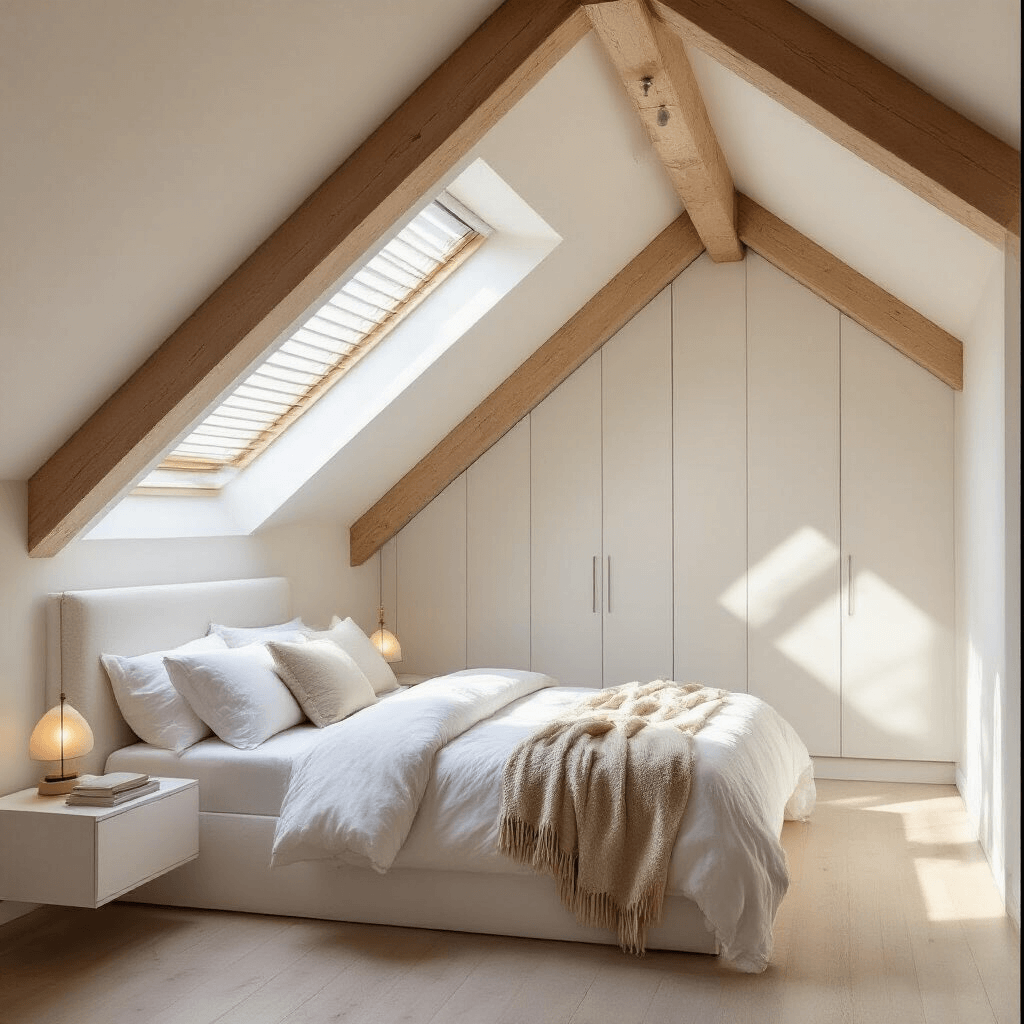
The Light and Bright Approach
I initially went this route because my attic felt like a shoebox.
Here’s what actually made a difference:
- Painting everything in bright white (ceiling, walls, the works)
- Installing skylight blinds that I could adjust throughout the day
- Keeping window treatments minimal so natural light flooded in
- Using light neutral tones for bedding and furniture
The transformation shocked me.
The same space that felt cramped suddenly appeared twice its actual size.
Light neutrals don’t mean boring, by the way—I mixed creams, soft grays, and warm whites to keep things interesting.
The Moody Retreat Approach
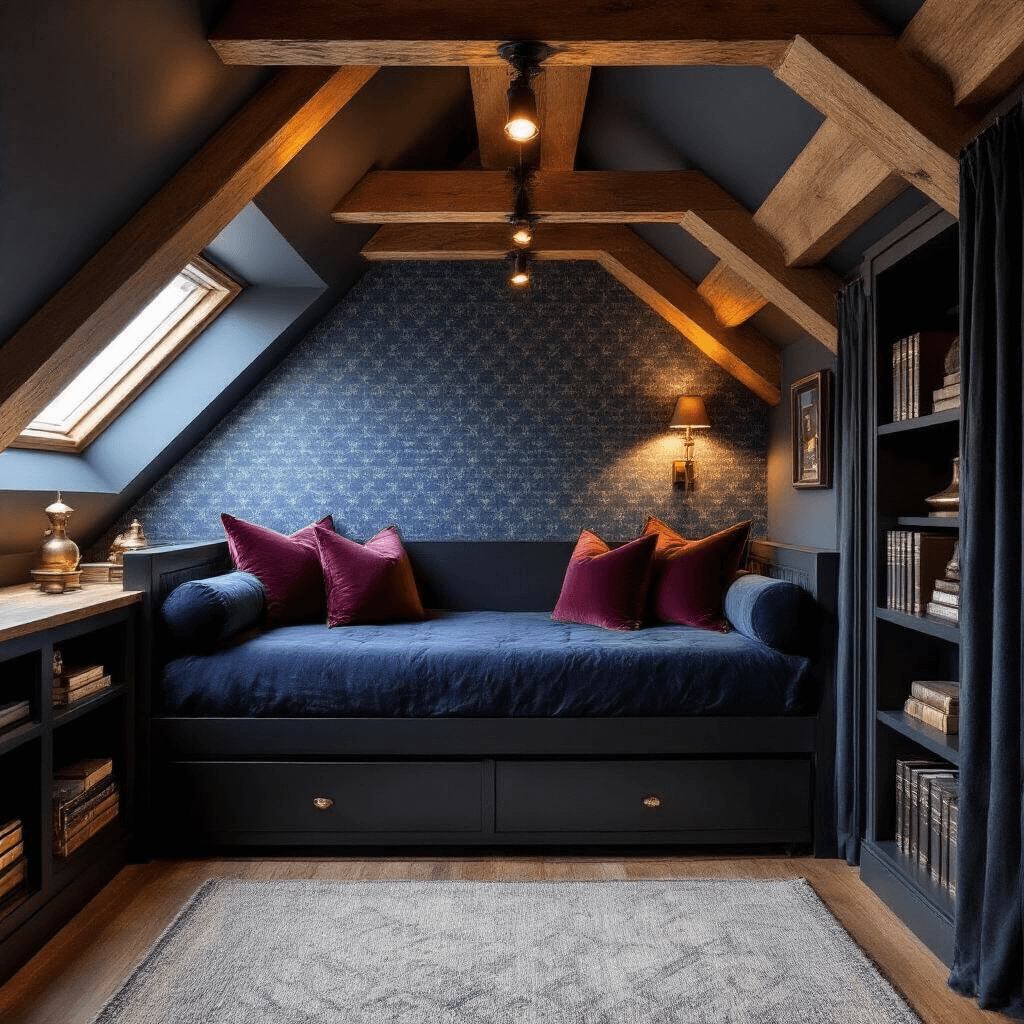
After living with the bright version for a year, I got bold and repainted.
I went with deep charcoal walls and warm wood tones.
People thought I was crazy (again), but this created something magical—an intentional cocoon that felt like a luxury hotel room.
The dark approach works when you:
- Have decent natural light coming in
- Want a space that feels intimate rather than expansive
- Aren’t claustrophobic (my sister lasted five minutes before fleeing)
- Layer in warm lighting to prevent it feeling like a cave
The moody palette made those sloped ceilings feel protective rather than oppressive.
Making Peace with Those Slanted Ceilings
This was my biggest mental hurdle.
I kept seeing those slopes as problems to hide.
Wrong approach entirely.
Exposed Beams Are Your Friends
If you’ve got ceiling beams, stop trying to cover them up.
I cleaned ours, gave them a light sand, and applied a clear wood finish.
They became the room’s best feature.
Quick beam upgrade tips:
- Clean thoroughly first (decades of dust aren’t decorative)
- Decide: natural wood or painted?
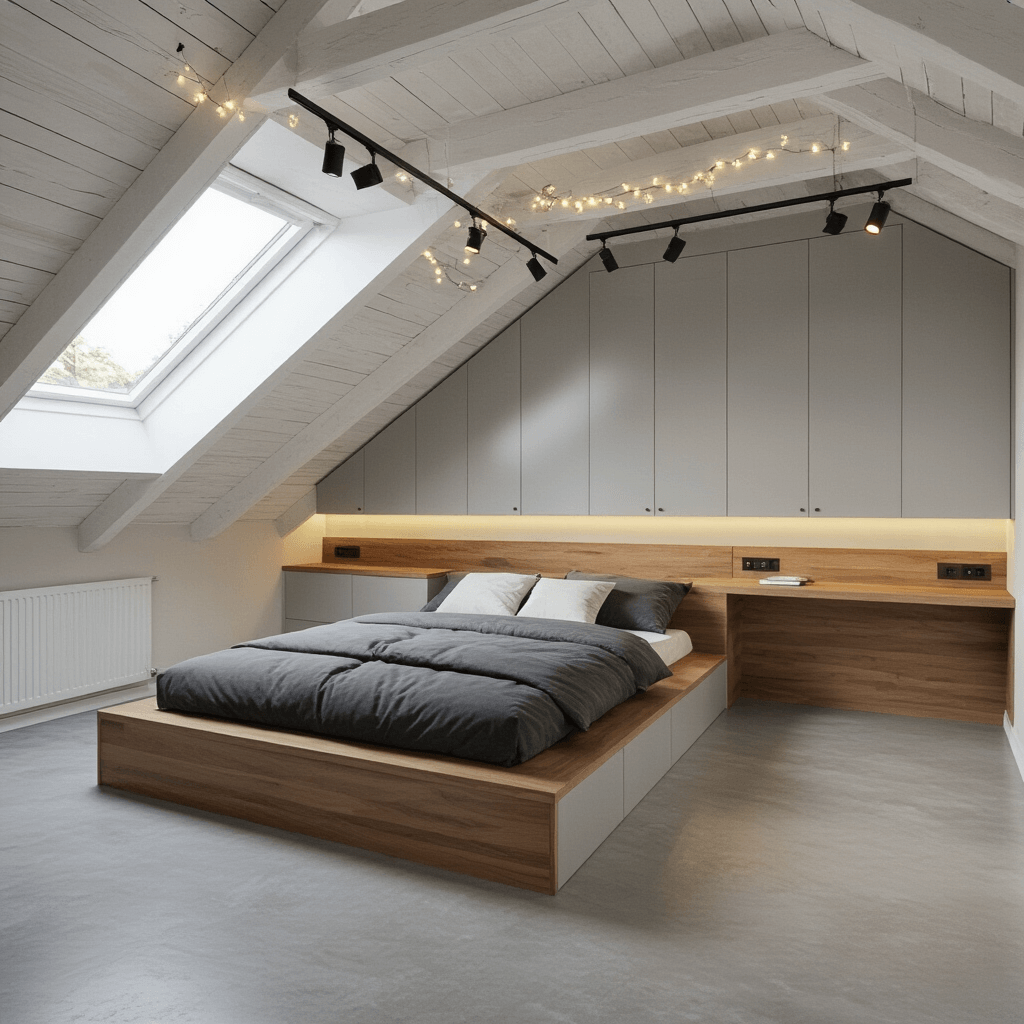
- Use them as natural guides for hanging string lights
- Run lighting tracks along them for modern appeal
The Wallpaper Trick That Changed Everything
I discovered this by accident when browsing a design magazine in my dentist’s waiting room.
Instead of avoiding the slanted ceiling, wallpaper it.
Make it the star.
I chose a subtle geometric pattern in soft blues, and suddenly that awkward angled ceiling became the room’s focal point.
People actually compliment it now instead of asking “how do you deal with that ceiling?”
Where to Put the Bed (This Matters More Than You Think)
I moved my bed four times before getting this right.
The winning position: tucked under the lowest part of the ceiling slope.
Sounds counterintuitive, right?
But here’s why it works—you’re already lying down, so the low ceiling doesn’t matter.
Meanwhile, the higher ceiling area remains open for walking and dressing.
I also positioned it perpendicular to the window, which lets morning light sweep across the room without blasting me awake at 5 AM.
Storage Solutions That Don’t Eat Your Floor Space
This is where most attic bedrooms fall apart.
You can’t just shove a regular dresser against a slanted wall and call it done.
Trust me, I tried.
The dresser stuck out like a sore thumb, and I kept banging my hip on the corner.
Built-Ins Are Worth Every Penny
I resisted this initially because of the cost.
But after pricing out regular furniture that would actually fit, the built-ins made financial sense.
What I had custom-built:
- Fitted wardrobes that followed the ceiling angle perfectly
- Shelving units in the knee wall spaces (those awkward short wall areas)
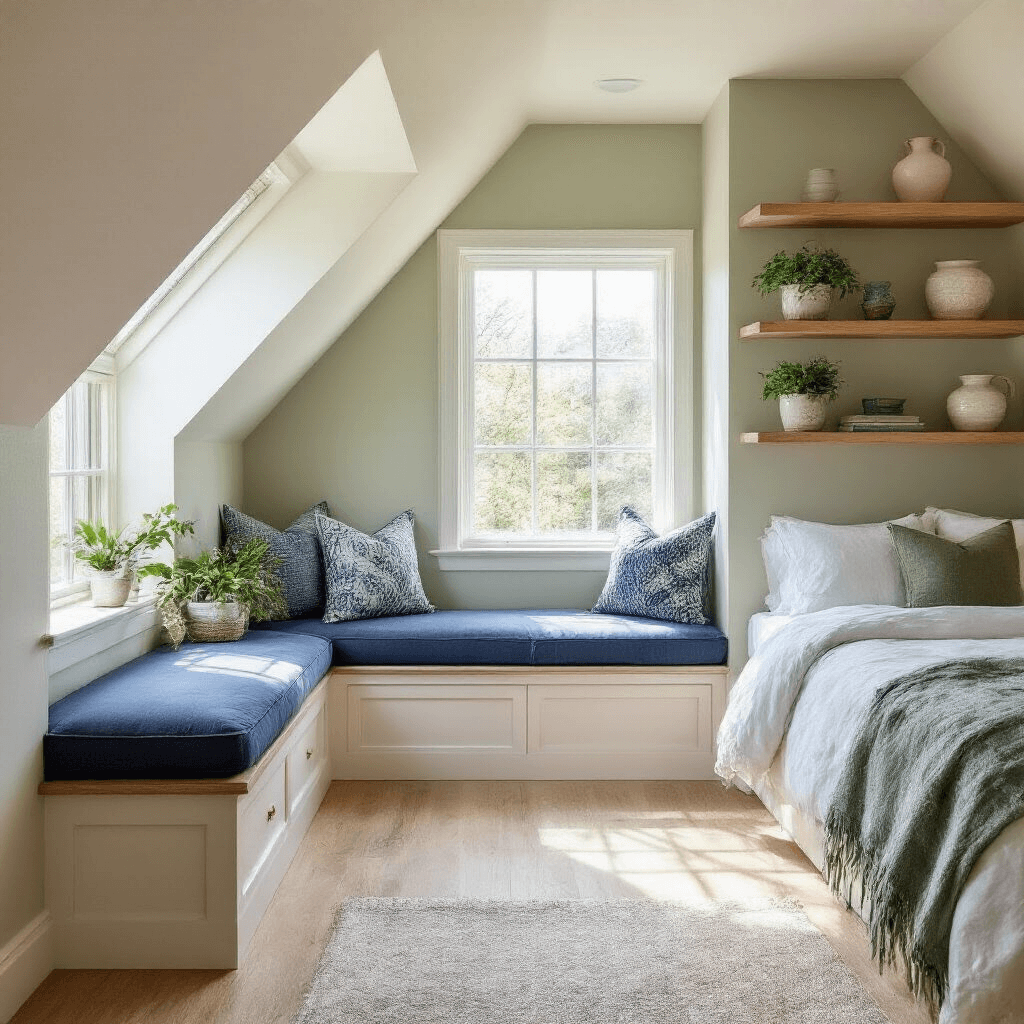
- A window seat with storage underneath that holds all my extra bedding
These built-ins reclaimed probably 30% more usable space than standalone furniture would have.
The Window Seat Game-Changer
If you have a dormer window, build a seat there.
Mine cost less than I expected—basically just a wooden frame, some cushion foam, and fabric.
The storage underneath holds:
- Off-season clothes
- Extra pillows and blankets
- Books I’m pretending I’ll read someday
It’s also become my favorite reading spot, which I didn’t anticipate.
Vertical Space is Your Secret Weapon
Stop thinking horizontally.
Go up.
I installed floating shelves on every wall section tall enough to accommodate them.
My vertical storage wins:
- Open shelving for books and decorative items
- Hooks mounted directly into ceiling beams for hanging plants
- A pegboard system on the one full-height wall for accessories
- Over-door organizers on the attic entrance door



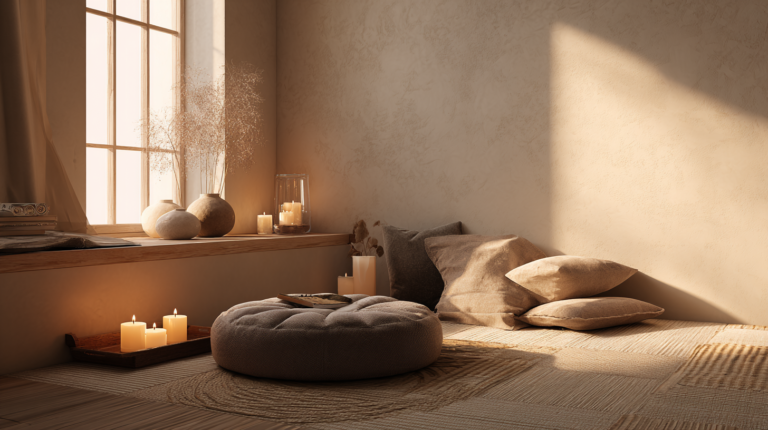

[…] MUJI-inspired decor focuses on clean lines, natural materials, and warm neutrals. This style works beautifully in tiny bedrooms by keeping the space calm and […]