This post may contain affiliate links. Please see my disclosure policy for details.
Front Porch Landscaping: How I Transformed My Curb Appeal Without Breaking the Bank
Contents
- Front Porch Landscaping: How I Transformed My Curb Appeal Without Breaking the Bank
- Create Visual Cohesion (But Don’t Obsess Over Matching)
- Make Your Front Door the Star
- The Three-Layer Approach That Saved My Sanity
- The Window Mistake I’ll Never Make Again
- Trees: The Long Game That’s Worth It
- Potted Plants: The MVP of Porch Design
Front porch landscaping isn’t just about tossing a few petunias by your door and calling it a day.
I learned this the hard way when my neighbor casually mentioned that my house looked “tired” compared to the rest of the street. Ouch. That stung worse than stepping on a rake, but she wasn’t wrong.
My front porch looked like I’d given up on life—sad, wilted plants in cracked pots, overgrown shrubs blocking half my windows, and a concrete walkway that screamed “builder special from 1987.”
So I rolled up my sleeves and got to work. What I discovered changed everything about how I think about front porch design, and I’m going to share exactly what worked (and what flopped spectacularly).
Why Your Front Porch Landscaping Actually Matters
Look, I get it. You’re busy, and landscaping feels like one more thing on an endless to-do list. But here’s what nobody tells you: your front porch is doing PR work for you 24/7.
Every person who drives by, every delivery driver, every nosy neighbor—they’re all forming opinions about you based on what they see.
When I finally accepted this reality, I stopped seeing my porch as a chore and started seeing it as an opportunity.
- Make my home feel welcoming before anyone even knocks
- Increase my property value without a major renovation
- Actually enjoy coming home instead of cringing at my own entrance
- Create something beautiful that makes me proud
The Foundation: Design Principles That Actually Work
I used to think good landscaping was some mysterious talent you were either born with or not. Turns out, it’s just following a few simple rules.
Create Visual Cohesion (But Don’t Obsess Over Matching)
My first mistake was treating my porch like an island. I had bright purple petunias on the porch and yellow daylilies in the yard, and they fought each other like cats in a bag.
Here’s what I do now:
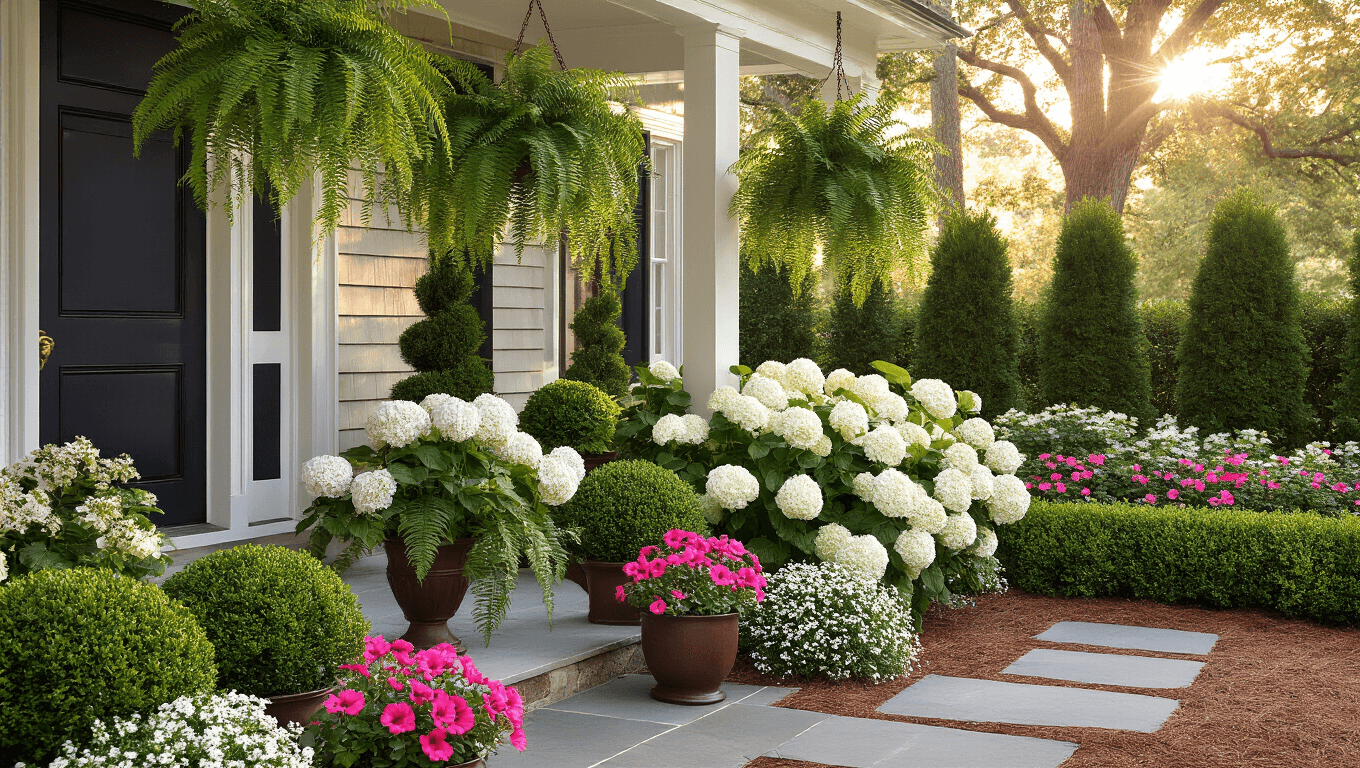
I pick a color palette and stick to it—for me, that’s whites, blues, and soft pinks. My decorative outdoor planters on the porch echo the same colors as my foundation plantings below.
This doesn’t mean everything matches perfectly. It means there’s a conversation happening between the different areas. Think of it like getting dressed—your shoes don’t have to match your shirt exactly, but they shouldn’t clash violently either.
Make Your Front Door the Star
Your front door is the focal point, period. Everything else is supporting cast.
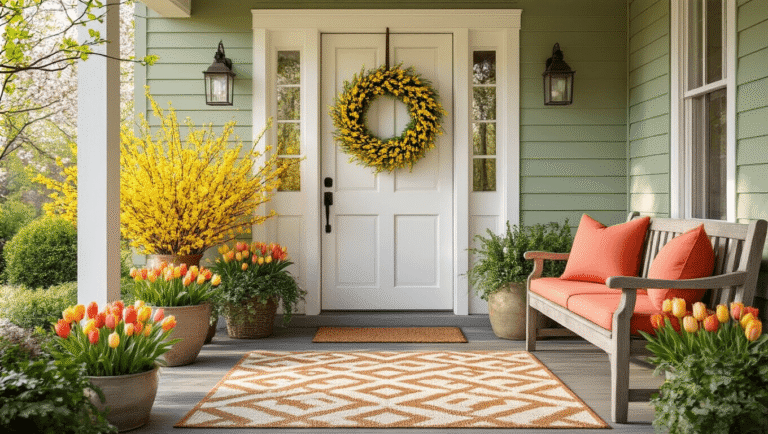
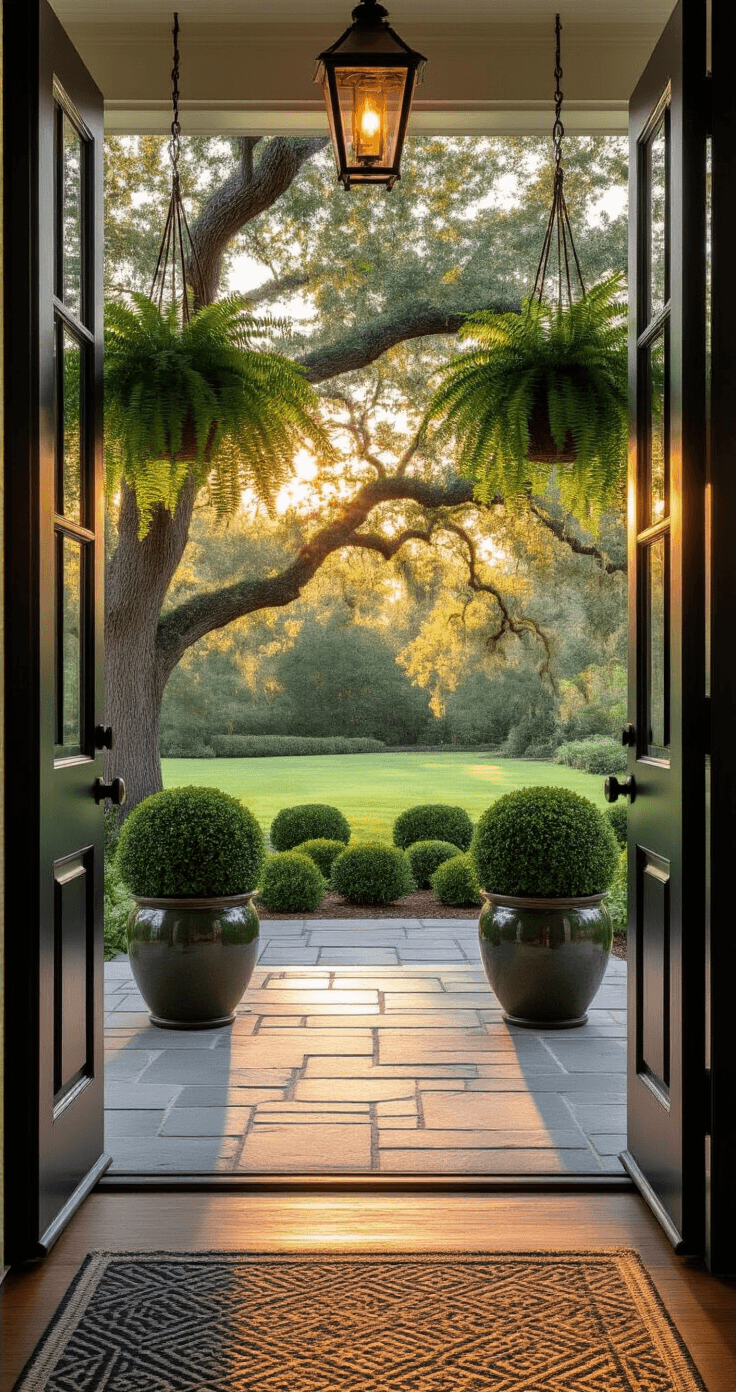
I flanked my door with two large ceramic plant pots filled with boxwoods. Simple, classic, and it immediately draws your eye where it should go.
Some people do one large pot on one side, some do matching pairs—there’s no wrong answer as long as the door gets the attention. I’ve seen people try to make their landscaping the star, and it always looks off. Like wearing a statement necklace with a statement hat with statement shoes—it’s too much.
The Plantings: Layering Like You Mean It
Remember that “tired” comment from my neighbor? My biggest problem was flat, one-dimensional planting. Everything was the same height, like a bad haircut.
The Three-Layer Approach That Saved My Sanity
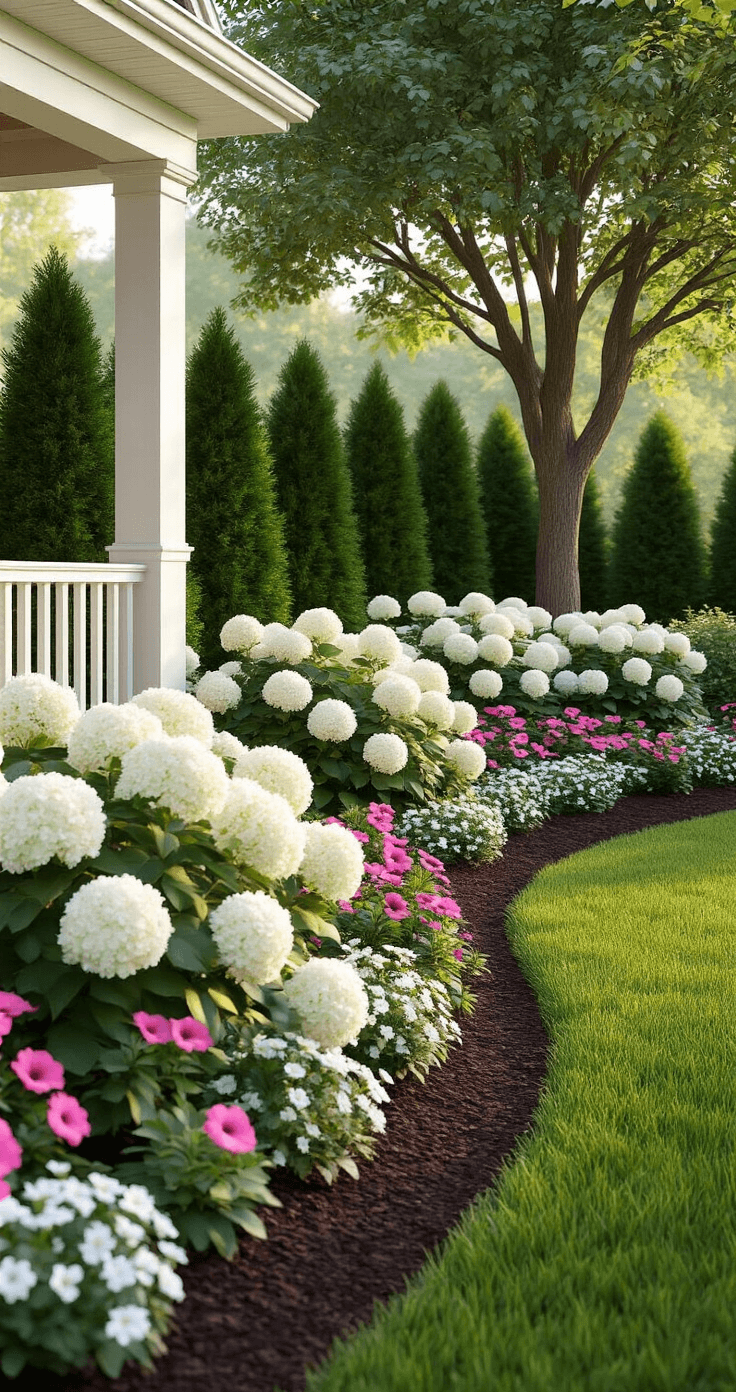
I restructured everything using three distinct layers:
Background (Tall Evergreens):
- These give you year-round structure
- I used arborvitaes along one side
- They create a backdrop that makes everything else pop
Middle Layer (Flowering Shrubs):
- This is where seasonal color happens
- Hydrangeas are my go-to (they’re nearly impossible to kill)
- I also added knockout roses for continuous blooms
Foreground (Annuals and Perennials):
- This layer changes with the seasons
- Spring gets pansies, summer gets petunias or zinnias
- Fall brings mums and ornamental kale
This layering creates depth that makes your landscaping look professional instead of amateur-hour.
The Window Mistake I’ll Never Make Again
I planted azaleas under my windows. Seemed smart at the time. Three years later, they were blocking half the view and making my living room feel like a cave.
Here’s the rule I follow now:
Plants under windows should frame them, not swallow them. I keep anything directly under windows to no more than two-thirds the window height.
Think of it like a necklace that sits just below the neckline—it accents without overwhelming.
I replaced those overgrown azaleas with low-growing dwarf boxwood shrubs that stay compact. Game changer.
Trees: The Long Game That’s Worth It
I planted a small oak tree in my front yard four years ago. Best decision I ever made for my front porch landscaping.
Why trees matter:
- They provide shade (my porch is actually usable now on summer afternoons)
- Birds flock to native oaks—I wake up to songbirds instead of traffic noise
- They add vertical interest and make your house look established
- Property value bump is real
If you don’t have decades to wait, consider faster-growing options, but stick with natives when possible. They require less water, less maintenance, and local wildlife actually uses them.
Porch Features That Pack a Punch
Once the foundation plantings were sorted, I turned my attention to the porch itself. This is where you can have some fun without committing to permanent changes.
Potted Plants: The MVP of Porch Design
I cannot overstate how much hanging plant baskets transformed my porch.
Why I love them:
- They keep the floor clear for furniture and foot traffic
- They add that Southern charm I was going for
- They’re easy to swap out seasonally
- They draw the eye upward, making the whole space feel bigger
I hang two on either side of my door and swap them out four times a year:
- Spring: Fuchsias
- Summer: Boston ferns
- Fall: Mums in hanging planters
- Winter: Evergreen arrangements with pinecones
Floor pots are great too, but be strategic. I use three large pots in odd-number groupings (design rule: odd numbers look better than even). I learned this from a designer friend who told me our brains find asymmetry more interesting than symmetry. Weird but true.