

This post may contain affiliate links. Please see my disclosure policy for details.
Green kitchen cabinets have transformed from a bold design choice to a timeless classic that dominates luxury homes and designer portfolios. Whether you’re drawn to the soft airiness of sage, the earthy richness of olive, or the dramatic depth of dark green, each shade creates a distinctly different mood and aesthetic impact. This comprehensive guide breaks down everything you need to know about selecting the perfect green for your kitchen cabinets, considering your space’s lighting, layout, and how each option affects your home’s value.
What Makes Green Kitchen Cabinets a Luxury Choice?
Contents
- What Makes Green Kitchen Cabinets a Luxury Choice?
- Overview of Popular Green Cabinet Shades
- Sage Green Kitchen Cabinets
- Olive Green Kitchen Cabinets
- Dark Green Kitchen Cabinets
- Green Kitchen Cabinets Cost (Stock vs Custom)
- High-End Cabinet Brands Known for Green Kitchens
- Countertops That Pair Best with Green Cabinets
- Hardware & Metal Finishes for Green Cabinets
- Appliances That Work Best with Green Kitchens
- Lighting Strategies for Green Kitchen Cabinets
- Best Layouts for Green Kitchen Cabinets
- Sage vs Olive vs Dark Green — Side-by-Side Comparison
- Common Green Kitchen Cabinet Mistakes
- Are Green Kitchen Cabinets Still in Style?
- FAQs About Green Kitchen Cabinets
- Related Green & Cabinet Design Guides
Green vs Gray and White Kitchens
While white and gray kitchens have dominated design trends for years, green cabinets offer a refreshing alternative that feels both current and timeless. Unlike the clinical feel that can accompany all-white spaces, green introduces warmth and character while maintaining a clean, sophisticated aesthetic. Benjamin Moore, Farrow & Ball, and Sherwin-Williams have all expanded their green palette offerings in response to growing demand from luxury homeowners and designers.
Why Green Feels Timeless, Not Trendy
Green’s staying power comes from its connection to nature. As a color found abundantly in the natural world, green creates a sense of balance and harmony that transcends passing trends. From historic homes to contemporary spaces, green cabinets have proven their versatility across design eras and architectural styles, making them a safe yet distinctive choice for homeowners concerned about longevity.

Green Cabinets in Architectural and Custom Homes
Custom home builders and architects increasingly specify green cabinetry for signature projects. The color provides a perfect backdrop for showcasing natural materials like marble, quartzite, and brass, which are hallmarks of luxury kitchen design. Green cabinets also create a distinctive focal point that elevates the entire home, making them a favorite for showcase properties and architectural publications.
Overview of Popular Green Cabinet Shades
Sage Green Cabinets (Soft & Airy)
Sage green cabinets feature soft, muted tones with gray undertones that create a light, airy feel. This versatile shade works beautifully in both traditional farmhouse kitchens and contemporary spaces, offering a subtle pop of color without overwhelming the room. Sage pairs exceptionally well with light countertops, natural woods, and brushed nickel or chrome hardware.

Olive Green Cabinets (Warm & Earthy)
Olive green cabinets bring warmth and earthiness to kitchen spaces with their yellow and brown undertones. This rich, organic shade creates a cozy, inviting atmosphere that works particularly well in traditional and transitional kitchens. Olive green pairs beautifully with warm metals like brass and copper, as well as with natural stone countertops featuring beige and cream tones.

Dark Green Cabinets (Moody & Dramatic)
Dark green cabinets make a bold statement with their deep, saturated tones that range from forest to emerald. These dramatic shades create a sense of luxury and sophistication, working particularly well in spaces with ample natural light or thoughtful artificial lighting. Dark green pairs strikingly with white marble, creating high-contrast moments that feel both classic and contemporary.

How Undertones Affect Each Shade
The undertones in green cabinets significantly impact how they appear in different lighting conditions and how they interact with other elements in your kitchen. Sage greens typically have gray or blue undertones, creating a cooler, more muted appearance. Olive greens contain yellow and brown undertones for warmth, while dark greens may have blue (for a jewel-tone effect) or black undertones (for a more neutral, sophisticated look).
Sage Green Kitchen Cabinets
Best Homes & Kitchen Sizes for Sage
Sage green cabinets work exceptionally well in smaller kitchens, where their light, airy quality helps the space feel larger and more open. They’re also ideal for homes with transitional, farmhouse, or Scandinavian-inspired design schemes. In open-concept homes, sage green creates a subtle definition for the kitchen area without visually competing with adjacent living spaces.

Lighting Conditions Sage Works Best In
Sage green cabinets shine in kitchens with abundant natural light, particularly north-facing spaces where the cooler light enhances their subtle gray undertones. In artificially lit spaces, opt for lighting with a color temperature between 2700K-3000K to maintain the warmth and depth of sage green. Under-cabinet lighting is particularly effective at highlighting the nuanced color variations in sage finishes.
Sage Cabinets and Resale Appeal
Of all green cabinet options, sage offers the broadest resale appeal due to its subtle, versatile nature. Real estate professionals report that sage green kitchens photograph exceptionally well for listings and create a memorable impression during showings without alienating buyers who prefer neutral spaces. The color’s association with nature and wellness also resonates with today’s health-conscious homebuyers.
Luxury Sage Green Paint Colors
These designer-recommended sage green paint colors create the perfect soft, sophisticated look:
- Benjamin Moore Saybrook Sage – A classic sage with perfect balance of gray and green
- Sherwin-Williams Clary Sage – A versatile sage with subtle warmth
- Farrow & Ball Mizzle – A sophisticated sage with unique depth and character
Olive Green Kitchen Cabinets
Why Designers Love Olive for Luxury Kitchens
Interior designers frequently select olive green for high-end kitchens because of its rich, complex character and ability to create a sense of warmth without overwhelming the space. The earthy undertones in olive green cabinets complement natural materials like wood, stone, and metals, creating a cohesive, organic aesthetic that feels intentional and curated rather than trendy.

Olive Green in Traditional vs Modern Spaces
Olive green adapts beautifully across design styles. In traditional kitchens, it pairs with ornate hardware, detailed millwork, and classic stone for a timeless, elegant look. In modern spaces, olive cabinets with minimal hardware, clean lines, and concrete or quartz countertops create a contemporary aesthetic with organic warmth. This versatility makes olive green a favorite for transitional homes that blend elements from multiple design eras.
Pairing Olive Cabinets with Warm Metals
The yellow and brown undertones in olive green create a natural affinity with warm metals like brass, bronze, and copper. Unlacquered brass hardware that develops a patina over time particularly complements the organic quality of olive cabinets. For a luxurious look, designers often combine olive cabinetry with aged brass light fixtures, pot fillers, and even range hoods for a cohesive, elevated aesthetic.

Luxury Olive Green Paint Colors
These designer-favorite olive green paint colors create rich, warm kitchen cabinetry:
- Farrow & Ball Bancha – A rich olive with perfect yellow-brown undertones
- Benjamin Moore Vintage Vogue – A sophisticated olive with depth and character
- Sherwin-Williams Ripe Olive – A versatile olive that works in both traditional and modern spaces
Dark Green Kitchen Cabinets
When Dark Green Works Best
Dark green cabinets make the strongest statement and work best in kitchens with ample space and good lighting. They’re particularly effective in rooms with high ceilings, large windows, or open layouts where the deep color creates a grounding effect without feeling oppressive. Homeowners with bold design sensibilities who want their kitchen to serve as a dramatic focal point will appreciate the sophisticated impact of dark green cabinetry.

Dark Green vs Black Cabinets
Dark green cabinets offer the drama and sophistication of black cabinetry but with added depth and character. While black can sometimes feel flat or stark, dark green contains subtle color variations that create visual interest and warmth. This complexity makes dark green more forgiving with fingerprints and dust than pure black, while still delivering the high-contrast, luxurious aesthetic that makes dark kitchens so appealing.
Creating Contrast Without Heaviness
To prevent dark green cabinets from overwhelming a space, designers balance them with lighter elements. White marble countertops, light-colored backsplashes, and reflective surfaces help bounce light throughout the room. Strategic lighting is crucial—combining ambient, task, and accent lighting ensures dark green cabinets appear rich and dimensional rather than flat or shadowy.

Luxury Dark Green Paint Colors
These designer-approved dark green paint colors create dramatic, sophisticated kitchen cabinetry:
- Farrow & Ball Studio Green – A near-black green with incredible depth
- Benjamin Moore Essex Green – A rich, traditional dark green with timeless appeal
- Sherwin-Williams Pewter Green – A versatile dark green with subtle gray undertones
Green Kitchen Cabinets Cost (Stock vs Custom)
Stock Green Cabinets
Stock cabinets in green finishes typically range from $100-$300 per linear foot installed. Major retailers like IKEA, Home Depot, and Lowe’s offer limited green options in their standard lines, though color selection is often restricted to a few shades. For budget-conscious homeowners, purchasing stock cabinets in white and painting them with a high-quality green cabinet paint offers more color flexibility at a similar price point.
Semi-Custom Green Cabinetry
Semi-custom cabinets in green finishes range from $300-$600 per linear foot installed. These offer significantly more color options, with manufacturers like KraftMaid, Wellborn, and Wood-Mode providing dozens of green shades across their lines. Semi-custom options also allow for modifications in cabinet dimensions and interior organization features, creating a more tailored solution than stock cabinetry.

Fully Custom Green Kitchens
Fully custom green cabinetry starts at $600 per linear foot and can exceed $1,500 per linear foot for high-end bespoke options. Luxury cabinet makers like Plain English, DeVOL, Christopher Peacock, and Henrybuilt create entirely custom solutions with proprietary green finishes, hand-applied techniques, and unique detailing. These cabinets are built precisely to your kitchen’s dimensions with unlimited customization options.
Luxury Cost Drivers
Several factors significantly impact the cost of high-end green cabinetry. Custom color matching to fabrics, artwork, or specific historical references can add 15-20% to cabinet costs. Specialty finishes like hand-distressing, glazing, or multi-step paint processes that create depth and character increase prices by 20-30%. Premium hardware systems from Blum or Hettich with soft-close mechanisms and specialized organization features add $100-$200 per drawer or door.
| Cabinet Type | Price Range (per linear ft) | Color Options | Customization Level |
| Stock | $100-$300 | Limited (2-5 greens) | None |
| Semi-Custom | $300-$600 | Moderate (10-20 greens) | Size adjustments, basic organization |
| Fully Custom | $600-$1,500+ | Unlimited | Complete customization |
High-End Cabinet Brands Known for Green Kitchens
Semi-Custom Brands
Several semi-custom cabinet manufacturers have developed reputations for exceptional green finishes. Wood-Mode offers over 30 curated green options with proprietary finishing techniques that enhance durability. Wellborn Cabinet’s “Nature” collection features 15 green shades specifically developed to complement natural stone and wood elements. KraftMaid’s designer series includes sage, olive, and forest green options with coordinated interior finishes for a cohesive look.

Luxury & Bespoke Brands
For the ultimate in green cabinetry, several luxury brands stand out. Plain English Design, known for their traditional British craftsmanship, offers hand-painted cabinets in signature greens like “Army Camp Green” and “Boiled Egg.” DeVOL Kitchens combines classic English design with contemporary sensibilities in their famous “Bakehouse Green” and “Pantry Blue” (which leans green). American-made Henrybuilt creates architectural green cabinetry with modernist influences, while Christopher Peacock’s hand-painted green finishes grace some of the world’s most exclusive homes.

Countertops That Pair Best with Green Cabinets
Quartzite (Taj Mahal, Mont Blanc)
Natural quartzite countertops offer the perfect balance of durability and beauty to complement green cabinets. Taj Mahal quartzite, with its creamy background and subtle gold veining, creates a warm contrast with olive and dark green cabinetry. Mont Blanc quartzite, featuring a white background with gray and taupe veining, pairs beautifully with sage green for a light, airy aesthetic. These natural stones provide the luxury of marble with superior durability against etching and staining.

Marble (Calacatta, Arabescato)
For those willing to embrace the natural patina that develops over time, marble countertops create a timeless, luxurious pairing with green cabinets. Calacatta marble, with its bright white background and dramatic gray veining, creates striking contrast with dark green cabinetry. Arabescato marble, featuring more complex patterns and warmer undertones, complements olive green cabinets particularly well. To minimize maintenance concerns, many designers recommend honed or leathered finishes rather than polished marble.
Quartz for Modern Kitchens
Engineered quartz countertops offer practical benefits for busy households while complementing green cabinets in contemporary kitchens. Premium brands like Caesarstone, Cambria, Silestone, and Dekton offer designer-curated options specifically developed to pair with green cabinetry. For sage green, look to whites with subtle veining like Cambria Brittanicca. Olive green cabinets pair beautifully with taupe-toned quartz like Caesarstone Topus Concrete, while dark green cabinets create dramatic contrast with bright whites like Silestone Eternal Calacatta Gold.
Premium Countertop Care Products
Protect your investment with these designer-recommended countertop care products:
- Granite Gold Daily Cleaner – Safe for all natural stone and quartz surfaces
- StoneTech BulletProof Sealer – Professional-grade protection for natural stone
- Weiman Quartz Countertop Cleaner – Specifically formulated for engineered surfaces
Hardware & Metal Finishes for Green Cabinets
Aged Brass and Unlacquered Brass
Aged brass and unlacquered brass hardware create a living finish that develops character over time, perfectly complementing the organic quality of green cabinets. These warm metal tones particularly enhance olive and dark green cabinetry by bringing out their yellow and brown undertones. For a cohesive luxury look, designers often extend brass finishes to faucets, lighting, and even range hoods, creating a harmonious material palette throughout the kitchen.

Brushed Nickel
Brushed nickel hardware offers a versatile, practical option that works well with all green cabinet shades. Its subtle warmth and matte finish complement sage green particularly well, creating a soft, sophisticated look. Brushed nickel is also highly durable and fingerprint-resistant, making it ideal for busy households. For a contemporary twist, designers often pair streamlined brushed nickel pulls with green slab-front cabinets.
Polished Chrome
Polished chrome hardware creates a bright, reflective contrast against green cabinets, bringing a contemporary edge to traditional cabinetry. This finish works exceptionally well with sage and dark green, where the cool undertones in the metal complement similar undertones in the paint. Chrome’s durability and timeless appeal make it a safe choice for homeowners concerned about longevity, while its reflective quality helps bounce light throughout the kitchen.
Why Black Hardware Can Overpower Green
While black hardware is trending, it requires careful consideration with green cabinets. The high contrast between black hardware and lighter green shades can create a spotty, disconnected appearance that draws attention to the hardware rather than creating a cohesive look. When using black hardware with green cabinets, designers recommend larger, substantial pieces rather than small knobs, and limiting other black elements to maintain balance.

Luxury Cabinet Hardware
Elevate your green cabinets with these designer-favorite hardware options:
- Armac Martin Queslett Cabinet Pull in Aged Brass – Handcrafted in England
- Rocky Mountain Hardware Cabinet Pull in Silicon Bronze Light – Made in USA
- Rejuvenation West Slope Drawer Pull in Aged Brass – Timeless design
Appliances That Work Best with Green Kitchens
Panel-Ready Appliances
Panel-ready appliances that can be fitted with custom green cabinet fronts create the most seamless, high-end look in green kitchens. This approach allows refrigerators, dishwashers, and even some specialty appliances to disappear into the cabinetry, creating a cohesive, furniture-like aesthetic. Sub-Zero, Miele, and Thermador offer extensive panel-ready options that integrate beautifully with custom and semi-custom green cabinetry.

Integrated vs Stainless Steel Finishes
When panel-ready options aren’t feasible, the choice between integrated and stainless steel appliances significantly impacts a green kitchen’s aesthetic. Integrated appliances with matching handles and control panels create a more cohesive look with green cabinetry, while standard stainless steel introduces a contrasting element. For green kitchens with stainless appliances, designers often recommend repeating stainless or nickel finishes in hardware and fixtures to create intentional continuity.
Luxury Appliance Brands
Several luxury appliance manufacturers offer options that pair exceptionally well with green cabinetry. Sub-Zero and Wolf’s professional-style ranges and integrated refrigeration create a chef-worthy focal point in green kitchens. Miele’s sleek, European-designed appliances with minimal stainless steel complement contemporary green cabinetry. Gaggenau’s architectural appliances with modular configurations work beautifully in modern green kitchens, while La Cornue’s colorful ranges can be custom-ordered to perfectly match or complement green cabinets for a truly bespoke kitchen.

Lighting Strategies for Green Kitchen Cabinets
Layered Lighting Approach
Green cabinets benefit tremendously from a thoughtfully layered lighting plan that combines ambient, task, and accent lighting. This multi-dimensional approach ensures the cabinet color appears rich and true throughout the day and evening. Ambient lighting from recessed fixtures or flush mounts provides overall illumination, while task lighting at work zones prevents shadows. Accent lighting highlights architectural features and adds depth to the green cabinetry.

Under-Cabinet Lighting
Under-cabinet lighting is particularly crucial for green kitchens, as it prevents shadows that can make cabinets appear darker than intended. LED strip lights or puck lights installed beneath upper cabinets illuminate countertops while casting a subtle upward glow that highlights the cabinet color. For the most natural effect, designers recommend high-CRI (Color Rendering Index) LEDs that accurately represent the true green cabinet color without distortion.
Ideal Color Temperature (2700K–3000K)
The color temperature of lighting dramatically affects how green cabinets appear. For most green shades, lighting between 2700K-3000K (warm white to soft white) provides the most flattering illumination that enhances the cabinet color’s richness without skewing its undertones. Cooler lighting above 3500K can make green cabinets appear more blue or gray, while very warm lighting below 2700K may overly emphasize yellow undertones in olive greens.
Premium Kitchen Lighting
Enhance your green cabinets with these designer-recommended lighting options:
- Visual Comfort Goodman Pendant – Classic design in aged brass
- Kichler 24″ LED Under Cabinet Light – High CRI for true color representation
- Lutron Caseta Wireless Dimmer – Smart control for perfect lighting levels
Best Layouts for Green Kitchen Cabinets
Green Lower Cabinets with Light Uppers
One of the most versatile approaches to incorporating green cabinetry is using it exclusively for base cabinets while keeping upper cabinets white or another light neutral. This strategy grounds the space with color while maintaining an open, airy feeling above. The two-tone approach works particularly well in smaller kitchens or spaces with limited natural light, where all-green cabinetry might feel overwhelming.

Green Kitchen Islands
A green island paired with neutral perimeter cabinets creates a focal point while introducing color in a controlled way. This approach works in kitchens of all sizes and allows homeowners to experiment with bolder green shades they might hesitate to use throughout the entire space. Designers often recommend selecting a green that appears elsewhere in adjacent rooms to create a cohesive flow throughout the home.
Two-Tone Green Kitchens
For a sophisticated, layered look, some designers use two different green shades within the same kitchen. This might involve darker green base cabinets with lighter green uppers, or a deep green island with softer green perimeter cabinets. The key to success with this approach is selecting greens with similar undertones that create a harmonious relationship rather than competing with each other.

Green Cabinets in Open-Concept Homes
In open-concept homes where the kitchen is visible from living and dining areas, green cabinets can help define the cooking space while creating a cohesive color story. The key is selecting a green that complements the adjacent spaces’ color palette. Many designers pull a green tone from artwork, textiles, or even views of nature visible through windows to create a seamless transition between indoor and outdoor spaces.
Sage vs Olive vs Dark Green — Side-by-Side Comparison
| Feature | Sage Green | Olive Green | Dark Green |
| Best for Small Kitchens | Excellent – Creates spacious feel | Good – Adds warmth without heaviness | Challenging – Requires ample light |
| Best for Low-Light Spaces | Excellent – Reflects available light | Good – Warm undertones help | Poor – Absorbs light |
| Resale Value Impact | Highest – Broadest appeal | Good – Perceived as timeless | Variable – Most taste-specific |
| Best for Modern Homes | Good – Clean, fresh aesthetic | Good – Adds warmth to minimal spaces | Excellent – Bold, architectural impact |
| Best for Traditional Homes | Good – Soft, classic feel | Excellent – Historic precedent | Good – Formal, elegant option |
| Maintenance | Moderate – Shows some marks | Good – Hides minor wear | Challenging – Shows dust/fingerprints |
Best for Small Kitchens
In small kitchens, sage green cabinets typically perform best as they reflect more light and create an airier feel. Olive green can work well in compact spaces with good natural light, adding warmth without heaviness. Dark green generally requires more space to prevent a cramped feeling, though it can be used effectively on just lower cabinets or an island in smaller kitchens.

Best for Low-Light Spaces
In kitchens with limited natural light, sage green cabinets perform best as they reflect available light and maintain their color even in dimmer conditions. Olive green can work in low-light spaces when paired with thoughtful artificial lighting that enhances its warm undertones. Dark green typically requires abundant natural or artificial light to prevent the space from feeling shadowy or closed-in.
Best for Resale Value
For homeowners concerned about resale value, sage green cabinets offer the broadest appeal to potential buyers, with real estate professionals reporting positive responses across demographic groups. Olive green, particularly in traditional homes, is increasingly perceived as a timeless choice rather than a trend. Dark green cabinets, while striking, tend to be the most taste-specific and may appeal to a narrower segment of buyers who appreciate bold design choices.
Common Green Kitchen Cabinet Mistakes
Choosing the Wrong Undertone
The most frequent mistake with green cabinets is selecting a shade with undertones that clash with other elements in the kitchen. Greens with blue undertones can appear discordant in spaces with warm-toned flooring or countertops, while greens with yellow undertones may clash with cool marble or stainless steel. Always test cabinet colors in your actual space with existing materials and lighting before committing.

Pairing with Cool Gray Finishes
Another common misstep is combining green cabinets with cool gray elements without considering their compatibility. While some green shades work beautifully with cool grays, others—particularly those with warm undertones—can appear muddy or dull when paired with cool gray flooring, countertops, or backsplashes. For most green cabinets, warm whites and creams or true grays with balanced undertones create more harmonious combinations.
Poor Lighting Planning
Inadequate lighting can significantly compromise the appearance of green cabinets, causing them to look dull, flat, or entirely different from what was expected. Many homeowners focus on the cabinet color without simultaneously planning their lighting strategy, leading to disappointment with the final result. Always develop a comprehensive lighting plan that includes ambient, task, and accent lighting when selecting green cabinetry.
Overusing Dark Greens
While dark green cabinets create a dramatic statement, using them throughout a kitchen without adequate contrast or relief can result in a heavy, oppressive feeling. Most successful dark green kitchens incorporate lighter elements—whether through countertops, backsplashes, open shelving, or two-tone cabinet approaches—to create visual breathing room and highlight the rich cabinet color rather than overwhelming the space.

Are Green Kitchen Cabinets Still in Style?
2025–2026 Kitchen Trends
Green kitchen cabinets continue to dominate design forecasts for 2025-2026, with industry experts predicting their popularity will extend well beyond this timeframe. Current trends show a shift toward more complex, nuanced greens with gray or brown undertones rather than brighter, clearer greens. Designers are increasingly pairing green cabinetry with natural materials like white oak, walnut, and marble to create organic, timeless kitchens that transcend passing trends.

Why Green Outperforms Gray Long-Term
While gray kitchens dominated the 2010s, green has emerged as a more enduring alternative with greater longevity. Unlike gray, which can sometimes feel cold or industrial, green brings warmth and life to kitchens while still functioning as a sophisticated neutral. Green’s connection to nature gives it a timeless quality that transcends specific design eras, allowing it to feel appropriate in both historic renovations and cutting-edge contemporary homes.
Designer Predictions
Leading kitchen designers predict that green cabinetry will remain relevant for at least the next decade, though specific shades will evolve. Many forecast a continued preference for muted, complex greens over saturated colors, with sage and olive maintaining strong popularity. Several designers note that green kitchens photographed today will still look current in real estate listings years from now, unlike more trend-driven choices that quickly date a home.
FAQs About Green Kitchen Cabinets
Are green kitchen cabinets timeless?
Yes, green kitchen cabinets have proven their longevity across multiple design eras. Unlike trendy colors that quickly date a kitchen, green has historical precedent in both traditional and modern design. The key to ensuring timelessness is selecting complex, nuanced greens with gray or brown undertones rather than bright or trendy greens. Sage, olive, and deep forest greens have particularly strong staying power, as they connect to nature and complement a wide range of materials and styles.
Which green shade is best for small kitchens?
Sage green is typically the best choice for small kitchens due to its light-reflecting properties and airy quality. Its gray undertones create a soft, receding effect that helps the space feel larger. For small kitchens with good natural light, olive green can work well when balanced with light countertops and backsplashes. In compact spaces, consider using green only on lower cabinets with white or glass-front uppers to prevent a closed-in feeling.
Do green cabinets hurt resale value?
When done well, green cabinets typically don’t hurt resale value and can even enhance it by creating a memorable, distinctive kitchen. Real estate professionals report that sage and olive green kitchens in particular often become selling points that buyers specifically mention after viewings. However, very bright or unusual green shades might limit buyer appeal. If resale is a primary concern, opt for more subdued greens like sage, and consider using the color on just an island or lower cabinets rather than throughout the entire kitchen.
What backsplash works best with green cabinets?
White subway tile creates a classic, versatile backdrop for green cabinets of all shades. For more interest, consider marble or marble-look backsplashes with subtle veining that picks up undertones in your cabinet color. Handmade zellige tiles in cream or white add texture while maintaining a neutral backdrop. For a bolder approach that works particularly well with sage green, consider terracotta or zellige in complementary blush or terracotta tones. With dark green cabinets, dramatic marbles with strong veining create sophisticated contrast.
Can you mix green cabinets with wood?
Green cabinets pair beautifully with wood elements, creating a natural, organic aesthetic. The key is matching your green’s undertones with the wood tone. Sage green works well with lighter woods like white oak and maple. Olive green complements mid-tone woods like walnut and cherry. Dark green creates dramatic contrast with light woods while harmonizing with darker species like mahogany. For a cohesive look, consider incorporating wood as open shelving, an island countertop, or interior cabinet elements alongside your green cabinetry.
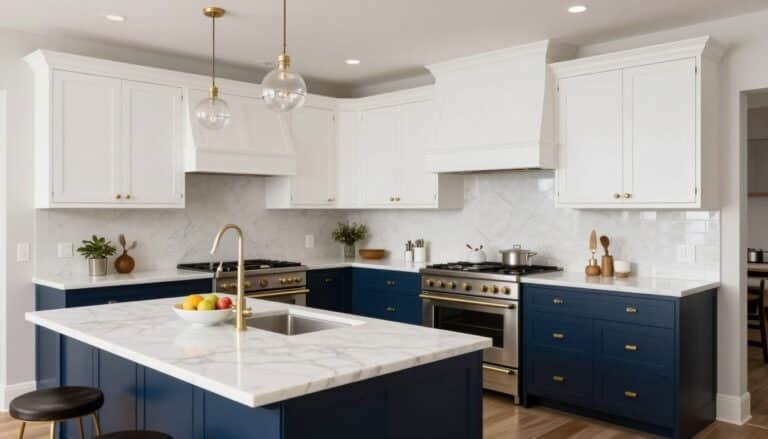
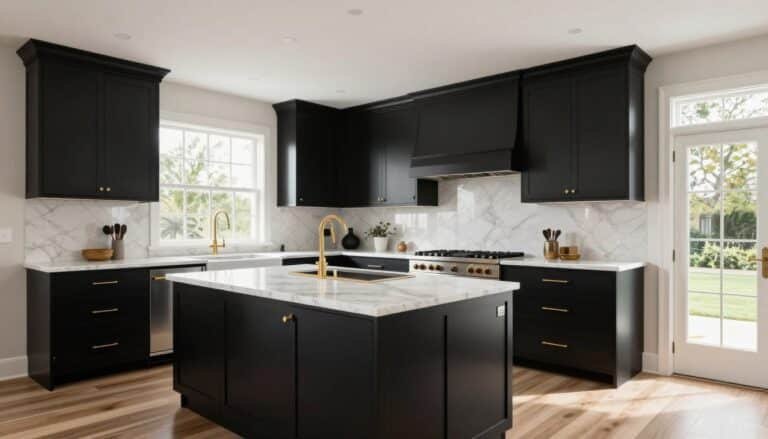
[…] Dark green kitchen cabinets aren’t just a trend—they’re a lifestyle choice. They say you’re bold, sophisticated, and unafraid to make a statement. […]
[…] kitchen is more than a cooking space. It’s the heart of your home. Sage green cabinets aren’t just a design choice – they’re a statement of who you […]