This post may contain affiliate links. Please see my disclosure policy for details.
Outdoor Hanging Plants That’ll Make Your Neighbors Actually Jealous
Contents
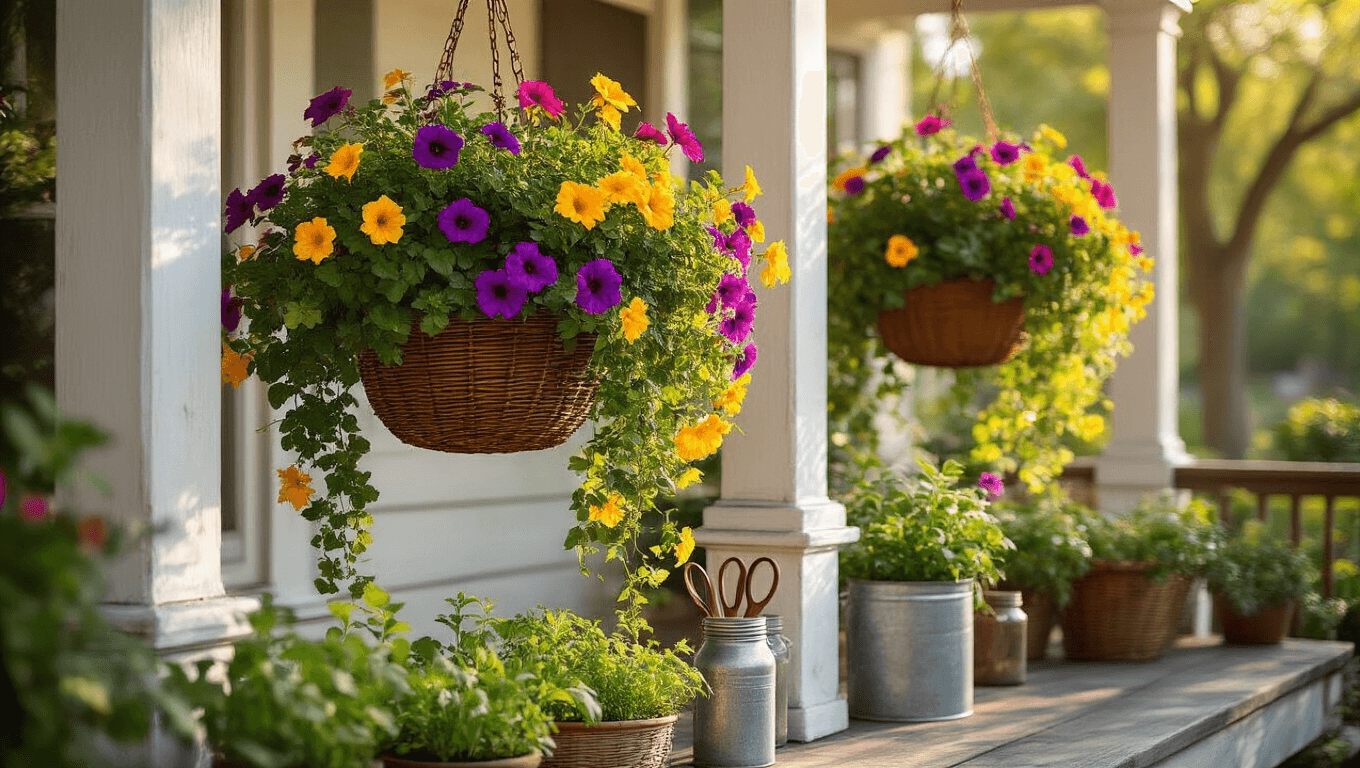
Outdoor hanging plants transform boring porches into Instagram-worthy spaces, and I’m here to tell you exactly which ones won’t die on you after two weeks.
Look, I’ve killed my fair share of hanging baskets.
That expensive fuchsia from the garden center? Dead in a month.
The petunia arrangement I was so proud of? Crispy and brown by July.
But after years of trial, error, and way too much money spent at nurseries, I’ve figured out which hanging plants actually survive—and thrive—outdoors.
Why Most People Fail at Hanging Baskets (And How You Won’t)
Here’s the truth nobody tells you at the garden center.
Most hanging baskets fail because we pick the wrong plants for our specific conditions.
You can’t just grab whatever looks pretty and expect it to work.
Sun exposure matters more than anything else.
A shade-loving fuchsia will fry in full afternoon sun, and sun-worshipping petunias will give you about three sad blooms in a shady corner.
I learned this the hard way on my south-facing porch, where I watched $40 worth of impatiens shrivel up like potato chips.
The Bulletproof Flowering Plants That Actually Last
Petunias and Calibrachoa: The Overachievers
Petunias in hanging baskets are like that friend who always shows up ready to party.
They bloom constantly, don’t demand deadheading (at least the Supertunias and Superbena varieties don’t), and they forgive you when you forget to water them for a day.
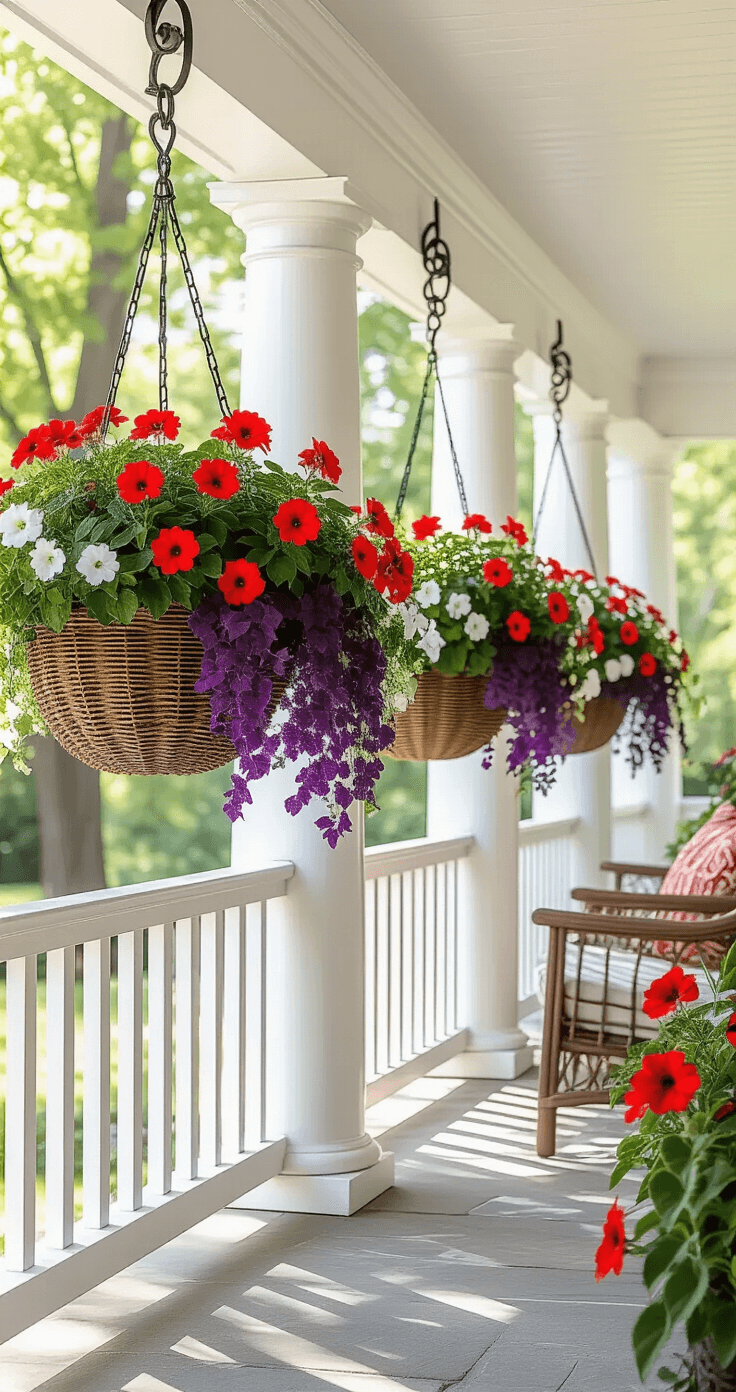
I’ve got colorful petunia hanging baskets on my front porch that have been going strong since May.
Calibrachoa (also called Million Bells) is petunia’s smaller, more delicate cousin.
Same toughness, tinier flowers, absolutely stunning when they cascade over the sides of your basket.
Here’s what makes them winners:
- Bloom from spring until frost without stopping
- No deadheading required for newer varieties
- Tolerate full sun like champions
- Come in practically every color imaginable
- Forgive occasional watering lapses
Bacopa: The Underrated Scene-Stealer
I didn’t discover bacopa until three years ago, and now I put it in almost every hanging basket I create.
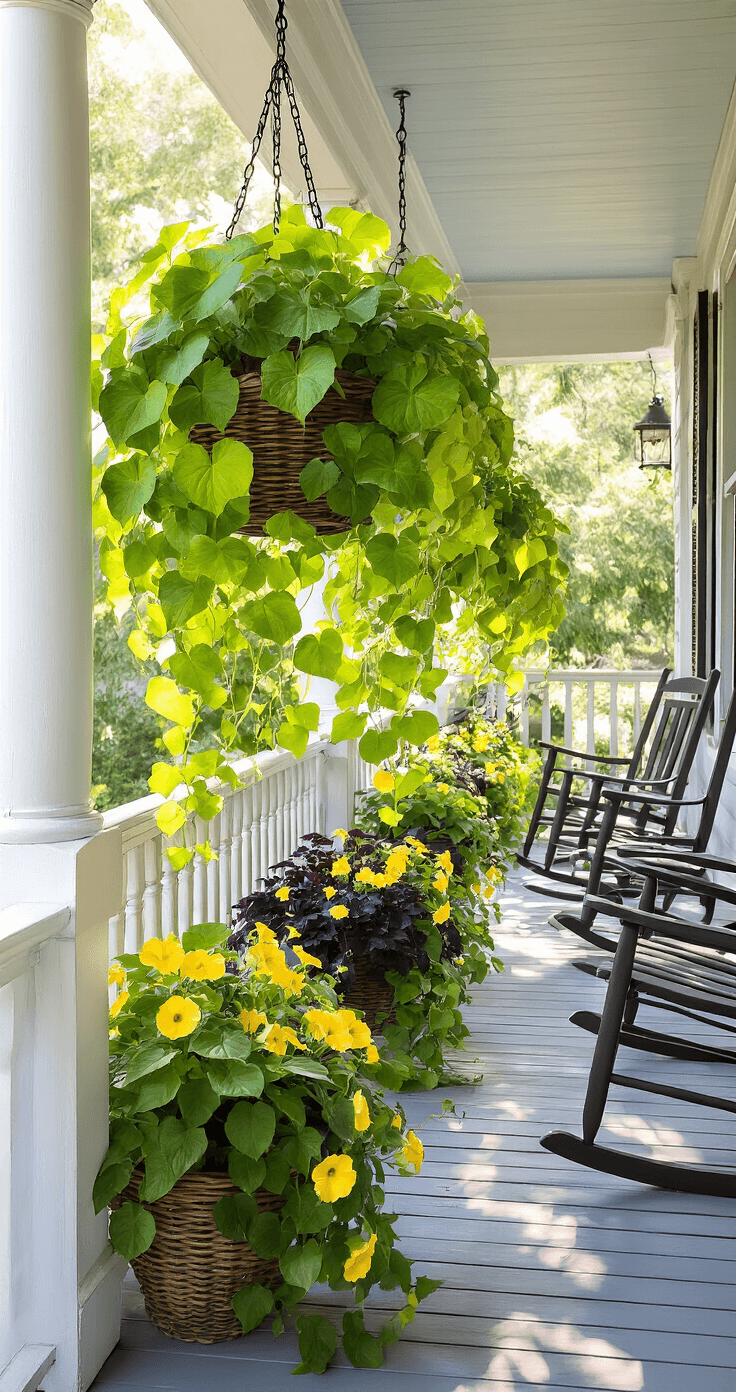
Bacopa works as the perfect “spiller” plant—it gracefully drapes over basket edges while your upright plants do their thing in the center.
The tiny flowers come in white, blue, and pink, and they bloom prolifically in both full sun and partial shade.
This flexibility is gold when you’re dealing with areas that get morning sun but afternoon shade.
I use bacopa as a companion plant with geraniums, and the contrast between bacopa’s delicate trailing habit and geraniums’ bold blooms is chef’s kiss.
Verbena: The Drought-Tolerant Powerhouse
If you’re even slightly forgetful about watering, verbena needs to be on your shortlist.
There are over 250 types of verbena, but the trailing varieties are your go-to for hanging baskets.
I once went on a week-long vacation in August (peak hot, dry weather) and forgot to arrange for someone to water my plants.
Everything else looked miserable when I got back.
The verbena? Still blooming like nothing happened.
Verbena perks:
- Extremely drought-tolerant once established
- Attracts butterflies like crazy
- Available in vibrant purples, reds, pinks, and whites
- Tolerates heat that would murder other plants
- Low maintenance to the point of being lazy-gardener-friendly
Fuchsias: The Shade Garden’s Best Friend
Fuchsias are the drama queens of the hanging basket world, and I mean that as the highest compliment.
Those dangling, two-toned flowers look like tiny ballerinas.
Here’s the catch: fuchsias hate sun and heat.
They want moderate to full shade and consistent moisture, which makes them perfect for covered porches, pergolas, or that weird shady corner of your yard.
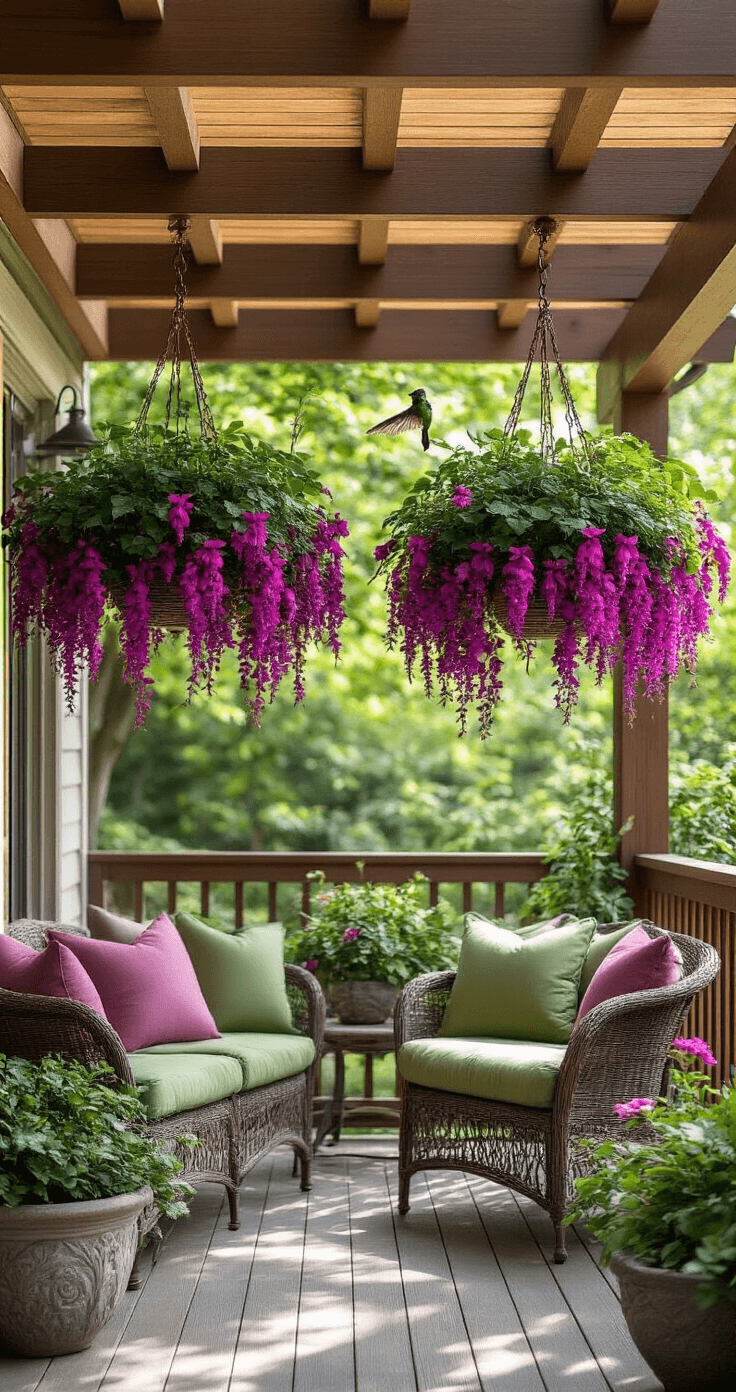
I have decorative fuchsia hanging plants under my back deck where nothing else would grow, and hummingbirds visit them constantly.
Bonus: Begonia boliviensis is another shade-loving option with arrow-shaped leaves and cascading flowers that hummingbirds adore.
It’s less fussy than fuchsia about moisture, so if you’re not great at consistent watering, go with begonias.
Edible Hanging Gardens (Yes, Really)
Why should flowers have all the fun?
I started growing edibles in hanging baskets two years ago, and it’s genuinely changed how I cook.
Herbs That Actually Thrive in Hanging Baskets
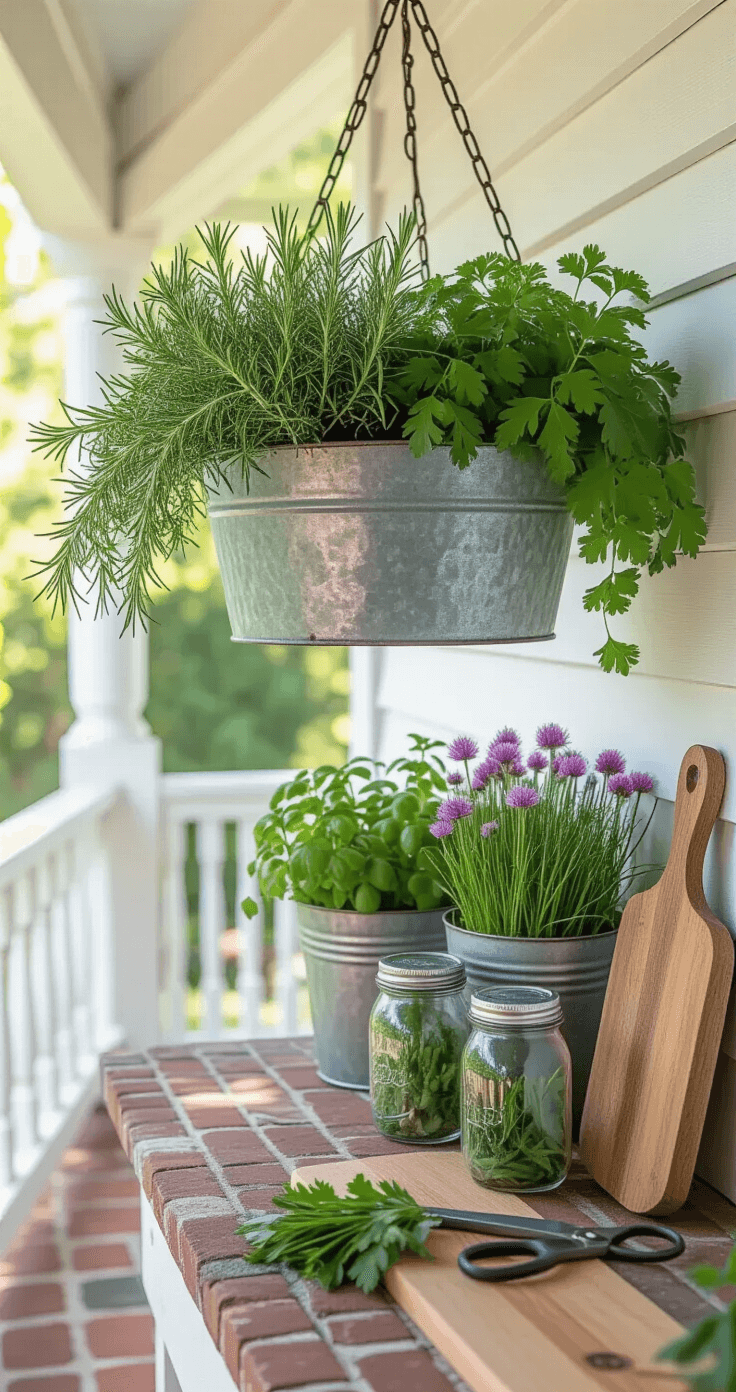
Here’s what I currently have hanging on my kitchen porch:
- Rosemary: Trailing varieties cascade beautifully
- Thyme: Fills in gaps and smells amazing when you brush past it
- Sage: Larger leaves add textural interest
- Parsley: Grows fast and you can harvest constantly
- Chives: Pretty purple flowers and useful in the kitchen
I planted them together in one large basket using outdoor hanging herb planters, and I just walk outside with scissors when I need fresh herbs.
No more buying those sad plastic packages from the grocery store that go slimy in three days.
The Surprising Success of Hanging Strawberries
Growing strawberries in hanging baskets solves the biggest strawberry problem: ground pests.
Slugs, snails, and chipmunks can’t reach your berries when they’re dangling three feet off the ground.
Strawberries need 6+ hours of direct sunlight, so position them accordingly