This post may contain affiliate links. Please see my disclosure policy for details.
How to Transform Your Home with Non-Christmas Winter Decor That Actually Looks Good
Contents
- How to Transform Your Home with Non-Christmas Winter Decor That Actually Looks Good
- Why Your House Feels Empty After Christmas (And What To Do About It)
- The Color Palette That Makes Everything Work
- What To Keep From Your Christmas Stash
- The Foundation: Greenery and Candlelight
- Texture Is Your Secret Weapon
Non-Christmas winter decor saved me from that awkward post-holiday emptiness last year, and I’m never going back to bare walls in January.
You know that feeling, right?
You take down the tree on December 26th, pack away every last ornament, and suddenly your house looks like someone sucked all the joy out through a vacuum cleaner.
I used to think winter decorating meant either keeping Christmas stuff up until Valentine’s Day (awkward when guests visit) or living in a stark, depressing space until spring finally shows up.
Turns out, there’s a third option that’s way better than both.
Why Your House Feels Empty After Christmas (And What To Do About It)
Here’s what nobody tells you about taking down Christmas decorations.
Your home doesn’t just lose the festive stuff—it loses warmth, texture, and those cozy focal points that made you want to curl up with hot chocolate.
The solution isn’t complicated.
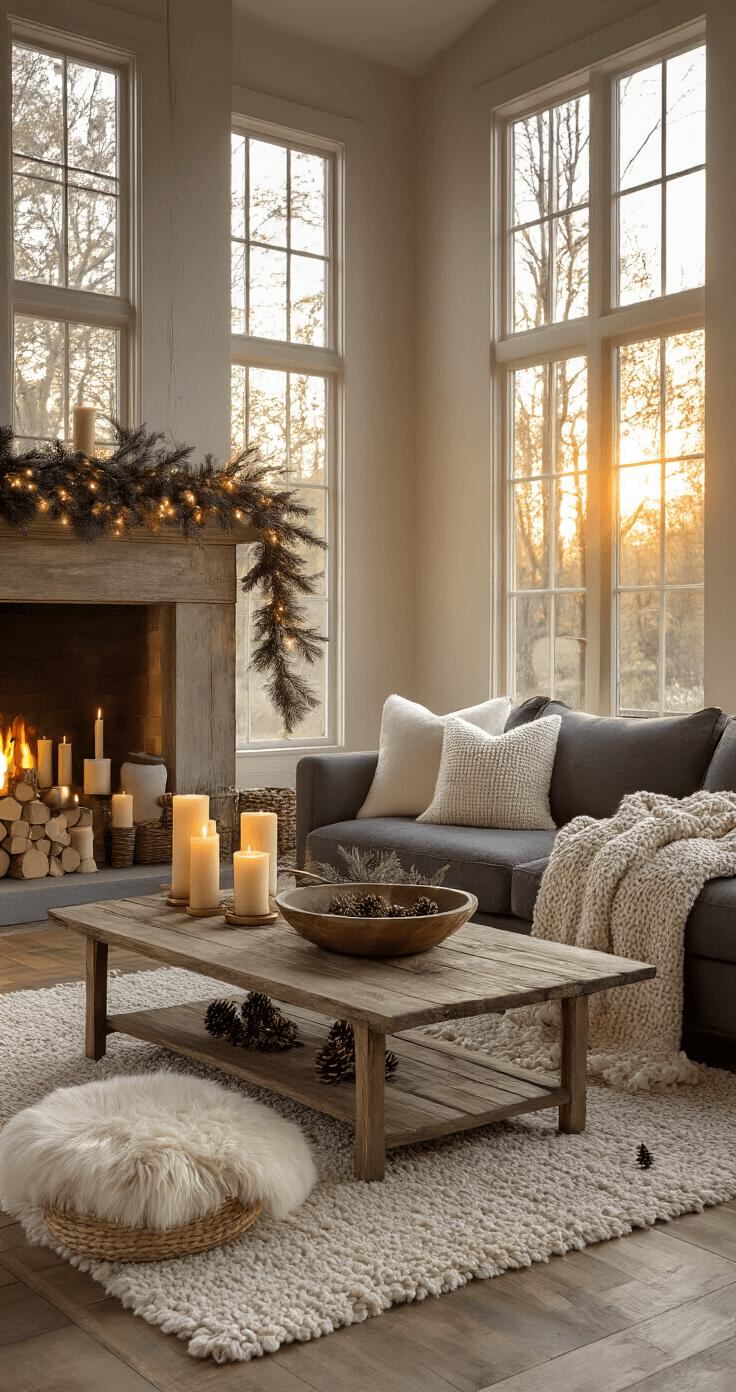
Non-Christmas winter decor focuses on natural elements, neutral palettes, and candlelight to create a serene, seasonless aesthetic that transitions your home from Christmas through early spring.
I stumbled into this concept three winters ago when I was too lazy to pack everything away at once.
Kept a few pieces out, removed the obviously Christmas-y bits, and people actually complimented how “intentional” my winter decorating looked.
The Color Palette That Makes Everything Work
Forget red and green for a minute.
Winter decorating works when you steal colors directly from winter itself.
Think about what you see outside on a cold January morning:
- Bare branches in grey and brown
- White snow covering everything
- Silver frost on windows
- Golden sunrise breaking through clouds
- Black shadows from leafless trees
Your indoor palette should mirror this.
Use neutral and metallic color schemes—wood, grey, black, white, silver, and gold—and suddenly everything feels cohesive instead of random.
I learned this the hard way after trying to “warm up” my space with burgundy accents one year.
Looked like Christmas was having an identity crisis.
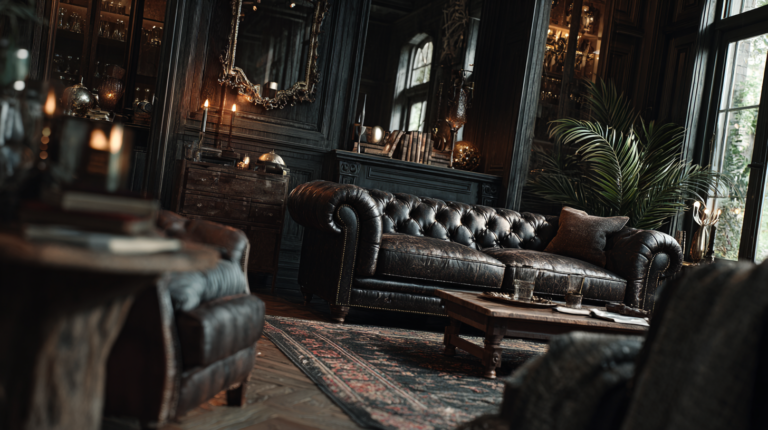
The key is to mimic the outdoors by incorporating the muted tones and textures you see in winter nature: softness of snow through faux fur throws and white blankets, roughness of bare wood and branches scattered throughout.
What To Keep From Your Christmas Stash
This part feels like permission to be lazy, but it’s actually strategic.
Keep these Christmas items for winter use:
- Branches of greenery (yank off those red berries first)
- Small artificial or potted trees (minus the ornaments, obviously)
- Neutral, non-themed garlands
- Simple plain wreaths without Santa faces or “Ho Ho Ho” nonsense
- Logs and pinecones
- Candles and lanterns (any color except red and green)
- Faux fur pieces
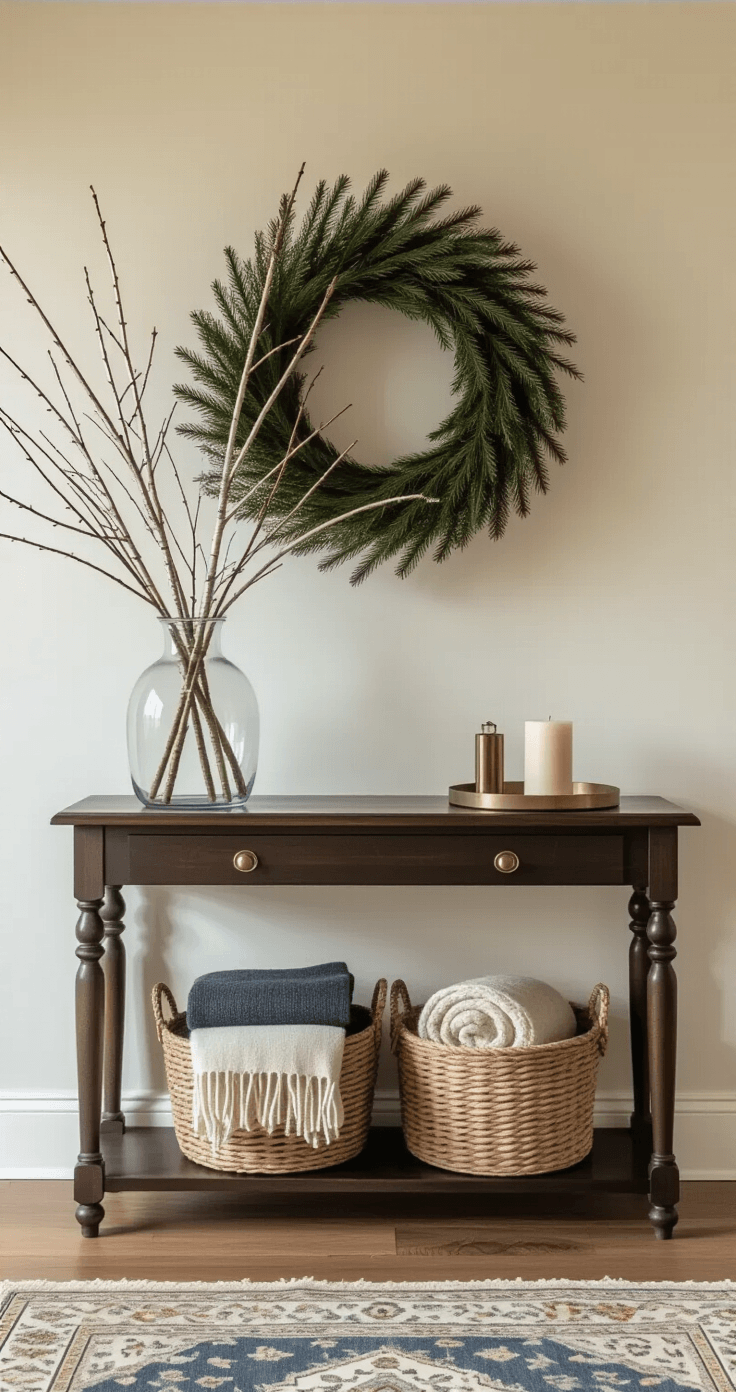
I have a massive wreath that cost me forty bucks at a craft store.
Used to pack it away every January until I realized that without the red bow and jingle bells, it’s just a really nice circular arrangement of pine branches.
Now it stays up until March.
Simplify existing Christmas decor by removing anything that says “Merry Christmas,” ornaments, and overly festive pieces.
Takes about fifteen minutes and saves you from buying a whole new collection of winter-specific stuff.
The Foundation: Greenery and Candlelight
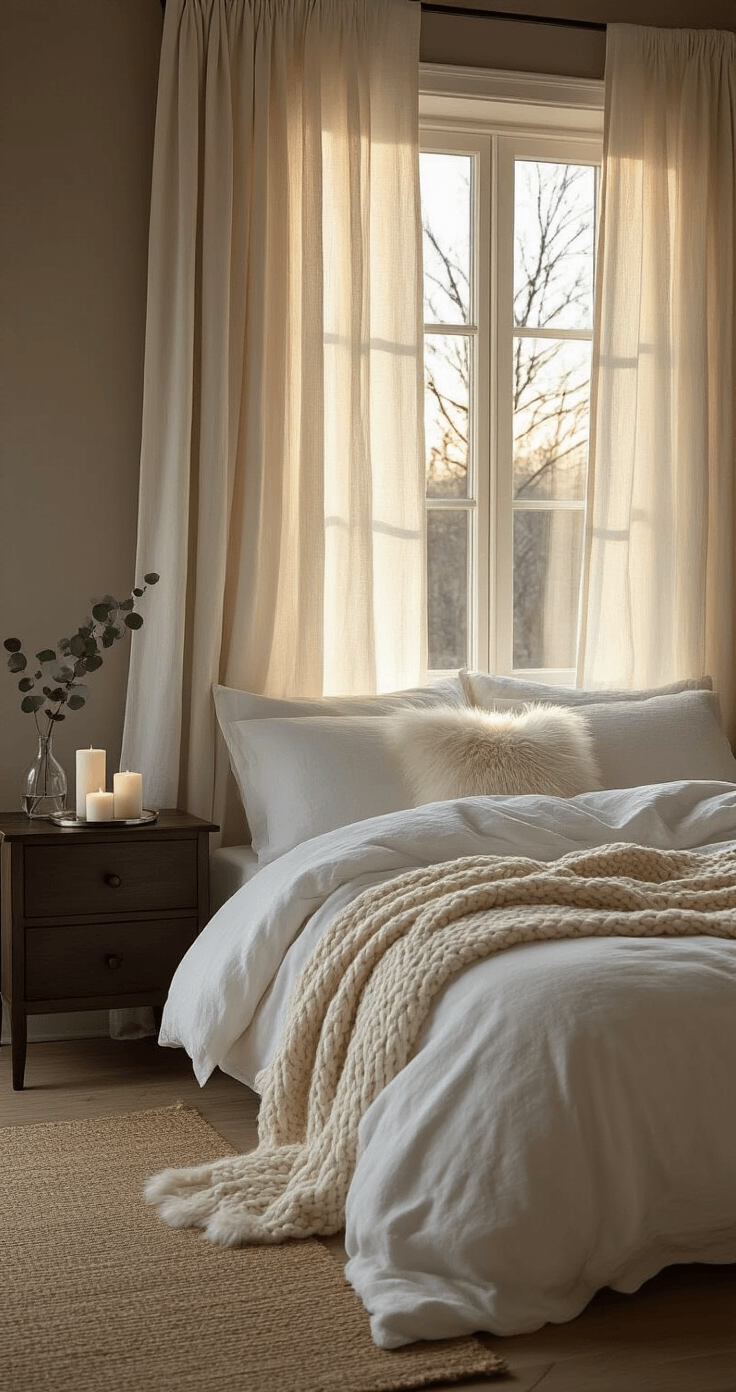
Natural greenery and candlelight serve as the foundation, and honestly, you could stop here and still have a beautiful space.
These two elements do the heavy lifting.
Use evergreens like pine, cedar, juniper, and eucalyptus—these can be arranged as mantel garlands, wreaths, or scattered branches in tall glass vases.
Fresh greenery smells incredible, but let’s be real about something.
It dries out, drops needles everywhere, and becomes a fire hazard if you’re burning candles nearby.
I switched to high-quality artificial greenery for my main displays and save fresh stuff for arrangements I replace every two weeks.
Candlelight Strategy That Won’t Burn Your House Down
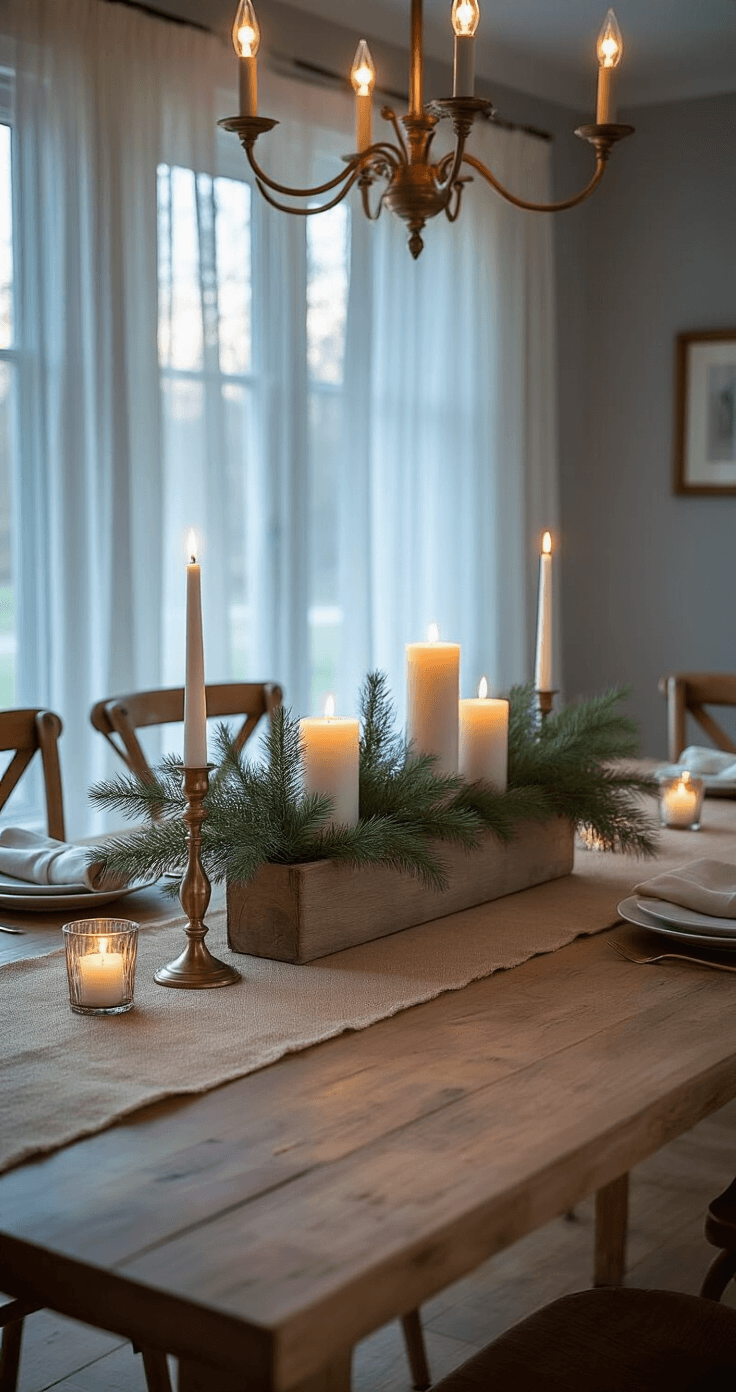
Layer beeswax or pillar candles in varying heights to create warm focal points.
Here’s my system:
- One tall candle (8-10 inches) as the anchor
- Two medium candles (5-6 inches) flanking it
- Three votives scattered in front
Cluster them on trays, cutting boards, or decorative mirror platforms to protect your furniture and amplify the light.
I keep mine on a big wooden dough bowl in the center of my dining table.
Burns for about three hours every evening, costs maybe twenty bucks a month in candles, and creates more ambiance than my entire Christmas light collection ever did.
Texture Is Your Secret Weapon
Flat surfaces look cold in winter.
Period.
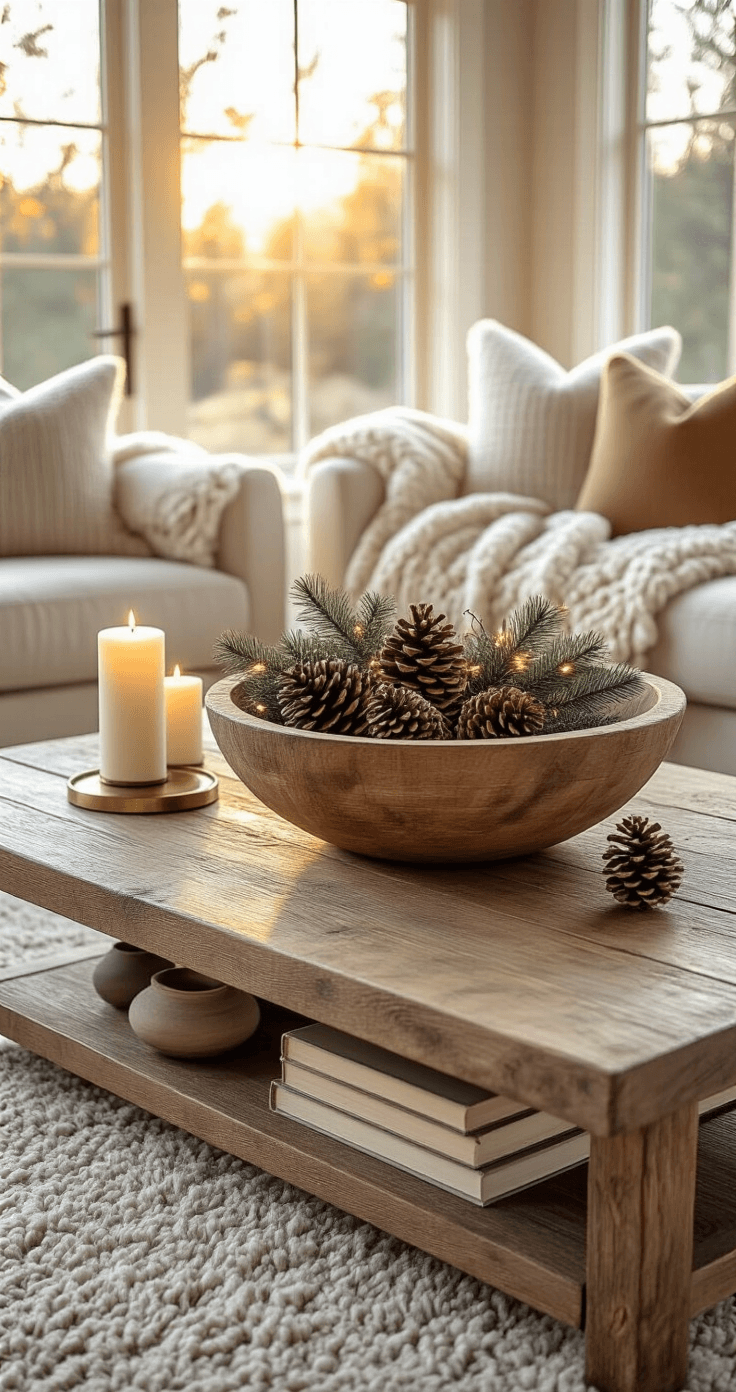
Add texture through layering: blankets on furniture, pinecones and dried pods in bowls, and mixed natural elements throughout your space.
I’m talking about:
Soft textures:
- Chunky knit blankets draped over chair arms
- Sheepskin rugs layered on hardwood
- Velvet pillows mixed with linen ones
- Cable knit poufs near the fireplace
Rough textures:
- Bark-covered branches in corners
- Woven baskets holding firewood
- Raw wood bowls filled with natural elements</li