This post may contain affiliate links. Please see my disclosure policy for details.
Japanese Minimalism: Transform Your Home Into a Sanctuary of Intentional Living
Contents
- Japanese Minimalism: Transform Your Home Into a Sanctuary of Intentional Living
- Wabi-Sabi: Embrace the Beautifully Imperfect
- Ma: The Power of Purposeful Emptiness
- Step 1: Work by Category, Not by Room
- Step 2: The Joy and Function Test
- Step 3: Invest in Natural Materials
- Color Palette: Keep It Neutral and Natural
- Furniture: Multipurpose and Low-Profile
- Lighting: Soft and Indirect
Japanese minimalism has completely transformed how I think about my living space, and I’m betting you’re feeling overwhelmed by the clutter creeping into every corner of your home too.
You know that suffocating feeling when you walk into a room stuffed with things you don’t really need? That nagging voice asking why you can’t seem to keep anything tidy for more than five minutes? I’ve been there, staring at my overflowing closet at 6 AM, wondering how I accumulated so much stuff I never actually use.
What Makes Japanese Minimalism Different from Regular Decluttering?
Here’s where Japanese minimalism knocked my socks off. Most Western approaches to minimalism scream “GET RID OF EVERYTHING!” like some sort of domestic boot camp. Japanese minimalism whispers a much gentler question: “What deserves to stay?”
This shift changed everything for me. Instead of frantically tossing items into donation bags, I started having actual conversations with my belongings. Sounds mad, I know, but stick with me here.
The philosophy runs deeper than your average spring cleaning:
- Wabi-Sabi – Finding beauty in imperfection and age
- Ma – Valuing empty space as much as filled space
- Kanso – Simplicity through purposeful elimination
- Danshari – Keeping only what’s necessary and meaningful
The Core Principles That Will Change Your Mind
Wabi-Sabi: Embrace the Beautifully Imperfect
Last month, I nearly threw away my grandmother’s wooden cutting board because it had knife marks and stains. Then wabi-sabi hit me like a revelation. Those marks weren’t flaws – they were stories of countless family meals.
Wabi-sabi teaches us to treasure:
- Natural aging and patina
- Handmade imperfections
- Materials that show their history
- Items that grow more beautiful with time
That vintage wooden cutting board now sits proudly on my counter, reminding me that perfection isn’t the goal – meaning is.
Ma: The Power of Purposeful Emptiness
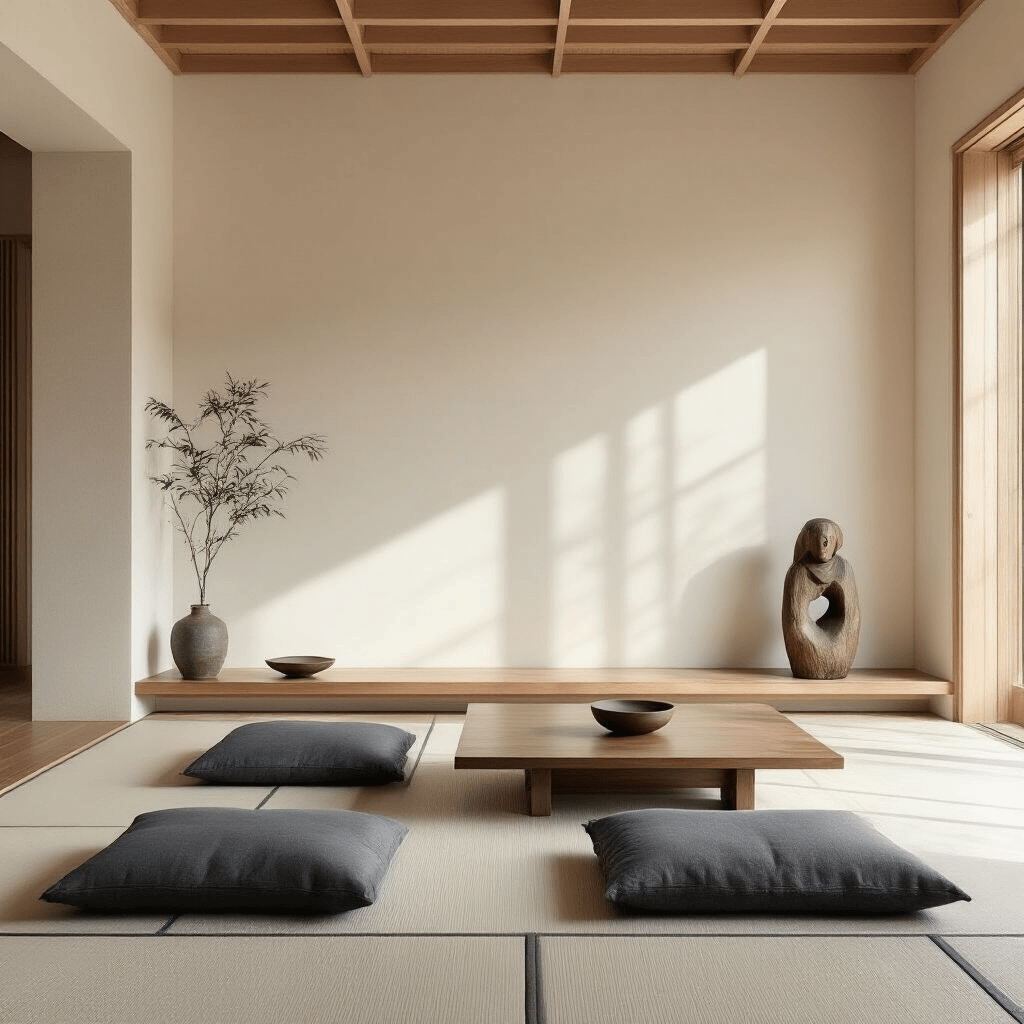
Ma completely flipped my decorating instincts. I used to panic whenever I saw empty wall space or bare surfaces. Every inch needed something – a photo, a plant, a decorative bowl filled with potpourri nobody cared about.
Ma showed me that empty space:
- Lets your eye rest and breathe
- Makes remaining items feel more important
- Creates calm instead of visual chaos
- Allows natural light to flow freely
Now I have entire walls with nothing on them except beautiful shadows that shift throughout the day. Revolutionary stuff, honestly.
How to Actually Apply Japanese Minimalism (Without Losing Your Mind)
Step 1: Work by Category, Not by Room
Forget room-by-room decluttering. That approach had me moving junk from bedroom to living room to kitchen like some sort of clutter shell game.
Here’s my category system that actually works:
- Clothing first – Dump everything from every closet onto your bed
- Books second – Gather every book from every room
- Kitchen items third – Yes, including that drawer full of mysterious gadgets
- Papers fourth – Bills, manuals, random notebooks
- Sentimental items last – When your decision-making muscles are strongest
Step 2: The Joy and Function Test
This sounds touchy-feely, but it’s surprisingly practical. Pick up each item, actually hold it, and ask: “Does this bring me joy OR serve a clear function?”
Notice I said “or,” not “and.” Your toilet brush doesn’t need to spark joy – it just needs to clean your loo effectively. But that decorative candle you’ve never lit? If it doesn’t make you smile, it’s taking up space that something meaningful could occupy.
Step 3: Invest in Natural Materials
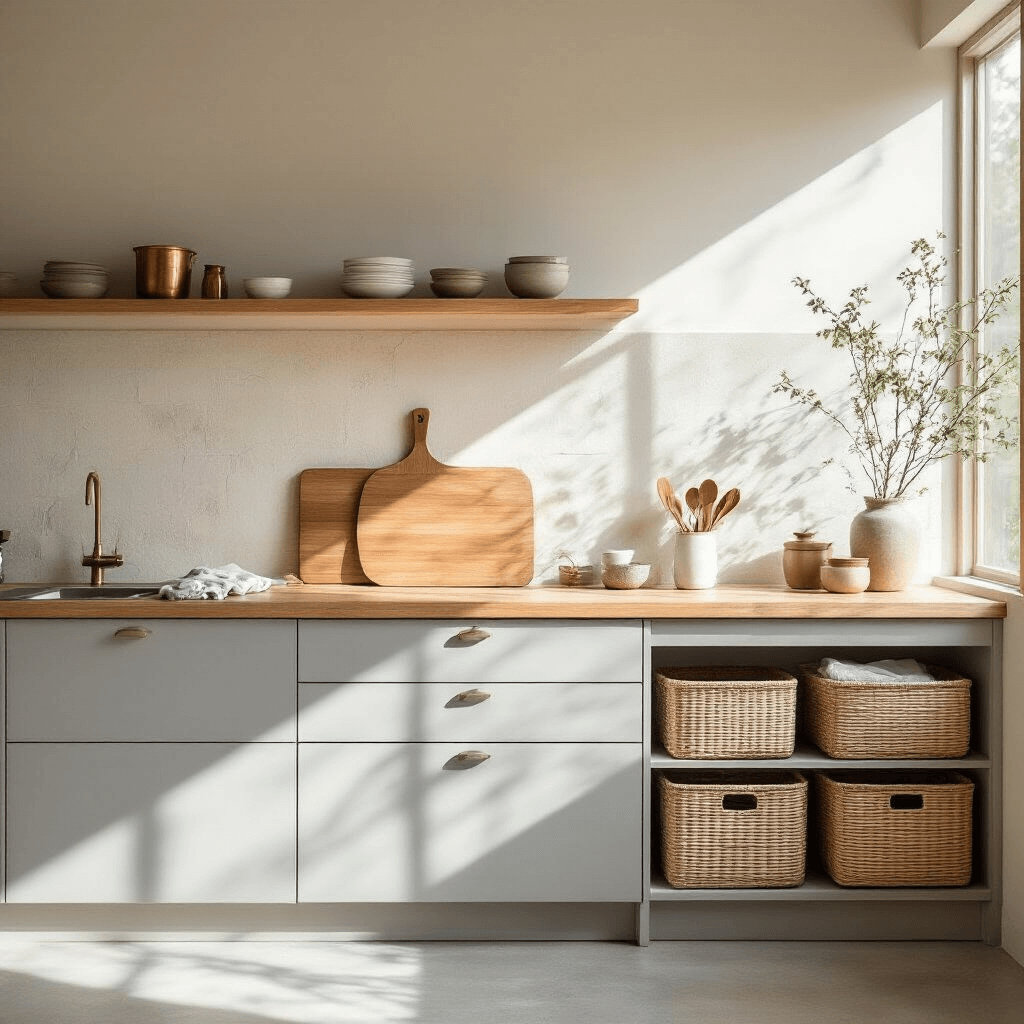
Plastic storage bins and synthetic fabrics started looking cheap and temporary once I understood this principle. Japanese minimalism favors wood, bamboo, linen, cotton, stone, and metal.
Materials I now prioritize:
- Bamboo storage baskets instead of plastic containers
- Linen curtains instead of polyester panels
- Wood furniture instead of particle board
- Cotton towels instead of microfiber
Design Elements That Create Japanese Minimalist Magic
Color Palette: Keep It Neutral and Natural
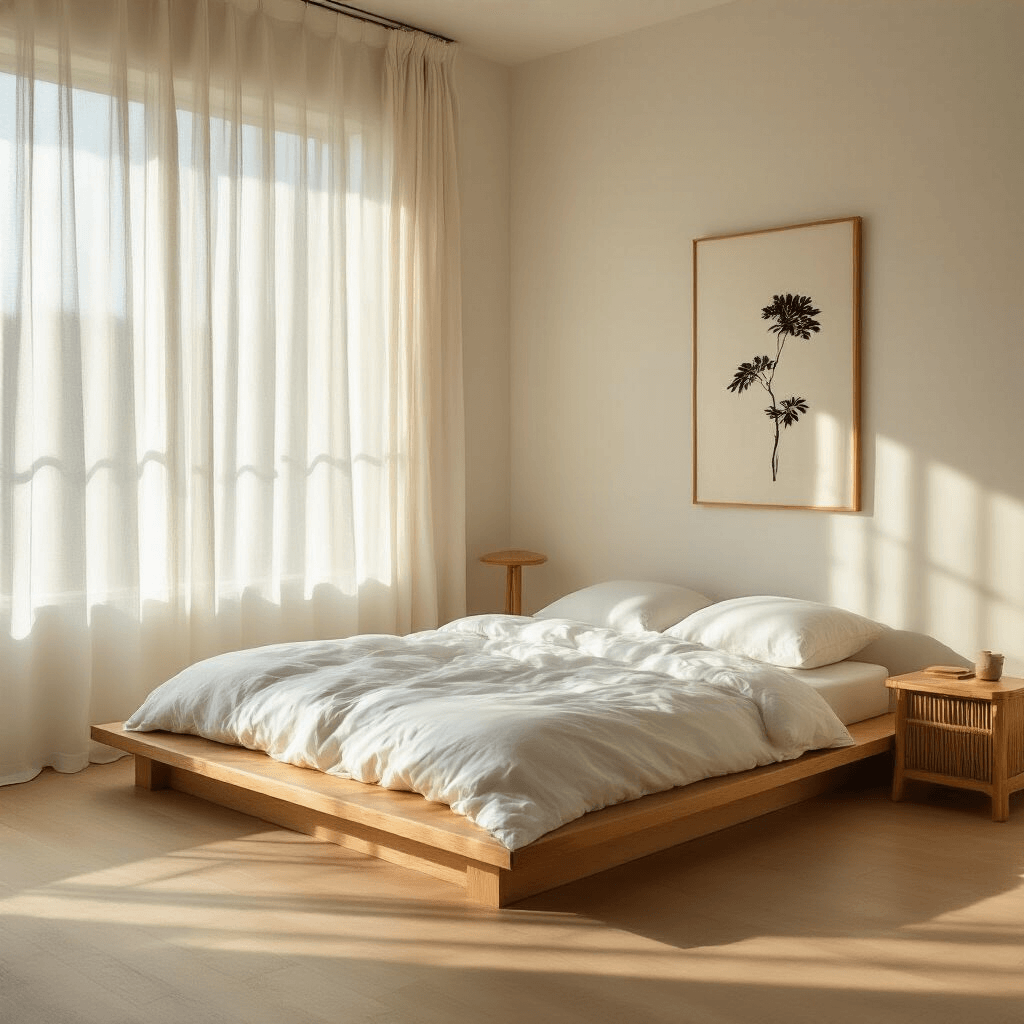
I used to think neutral meant boring. Then I created a bedroom using only whites, warm grays, and natural wood tones. The result felt like a luxury hotel retreat instead of my chaotic life headquarters.
Winning color combinations:
- Warm white walls with natural wood accents
- Soft gray textiles with black metal fixtures
- Cream fabrics with charcoal stone elements
- Beige surfaces with deep brown wood grain
Furniture: Multipurpose and Low-Profile
Japanese minimalism loves furniture that works overtime. My low platform bed frame eliminates the need for a box spring and creates clean horizontal lines. Storage ottomans provide seating and hide clutter. A dining table doubles as my work desk.
Smart multipurpose pieces:
- Storage benches for entryways
- Expandable dining tables
- Ottomans with hidden compartments
- Floor cushions that stack when not in use
Lighting: Soft and Indirect
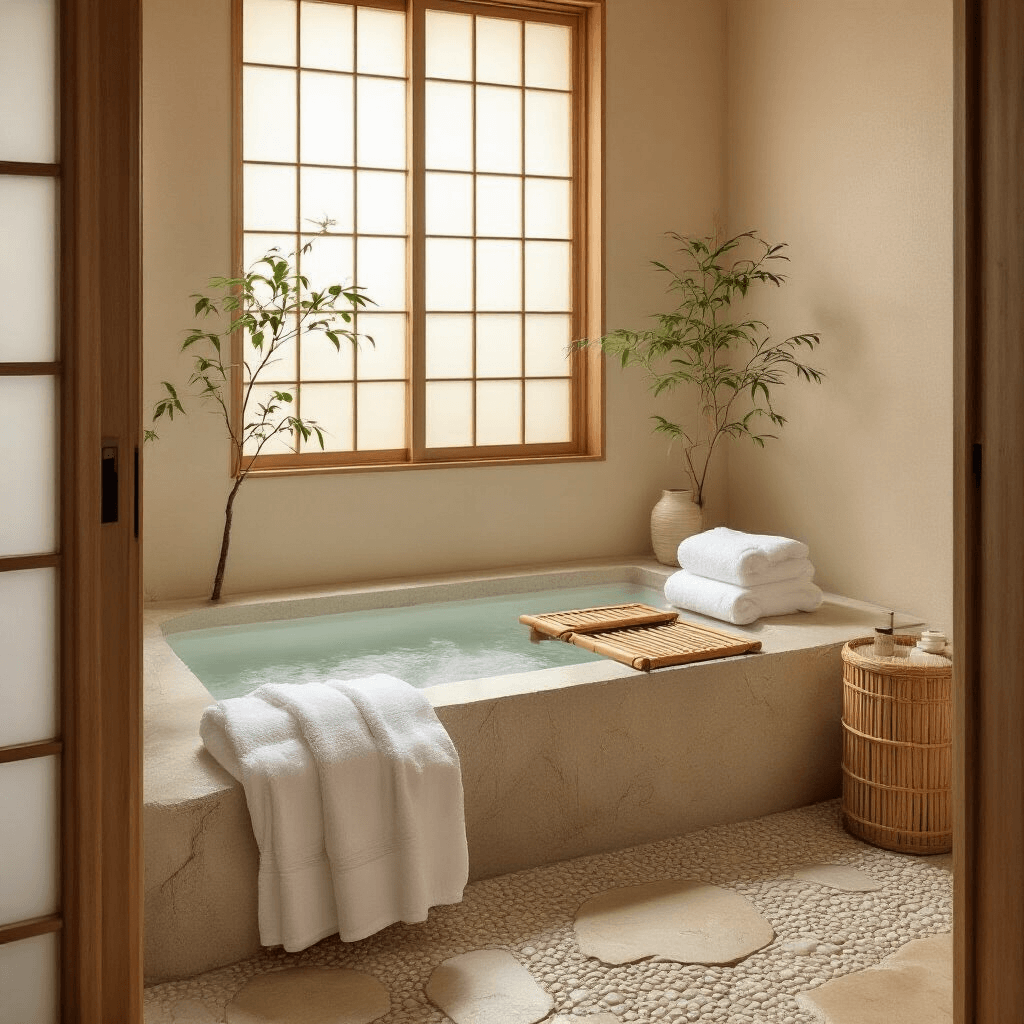
Harsh overhead lighting murders the peaceful vibe Japanese minimalism creates. I replaced my ceiling fixtures with table lamps and