

This post may contain affiliate links. Please see my disclosure policy for details.
Spring Table Decor That Actually Makes Your Dining Room Feel Alive
Contents
- Spring Table Decor That Actually Makes Your Dining Room Feel Alive
- Why Your Current Table Setup Feels Flat (And How to Fix It)
- The Foundation: Start With Your Table Linens
- The Five-Minute Centerpiece That Looks Expensive
- Color Schemes That Don’t Look Like a Nursery
- Layering Your Table Like a Designer (Without the Designer Budget)
- The Centerpiece Alternatives Nobody Talks About
Spring table decor transforms your dining space into a celebration of renewal, and I’m going to show you exactly how to pull it off without spending a fortune or needing a design degree.
You know that feeling when winter drags on forever and your dining table looks as tired as you feel? I’ve been there, staring at the same old centerpiece wondering why my home feels so lifeless.
The good news is that spring decorating doesn’t require a complete overhaul. It just needs the right touches in the right places.
Why Your Current Table Setup Feels Flat (And How to Fix It)
Most people make the same mistake with spring decor. They either go overboard with every pastel item they can find, or they add one sad vase of flowers and call it done.
Neither approach works.
Real spring table decor layers textures, plays with height, and tells a story.
I learned this the hard way after hosting Easter brunch with a table that looked like a craft store exploded. My aunt actually asked if I was opening a boutique. Not the compliment I was hoping for.
The Foundation: Start With Your Table Linens
Before you touch a single flower, sort out your base layer.
Your tablecloth or runner sets the entire mood, and spring calls for lighter fabrics that breathe.
I switched from my heavy winter linens to a linen table runner last March, and the difference was immediate. The texture alone makes everything feel more relaxed and seasonal.
Best fabric choices for spring tables:
- Linen in natural tones or soft pastels
- Cotton with subtle patterns (gingham, florals, stripes)
- Gauze or cheesecloth for ultra-casual gatherings
- White or cream as your go-to neutral base
Skip the polyester blends that look cheap under natural light. They photograph terribly and feel synthetic to the touch.
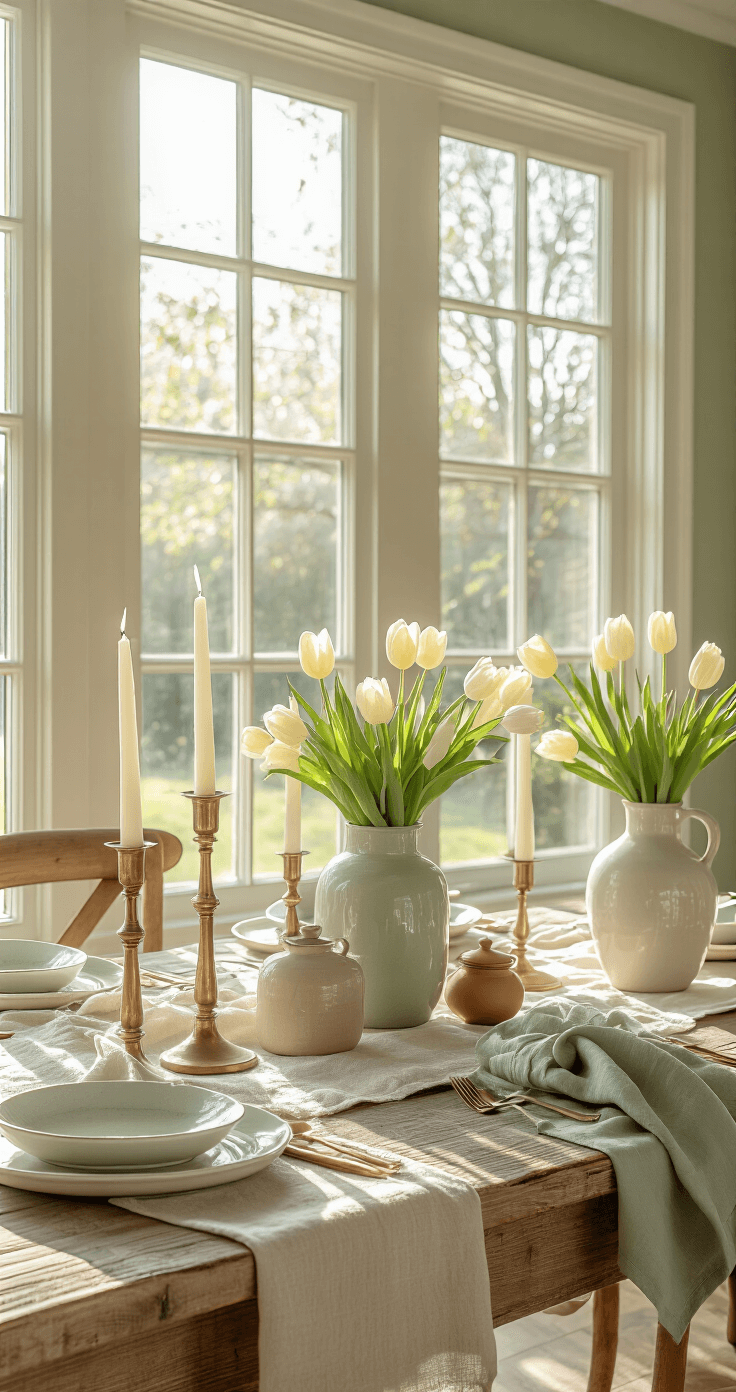
Flowers That Don’t Die Before Dinner Ends
Let’s talk about the elephant in the room. Fresh flowers are gorgeous but expensive and temperamental.
I’ve had tulips droop halfway through a meal, roses that lasted exactly one day, and peonies that cost more than the entire dinner.
Here’s what actually works:
Budget-Friendly Fresh Options
- Grocery store tulips (change the water daily)
- Farmer’s market stems bought two days before your event
- Potted plants you can reuse (herbs, hyacinths, miniature roses)
- Branches from your yard (forsythia, cherry blossoms, pussy willow)
When to Go Artificial
I used to be a flower snob until I found high-quality artificial spring flowers that look real from three feet away.
The trick is buying individual stems, not pre-made arrangements. Those premade bouquets scream “fake” from across the room.
Mix real and faux strategically:
- Real flowers up front where guests can see and smell them.
- Faux greenery as filler in the back.
Nobody will know, and your arrangement lasts for weeks.
🎨 Steal This Look
- Paint Color: use Farrow & Ball brand. Match the ACTUAL wall color in the image. Format: Farrow & Ball ColorName CODE
- Furniture: extendable farmhouse dining table in warm white oak or reclaimed pine, 72-96 inches to accommodate spring gatherings
- Lighting: oversized linen drum pendant or vintage-inspired brass chandelier with dimmable bulbs for adjustable ambiance
- Materials: Belgian linen, raw cotton, weathered wood, matte ceramic, hammered brass
I learned this the hard way after hosting Easter brunch with a synthetic tablecloth that clung to every plate—now I keep three linen runners in rotation and wash them until they’re impossibly soft.
The Five-Minute Centerpiece That Looks Expensive
You don’t need complicated floral arrangements to make an impact.
My go-to formula takes less time than brewing coffee:
The Simple Three-Element System:
- One statement vessel (ceramic pitcher, vintage vase, or glass cylinder)
- One flower variety in varying stem heights
- One unexpected accent (fruit, candles, or interesting branches)
Last Sunday, I grabbed a blue ceramic pitcher from my kitchen, stuck seven yellow tulips in it, and scattered three decorative lemon ornaments around the base.
Total time: four minutes. Compliments from guests: too many to count.
The key is resisting the urge to add more. One strong focal point beats five mediocre elements every single time.

🌟 Steal This Look
- Paint Color: Behr Swiss Coffee 12
- Furniture: weathered oak farmhouse dining table with turned legs
- Lighting: brass linear chandelier with six exposed candle-style bulbs
- Materials: matte ceramic, hand-blown glass, raw linen, aged brass, fresh citrus
I keep a rotating collection of three ceramic pitchers in cream, sage, and dusty blue on my kitchen shelf specifically for this purpose—they’re my secret weapon when guests arrive twenty minutes early and the table still looks bare.
Color Schemes That Don’t Look Like a Nursery
Pastels are beautiful until your table looks like a baby shower.
I love soft spring colors, but they need balance or the whole setup feels juvenile.
Winning color combinations I’ve tested:
- Butter yellow + cream + natural wood (warm and sophisticated)
- Sage green + white + terracotta (modern farmhouse without the Pinterest clichés)
- Lavender + gray + silver (elegant without being stuffy)
- Coral + navy + gold (unexpected and fresh)
- Blush pink + charcoal + copper (feminine but grounded)
Notice what’s missing from these palettes? Multiple pastels competing for attention.
Pick one soft color as your accent and ground it with neutrals or deeper tones.
When I decorated for my daughter’s spring birthday, I chose mint green as my only pastel and paired it with white dishes, natural wood chargers, and brass candlesticks. It felt spring-like without looking childish.
Layering Your Table Like a Designer (Without the Designer Budget)
Professional table stylists layer elements to create depth and visual interest. You can steal this technique with items you already own.
Bottom to top, here’s the order:
- Tablecloth or bare table (if your table is attractive)
- Runner or placemats (choose one, not both)
- Chargers or placemats under dinner plates
- Dinner plates, salad plates, bowls
- Napkins (folded or in decorative napkin rings)
- Flatware and glassware
- Centerpiece and accent pieces
The magic happens when you vary heights across the table.
Flat tables feel static and boring. I learned to use cake stands, stacked books under linens, and candlesticks at different heights to create elevation changes.
Your eye moves across the table instead of glazing over.
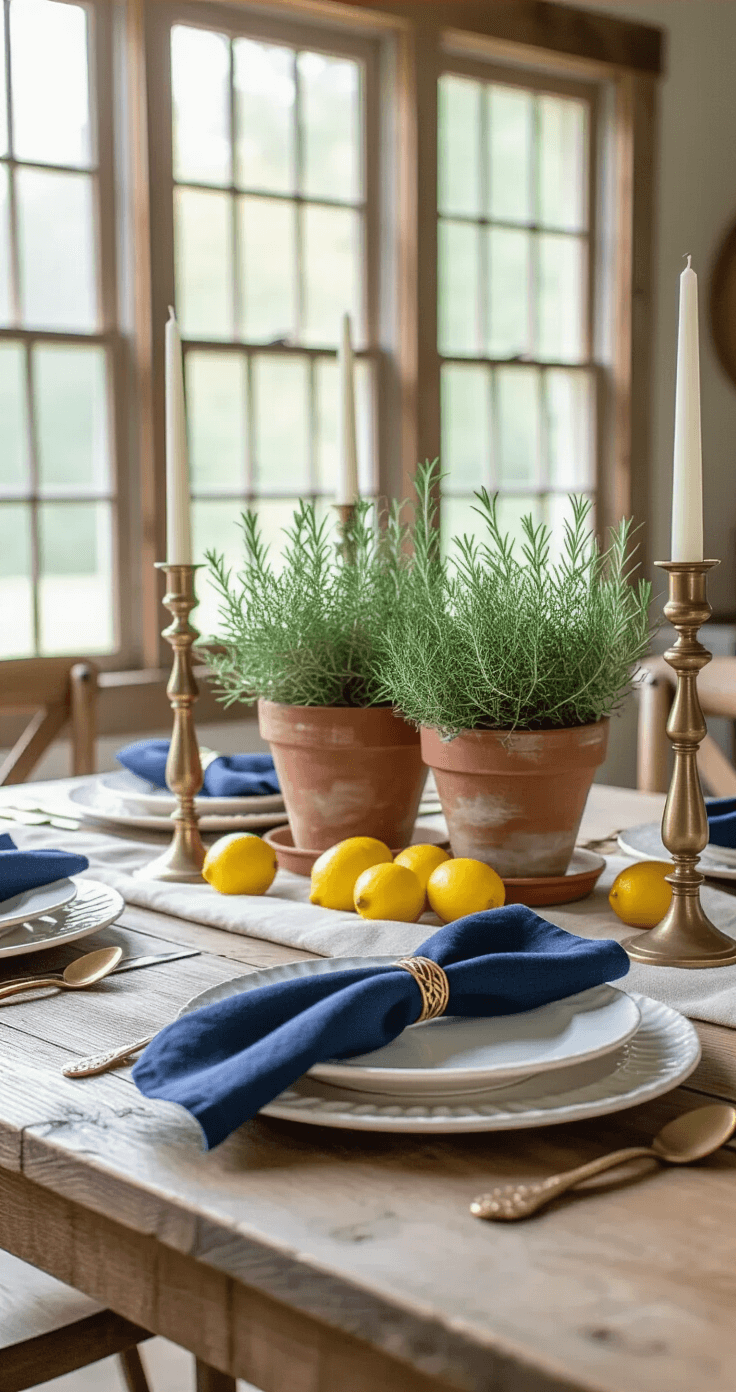
💡 Steal This Look
- Paint Color: use PPG brand. Match the ACTUAL wall color in the image. Format: PPG ColorName CODE
- Furniture: weathered oak farmhouse dining table with visible grain and natural imperfections
- Lighting: brass adjustable-arm picture light mounted above the table or vintage-inspired glass globe pendant
- Materials: Belgian linen tablecloths, hand-thrown ceramic chargers, hammered brass napkin rings, and matte stoneware dinnerware
I once laid out my entire Easter table only to realize everything sat flat as a pancake—now I keep a stack of vintage hardcover cookbooks in my linen closet specifically for slipping under runners when I need instant lift.
The Centerpiece Alternatives Nobody Talks About
Flowers aren’t your only option, and honestly, sometimes they’re not even the best option.
I’ve
[…] in a small apartment, every design choice matters. Curate carefully, and your dining area will feel intentional and […]
[…] Bar-height tables are awkward for regular dining. They’re hard for kids to use. They make passing dishes difficult. Getting in and out of […]