

This post may contain affiliate links. Please see my disclosure policy for details.
The Standard Dining Table Height (And Why It Actually Works)
Contents
- The Standard Dining Table Height (And Why It Actually Works)
- The Chair Height That Pairs With Your Table
- Counter-Height Tables: The Casual Alternative
- Bar-Height Tables: When to Go Tall
- How to Measure Your Current Table (The Right Way)
- What to Do If Your Table and Chairs Don’t Match
- Special Considerations for Different Body Types
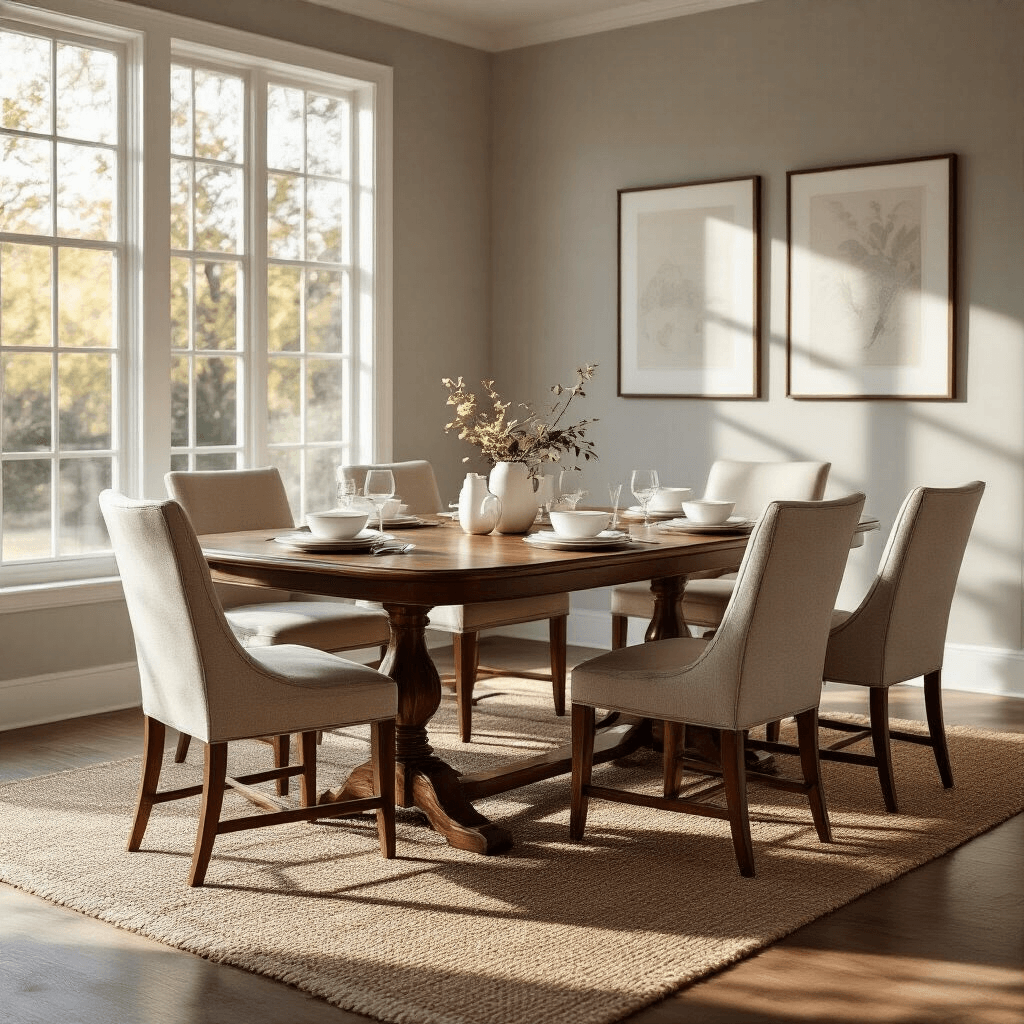
Standard dining tables sit at 28 to 30 inches tall, measured from floor to tabletop.
This isn’t some random number furniture makers pulled out of thin air. It’s based on decades of ergonomic research and the average proportions of human bodies.
Here’s what makes this height work:
- Your feet rest flat on the floor when seated
- Your arms bend naturally at the elbows while eating
- There’s enough clearance between your lap and the table edge
- It pairs perfectly with standard dining chairs
Most quality dining tables you’ll find, like a solid wood dining table, stick to this proven height range.
The Chair Height That Pairs With Your Table
A table is only as comfortable as the chairs surrounding it.
Standard dining chairs measure 17 to 19 inches from floor to seat.
The magic formula? You need 10 to 12 inches of clearance between your chair seat and the table underside.
Less than 10 inches and you’re cramped. More than 12 inches and you’re reaching up like a kid at the adult table.
I once bought gorgeous chairs without checking the measurements first. They were 21 inches high. Paired with my 30-inch table, every meal felt like I was eating at a coffee shop counter.
When shopping for dining room chairs, bring a tape measure and actually sit down to test the height.
Counter-Height Tables: The Casual Alternative
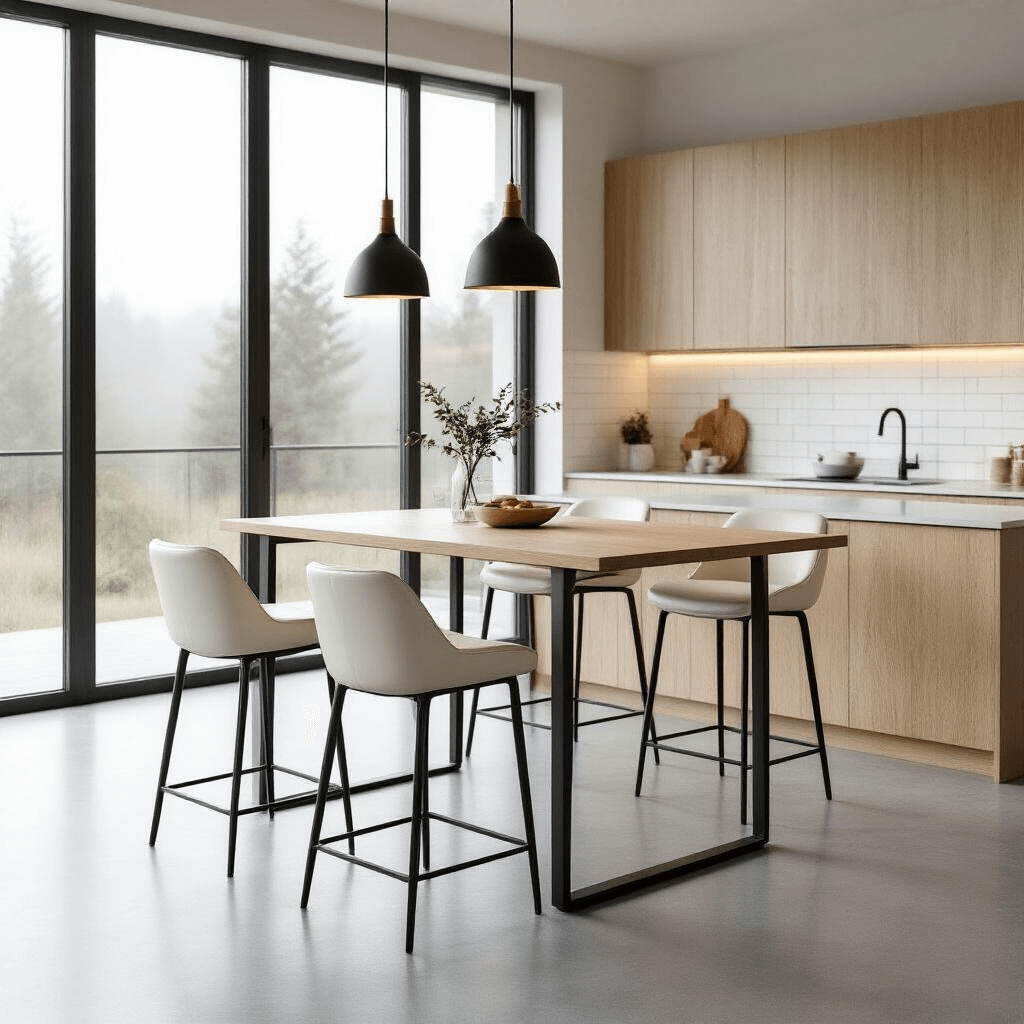
Counter-height tables have exploded in popularity, especially in open-concept homes.
These tables stand 34 to 36 inches tall.
They create a more casual, contemporary vibe and work beautifully in:
- Kitchen breakfast nooks
- Small apartments where the dining area flows into the kitchen
- Homes where you want a relaxed, bistro-style atmosphere
- Spaces where the table doubles as a workspace or homework station
You’ll pair these with counter-height stools or chairs at 24 to 26 inches.
The taller profile can make a small room feel more spacious by drawing the eye upward. But they’re not ideal if you have young children or elderly family members who struggle with climbing.
A counter height dining set typically comes with properly matched seating, taking the guesswork out of pairing.
Bar-Height Tables: When to Go Tall
Bar-height tables tower at 40 to 42 inches.
These work best in specific situations:
- Home bars or entertainment areas
- Man caves or game rooms
- Standing-height workspaces that occasionally convert to eating areas
- Restaurants and commercial spaces going for a nightlife aesthetic
Pair them with bar stools at 28 to 30 inches high.
Honestly? Bar-height tables are awkward for regular dining. They’re hard for kids to use. They make passing dishes difficult. Getting in and out of your seat becomes more of a production.
I’d reserve this height for socializing spots where people gather for drinks and appetizers, not sit-down family dinners.
How to Measure Your Current Table (The Right Way)
Grab a tape measure and let’s do this properly.
For table height:
- Place the tape on the floor
- Measure straight up to the underside of the tabletop (not the top surface)
- Ignore the apron or any decorative trim
For chair height:
- Measure from the floor to the top of the seat cushion
- If the seat compresses significantly, measure where it sits with someone seated
For clearance:
- Sit in the chair at the table
- Measure from the top of your thighs to the table underside
- You want at least 10 inches minimum
This simple check tells you if your current setup is working or if you need to make changes.
What to Do If Your Table and Chairs Don’t Match
Found out your measurements are off? You’ve got options.
If your table is too high:
- Cut down the legs (only if you own the table and it’s solid wood)
- Replace it with a standard-height table
- Use taller chairs or add cushions (though this can look awkward)
If your table is too low:
- Add furniture risers or bed lifts under each leg
- Place the table on a low-profile rug with padding underneath
- Replace the table
If your chairs are wrong:
- This is usually easier to fix than replacing a table
- Shop for chairs in the correct height range
- Consider adjustable-height chairs for flexibility
I’ve used furniture risers to fix a table that was just two inches too short, and the difference in comfort was remarkable.

Special Considerations for Different Body Types
Standard measurements work for average-height adults. But average doesn’t mean everyone.
For taller people (over 6’2″):
- Consider a 31 or 32-inch table height
- Look for chairs with higher backs for better support
- Ensure at least 12 inches of knee clearance
For shorter people (under 5’4″):
- A 28 or 29-inch table works better than 30 inches
- Choose chairs at the lower end of the range (17 inches)
- Consider a footrest under the table if feet don’t reach the floor
For wheelchair users:
- Tables need to be 28 to 34 inches high
- Knee clearance should be at least




[…] tables – The workhorses of dining furniture, perfect for families and narrow […]
[…] 20-Minute Rule: I can completely transform any room’s seasonal vibe in 20 minutes just by switching textiles. It’s the highest-impact change you […]