
This post may contain affiliate links. Please see my disclosure policy for details.
Transforming your bathroom doesn’t have to drain your savings. The secret to a successful bathroom remodel on a budget lies in knowing exactly where to invest your dollars for maximum impact and where to cut costs without sacrificing quality. With strategic planning and smart material choices from trusted brands like Kohler, Delta, and Caesarstone, you can create a space that feels luxurious while maintaining financial discipline. This comprehensive guide will help you navigate the crucial decisions that balance function, style, and resale value—turning your ordinary bathroom into an extraordinary retreat without the extraordinary price tag.
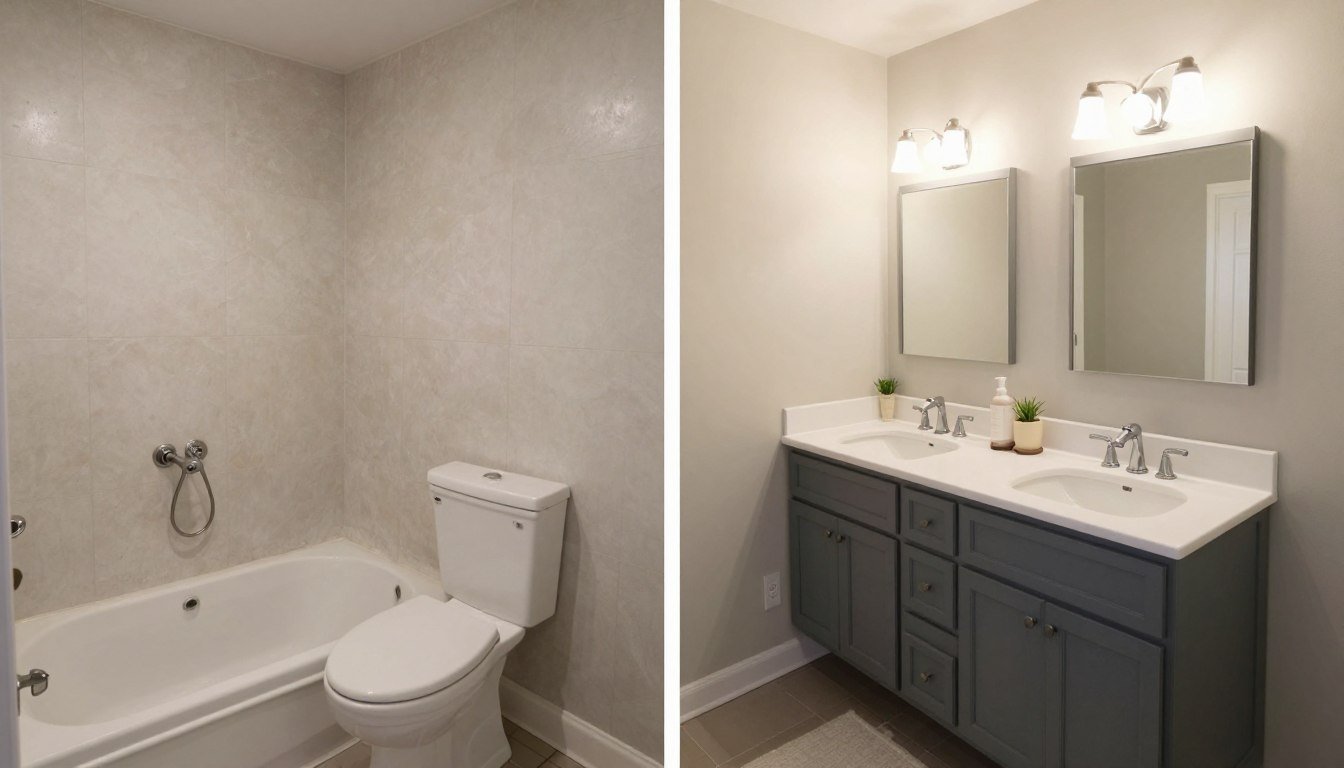
Bathroom Remodel Budget Breakdown (Realistic Costs)
Contents
- Bathroom Remodel Budget Breakdown (Realistic Costs)
- What’s Worth Splurging On — Designer-Approved Upgrades
- What’s Usually Not Worth Splurging On
- Material Pairings That Look Expensive on a Budget
- Flooring Decisions That Matter — and Ones That Don’t
- Shower & Tub Remodel Tradeoffs
- Vanity & Sink Choices — Budget vs Luxury
- Lighting Strategies That Stretch Your Budget
- Mistakes That Waste Money in Bathroom Remodels
- ROI & Resale Value: What Buyers Notice
- FAQs About Budget Bathroom Remodels
- Related Bathroom Remodel Guides
Understanding the financial landscape of a bathroom renovation helps you allocate your budget effectively. While costs vary by location and scope, these guidelines will help you plan realistically.
National Average Cost Ranges
The typical bathroom remodel costs between $6,000 and $15,000, with the national average hovering around $10,000. Small bathroom renovations can start as low as $2,500 for cosmetic updates, while high-end remodels can exceed $25,000. The cost per square foot typically ranges from $70 to $250, depending on the quality of materials and extent of changes.
Where Costs Typically Go (Labor vs Materials)
In a professional bathroom remodel, labor typically accounts for 40-65% of your budget. The remaining portion covers materials, with fixtures, cabinetry, and tile being the largest material expenses. Plumbing and electrical work are often the most expensive labor components, especially if you’re moving fixtures to new locations.
Typical Budget Tiers (Low, Mid, High)
| Budget Level | Cost Range | What’s Included | Best For |
| Low | $2,500-$6,000 | Cosmetic updates (paint, fixtures, hardware), DIY labor, keeping existing layout | Quick refreshes, rental properties, tight budgets |
| Mid-Range | $6,000-$15,000 | New vanity, toilet, shower/tub, flooring, some tile work, limited layout changes | Long-term homeowners, moderate upgrades with good ROI |
| High-End | $15,000-$25,000+ | Premium fixtures, custom cabinetry, high-end tile, major layout changes, professional design | Forever homes, luxury upgrades, complete transformations |
When DIY Makes Sense — and When It Doesn’t
DIY Makes Sense When:
- You have basic home improvement skills
- The project involves cosmetic changes (painting, hardware replacement)
- You’re working with a very tight budget
- You have time flexibility for the project
- You’re comfortable researching building codes
Hire Professionals When:
- The project involves plumbing or electrical work
- You’re moving fixtures to new locations
- Structural changes are needed
- You need permits and inspections
- Time is a critical factor
What’s Worth Splurging On — Designer-Approved Upgrades
Strategic investments in key areas can elevate your entire bathroom while allowing you to economize elsewhere. These splurge-worthy elements offer the best combination of durability, function, and aesthetic impact.
1. Quality Plumbing Fixtures
High-quality faucets, showerheads, and valves are worth every penny. They’re used multiple times daily, contribute significantly to your bathroom’s appearance, and can prevent costly water damage when properly constructed. Investing in reputable brands ensures smooth operation and longevity.
Investment brands worth considering:
- Kohler: Known for innovative designs and excellent warranty coverage
- Moen: Offers great value with reliable performance and easy installation
- Delta: Features technologies like magnetic docking and spot-resistant finishes
- Grohe: European engineering with water-saving technologies
- Brizo: Designer-tier fixtures with distinctive styling
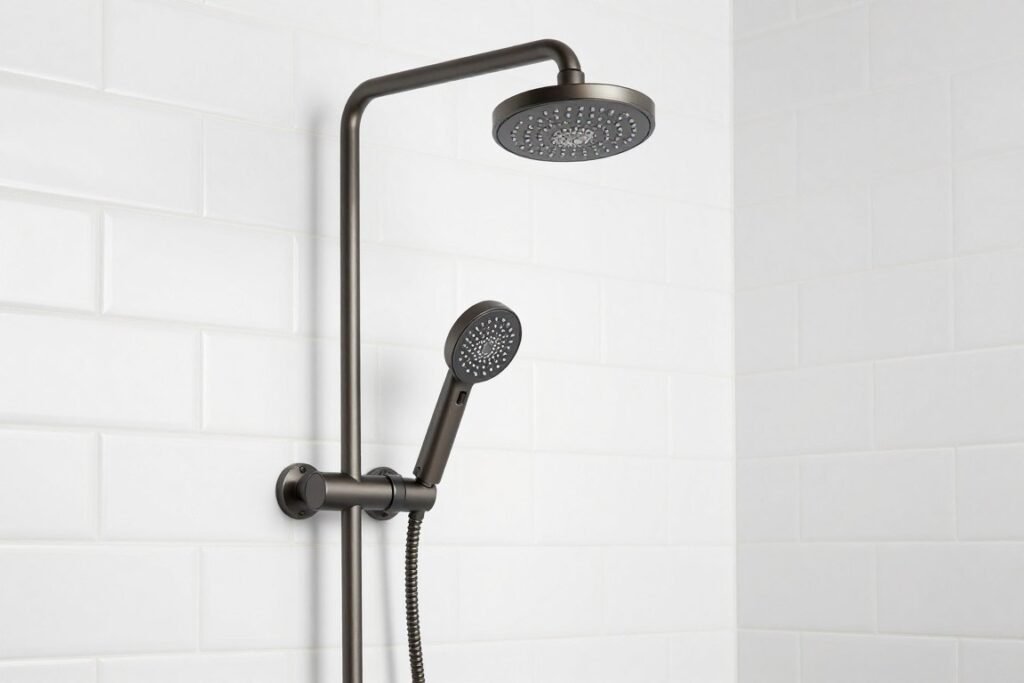
2. Shower System Upgrades
The shower experience is central to your bathroom’s functionality. A quality valve system prevents temperature fluctuations, while well-designed showerheads enhance your daily routine. Rain shower and handheld combinations offer versatility for different users and cleaning needs.
3. Good Lighting Plan (Not Just a Vanity Light)
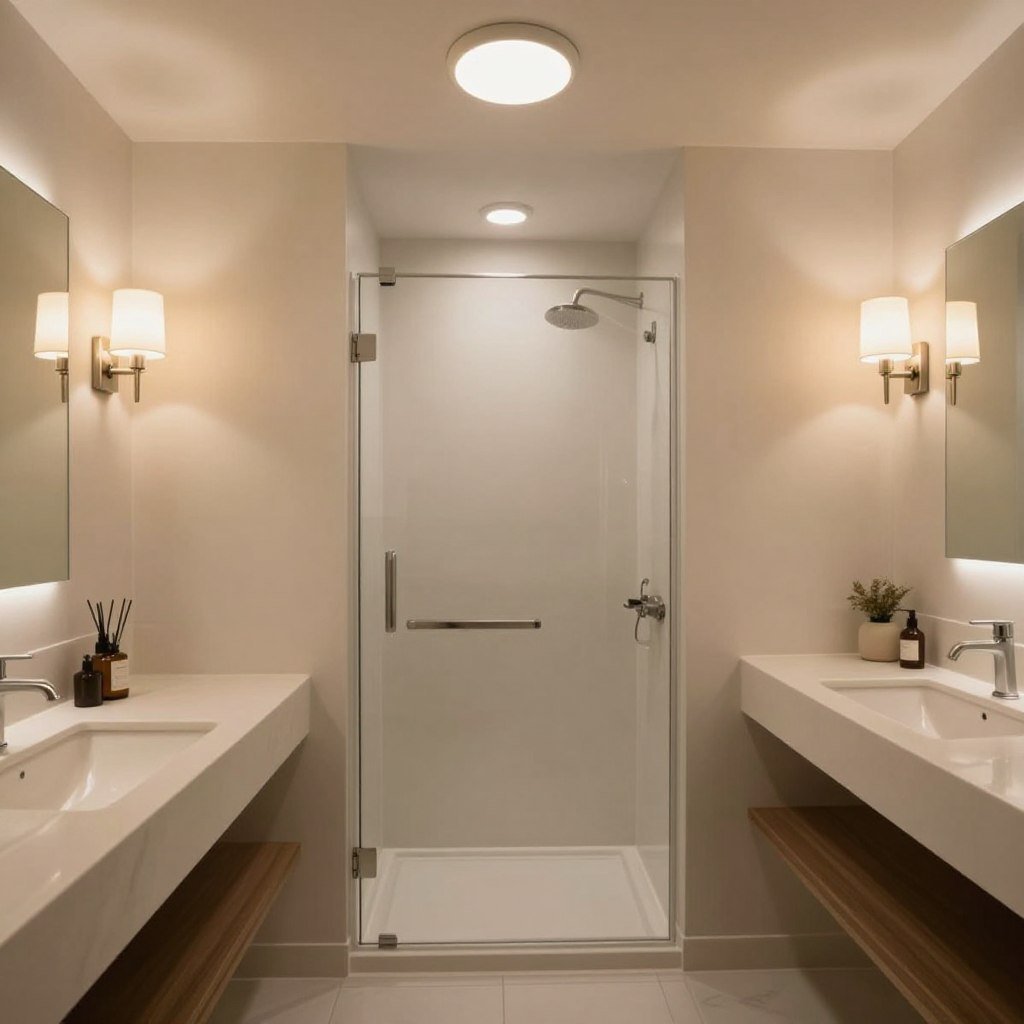
Proper lighting transforms how your bathroom looks and functions. A layered approach with ambient, task, and accent lighting creates a more usable and attractive space. Quality fixtures in the right locations eliminate shadows, accurately render colors, and create ambiance.
Essential lighting elements:
- Overhead ambient lighting (recessed or ceiling fixture)
- Vanity lighting at eye level (sconces or vertical fixtures)
- Task lighting for grooming (properly positioned to minimize shadows)
- Accent lighting for visual interest (shower niche, toe kick)
- Dimmer switches for flexibility
4. Vanity & Countertop Quality
Your vanity endures constant moisture exposure and heavy daily use. Investing in quality construction with moisture-resistant materials prevents warping, swelling, and premature replacement. A solid vanity with a durable countertop serves as an anchor piece that elevates the entire room.
5. Functional Storage Solutions
Thoughtful storage maximizes your bathroom’s functionality while reducing visual clutter. Quality drawer organizers, pull-outs, and built-ins make everyday routines more efficient. Investing in well-designed storage solutions pays dividends in daily convenience.

What’s Usually Not Worth Splurging On
Being strategic about where to economize allows you to allocate more budget to impactful elements. These areas typically offer good opportunities to save without compromising your bathroom’s overall quality and appearance.
1. Fancy Faucets That Don’t Perform
Avoid paying premium prices for faucets with flashy designs but subpar internal components. Many mid-tier brands offer excellent performance and attractive styling at reasonable price points. Focus on solid brass construction and ceramic disc valves rather than trendy but unproven designs.
Good mid-tier brands to consider:
- Delta: Reliable performance with innovative features
- Pfister: Good value with lifetime warranties
- Hansgrohe: Quality German engineering at accessible price points
2. Ultra-High-End Tile Everywhere
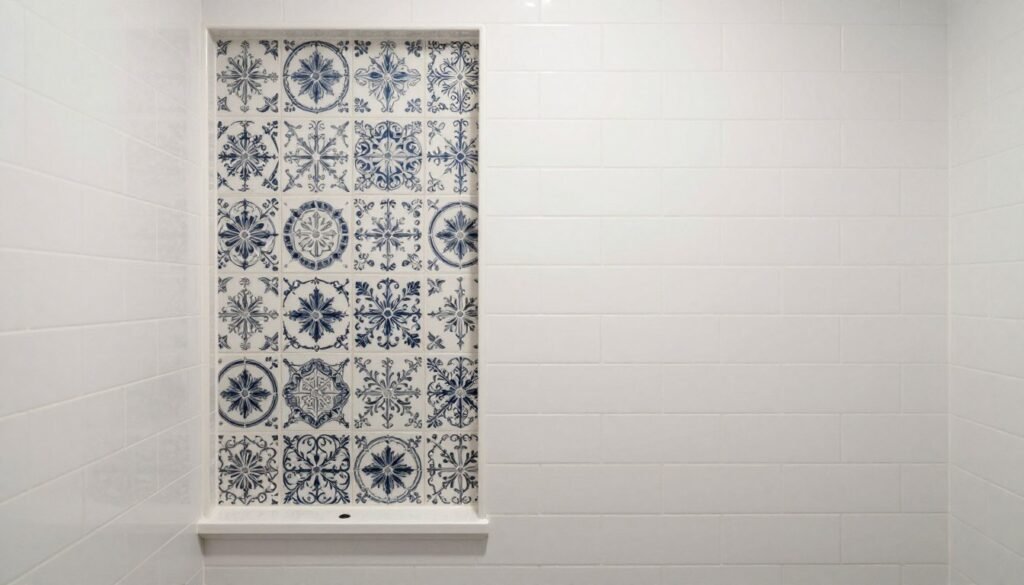
Using luxury tile throughout your entire bathroom can quickly deplete your budget. Instead, use premium tile strategically as an accent while selecting quality basics for larger areas. This approach creates visual impact while keeping costs manageable.
Smart tile strategy:
- Use luxury tile (like Ann Sacks or Porcelanosa) for focal points or accent bands
- Select quality basics from TileBar for larger wall and floor areas
- Consider porcelain tiles that convincingly mimic natural stone
- Focus premium materials at eye level where they’ll be most noticed
3. Oversized Mirrors & Frames
Custom, oversized mirrors with elaborate frames can be surprisingly expensive. In many cases, standard-sized mirrors with simple DIY frames or trim create a similar high-end look at a fraction of the cost. This is an area where creativity often yields better results than pure spending.
4. Premium Accessory Hardware Across the Room
While quality matters for frequently used items like cabinet pulls, you can often economize on accessory hardware like towel bars and toilet paper holders. Mid-tier options from brands like Emtek and Top Knobs offer good quality and attractive designs without the premium price tag of designer collections.
Material Pairings That Look Expensive on a Budget
Certain material combinations create a high-end look without the high-end price tag. These designer-approved pairings help you achieve a cohesive, upscale aesthetic while maintaining budget discipline.
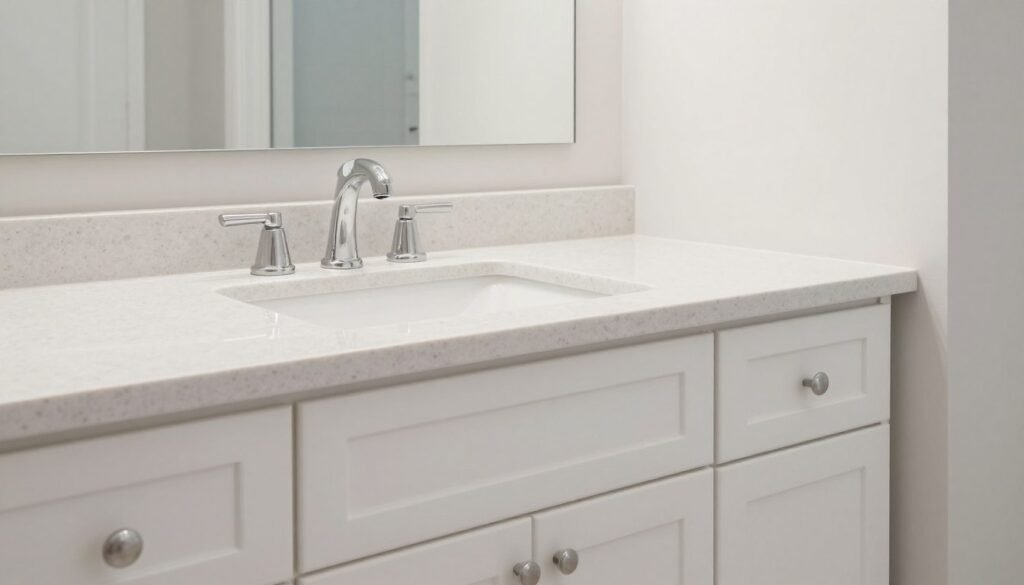
White Cabinets + Light Quartz + Subtle Veining
This timeless combination creates a bright, clean aesthetic that feels luxurious and spacious. White cabinets provide a versatile foundation, while quartz with subtle veining offers marble-like beauty without the maintenance concerns or premium cost.
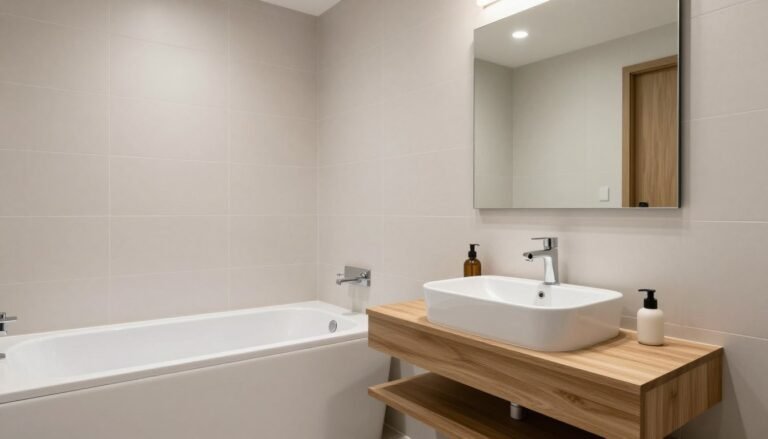
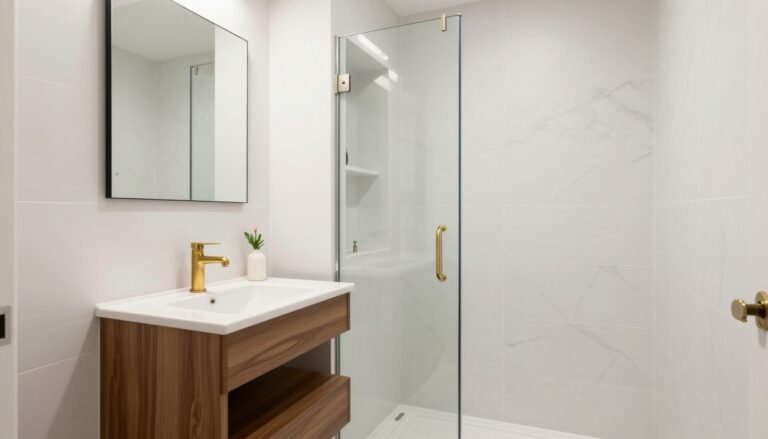
Wood-Tone Vanities + Brass Accents
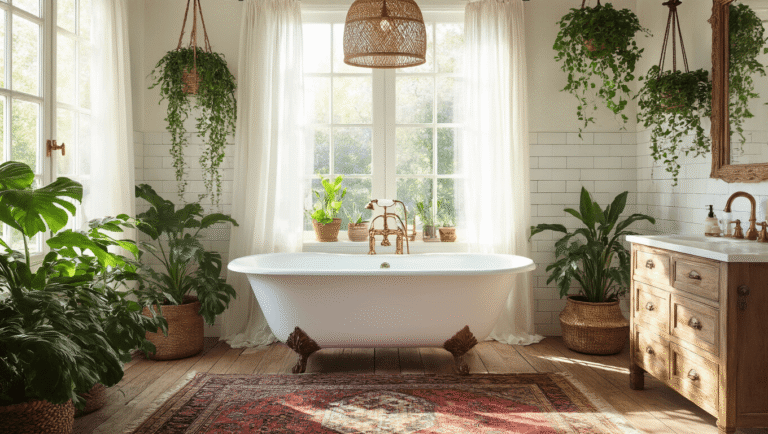
Warm wood tones paired with brass or gold fixtures create an inviting, on-trend look that feels custom and considered. This combination works with various design styles from modern to traditional and adds warmth to typically cool bathroom spaces.
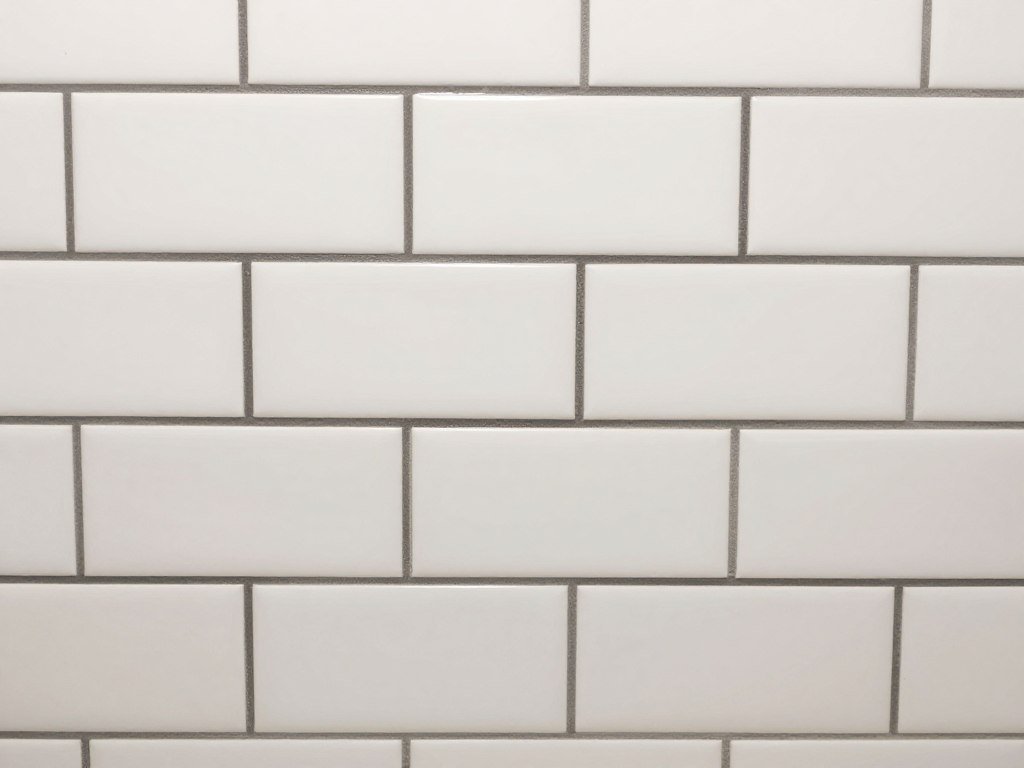
Contrast Grout with Classic Subway Tile
Basic white subway tile becomes instantly more distinctive when paired with contrasting grout in charcoal, navy, or black. This budget-friendly approach adds architectural interest and highlights the tile pattern without increasing material costs.
Tile Combos with Splash of Luxury Accent Mosaic
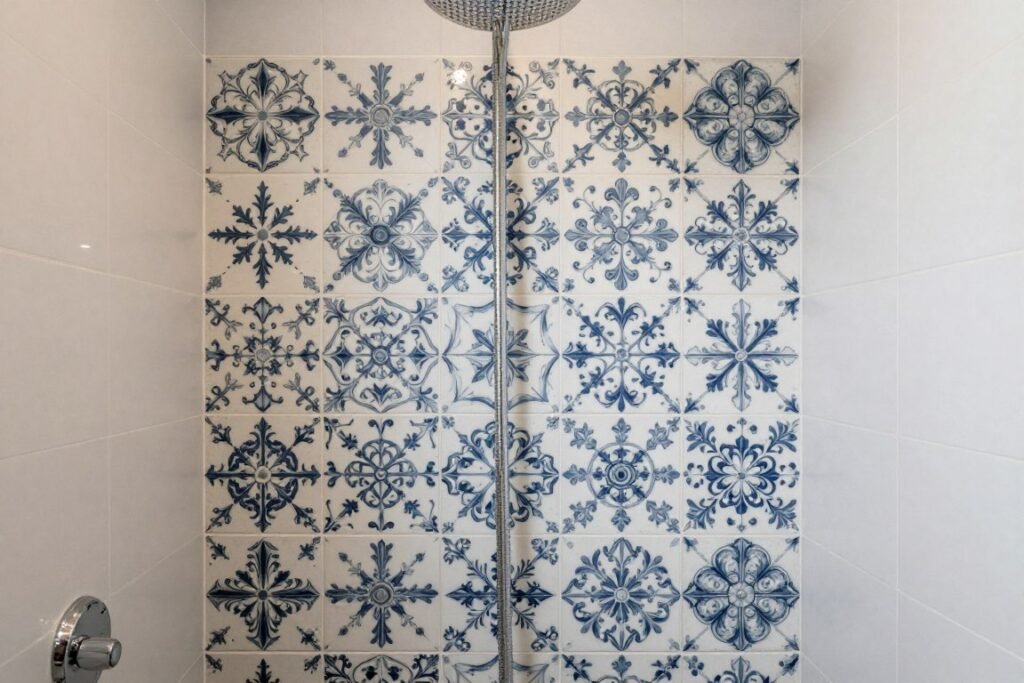
Combining affordable field tile with a small quantity of premium accent tile creates a custom look without breaking the budget. A luxury mosaic from brands like Ann Sacks, Porcelanosa, or TileBar can be used strategically in a shower niche, as a vanity backsplash, or as a decorative band.
Flooring Decisions That Matter — and Ones That Don’t
Bathroom flooring must balance aesthetics with practical concerns like moisture resistance, durability, and comfort. Understanding which features truly matter helps you invest wisely in this essential surface.
Porcelain Plank Tile That Mimics Wood (Budget Win)
Wood-look porcelain tile offers the warmth and character of hardwood with superior moisture resistance and durability. Modern manufacturing techniques create remarkably realistic grain patterns and textures at a fraction of the cost of natural materials.
Heated Floors — Worth It?
Radiant floor heating adds luxury and comfort to your bathroom experience, especially in colder climates. While not essential, it’s a relatively affordable upgrade when installed during a remodel (typically $5-12 per square foot) that can significantly enhance your daily routine and potentially improve resale value.
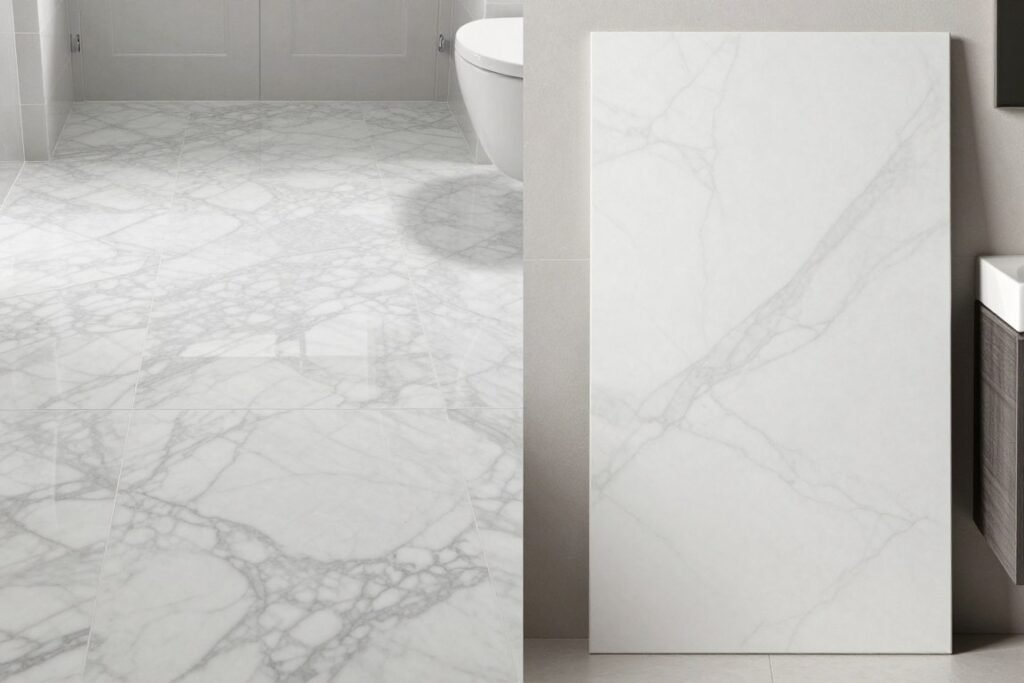
Luxury Stones for Small Areas vs Alternatives
Natural stone like marble or travertine makes a stunning statement but comes with higher costs and maintenance requirements. For budget-conscious remodels, consider using natural stone selectively in small areas while choosing quality porcelain or ceramic tile for larger surfaces.
Shower & Tub Remodel Tradeoffs
The shower and tub area typically represents the largest portion of a bathroom remodel budget. Understanding the cost-benefit tradeoffs helps you make informed decisions that balance luxury with practicality.
Tile Showers — When to Do Full Surround
While fully tiled shower surrounds create a custom, high-end look, they require significant material and labor costs. Consider tiling to a height of 7 feet rather than ceiling height in standard bathrooms, or focus on the most visible walls while using more economical options for secondary surfaces.
Prefab Shower Walls vs Tile
Modern acrylic and solid surface shower surrounds have come a long way in terms of style and quality. High-end prefabricated options can offer a clean, contemporary look with significantly lower installation costs and superior water resistance compared to traditional tile.
Tub Replacement: Acrylic vs Cast Iron
While cast iron tubs offer unmatched durability and heat retention, quality acrylic options provide excellent value with good performance at roughly half the price. For budget remodels, consider a mid-range acrylic tub with a lifetime warranty rather than premium cast iron or specialty materials.
Vanity & Sink Choices — Budget vs Luxury
As the centerpiece of most bathrooms, your vanity significantly impacts both functionality and aesthetics. Strategic decisions here can create a custom look without custom pricing.
Ready-to-Assemble vs Custom Vanities
Custom cabinetry offers perfect sizing and unlimited design options but typically costs 2-3 times more than ready-to-assemble alternatives. Many manufacturers now offer semi-custom options with modifiable dimensions and premium features like soft-close drawers at mid-range price points.
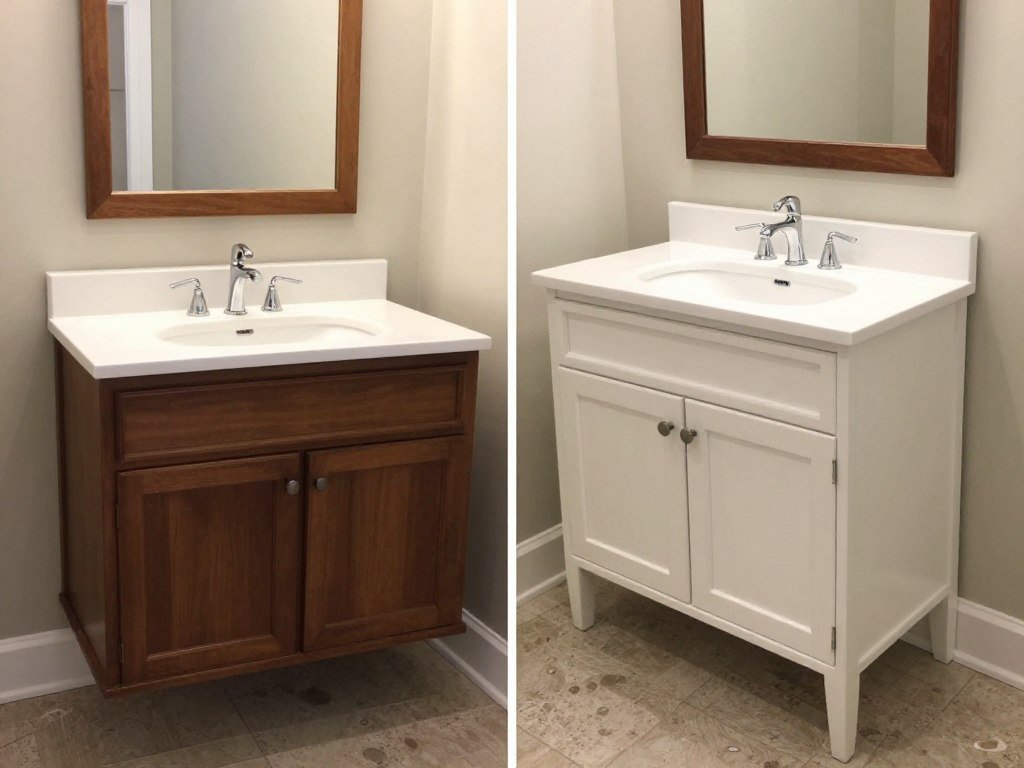
Vessel Sinks vs Under-Mount — Style + Function
Vessel sinks create a distinctive focal point but may be less practical for everyday use due to splashing and cleaning challenges. Under-mount sinks offer superior functionality and timeless appeal, making them a better long-term investment for most bathroom remodels.
Countertop Materials That Elevate
The vanity countertop offers an opportunity to introduce luxury materials in a relatively small area. Engineered quartz from brands like Caesarstone or Cambria provides the perfect balance of aesthetics, durability, and value for bathroom applications.
Lighting Strategies That Stretch Your Budget
Effective bathroom lighting dramatically improves both function and ambiance without necessarily requiring premium fixtures. Strategic placement and layering often matter more than the fixtures themselves.
Layered Lighting Approach (General, Task, Accent)
Creating layers of light—overhead ambient lighting, task lighting at the vanity, and accent lighting for visual interest—produces a more functional and aesthetically pleasing environment than relying on a single light source, regardless of fixture cost.
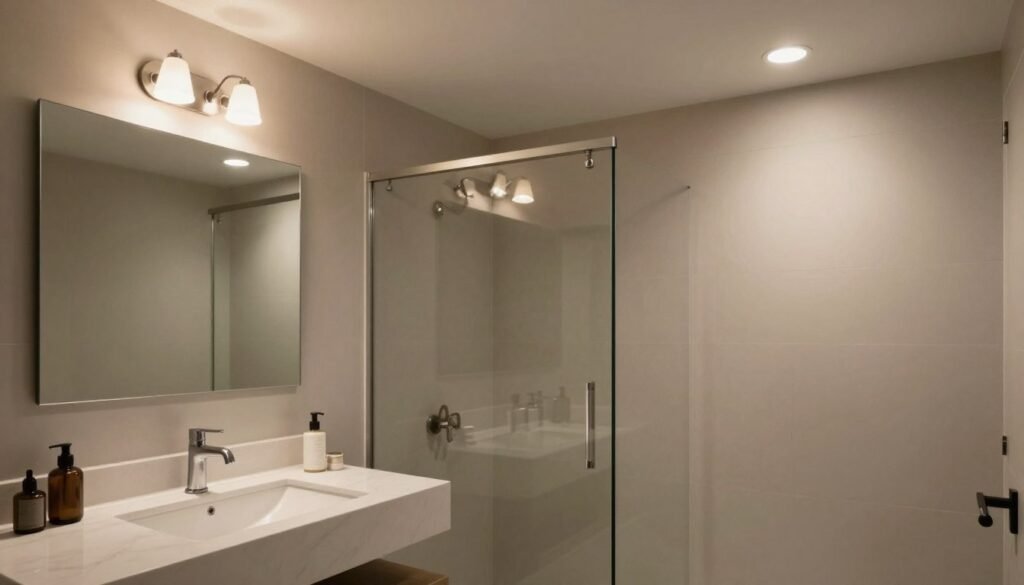
Dimmable LEDs & Color Temperature Tips
Investing in quality LED bulbs with appropriate color temperatures (2700K-3000K for bathrooms) and dimming capabilities allows you to create different moods and optimize lighting for various tasks. This approach improves your experience regardless of fixture price point.
Fixtures That Look High-End Under $300
Many lighting manufacturers offer designer-inspired fixtures at accessible price points. Brands like Kichler, Progress Lighting, and Sea Gull Lighting provide stylish options with quality construction for significantly less than premium designer brands.
Mistakes That Waste Money in Bathroom Remodels
Avoiding common pitfalls can help you maximize your renovation budget and prevent costly corrections. These frequent mistakes often lead to unnecessary expenses and disappointing results.
Ignoring Lighting Early
Treating lighting as an afterthought often results in inadequate illumination and expensive retrofitting. Plan your lighting layout during the initial design phase, ensuring proper electrical rough-ins for sconces, recessed lights, and feature lighting before walls are closed.
Forgetting Ventilation
Inadequate ventilation leads to moisture problems, mold, and premature deterioration of finishes. Investing in a quality, appropriately sized exhaust fan (minimum 1 CFM per square foot of bathroom space) protects your renovation investment and improves air quality.

Overbuying Materials — and Underbuying Performance
Purchasing excessive quantities of decorative materials while skimping on functional elements like waterproofing, quality substrates, and proper installation methods creates a bathroom that looks good initially but develops problems over time. Prioritize unseen quality over quantity of visible finishes.
No Professional Measurements Before Ordering
Relying on approximate measurements when ordering fixtures, vanities, or custom elements frequently leads to costly mistakes and delays. Invest in professional measuring or take extra care with detailed dimensions before committing to major purchases.
ROI & Resale Value: What Buyers Notice
Understanding which bathroom features most impact resale value helps you make renovation decisions that benefit both your current enjoyment and future returns. These insights come from real estate professionals and market research.
Mid-Range Remodels That Recoup Value
According to industry data, mid-range bathroom remodels typically recoup 60-70% of their cost at resale, offering better returns than upscale renovations. Focus on quality fixtures, fresh surfaces, good lighting, and adequate storage—the elements buyers consistently value most.
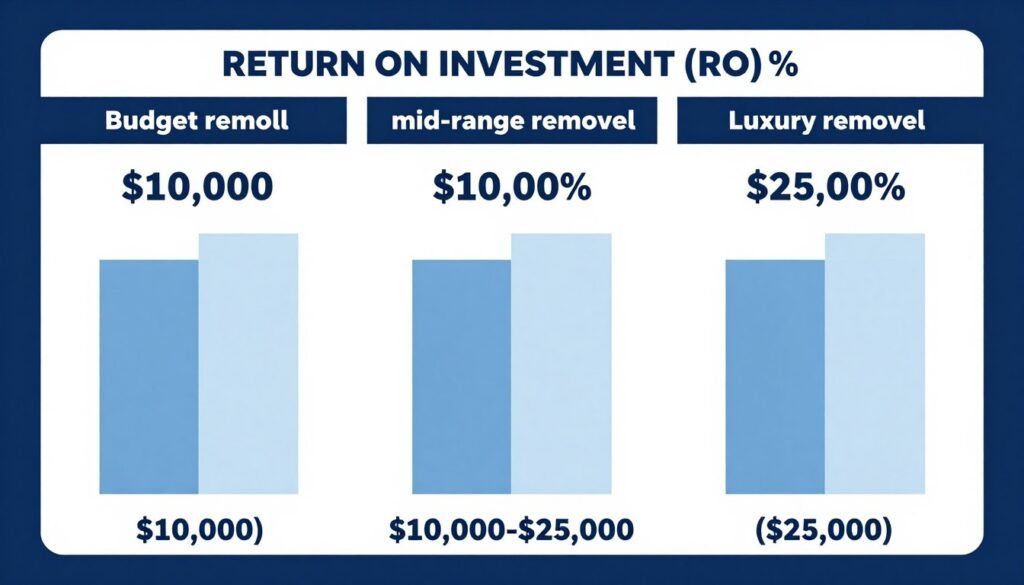
Luxury Upgrades That Don’t Pay Off
Highly personalized features like steam showers, smart toilets, and exotic materials rarely return their investment at resale. While these may enhance your personal enjoyment, recognize them as lifestyle investments rather than financial ones when budgeting.
Regional Resale Differences
Bathroom renovation returns vary significantly by location. In competitive urban markets and higher-end neighborhoods, quality bathroom remodels typically yield better returns than in rural areas or lower-priced markets. Research comparable homes in your specific area to gauge appropriate investment levels.
FAQs About Budget Bathroom Remodels
Related Bathroom Remodel Guides
Small Bathroom Remodel Ideas
Discover space-maximizing strategies and clever storage solutions that make even the tiniest bathrooms feel spacious and functional.
Cheap Bathroom Remodel Ideas That Look Expensive
Learn designer tricks for creating high-end looks on a limited budget with strategic material choices and DIY techniques.
Bathroom Lighting Ideas
Explore layered lighting approaches that enhance both function and ambiance in bathrooms of all sizes and styles.
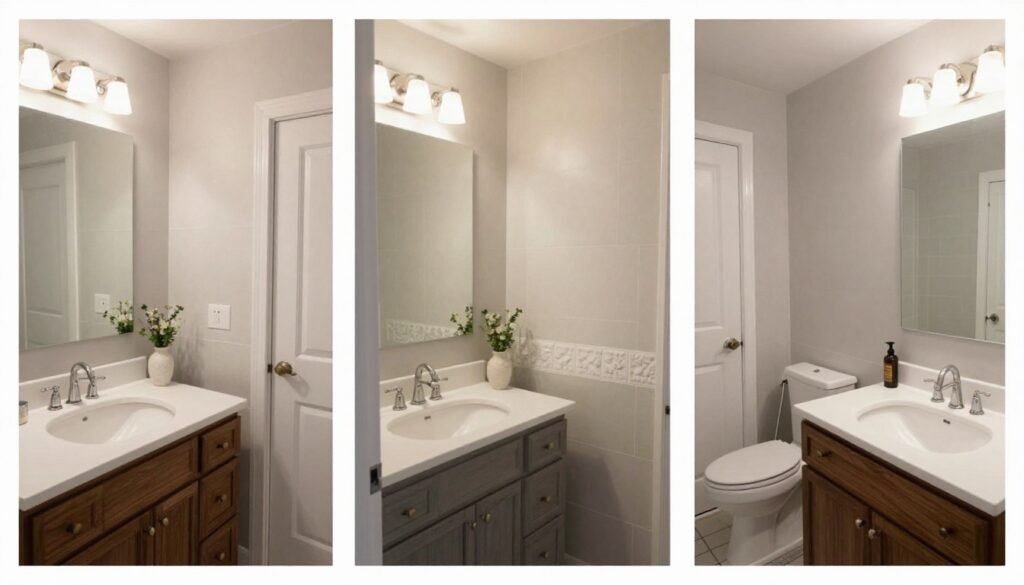
A successful bathroom remodel on a budget isn’t about cutting corners—it’s about making strategic decisions that maximize impact while controlling costs. By investing in quality where it matters most (plumbing fixtures, lighting, vanity construction) and finding creative solutions for other elements, you can create a bathroom that feels luxurious, functions beautifully, and stays within your financial parameters. Remember that thoughtful planning and prioritization will always yield better results than simply choosing the least expensive option for every component.
[…] Worth the extra investment for main bathrooms […]