

This post may contain affiliate links. Please see my disclosure policy for details.
Transform Your Bedroom Into a Cozy Retreat That Actually Helps You Sleep Better
Cozy bedroom design isn’t just about pretty pictures for Instagram. I learned this the hard way after spending countless nights tossing and turning in what I thought was a “stylish” bedroom that felt more like a hotel lobby than a restful sanctuary.
The problem with most bedroom advice? It focuses on trends instead of comfort. You end up with spaces that look magazine-perfect but feel cold and uninviting when you’re actually trying to wind down after a brutal day.
Let me show you how to create a bedroom that’s both gorgeous and genuinely restful—without breaking your budget or following cookie-cutter formulas.
Why Most “Cozy” Bedrooms Fail the Comfort Test
Here’s what I discovered after years of bedroom styling mistakes:
The Pinterest trap is real. Those perfectly styled beds with twelve decorative pillows? You’ll spend ten minutes every morning removing them and ten minutes every night putting them back.
Overhead lighting kills the vibe instantly. Nothing screams “fluorescent office building” like harsh ceiling lights in a space meant for relaxation.
Matchy-matchy everything feels sterile. When every single element coordinates perfectly, your bedroom loses personality and warmth.
Cold color schemes don’t promote sleep. Those stark white minimalist bedrooms might photograph well, but they’re not doing your circadian rhythm any favors.
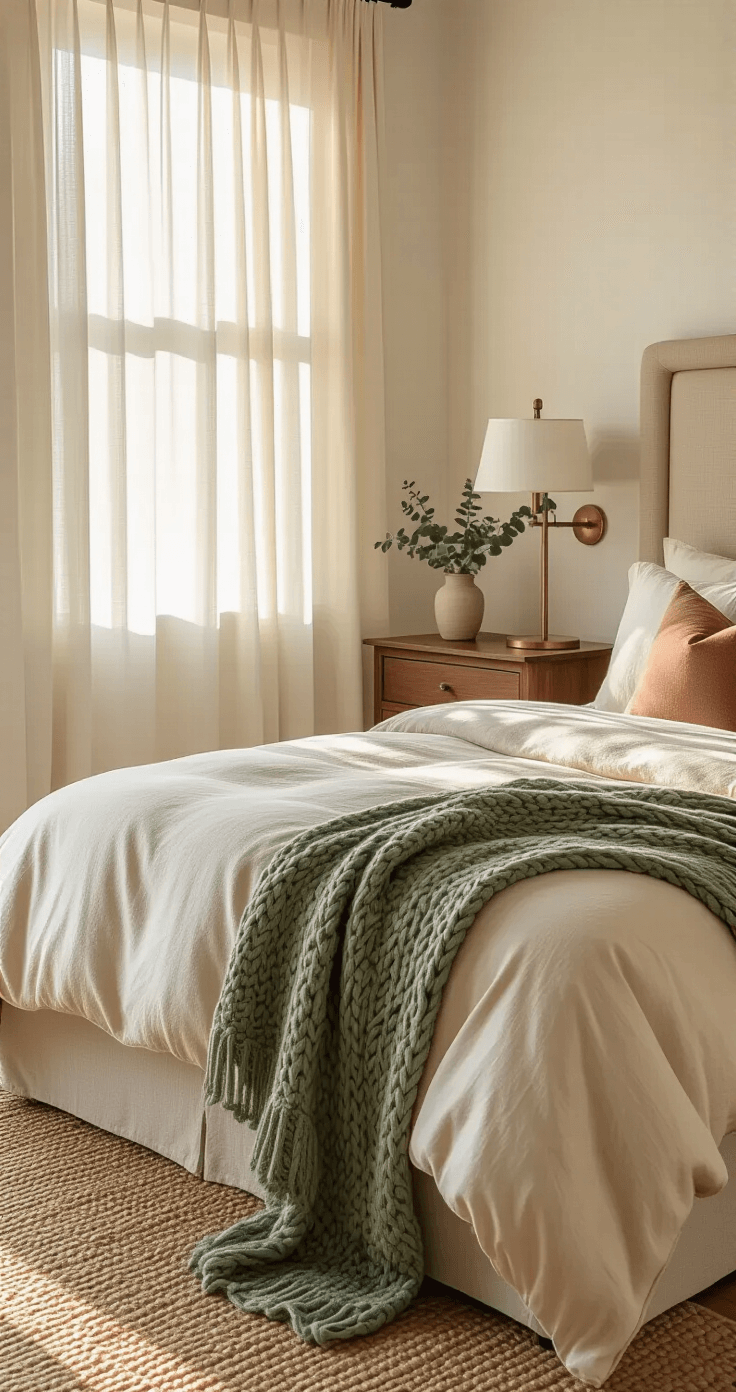
🖼 Steal This Look
- Paint Color: Benjamin Moore Edgecomb Gray HC-173
- Furniture: low-profile upholstered platform bed with a curved headboard in natural linen
- Lighting: table lamp with a linen drum shade and warm brass base on each nightstand
- Materials: brushed cotton bedding, raw wood nightstands, hand-thrown ceramic lamp bases, vintage wool rugs
I’ve learned that the bedrooms people actually want to linger in feel collected over time, not purchased in a single weekend—give yourself permission to let pieces find you rather than forcing a complete look immediately.
✓ Get The Look
Start With the Foundation: Your Bed Setup That Actually Works
Your bed takes up most of the visual space, so get this right first.
The Three-Layer Bedding Formula
I swear by this system because it looks effortless but photographs beautifully:
- Base layer: High-quality fitted sheet in a neutral tone
- Comfort layer: Soft comforter or duvet in your main color
- Texture layer: Throw blanket in contrasting material (chunky knit over smooth cotton, linen over velvet)
The Pillow Arrangement That Won’t Drive You Crazy
Forget those elaborate pillow walls. Here’s what actually works for daily life:
- Two sleeping pillows in matching cases
- One accent pillow in a complementary color or pattern
- Optional: Small lumbar pillow for reading in bed
Pro tip: Choose pillows you can actually sleep with, not decorative rocks disguised as comfort items.
Master the Lighting Game: Creating Warmth That Photographs Beautifully
Lighting transforms everything about how your bedroom feels and looks in photos.
The Golden Hour Secret
I shoot all my bedroom content during these magic windows:
Save this article
Enter your email and we'll send it straight to your inbox.
- Morning: 6-8 AM when sunlight is soft and warm
- Evening: 4-6 PM for that cozy golden glow
No natural light? No problem. Warm-toned table lamps placed at different heights create the same inviting atmosphere.
The Three-Point Lighting Strategy
- Primary: Main bedside lamp with warm bulb
- Ambient: String lights or candles for mood
- Accent: Small lamp on dresser or reading light
This setup eliminates harsh shadows and creates that “expensive hotel” feeling everyone craves.
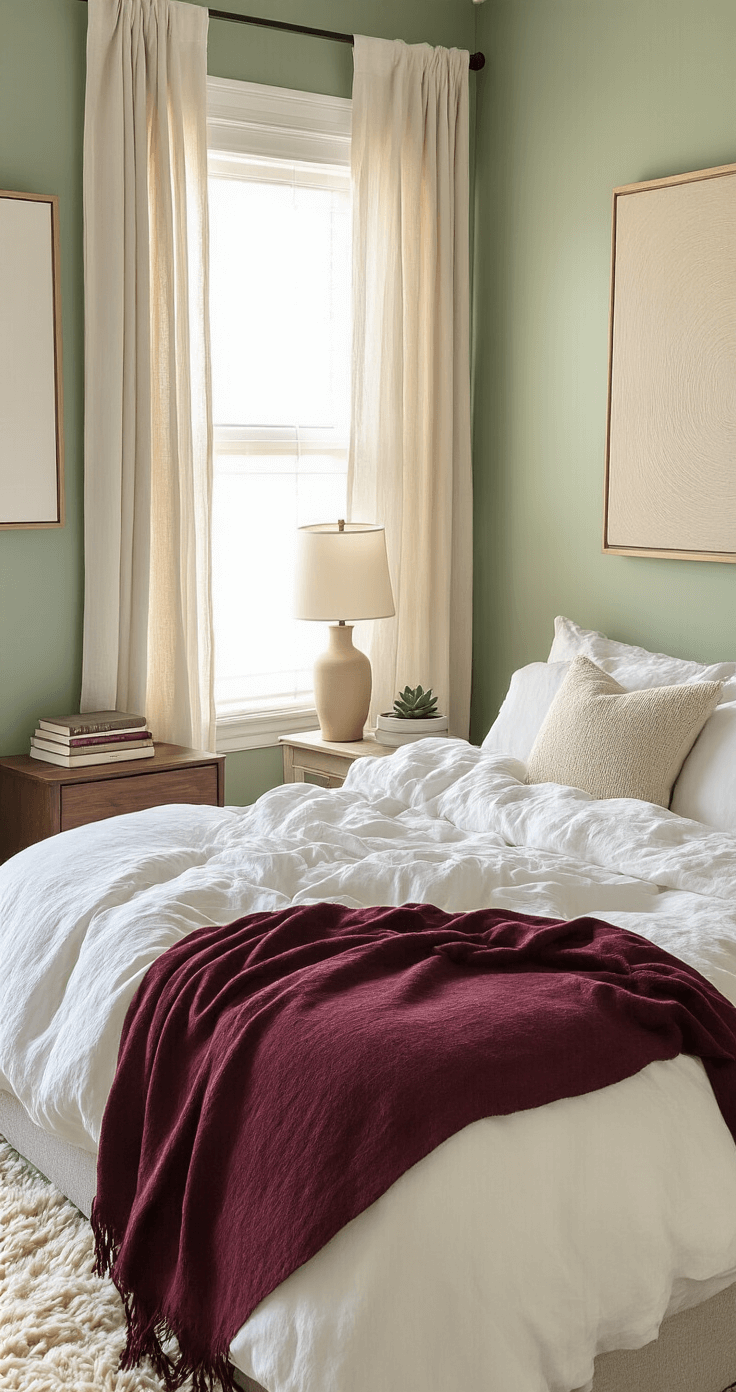
✎ Steal This Look
- Paint Color: Behr Soft Focus PPU18-09
- Furniture: low-profile platform bed with upholstered headboard in warm taupe linen
- Lighting: brass swing-arm wall sconces with dimmable Edison bulbs paired with ceramic table lamps in cream glaze
- Materials: brushed brass, natural linen, frosted glass, warm wood tones, matte ceramic
This is the setup I use in my own bedroom shoots—there’s something deeply satisfying about dialing in that perfect warm glow and watching an ordinary Tuesday evening transform into something worth capturing.
Color Psychology That Actually Promotes Better Sleep
Colors affect your mood and sleep quality more than you realize.
The Warm Neutral Base
Start with these sleep-friendly foundations:
- Creamy whites
- Soft beiges
- Warm grays
- Mushroom tones
Add Personality With Accent Colors
- Calming blues: Lower blood pressure and promote relaxation
- Sage greens: Reduce anxiety and create balance
- Muted burgundy: Add warmth without overstimulation
- Soft blush: Create warmth while maintaining serenity
Skip these color mistakes: Bold reds (too stimulating), bright oranges (disrupt sleep), stark whites (feel clinical), dark blacks (create depression).
Texture Layering: The Secret to Instagram-Worthy Depth
Mixing textures creates visual interest without overwhelming the space.
The Contrast Principle
Pair opposites for maximum impact:
- Smooth silk pillowcases with chunky knit throws
- Sleek wooden nightstands with woven basket storage
- Matte linen bedding with velvet accent pillows
- Rough jute rugs with soft sheepskin accents
Natural Materials That Never Go Wrong
- Wood: Adds warmth and grounds the space
- Linen: Breathable and effortlessly rumpled
- Cotton: Classic comfort that photographs beautifully
- Wool: Cozy texture perfect for throws and rugs
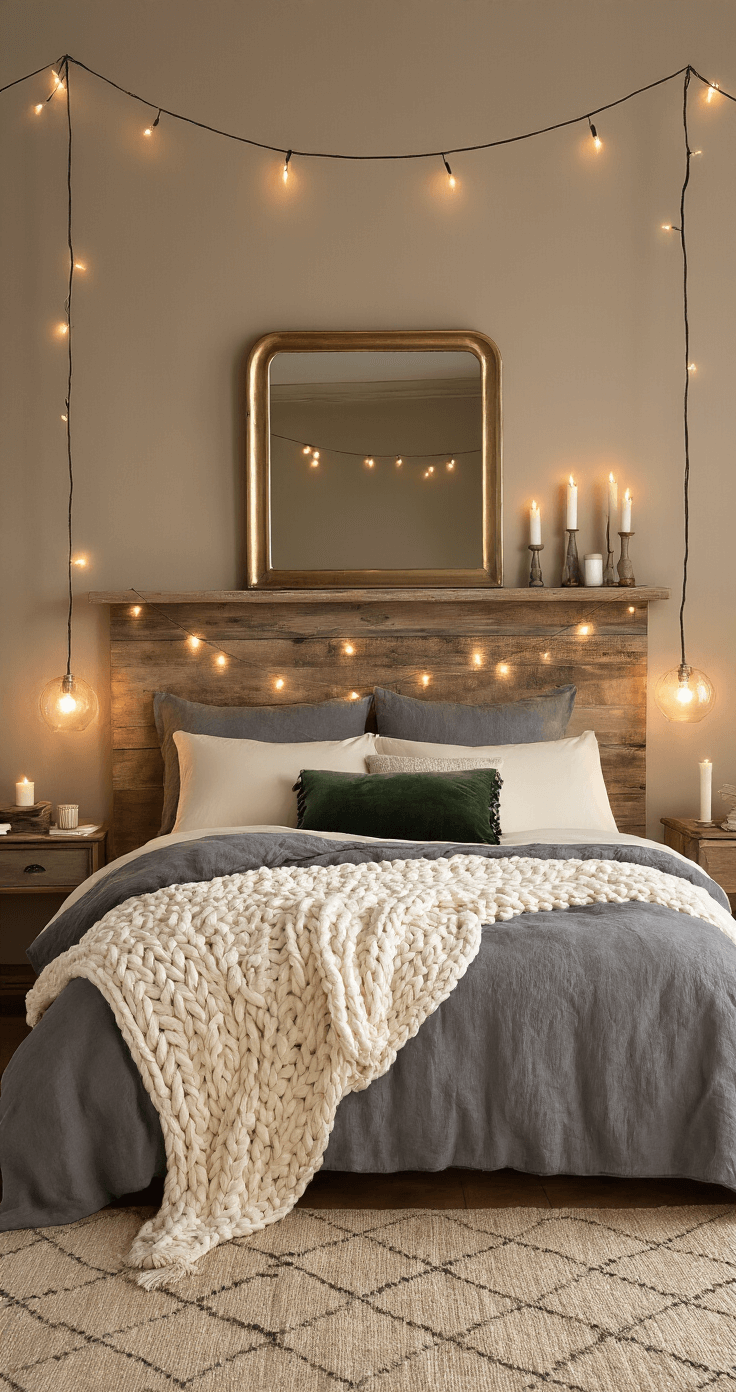
✎ Steal This Look
- Paint Color: PPG Warmstone PPG1007-3
- Furniture: low-profile platform bed with woven cane headboard, floating walnut nightstands with soft-close drawers
- Lighting: oversized linen drum pendant with brass hardware, dimmable Edison bulb
- Materials: chunky merino wool throw, slubby Belgian linen duvet, raw-edge mango wood, handwoven seagrass baskets, vintage Turkish rug with worn pile
This is the room where you’ll actually want to linger with morning coffee, running your fingers across the nubby throw while the linen drapes catch that perfect golden hour light.
The Styling Elements That Make or Break Your Photos
Small details separate amateur bedroom photos from professional-looking content.
The Nightstand Formula
Each nightstand should have three elements:
- Light source: Lamp or candle
- Personal item: Book, small plant, or meaningful object
- Functional piece: Clock, water glass, or phone charger
Wall Decor That Creates Focal Points
- Oversized artwork: Creates drama without clutter
- Gallery wall: Three to five pieces in cohesive frames
- Textured headboard: Upholstered, wooden, or peel-and-stick wallpaper
- Statement mirror: Reflects light and makes rooms feel larger
Photography tip: Shoot from corner angles to capture multiple design elements in one frame.
Keep this one for later
We'll email you the link so you can come back to it.


