This post may contain affiliate links. Please see my disclosure policy for details.
Last Tuesday morning, I watched my husband pour my coffee without asking how I wanted it. He added the exact amount of cream I prefer and slid it across the counter. Twenty-five years ago, he would have asked three times and probably gotten it wrong.
These small changes happen quietly when you share a life with someone for a long time. Nobody warns you about them before your wedding day.
Reaching a 25th wedding anniversary isn’t about having a perfect relationship or knowing all the answers. It’s about discovering unexpected truths that sneak up on you over time. Some of these truths are beautiful. Others are uncomfortable.
I’ve learned twenty-one things through lived experience that I wish someone had told me earlier. These observations cover the real shifts in intimacy, communication, roles, and connection that happen in a long-term partnership. I’m sharing them here with the same honesty I’d offer a close friend over coffee, because your journey deserves that kind of truth.

Image credit @Pixabay
The Love That Stays Looks Nothing Like the Love That Started
After 25 years of marriage, I’ve learned that lasting love changes a lot. It transforms into something completely different from the start. When my husband walks in, I feel a deep, steady love, unlike the excitement of our early days.
This change surprises many people. We think love stays the same forever. But a quarter century of marriage shows us it evolves in ways we can’t predict.
It Stops Feeling Like a Choice and Becomes Something Deeper
In the beginning, loving my husband was a choice I made every day. It felt like a big effort, full of newness. I decided to call him, plan things, and say yes to our future together.
Over time, that choosing went away. Love became as natural as breathing. I don’t wake up thinking, “I’ll love him today.” It’s just who I am.
This change happened so slowly, I don’t know when it started. Loving him became a part of me, not something I did.
This is a secret of lasting love nobody talks about. The love that lasts becomes a part of who you are, not just something you choose.
The Butterflies Don’t Come Back — Something Better Does
The butterflies are gone, but something better has taken their place. There’s a deep comfort when he sits next to me without a word. And a quiet thrill when he remembers how I like my coffee.
This new love is about being completely known. He knows my mood from my keys. I know his day without him saying a word.
This knowing is more intimate than any early-relationship excitement. It’s the difference between a first kiss and falling asleep next to someone who knows you and chooses to stay.
Young love is about discovery. Long-term love is about recognition. And that recognition, like when he makes my tea just right, creates magic.
You Start Loving Who They’re Becoming, Not Just Who They Were
The man I married at 25 is not the same today. And I’m glad for that. We’ve both changed in ways we couldn’t imagine.
My husband has found new interests and become more patient and funny. He’s grown older and more confident.
One truth of a quarter century marriage is loving someone new every few years. It’s the same person, but evolved. I love him more now than I did when he was younger.
This means letting go of who you thought they would be. I had to accept who he is today, not just who I imagined. This is harder than it seems.
Watching someone grow over decades is amazing. It creates layers of love that can’t exist in a short time. You’re loving their whole story, their growth, and the chance to see it all.
The Silence Between You Changes Meaning Completely
I never expected how quiet moments would change over 25 years of marriage. At first, any pause felt awkward. We filled every gap with words, music, or background noise.
Now, silence is a complex language we speak. Its meaning changes based on context, mood, and what’s hidden beneath the surface.
Understanding different types of quiet is key to our relationship. Some silences feel like home, while others signal a need for attention.
Comfortable Silence Is a Language You Had to Learn
The peaceful quiet didn’t come naturally. We grew into it together over many years.
On a Saturday morning, we might sit reading the newspaper with coffee. No words are exchanged for an hour, yet I feel deeply connected to him.
Driving six hours to visit family without the radio, the silence was not empty. It was filled with shared presence and companionship, not needing constant talk.
Comfortable silence happens when we cook dinner together. He chops vegetables while I stir the sauce. We move around each other without speaking, yet there’s a rhythm.
This quiet is intimate, saying, “I’m comfortable enough with you that I don’t need to perform or entertain.”
But Some Silences Are Warning Signs You Learn to Read
After 25 years, I can tell the difference between restful quiet and warning signs. They feel different in my body.
There’s a silence with tension hanging in the air. You both know something needs to be said, but neither wants to start.
I’ve learned to read physical signs. A tight jaw or avoiding eye contact when I enter the room are warning signs. The heavy silence is different from the peaceful one.
These warning silences often follow disagreements we haven’t resolved. We go through life’s motions, but words get stuck.
In a 25 year marriage, you learn to recognize these differences. You know when quiet means peace and when it means avoidance.
You Can Feel Emotionally Alone in the Same Room
This truth surprised me more than anything else. Being physically close doesn’t mean you’re emotionally connected.
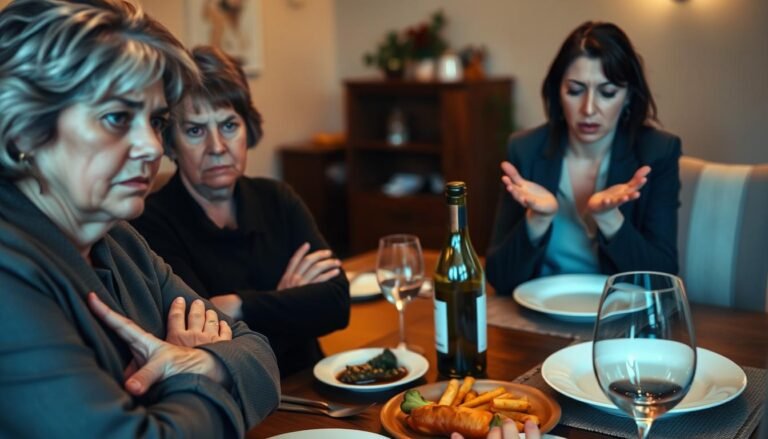
There have been evenings when we sat on the same couch, three feet apart, yet I felt alone. We were both on our phones, the TV on but not watched.
We were in the same space, breathing the same air, but felt like we were on different continents. This disconnection is harder to name than an argument.
I’ve felt this emotional distance during stressful times. Work pressure or family issues can make us retreat into our own worlds, even when we’re together.
Recognizing this pattern in our 25 year marriage has been key. Sometimes, it’s not about filling the silence with words. It’s about being present, not just physically there.
I’ve learned to reach for his hand in these moments. To close my laptop and ask how his day was. Small actions that bridge the gap between physical closeness and emotional connection.
Your Roles Quietly Shift Without Either of You Noticing
At some point, without anyone saying a word, our roles changed. The person who used to handle the finances now doesn’t. The laundry expert became a stain removal master. These changes sneak up on you, and before you know it, your partnership has changed a lot.
Being married for 25 years shows how roles can change without anyone noticing. They evolve based on who has more time or who cares more about something. It happens without discussion or announcement.
The Person Who Handles Things Changes Over Time
I used to manage our finances. But as my job got busier, my spouse took over. It wasn’t a decision we made together; it was just what needed to be done.
Now, I don’t know our mortgage payment without checking. The person who used to handle all the money stuff doesn’t even know which credit card we use for groceries anymore.
Our social life also changed. My partner used to plan everything with friends. But around year 18, that job fell to me. I became the one who kept our social calendar full without being asked.
Medical appointments are another example. I never scheduled doctor visits early on. But as my spouse’s work schedule changed, I took over. Now, I’m the one making appointments and tracking prescriptions.
Home maintenance roles also flipped. The person who used to handle repairs now barely notices when something needs fixing. The one who couldn’t tell a Phillips screwdriver from a flathead now fixes garage door openers.
You Stop Asking and Start Assuming — and That Costs You
Assumptions can be dangerous in a long marriage. You might assume your partner will remember to pick up your prescription. You might not ask them to call the plumber because it’s “their thing.” You might expect them to know you need emotional support without saying anything.
These assumptions feel natural after 25 years together. You think you shouldn’t have to ask anymore. You believe they should just know what you need or what’s going on.
But that’s when communication breaks down. Last year, I assumed my spouse would handle our taxes. They assumed I was tracking the deadline. We both ended up scrambling, feeling frustrated that the other had “dropped the ball.”
These assumptions lead to missed appointments, forgotten commitments, and frustration. You feel let down. They feel blindsided by your disappointment. Both of you wonder why the other person didn’t handle what they were “supposed” to handle.
Being married for 25 years doesn’t give you telepathy. It makes you think you have it. The assumption that you don’t need to communicate clearly anymore causes more fights than almost anything else.
Resentment Builds in the Gaps Between Expectations and Reality
Resentment doesn’t shout its presence. It quietly builds up over time, hiding in the gaps between what you expected and what happened.
I resented carrying most of the household mental load for years. I was the one remembering everything, from toilet paper to dog shots. My spouse had no idea because I never said anything. I just kept doing everything, getting angrier.
My spouse was building their own resentment about always doing the heavy lifting. They felt unappreciated for all the physical work while I kept track of everything mentally.
These resentments nearly broke us. We were both feeling overburdened and undervalued, each keeping score in our heads without telling the other.
The reality of being married for 25 years includes facing these resentments head-on. You have to talk about who’s doing what, what feels fair, and what needs to change. You can’t keep assuming the division of labor that worked in year 10 is good for year 25.
Expectations shift as life changes, but if you don’t update each other, bitterness can grow. The partner who expects you to handle something you didn’t know was your job. The spouse who feels taken for granted because you don’t notice all they quietly manage.
We had the hard conversations three years ago. We wrote down who handles what, discussed what feels unfair, and redistributed responsibilities. It wasn’t easy, but it was necessary.
Those gaps between expectations and reality don’t close themselves. You have to bridge them with honest communication, even after 25 years together.
The Physical Side of Marriage Surprises You in Both Directions
Let’s talk about something most people don’t discuss openly: physical intimacy changes a lot over 25 years. It’s not what anyone warned me about before we got married. And it’s definitely not what I saw in movies about long-term relationships. The truth is somewhere between the challenges nobody mentions and the unexpected gifts of celebrating 25 years together.
This evolution happens in both directions. Some aspects become harder, more complicated, and require more intention than they did in our twenties. Other aspects become surprisingly easier, more comfortable, and more meaningful than I ever imagined possible.
The physical dimension of a long marriage is messy and beautiful and awkward and intimate in ways that shift constantly. And almost nobody talks about it honestly.
Intimacy After 20+ Years Is Nothing Like What Movies Show
Hollywood got this completely wrong. On screen, couples celebrating decades together either have passionate, spontaneous encounters or they’ve become completely sexless roommates. Real life looks nothing like either extreme.
The frequency changes, and that’s just reality. What happened multiple times a week in our early years might now happen a couple times a month. Some seasons it’s more, some seasons it’s less.
And here’s what the movies never show: sometimes we schedule it. That sounds unromantic until you realize that making time for each other is actually deeply romantic. We put it on the calendar like we would a date night because life gets busy and bodies get tired.
The pressure to perform has mostly disappeared, which is both a relief and took some adjustment. We’re not trying to impress each other anymore. We know exactly what works and what doesn’t, and there’s no pretending or performing for the other person’s benefit.
What surprised me most is that less frequent doesn’t always mean less satisfying. Sometimes the opposite is true. When it happens, it often carries more weight, more meaning, more genuine connection than it did when it was just routine.
Your Body Changes and So Does What You Both Need
This is where it gets really practical and nobody prepares you for it. My body at fifty-something looks and functions differently than it did at twenty-five. So does my husband’s. That’s not a judgment or a complaint—it’s just fact.
Weight gain happened for both of us at different times. Medications entered the picture that affected energy and desire. Menopause changed everything for me in ways I didn’t anticipate, and we had to navigate those conversations together.
Energy levels aren’t what they were. We used to stay up late without thinking about it. Now we’re both exhausted by nine o’clock most nights, and that changes what’s realistic or even desirable.
Physical limitations show up too. A bad back means certain positions don’t work anymore. Arthritis in the hands means adjusting how we touch each other. These aren’t sexy topics, but they’re real ones when you’re celebrating 25 years together.
What makes this complicated is that needs shift at different rates. There were years when my desire increased while his decreased due to stress and health issues. Other years, the opposite happened. We’ve had to learn to talk about these mismatches without making the other person feel broken or inadequate.
New insecurities emerge that require gentle handling from both sides. I feel self-conscious about things that didn’t exist twenty years ago. So does he. We’ve had to actively choose to reassure each other that we both find each other attractive, even as bodies change.
Save this article
Enter your email and we'll send it straight to your inbox.
Closeness Becomes More About Presence Than Performance
Here’s the unexpected gift that came from all those challenges: intimacy stopped being mainly about the physical act and became more about physical presence itself. That shift changed everything in ways I didn’t see coming.
Some of my favorite moments of physical connection now happen outside the bedroom entirely. Falling asleep curled against each other after a long day. Holding hands during a difficult conversation about our aging parents. A back rub with absolutely no expectation that it leads anywhere else.
We’ve become more physically affectionate in everyday life than we were in our early years. A hand on the shoulder while passing in the kitchen. Sitting close on the couch even when there’s plenty of room. These small touches carry more meaning now.
The intimacy of just being together in our bodies, in the same space, without needing to do anything—that’s become precious. We can sit in comfortable silence and yet feel deeply connected physically just by being near each other.
This doesn’t mean the other aspects disappeared or became unimportant. They didn’t. But they became one part of a much broader physical relationship, not the defining element of our connection.
What nobody told me is that this evolution would actually deepen our relationship in some ways. The pressure to perform gave way to the comfort of simply being together. And that comfort created a safety that allows for more vulnerability and more genuine connection than any performance ever could.
Celebrating 25 years together means accepting that your physical relationship will look nothing like it did at the beginning. It means adapting, communicating, and sometimes laughing at how different everything is. And it means discovering that presence can be just as intimate as passion—sometimes even more so.
Your Marriage Becomes a Mirror You Can’t Look Away From
Living with someone for 25 years makes them a mirror that shows you truths you’d prefer not to see. They’ve seen you react to stress, joy, and success many times. They know your patterns before you do.
This isn’t just about soulmates finishing each other’s sentences. It’s about being known so well that you can’t hide. Your spouse has seen your worst and best.
The silver wedding milestone makes this reality clear. You’re no longer figuring each other out. You’re two people who can’t unknow what you’ve learned about each other.
You See Yourself Clearly Through How They See You
My husband once said I shut down emotionally when things get tough. I was furious. But he was right, and I’d been doing it for years.
After he pointed out my pattern, I noticed it myself. When my mom called with bad news, I changed the subject. When our daughter struggled, I focused on logistics. He was right, and I’d been doing it for years.
Your partner’s view of you becomes hard to ignore after decades together. They’ve gathered enough evidence to support their observations. When they say you’re more critical than you realize, or that you avoid conflict, or that you sell yourself short, they’re not guessing.
Sometimes, their view reveals positive things you can’t see in yourself. My husband noticed I was good with people in crisis long before I considered becoming a counselor. He saw capabilities I’d written off as nothing special.
The Things That Irritate You Most Reveal the Most About You
I spent years being annoyed at how my husband leaves cabinet doors open and never finishes one project before starting another. It drove me absolutely crazy. Then a therapist asked me why I needed everything closed and completed.
That question unlocked something uncomfortable. My irritation wasn’t really about cabinet doors. It was about my desperate need to control my environment because I felt like so much of my life was chaotic and uncertain.
His mess wasn’t the problem. My anxiety was. He was just the mirror reflecting it back to me every single day.
This happens in every marriage that lasts. Your spouse’s habits that bother you most often point directly at your own unresolved issues. If their social nature makes you uncomfortable, maybe you’re avoiding your own fear of vulnerability. If their spontaneity stresses you out, perhaps you’re holding on too tight to the illusion of control.
The behaviors that trigger the strongest reactions in you are usually the ones teaching you something important about yourself. But you have to be willing to look.
Growth Requires Honesty That Is Uncomfortable to Give and Receive
Three years ago, I had to tell my husband that his drinking had crossed a line. Not the fun social drinking we’d always done together, but the nightly glasses of wine that had slowly increased to a full bottle. Then more.
That conversation was one of the hardest things I’ve ever done. I was terrified he’d get angry or defensive. I was scared I was overreacting, even though I knew I wasn’t.
He didn’t speak to me for two days after. But then he scheduled an appointment with his doctor and eventually started therapy. That honesty, as painful as it was to deliver and receive, potentially saved his health and our marriage.
Real growth in a long marriage demands this kind of brutal honesty. My husband had to tell me that my constant criticism was making him feel like he could never do anything right. I had to tell him that his withdrawal during arguments made me feel abandoned.
These conversations don’t feel good in the moment. They make you want to defend yourself or shut down completely. But after 25 years together, you can’t afford to let these truths go unspoken.
The alternative is living with someone who sees your blind spots clearly but stays silent while those blind spots damage both of you. That’s not kindness. That’s just slow erosion disguised as peacekeeping.
The mirror your marriage becomes isn’t always flattering. Sometimes it shows you exactly what you don’t want to see about yourself. But it also shows you where you can grow, what you need to face, and who you’re capable of becoming if you’re brave enough to look honestly at the reflection.
The Outside World Tests You in Ways You Didn’t Expect
No one warns you that the world can shake your marriage harder than arguments. I thought the biggest challenges would be about us—our communication, compatibility, and commitment. But, some of the hardest moments came from outside our relationship.
External pressures expose cracks you didn’t know existed. They force decisions that reveal fundamental differences in how you see the world. Learning to navigate these challenges together is a key to a long-lasting marriage.
The truth is that job loss, sick parents, and conflicting parenting styles can test your bond more severely than most internal disagreements ever will.
When Financial Pressure Exposes Your Deepest Values
Money stress revealed differences between us that we’d successfully avoided for years. When my husband lost his job during the 2008 recession, everything changed.
I wanted to cut expenses immediately and build our emergency fund back up. He wanted to maintain our lifestyle because he believed the job loss was temporary and didn’t want our kids to feel insecure. We had the same goal—protecting our family—but completely opposite approaches.
The fights weren’t really about the electric bill or whether to cancel our vacation. They were about security versus optimism, fear versus faith, control versus trust. I felt like he was being reckless. He felt like I was catastrophizing.
Later, when our adult daughter needed financial help after a divorce, we clashed again. I wanted to help her substantially because she’s our child and was struggling. My husband worried we were enabling her and jeopardizing our own retirement. Both positions came from love, but they were fundamentally incompatible.
These financial disagreements touched nerves that regular arguments never did. They made me question whether we shared the same values at all.
Loving the Same Children But Raising Them Completely Differently
I never expected that parenting the same children would nearly break us. We both loved our kids fiercely, but we had totally different approaches that created constant friction.
I was the strict parent who believed in natural consequences. He was the softer one who wanted to protect them from harsh realities. When our son got a D in high school, I wanted to let him face the consequences and possibly lose his spot on the basketball team. My husband wanted to hire a tutor and talk to the teacher about extra credit.
We undermined each other constantly. The kids learned to play us against each other. I resented that he made me look like the bad guy. He resented that I made him feel like a pushover.
The worst conflicts came when our kids became adults. Our daughter made choices we both disagreed with, but I wanted to step back and let her learn from mistakes. My husband wanted to intervene more directly. We had vicious arguments about whether we were abandoning her or respecting her autonomy.
These disagreements felt personal in a way that other conflicts didn’t. The way he parented felt like a judgment on how I parented, and vice versa. It touched something primal about who we were and what we believed about raising humans.
When Aging Parents Pulled Us in Opposite Directions
Nothing prepared us for the strain of managing aging parents while trying to maintain our own lives and marriage. My mother developed dementia when she was only 68, and the decisions we had to make nearly destroyed us.
I felt obligated to have her move in with us. My husband loved my mother but was honest that he didn’t think we could handle the level of care she needed. I felt like he was being selfish and cold. He felt like I was being unrealistic and martyr-like.
We compromised on an assisted living facility nearby, but I resented him for years for not supporting my original plan. I visited her almost daily, which took time away from our marriage. He felt neglected. I felt like he didn’t understand family obligation.
When his father had a stroke two years later, the situation flipped. His dad lived three states away, and my husband wanted to move temporarily to help. I had just started a new job and our youngest was finishing high school. The logistics were impossible, but he felt torn between his father and his family.
We were both stretched thin, trying to honor our parents while not abandoning our marriage or our kids. The stress spilled into everything. We snapped at each other constantly. We had no energy left for us.
The caregiving years taught us that external pressures don’t just test your marriage—they can consume it entirely if you’re not intentional about protecting what you’ve built together.
What Nobody Tells You About Almost Losing Each Other
Before our 25th wedding anniversary, we faced months of uncertainty. It seemed like we might not make it to 26 years together. Everyone congratulates you on reaching this milestone, but they rarely ask about the tough times.
They don’t talk about the year we felt like strangers living together. Or the crisis that almost tore us apart.
But here’s what I’ve learned: every marriage that lasts this long has faced a near-end. The key difference isn’t in avoiding struggles. It’s in choosing to fight through them, not walk away.
Every Long Marriage Has at Least One Season That Nearly Ends It
For us, year seventeen was the turning point. We’d become more like business managers than partners. Our conversations were about schedules, not feelings.
I remember feeling nothing when my spouse spoke. No anger, no love, just emptiness. It scared me more than any fight.
Marriages can end due to many reasons. Infidelity, addiction, financial issues, or just a build-up of resentments. For some, it’s a single event. For others, it’s a series of small disappointments.
Our crisis looked like separate bedrooms for six months. Our conversations were about logistics, not feelings. We even fantasized about different lives.
I confided in two friends about leaving. One said go. The other asked me to wait three months.
I’m grateful for that second friend.
Coming Back From the Edge Changes the Shape of Your Love
Fixing our marriage took two years of counseling and tough talks. We changed how we treated each other.
Our love became more intentional and grateful. We realized how fragile it was.
Before, I loved my spouse with naive optimism. After our crisis, that changed. Our love became more aware of its fragility.
Surviving a near-death experience in marriage changes you. You can’t go back to who you were. You must decide who you want to become.
Choosing Each Other Again After Hardship Is Not the Same as Staying Out of Habit
Some couples stay together out of habit or convenience. They don’t truly choose each other again. They stay because it’s easier.
Choosing to stay after hitting rock bottom requires effort. We had to admit our mistakes and change our ways.
For me, it meant speaking up instead of staying silent. For my spouse, it meant prioritizing our connection.
We had to rebuild trust and create new ways of communicating. We had to decide every day that our marriage was worth it.
Staying together out of habit is passive. Choosing to rebuild is active. One requires nothing. The other requires everything.
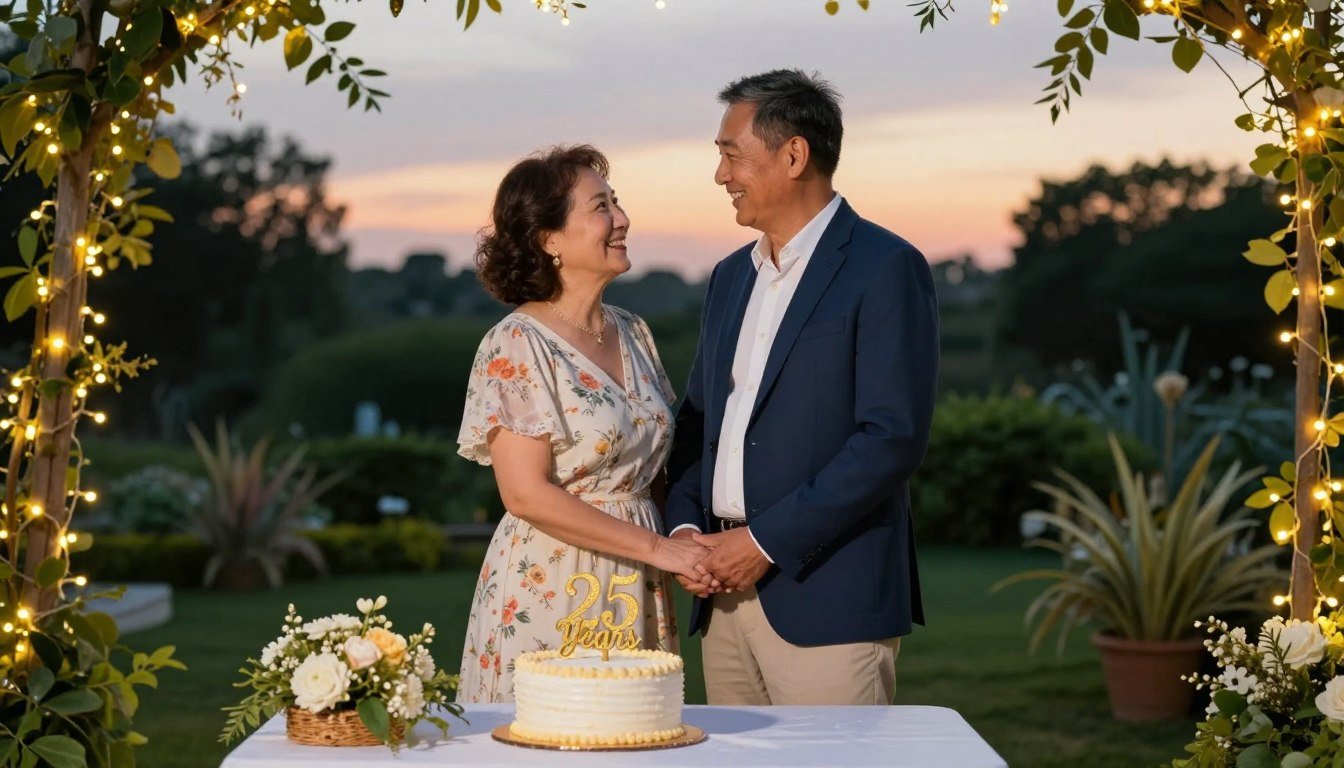
When people congratulate us on our 25th anniversary, I smile. I’m celebrating our choice to stay together after seeing all the reasons to leave.
That choice, made in year seventeen, is more meaningful than any vow we made at the altar.
The Unexpected Gifts of 25 Years Together
After facing the hard truths, I was surprised by something. The silver anniversary is more than just surviving. It’s about finding things you never knew were there.
My husband and I can talk a whole conversation with just one look. We have words that mean nothing to others but bring back memories from 15 years ago. A raised eyebrow or a specific sigh can remind us of a past event.
These secret codes are unique to us. They exist nowhere else in the world.
They Know Your History Better Than Anyone Else
My parents are gone, and old friends moved away. But my spouse remembers me at 28. He saw my career ups and downs. He knows stories about my mother that few others do.
This shared history is priceless as time goes by.
The Ordinary Moments Become the Ones You’ll Miss Most
It’s not the big trips I remember. It’s our Saturday morning coffee. The sound of his keys at 6 p.m. His bad jokes that make me laugh.
These everyday moments are what make our life together special.
When people ask about silver anniversary gifts, I think of these things. The real gifts are our language, history, and everyday moments. These are what 25 years of marriage gives you.
Keep this one for later
We'll email you the link so you can come back to it.