

This post may contain affiliate links. Please see my disclosure policy for details.
How to Create the Perfect Cozy Cottage Style in Your Home
Cozy cottage style transforms any space into a warm, inviting retreat that makes you want to curl up with a good book and never leave.
I’ve spent years perfecting this look in my own home, and I’m going to show you exactly how to nail it without spending a fortune or making rookie mistakes that leave your space looking more cluttered than charming.
What Makes Cozy Cottage Style Actually Work
Here’s the thing nobody tells you about cottage style: it’s not about cramming every vintage piece you find at the thrift store into one room.
Real cottage style creates a lived-in feeling that’s both intentional and effortless. It celebrates imperfection while maintaining visual harmony. The best cottage interiors feel collected over time, not decorated in a weekend shopping spree.
The three pillars that make cottage style work:
- Weathered finishes that add character without looking shabby
- A balanced mix of patterns that creates interest without chaos
- Functional vintage pieces that earn their place in your home
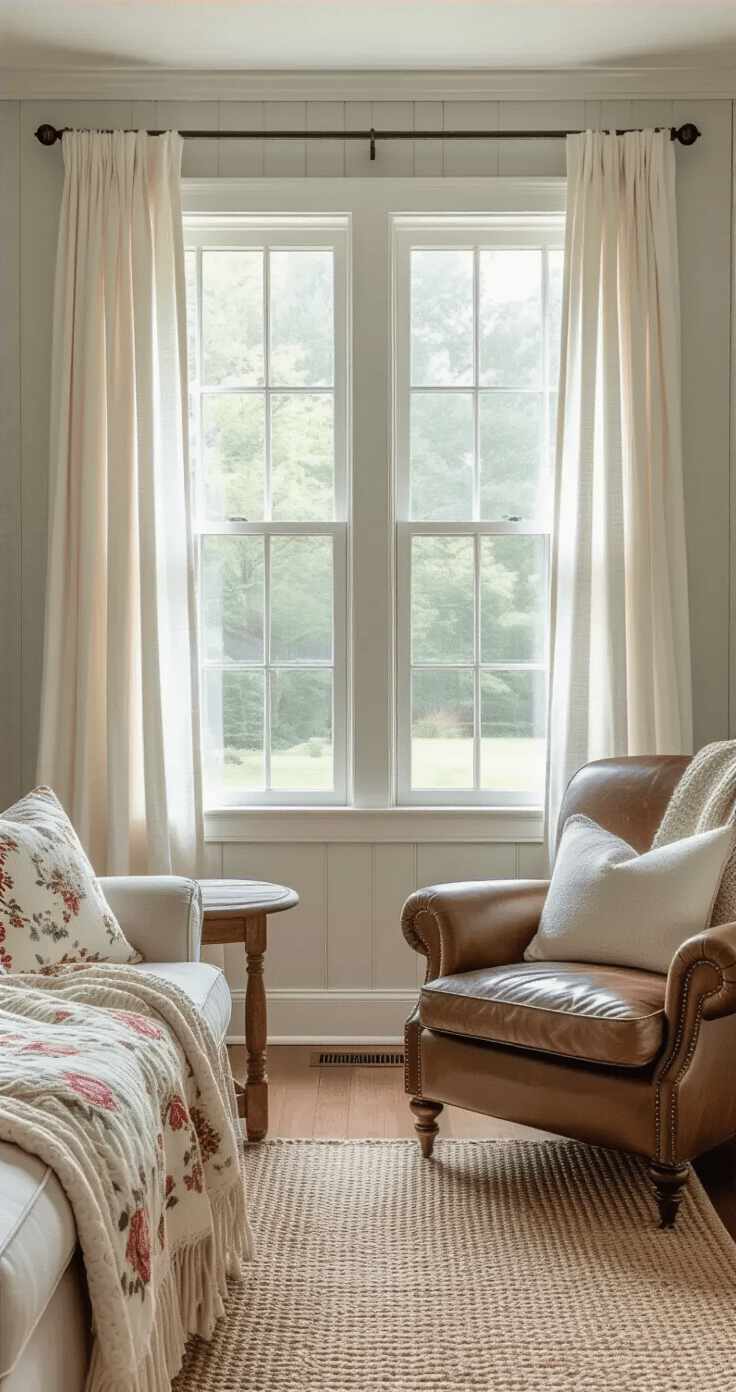
Your Color Foundation: Getting It Right From the Start
I learned this the hard way after painting my first cottage-inspired room a color that looked “vintage” in the store but made my space feel like a dingy basement.
Start with whites and soft woods as your base. These create the airy, welcoming feeling that defines authentic cottage style.
Colors that actually work:
- Warm whites (not stark builder white)
- Soft grays with warm undertones
- Pale blues and greens from nature
- Creamy neutrals that feel lived-in
Colors to avoid:
- Bright, saturated pastels (they read juvenile, not cottage)
- Stark white everywhere (too clinical)
- Dark, moody colors (save those for farmhouse style)
I paint my walls in pale gray, and it’s been the perfect backdrop for layering in cottage elements without the space feeling dark or cramped.
Walls That Tell a Story
Your walls set the entire mood for cottage style.
Beadboard is your secret weapon. I installed beadboard wall panels in my dining room, and the transformation was immediate. The vertical lines add height, the texture adds depth, and the traditional look screams cottage charm.
Run beadboard halfway up your walls for a classic wainscoting effect, or go full height for maximum impact. Paint it the same color as your walls for a cohesive look, or use white for contrast.
Planked walls create instant character. Horizontal planks make rooms feel wider. Vertical planks add height to low ceilings. Diagonal planks create drama (but use sparingly).
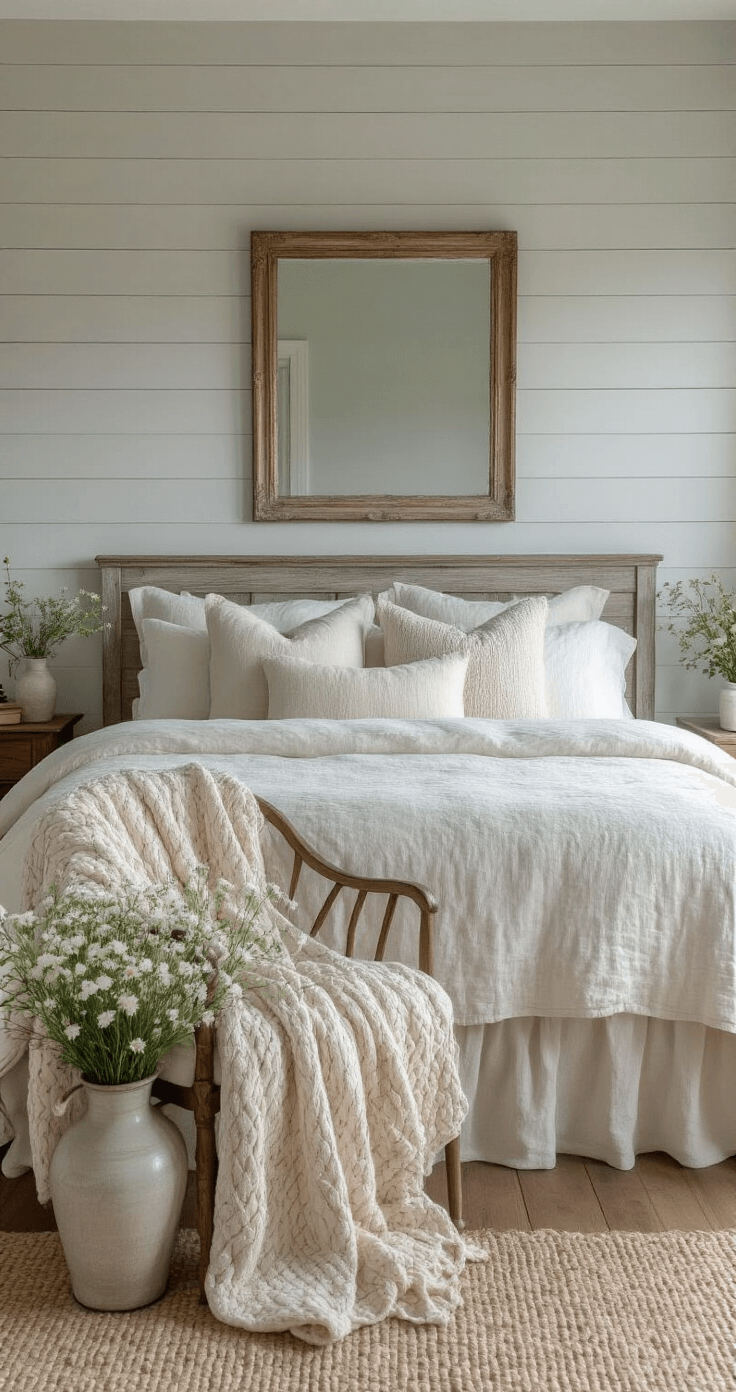
I installed horizontal shiplap in my bedroom using basic pine boards from the hardware store, and the project cost under $200 for a 12×14 room.
Patterns and Textures: The Make-or-Break Element
This is where most people completely lose the plot.
You can’t just throw every floral, gingham, and plaid pattern together and hope for cottage magic. There’s a method to the madness.
My pattern mixing formula:
- Choose one large-scale pattern as your star (florals work beautifully)
- Add one medium-scale geometric (gingham or plaid)
- Include one small-scale pattern or texture (ticking stripes or subtle prints)
- Ground everything with solid colors that pull from your patterns
I use vintage-inspired quilts as my starting point because they already contain a curated palette of cottage-appropriate colors and patterns.
Textures that add cottage depth:
- Chunky knit throws for visual weight
- Linen curtains for soft, natural texture
- Jute or sisal rugs for organic groundedness
- Distressed wood surfaces that show their age
Layer these textures throughout your space instead of matching everything perfectly.
Built-Ins That Actually Earn Their Space
Every cottage needs clever storage that doubles as character.
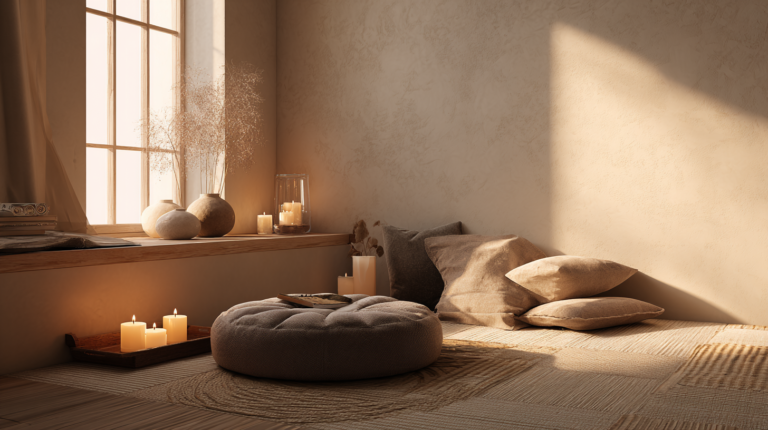
Window seats changed my entire living room. I built a simple platform under my bay window with storage drawers underneath, added comfortable cushions and throw pillows, and created the coziest reading nook in my house.
Built-in ideas that work in any home:
- Floor-to-ceiling bookshelves flanking a fireplace
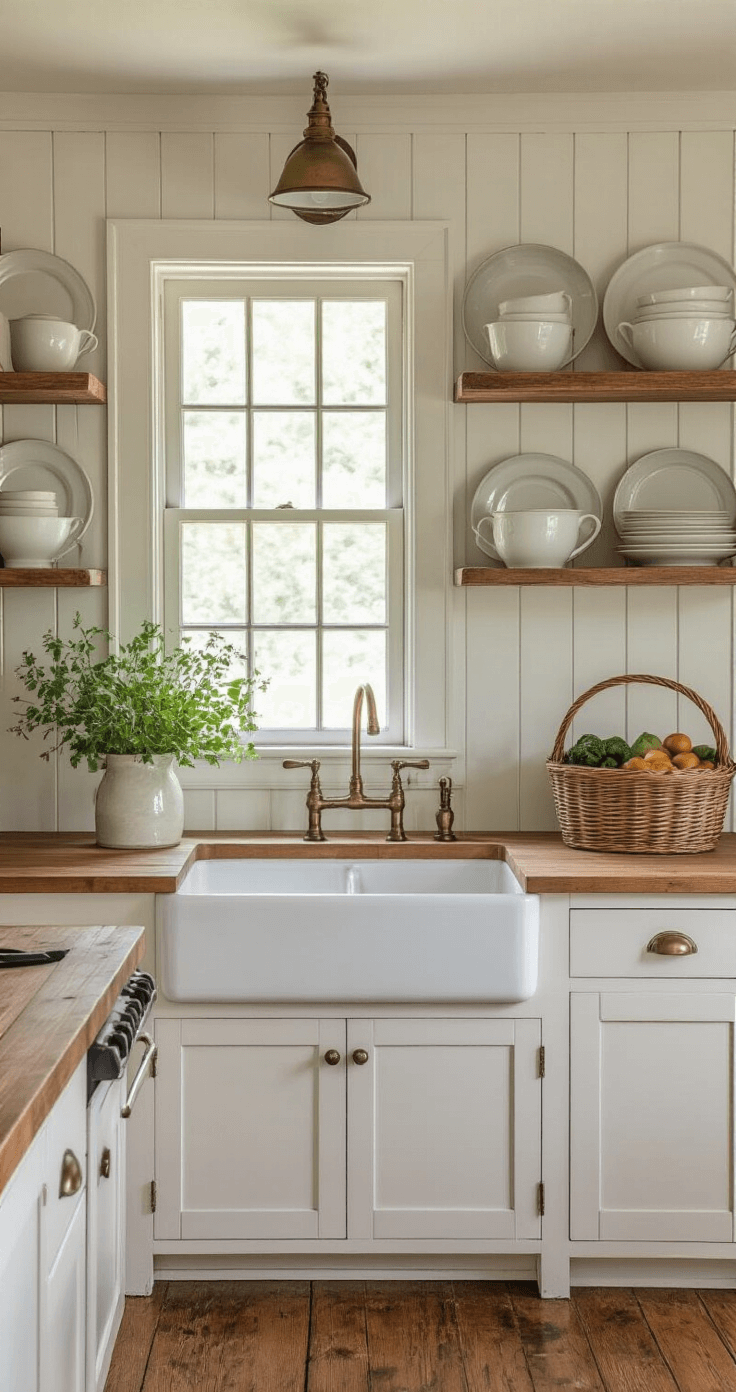
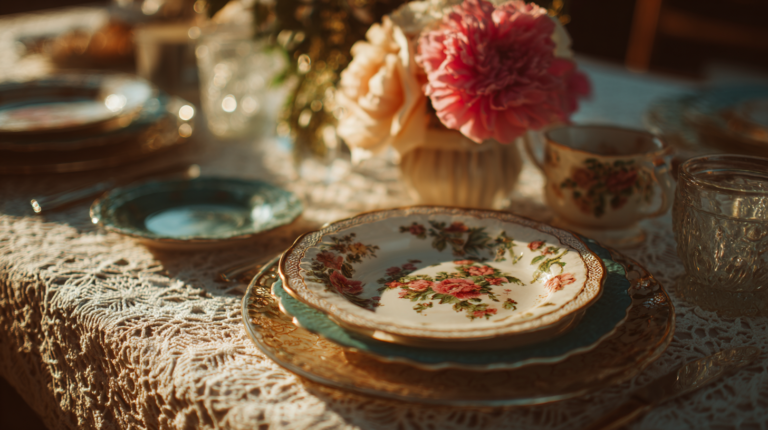
- Kitchen open shelving for displaying pretty dishes
- Mudroom benches with hooks above and storage below
- Bathroom linen closets with glass doors showing rolled towels
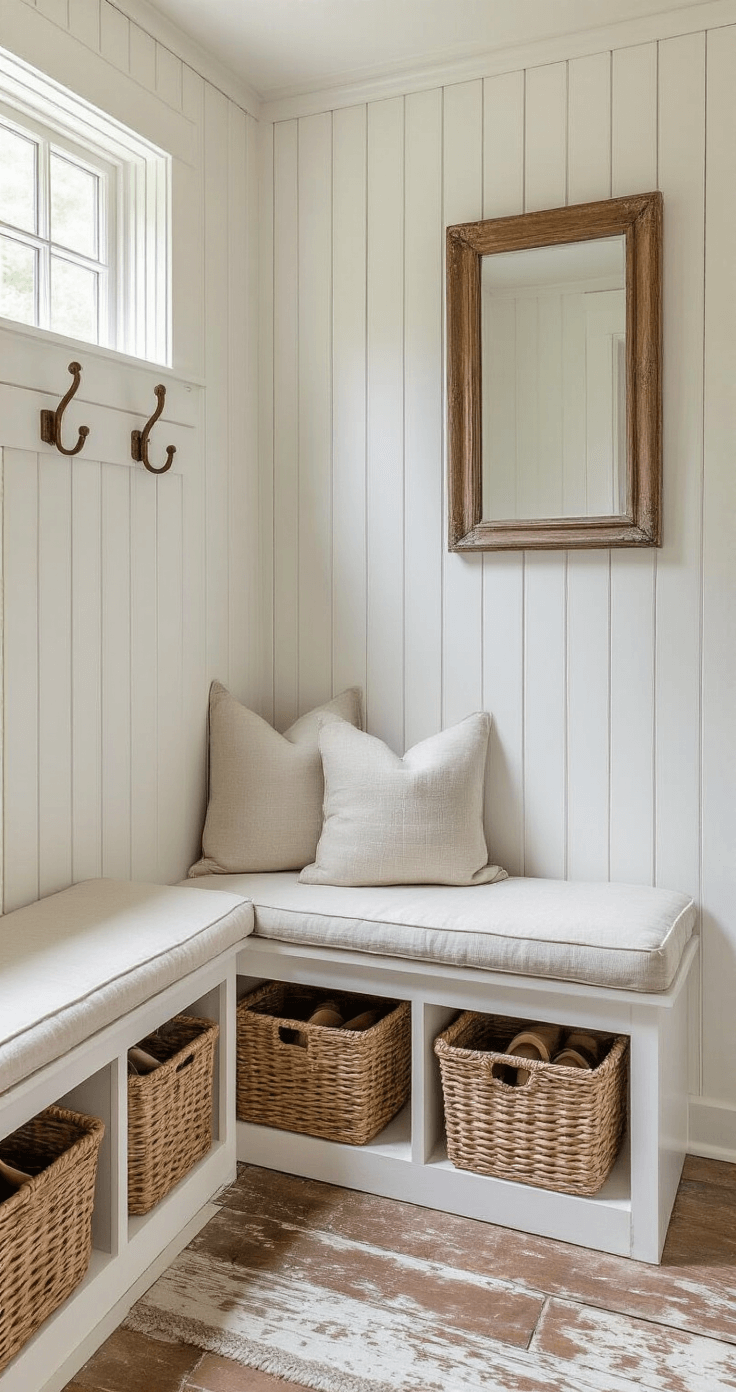
The key is making these elements look original to the house, not like add-ons. Paint them the same color as your trim, use matching hardware, and integrate them into the room’s architecture.
The Kitchen: Where Cottage Style Gets Real
Your cottage kitchen should feel warm and functional, not like a museum.
I went with white shaker cabinets (a cottage classic) but added character through unexpected details. Gunmetal gray hardware instead of boring silver. Open shelving on one wall for my vintage dishware collection. A deep farmhouse sink that’s actually practical for daily use.
Kitchen elements that define cottage style:
- Glass-front cabinets for displaying collections
- Butcher block countertops that age beautifully
- Vintage-inspired faucets in matte black or brushed nickel
- Swing-arm wall lamps for task lighting with character
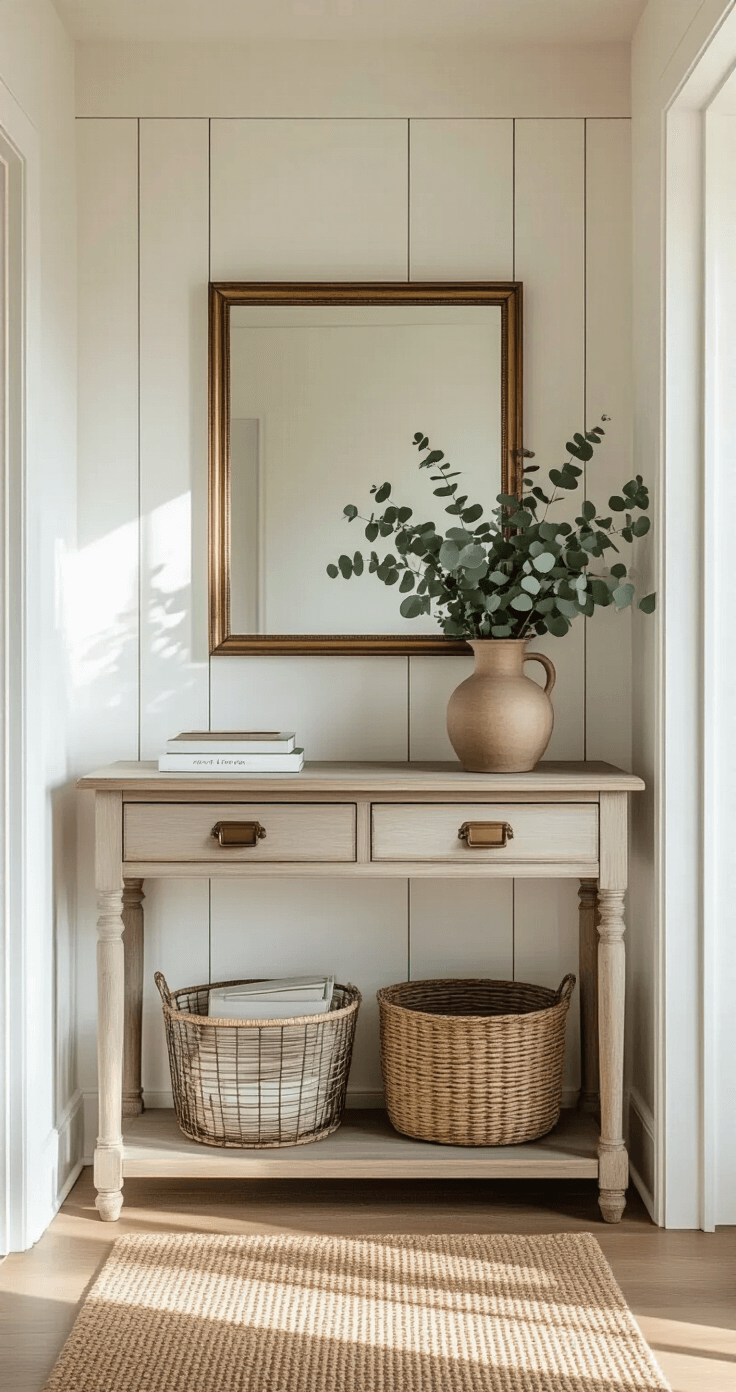
Skip the matchy-matchy approach. Mix wood tones, combine metal finishes, and let your kitchen feel collected rather than coordinated.
Bedrooms: Creating the Ultimate Cozy Retreat
I’ve redesigned my bedroom three times

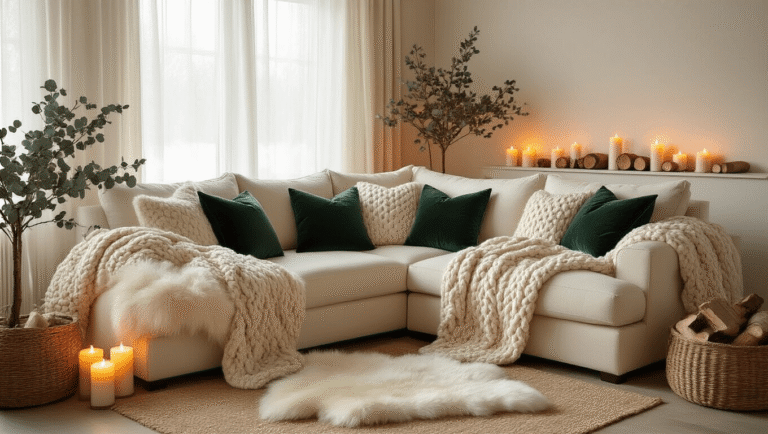
[…] Creating that perfect mountain comfort means layering textures: […]