This post may contain affiliate links. Please see my disclosure policy for details.
Why Most Fall Containers Look Boring (And How to Fix It)
Here’s what nobody tells you: flowers aren’t the star of the show in fall containers. Foliage does the heavy lifting.
I learned this the hard way after years of cramming chrysanthemums into pots and wondering why my displays looked flat. The moment I started thinking about texture, color, and structure first, everything changed.
Mums have their place, sure. But when you lead with interesting foliage plants, you create depth that lasts months instead of weeks.
🏠 Steal This Look
- Paint Color: Sherwin-Williams Rookwood Dark Red SW 2802
- Furniture: weathered teak potting bench with galvanized steel top
- Lighting: vintage barn pendant with seeded glass in aged bronze
- Materials: oxidized copper planters, raw cedar boxes, cast concrete urns, dried oat grass, preserved eucalyptus
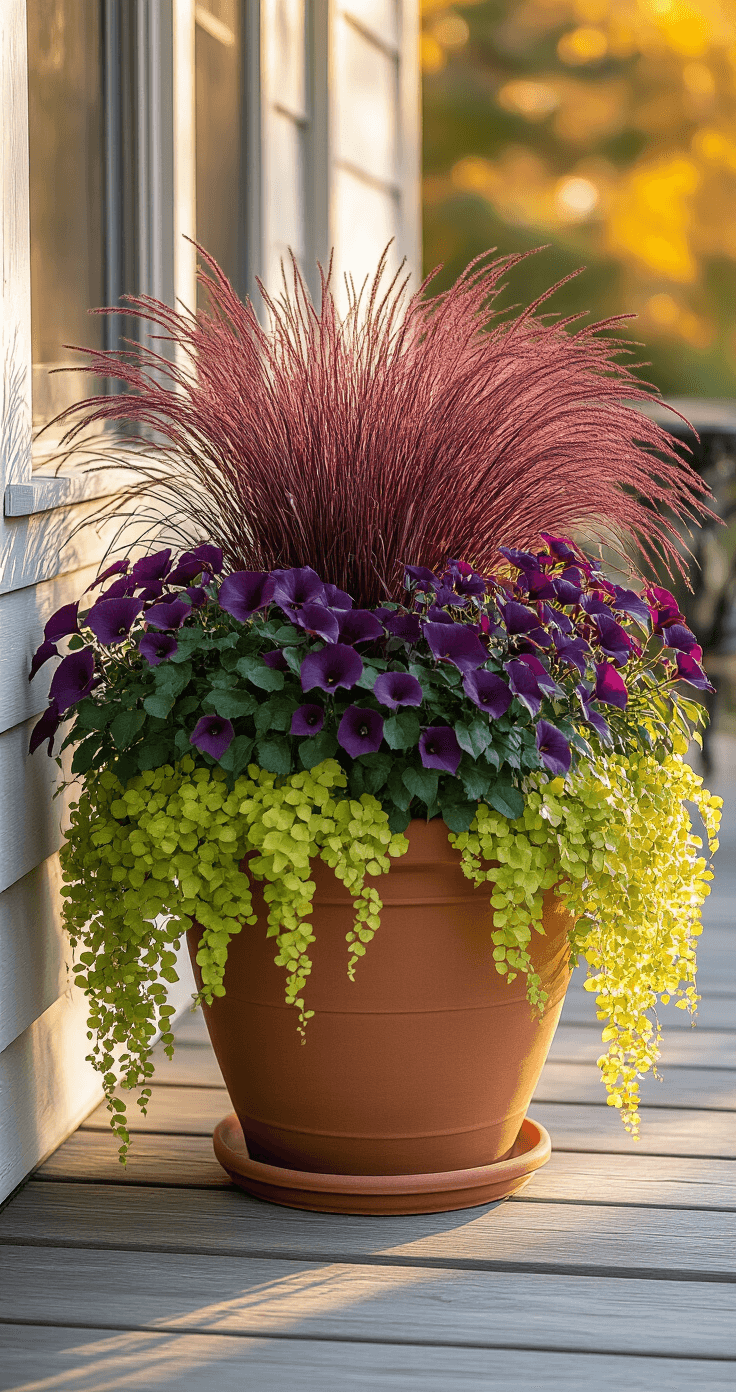
I used to panic-buy flats of orange mums every September, convinced more flowers equaled more impact. Now I spend that budget on one spectacular grass and three interesting foliage plants, and my porch looks intentional through Thanksgiving.
The Plants That Make Fall Containers Actually Work
Forget the predictable choices. These are the plants I reach for every single time.
Foliage Powerhouses
Ornamental grasses bring movement and height that no flower can match:
- Muhly grass creates those gorgeous pink clouds you see in professional landscapes
- Fountain grass adds dramatic burgundy plumes
- Acorus grass delivers bright gold-and-green striped foliage that practically glows
Coral bells (Heuchera) are my secret weapon. Varieties like ‘Stormy Seas’ offer deep burgundy leaves that anchor color schemes beautifully. They’re tough, they’re gorgeous, and they don’t quit when frost hits.
Trailing plants soften container edges:
- English ivy cascades elegantly without looking dated
- Golden creeping Jenny adds a pop of chartreuse
- Trailing rosemary gives you fragrance and culinary uses
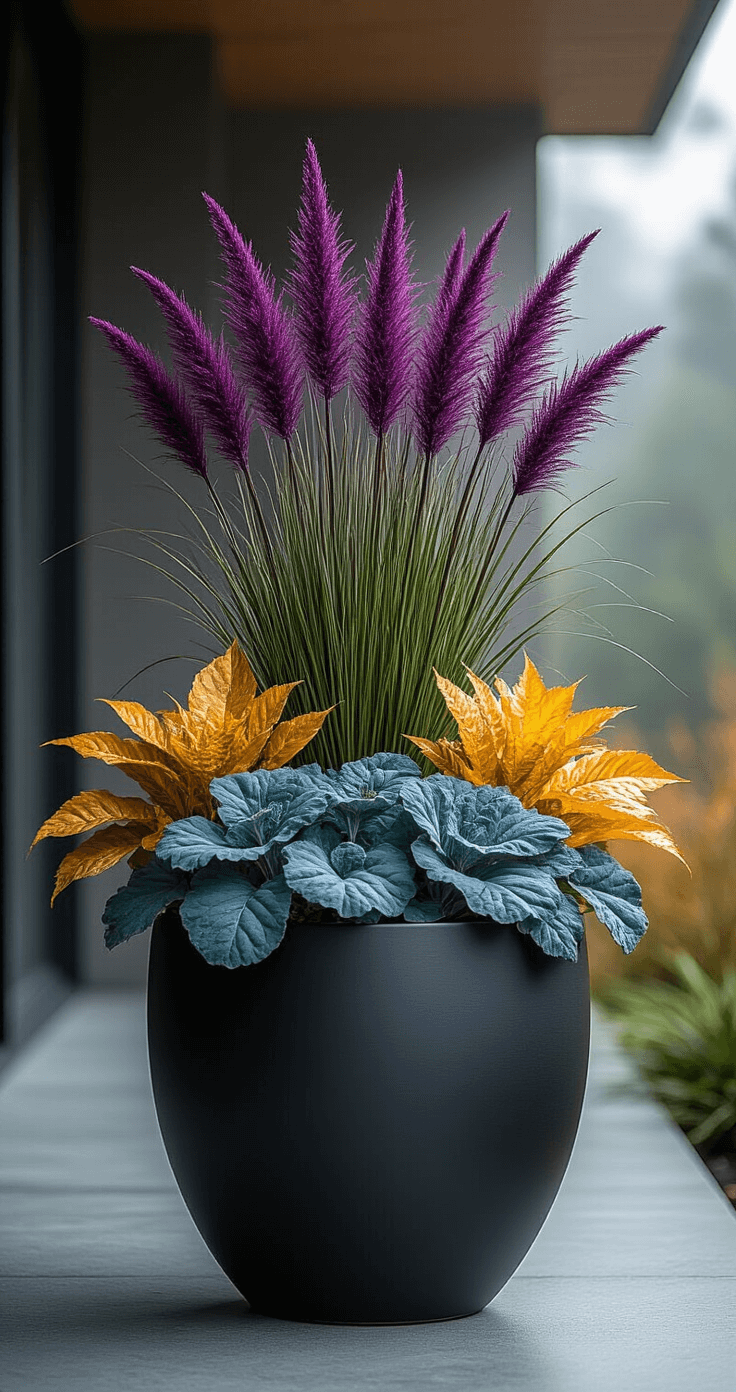
Ornamental cabbage and kale get dismissed as cheesy, but hear me out. The modern varieties look nothing like the frilly purple pom-poms from the ’90s. Place them strategically, and they add architectural interest that intensifies after the first frost.
Flowers That Actually Pull Their Weight
When I do use flowers, I choose varieties that can handle temperature swings:
- Pansies and violas keep blooming through light frosts
- Snapdragons offer vertical interest and come in sophisticated colors
- Asters bridge the gap between summer and fall perfectly
- Nemesias deliver fragrance along with color
Pro move: Swiss chard with bright stems (yellow, red, or pink) functions as both an ornamental plant and something you can harvest for dinner.
★ Steal This Look
- Paint Color: Benjamin Moore Vintage Wine 2116-20
- Furniture: weathered teak planter bench with built-in storage for container rotation
- Lighting: solar-powered rattan globe string lights with warm 2700K output
- Materials: oxidized zinc planters, hand-thrown terracotta with raw edges, brushed copper plant markers
I’ve killed enough mums to know that fall containers built on foliage rather than flowers forgive the gardener who forgets to water during a busy week—those coral bells still look intentional even when you’re running on autopilot.
How to Design Containers That Look Expensive
I’m going to save you from the biggest mistake I see everywhere: randomly stuffing plants into pots and hoping for the best.
The Hierarchy That Actually Works
Back to front, tall to short. It sounds obvious, but I watch people ignore this constantly.
Your thriller plant (the tall centerpiece) should be at least as tall as your container. Better yet, make it twice as tall for real impact.
When ornamental grasses won’t work—maybe you’re styling a shaded porch—try this trick I picked up from a designer friend: Bundle birch poles, dogwood branches, or curly willow together. Zip-tie them to a wooden stake. Push the stake into the center of your planted container. Instant architectural height without spending a fortune on massive plants.
Save this article
Enter your email and we'll send it straight to your inbox.
The Two-Container Combo I Use Everywhere
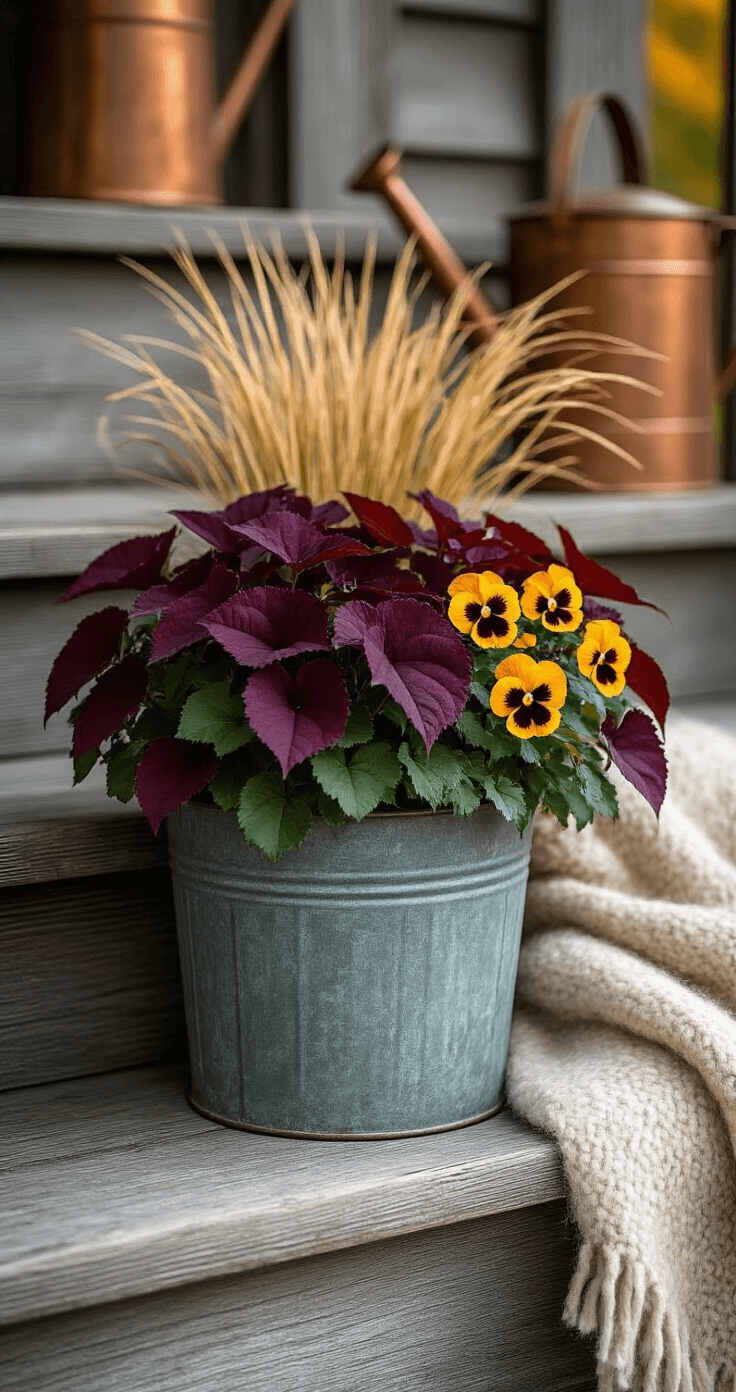
Large container:
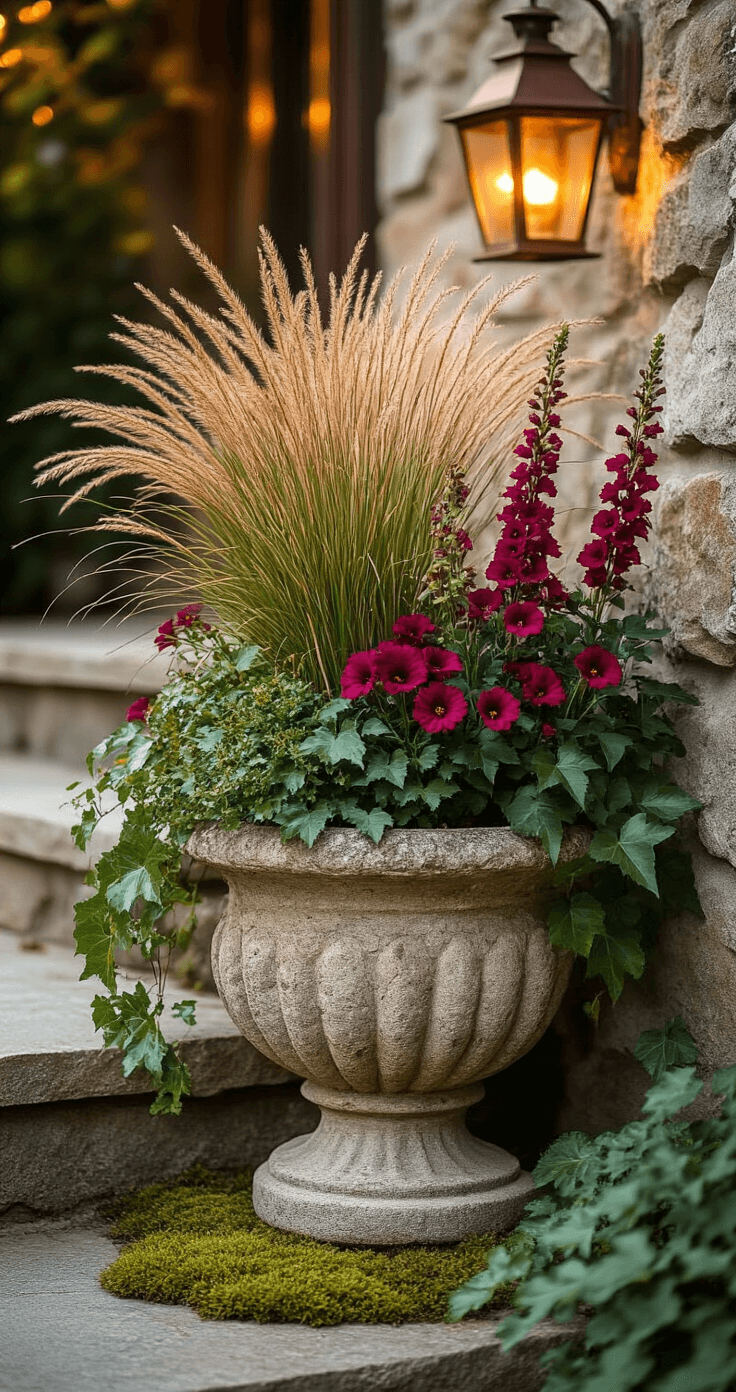
- Tall muhly grass or purple fountain grass as the centerpiece
- Mid-height acorus grass for bright contrast
- Maroon coral bells to anchor the color palette
- Antique-shaded pansies (not bright primary colors) to soften edges
Companion container:
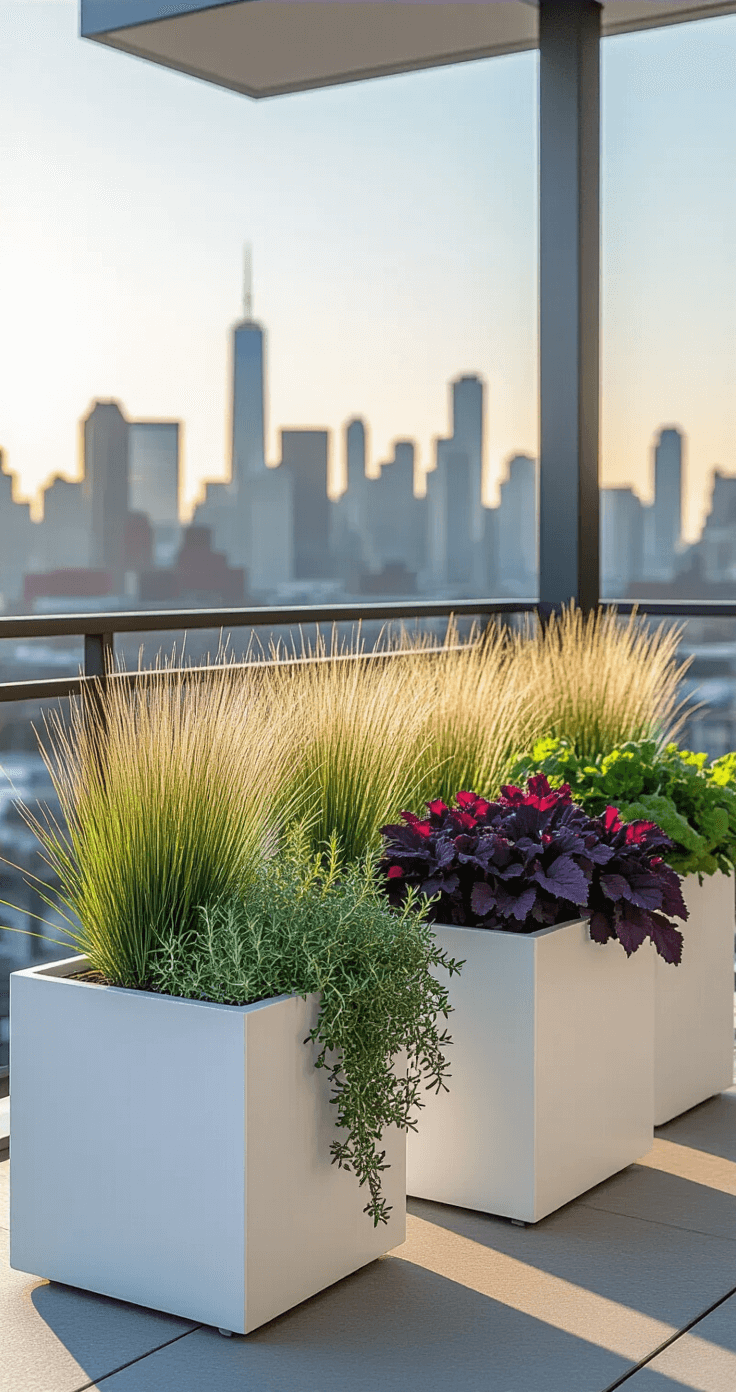
- Lower-growing Mexican feather grass
- Coordinating plants from the larger pot in smaller quantities
Place them near your entry or on either side of porch steps. The repetition of colors and textures creates cohesion that looks professionally designed.
✎ Steal This Look
- Paint Color: use Farrow & Ball brand. Match the ACTUAL wall color in the image. Format: Farrow & Ball ColorName CODE
- Furniture: weathered teak potting bench with galvanized zinc top
- Lighting: oversized blackened steel barn pendant with seeded glass
- Materials: raw terracotta, aged zinc, hand-thrown ceramic, woven seagrass, charred wood
This is the approach I use on my own front steps every October, and neighbors always assume I hired a designer—the birch pole trick alone transformed my shaded north-facing entry when nothing else would grow tall enough.
Three Container Ideas That Take 30 Minutes or Less
The Instant Gratification Method
Buy a gorgeous Belgian mum already in bloom. Choose a decorative container that’s slightly larger. Fill the gap with fresh potting soil. Nestle the entire nursery pot inside.
Done.
This is the method I use when I’m short on time but still want impact. Nobody knows the plant is still in its original pot, and you can swap it out when it’s spent.
The Shrub Upgrade
Already have a rosemary or small evergreen shrub in a container? Don’t start from scratch.
Add around the base:
- Ornamental cabbage tucked close to the shrub
- Purple violas filling gaps
- Trailing ivy spilling over the edge
The established plant provides structure. The additions provide seasonal color. Total time: 20 minutes.
The Summer Container Refresh
I never dump my summer pots completely.
- Anything that tolerates frost stays:
- Perennials get a second act
- Hardy shrubs become fall anchors
- Ornamental grasses that looked scraggly in August suddenly shine in October
I pull out the heat-loving annuals and tuck in pansies, ornamental kale, and trailing ivy around what’s already thriving.
🌟 Steal This Look
- Paint Color: Behr Burnished Clay PPU2-17
- Furniture: weathered teak bench for staging fall containers
- Lighting: oversized galvanized metal lantern with LED candle
- Materials: terracotta with aged patina, brushed copper accents, woven seagrass basket liners
These quick-change methods saved my sanity during the years I hosted Thanksgiving with a newborn and zero bandwidth for garden center marathons.
The Color Strategy Nobody Talks About
Forget the orange-and-yellow cliché unless that genuinely speaks to you.
I build my fall palettes around burgundy, gold, chartreuse, and deep purple. These colors reflect autumn without screaming “October.” They photograph
Keep this one for later
We'll email you the link so you can come back to it.