This post may contain affiliate links. Please see my disclosure policy for details.
Crafting the Perfect Primitive Kitchen: A Rustic American Dream
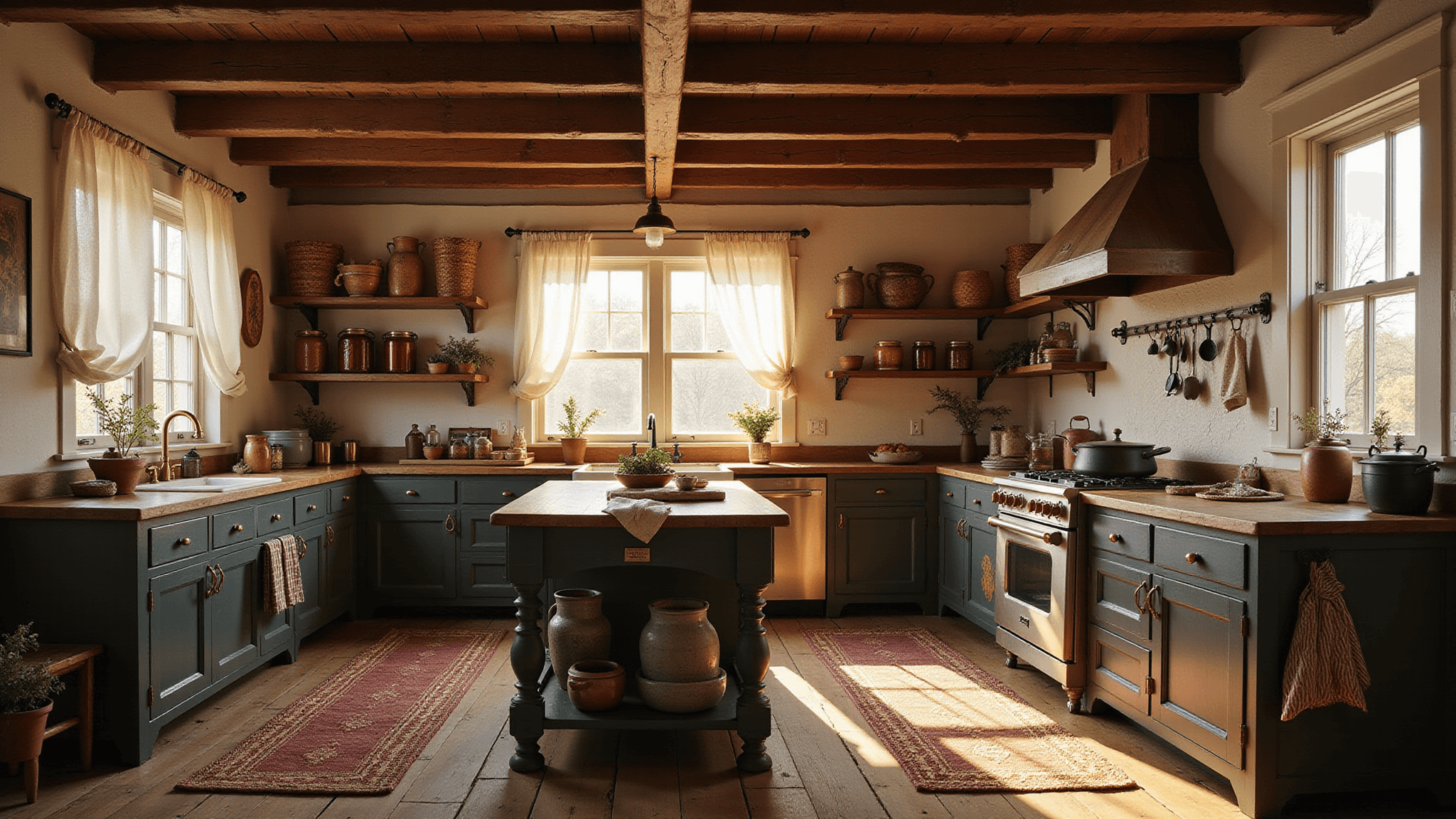
The primitive kitchen that felt most authentic had a farmhouse sink, open shelving with crockery, and natural wood tones. Primitive kitchen style is about rustic, simple American design. The key is using natural materials and keeping the look honest and functional.

There’s something deeply grounding about a kitchen that honors the honest craftsmanship of early American settlers—it’s less about perfection and more about the stories embedded in every scarred surface and hand-worn handle.
What Makes a Primitive Kitchen Truly Magical?
Primitive kitchens aren’t just a design choice – they’re a love letter to simplicity and heritage. Picture this: warm woods, vintage metals, and textures that tell stories of generations past.
The Heartbeat of Primitive Kitchen Design
Materials That Whisper History:
- Distressed wooden cabinetry that looks like it’s survived a century
- Wrought iron fixtures that could’ve come straight from an old farmhouse
- Natural fabrics that feel like a warm hug from your favorite quilt

Color Palette: Warmth Meets Tradition
My favorite part about primitive kitchens? The colors that wrap you in comfort:
- Rich chocolate browns
- Deep forest greens
- Mustard yellows that pop
- Burgundy accents that add depth and drama
There’s something deeply grounding about a kitchen that refuses to rush—where every scratch in the pine tells you breakfast was made here for fifty years, and the iron kettle never quite got put away.
Styling Your Primitive Kitchen: Pro Tips
Furniture and Hardware: The Devil’s in the Details
Must-Have Elements:
- Shaker-style cabinets with minimal fuss
- Antique brass or wrought-iron knobs that tell a story
- Hardware that looks like it’s been lovingly passed down through generations

Accessories That Bring the Magic
Create Your Vintage Vignettes:
- Wooden risers displaying vintage mason jars
- Punched tin lamp shades that cast magical shadows
- Pottery and baskets that scream “handcrafted with love”
There’s something deeply satisfying about running your hand over a cabinet knob that’s worn smooth by decades of use; it’s a daily reminder that the best kitchens aren’t showpieces but living, working spaces that honor the hands that came before.
Primitive vs. Farmhouse: Know the Difference
Think primitive is just another farmhouse style? Think again!
Key Distinctions:
Save this article
Enter your email and we'll send it straight to your inbox.
- Primitive: Deeper colors, more historical authenticity
- Farmhouse: Lighter palette, more modern comfort
- Primitive focuses on pure historical charm
- Farmhouse allows more contemporary touches

1-2 sentences of human framing about this room
✅ Get The Look
Functional Decor: Because Beauty Meets Practicality
Storage Solutions with Style:
- Mason jars for everything from utensils to dried herbs
- Wooden trays that are both beautiful and functional
- Tin containers that look amazing and keep your kitchen organized
Pro Tip: Texture is Your Best Friend
Layer, layer, layer! Mix distressed woods with soft linens. Combine rough metals with smooth ceramics. Create a space that begs to be touched and admired.

This is the heart of the primitive kitchen—where your grandmother’s rolling pin and that dented tin you found at a flea market finally earn their keep as working decor.
A primitive kitchen isn’t just a design choice – it’s a celebration of American craftsmanship, simplicity, and warmth. It’s about creating a space that feels like home the moment you walk in.
Remember:
- Embrace imperfections
- Choose pieces with history
- Let your personality shine through
Your primitive kitchen is waiting to tell its story. Are you ready to start writing it?
Disclaimer: No vintage mason jars were harmed in the making of this design guide. 😉

A primitive kitchen works when the materials are natural and the design is simple. Use a farmhouse sink, open shelving, and wood tones. The kitchen should feel rustic and authentic.
This kitchen becomes a living scrapbook where every scratch on the table and chip in a bowl holds memory—it’s less about achieving a look and more about honoring the hands that came before yours.
Keep this one for later
We'll email you the link so you can come back to it.