This post may contain affiliate links. Please see my disclosure policy for details.
Why Your Downstairs Toilet Feels Like a Broom Cupboard (And What to Do About It)
Contents
Most downstairs toilets weren’t designed with intention. They’re afterthoughts squeezed under staircases or carved out of hallways. The average downstairs toilet measures around 4 feet by 3 feet. That’s smaller than most walk-in closets.
But here’s what I learned: small doesn’t have to mean cramped, boring, or ugly.
You’re probably dealing with at least two of these problems:
- Nowhere to put anything without cluttering the space
- Dark and uninviting atmosphere
- Fixtures that make the room feel even smaller
- Zero personality or style
Let me walk you through the solutions that actually work.
Space-Maximizing Strategies That Don’t Involve Building an Extension
Get Everything Off the Floor
This was my first move, and honestly, the most transformative.
Floor space is premium real estate in a tiny toilet. Every item sitting on the floor makes the room feel smaller and harder to clean.
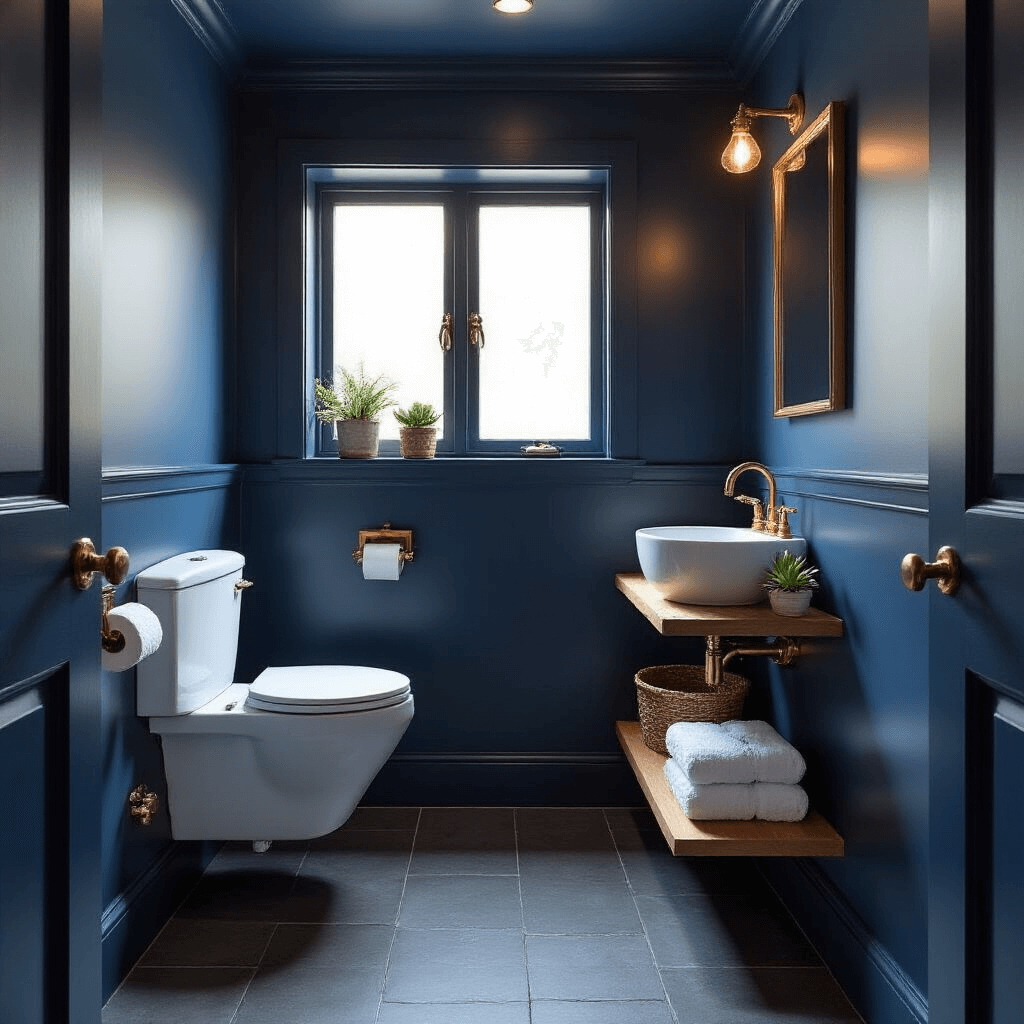
Wall-mounted fixtures became my best friends:
- Wall-hung toilets look sleek and create the illusion of more floor space
- Floating shelves hold essentials without eating into your walking space
- Wall-mounted cabinets provide hidden storage at eye level
I installed a wall-hung toilet in mine, and the difference was immediate. You can actually see the floor tiles now, which tricks your brain into thinking the space is larger.

Rethink Your Sink Situation
Standard bathroom sinks are designed for bathrooms with actual square footage. Your downstairs toilet isn’t one of those bathrooms.
Corner sinks changed the game for me. They tuck into otherwise wasted space and leave the center of the room open.
Cloakroom basins are specifically designed for compact spaces. Some are as narrow as 10 inches but still perfectly functional.
I went with a corner-mounted basin that left enough room to actually stand comfortably. Before, I was basically doing a weird sideways shuffle every time I washed my hands.
Sort Out That Door Problem
Here’s something nobody tells you about small bathrooms: the door probably takes up 25% of your usable space.
Traditional hinged doors swing inward, claiming a massive arc of floor space just to open and close.
Better options:
- Sliding doors run parallel to the wall
- Pocket doors disappear into the wall cavity
- Outward-opening doors if your hallway allows it
I couldn’t install a pocket door without major renovation, so I switched the door to open outward. Simple change, massive impact.
The Wet Room Approach
If you’re doing a complete renovation anyway, consider going full wet room.
Glass shower enclosures or eliminating the shower barrier entirely creates visual continuity. Your eye can travel across the whole space without hitting barriers.
I didn’t go this route (no shower in my downstairs toilet), but my friend Sarah did, and her tiny bathroom looks twice the size.
Storage That Actually Works
You need places to put toilet paper, hand towels, cleaning supplies, and whatever else accumulates.
Here’s what worked for me:
Natural alcoves are goldmines. I had a weird indent next to the toilet that I’d ignored for years. Three floating shelves later, and I had storage for rolled towels and decorative bits.
Mirrored cabinets are genius. You need a mirror anyway, so why not make it do double duty? Mine holds all the unglamorous necessities behind a reflective surface that makes the room feel larger.
Wall-mounted rails and towel racks keep things accessible without cluttering surfaces. I mounted a simple brass rail on the wall opposite the toilet. Hand towel stays off the sink, the sink stays clear, everyone’s happy.
Color and Pattern Approaches That Transform Tight Spaces
This is where I got to have actual fun.
Color Drenching: Bold and Beautiful
I’d read about color drenching but thought it would make my small space feel like a coffin. I was completely wrong.
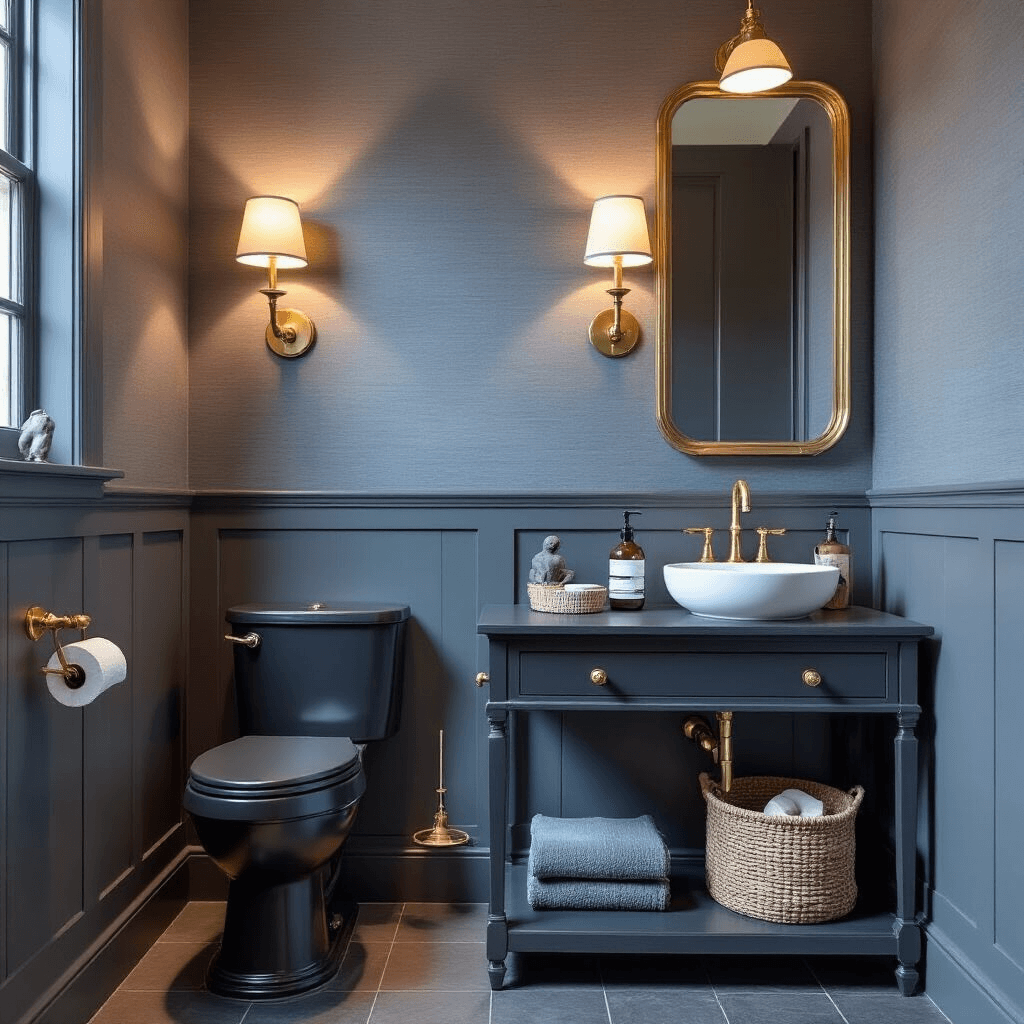
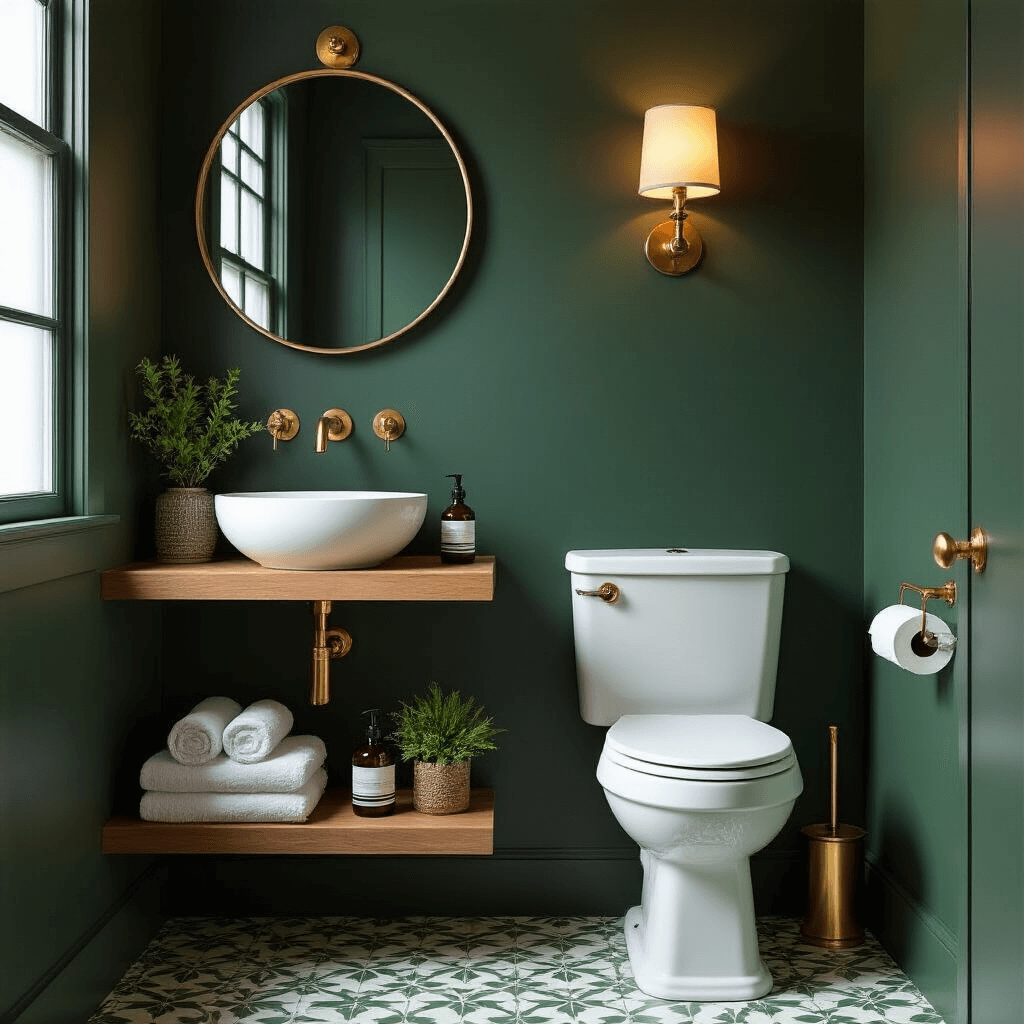
Color drenching means painting everything—walls, ceiling, trim, sometimes even fixtures—in the same rich hue. Instead of breaking up the space with different colors, you create a cohesive envelope.
I went with a deep navy blue.
Walls: navy. Ceiling: navy. Woodwork: navy.
The result? Sophisticated, cozy, and surprisingly spacious.
Other colors that work brilliantly:
- Burgundy for drama and warmth
- Deep forest green for a nature-inspired vibe
- Charcoal gray for modern elegance
- Jewel tones like emerald or sapphire for luxury
The key is going all in. Half-hearted color drenching looks like you ran out of paint halfway through.
If Bold Terrifies You, Go Pale
My sister took the opposite approach. She chose a pale blush pink that reflects every bit of light.
Light colors