

This post may contain affiliate links. Please see my disclosure policy for details.
The Good Kind: Winter Grass That Actually Saves Your Lawn
Here’s the thing about winter grass varieties – they’re the overachievers of the plant world.
While your warm-season grasses are basically hibernating through the cold months, cool-season grasses like ryegrass and winter wheatgrass are living their best lives. They thrive when temperatures drop, keeping your yard looking respectable instead of like abandoned farmland.

I started overseeding my Bermudagrass lawn five years ago, and honestly, I can’t believe I spent so many winters pretending the brown was “natural dormancy” when guests came over.
Why You’d Actually Want Winter Grass Growing
Let’s talk benefits, because I’m not asking you to do extra yard work for nothing.
Your lawn gets serious protection:
- Soil stays locked in place when winter rains try to wash it away
- Erosion becomes someone else’s problem, not yours
- The ground stays covered and healthy instead of bare and compacted
Your yard looks intentional:
- No more explaining to neighbors that yes, your grass is “supposed” to look dead
- Curb appeal doesn’t vanish the second frost hits
- Your landscape maintains that “someone actually lives here” vibe
The spring transition becomes smoother:
- Less shock to your soil when warm-season grass wakes up
- Fewer bare patches and weak spots in spring
- Your main grass comes back stronger because it had a protective blanket all winter

Actually Getting Winter Grass to Grow (Without Losing Your Mind)
I’m not going to sugarcoat this – the first time I tried overseeding, I basically threw ryegrass seed on my lawn like feeding pigeons and wondered why nothing happened.
There’s a method here, and it matters.
Step 1: Scalp your lawn like you mean it
Cut your existing grass down close to the soil. I’m talking shorter than you’ve ever cut it before. This feels wrong at first, but your warm-season grass is going dormant anyway – you’re not hurting it.

Step 2: Give the soil something to work with
Add a thin layer of compost across the scalped area. This isn’t optional if you actually want things to grow. Think of it like prepping a canvas before painting – you need a good surface.
Step 3: Get those seeds into contact with soil
Don’t just scatter seeds on top and hope for the best. Use a broadcast spreader for even distribution, then lightly rake them into the soil surface. Seed-to-soil contact is the magic phrase here.
Save this article
Enter your email and we'll send it straight to your inbox.

Step 4: Water like it’s your new part-time job
For the first week, water daily. Not a light sprinkle – actually soak the area. After germination (which happens around 7-10 days for ryegrass), cut back to twice weekly deep watering.
Step 5: Wait for the magic
When your grass hits about 2 inches tall, you can start mowing. Keep your mower blades sharp – baby grass tears easily with dull blades, and torn grass gets diseased grass.
🎨 Steal This Look
- Paint Color: Sherwin-Williams Ripe Olive SW 6209
- Furniture: weathered teak potting bench with galvanized steel top, used as a mudroom console for storing garden boots and seed trays
- Lighting: barn-style gooseneck sconce in matte black with warm 2700K LED, mounted above the entry door
- Materials: rough-sawn cedar shiplap, honed slate flooring, raw linen, terracotta, aged brass hardware
There’s something deeply satisfying about a mudroom that acknowledges the mess of real outdoor life—this is where you transition from the dormant world back into the warmth, grass stains and all.
The Bad Kind: Winter Grass That Ruins Everything
Now let’s talk about the villain of this story: annual bluegrass, also called Poa annua.
This is the winter grass weed that shows up uninvited, spreads like gossip, and makes your lawn look patchy and terrible.
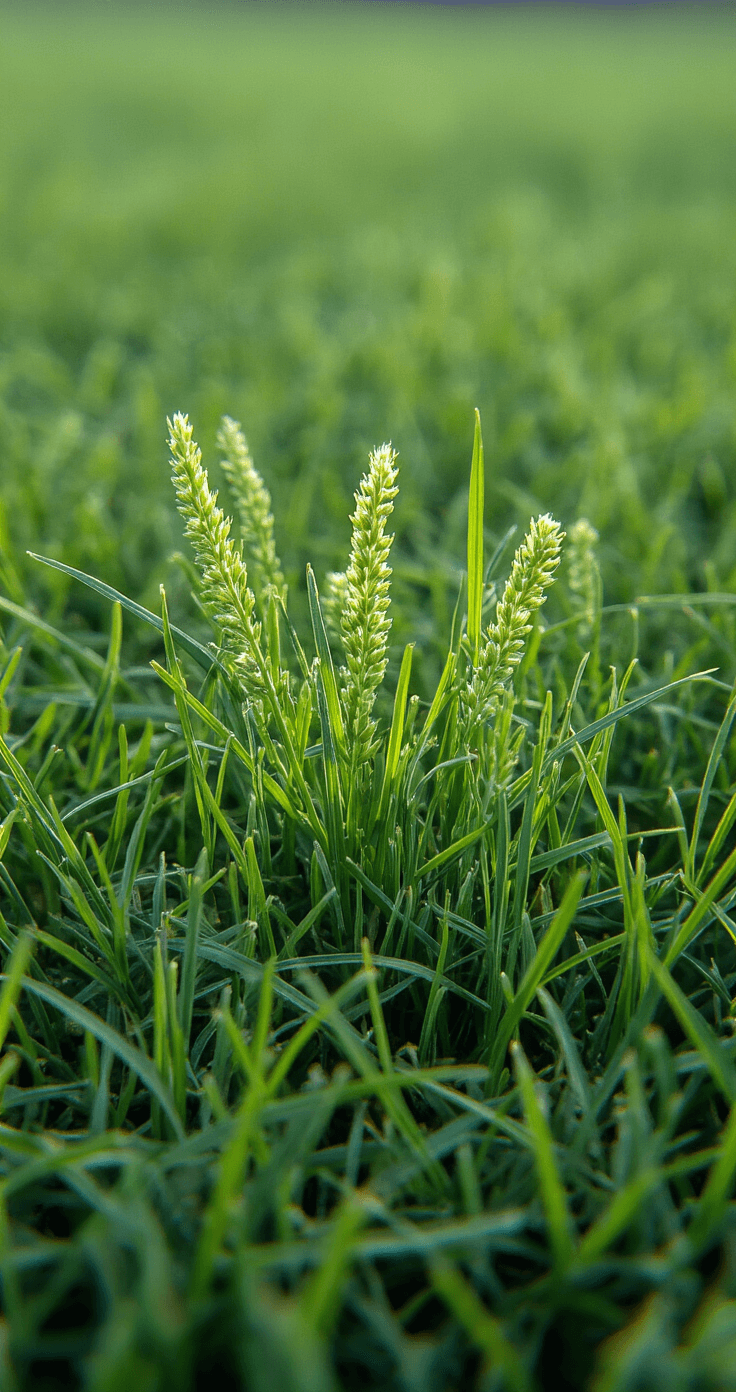
I first noticed it in my lawn three years ago – these lighter green clumps that stuck out like a sore thumb against my dark green fescue. I thought maybe I’d just missed those spots when fertilizing. Nope. Invader.
How to Spot the Imposter
Annual bluegrass doesn’t even try to blend in:
- Lighter, almost lime-green color compared to your actual grass
- Grows in clumps instead of the uniform pattern you want
- Coarser texture that feels different when you walk on it
- Seeds like its life depends on it (because it does)
Here’s what makes this weed particularly annoying: one plant produces hundreds of seeds. Those seeds can sit in your soil for years, just waiting for the right cool weather to germinate. It’s like having sleeper agents in your lawn.
Fighting Back Without Destroying Your Actual Grass
You’ve got two main battle strategies here, and honestly, you’ll probably need both.
Cultural control (the non-chemical approach):
- Keep your desirable grass so healthy and thick that weeds can’t find room to establish. A dense lawn is your first line of defense.
- Water deeply but infrequently instead of shallow daily watering. Poa annua loves frequent shallow watering – you’re basically rolling out the welcome mat.
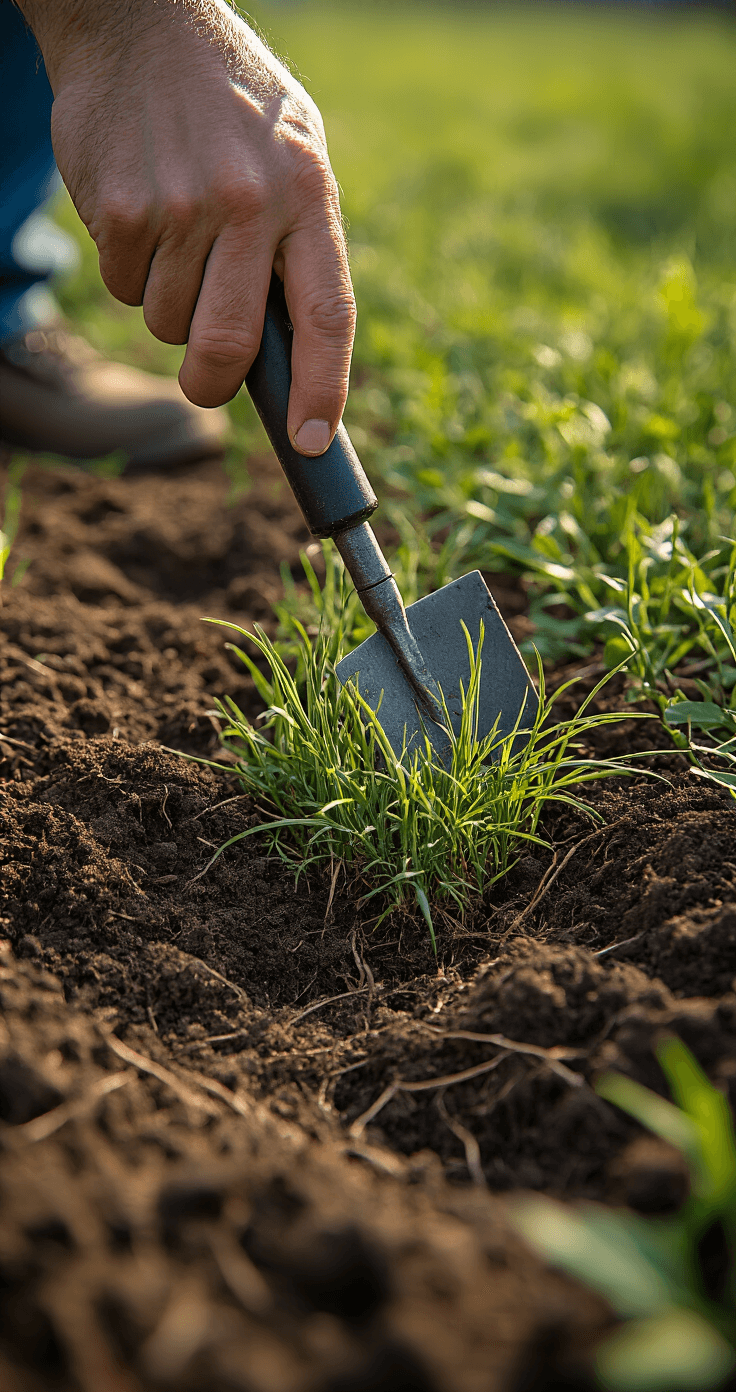
- Hand-pull small patches when you first spot them. Yes, this is tedious. Yes, it works better than ignoring them. Get down there with a weeding tool and evict them.
- Mow frequently to cut off seed heads before they mature. Every seed head you remove is hundreds of future weeds you don’t have to deal with.
- Skip the high-nitrogen fertilizer in late fall. You’re just feeding the enemy at that point.
Chemical control (when you mean business):
- Pre-emergent herbicides are your friend here, but timing is everything. You need to apply them before seeds germinate – typically in
🎨 Steal This Look
- Paint Color: Benjamin Moore Caldwell Green HC-124
- Furniture: vintage-inspired metal garden bench with distressed sage finish
- Lighting: galvanized steel barn pendant with seeded glass
- Materials: weathered cedar, oxidized zinc, raw linen, terracotta with moss patina
There’s something deeply human about dedicating space to what went wrong in our outdoor lives—it transforms shame into story, and suddenly that embarrassing lawn patch becomes the reason you finally built the sunroom you kept postponing.
Keep this one for later
We'll email you the link so you can come back to it.





[…] don’t need to surrender your container garden to […]
[…] Gardener’s Secret: Healthy soil and dense grass are your best long-term weed prevention […]