

This post may contain affiliate links. Please see my disclosure policy for details.
What Actually Makes an Easter Table Look Good (Without Trying Too Hard)
Contents
- What Actually Makes an Easter Table Look Good (Without Trying Too Hard)
- The Centerpiece That Won’t Die Before Your Guests Arrive
- Why Your Table Linens Matter More Than You Think
- Napkin Rings Are the Secret Weapon Nobody Talks About
- Place Cards That Don’t Feel Like a Wedding Reception
- Individual Touches That Make Each Seat Feel Special
- The Plate Situation (And Why Mixing Matters)
- Budget Decor That Doesn’t Scream “Budget Decor”
Listen, your table doesn’t need to look like it belongs in a magazine spread. It needs to feel welcoming, celebrate spring, and not make you want to cry when you calculate the damage. Spring flowers are your best friend here. I’m talking tulips, daffodils, hyacinths—anything that screams “winter is finally dead and buried.” Pastel colors work, but don’t feel chained to them if jewel tones or bright colors are more your style. Natural elements ground everything so it doesn’t look like an Easter Bunny exploded on your table.
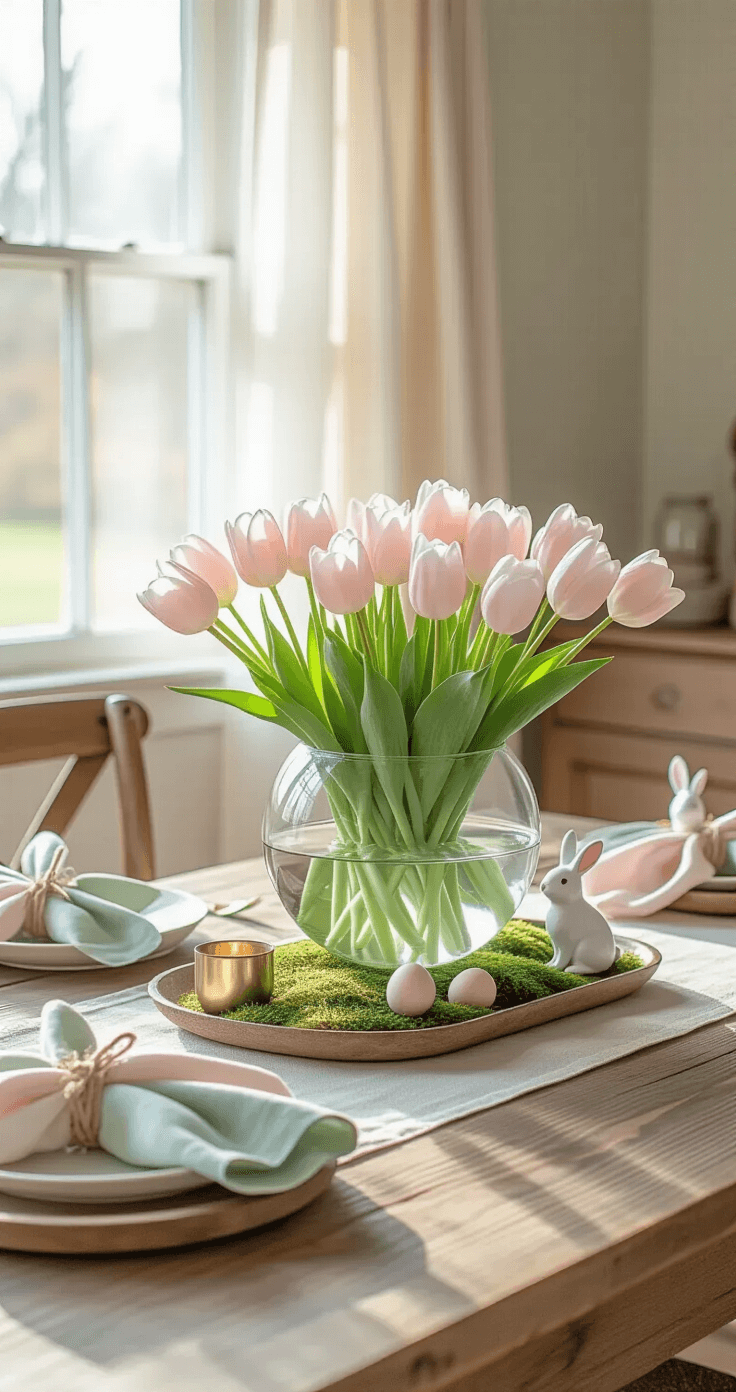
🖼 Steal This Look
- Paint Color: Sherwin-Williams Alabaster SW 7008
- Furniture: farmhouse trestle dining table in natural oak finish
- Lighting: linear rattan pendant light with warm brass hardware
- Materials: unbleached linen, raw wood, woven rattan, matte ceramic
This is the table where your mother-in-law finally compliments your hosting and your niece asks why you don’t do this every Sunday—effortless beats perfect every time.
The Centerpiece That Won’t Die Before Your Guests Arrive
Last year, I spent forty dollars on tulips that drooped before anyone even sat down. Never again. Here’s what actually works: Floating flower heads in shallow bowls are nearly idiot-proof—just snip the stems and let them float. I use my decorative glass bowls filled with water and scatter tulip or rose heads across the surface. They last longer than full stems because they’re already getting direct water contact.

Potted spring bulbs are even better because they keep growing. Grab a wicker basket, line it with moss from your yard or the craft store, and nestle in a few blooming hyacinth or daffodil plants. Your house smells amazing, and the centerpiece survives the entire weekend.
🌟 Steal This Look
- Paint Color: Benjamin Moore White Dove OC-17
- Furniture: extendable farmhouse dining table in weathered oak finish
- Lighting: linear brass chandelier with seeded glass shades
- Materials: clear glass, woven wicker, sheet moss, terracotta pots, water
There’s something quietly triumphant about a centerpiece that still looks cheerful when you’re scraping plates at midnight, and your future self will thank you for choosing living bulbs over cut stems.
Why Your Table Linens Matter More Than You Think
I used to skip table runners because they seemed unnecessary. Then I put one down and realized it’s basically makeup for your table—covers imperfections and pulls everything together. For Easter, go with these approaches: A lace table runner gives you instant vintage elegance without fuss. Burlap or linen runners work if your style leans farmhouse or rustic. Skip the tablecloth entirely and let your wood table show through with just a runner down the center.

🌟 Steal This Look
- Paint Color: Farrow & Ball Skimming Stone 241
- Furniture: reclaimed wood farmhouse dining table with visible grain and natural finish
- Lighting: vintage brass candlestick holders with tapered beeswax candles
- Materials: Belgian linen, raw-edge burlap, hand-crocheted cotton lace, weathered oak
I learned this the hard way at my first Easter brunch when my grandmother’s water ring from 1987 became the unintended centerpiece; now I treat linens as non-negotiable insurance against table trauma.
Napkin Rings Are the Secret Weapon Nobody Talks About
I never understood napkin rings until I used them once. They transform a folded napkin from “meh” to “she really thought about this.” Easiest options that look intentional: Fresh rosemary or thyme sprigs tied around napkins with twine, Ceramic bunny napkin rings if you’re leaning into the theme, Ribbon in your color scheme tied in a simple bow, Wooden rings for a natural, understated look, Beaded rings if your style is more elegant than casual. I keep mine simple—usually just fresh herbs from my garden tied with kitchen twine. It costs nothing and makes the whole table smell good when people sit down.

★ Steal This Look
- Paint Color: Behr Swiss Coffee 12
- Furniture: Extendable farmhouse dining table with turned legs, upholstered dining chairs in natural linen
- Lighting: Linear brass chandelier with linen shades over the table
- Materials: Unfinished wood, raw linen, terracotta, dried botanicals, matte ceramic
There’s something quietly satisfying about watching guests notice the rosemary tied around their napkin—it’s the smallest detail that sparks the most conversation.
Place Cards That Don’t Feel Like a Wedding Reception
Place cards feel formal, but they solve the awkward “where should I sit” shuffle. Here’s how to do them without the stuffiness: Write names on eggs with a paint pen—hard-boiled eggs that double as part of the table decor. Press small flowers into cardstock and write names in simple handwriting. Cut bunny shapes from cardstock and write names on the ears. Tie small tags to individual flowers at each place setting. The trick is keeping your handwriting casual and using materials that match your table’s overall vibe. Nobody wants to see calligraphy if your table is rustic farmhouse.

🏠 Steal This Look
- Paint Color: use Valspar brand. Match the ACTUAL wall color in the image. Format: Valspar ColorName CODE
- Furniture: farmhouse dining table with natural wood grain and visible knots, paired with mismatched vintage chairs in varying wood tones
- Lighting: linear rattan pendant light with exposed Edison bulbs suspended over the table center
- Materials: raw linen napkins, unbleached cotton runners, kraft cardstock, pressed wildflowers, brown eggs with matte finish, jute twine, unfinished wood slices
There’s something quietly generous about telling someone exactly where they belong at your table—it removes the social math and lets guests arrive already relaxed.
Individual Touches That Make Each Seat Feel Special
When I sit down at someone’s table and there’s a little something just for me, I immediately feel like a priority. Small additions that create this feeling: A single stem in a bud vase at each setting—I buy one large bouquet and split it up. Tiny bird nests with a few pastel eggs tucked next to each plate. Small potted herbs like basil or mint that guests can take home. Chocolate eggs or candies wrapped in tissue paper at each place. A hand-written note or Easter wish on decorative paper. These touches take minutes but create the impression you spent hours thinking about your guests.

💡 Steal This Look
- Paint Color: PPG White Whisper PPG1001-1
- Furniture: farmhouse-style extendable dining table with turned legs
- Lighting: vintage-inspired brass chandelier with candle-style bulbs
- Materials: woven linen napkins, ceramic bud vases, kraft paper place cards, terracotta pots, tissue paper in soft pastels
There’s something deeply satisfying about watching guests discover their personal detail—these small gestures transform a meal into a memory they’ll carry home.
🛒 Get The Look
The Plate Situation (And Why Mixing Matters)
You don’t need matching Easter plates unless you want them. Layer what you have: Start with your everyday dinner plates in white or a neutral color. Top them with smaller salad plates in a spring pattern or pastel color. Add a patterned napkin that picks up colors from both plates. The layering creates visual interest without requiring you to buy a whole new dish set. I found floral salad plates at a thrift store for two dollars each and use them every spring over my regular white plates. Looks intentional, costs nothing.
Budget Decor That Doesn’t Scream “Budget Decor”
The Dollar Tree is secretly amazing for Easter table decor. Last year I created an entire tablescape for under twenty dollars using: Wooden crates as risers for height variation, Flocked bunny figurines that actually looked decent, Mixed spring floral bushes that I separated into smaller arrangements, Floral foam to keep everything in place. Other cheap tricks that work: Paint ceramic or wooden eggs from the craft store in your color scheme. Use branches from your yard as height elements—forsythia, cherry blossoms, or pussy willows all work. Repurpose mason jars as vases instead of buying new ones. Dye eggs with food coloring you already own. Cut squares of burlap or old linen to use as placemats. The key is choosing two or three materials and repeating them across the table so it looks cohesive instead of random.

[…] Charger plate (the big decorative one that stays put)– Dinner plate– Salad or appetizer plate (if you’re serving courses)– […]