This post may contain affiliate links. Please see my disclosure policy for details.
Farmhouse Front Porch Steps: Transform Your Entryway Into a Showstopper
Contents
- Farmhouse Front Porch Steps: Transform Your Entryway Into a Showstopper
- Why Your Front Steps Matter More Than You Think
- The Paint vs. Stain Debate (And What Actually Works)
- Material Choices That Actually Hold Up
- Color Coordination That Doesn’t Require a Design Degree
- Decorative Enhancements That Make People Slow Down
Farmhouse front porch steps typically feature natural wood or painted finishes in neutral tones, and trust me, getting them right can make or break your home’s entire curb appeal.
I’ve spent the last decade renovating properties and consulting homeowners on exterior design, and I can tell you without hesitation that your front steps are doing more heavy lifting than you realize.
They’re the first thing guests see, the backdrop for every front door photo, and honestly, they set the tone for your entire home.
So why do so many people get them wrong?
Why Your Front Steps Matter More Than You Think
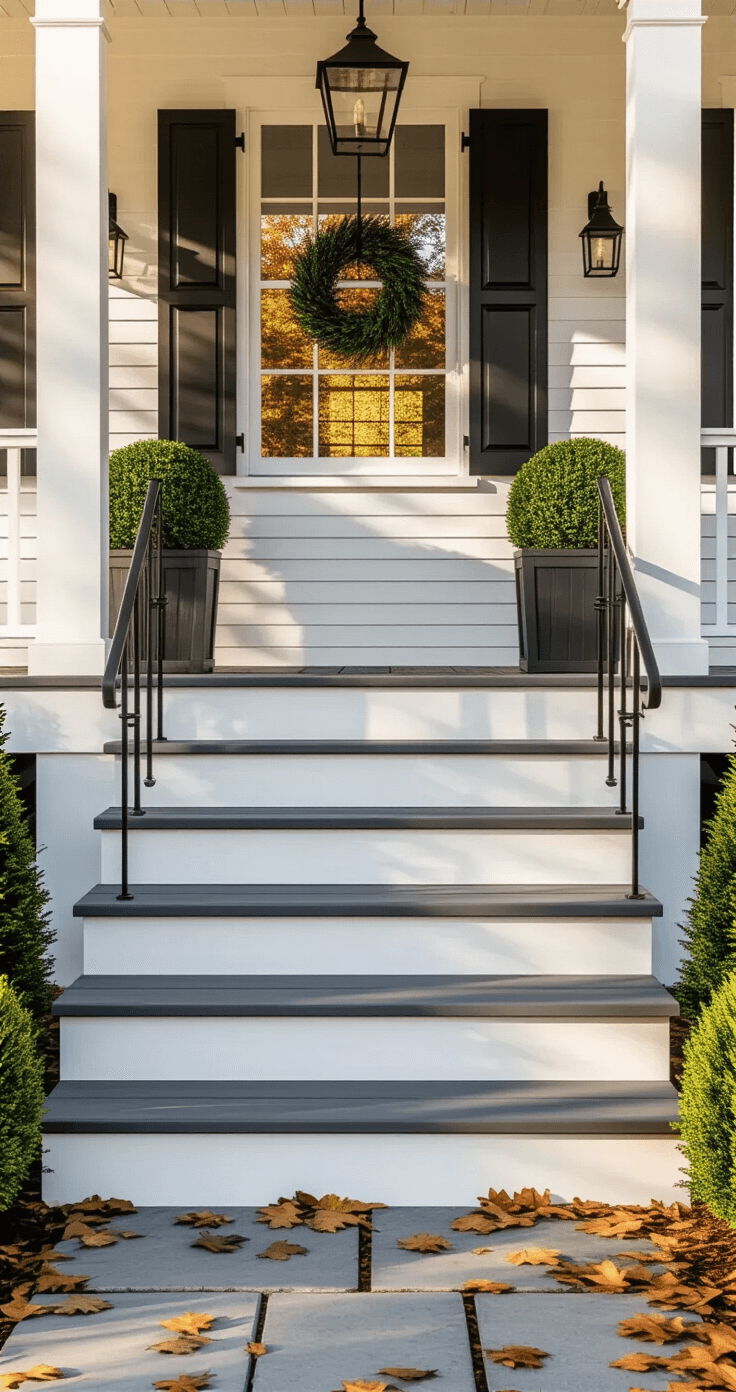
Here’s the thing nobody tells you when you’re staring at your boring concrete steps: those stairs are prime real estate.
I learned this the hard way when I bought my first fixer-upper in Tennessee.
The house had gorgeous farmhouse bones, but those plain grey steps made the whole place look like a municipal building.
One weekend project later, with freshly painted risers and stained treads, and suddenly neighbors were stopping to take photos.
Your steps are your home’s handshake, and right now, you might be giving people a limp one.
The Paint vs. Stain Debate (And What Actually Works)
The Classic Two-Tone Approach:
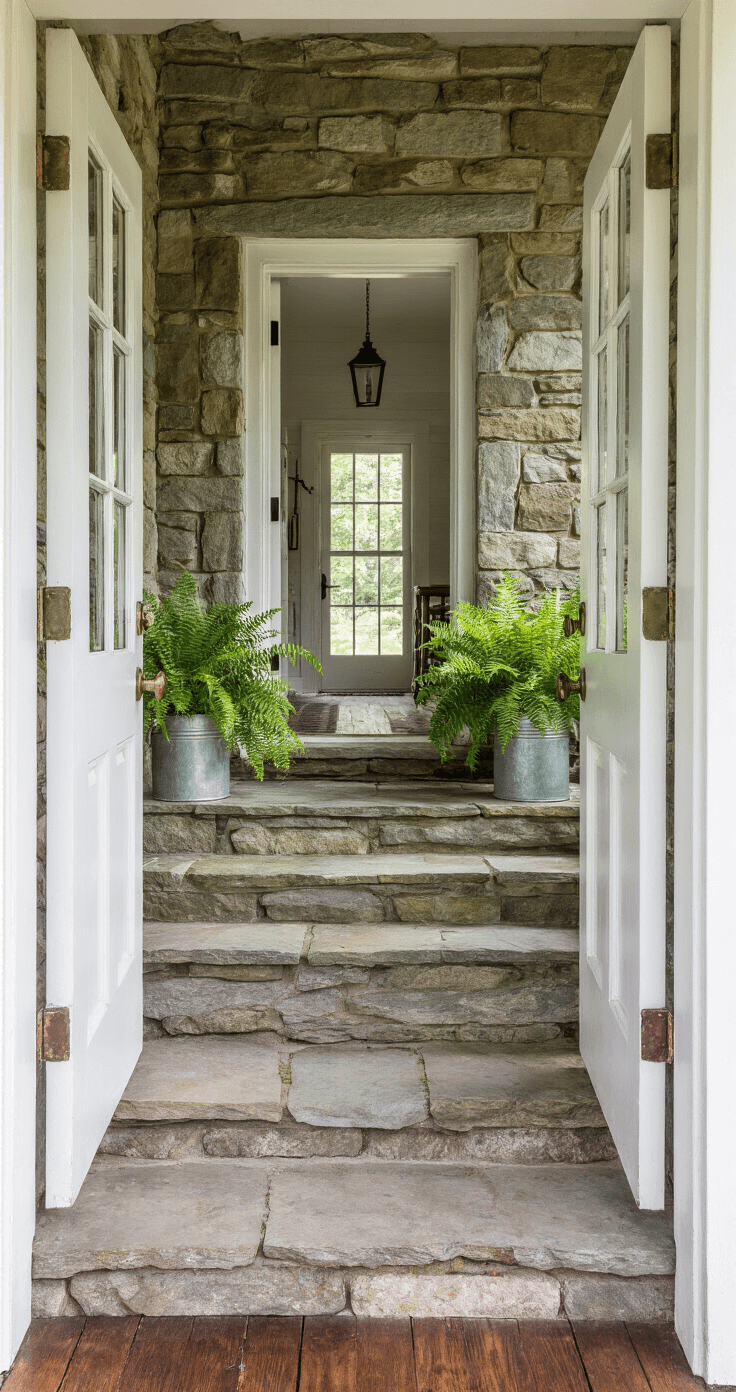
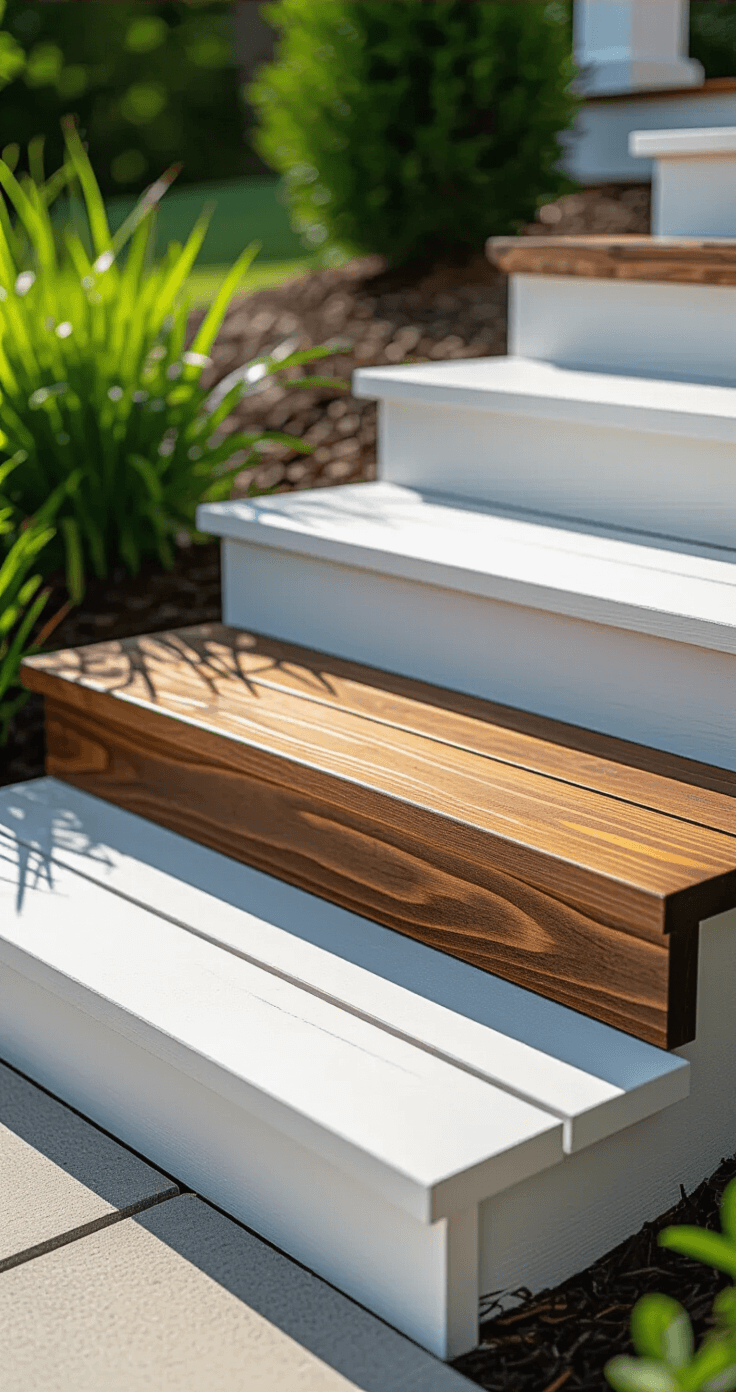
Most farmhouse enthusiasts swear by painting risers white and keeping treads in a contrasting neutral grey.
I’ve used this combo on at least fifteen projects, and it works every single time.
Why?
Because it creates visual interest without screaming for attention.
The white brightens everything up, while the darker tread hides the inevitable scuff marks from boots, kids, and delivery boxes.
Grab some exterior porch paint in a durable finish because regular paint won’t cut it here.
When Stain Makes More Sense:
Sometimes you want that rich, natural wood look that makes people stop and wonder if your steps are original to a hundred-year-old farmhouse.
I worked with a client in Maine who had these gorgeous pressure-treated steps.
We hit them with a dark walnut stain, and against her forest green siding with white trim, it looked like something out of a magazine.
The key is contrast.
If your siding is light, go darker with your treads.
If you’ve got dark siding, lighter stained wood or painted treads will pop.
A quality wood stain for outdoor use will protect your investment and keep those steps looking fresh through harsh weather.
Material Choices That Actually Hold Up
I’m going to be straight with you about materials because I’ve seen what fails and what lasts.
Natural Wood (The Real Deal):
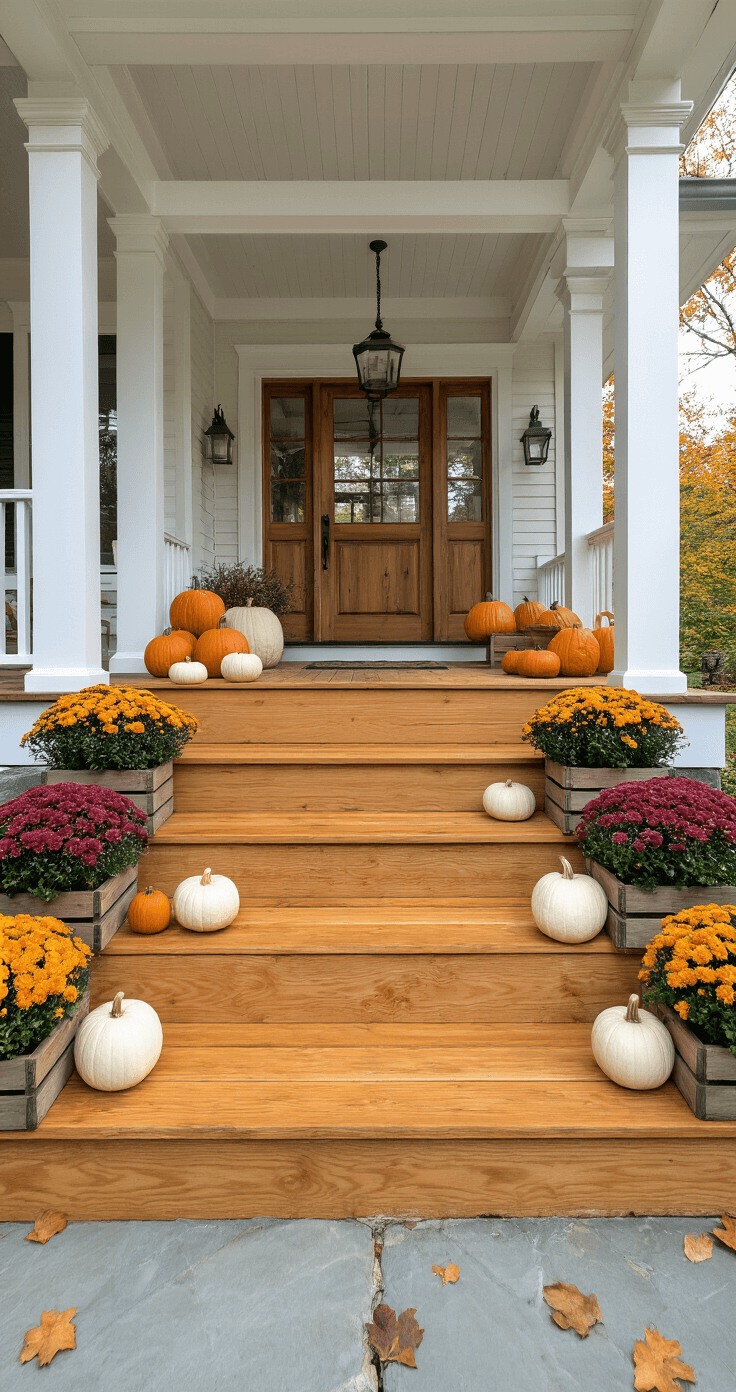
Untreated or naturally finished wood looks incredible, especially when you want that authentic farmhouse vibe.
But here’s what they don’t mention in those Pinterest photos: maintenance.
I’ve got natural cedar steps on my current home, and they’re stunning, but I seal them twice a year without fail.
Skip that routine, and you’re looking at splintering, warping, and rot within a few seasons.
If you’re committed to the upkeep, nothing beats the real thing.
Stacked Stone (My Personal Favorite for Durability):
I renovated a farmhouse in Virginia where we replaced rotting wood steps with stacked stone.
Five years later, those steps look exactly the same.
No painting, no staining, no babying them through winter.
Stone gives you that rustic, timeless aesthetic while laughing in the face of weather, foot traffic, and time.
The installation costs more upfront, but I promise you’ll save money over ten years.
The Hybrid Approach:
Here’s a trick I use all the time: wood-covered concrete steps.
You get the warmth and farmhouse charm of wood with the structural integrity of concrete underneath.
I did this on my sister’s place last summer.
We poured basic concrete steps, then wrapped them with treated lumber and finished with paint.
They look like traditional wood stairs but will outlast regular wooden steps by decades.
You’ll need concrete adhesive and pressure-treated lumber if you’re going this route.
Color Coordination That Doesn’t Require a Design Degree
I’ve watched people overthink this until they’re paralyzed.
Let me simplify it.
Match Your Risers to Your Siding:
This creates a seamless, pulled-together look that feels intentional.
White house? White risers.
Grey farmhouse? Grey risers.
It’s not revolutionary, but it works beautifully and never looks dated.
Create Contrast Between Treads and Everything Else:
Your treads get walked on constantly, so they need to be darker or more forgiving than your risers.
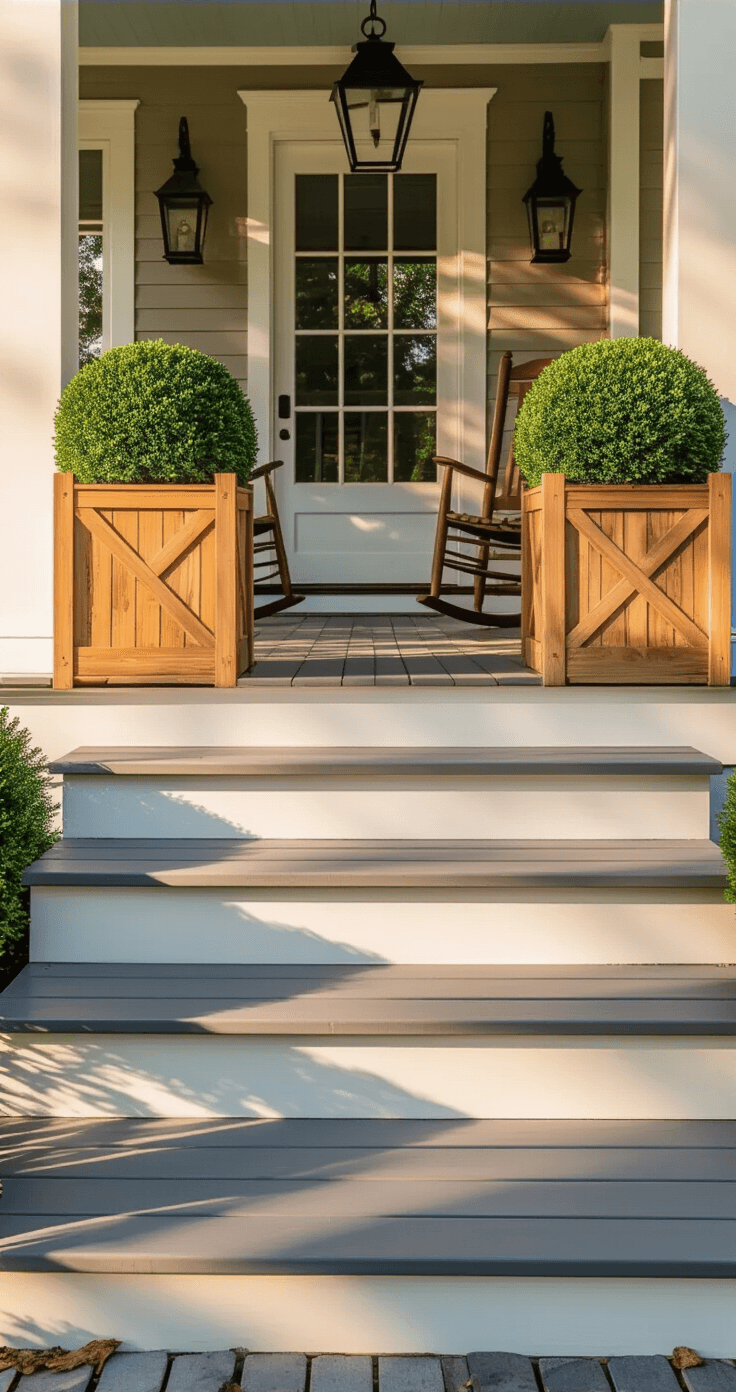
If your risers are white (which most are), go with grey, brown, or stained wood for treads.
This isn’t just aesthetic—it’s practical.
Dark treads hide dirt and wear patterns that would make white treads look dingy within weeks.
Stone Framing for Extra Character:
I added stone underskirting and matching stone pavers to a pathway on a project in Kentucky, and the homeowners still send me photos years later.
The stone framing around wooden or painted steps adds texture and makes everything feel more established, like it’s been there for generations.
Decorative Enhancements That Make People Slow Down
Alright, your steps look great structurally.
Now let’s talk about making them Instagram-worthy without trying too hard.
Flanking Planters (The Easiest Win):
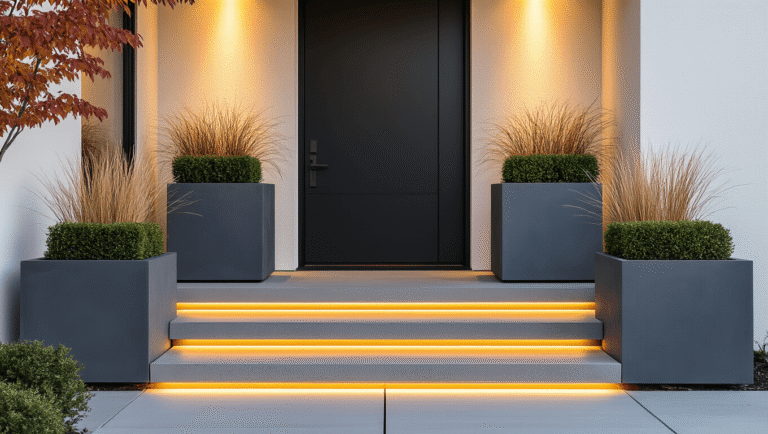
I put tall wooden planters with rounded boxwoods on either side of steps constantly.</p