

This post may contain affiliate links. Please see my disclosure policy for details.
Spring home decor is hands down my favorite seasonal switch because it finally kicks winter’s gray, heavy vibes to the curb.
I used to think spring decorating meant drowning my living room in pastel bunnies and fake grass. Wrong. Dead wrong.
After years of trial and error (and one embarrassing Easter explosion incident we don’t talk about), I’ve learned that bringing spring indoors is about freshness, not tackiness.
Why Your Winter Space Is Begging for a Spring Refresh
Let’s be honest. By late February, your home probably feels like a cave. Heavy blankets everywhere. Dark colors dominating. That sad, dusty wreath still hanging from December.
Your space needs to breathe, and so do you.
Spring decorating isn’t about following trends or copying magazine spreads. It’s about creating a home that feels lighter, brighter, and actually makes you want to throw open the windows.

🎨 Steal This Look
- Paint Color: Sherwin-Williams Alabaster SW 7008
- Furniture: light oak console table with slender tapered legs
- Lighting: brushed brass arc floor lamp with linen drum shade
- Materials: unbleached linen, raw cotton, light-washed oak, seagrass, matte ceramic
I used to think spring meant buying all new everything, but the rooms that feel most alive are the ones where you simply edit back to what breathes—your winter self will thank you for the permission to let go.
The Foundation: Start With Real (or Really Good Fake) Flowers
I’ll die on this hill: nothing announces spring like fresh flowers.
And I’m not talking about those sad grocery store carnations.
Tulips are your best friend here. White tulips work in literally any space and won’t clash with your existing decor. Colored tulips add that pop of spring energy without screaming “I bought out the Easter aisle.”
Here’s what I do:
- Grab fresh tulip bouquets weekly during spring
- Place them in simple clear glass vases (nothing fancy needed)
- Mix heights and group in odd numbers (3 or 5 vases look better than even numbers)
Pro tip I learned the hard way: Change the water every other day and cut stems at an angle. Your tulips will last twice as long.
The Forced Flowering Branch Game-Changer
This trick blew my mind when I first discovered it.
You can literally cut branches from flowering trees or bushes in late winter, bring them inside, and force them to bloom early.
Cherry blossoms. Forsythia. Pussy willow.
Stick them in water, place them somewhere warm, and watch spring happen in your living room before it happens outside.
The delicate pastel shades these branches produce are absolutely stunning. Way more interesting than any store-bought arrangement.

🖼 Steal This Look
- Paint Color: Benjamin Moore White Dove OC-17
- Furniture: simple clear glass cylinder vases in varying heights (6-inch, 8-inch, and 10-inch)
- Lighting: tabletop LED grow light for forcing branches indoors
- Materials: clear hand-blown glass, fresh-cut stems, forced flowering branches (forsythia or quince), crisp linen table runners
There’s something quietly luxurious about walking into a room and seeing fresh stems on the table—it signals that someone actually lives here, thoughtfully.
Greenery That Doesn’t Die in a Week
I love the idea of being a plant person. Reality? I’ve murdered more succulents than I care to admit.
That’s why I’ve made peace with high-quality faux plants.
And before you judge, hear me out.
Today’s fake greenery looks incredible if you invest in decent quality. No one’s getting close enough to your faux potted ferns to check for a watering schedule.
What actually works for spring greenery:
Save this article
Enter your email and we'll send it straight to your inbox.
- Potted ferns – Real or fake, these scream “fresh and lush”
- Moss accents – Add texture to vignettes and wreaths
- Pussy willow branches – Soft, subtle, perfect for tall vases
- Grapevine wreaths – Natural base for any spring arrangement
I mix real and faux throughout my house. The real plants go where I’ll remember to water them (kitchen, bathroom). The faux ones go everywhere else.
No guilt, no dead leaves, no problem.

💡 Steal This Look
- Paint Color: Farrow & Ball Green Smoke 47
- Furniture: weathered oak console table with lower shelf for layered plant display
- Lighting: ceramic table lamp with linen drum shade in soft white
- Materials: terracotta pots, aged brass planters, preserved moss, woven seagrass baskets
This is the room where you finally stop apologizing for your black thumb and embrace the beauty of zero-maintenance greenery that looks convincingly alive.
Your Front Door Needs This (Everyone’s First Impression)
Here’s something I notice every spring: half my neighbors still have winter wreaths up in April.
Don’t be that house.
A spring wreath on your front door literally announces to the world (and more importantly, to yourself) that winter is over.
I make mine using:
- A grapevine wreath base
- Faux spring flowers in soft colors
- Moss tucked into gaps
- Maybe a small nest if I’m feeling extra
Takes about 20 minutes. Costs less than buying a pre-made one. Looks way better than anything mass-produced.
🖼 Steal This Look
- Paint Color: Behr Marquee Crisp Linen MQ3-46
- Furniture: a slim console table for behind-the-door styling with a ceramic vase
- Lighting: a brass outdoor sconce with seeded glass shade
- Materials: weathered grapevine, dried moss, silk cherry blossoms, raffia ribbon
Your front door is the handshake your home offers the world—spending twenty minutes here pays dividends every time you pull into the driveway and actually smile.
🌊 Get The Look
The Textile Swap That Changes Everything
This is the laziest spring refresh possible, and it works like magic.
Swap your heavy winter textiles for lighter versions.
I’m talking about:
- Throw pillows
- Blankets
- Curtains
- Bed linens
- That heavy rug in the living room
You don’t need to rebuy your entire house. I have two sets of pillow covers and throw blankets that I rotate seasonally.
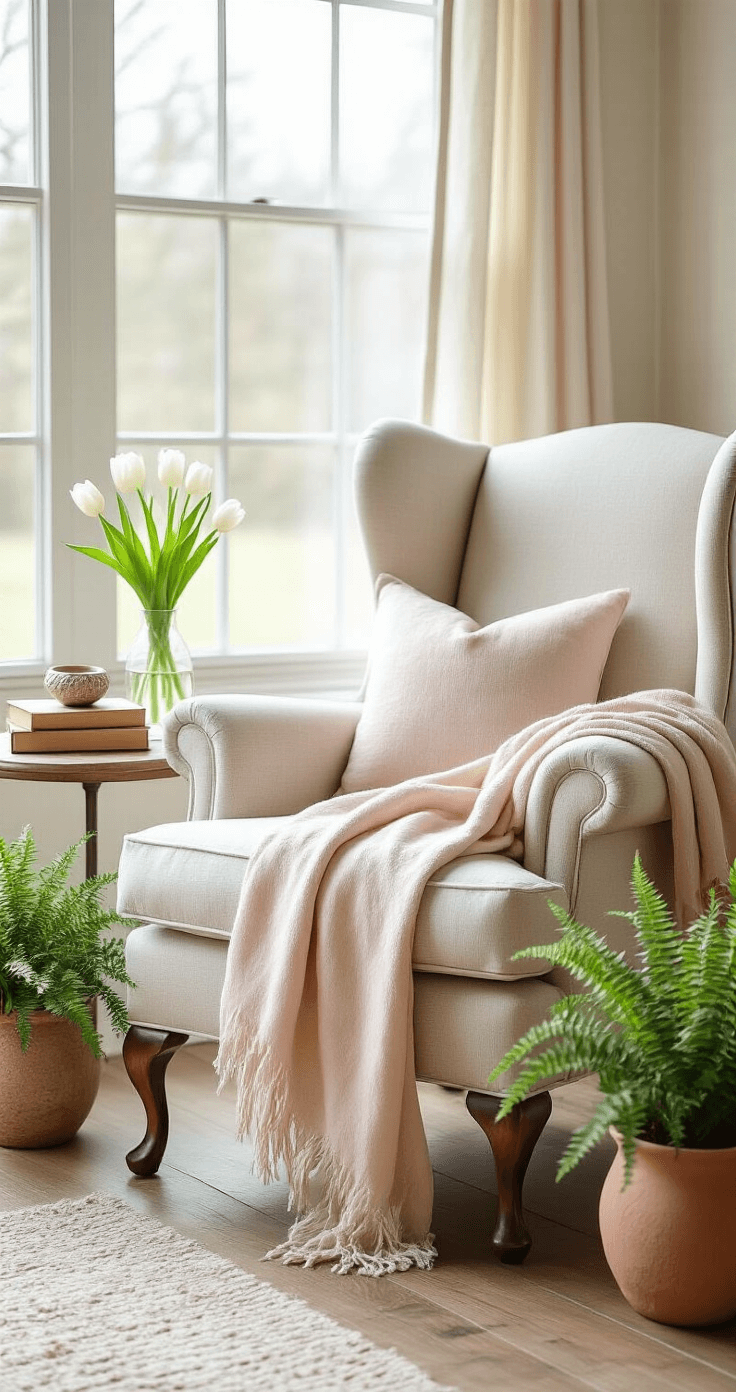
Winter gets the chunky knits and dark colors. Spring gets the lightweight cotton throws and softer tones.
Same furniture, completely different vibe.
The room literally feels lighter. It’s not just visual – airflow changes when you remove heavy fabrics.

🎨 Steal This Look
- Paint Color: use Valspar brand. Match the ACTUAL wall color in the image. Format: Valspar ColorName CODE
- Furniture: existing sofa and armchairs — keep them, just strip back to bare frames and rebuild with spring layers
- Lighting: linen drum pendant or rattan floor lamp to amplify the airy textile transformation
- Materials: washed Belgian linen, slub cotton, lightweight muslin, natural jute or flatweave cotton rugs, raw-edge cotton throws
This is the refresh I actually do myself every March — there’s something almost ceremonial about folding away the heavy wool and feeling the room exhale.
Building Spring Vignettes (Without the Clutter)
Here’s where most people go wrong with spring decor.
They buy every bunny, egg, and pastel item they see, then wonder why their house looks like an Easter store threw up.
Vignettes should be curated, not cluttered.
I create mine by layering:
- A tray or defined space (creates boundaries)
- Something with height (candle, small vase)
Keep this one for later
We'll email you the link so you can come back to it.


