This post may contain affiliate links. Please see my disclosure policy for details.
Two-tone kitchen cabinets have become the hallmark of designer kitchens, offering a sophisticated way to add depth and character without overwhelming your space. This approach, favored by high-end designers, creates visual interest through thoughtful color contrast while maintaining a cohesive look. Whether you’re drawn to the crisp contrast of Benjamin Moore’s Simply White paired with Hale Navy, or the subtle elegance of Farrow & Ball’s Cornforth White with Railings, two-tone cabinets instantly elevate your kitchen from standard to custom. This comprehensive guide covers everything from design principles and color combinations to costs and common mistakes, helping you create a kitchen worthy of a luxury home magazine – even if you’re pairing it with Sub-Zero, Wolf, or Miele appliances.
What Are Two-Tone Kitchen Cabinets?
Contents
- What Are Two-Tone Kitchen Cabinets?
- Why Designers Use Two-Tone Cabinets in Luxury Kitchens
- Two-Tone Kitchen Cabinets Cost (Stock vs Custom)
- High-End Cabinet Brands Known for Two-Tone Kitchens
- Most Popular High-End Two-Tone Cabinet Color Combinations
- Two-Tone Kitchen Islands (Designer Favorite)
- Countertops That Tie Two-Tone Cabinets Together
- Hardware & Fixtures for Two-Tone Kitchens
- Appliances That Work Best in Two-Tone Kitchens
- Two-Tone Kitchen Layout Ideas
- Common Two-Tone Kitchen Cabinet Mistakes
- Two-Tone Cabinets vs Single-Color Kitchens
- FAQs About Two-Tone Kitchen Cabinets
- Creating Your Perfect Two-Tone Kitchen
Two-tone kitchen cabinets incorporate two distinct colors or finishes to create visual contrast and interest in your kitchen design. This approach has become increasingly popular in custom and luxury kitchens because it adds architectural depth and creates a more personalized space than single-color cabinetry.
Painted + Painted Combinations
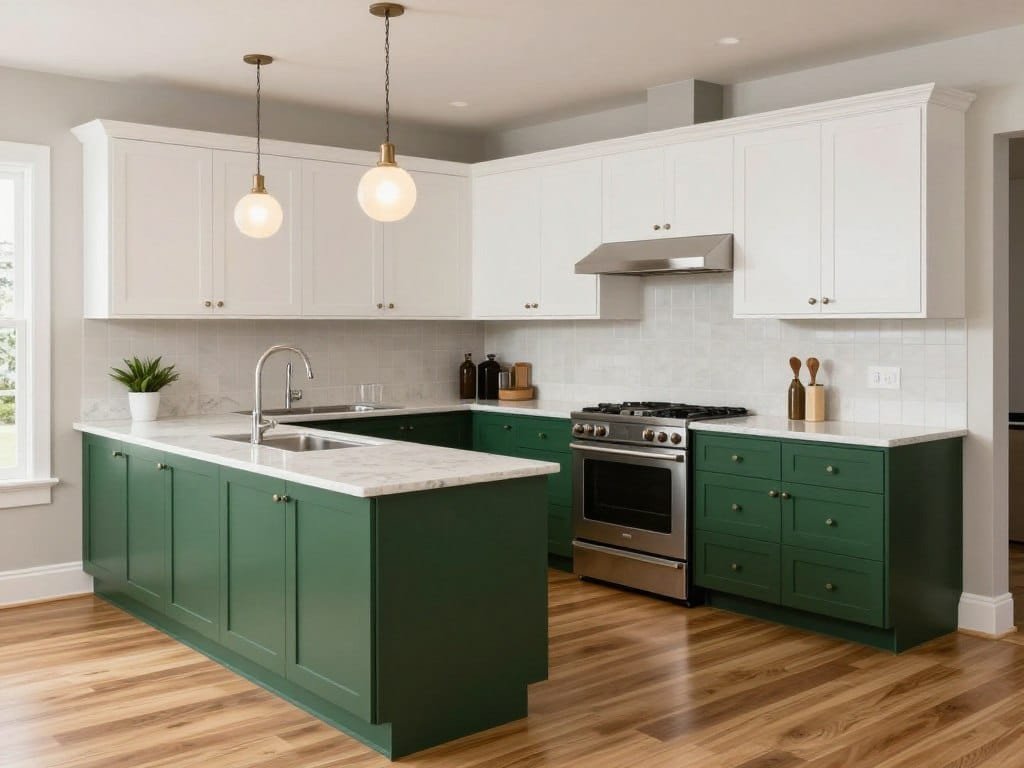
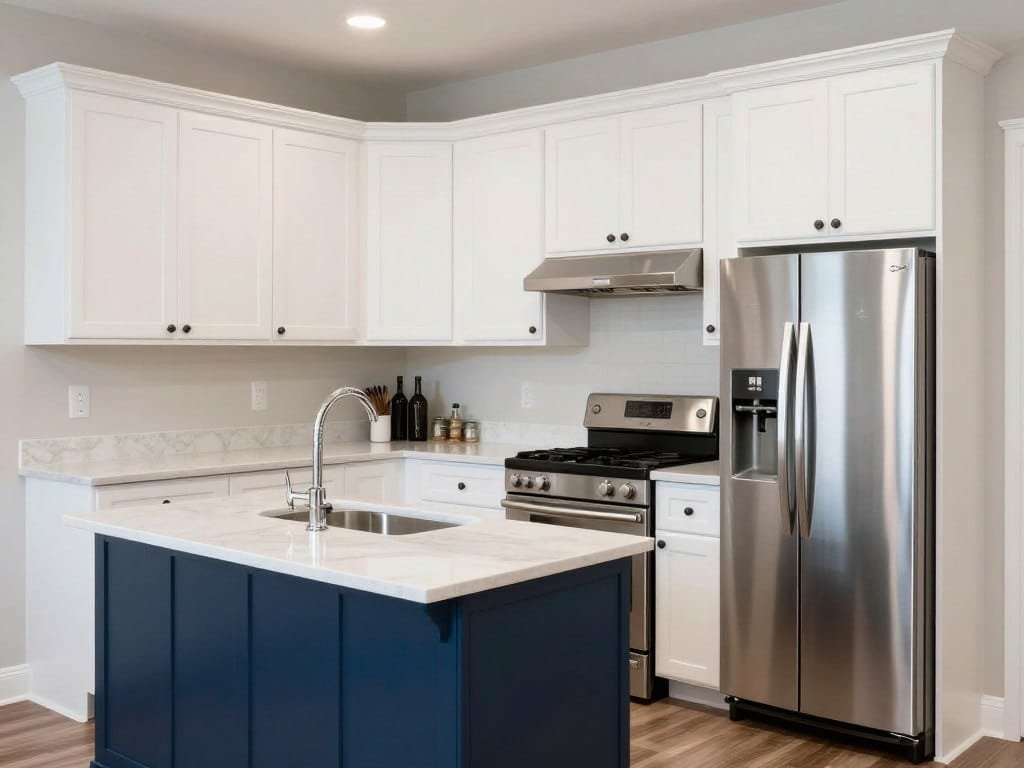
The most common two-tone approach pairs two different paint colors, typically with lighter shades on upper cabinets and darker tones on lower cabinets. This creates visual balance while making the space feel larger and more open. Popular combinations include white uppers with navy, black, or green lowers—creating a striking yet timeless contrast that works in both traditional and contemporary kitchens.
Wood + Painted Combinations
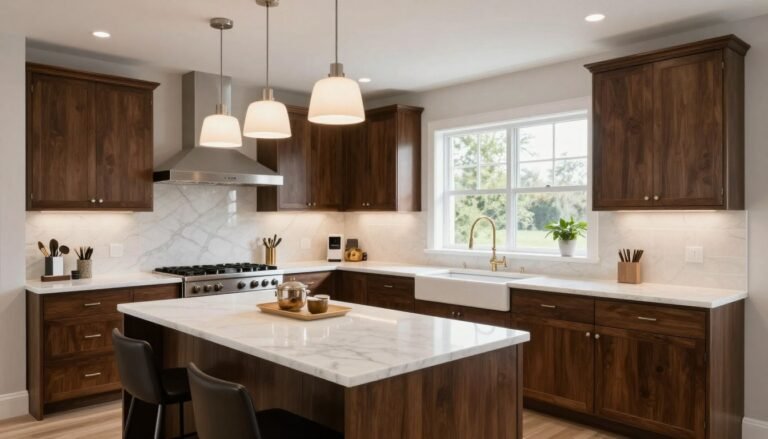
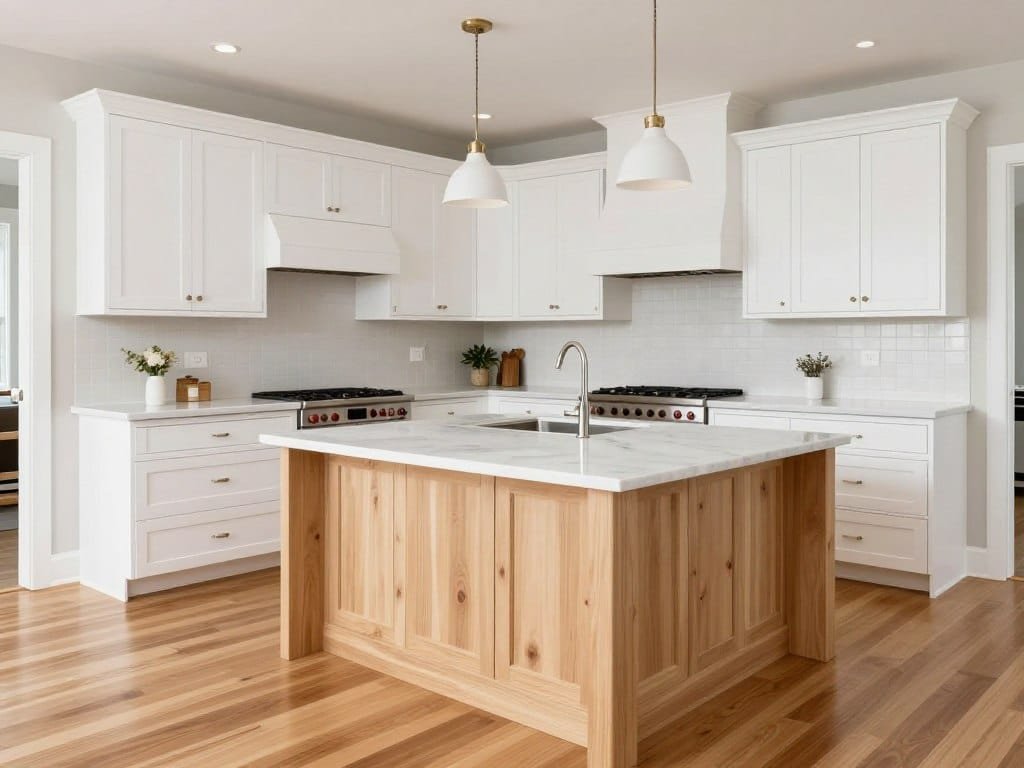
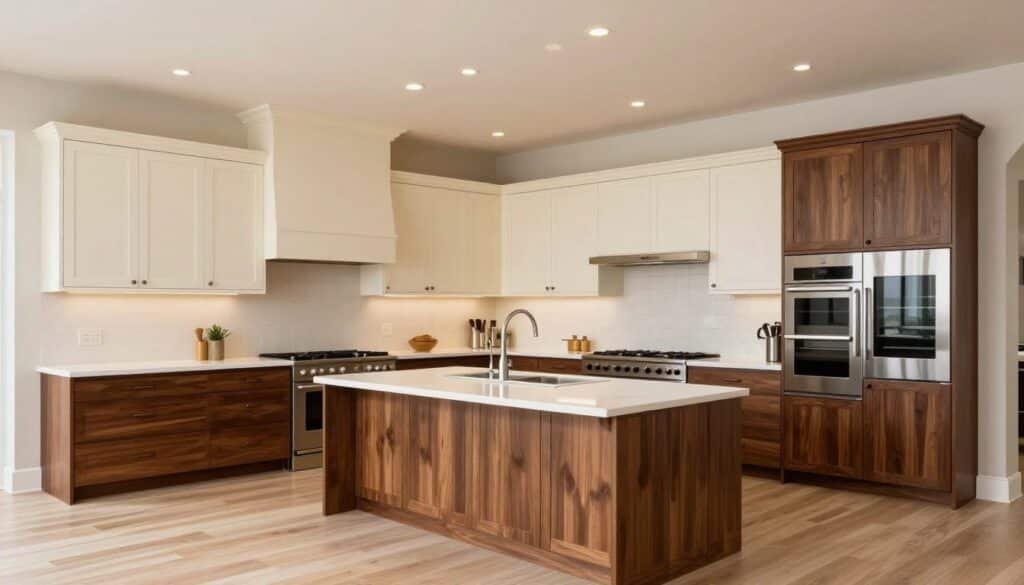
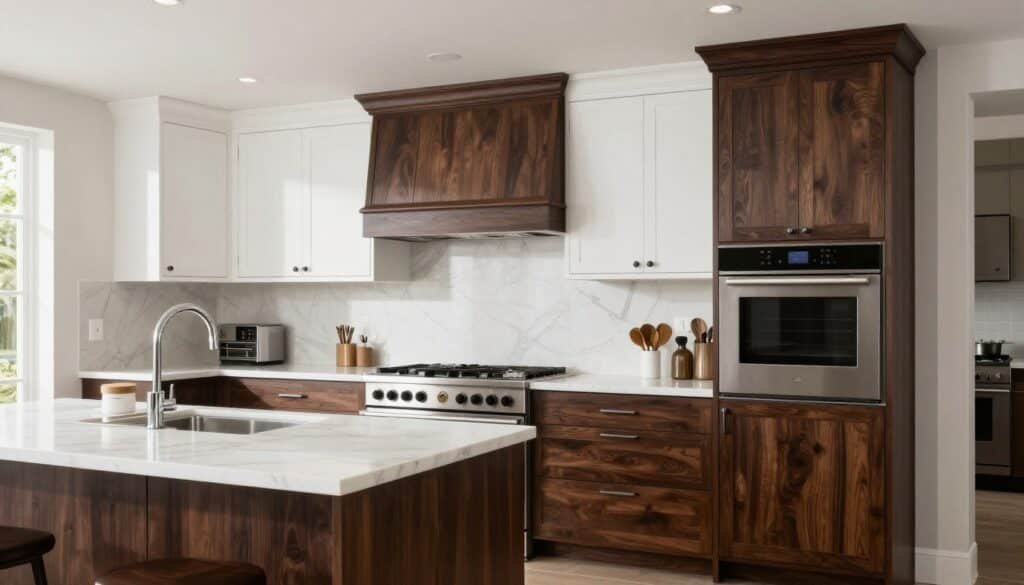
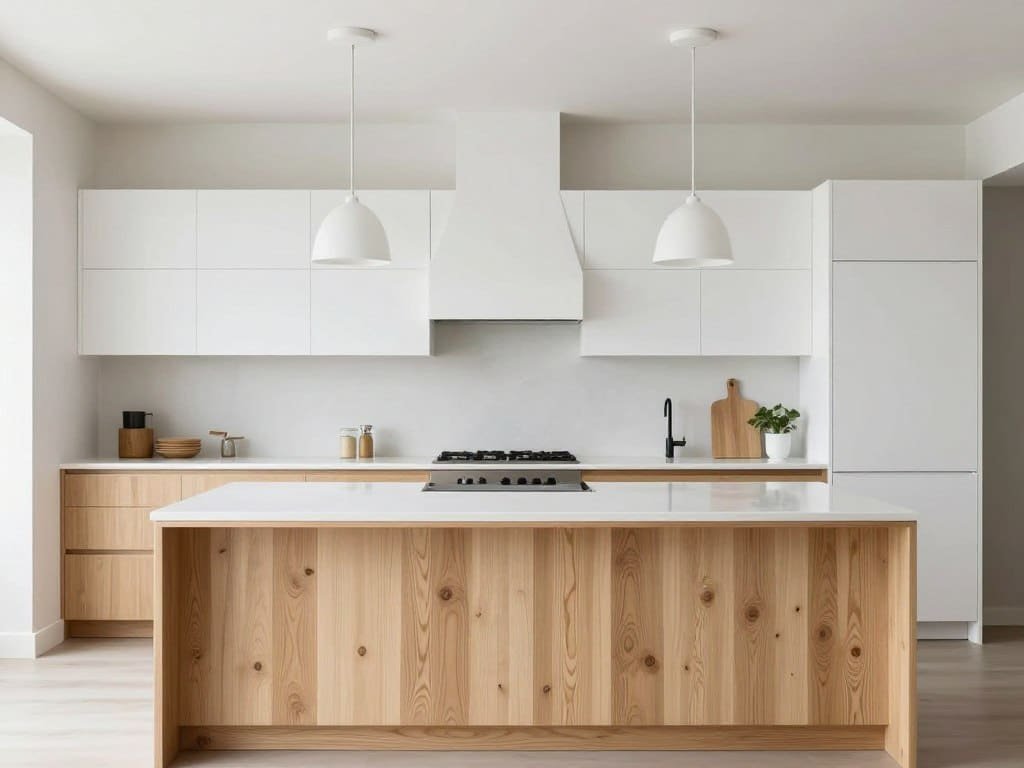
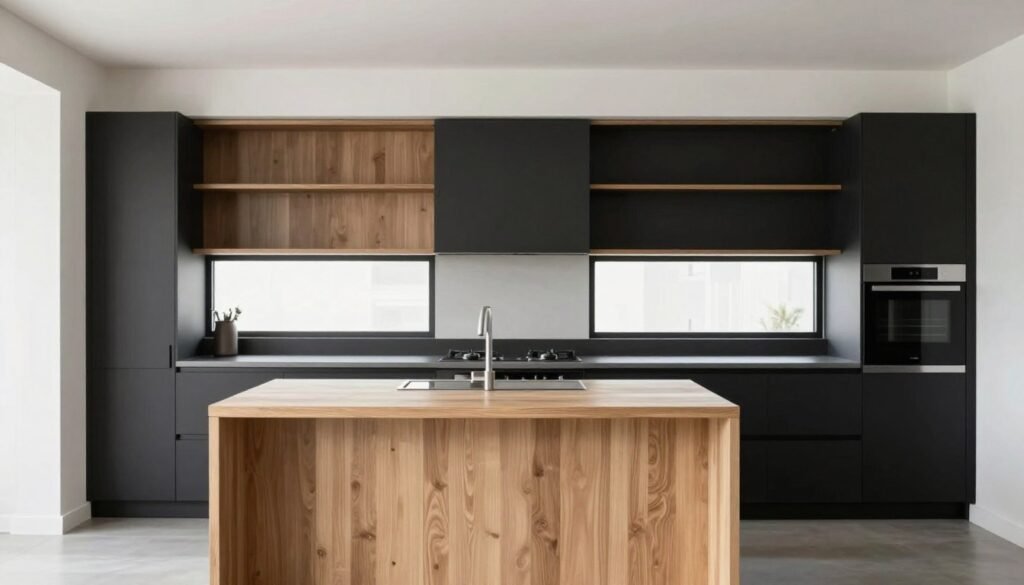
Pairing natural wood with painted cabinets creates a warm, organic contrast that feels both modern and timeless. This approach often features painted perimeter cabinets with a wood island, or wood upper cabinets with painted lowers. The natural grain and texture of woods like white oak, walnut, or cherry add depth and character when combined with solid painted surfaces.
Island-Only Two-Tone Kitchens
For a more subtle approach, many designers use a contrasting color or finish only on the kitchen island. This creates a focal point without committing to a full two-tone look throughout the kitchen. Island-focused designs allow for bolder color choices since they’re used in smaller doses, making them perfect for introducing trendy colors without overwhelming the space.
Why Two-Tone Reads More “Custom” Than Single-Color Cabinets
Two-tone kitchens instantly signal custom millwork and thoughtful design. Unlike builder-grade kitchens with uniform cabinetry, two-tone approaches require intentional planning and often custom fabrication. This deliberate contrast creates architectural interest and demonstrates attention to detail—hallmarks of high-end kitchen design that elevate your space from standard to luxurious.
Why Designers Use Two-Tone Cabinets in Luxury Kitchens
Interior designers consistently turn to two-tone cabinet designs when creating high-end kitchens for specific aesthetic and functional reasons. Understanding these principles can help you implement this approach effectively in your own space.
Visual Balance in Large Kitchens
In spacious kitchens, a single cabinet color can feel monotonous and flat. Two-tone cabinets break up large expanses of cabinetry, creating visual rhythm and preventing the kitchen from feeling like a sea of identical surfaces. This approach adds dimension and scale, particularly important in open-concept homes where the kitchen is visible from multiple angles.
Creating Focal Points (Islands, Pantries)
Designers strategically use contrasting cabinet colors to draw attention to architectural features or functional zones. A differently colored island instantly becomes a centerpiece, while a distinctive pantry or beverage station creates visual interest. These focal points guide the eye through the space and establish a clear visual hierarchy—a fundamental principle in luxury design.
Breaking Up Long Cabinet Runs
In kitchens with extensive cabinetry, two-tone designs prevent visual monotony by creating intentional breaks. This technique is particularly effective in galley kitchens or spaces with long walls of cabinets, where a single color can feel overwhelming. The contrast between colors creates natural stopping points for the eye, making the space feel more thoughtfully designed.
Two-Tone Kitchens and Resale Value
When executed with timeless color combinations, two-tone kitchens can positively impact home value. Real estate professionals note that thoughtfully designed two-tone kitchens photograph exceptionally well for listings and create memorable impressions during showings. However, highly personalized or trendy color choices may limit appeal, so consider classic combinations if resale value is a priority.
Two-Tone Kitchen Cabinets Cost (Stock vs Custom)
The cost of two-tone kitchen cabinets varies significantly based on cabinet quality, materials, and installation complexity. Understanding these price points helps you budget effectively for your kitchen renovation.
Stock Two-Tone Cabinets
Stock cabinets offer the most affordable entry point for two-tone kitchens, typically ranging from $80-$300 per linear foot installed. These mass-produced cabinets come in standard sizes and limited finish options, but many manufacturers now offer coordinating cabinet lines specifically designed for two-tone installations. While budget-friendly, stock cabinets may have fewer customization options and typically feature less durable construction.
Editor’s Choice: Hampton Bay Cambridge Shaker Cabinets
These affordable stock cabinets come in coordinating white and gray finishes perfect for two-tone kitchens, featuring solid wood doors and dovetail drawers.
Semi-Custom Two-Tone Cabinetry
Semi-custom cabinets provide a middle ground, costing approximately $150-$650 per linear foot installed. These cabinets offer more size options, finish selections, and storage features than stock cabinets. Semi-custom lines typically provide better construction quality and more design flexibility, making them ideal for most two-tone kitchen projects where some customization is desired without the premium price of fully custom work.
Fully Custom Two-Tone Kitchens
Fully custom cabinets represent the high end of the market, typically starting at $500 per linear foot and ranging upward of $1,500+ per linear foot installed. These cabinets are built specifically for your space with unlimited options for sizes, finishes, and details. Custom work allows for perfect color matching, unique door styles, and specialized storage solutions. For luxury two-tone kitchens, custom cabinetry provides unmatched quality and design flexibility.
Luxury Cost Drivers
Several factors significantly impact the cost of high-end two-tone kitchens:
- Multiple paint colors: Each additional finish typically adds 10-20% to cabinet costs due to separate finishing processes
- Custom stain matching: Precise color matching to other elements in your home can add $1,000-$3,000
- Inset cabinetry: This premium construction style adds 20-30% compared to overlay doors
- Premium hardware: High-end hardware from brands like Blum and Hettich adds $1,500-$3,000 to a typical kitchen
- Specialized finishes: Hand-glazing, distressing, or other artisanal techniques can add 15-25% to cabinet costs
High-End Cabinet Brands Known for Two-Tone Kitchens
When planning a luxury two-tone kitchen, choosing the right cabinet manufacturer ensures quality construction and beautiful finishes. These respected brands offer exceptional options for creating distinctive two-tone designs.
Semi-Custom Cabinet Brands
These manufacturers offer excellent quality with more customization options than stock cabinets, but at more accessible price points than fully custom work:
Wood-Mode
Known for impeccable finishes and construction, Wood-Mode offers extensive color options specifically designed to work together in two-tone applications. Their hand-rubbed finishes and attention to detail make them a designer favorite.
Wellborn Cabinet
Wellborn excels at coordinating finishes across different door styles, making them ideal for sophisticated two-tone kitchens. Their ColorInspire program offers custom color matching for unique combinations.
KraftMaid
More accessible but still high-quality, KraftMaid offers numerous finish options that work beautifully in two-tone designs. Their Vantage collection provides excellent value with many premium features.
Luxury & Bespoke Brands
For the ultimate in customization and craftsmanship, these premium manufacturers create truly one-of-a-kind two-tone kitchens:
Plain English Design
This British company specializes in handcrafted Georgian-inspired cabinetry with extraordinary paint finishes. Their distinctive color palette is perfect for sophisticated two-tone kitchens with a traditional flair.
DeVOL Kitchens
Combining traditional craftsmanship with contemporary colors, DeVOL creates distinctive two-tone kitchens with character. Their signature looks often pair painted cabinets with natural wood elements.
Henrybuilt
For modern two-tone kitchens, Henrybuilt offers architectural cabinetry with exceptional materials and finishes. Their system-based approach creates cohesive designs with contrasting elements.
Premium Cabinet Hardware
Complete your two-tone kitchen with Amerock Cabinet Hardware’s Blackrock collection, featuring solid construction and a versatile oil-rubbed bronze finish that complements any cabinet color combination.
Most Popular High-End Two-Tone Cabinet Color Combinations
The most successful two-tone kitchens rely on thoughtful color pairings that create contrast while maintaining harmony. These designer-approved combinations offer timeless appeal with a contemporary edge.
White Uppers + Dark Lower Cabinets
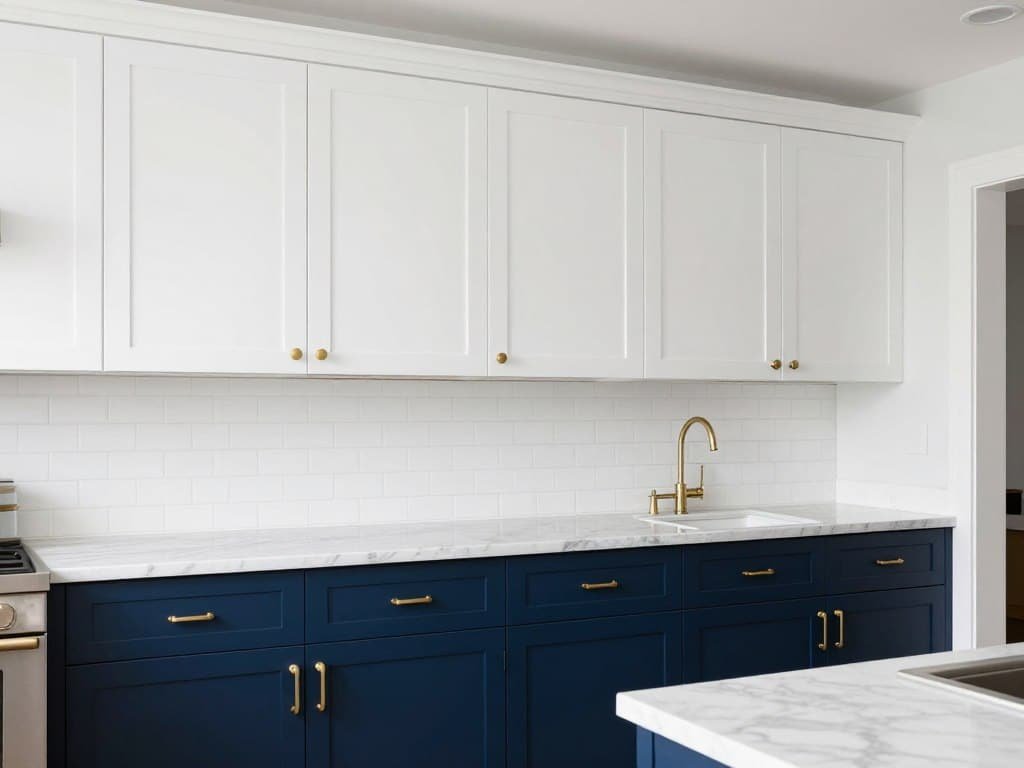
This classic approach remains the most popular two-tone strategy, creating visual balance while maximizing brightness. White upper cabinets reflect light and make spaces feel larger, while darker base cabinets ground the space and hide everyday wear. For a sophisticated take, pair Benjamin Moore’s Simply White uppers with Hale Navy lowers, or Sherwin-Williams Pure White with Tricorn Black for dramatic contrast.
Editor’s Choice: Benjamin Moore Cabinet Paint
Benjamin Moore’s ADVANCE Interior Paint offers a furniture-like finish perfect for two-tone cabinets, with exceptional durability and a smooth, self-leveling formula.
Greige Cabinets + White Uppers
For a softer contrast that still offers visual interest, pair white upper cabinets with greige (gray-beige) lowers. This combination creates a warm, sophisticated look that works beautifully in transitional kitchens. Try Farrow & Ball’s Strong White uppers with Elephant’s Breath lowers, or Sherwin-Williams Greek Villa with Agreeable Gray for a subtle yet distinctive two-tone effect.
Black Cabinets + White or Stone Uppers
For dramatic impact, black lower cabinets paired with white or light stone-colored uppers create a bold, contemporary look. This high-contrast combination works particularly well in modern kitchens with clean lines. Benjamin Moore’s Onyx paired with White Dove creates sophisticated drama, while Sherwin-Williams Tricorn Black with Alabaster offers similar impact.
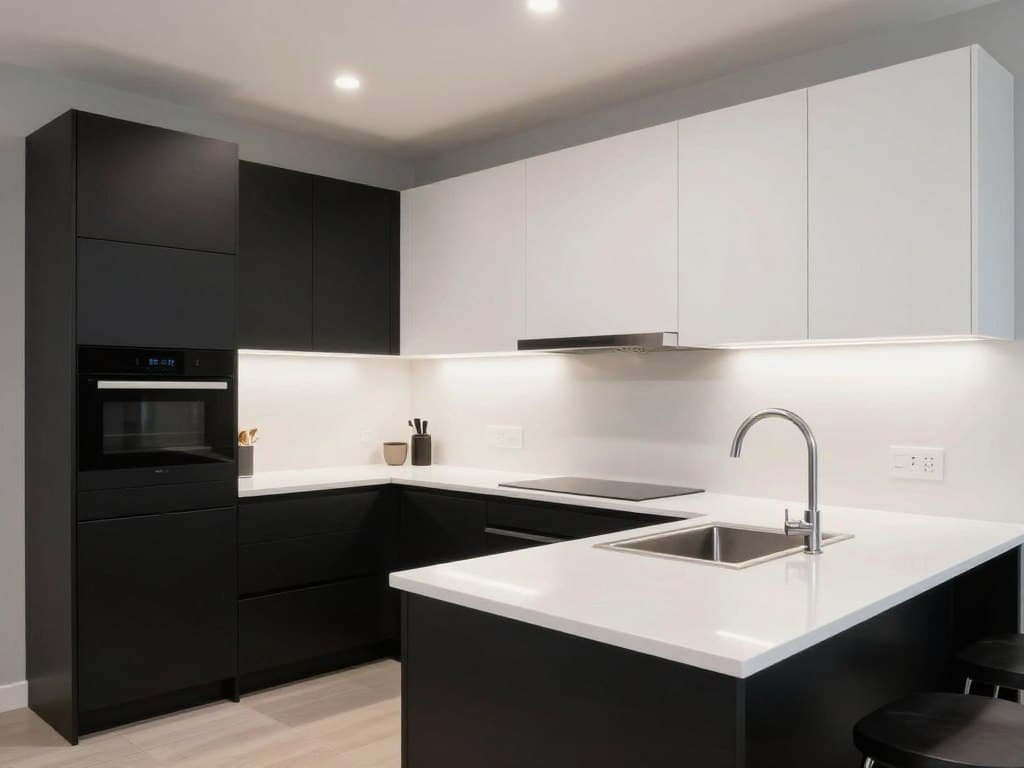
Navy blue has emerged as a new classic for two-tone kitchens, offering depth and character without the starkness of black. Paired with warm white, navy creates a timeless, sophisticated look that bridges traditional and contemporary styles. Benjamin Moore’s Hale Navy with Simply White is a designer favorite, as is Farrow & Ball’s Stiffkey Blue with Pointing.
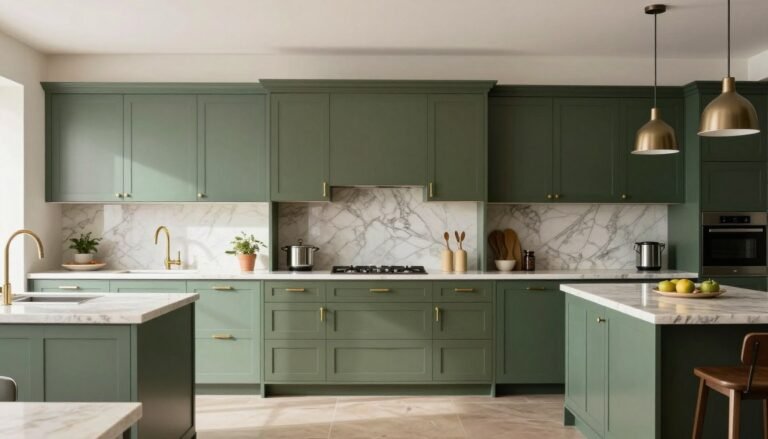
Dark Green + Light Neutral
Green cabinets have surged in popularity, with deep forest and sage tones creating rich, nature-inspired kitchens. Pairing dark green lower cabinets with light neutral uppers creates a fresh, organic contrast. Try Benjamin Moore’s Hunter Green with Cloud White, or Farrow & Ball’s Studio Green with Wimborne White for an elegant, biophilic approach.
White Oak + Painted Cabinets
Natural white oak paired with painted cabinets offers a contemporary yet warm aesthetic that’s extremely popular in modern homes. The light, neutral tone of white oak complements virtually any paint color while adding natural texture. Combine rift-sawn white oak with Benjamin Moore’s Decorator’s White for a clean, Scandinavian-inspired look, or with Farrow & Ball’s Setting Plaster for a warmer, more organic feel.
Two-Tone Kitchen Islands (Designer Favorite)
The kitchen island offers the perfect opportunity to introduce a second cabinet color without committing to a fully two-tone kitchen. This focused approach creates a striking focal point while maintaining design cohesion.
Contrasting Island Colors
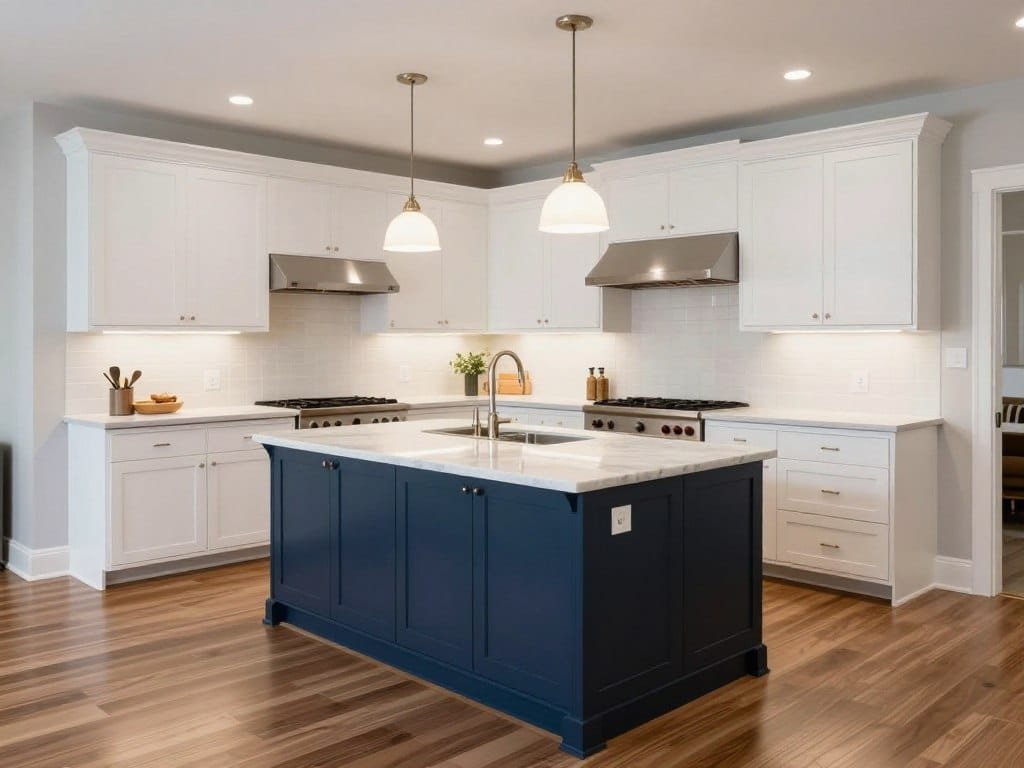
A differently colored island instantly becomes the centerpiece of your kitchen, drawing attention and creating visual interest. For maximum impact, choose an island color that contrasts with your perimeter cabinets while still relating to other elements in your kitchen. Navy islands in white kitchens create classic contrast, while emerald green or deep plum islands make bold statements in neutral spaces.
Wood Islands with Painted Perimeter Cabinets
Natural wood islands paired with painted perimeter cabinets create organic warmth and textural contrast. This approach works beautifully in both contemporary and traditional kitchens, depending on the wood species and cabinet style. White oak, walnut, or cherry islands offer distinctive character while painted perimeter cabinets provide a clean, cohesive backdrop.
Butcher Block for Wood Islands
John Boos Maple End Grain Butcher Block creates a stunning wood island top that pairs perfectly with painted cabinets, featuring 3″ thick construction and food-safe finish.
Waterfall Islands with Two-Tone Cabinetry
For contemporary kitchens, waterfall islands (where countertop material continues down the sides) paired with two-tone cabinetry create architectural interest and luxury appeal. This approach works particularly well with dramatic stone countertops, allowing the material to become a third design element alongside the two cabinet finishes.
Countertops That Tie Two-Tone Cabinets Together
The right countertop selection unifies your two-tone cabinet design, creating cohesion between different cabinet finishes. These premium materials complement contrasting cabinets while adding their own luxury appeal.
Quartzite (Taj Mahal, Mont Blanc)
Natural quartzite offers the perfect balance of durability and beauty for two-tone kitchens. Its subtle veining and neutral tones bridge different cabinet colors while providing a luxurious, organic element. Taj Mahal quartzite, with its creamy background and delicate gold veining, works beautifully with both light and dark cabinets, while Mont Blanc’s white background with gray veining complements virtually any cabinet combination.
Marble (Calacatta, Arabescato)
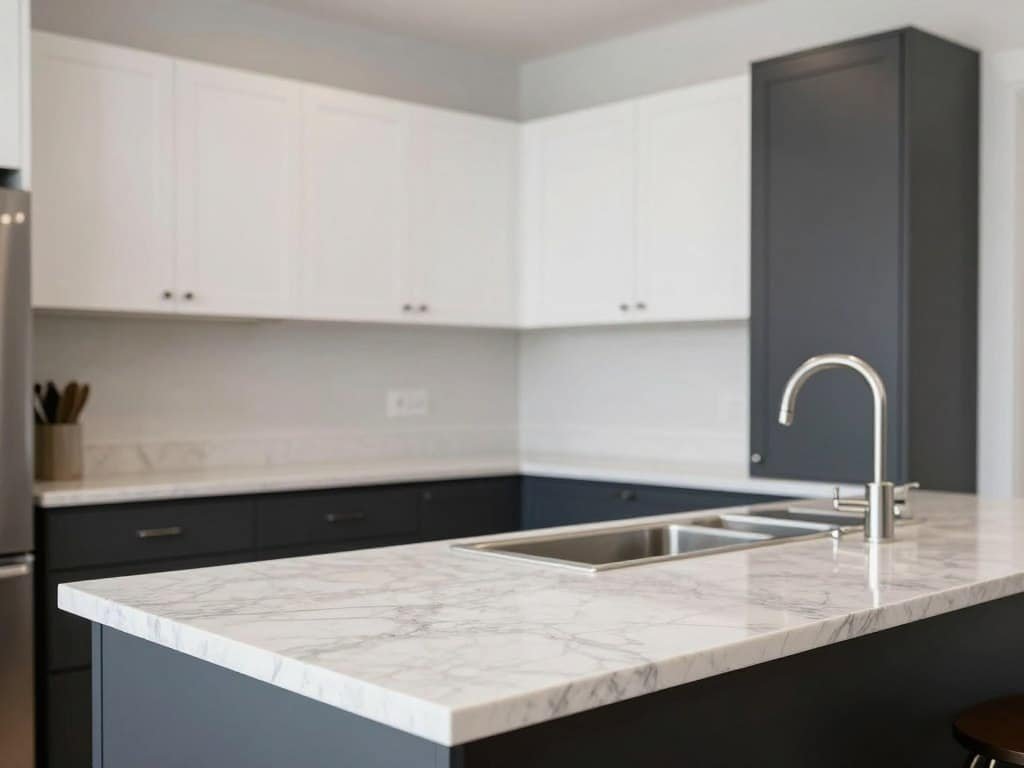
For unmatched luxury, marble countertops add timeless elegance to two-tone kitchens. Calacatta marble, with its bright white background and dramatic veining, creates a stunning focal point that draws together different cabinet finishes. Arabescato marble offers similar drama with distinctive gray veining that complements both light and dark cabinetry.
Quartz for a Clean Modern Look
Engineered quartz provides consistent coloration and pattern, creating a clean backdrop for two-tone cabinets. Premium brands like Caesarstone, Cambria, and Silestone offer designer-curated colors specifically developed to complement multiple cabinet finishes. For contemporary two-tone kitchens, consider Caesarstone’s Pure White, Cambria’s Brittanicca, or Silestone’s Eternal Calacatta Gold.
Countertop Care Kit
Protect your investment with TriNova Granite Sealer & Protector, designed for natural stone countertops with a non-toxic formula that preserves the beauty of your surfaces.
Hardware & Fixtures for Two-Tone Kitchens
Cabinet hardware and fixtures play a crucial role in unifying two-tone kitchen designs, creating cohesion between different cabinet finishes while adding their own design statement.
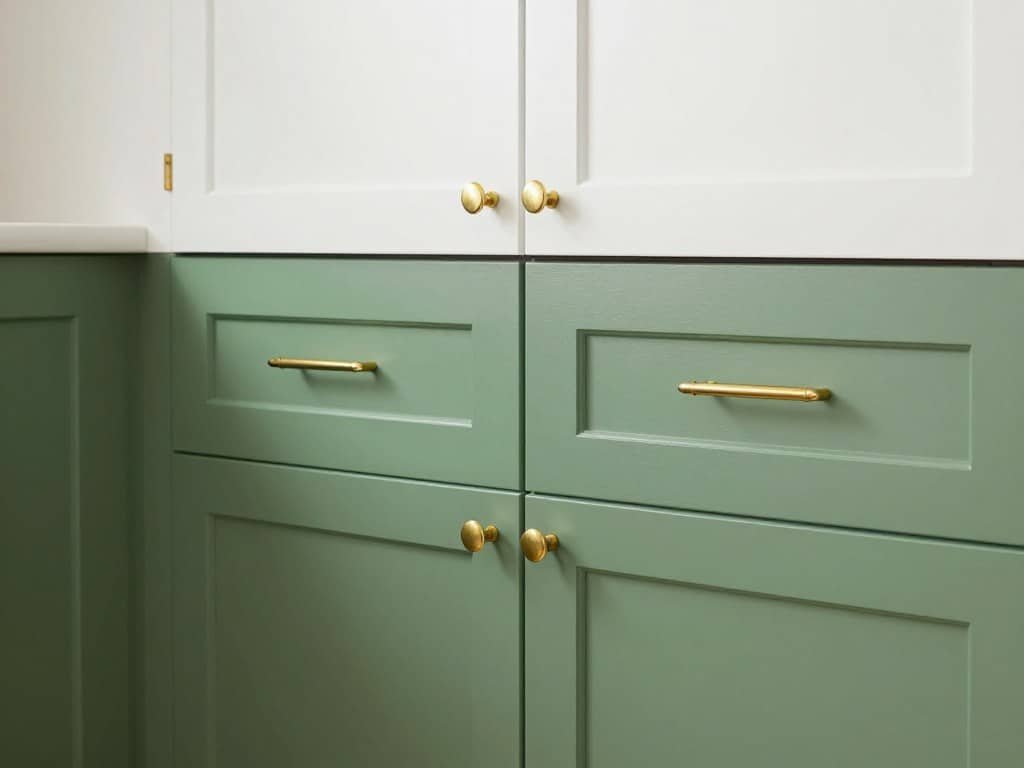
Using One Hardware Finish vs Mixed Finishes
For most two-tone kitchens, using a single hardware finish throughout creates visual consistency that helps unify different cabinet colors. This approach allows the cabinet contrast to remain the primary focus while the hardware provides a cohesive element. However, in some designs, intentionally mixed metal finishes can enhance the two-tone effect—such as brass hardware on navy cabinets with nickel on white cabinets.
Best Finishes for Two-Tone Cabinets
Certain hardware finishes work particularly well in two-tone kitchens:
- Unlacquered brass: Adds warmth and patina that complements both light and dark cabinets
- Matte black: Creates contemporary contrast against light cabinets while blending with darker finishes
- Satin nickel: Offers versatile neutrality that works with virtually any cabinet color combination
- Oil-rubbed bronze: Provides traditional character with subtle variation that bridges different cabinet tones
Luxury Hardware Brands
These premium hardware manufacturers offer exceptional quality and distinctive designs that elevate two-tone kitchens:
Armac Martin
This British brand creates exquisite solid brass hardware with impeccable finishes, offering traditional and contemporary designs that complement sophisticated two-tone kitchens.
Rocky Mountain Hardware
Specializing in bronze cabinet hardware with distinctive patinas, Rocky Mountain offers artisanal quality with organic textures that work beautifully across different cabinet finishes.
Rejuvenation
With a focus on historically inspired designs, Rejuvenation offers solid brass hardware in multiple finishes, perfect for creating cohesion in traditional two-tone kitchens.
Editor’s Choice: Luxury Cabinet Pulls
Amerock Sea Grass Collection cabinet pulls feature solid construction and a versatile champagne bronze finish that complements any two-tone cabinet combination.
Appliances That Work Best in Two-Tone Kitchens
Appliance selection significantly impacts the success of two-tone kitchen designs. The right approach integrates these functional elements seamlessly with your contrasting cabinet finishes.
Panel-Ready Appliances
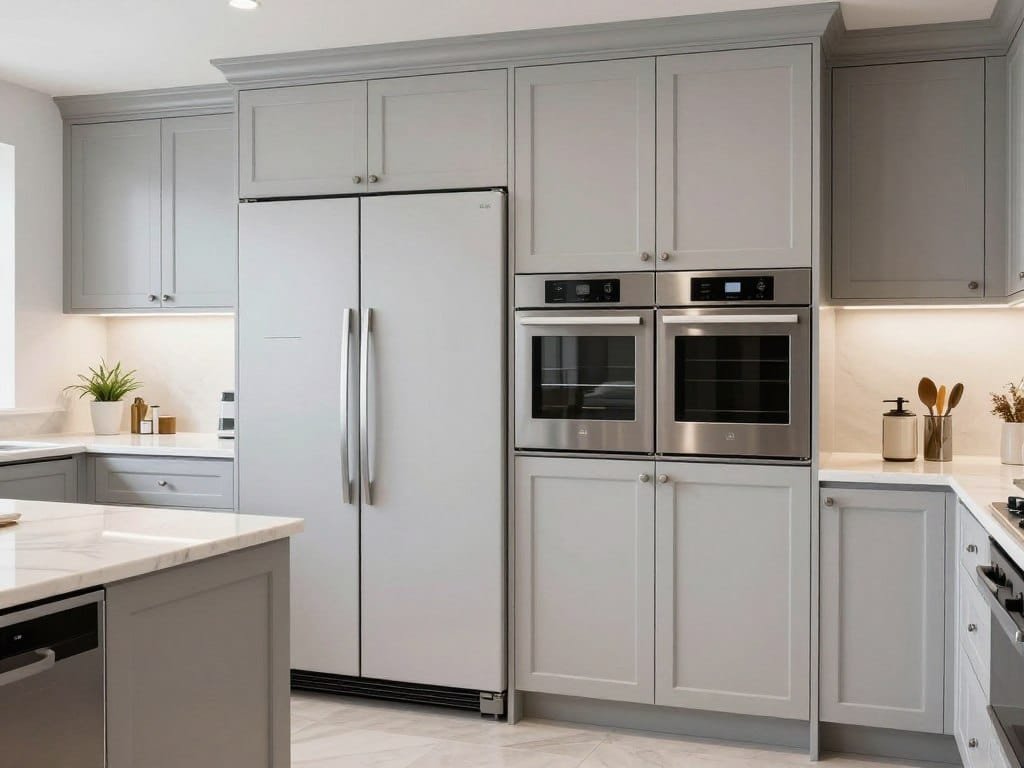
For the most cohesive look in two-tone kitchens, panel-ready appliances disappear into your cabinetry, allowing the intentional color contrast to remain the focus. Refrigerators and dishwashers can be paneled to match either cabinet finish, depending on their location. This approach creates a seamless, furniture-like appearance that elevates the entire kitchen design.
Stainless Steel vs Integrated Panels
While panel-ready appliances offer the most integrated look, stainless steel can work beautifully in two-tone kitchens by providing a neutral third element. The silver tone of stainless steel typically complements both cabinet finishes, creating a professional appearance. For a more contemporary approach, black stainless or matte black appliances can create dramatic contrast in lighter kitchens.
Luxury Appliance Brands
These premium manufacturers offer exceptional performance and design options that complement high-end two-tone kitchens:
Sub-Zero & Wolf
The gold standard for luxury kitchens, Sub-Zero refrigerators and Wolf cooking appliances offer both panel-ready options and distinctive stainless steel designs with professional performance.
Miele
Known for sleek European design and innovative technology, Miele offers fully integrated dishwashers and refrigerators that disappear into two-tone cabinetry, along with distinctive cooking appliances.
Gaggenau
This ultra-premium German brand creates architectural appliances with minimalist design, offering both panel-ready options and distinctive stainless finishes that complement contemporary two-tone kitchens.
Premium Appliance Handles
Upgrade your appliance appearance with Koofizo Refrigerator Door Handle Covers, featuring brushed stainless steel finish that coordinates with any cabinet color scheme.
Two-Tone Kitchen Layout Ideas
The physical arrangement of your two-tone cabinets significantly impacts the overall design effect. These layout strategies maximize the visual impact of contrasting cabinet finishes.
Kitchens Without Upper Cabinets
Contemporary kitchens often eliminate upper cabinets in favor of open shelving or windows, creating a natural opportunity for two-tone design. Base cabinets in a distinctive color paired with a contrasting island create architectural interest without overwhelming the space. This approach works particularly well in smaller kitchens where full two-tone designs might feel busy.
Two-Tone Shaker Cabinets
Shaker cabinets provide a versatile foundation for two-tone designs, working equally well in traditional and contemporary settings. The simple frame-and-panel construction creates subtle shadow lines that enhance color contrast without competing with it. For a classic approach, pair white shaker uppers with navy or green shaker lowers in the same door style.
Flat-Panel Two-Tone Kitchens
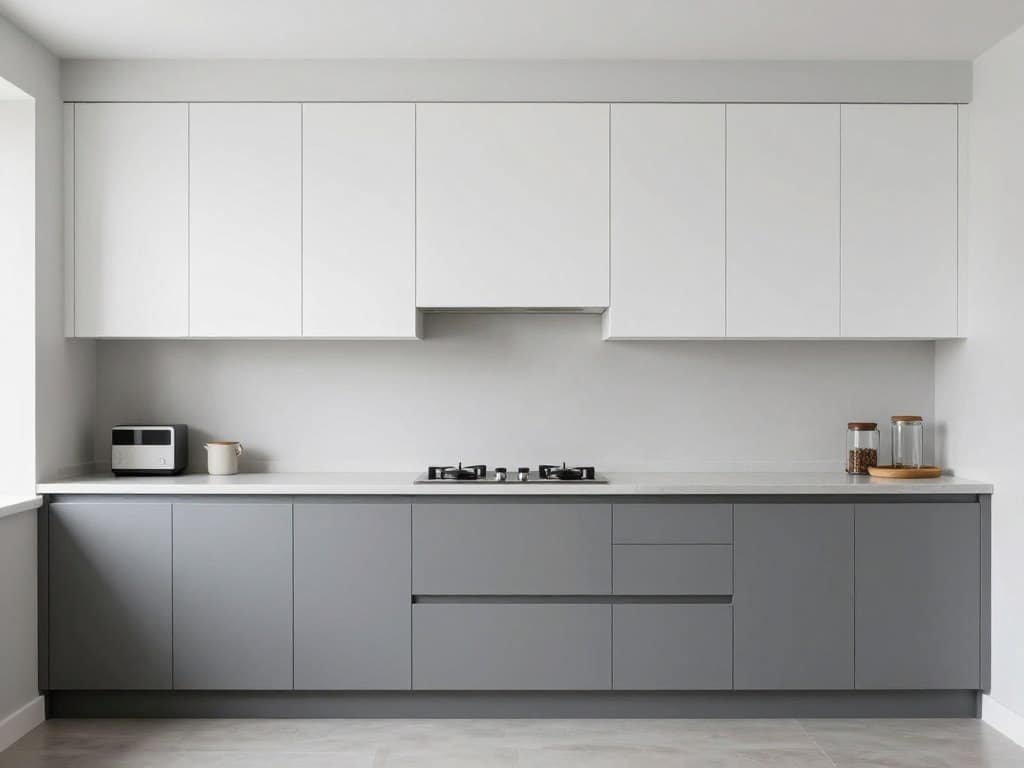
For modern, minimalist kitchens, flat-panel (slab) doors in contrasting colors create clean, architectural impact. This approach emphasizes the color contrast without additional detail from door profiles. Consider high-gloss white upper cabinets with matte black or wood-grain lower cabinets for a contemporary European look.
Two-Tone Cabinets in Open-Concept Homes
In open-concept spaces where the kitchen is visible from living areas, two-tone cabinets help define the kitchen zone while creating visual interest. Consider how cabinet colors relate to adjacent spaces—using a darker cabinet color that coordinates with living room furniture creates cohesion between the areas while maintaining distinct zones.
Common Two-Tone Kitchen Cabinet Mistakes
Even with careful planning, certain pitfalls can compromise the success of two-tone kitchen designs. Avoiding these common mistakes ensures a cohesive, professional result.
Too Much Contrast
While contrast is the foundation of two-tone design, excessive contrast can create a disjointed appearance. Colors that are too different in both hue and value (lightness/darkness) can make a kitchen feel choppy rather than cohesive. For harmonious contrast, choose colors that share either similar undertones or similar intensity levels.
Mismatched Undertones
One of the most common mistakes in two-tone kitchens involves combining colors with clashing undertones. For example, pairing cool-toned gray cabinets with warm cream uppers can create discord. For successful combinations, ensure both colors have either warm or cool undertones, or intentionally pair warm and cool colors that have been designed to work together.
Ignoring Lighting Temperature
Cabinet colors appear dramatically different under various lighting conditions. Failing to test finishes under your actual kitchen lighting can lead to unexpected results. Cool LED lighting can make warm cabinet colors appear dull, while warm incandescent lighting can skew cool cabinet colors. Always test large samples of both cabinet finishes under your specific lighting before committing.
Using Cheap Paint Finishes
Two-tone kitchens highlight the quality of cabinet finishes, making subpar paint or stain immediately noticeable. Investing in premium cabinet-grade finishes ensures durability and a professional appearance. For painted cabinets, acrylic or catalyzed conversion varnishes offer superior hardness and resistance to chipping compared to standard latex paints.
Professional Cabinet Paint
General Finishes Milk Paint provides a durable, self-leveling finish perfect for DIY cabinet painting, with minimal prep and excellent coverage for two-tone projects.
Two-Tone Cabinets vs Single-Color Kitchens
Understanding the comparative advantages of two-tone and single-color kitchens helps you determine which approach best suits your space and lifestyle.
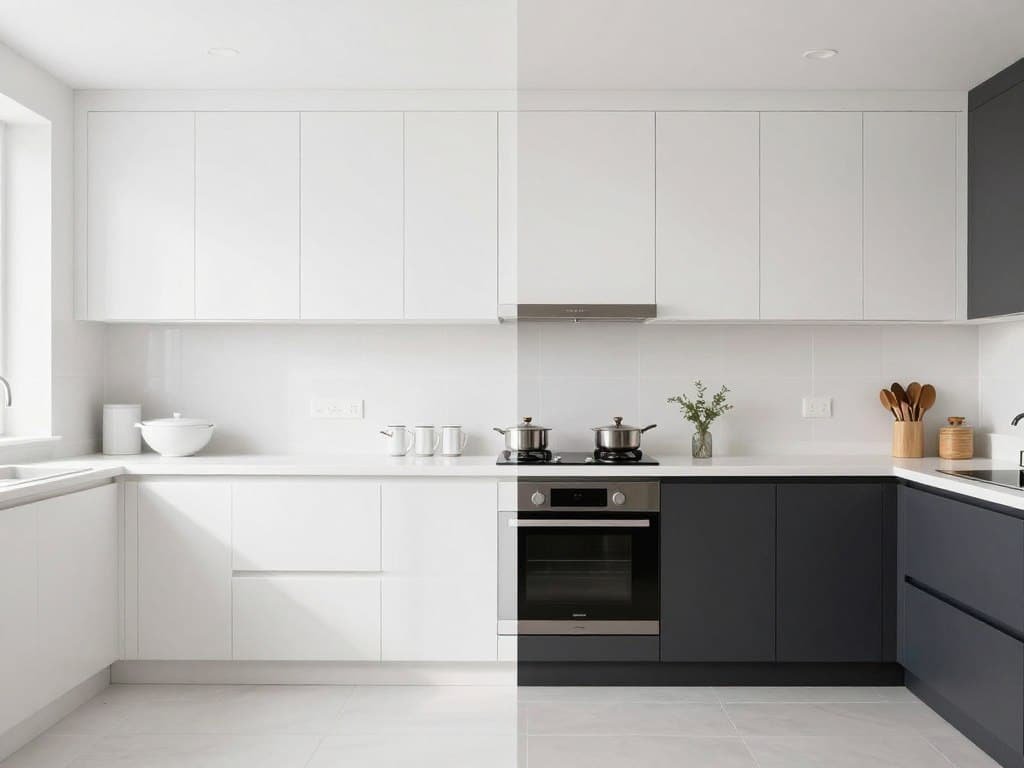
Two-Tone vs All-White Kitchens
All-white kitchens offer timeless appeal and brightness but can sometimes feel clinical or flat without careful attention to texture and detail. Two-tone kitchens provide built-in visual interest and dimension while still maintaining brightness with lighter upper cabinets. They also typically show less wear than all-white designs, as darker lower cabinets hide scuffs and everyday use.
Two-Tone vs Wood-Only Kitchens
Natural wood kitchens offer warmth and organic character but can sometimes feel heavy or dated depending on the wood species and finish. Two-tone kitchens that incorporate wood elements provide the warmth and texture of natural materials while the painted components add freshness and light. This balanced approach works particularly well in transitional homes that blend traditional and contemporary elements.
Two-Tone vs Dark Cabinet Kitchens
All-dark kitchens create dramatic, cocooning spaces but can make rooms feel smaller and darker, particularly in spaces with limited natural light. Two-tone kitchens with dark lower cabinets provide the grounding effect and sophistication of darker finishes while lighter upper cabinets prevent the space from feeling closed in. This approach offers the best of both worlds—the drama of dark cabinetry with the openness of lighter elements.
FAQs About Two-Tone Kitchen Cabinets
Are two-tone kitchen cabinets still in style?
Yes, two-tone kitchen cabinets remain firmly in style and have evolved from a trend to a standard design approach in custom kitchens. While specific color combinations may shift with broader design trends, the fundamental concept of using contrasting cabinet finishes continues to be embraced by designers for its visual interest and architectural appeal. The most timeless combinations—white with navy, black, or natural wood—show no signs of falling out of favor.
Do two-tone cabinets increase resale value?
When executed with timeless color combinations, two-tone cabinets can positively impact resale value by creating memorable, photogenic kitchens that stand out to potential buyers. Real estate professionals note that kitchens with thoughtful two-tone designs often become selling points during home tours. However, highly personalized or trendy color choices may limit appeal, so classic combinations like white with navy, black, or natural wood offer the best return on investment.
How many colors should a two-tone kitchen have?
Most successful two-tone kitchens limit themselves to two cabinet colors plus coordinating countertop and backsplash materials. Introducing more than two cabinet finishes risks creating a busy, disjointed appearance unless done with exceptional design skill. For most homes, two carefully chosen cabinet colors create sufficient visual interest while maintaining cohesion.
Can you mix wood and painted cabinets?
Yes, mixing wood and painted cabinets creates one of the most successful and timeless two-tone approaches. This combination adds natural warmth and texture while maintaining the clean, bright qualities of painted finishes. Popular combinations include white painted perimeter cabinets with a walnut island, or white upper cabinets with oak lower cabinets. The key is choosing wood with distinctive grain patterns that contrast beautifully with solid painted surfaces.
What backsplash works best with two-tone cabinets?
The most successful backsplashes for two-tone kitchens typically incorporate elements that relate to both cabinet colors, creating a bridge between the contrasting finishes. Simple white subway tile provides a clean backdrop that allows cabinet colors to remain the focus, while marble or quartzite with subtle veining can tie together different cabinet tones. Avoid busy patterns or bold colors that compete with the cabinet contrast unless they’re used as a deliberate focal point in a limited area.
Creating Your Perfect Two-Tone Kitchen
Two-tone kitchen cabinets offer a sophisticated way to add architectural interest and personal style to your home. By thoughtfully combining contrasting finishes—whether painted cabinets in different colors or natural wood with painted surfaces—you create visual depth that elevates your kitchen from ordinary to extraordinary. The most successful two-tone kitchens balance contrast with cohesion, using complementary colors and consistent design elements to create harmony. Whether you’re planning a full custom kitchen or updating existing cabinets, the principles outlined in this guide will help you create a beautiful, balanced space that reflects both timeless design and your personal aesthetic.
Start Your Two-Tone Kitchen Project
Ready to transform your kitchen? The Rust-Oleum Cabinet Transformations Kit provides everything you need to create a professional-quality two-tone finish on existing cabinets, with no stripping required.