

This post may contain affiliate links. Please see my disclosure policy for details.
Cottagecore living room ideas embrace a rustic, romantic aesthetic. The best designs use natural materials, floral patterns, and cozy textures. The key is creating a space that feels like a countryside retreat.
1. Cottagecore Living Room: A Cozy Escape
A cottagecore living room is all about coziness, natural elements, and a sense of nostalgia. Think of soft, muted color palettes, floral prints, and wooden textures that create a lived-in feel. Layer throw blankets and pillows for warmth and softness, and add vintage pieces or handmade decor to enhance that rustic charm.
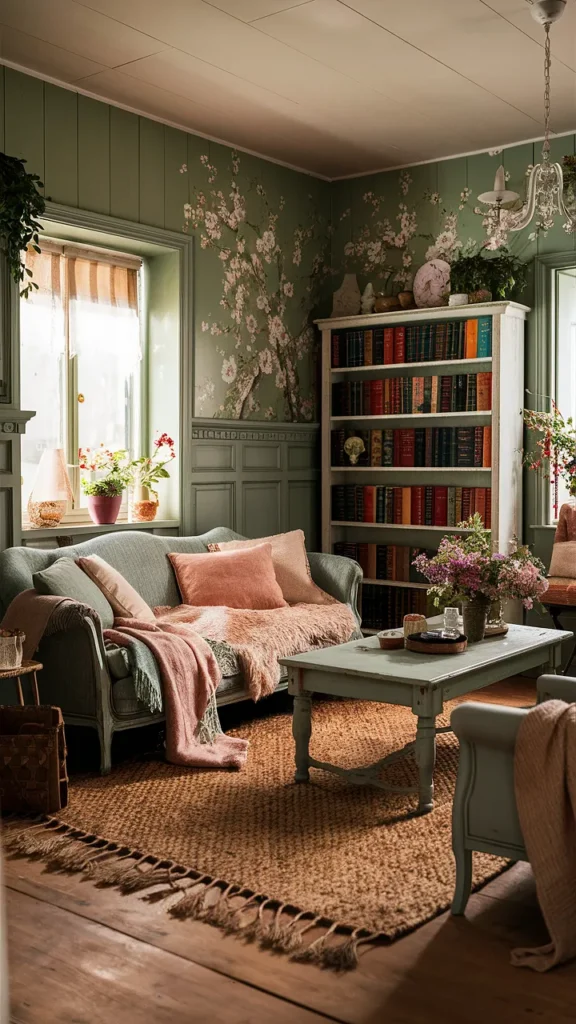
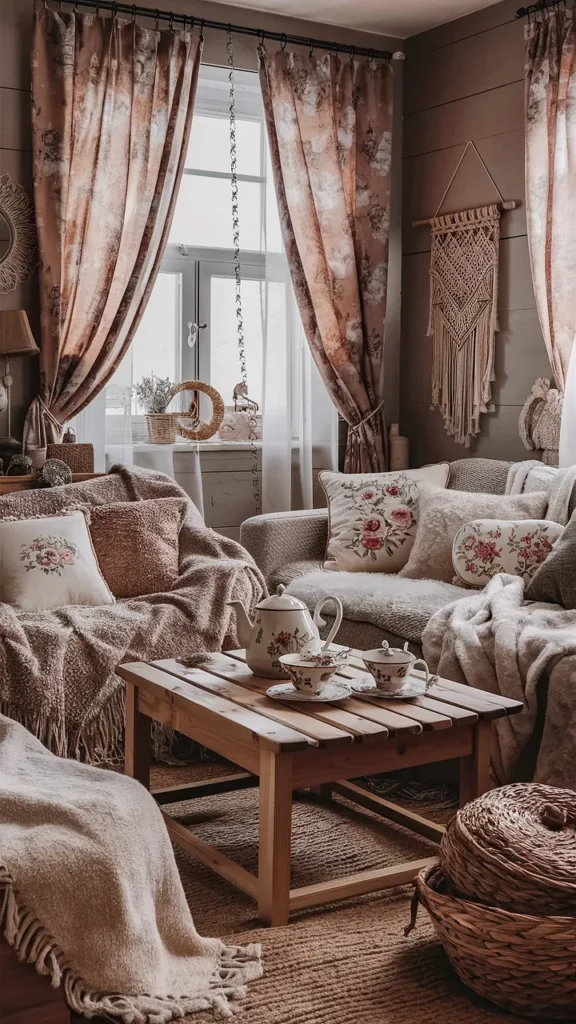
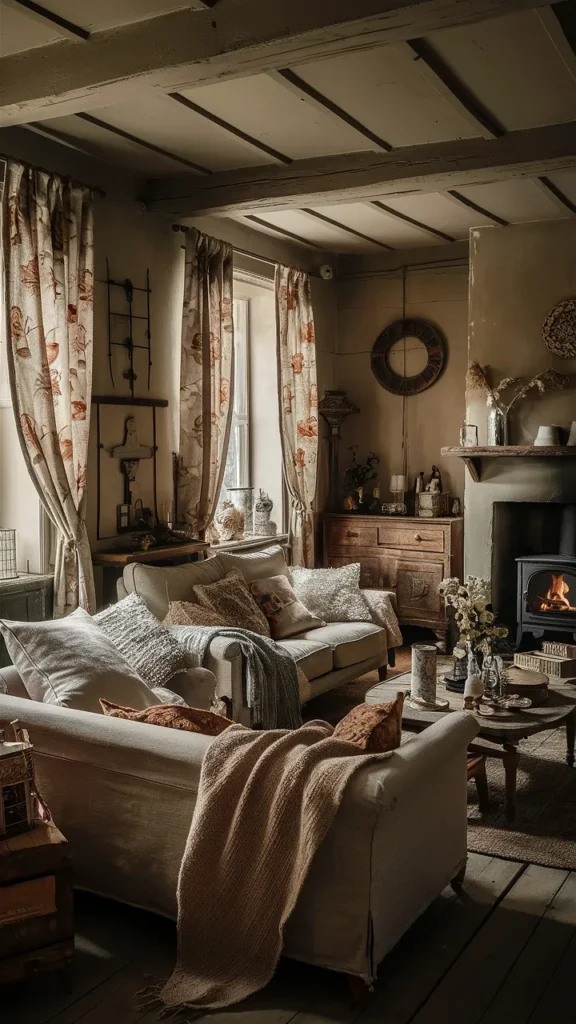
🌟 Steal This Look
- Paint Color: Sherwin-Williams Accessible Beige SW 7036
- Furniture: Low-profile wooden sofa with rolled arms, vintage-style upholstered wingback chair, reclaimed wood coffee table, open wooden shelving with woven baskets
- Lighting: Warm brass floor lamp with linen shade, vintage Edison bulb pendant fixture, or antique candlestick holders
- Materials: Linen, cotton, jute, reclaimed wood, wrought iron, woven textiles, vintage ceramics
Cottagecore living rooms work because they feel like spaces that have been loved across generations—they’re about honoring handmade, natural, and vintage treasures. This style invites you to slow down, wrap yourself in a soft blanket, and settle into a room that whispers comfort.
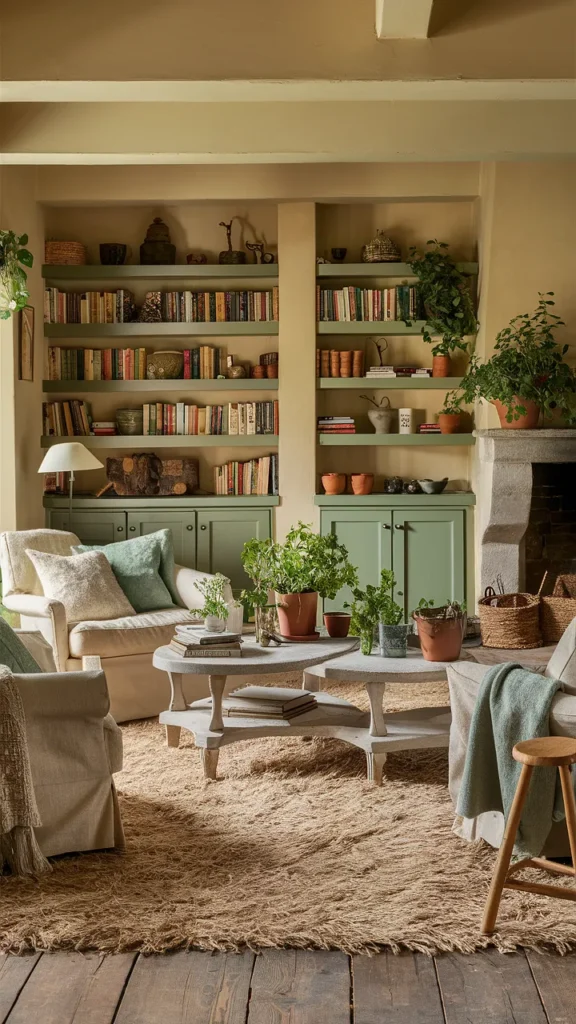
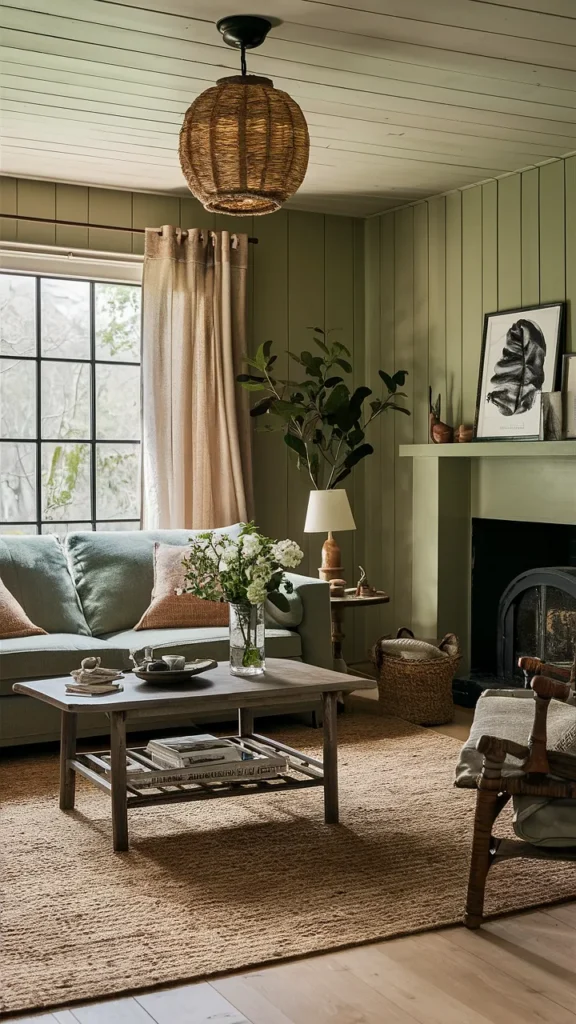
2. Earthy Cottagecore Living Room: Bringing Nature Indoors
To fully embrace the cottagecore aesthetic, lean into earthy tones like sage green, warm beige, and muted browns. These colors create a calming environment that feels connected to the outdoors. Add plants, dried flowers, or botanical prints to bring more natural elements into your living space.
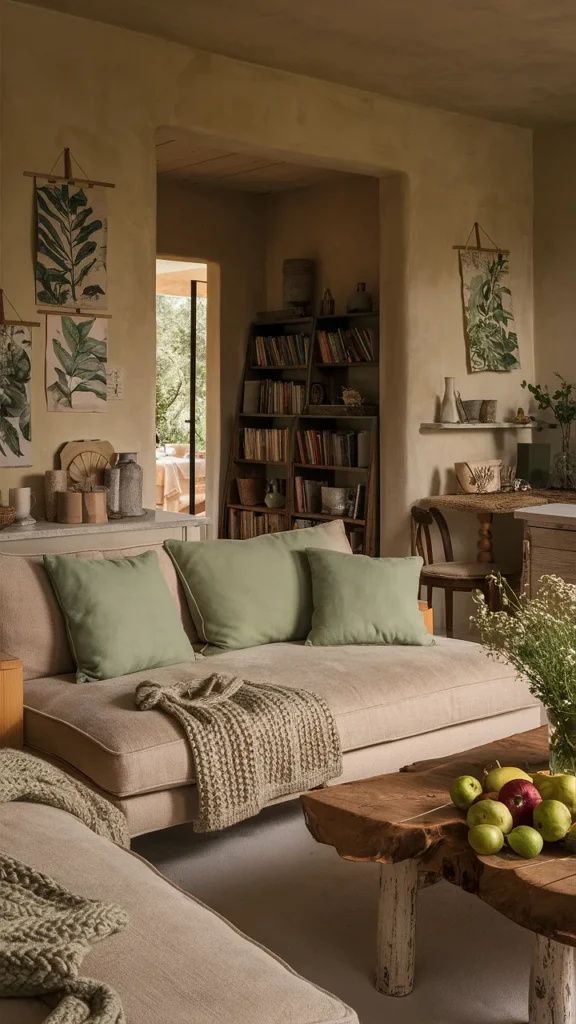
★ Steal This Look
- Paint Color: Benjamin Moore Healing Aloe 2037-60
- Furniture: Low-profile wooden sofa with rolled arms in natural oak or walnut, paired with a vintage linen wingback chair in warm oatmeal. Add a reclaimed wood coffee table with turned legs and a woven jute ottoman for layered texture.
- Lighting: Brass arc floor lamp with linen shade, positioned near seating to cast warm ambient light without harshness. Supplement with vintage-style table lamps with cream fabric shades.
- Materials: Natural linen upholstery, aged wood frames, woven jute and sisal rugs, dried botanicals in glass vessels, ceramic pottery with matte finishes, pressed flower frames in wood
This earthy palette creates a grounding, restorative retreat that whispers rather than shouts—the kind of room where you actually want to spend quiet afternoons reading or sketching. The beauty is that every element (wood, linen, dried flowers) ages gracefully, so your space becomes more authentically cottagecore over time as pieces develop patina.
3. Cottagecore Living Room Furniture: Timeless Comfort
For furniture, choose items that are both functional and full of character. Opt for wooden pieces with natural finishes, soft fabrics like linen or cotton, and a mix of vintage and modern styles. An oversized armchair or a comfy sofa with floral cushions can instantly make your living room feel more inviting.
🏠 Steal This Look
- Paint Color: Farrow & Ball Pointing PE 374
- Furniture: Rolled-arm sofa in natural linen, wooden coffee table with turned legs, oversized wingback armchair upholstered in cream linen, vintage wooden side tables with natural finish
- Lighting: Brass or wrought iron table lamps with linen shades, positioned on wooden side tables
- Materials: Natural wood finishes (oak, pine, walnut), linen and cotton upholstery, vintage or reproduction hardware, matte brass fixtures
Cottagecore living rooms celebrate the beauty of imperfection and time-worn comfort. These spaces invite you to curl up with a book and stay awhile, which is exactly what thoughtfully chosen, character-filled furniture achieves.
4. Cottagecore Living Room Hutch: A Vintage Touch
A classic hutch is a must-have in a cottagecore living room. It provides storage for your favorite trinkets, books, or antique finds while adding a nostalgic flair to the room. Look for hutches with distressed finishes or decorative glass doors for extra charm.
🏠 Steal This Look
- Paint Color: Behr Cottage White N310-1
- Furniture: Distressed wood hutch with glass cabinet doors, preferably in cream, soft white, or natural wood tones with worn finishes. Look for pieces with decorative molding and turned legs.
- Lighting: Warm brass or bronze picture lights mounted above hutch shelves, or vintage-style sconces flanking the hutch for accent lighting on displayed items
- Materials: Distressed or whitewashed wood, vintage glass panes, wrought iron hardware, aged brass accents, reclaimed wood shelving
A vintage hutch becomes the soul of your cottagecore living room—it’s where you tell the story of treasures collected and memories held. This piece transforms simple storage into a gallery of nostalgia.
5. Japanese Cottagecore Living Room: Minimalist Meets Cozy
For a twist on traditional cottagecore, try blending it with Japanese minimalism. Opt for low, wooden furniture, floor cushions, and simple, natural materials. Soft lighting, neutral tones, and lots of open space will help you create a tranquil atmosphere that merges cottagecore warmth with Japanese simplicity.
🏠 Steal This Look
- Paint Color: Valspar Subtle Taupe 7036-7C
- Furniture: Low-profile wooden platform sofa or sectional in natural wood finish, paired with floor cushions in linen or cotton canvas, low wooden coffee table with clean lines, natural wood side tables
- Lighting: Paper pendant lights or rice paper floor lamps with warm (2700K) LED bulbs for soft, diffused illumination
- Materials: Raw wood, natural linen, cotton canvas, woven straw tatami elements, unfinished oak or walnut, ceramic vessels, wool throw blankets in cream or soft grey
This fusion style works beautifully for those who love cottagecore’s lived-in warmth but feel overwhelmed by visual clutter. It’s the perfect answer for anyone seeking a sanctuary that feels both intimate and peacefully uncluttered.
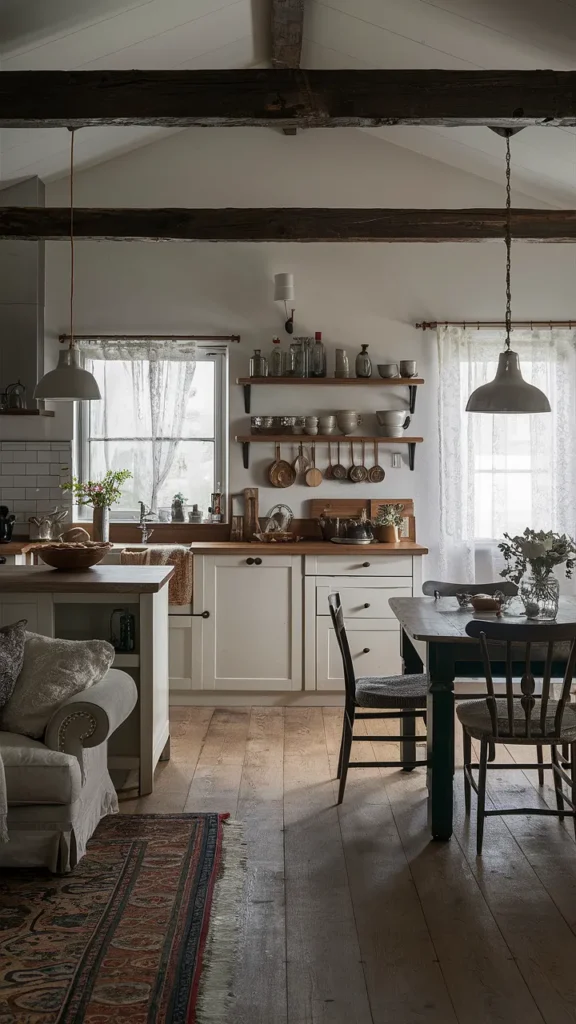
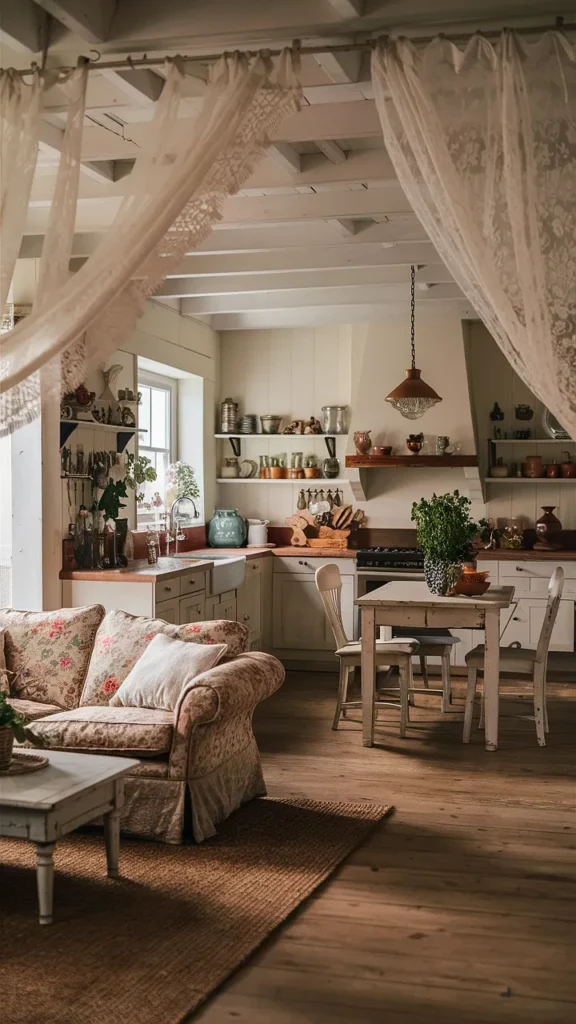
6. Cottagecore Living Room Kitchen: Blurring the Lines
In homes with open-concept spaces, blending the living room and kitchen can enhance the cottagecore vibe. Use rustic shelving, vintage kitchenware, and farmhouse tables to tie both areas together. Soft fabrics, like lace curtains, can help soften the look and maintain the cozy feel.
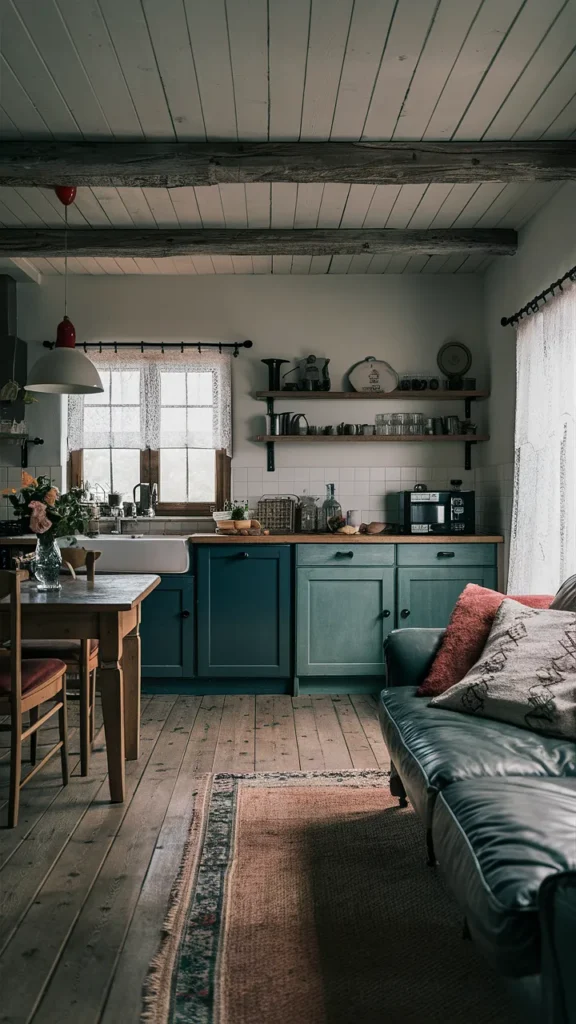
🌟 Steal This Look
- Paint Color: PPG Accessible Beige PPG1088-3 – a warm, soft neutral that bridges living and kitchen spaces without feeling sterile, allowing vintage and rustic elements to stand out
- Furniture: Reclaimed wood farmhouse dining table with turned legs, open shelving with corbel brackets in aged wood finish, upholstered wingback chairs in linen or linen-blend fabric for the living area transition
- Lighting: Vintage-style iron pendant lights with Edison bulbs hung over the kitchen counter area, paired with table lamps with cream fabric shades in the living section
- Materials: Distressed wood, aged brass hardware, vintage ceramic kitchenware, lace or cotton voile curtains, linen upholstery, wrought iron brackets
Open-concept cottagecore is about creating a unified, inviting home where the kitchen doesn’t feel like an interruption to relaxation. The magic happens when both zones whisper the same nostalgic story through shared materials and a warm, lived-in aesthetic.
7. Cottagecore Living Room Leather Couch: Balancing Rustic and Modern
A leather couch might seem out of place in a cottagecore design, but it can work beautifully when paired with the right elements. Choose a worn-in, vintage leather sofa that complements other rustic elements like wood or woven textures. Throw blankets and soft pillows can help balance the ruggedness.
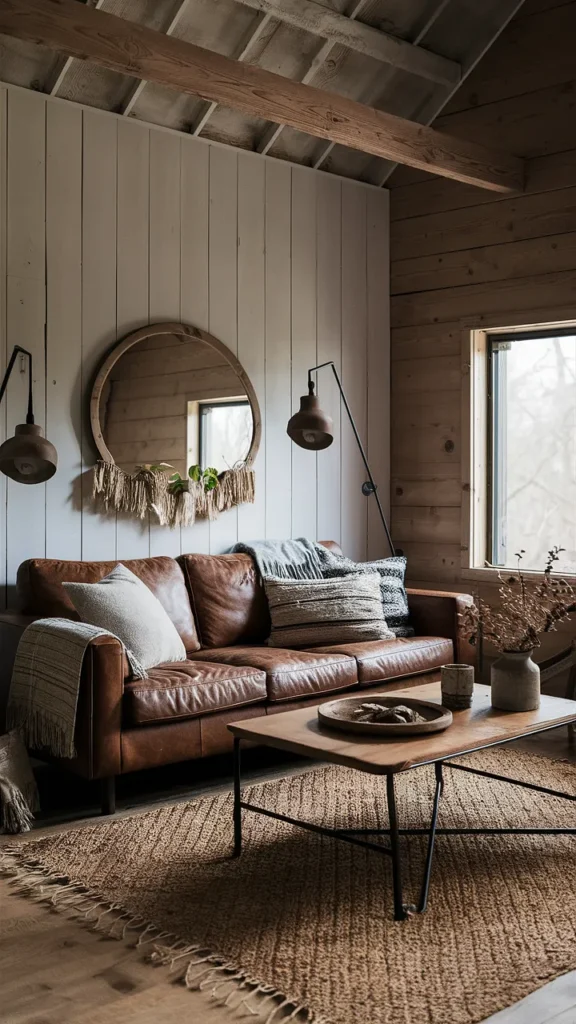
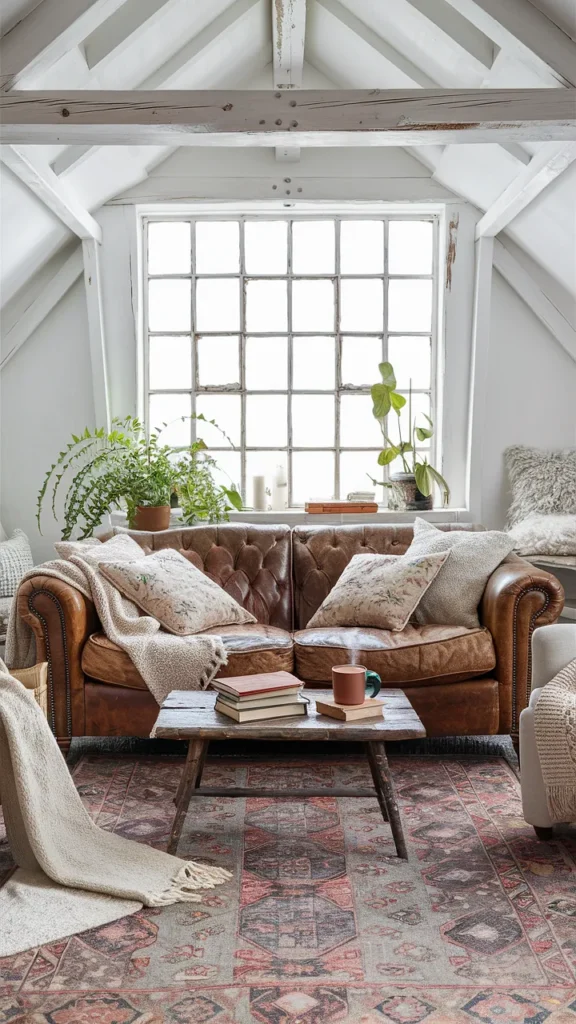
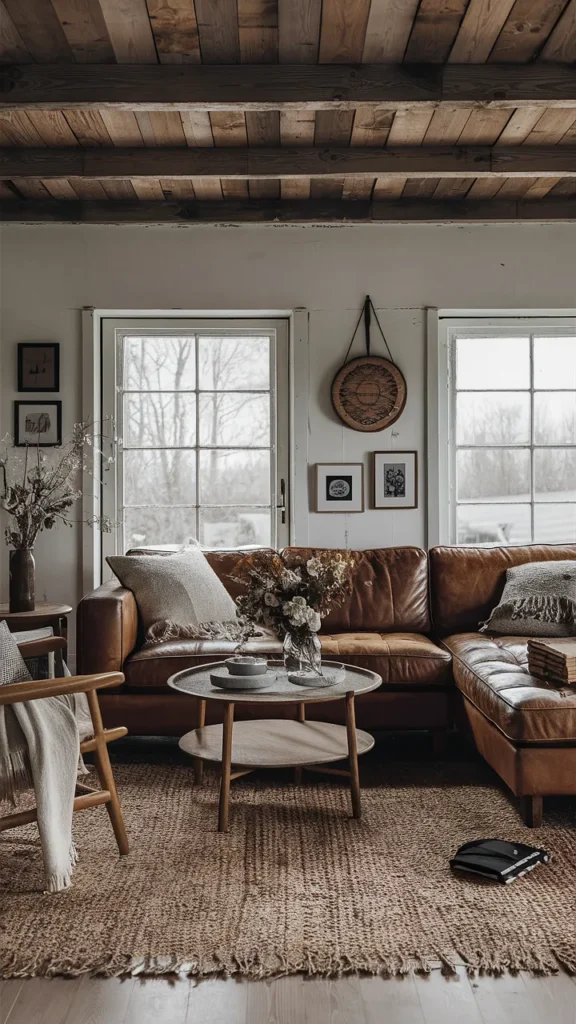
✎ Steal This Look
- Paint Color: Dunn-Edwards Warm Taupe DE6089
- Furniture: Vintage brown or cognac leather sofa with rolled arms and nailhead detailing; pair with reclaimed wood coffee table and woven storage ottomans
- Lighting: Wrought iron floor lamp with linen shade or brass table lamps with warm Edison bulbs
- Materials: Distressed leather, natural wood, linen, chunky knit throws, jute rugs, woven baskets
A leather couch in cottagecore is an act of thoughtful rebellion—it proves the style thrives on mixing periods and textures, not rigid rules. When you choose an authentically aged piece and dress it with vintage textiles, it becomes a storytelling centerpiece that feels like an heirloom.
Save this article
Enter your email and we'll send it straight to your inbox.
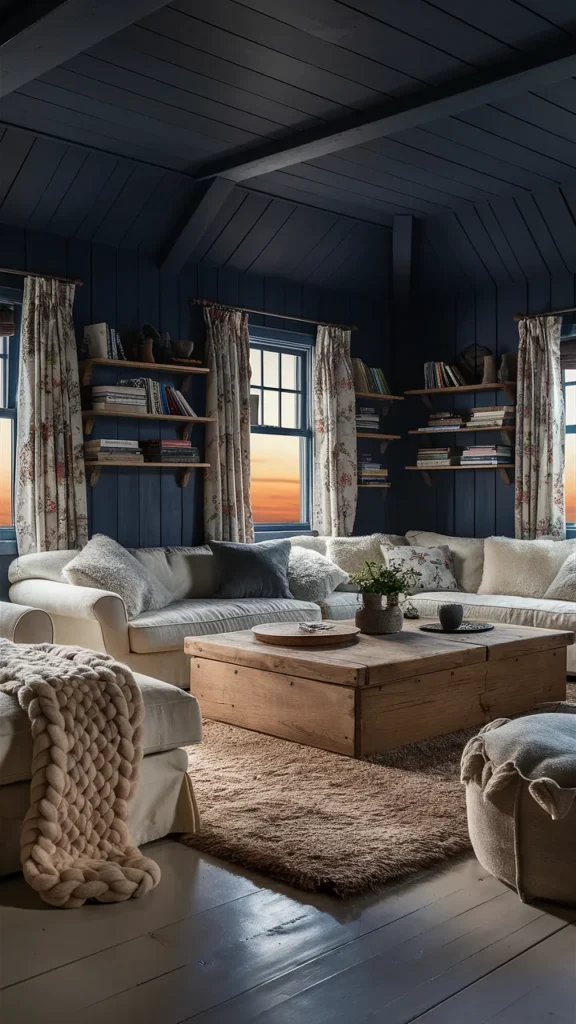
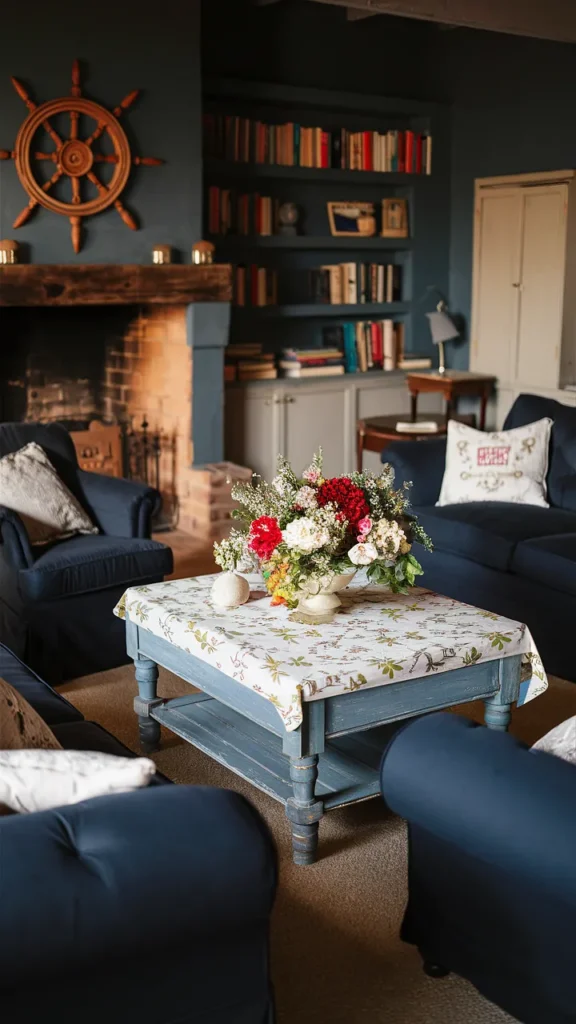
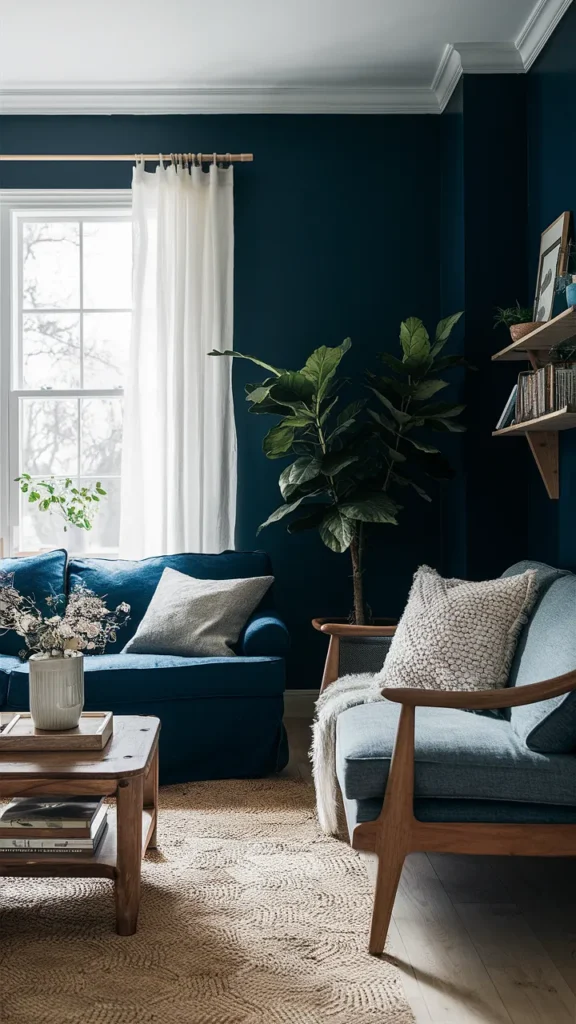
While cottagecore is often associated with lighter colors, navy can add a rich and cozy feel to your living room. Navy walls or furniture, when paired with wooden accents and soft textures, create a warm, inviting space that still feels natural and grounded.
★ Steal This Look
- Paint Color: Clare Paint Deep Navy CODE
- Furniture: Wooden-frame sofa with linen upholstery in cream or oatmeal, paired with a dark wood coffee table with turned legs, vintage-style wingback chair in natural linen
- Lighting: Warm brass or oil-rubbed bronze chandelier with fabric shade, or vintage-style table lamps with linen shades
- Materials: Natural wood (oak, walnut), soft linen, cotton, wool throws, jute area rug, vintage ceramics, woven baskets
Navy cottagecore reads as literary and introspective — think English countryside manor libraries. It’s perfect for rooms where you want to feel wrapped in comfort rather than airy lightness, and it deepens the sense of retreat that cottagecore promises.
9. Cottagecore Living Room Orange: A Warm, Vintage Pop
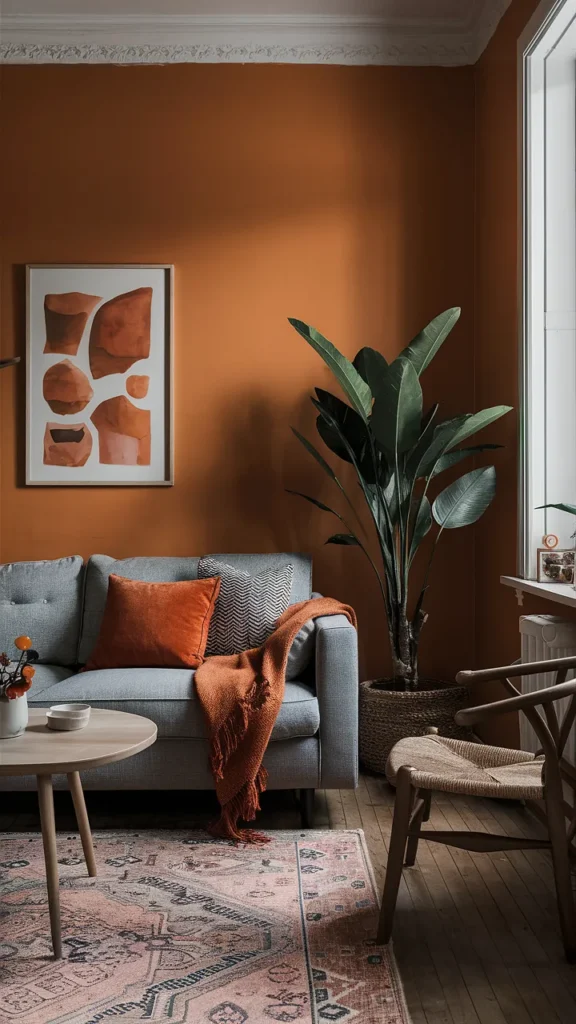
A touch of orange can bring warmth and vibrancy to your cottagecore living room. Opt for muted or burnt orange hues for a vintage look, especially in accent pieces like cushions, throws, or a small area rug. It adds a cozy energy without overpowering the softness of the cottagecore aesthetic.
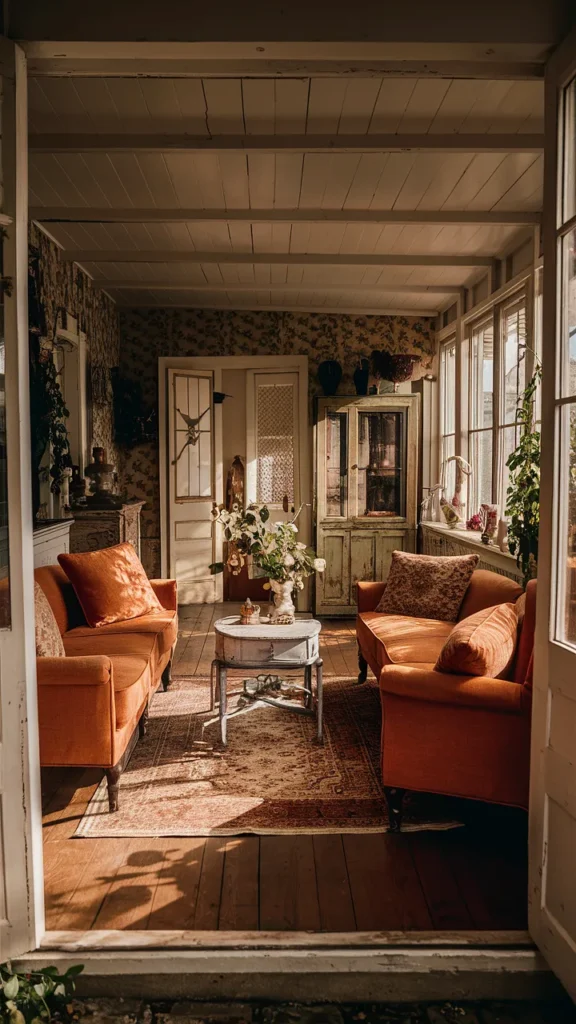
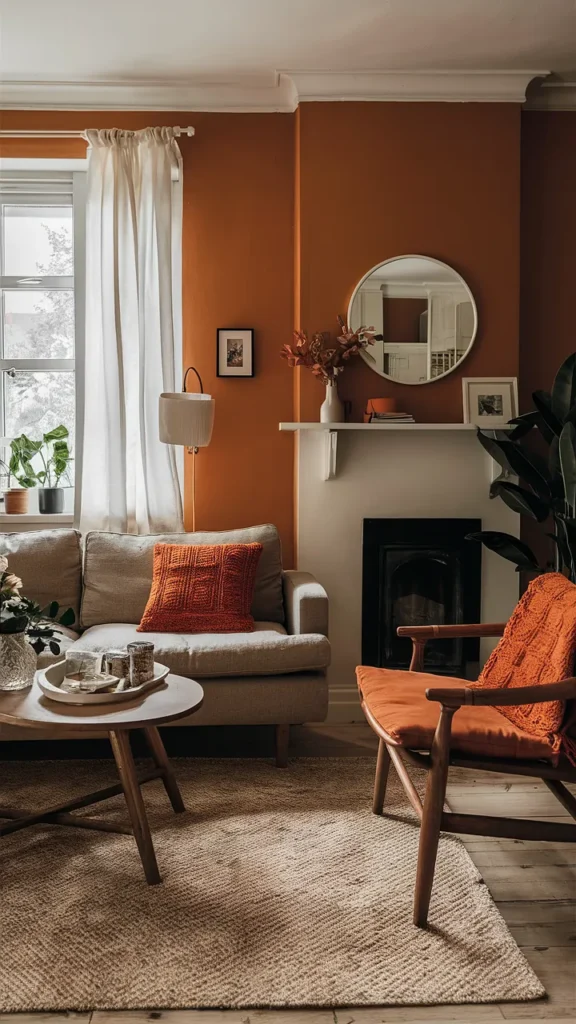
🖼 Steal This Look
- Paint Color: Fine Paints of Europe Terracotta 539 for accent walls, or Fine Paints of Europe Warm White 11 for main walls to let burnt orange accents shine
- Furniture: Vintage-style linen sofa in cream or oatmeal; low wooden coffee table with turned legs; upholstered armchair in natural fabric; woven storage baskets
- Lighting: Warm brass or bronze floor lamp with linen shade; Edison bulb pendant fixture for ambient glow
- Materials: Linen upholstery, wool area rug with muted patterns, aged wood frames, ceramic accents, natural jute and raffia textures
Burnt orange feels like coming home to a vintage autumn—it’s warm without being loud, nostalgic without feeling dated. This warm pop transforms a cottagecore room from serene to inviting, creating the kind of space where you actually want to spend your evenings with tea and a book.
10. Cottagecore Living Room Small: Maximizing Coziness
Even a small living room can exude cottagecore charm. Stick to light colors, use mirrors to reflect natural light, and incorporate multi-functional furniture. Vintage trunks can serve as coffee tables with hidden storage, while wall-mounted shelving can free up floor space without sacrificing style.
✎ Steal This Look
- Paint Color: Backdrop Cream Linen CC-100
- Furniture: Vintage wooden trunk coffee table with storage, compact settee or loveseat in cream linen, wall-mounted open shelving in natural wood, small-scale wingback chair
- Lighting: Wall-mounted brass or wrought iron sconces flanking mirrors, or a small chandelier to maximize vertical light distribution
- Materials: Light linen upholstery, reclaimed wood shelving, vintage metal hardware, natural jute or woven accents, distressed wood finishes
Small cottagecore living rooms thrive on intentionality—every piece should earn its place through beauty and function. This approach transforms a compact space into an intimate, magazine-worthy retreat that feels deliberately curated rather than cramped.
11. Cottagecore Living Room Yellow: Adding a Sunny Touch
Yellow is a cheerful and timeless color that can easily fit into a cottagecore living room. Soft pastel yellows or mustard tones can be incorporated through throw pillows, wall art, or even painted furniture. These pops of yellow will brighten up the room and bring a sunny, welcoming feel.
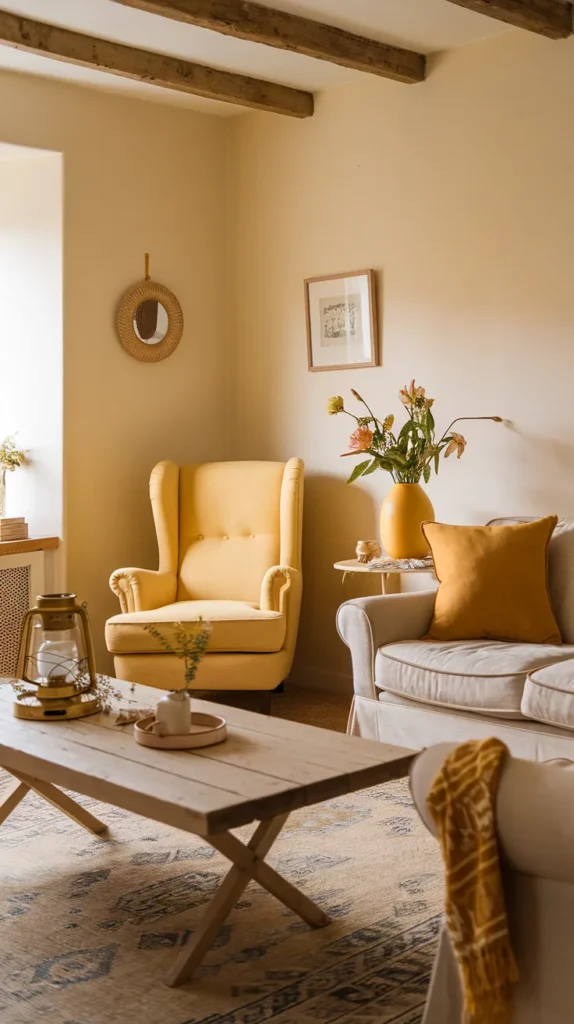
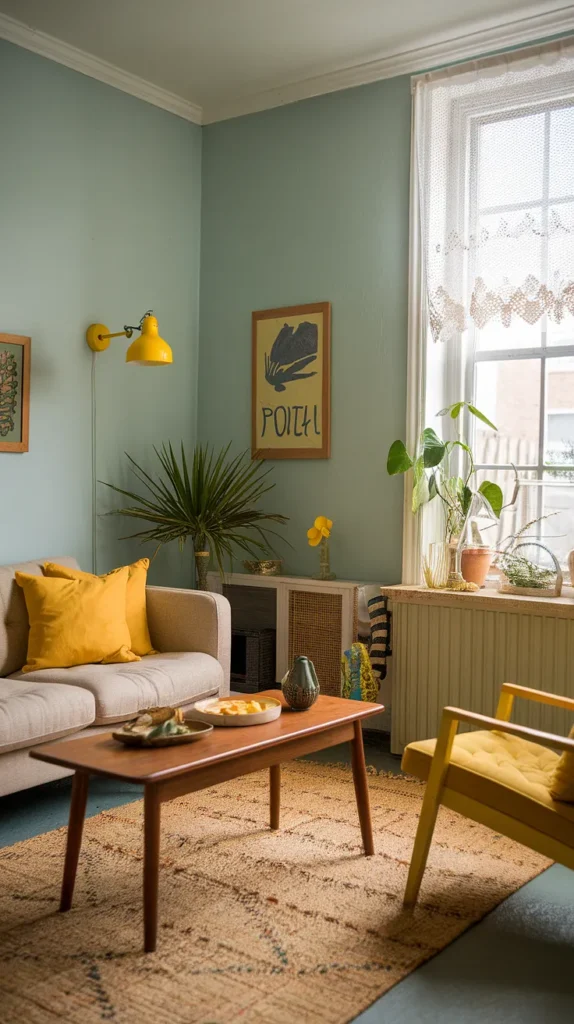
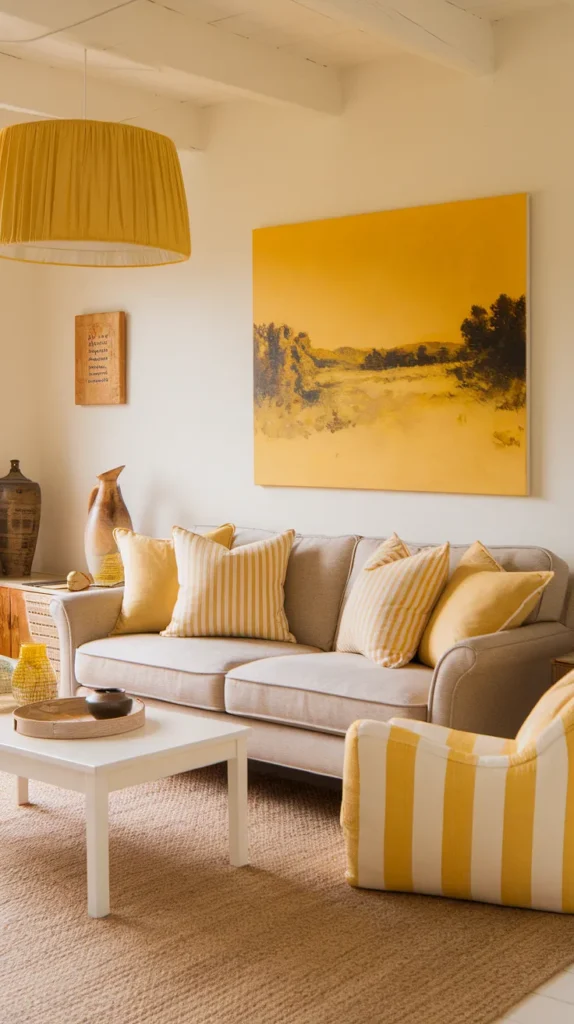
🖼 Steal This Look
- Paint Color: Sherwin-Williams Hawksbeard SW 9197
- Furniture: Distressed wood coffee table with turned legs, cream upholstered armchair, vintage-style wooden shelving unit
- Lighting: Vintage brass floor lamp with linen shade or wrought iron chandelier with Edison bulbs
- Materials: Linen, cotton, distressed wood, woven wicker baskets, aged brass accents
Yellow in cottagecore feels like sunlight streaming through vintage lace curtains—it’s nostalgic and nurturing rather than bold. This warmth pairs beautifully with cream walls and aged wood, creating that timeless farmhouse comfort we’re drawn to.
12. English Cottagecore Living Room: Classic and Traditional
For a traditional English cottagecore vibe, look for floral prints, antique furniture, and dark wood finishes. Wingback chairs, vintage rugs, and a roaring fireplace are key elements. Don’t be afraid to mix patterns—florals, checks, and stripes can all work together in this style, adding a layer of quaint charm.
💡 Steal This Look
- Paint Color: Benjamin Moore Hale Navy HC-153
- Furniture: Wingback armchair with rolled arms in deep burgundy velvet, antique oak coffee table with turned legs, vintage Persian area rug in jewel tones, traditional sofa with nailhead trim
- Lighting: Traditional brass floor lamp with pleated fabric shade, or chandelier with candle-style bulbs for fireplace accent
- Materials: Dark wood (oak, mahogany), velvet upholstery, wool rugs, floral chintz and linen textiles, wrought iron fireplace accessories
This style celebrates the romance of English country estates—think of inheriting your grandmother’s parlor with its mismatched treasures and unapologetic pattern play. It’s cozy, character-filled, and perfectly imperfect.
13. Cottagecore Living Room Fireplace: The Heart of the Home
A fireplace is a quintessential feature in any cottagecore living room. If you’re lucky enough to have one, emphasize its presence with a mantel filled with vintage finds, candles, or dried flowers. Even if you don’t have a real fireplace, you can recreate the cozy effect with a faux fireplace or a wood-burning stove.
Cottagecore living room ideas work when the materials are natural and the space feels cozy. Use floral patterns, wood, and soft textiles. The room should feel like a charming countryside escape.
🖼 Steal This Look
- Paint Color: Farrow & Ball Pointing PE 2816
- Furniture: Upholstered wingback armchair in aged linen, low wooden coffee table with turned legs, vintage side table for mantel display
- Lighting: Brass candelabra or wall sconces with warm Edison bulbs flanking the fireplace
- Materials: Reclaimed wood mantel, natural plaster or limewash walls, vintage ceramic candlesticks, dried flowers in glass vessels, worn brass hardware
The fireplace is the soul of cottagecore design—it’s where warmth, memory, and intentional living intersect. Your mantel should tell a personal story through treasured finds rather than trend-driven purchases.
Keep this one for later
We'll email you the link so you can come back to it.


[…] Vintage finds with personality […]