

This post may contain affiliate links. Please see my disclosure policy for details.
Small Bedroom Ideas: How to Make Your Tiny Space Feel Like a Cozy Haven
Small bedroom got you feeling trapped and claustrophobic? I get it. You’re staring at your cramped quarters wondering how on earth people make those magazine-worthy bedrooms when you can barely fit a queen bed frame without blocking the closet door.
Here’s the truth: I’ve transformed more shoebox bedrooms than I can count, and small spaces actually have a secret superpower. They’re naturally cozy. You just need to know how to work with what you’ve got instead of fighting against it.
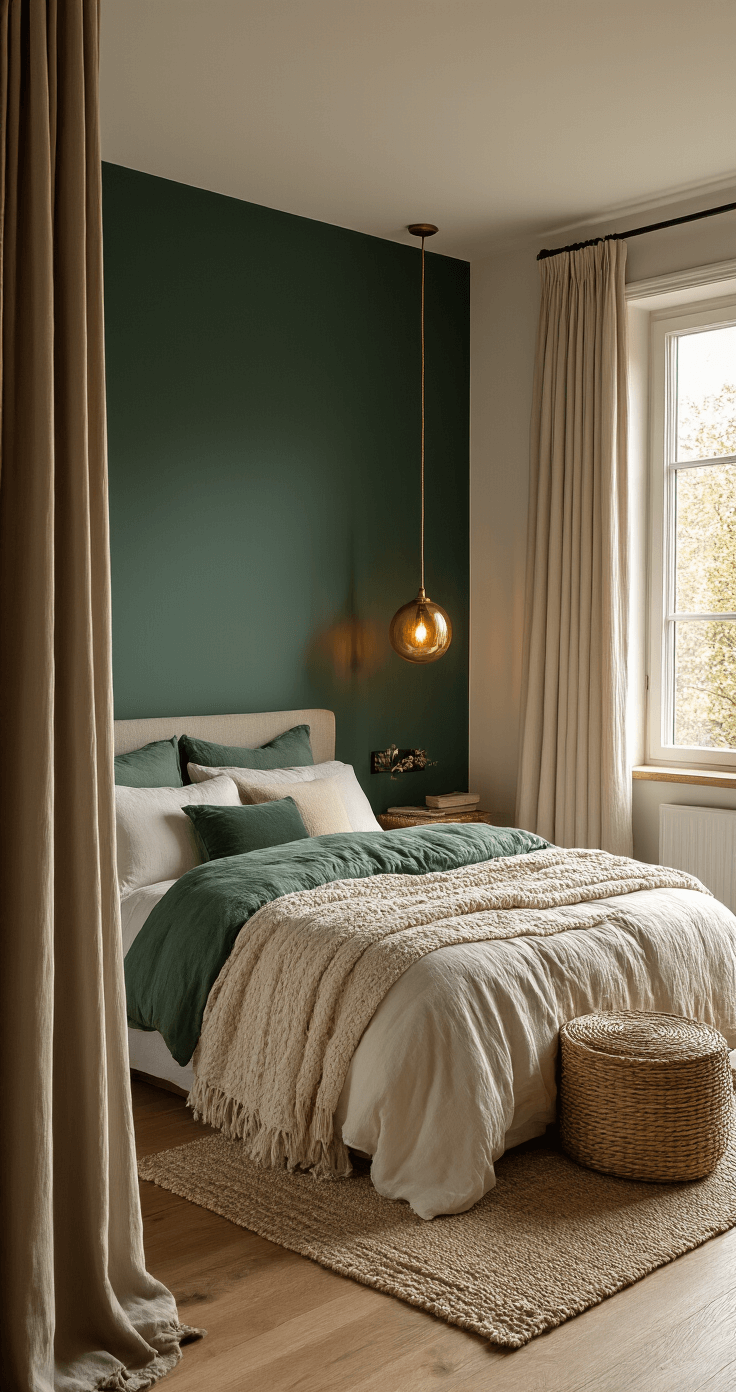
💡 Steal This Look
- Paint Color: Sherwin-Williams Agreeable Gray SW 7029
- Furniture: Wall-mounted floating nightstand with built-in USB charging and a low-profile platform bed with under-bed storage drawers
- Lighting: Plug-in wall sconce with fabric shade on a swing arm, positioned at reading height beside the bed
- Materials: Linen bedding with chunky knit throw, warm wood tones, and brushed brass accents
I’ve slept in a 9×10 bedroom for three years, and the moment I stopped treating it like a temporary problem and started designing for its actual footprint, everything clicked.
Stop Trying to Make Your Small Bedroom Look “Bigger”
First things first—forget everything you’ve heard about making small rooms look massive. That’s not the goal here.
Your small bedroom will never be a sprawling master suite, and that’s perfectly fine. What we’re after is making it feel intentional, comfortable, and like your favorite spot in the entire house.
I learned this the hard way in my first apartment, a 8×10 bedroom that felt more like a storage closet. I painted it stark white, got rid of “unnecessary” furniture, and kept everything minimal. Know what happened? It looked like a hospital room and felt about as welcoming.
Create One Stunning Focal Point (Not Five)
Your eye needs somewhere to land when you walk into a room. In a small bedroom, you can’t have multiple competing focal points without creating visual chaos.
Pick one thing and make it spectacular:
- A statement headboard that draws the eye upward
- An accent wall behind your bed with bold wallpaper or paint
- A gallery wall with personal photos and art
- Architectural details like exposed beams or interesting molding
I went with a deep emerald accent wall behind my bed, and suddenly the room had purpose. Everything else became supporting actors to that one dramatic moment.
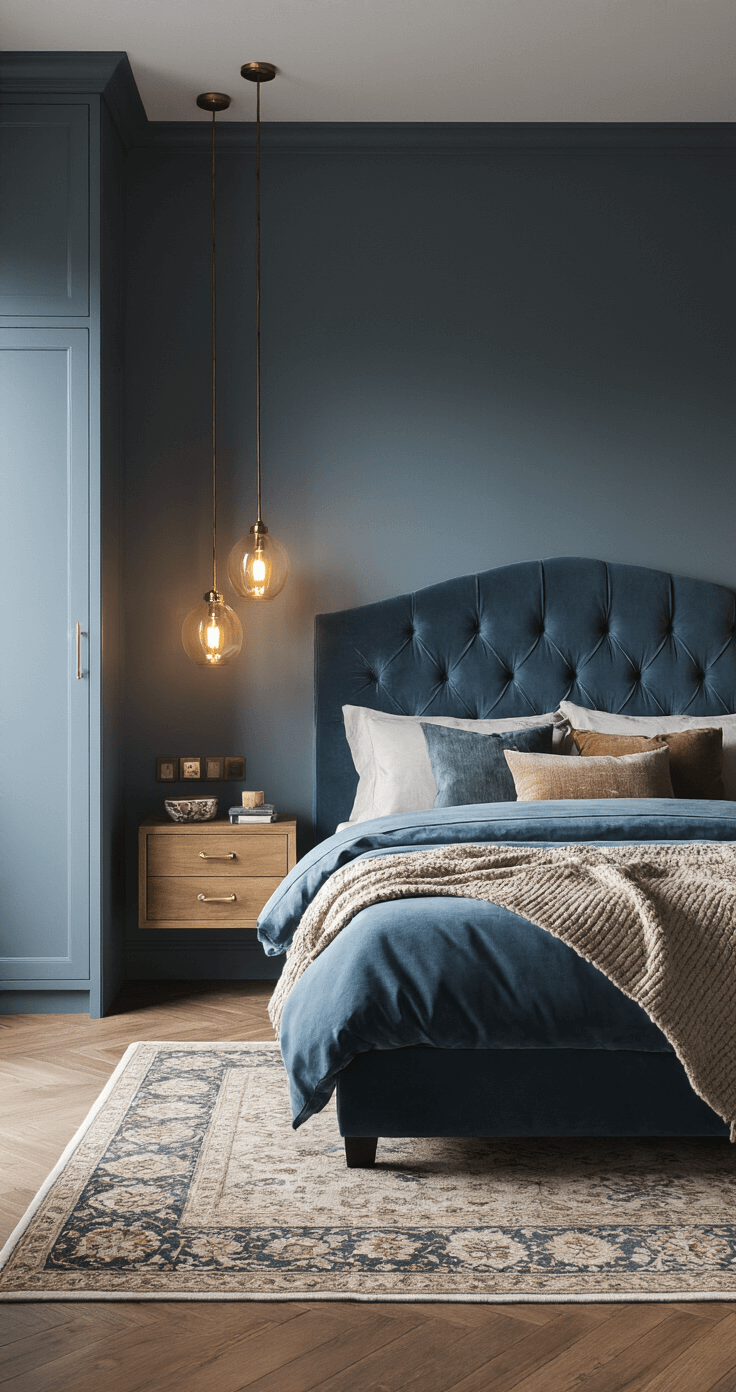
The focal point tricks your brain into seeing design intention rather than square footage limitations.
🎨 Steal This Look
- Paint Color: Farrow & Ball Inchyra Blue 289
- Furniture: upholstered channel-tufted wingback headboard in velvet or performance linen, wall-mounted to save floor space
- Lighting: oversized linen drum pendant or sculptural ceramic sconces flanking the headboard
- Materials: velvet upholstery, limewash or matte emulsion finish, aged brass accents, natural linen textiles
I learned this the hard way in my first apartment—trying to make every wall interesting just made the room feel anxious and cramped until I committed to one bold moment.
Furniture That Actually Fits (Groundbreaking, I Know)
Listen, I love a good oversized reading chair as much as anyone. But cramming furniture meant for a different-sized room into your space is design suicide.
Here’s what works:
- Beds with built-in storage drawers underneath
- Floating nightstands instead of bulky side tables
- A slim wardrobe organizer that utilizes vertical space
- Multi-functional pieces like an ottoman that stores blankets
- Furniture with legs (not skirted pieces that touch the floor)
That last point is crucial. When you can see floor space under furniture, the room automatically feels more open. It’s an optical illusion that actually works.
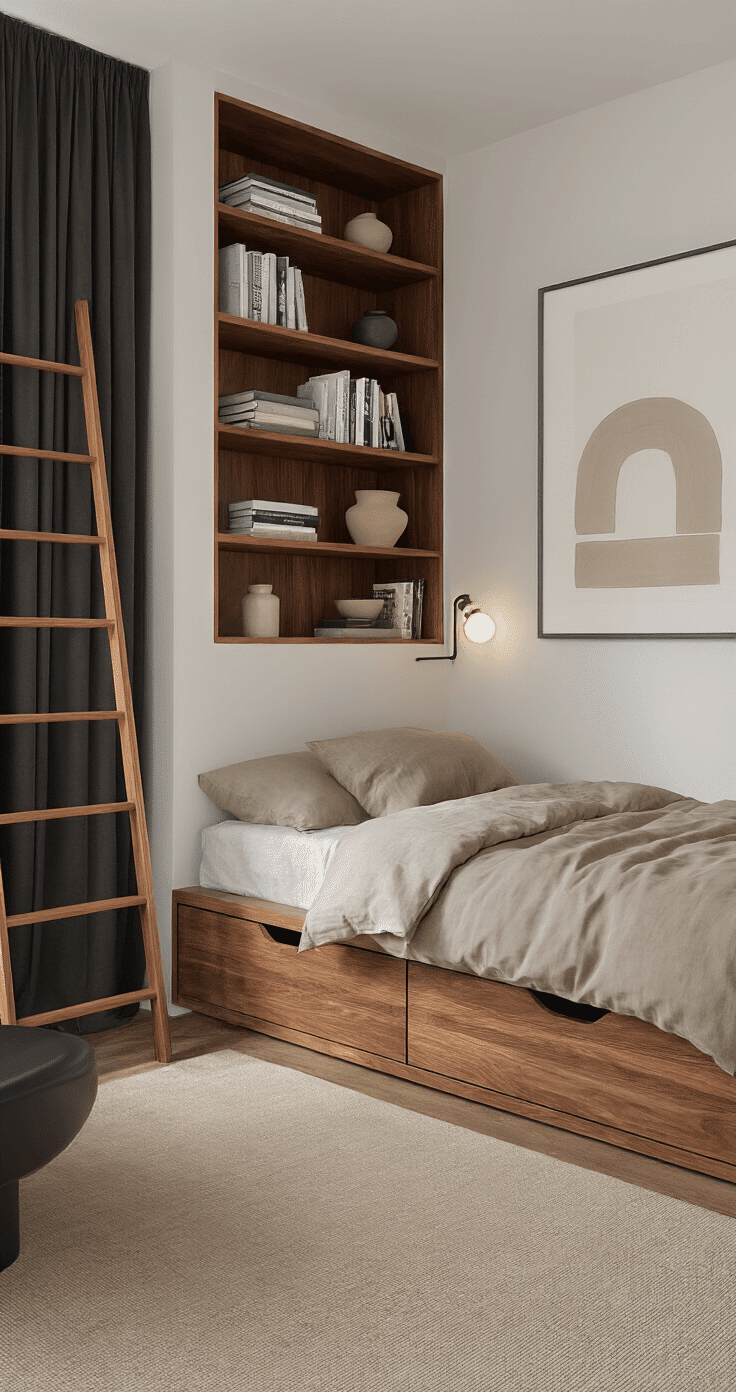
💡 Steal This Look
- Paint Color: Behr Cozy Cottage S190-2
- Furniture: platform bed with integrated under-bed storage drawers in warm oak finish
- Lighting: swing-arm wall sconce with fabric shade in brass finish
- Materials: light oak wood, woven rattan, linen upholstery, brushed brass
I learned this the hard way in my first studio apartment when a chunky storage ottoman turned my bedroom into an obstacle course—sometimes the smartest furniture is the one you barely notice is there.
Go Up, Not Out
You’ve got limited floor space, but your ceiling is just sitting there doing nothing.
Save this article
Enter your email and we'll send it straight to your inbox.
Vertical storage solutions:
- Wall-mounted shelves above your headboard
- Hooks for bags, hats, and jewelry
- A leaning ladder shelf for books and plants
- Hanging pendant lights instead of floor lamps
- Tall, narrow bookcases
I installed floating shelves on three walls in my current bedroom, and it completely changed the game. Suddenly I had display space, storage, and visual interest without sacrificing a single inch of floor.
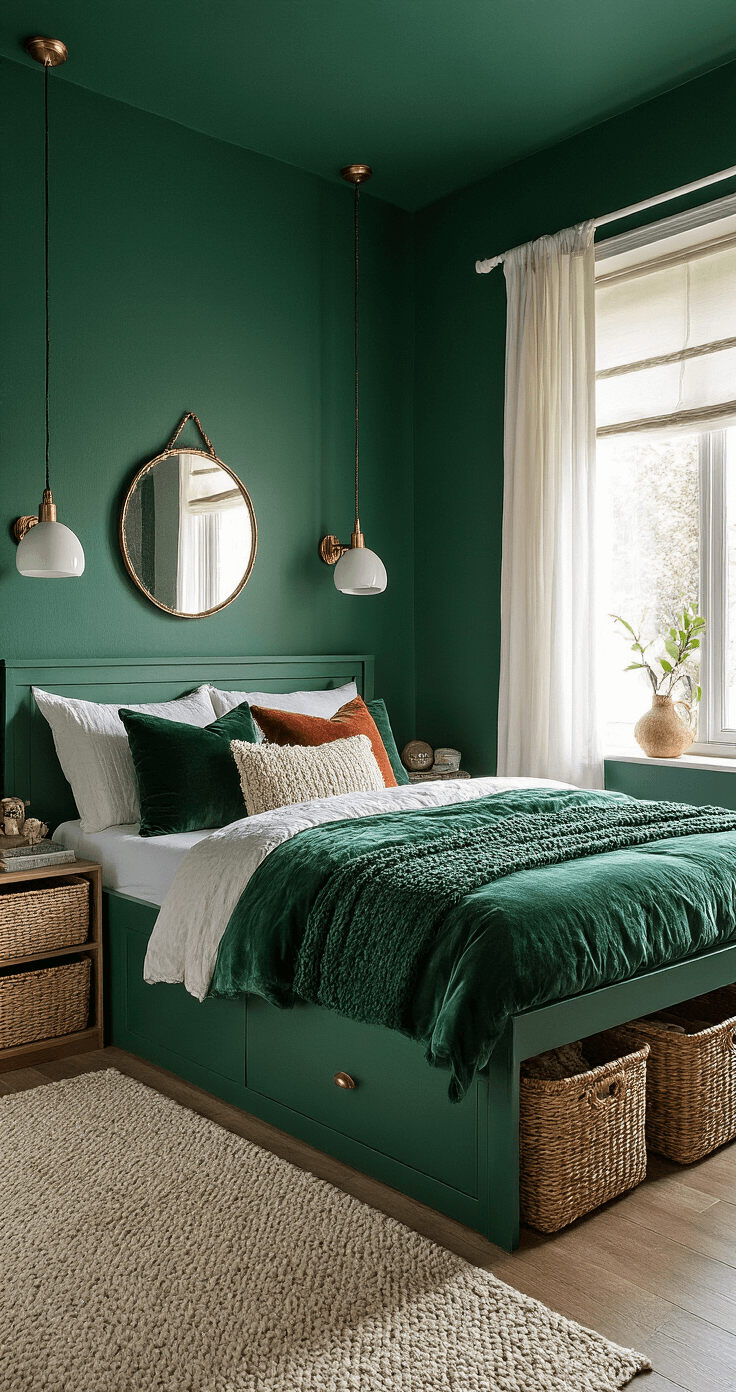
🖼 Steal This Look
- Paint Color: Valspar Ultra White 7006-24
- Furniture: wall-mounted floating shelves in varying depths (8-12 inches), tall narrow 5-tier bookcase with open back
- Lighting: plug-in swag pendant with fabric cord and small drum shade
- Materials: light oak veneer plywood shelves, black powder-coated steel brackets, natural jute rope, matte ceramic planters
I learned this the hard way in my first studio apartment—once I stopped treating walls as boundaries and started seeing them as usable real estate, my tiny bedroom finally felt like it could breathe.
Layer Your Lighting Like Your Life Depends On It
Harsh overhead lighting is the enemy of cozy. Period.
You need multiple light sources at different heights creating pools of warm illumination.
My lighting formula:
- Ambient lighting – A ceiling fixture with a dimmer
- Task lighting – Reading lamps by the bed
- Accent lighting – String lights or a small table lamp
- Natural light – Keep it unobstructed when possible
Warm bulbs only. Those cool-toned bulbs make small spaces feel like interrogation rooms.
I have five different light sources in my bedroom, and I rarely use more than two at once. The flexibility lets me adjust the mood depending on whether I’m reading, getting dressed, or winding down.
Make Your Bed the Star of the Show
Your bed takes up most of the room anyway, so lean into it.
Create a bed worth looking at:
- Four to six pillows in varying sizes
- A textured throw blanket folded at the foot
- Layers of bedding (sheet, quilt, duvet)
- Mix textures – linen, velvet, cotton, knit
- Make it every single morning
That last point matters more than you think. A made bed instantly makes a small room feel put-together instead of cluttered.
Takes three minutes, maximum.
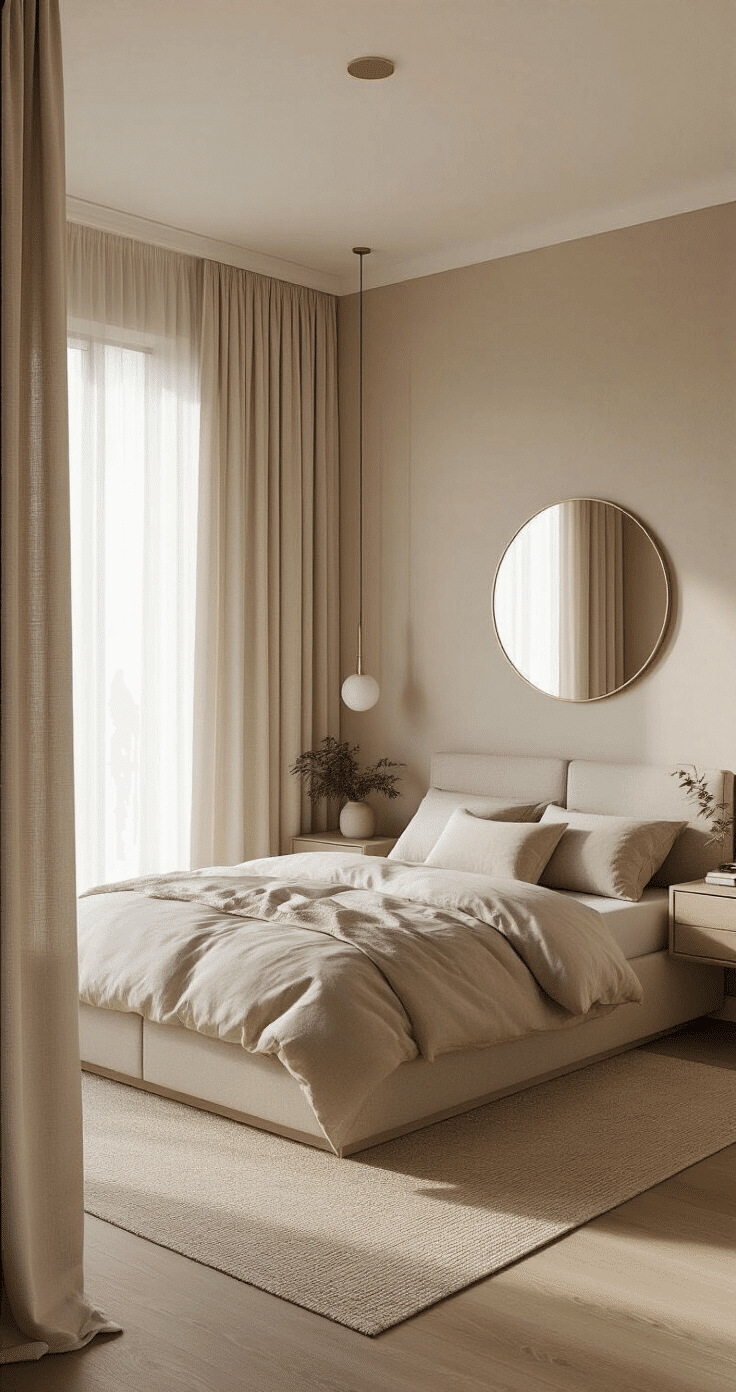
★ Steal This Look
- Paint Color: Dunn-Edwards Whisper White DEW 340
- Furniture: low-profile platform bed with upholstered headboard in a performance velvet
- Lighting: adjustable wall-mounted swing arm reading sconce with fabric shade
- Materials: washed linen duvet cover, chunky knit throw, velvet euro shams, cotton percale sheets
There’s something almost meditative about the ritual of making a bed that anchors your whole morning, especially when every square foot counts.
🎁 Get The Look
Embrace Cozy Instead of Fighting It
Here’s where most people get it wrong. They try to make a small bedroom feel spacious and airy when they should be making it feel like a cocoon.
Small bedrooms are meant to be intimate. They’re supposed to feel like you’re wrapped in a hug.
How to amp up the cozy factor:
- Use deeper, richer colors instead of stark white
- Add a plush area rug beside the bed
- Hang curtains from ceiling to floor
- Include soft textures everywhere
- Keep the temperature slightly cool
- Use blackout curtains for better sleep
I painted my bedroom a moody blue-gray, added velvet pillows, and hung floor-length curtains. It feels like a boutique hotel room now instead of
Keep this one for later
We'll email you the link so you can come back to it.


[…] small spaces feel dramatically […]
[…] small spaces feel intentionally […]