

This post may contain affiliate links. Please see my disclosure policy for details.
How to Style a Minimalist Coffee Table That Actually Looks Intentional (Not Empty)
Contents
Minimalist coffee table styling drives me absolutely mad when done wrong.
I’ve walked into countless living rooms where someone thought minimalism meant slapping a single candle on a bare table and calling it “curated.”
That’s not minimalism—that’s just lazy.
Real minimalist styling requires more thought, not less. You’re creating visual poetry with fewer words. Every single item needs to earn its place on that table.
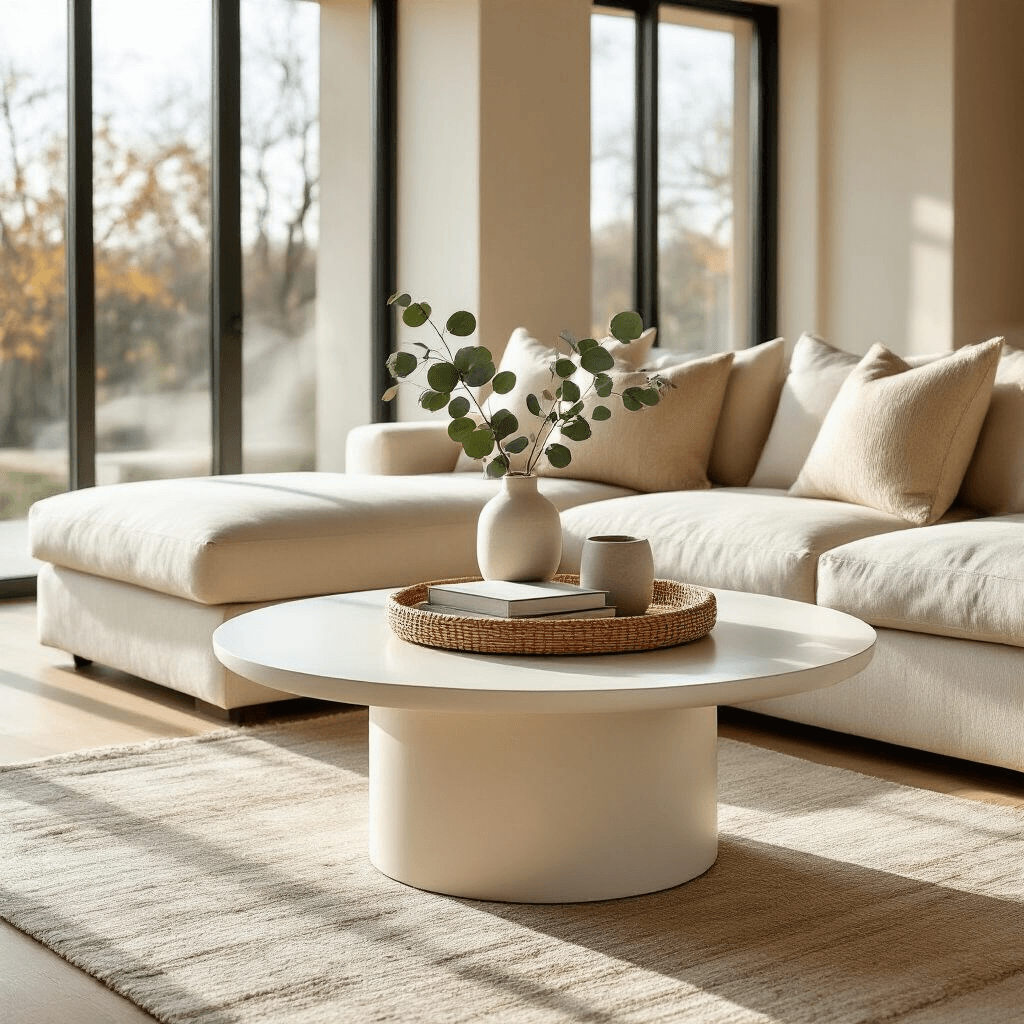
Why Your Coffee Table Looks Accidentally Empty (And How to Fix It)
Here’s what I learned after styling dozens of coffee tables for friends, family, and my own constantly-changing living spaces.
Most people make these rookie mistakes:
- Thinking one lonely object equals minimalism
- Choosing items that don’t talk to each other
- Ignoring scale and proportion completely
- Forgetting that minimalism still needs personality
The secret? Intentional curation beats accidental emptiness every single time.
Choosing Your Minimalist Coffee Table Foundation
Material Matters More Than You Think
Your table choice sets the entire tone. I’ve seen gorgeous styling completely ruined by the wrong table material.
Fiberglass tables became my unexpected favorite after initially dismissing them. The matte finishes feel sophisticated, not plastic-y. Rounded edges eliminate that harsh geometric look while staying completely modern. Plus, they’re practically indestructible—critical when you’re hosting wine nights.
Wooden coffee tables bring instant warmth that prevents minimalism from feeling cold. Light woods like oak or maple create that coveted Scandinavian vibe. Dark walnut adds richness without breaking minimalist rules. A wooden coffee table becomes your room’s anchor piece.
Glass and acrylic options literally make small spaces breathe easier. I recommend these for apartments or rooms under 200 square feet. The transparency lets your styling shine without visual competition. Just commit to keeping them spotless—every fingerprint shows.
Concrete tables satisfy that industrial minimalist craving. They ground a space without overwhelming it. The neutral gray works with literally any color palette.
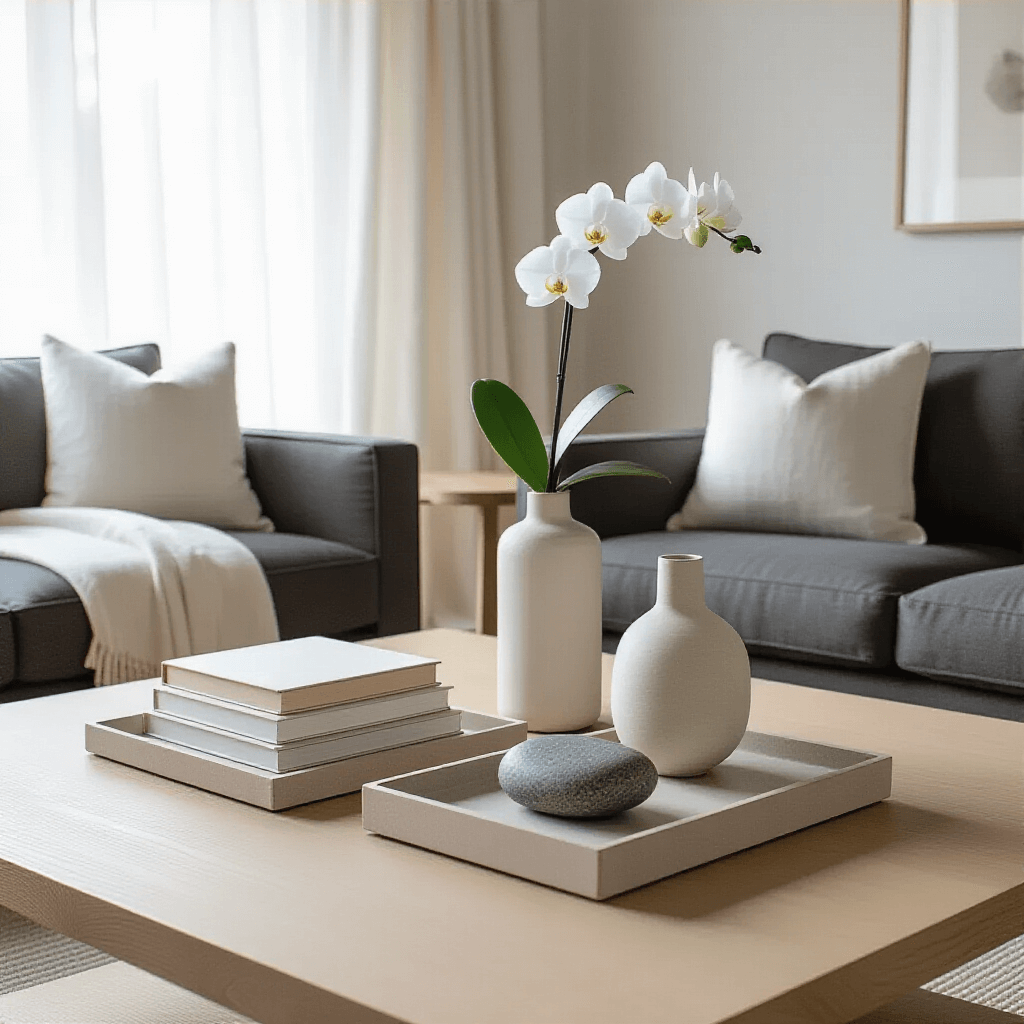
Size and Shape Strategy
Here’s my foolproof sizing method:
- Measure your sofa seat height
- Choose a table within 1-2 inches of that height
- Keep width under 55 inches for smaller rooms
- Leave 12-18 inches between table and sofa for leg room
Shape psychology is real: Round tables soften angular rooms. Rectangular tables balance curved furniture. Square tables work best in square seating arrangements.
The Five-Element Minimalist Styling Formula
I developed this system after countless styling sessions that fell flat. These five elements create visual interest without chaos:
1. The Foundation Tray
Start with a neutral tray in linen, rattan, or ceramic. This contains your styling and prevents the “scattered” look. Choose colors like:
- Warm white
- Soft beige
- Natural wood tones
- Matte gray
The tray creates boundaries. Everything feels intentional instead of randomly placed.
2. Curated Book Stack
Books add intellectual weight without visual heaviness.
Stack 2-3 hardcover books maximum. Choose covers in your neutral palette—white, cream, soft gray. Avoid bright colors or busy graphics. Place a small decorative object on top to complete the vignette.
Pro tip: Remove dust jackets for cleaner lines.
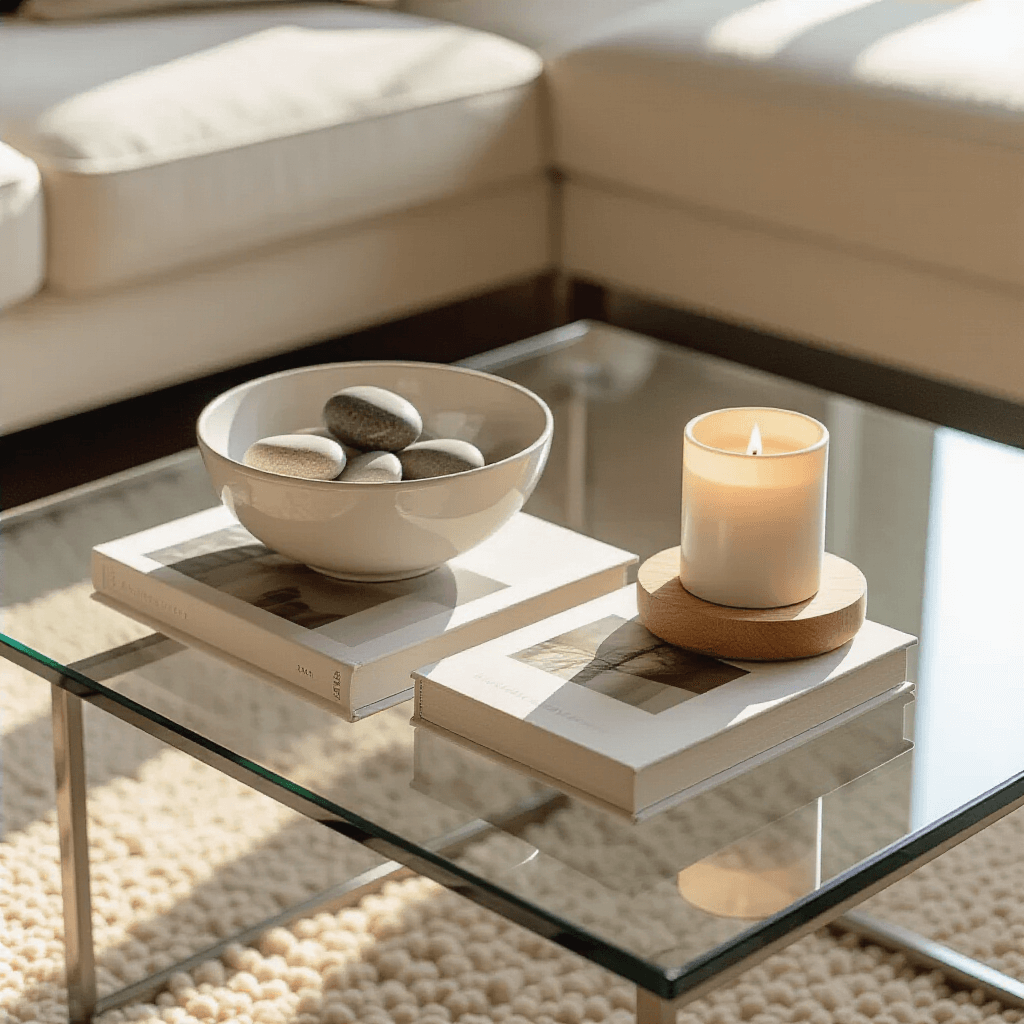
3. Natural Elements
This is where minimalist styling comes alive. A ceramic vase with single stems beats elaborate arrangements every time.
My go-to natural elements:
- White hydrangeas
- Eucalyptus branches
- Single orchid stem
- Dried pampas grass
- Smooth river stones
Keep it simple. One type of greenery per vase. Choose muted, natural colors that won’t scream for attention.
4. Sculptural Accent
One beautiful object beats five mediocre ones.
Look for pieces with interesting shapes but neutral colors:
- Ceramic bowl in matte white
- Smooth stone sculpture
- Minimalist candle holder
- Small wooden sphere
- Abstract ceramic piece
The key is choosing items that feel like art, not decoration.
5. Soft Lighting Element
A simple candle transforms the entire mood. Choose holders in ceramic, concrete, or natural wood. Avoid ornate or colorful options.
Lighting creates atmosphere:
- Warm white candles feel inviting
- Soy candles burn cleaner
- Battery-operated options offer safety
- Small table lamps work for larger tables
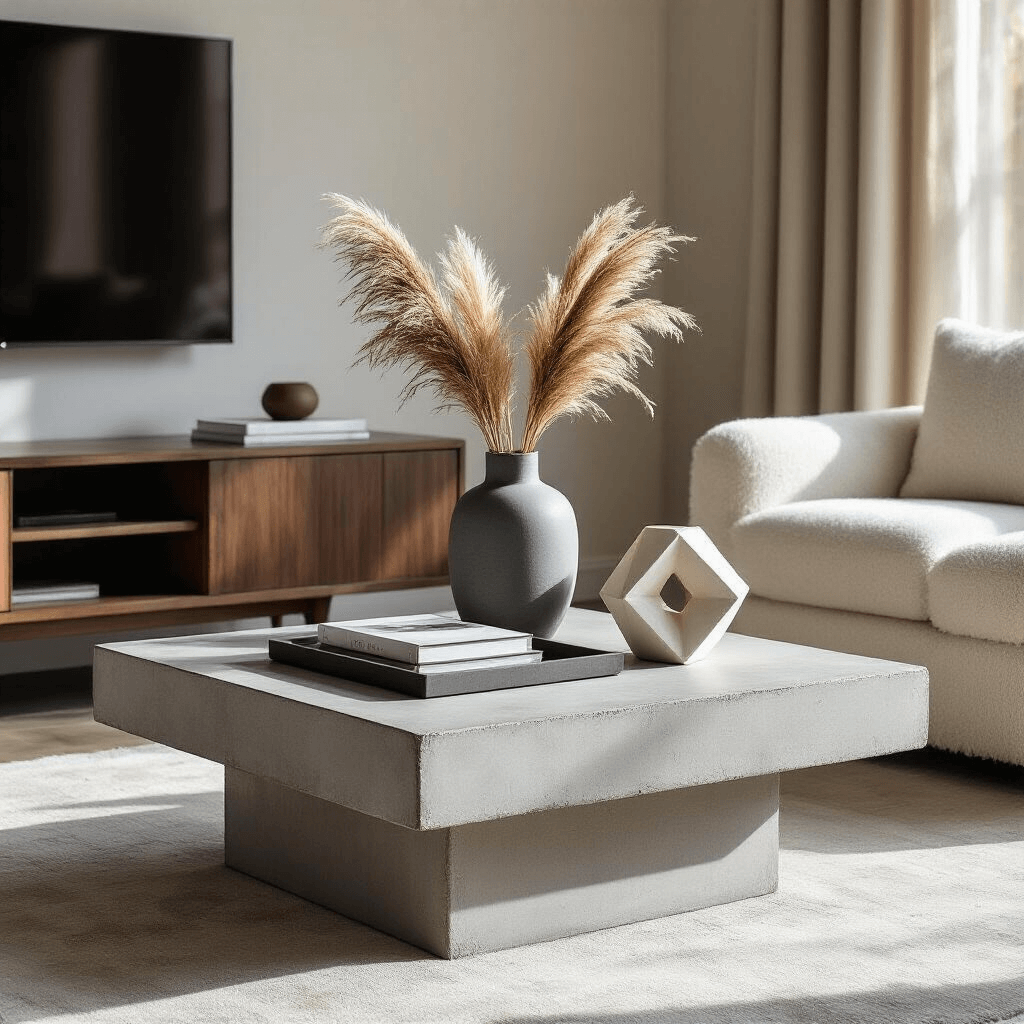
Advanced Minimalist Styling Principles
Color Balance That Actually Works
If your table is dark wood: Use lighter accessories to prevent heaviness. White ceramics, cream books, pale greenery.
If your table is light or glass: You can handle slightly richer tones. Warm beiges, soft grays, natural wood accents.
Texture Layering Without Clutter
Combine different materials strategically:
- Smooth ceramic + woven rattan
- Matte finishes + subtle shine
- Rough stone + polished wood
- Soft fabric + hard surfaces
The rule: Maximum three different textures per styling arrangement.
Strategic Negative Space
This separates amateur from professional styling.
Leave at least 40% of your table

[…] Style with intention […]