

This post may contain affiliate links. Please see my disclosure policy for details.
Burnt Orange Christmas Tree Ideas That’ll Make Your Living Room Pop
Burnt orange Christmas tree decorating stopped me in my tracks last holiday season when I walked into my neighbor’s living room. I’d been wrestling with the same tired red-and-green scheme for years, and suddenly here was this gorgeous, warm alternative that felt both fresh and timeless.
Look, I get it. You’re probably staring at your tree right now wondering how to make it feel special without going full Pinterest-perfect or spending your entire holiday budget. Maybe you’re tired of the same old decorations, or perhaps you scored some burnt orange ornaments on sale and aren’t quite sure what to do with them.
Let me walk you through exactly how to pull off a burnt orange Christmas tree that looks intentional, not accidental.
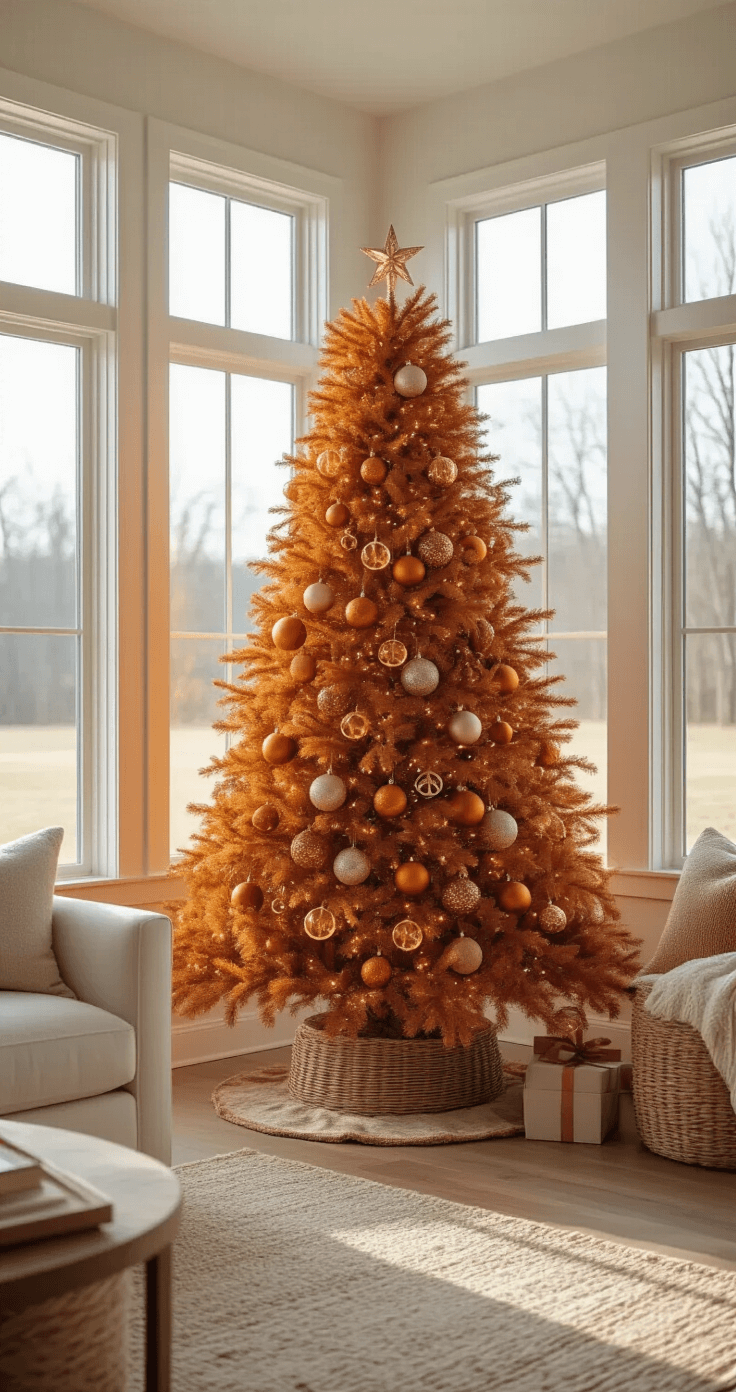
✎ Steal This Look
- Paint Color: Sherwin-Williams Accessible Beige SW 7036
- Furniture: low-profile linen sectional in a warm greige tone, paired with a mid-century walnut coffee table with tapered legs
- Lighting: oversized brass arc floor lamp with a linen drum shade positioned behind the seating area
- Materials: chunky knit wool throws, vintage leather accent pillows, raw edge wood, matte ceramic vases, and hammered brass details
I spent three years with a tree that felt like everyone else’s before discovering how burnt orange transforms the entire mood of a living room into something that actually feels like home.
Why Burnt Orange Works (When Red Feels Tired)
Burnt orange sits in that sweet spot between cozy and sophisticated. It’s warm without screaming “look at me,” and it plays well with nearly everything already in your home.
I switched to burnt orange two years ago when I realized my living room had evolved into this mix of neutrals, wood tones, and brass accents—and my bright red ornaments were fighting everything. The burnt orange just melted right in.
This color choice works especially well if you’ve got:
- Warm wood furniture or floors
- Neutral walls (cream, beige, greige)
- Gold or brass hardware anywhere in the room
- A modern farmhouse or boho aesthetic
- An aversion to looking like every other house on the block
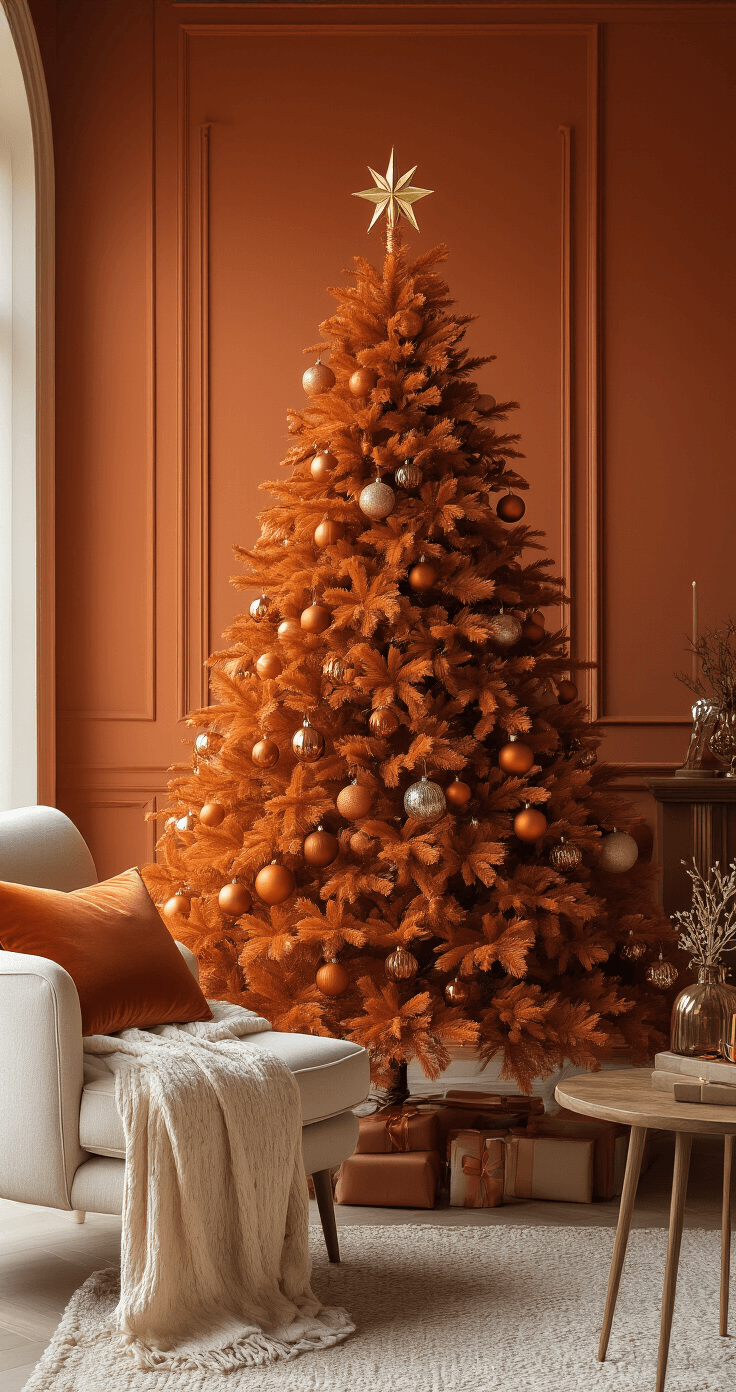
✎ Steal This Look
- Paint Color: Benjamin Moore White Dove OC-17
- Furniture: Mid-century modern walnut credenza with tapered legs
- Lighting: Brass sputnik chandelier with frosted glass globes
- Materials: Raw linen, aged brass, reclaimed oak, hand-thrown ceramics, chunky wool knits
This is the room where you’ll actually want to linger with coffee on a December morning, not just rush through to hang another ornament—there’s something about burnt orange that slows the whole season down.
Building Your Color Scheme (Without Overthinking It)
Here’s where most people freeze up. They grab burnt orange ornaments, get home, and panic about what goes with them.
The Warm Luxe Route
Pair burnt orange with:
- Cream and ivory
- Antique gold
- Deep bronze
- Champagne metallics
This combination gives you that expensive hotel-lobby vibe without trying too hard. I used gold ball ornaments mixed with burnt orange in varying sizes, and the reflection play between matte and shiny finishes did most of the heavy lifting.
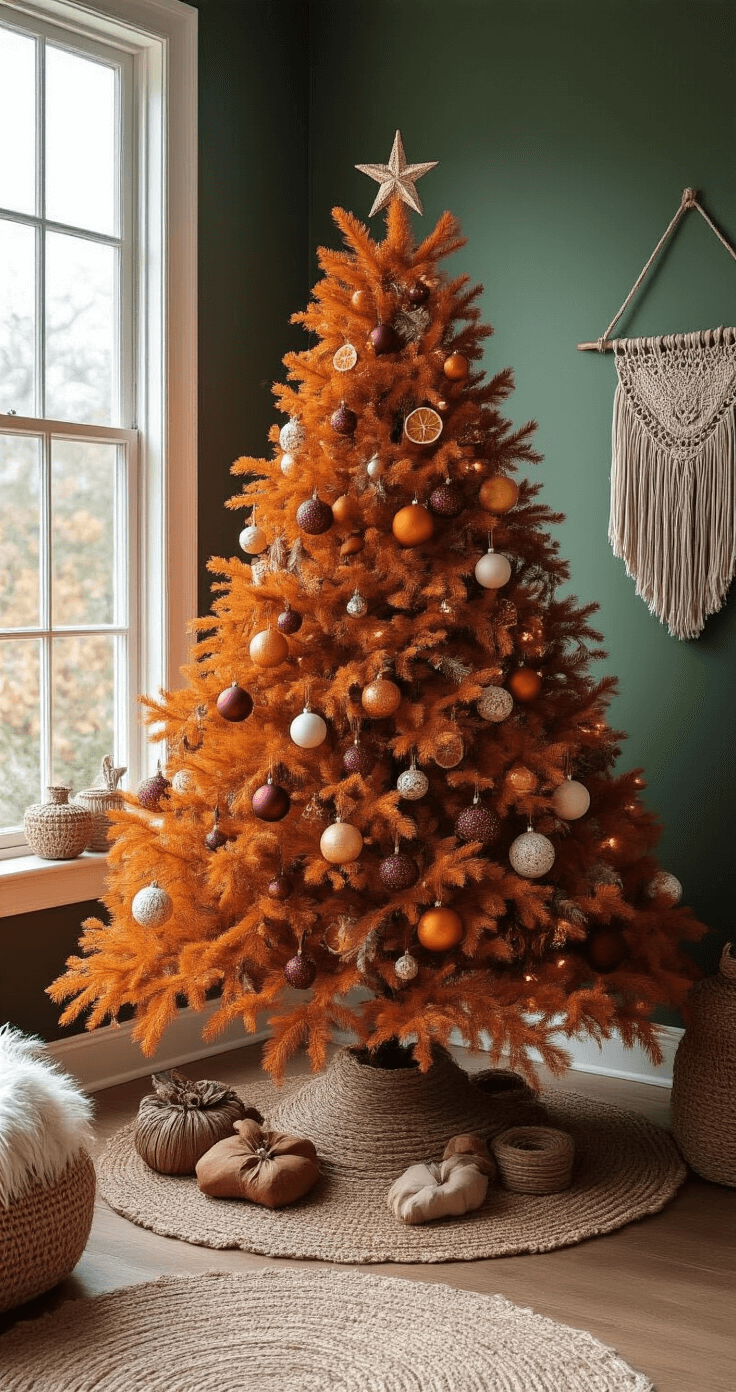
The Earthy Natural Option
Combine burnt orange with:
- Deep forest green
- Burgundy or wine
- Natural wood elements
- Cream and tan
This feels more organic and collected-over-time. Works brilliantly if you lean toward farmhouse or cottagecore aesthetics.
The Monochromatic Drama
Go all-in with orange shades:
Save this article
Enter your email and we'll send it straight to your inbox.
- Burnt orange (your anchor)
- Rust
- Terracotta
- Peach
- Coral accents
Honestly, this was my move last year, and guests kept asking if I’d hired someone. The secret is varying your shades enough that everything doesn’t blur together.
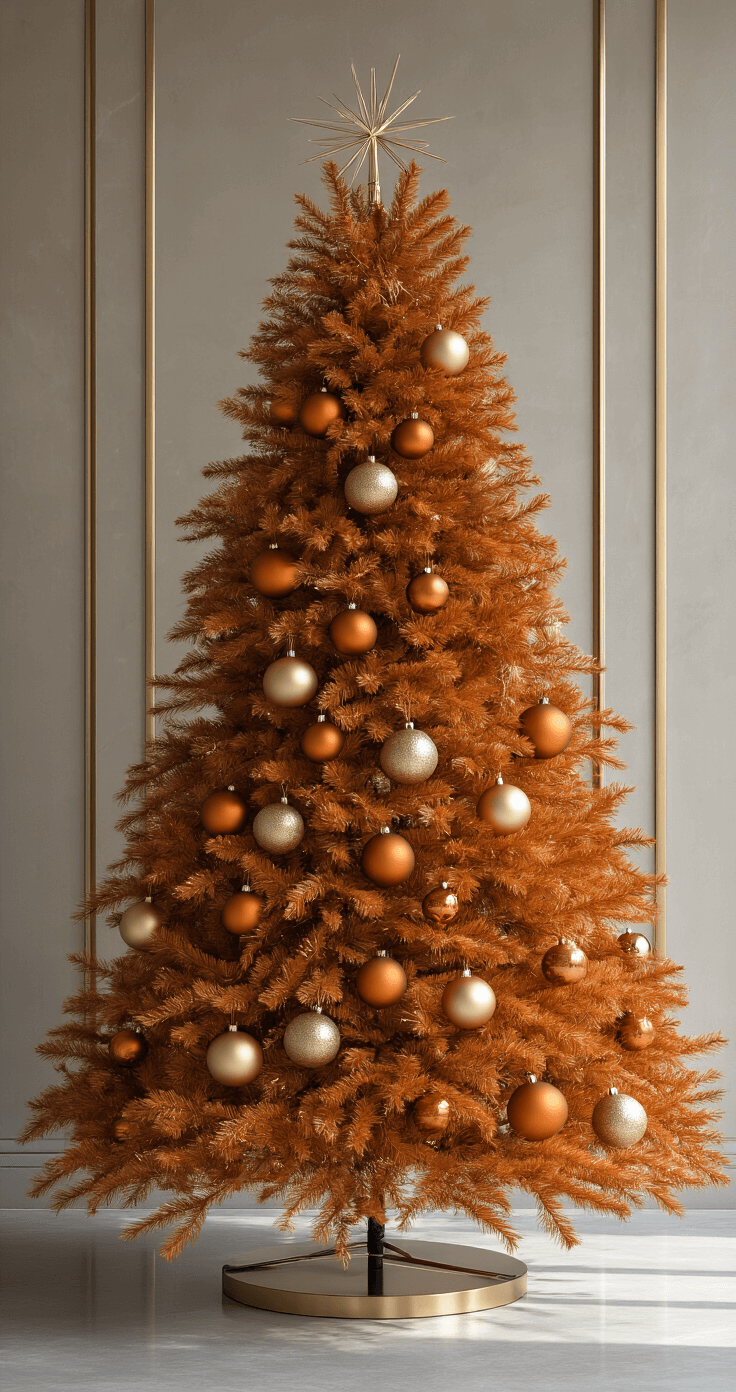
🖼 Steal This Look
- Paint Color: Farrow & Ball Hague Green 30
- Furniture: distressed oak console table with turned legs
- Lighting: antique brass adjustable-arm picture light
- Materials: raw Belgian linen, aged brass, hand-thrown terracotta, reclaimed pine
I’ve watched clients overthink this for hours when the secret is simply committing to one route fully—half-measures read as uncertainty, not eclecticism.
Picking Your Ornaments (The Practical Stuff)
Shatterproof Is Your Friend
Look, I learned this the hard way. Glass ornaments are gorgeous until your cat decides the tree is her personal jungle gym at 2 AM.
Shatterproof burnt orange ornaments have come a long way—they don’t look cheap anymore. Grab a 60-piece set in various sizes (I like having 2.5″ as my medium size) for baseline coverage.
Texture Matters More Than You Think
This is where your tree goes from “fine” to “wait, how’d you do that?”
Mix these finishes:
- Shiny metallic – catches light, adds sparkle
- Matte – grounds everything, prevents disco-ball syndrome
- Velvet or flocked – adds unexpected softness and depth
- Mercury glass style – vintage feel without actual vintage prices
I picked up some velvet burnt orange ornaments last year, and they’re the ones everyone touches (yes, people touch your tree ornaments—weird but true).
Size Variation Keeps Things Interesting
Don’t buy all the same size unless you want your tree to look like a geometry lesson.
Get:
- Large (3-4″) for visual anchor points
- Medium (2-2.5″) for your workhorse layer
- Small (1-1.5″) for filling gaps and adding delicate detail
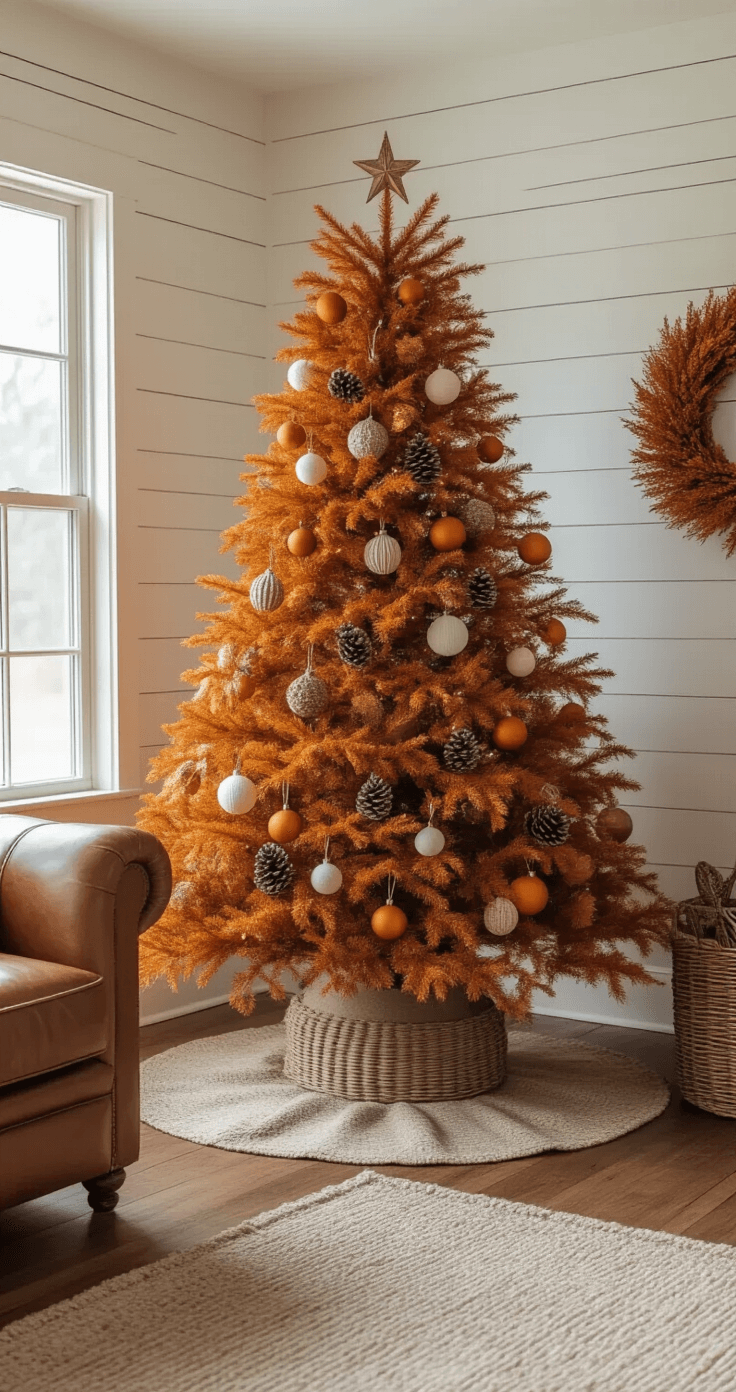
🎨 Steal This Look
- Paint Color: use Behr brand. Match the ACTUAL wall color in the image. Format: Behr Warm Caramel M230-5
- Furniture: mid-century modern credenza in warm walnut with tapered legs to anchor the tree display area
- Lighting: adjustable arc floor lamp with brass finish positioned to uplight the tree canopy
- Materials: velvet ribbon garlands, aged mercury glass votive holders, natural pine garland with dried orange slices, woven jute tree collar
I still remember my first velvet ornament purchase—standing in the craft store aisle, running my thumb across that nubby texture and realizing this was the missing piece my metallic-heavy tree needed.
The Dried Orange Trick Everyone’s Doing (Because It Actually Works)
I was skeptical about this whole dried-orange-as-decoration thing until I tried it. Turns out, it’s dead simple and adds that handmade touch without requiring actual crafting skills.
How to Dry Orange Slices
Slice oranges about 1/4 inch thick. Pat them completely dry with paper towels. Lay them on parchment paper on a baking sheet. Bake at 200°F for about 3-4 hours, flipping halfway.
Here’s the trick nobody tells you: sprinkle confectioner’s sugar on them after they’re dried. It keeps the color vibrant instead of turning brown and sad-looking.
Ways to Use Them
Thread twine through a hole punched near the edge
Keep this one for later
We'll email you the link so you can come back to it.


[…] Pops of color that make a room sing […]