This post may contain affiliate links. Please see my disclosure policy for details.
Why Your Fall Garden Probably Looks Blah (And How to Fix It)
Most people plant for spring and summer, then completely forget about autumn.
I get it—you’re tired from a season of weeding and watering.
But here’s the thing: fall flowers are often easier to maintain because cooler temperatures mean less watering and fewer pest problems.
The real issue is that most gardeners simply don’t know which plants shine in autumn or how to design beds that peak when the temperature drops.
The Fall Flowers That Actually Work
Chrysanthemums: The Workhorses of Autumn
Let’s start with the obvious one because it’s obvious for a reason.
Garden mums are the backbone of any decent fall flower bed, and I’m not sorry for being basic about this.
They come in every autumn color you can imagine:
- Deep burgundy
- Burnt orange
- Golden yellow
- Rich purple
- Creamy white
I plant mine in clusters of three or five—odd numbers always look more natural—and mix different colors for depth.
Asters: The Underrated Stars
Asters are like mums’ cooler, slightly wilder cousin.
They have a more delicate, daisy-like appearance with star-shaped blooms in purples, pinks, and whites.
What I love about asters is they attract butterflies like crazy, giving your garden that magical, alive feeling even as everything else winds down.

Celosia: For Drama Queens (Like Me)
If you want texture and height, celosia is your plant.
These beauties have feathery or brain-like (yes, really) blooms in the most intense colors:
- Scarlet red that practically glows
- Deep purple that’s almost black
- Sunset orange
- Hot pink
Celosia plants add vertical interest that most fall gardens desperately need.
Sedum: The Plant That Keeps On Giving
Sedum, especially the ‘Autumn Joy’ variety, is brilliant because it works triple-duty.
The succulent foliage looks great all summer, the flowers emerge in late summer as pale pink clusters, then deepen to rosy red in fall.
Even better? The dried flower heads look fantastic through winter, so you’re not staring at dead stalks until spring.

Pansies: The Cold Warriors
Pansies laugh in the face of frost.
I’ve seen these little troopers blooming through light snow, their cheerful faces poking up like nothing’s wrong.
Plant them in early fall, and they’ll give you color well into winter in most climates.
Sweet Alyssum: The Honey-Scented Carpet
This low-growing annual loves cool weather and smells absolutely divine.
Use it as edging or let it spill over containers—it’ll bloom until hard frost hits.
The tiny flowers create a frothy, romantic look in white, pink, rose, and purple.

The Native Options Everyone Forgets
Don’t sleep on these native fall bloomers:
- Goldenrod (Solidago) – no, it doesn’t cause allergies, that’s ragweed
- Black-eyed Susans
- Purple coneflowers
- Turtlehead
These plants are tougher than your average annual, require almost no maintenance, and support local pollinators when they need it most.
Design Ideas That Actually Look Professional
The Layering Trick That Never Fails
This is garden design 101, but people mess it up constantly.
Put your tall plants in the back:
- Celosia
- Tall varieties of asters
- Garden mums on the taller side
Medium-height plants go in the middle:
- Standard mums
- Shorter asters
- Coneflowers
Low growers belong in front:
- Sweet alyssum
- Pansies
- Low-growing sedum
Sounds simple because it is—but you’d be shocked how many flower beds ignore this basic rule and end up looking like a jumbled mess.

Color Combinations That Pop
Here’s where you can get creative or play it safe, depending on your personality.
The Safe-But-Stunning Approach:
Stick with one color family but vary the shades.
Try all purples—deep eggplant mums, lavender asters, and purple pansies create an ombre effect that’s sophisticated without being boring.
The Bold Statement:
Go full autumn with oranges, reds, and golds.
This is your classic fall palette, and there’s absolutely nothing wrong with leaning into the season hard.
The Sophisticated Surprise:
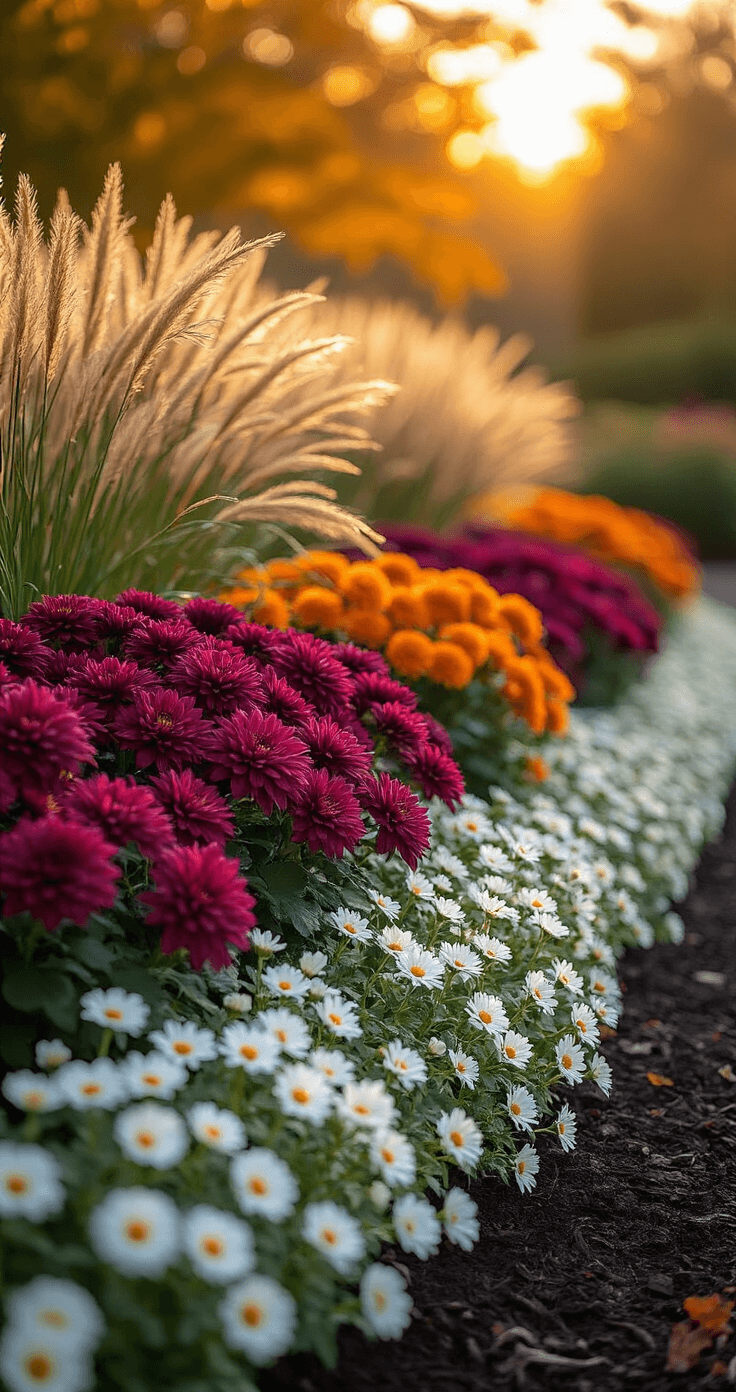
White and burgundy together create an unexpectedly elegant combination.
Add some dusty purple asters to bridge the two, and you’ve got something magazine-worthy.
The Wildflower Vibe:
Combine goldenrod’s bright yellow with black-eyed Susans and purple coneflowers for that natural, meadow-like look.