

This post may contain affiliate links. Please see my disclosure policy for details.
Winter Pansies: Your Secret Weapon for a Garden That Refuses to Quit
Winter pansies transform bleak, frozen gardens into bursts of unexpected color when everything else has given up for the season.
I’ll never forget the first time I planted winter pansies.
It was late September, and my neighbor laughed at me for “wasting time on flowers that would just die anyway.”
Fast forward to January—her garden looked like a brown wasteland while mine was putting on a full-blown flower show despite the frost coating every petal each morning.
That’s the magic of these little fighters.
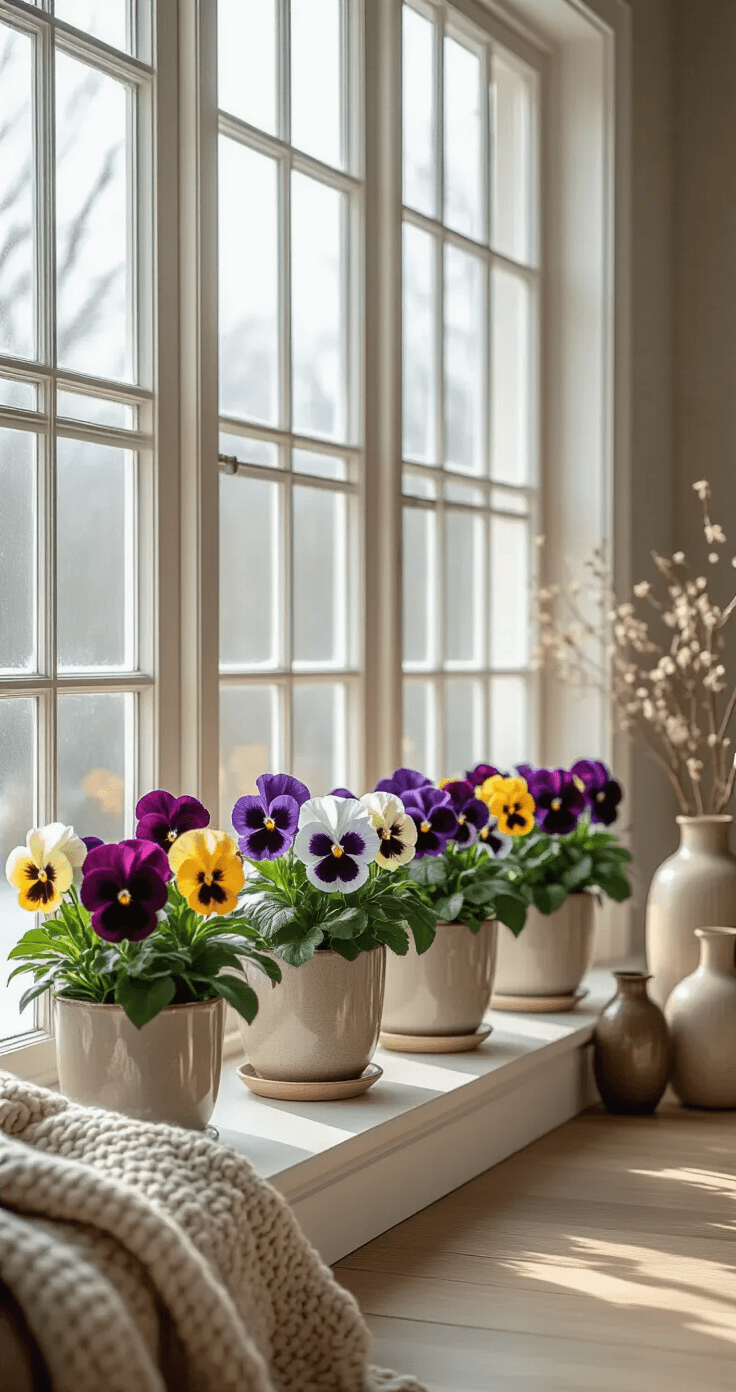
💡 Steal This Look
- Paint Color: Sherwin-Williams Garden Grove SW 6445
- Furniture: weathered teak potting bench with galvanized steel top
- Lighting: solar-powered Edison string lights with frosted bulbs
- Materials: frost-resistant terracotta, aged zinc planters, reclaimed barn wood, hammered copper accents
There’s something quietly defiant about tending a garden that blooms while your neighbors have surrendered to dormancy—it’s the horticultural equivalent of wearing a bright scarf on a gray day.
What Makes Winter Pansies Different From Regular Pansies?
Stop me if you’ve been here: you buy gorgeous pansies in spring, they look spectacular for a few weeks, then summer heat turns them into crispy disappointments.
Winter pansies flip that script entirely.
These cold-hardy flowering plants belong to the Viola genus and are specifically bred to laugh in the face of freezing temperatures.
While your summer-loving plants are taking their six-month nap, winter pansies are just getting started.
They’re also known as ice pansies or Viola hiemalis, and they’re among the toughest members of the Violaceae family.
Snow doesn’t scare them.
Frost doesn’t faze them.
They’re the Gordon Ramsay of the plant world—thriving under pressure that would make others crumble.
Key differences you need to know:
- Winter pansies are bred specifically for cold tolerance
- They bloom from autumn through spring (not just spring)
- Their flowers are slightly smaller than regular pansies but appear in much greater numbers
- They can handle wet, miserable conditions that would rot other varieties
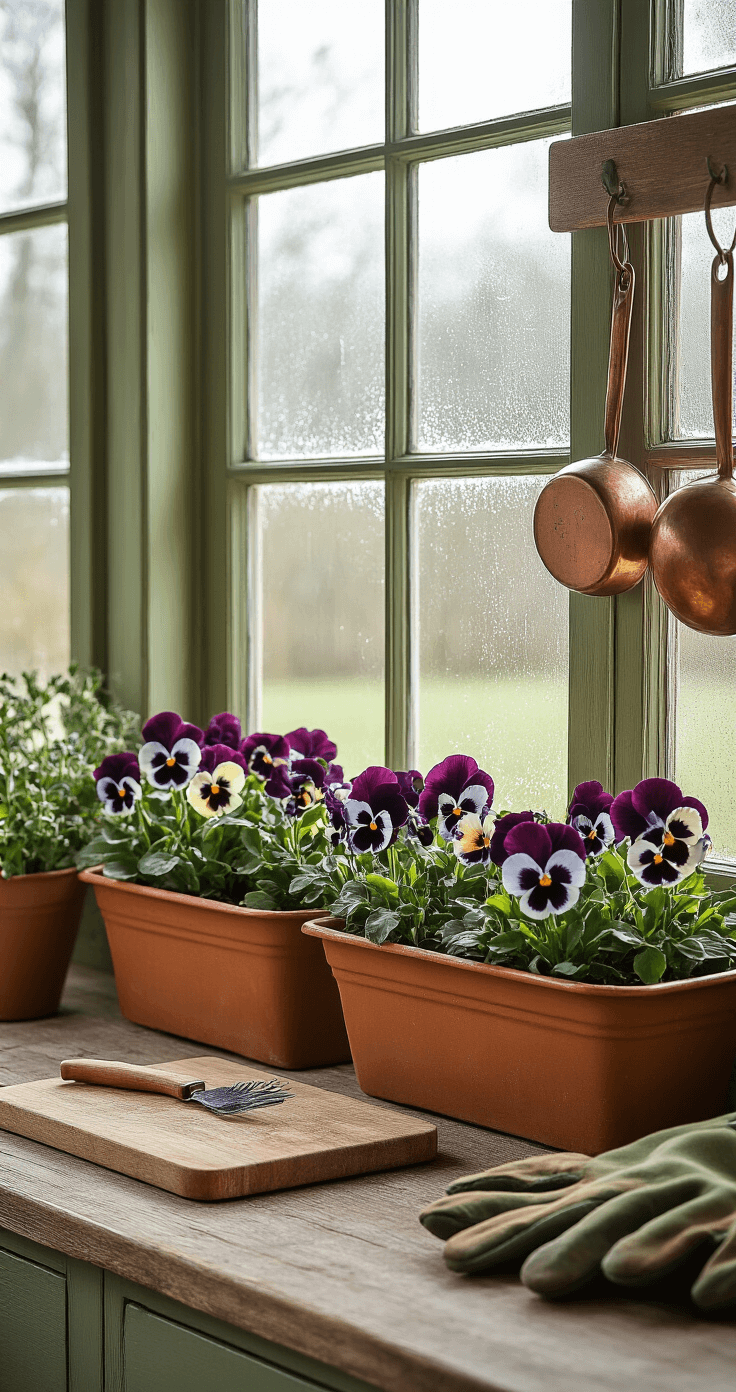
★ Steal This Look
- Paint Color: Benjamin Moore Deep Purple 2065-20
- Furniture: vintage-inspired wrought iron plant stand with scrollwork details
- Lighting: frosted glass globe pendant with aged brass hardware
- Materials: weathered zinc planters, chunky knit wool throws, matte ceramic vessels
There’s something quietly defiant about tending a garden that refuses to sleep—winter pansies remind us that beauty doesn’t need permission from the calendar.
Size and Color: What to Expect
Winter pansies grow compact and tidy.
Expect them to reach between 15 and 25cm (6-10 inches) in both height and width.
The color range is absolutely bonkers:
- Deep, velvety purples
- Sunshine yellows
- Blushing pinks
- Crisp whites
- Rich reds
- Cool blues
- Sophisticated mauves
Most varieties come as bicolors or have those distinctive “faces” with contrasting centers and edges.
I’m particularly obsessed with the ones that look like they’ve been hand-painted with multiple shades blending into each other.
The flowers themselves are slightly more petite than summer pansies, but what they lack in individual size, they make up for with sheer abundance.
One plant can produce dozens of blooms throughout the season.
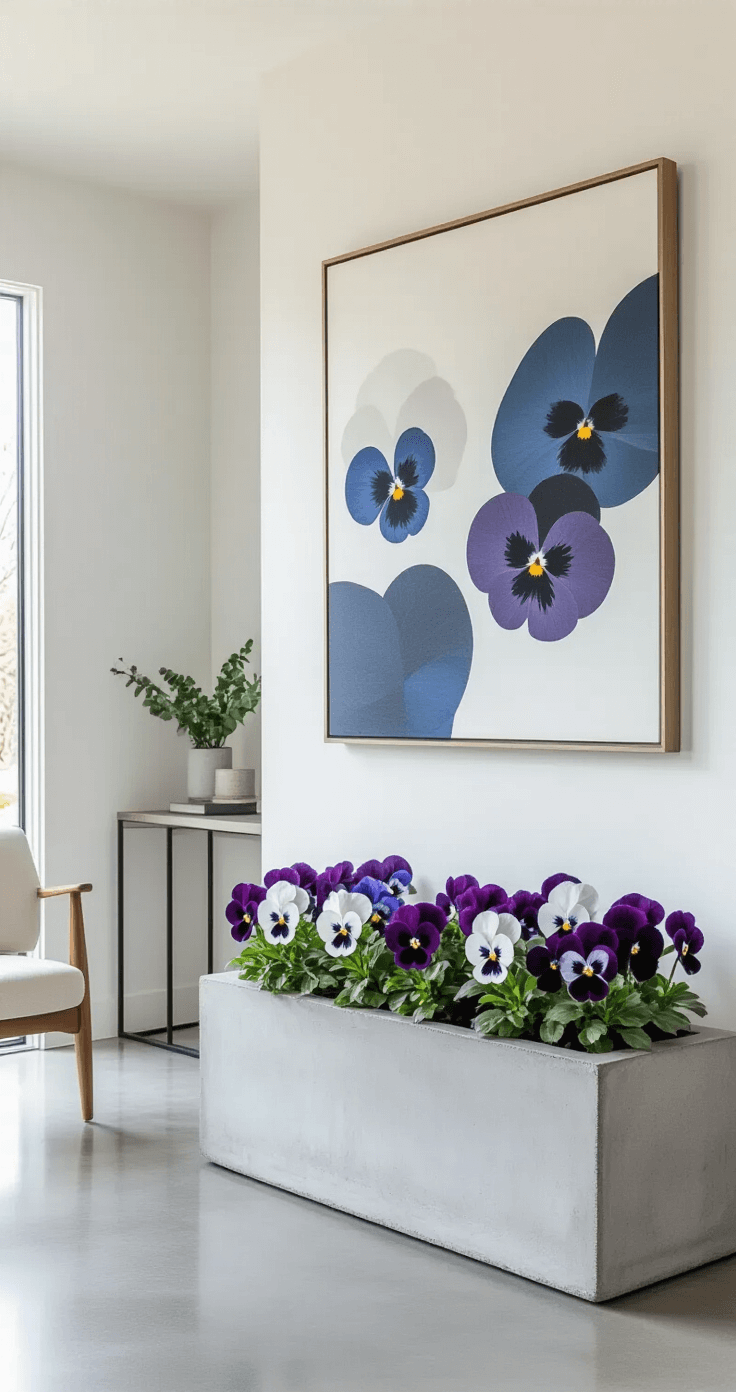
🏠 Steal This Look
- Paint Color: Farrow & Ball Pelt 254
- Furniture: low-profile velvet ottoman in deep aubergine, compact brass side table with marble top
- Lighting: petite brass pharmacy lamp with mauve silk shade
- Materials: velvet, brushed brass, Carrara marble, matte ceramic, wool bouclé
There’s something deeply satisfying about a space that feels collected rather than staged—like a windowsill crowded with mismatched pots of pansies, each bloom vying for attention yet somehow harmonious together.
When to Plant: Timing Is Everything
Here’s where most people mess up.
They wait until spring when garden centers are screaming “PLANT NOW!” with colorful displays.
That’s too late for winter pansies.
The golden window is autumn—specifically late summer through mid-October.
In the UK, aim for September or early October.
Why does this matter so much?
Early planting gives roots time to establish before hard frosts arrive.
Save this article
Enter your email and we'll send it straight to your inbox.
Those established roots mean:
- Larger, more robust plants
- More flowers
- Better survival through harsh weather
- Earlier blooming in spring
I planted some in early September last year and others in late October as an experiment.
The September batch was twice the size by December and produced three times as many flowers through winter.
The late-planted ones survived just fine but looked sad and sparse in comparison.
Can you plant in winter itself?
Yes, but only if:
- The ground isn’t frozen solid
- The soil isn’t waterlogged
- You accept they won’t establish as well
Think of it like arriving at a party after dinner’s been served—you’ll still have fun, but you missed the best part.
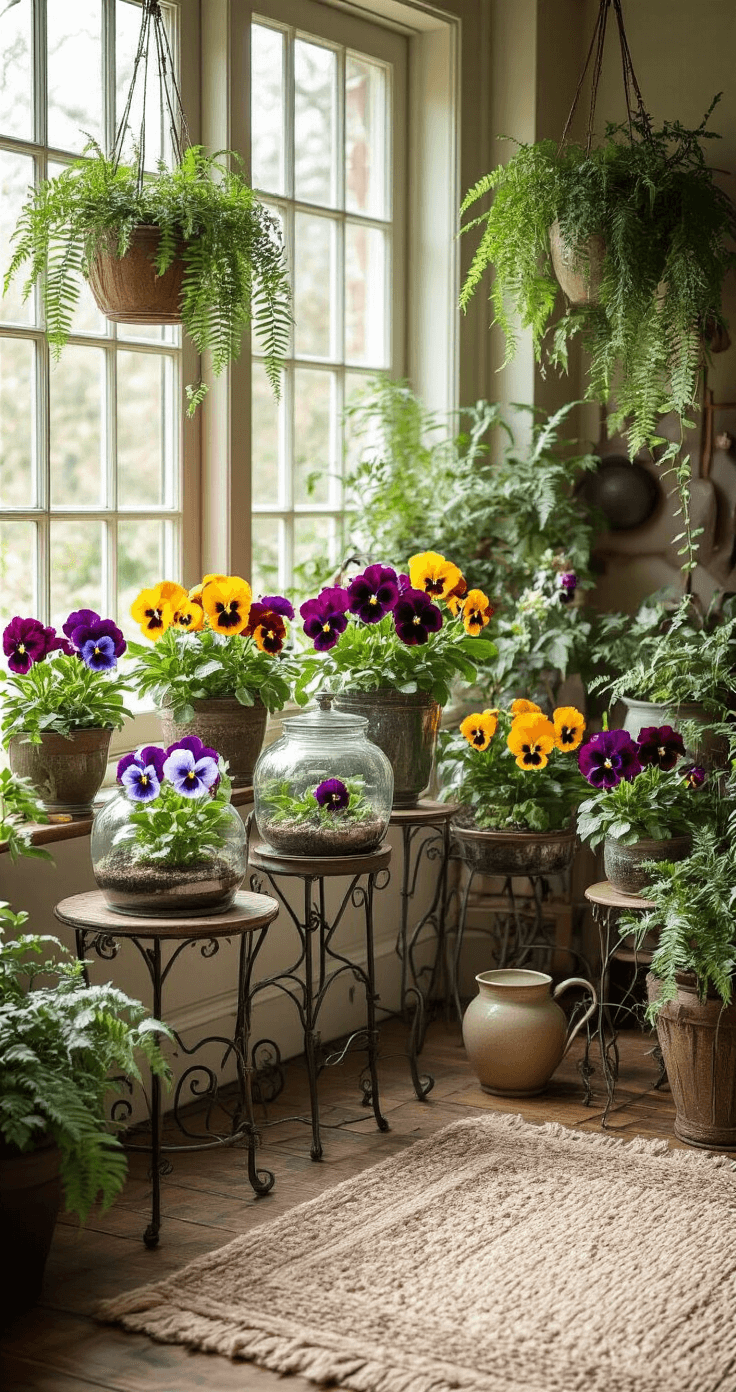
💡 Steal This Look
- Paint Color: Behr Garden Spot S-H-760
- Furniture: a weathered teak potting bench with galvanized steel top for seed starting and transplanting
- Lighting: a gooseneck LED grow light with full spectrum bulbs for starting seeds indoors before autumn transplant
- Materials: unglazed terracotta pots, burlap frost protection wraps, aged copper plant markers, raw linen gardening apron
There’s something quietly rebellious about planting when everyone else is putting their gardens to bed—this room celebrates that counter-seasonal instinct that separates the gardeners who actually enjoy winter blooms from those who just admire them in passing.
Where and How to Plant Them
Winter pansies are wonderfully flexible about where they live.
They thrive in both containers and garden borders.
Soil requirements:
Use fertile, well-draining soil or high-quality potting compost.
I swear by premium potting mix for containers because winter pansies really respond to rich soil with good structure.
Heavy clay that holds water like a bathtub?
Amend it with organic matter first or stick to containers.
Light requirements:
These plants love full sun to partial shade.
The sweet spot is about six hours of direct sunlight daily.
Morning sun with afternoon shade works brilliantly, especially in areas where winter sun can be surprisingly intense.
I’ve grown them in full sun and they performed well, but the colors stayed more vibrant in locations with afternoon protection.
Planting in containers:
This is where winter pansies really shine.
Choose containers with drainage holes—this is non-negotiable.
Soggy roots in winter equal dead plants.
I use decorative winter planters near my front door where I see them every day.
That daily dose of color during grey winter months is better than therapy.
Space plants about 15-20cm apart so they have room to spread without overcrowding.
Planting in borders:
Prepare the soil by working in compost or well-rotted manure.
Plant at the same depth they were in their nursery pots.
Water thoroughly after planting.
Group them in clusters of odd numbers (3, 5, 7) for maximum visual impact rather than spacing them out individually like lonely soldiers.
<img src=”https://evyvehomes.com/wp-content/uploads/2026/01/2398scandinavian-winter-pansies-living-room.png” alt=”A Scandinavian-inspired living room corner with winter pansies in minimal white ceramic planters, large windows showcasing a frost-covered landscape, a soft grey wool throw, light oak floors, and a mid-century modern chair. The pansies display blush pink, pale
Keep this one for later
We'll email you the link so you can come back to it.



[…] to know the secret weapon of winter wallpaper enthusiasts? Cardinals in snow-covered branches. That crimson red against pure white snow […]