This post may contain affiliate links. Please see my disclosure policy for details.
The modern kitchen has evolved beyond traditional design constraints, with one of the most striking trends being the elimination of upper cabinets. This architectural choice creates an open, gallery-like atmosphere that’s become increasingly popular in high-end homes. When executed properly with thoughtful storage solutions from premium brands like Sub-Zero, Wolf, and Miele, these kitchens balance minimalist aesthetics with practical functionality. Let’s explore why designers are embracing this sophisticated approach and how you can implement it successfully in your own home.

What Is a Kitchen Without Upper Cabinets?
Contents
- What Is a Kitchen Without Upper Cabinets?
- Why Designers Choose Kitchens Without Upper Cabinets
- Pros of a Kitchen Without Upper Cabinets
- Cons of a Kitchen Without Upper Cabinets
- Cost Impact of Removing Upper Cabinets
- High-End Cabinet Brands That Design Kitchens Without Uppers
- Smart Storage Solutions for Kitchens Without Upper Cabinets
- Best Countertops & Backsplashes for No-Upper Kitchens
- Appliances That Work Best in Kitchens Without Upper Cabinets
- Lighting Strategies for Kitchens Without Upper Cabinets
- Best Layouts for Kitchens Without Upper Cabinets
- Common Mistakes in No-Upper-Cabinet Kitchens
- Is a Kitchen Without Upper Cabinets Worth It?
- FAQs About Kitchens Without Upper Cabinets
A kitchen without upper cabinets is exactly what it sounds like—a kitchen design that eliminates the traditional storage units that typically hang on the wall above countertops. This architectural choice creates uninterrupted wall space, allowing for more windows, decorative backsplashes, or simply a cleaner visual line throughout the space.
No Uppers vs. Partial Uppers
While some homeowners opt to remove all upper cabinets, others take a hybrid approach. Partial upper cabinet designs might include cabinets in less visible areas while leaving primary walls open. This compromise maintains some convenient eye-level storage while still achieving a more open feel than fully traditional layouts.

Open Shelving vs. No Storage
Some kitchens replace upper cabinets with open shelving—providing display space for beautiful dishware while maintaining some storage capacity. Others eliminate wall storage entirely, relying solely on base cabinets, islands, and pantries. The choice depends on your storage needs, aesthetic preferences, and how you use your kitchen daily.
Why This Layout Reads More “Custom” Than Builder-Grade
Builder-grade kitchens typically maximize cabinet space for broad market appeal. In contrast, kitchens without upper cabinets require thoughtful custom millwork and storage planning. This deliberate design choice signals European kitchen design influence and architectural intention, immediately elevating the space beyond standard offerings. The result is a kitchen that feels curated rather than conventional.
Why Designers Choose Kitchens Without Upper Cabinets
Visual Openness and Light
Removing upper cabinets instantly creates a sense of spaciousness that transforms even modest kitchens. Without bulky cabinetry at eye level, the space feels less confined and more connected to adjacent rooms. This openness is particularly valuable in open-concept layouts where the kitchen serves as both functional workspace and social hub.

Highlighting Premium Materials
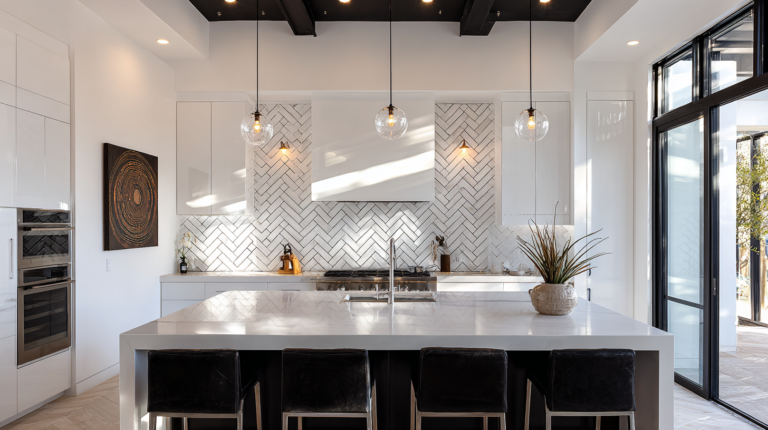
Without upper cabinets competing for attention, statement backsplashes and countertops become focal points. Designers can showcase luxury materials like book-matched marble, handmade tiles, or exotic woods that might otherwise be visually fragmented by cabinet doors. This emphasis on premium surfaces creates a gallery-like quality that elevates the entire space.
Works Well with Statement Backsplashes
A kitchen without upper cabinets provides the perfect canvas for dramatic backsplash treatments. Full-height stone slabs, artistic tile installations, or even windows can become striking visual elements when not interrupted by cabinetry. These unbroken surfaces create a sense of luxury and intentional design that’s difficult to achieve with traditional layouts.
Popular in Modern and European Kitchens
The no-uppers approach has long been popular in European kitchen design, where space efficiency and clean aesthetics are highly valued. This influence has increasingly shaped American luxury kitchens, with brands like Henrybuilt and Plain English Design embracing the sophisticated minimalism of cabinet-free walls. The result is a timeless yet contemporary look that transcends passing trends.
Pros of a Kitchen Without Upper Cabinets
Advantages
- Creates a more spacious, open feeling
- Allows for more natural light throughout the space
- Showcases premium backsplash materials
- Enables easier access to countertops
- Creates a cleaner visual line throughout the kitchen
- Allows for more windows or architectural features
- Reduces the need to reach up into high cabinets
- Creates a more modern, European aesthetic
Cleaner Sightlines
Without upper cabinets blocking views, kitchens feel more connected to adjacent spaces. This visual continuity is especially valuable in open floor plans, where the kitchen flows into dining and living areas. The uninterrupted sightlines create a sense of harmony that makes the entire home feel more cohesive and thoughtfully designed.

More Natural Light
Upper cabinets can block precious natural light from windows. Removing them allows sunlight to penetrate deeper into the space, creating a brighter, more inviting atmosphere. This enhanced illumination not only makes the kitchen feel larger but also reduces the need for artificial lighting during daylight hours—a subtle but meaningful energy efficiency benefit.
Strong Design Impact
Few design choices make as dramatic a statement as eliminating upper cabinets. This deliberate approach signals confidence and intentionality, immediately distinguishing your kitchen from standard builds. The resulting aesthetic reads as both luxurious and thoughtfully restrained—a hallmark of sophisticated design that elevates the entire home.
Ideal for Luxury Homes and Open-Concept Layouts
In high-end residences where space is less constrained, kitchens without upper cabinets shine. The design creates a seamless flow between cooking, dining, and entertaining areas while maintaining a sense of architectural elegance. This integration is particularly valuable in luxury homes where the kitchen serves as both functional workspace and social centerpiece.
Cons of a Kitchen Without Upper Cabinets
Challenges
- Reduced overall storage capacity
- Requires alternative storage solutions
- May necessitate a separate pantry space
- Can increase reliance on lower cabinets
- May require more frequent cleaning of open shelves
- Potentially higher renovation costs for custom solutions
- Not ideal for all kitchen layouts
- May impact resale value in some markets
Reduced Storage
The most obvious drawback is the loss of storage space. Upper cabinets typically provide convenient homes for everyday items like glasses, plates, and pantry staples. Without them, you’ll need to rethink where and how you store kitchen essentials. This challenge requires thoughtful planning and potentially additional storage solutions elsewhere in the home.

Higher Reliance on Custom Cabinetry
To compensate for lost upper cabinet space, many homeowners invest in specialized lower cabinets with premium organization systems. These custom solutions from brands like Blum and Hettich maximize efficiency but come at a higher price point than standard cabinetry. The investment is worthwhile for the functionality but represents an additional cost consideration.
Not Ideal for All Households
Families with extensive cookware collections or specialty kitchen equipment may find the reduced storage challenging. Similarly, those who entertain frequently might miss having convenient places for multiple dish sets or serving pieces. Before committing to a no-uppers design, honestly assess your storage needs and kitchen habits.
Can Increase Renovation Costs
While eliminating upper cabinets might seem like a cost-saving measure, the reality is often the opposite. The need for specialized storage solutions, potential pantry additions, and premium drawer systems can increase overall renovation expenses. Additionally, the expanded wall space may call for higher-end backsplash treatments that extend further than traditional designs.
Cost Impact of Removing Upper Cabinets
Cabinet Cost Savings vs. Added Millwork
Removing upper cabinets can reduce cabinetry costs by 30-40%, but these savings are typically offset by investments in alternative storage. Premium drawer systems, pull-outs, and specialized inserts often cost more than standard upper cabinets. The net financial impact depends on your specific choices and priorities.

Full-Height Pantry Cabinets
Many homeowners compensate for lost upper cabinet space with full-height pantry cabinets. These substantial storage units provide ample room for food, small appliances, and kitchenware but represent a significant investment. Quality pantry cabinets with premium organization systems can cost $3,000-$8,000 per unit, depending on size and features.
Appliance Garages and Storage Walls
Specialized solutions like appliance garages (concealed countertop storage for small appliances) and full storage walls help maintain functionality without upper cabinets. These custom elements typically cost more than standard cabinetry but offer superior organization and aesthetic integration.
Cost Comparison: Traditional vs. No-Uppers Kitchens
While the cabinetry in a no-uppers kitchen might cost 10-15% less overall, investments in premium organization systems, pantry solutions, and high-end backsplashes often result in comparable or slightly higher total costs. The value comes not from savings but from the distinctive design and thoughtful functionality of the space.
High-End Cabinet Brands That Design Kitchens Without Uppers
Luxury & Bespoke Brands
Several premium cabinet manufacturers have embraced the no-uppers aesthetic, developing specialized systems to maximize functionality without wall cabinets. These high-end brands offer the craftsmanship and customization necessary to execute this design approach successfully.
Henrybuilt
Known for integrated system design, Henrybuilt creates kitchens with architectural integrity and exceptional functionality. Their approach often eliminates upper cabinets in favor of thoughtfully designed base units and storage walls.
Plain English Design
This British company specializes in handmade Georgian-inspired cabinetry that often foregoes upper cabinets for a more open, traditional feel. Their designs frequently incorporate freestanding furniture pieces and pantry cupboards.
DeVOL Kitchens
Combining traditional craftsmanship with contemporary sensibilities, DeVOL frequently designs kitchens without upper cabinets. Their aesthetic emphasizes simplicity and quality materials over maximizing storage density.
Christopher Peacock
Known for handcrafted cabinetry with exceptional attention to detail, Christopher Peacock designs often feature minimal or no upper cabinets to create a more architectural, less utilitarian kitchen aesthetic.

Semi-Custom Brands Used in High-End Remodels
For those seeking the no-uppers look at a more accessible price point, several semi-custom brands offer quality options that can be configured without wall cabinets.
Wood-Mode
This American manufacturer offers customizable cabinetry that works well in kitchens without upper cabinets. Their extensive organization options help maximize base cabinet functionality.
Wellborn Cabinet
Offering a range of styles from traditional to contemporary, Wellborn provides quality cabinetry that can be configured to support a no-uppers design approach.
Smart Storage Solutions for Kitchens Without Upper Cabinets
Full-Height Pantry Walls
Dedicated pantry walls provide substantial storage capacity while maintaining a clean aesthetic elsewhere in the kitchen. These full-height units can house everything from food items to small appliances and serving pieces, effectively compensating for the loss of upper cabinets.

Appliance Garages
These specialized cabinets conceal small appliances like coffee makers and toasters behind retractable doors, keeping countertops clear while maintaining easy access. Modern versions feature premium lift mechanisms from brands like Blum that ensure smooth operation and durability.
Editor’s Choice: Premium Appliance Garage Hardware
Blum AVENTOS HK-XS Lift System provides smooth, silent operation for appliance garage doors. This compact system is perfect for small to medium cabinet fronts and includes soft-close functionality.
Drawer-Based Lower Cabinets
Deep, wide drawers provide more accessible storage than traditional base cabinets with doors and shelves. Premium drawer systems from Blum and Hettich offer smooth operation even when heavily loaded, with options for customized dividers and organizers to maximize efficiency.
Premium Drawer Organization System
Rev-A-Shelf Wood Drawer Organizer for Kitchen Utensils provides customizable storage for flatware and cooking tools, maximizing drawer efficiency in kitchens without upper cabinets.
Pull-Out Storage Systems
Specialized pull-out units make the most of narrow spaces between cabinets or next to appliances. These slim storage solutions can hold spices, cooking oils, or utensils in previously underutilized areas, helping compensate for the loss of upper cabinet space.

Hidden Storage Behind Paneling
Integrated storage concealed behind decorative paneling maintains clean aesthetics while providing functional space. These hidden compartments can house everything from small appliances to pantry items, offering a sophisticated solution that doesn’t compromise the kitchen’s visual appeal.
Best Countertops & Backsplashes for No-Upper Kitchens
Full-Height Slab Backsplashes
Without upper cabinets interrupting the wall, continuous stone backsplashes create dramatic visual impact. Book-matched marble, quartzite, or engineered stone from premium brands like Caesarstone and Cambria can extend from countertop to ceiling, creating a luxurious, gallery-like aesthetic.

Stone as a Focal Point
When upper cabinets are eliminated, backsplash materials become more prominent. This presents an opportunity to showcase exceptional natural stone with dramatic veining or movement. Materials like Calacatta marble, Blue de Savoie, or exotic quartzites create artistic focal points that define the kitchen’s character.
Integrated Shelves in Stone
For a sophisticated storage solution that maintains visual continuity, consider integrated stone shelves that extend from the backsplash. This architectural approach provides display space for select items while preserving the clean lines of a cabinet-free wall.
Premium Brands
Several manufacturers offer high-performance surfaces ideal for kitchens without upper cabinets, where backsplashes receive more attention and potentially more exposure to cooking elements.
Caesarstone
Known for consistent quality and innovative designs, Caesarstone’s engineered quartz surfaces work beautifully as full-height backsplashes in kitchens without upper cabinets.
Cambria
This American-made quartz brand offers exceptional durability with designs that mimic natural stone, providing practical luxury for statement backsplashes.
Silestone
Combining antimicrobial protection with sophisticated aesthetics, Silestone surfaces maintain their beauty even when more exposed in cabinet-free kitchen designs.
Dekton
This ultra-compact surface resists heat, scratches, and stains—making it ideal for backsplashes in hardworking kitchens where upper cabinets won’t provide protection.
Appliances That Work Best in Kitchens Without Upper Cabinets
Panel-Ready Appliances
In kitchens without upper cabinets, appliances receive more visual attention. Panel-ready refrigerators and dishwashers that seamlessly integrate with cabinetry help maintain the clean, architectural aesthetic that makes these kitchens so appealing.

Built-In Wall Ovens
With more available wall space, built-in ovens can be positioned at ergonomic heights without sacrificing storage. Premium brands like Wolf and Miele offer sleek designs that complement the architectural quality of kitchens without upper cabinets.
Editor’s Choice: Premium Oven Cleaner
Carbona Oven Cleaner effectively maintains the appearance of high-end wall ovens without harsh chemicals. Perfect for preserving the pristine look of statement appliances in kitchens without upper cabinets.
Integrated Refrigeration
Column refrigeration units from brands like Sub-Zero offer flexibility in kitchen layout while maintaining a streamlined appearance. These modular appliances can be positioned strategically to support the workflow in kitchens without traditional upper cabinet storage.
Luxury Appliance Brands
Several premium manufacturers offer appliances that complement the sophisticated aesthetic of kitchens without upper cabinets.
Sub-Zero & Wolf
Known for exceptional performance and design, these sister brands offer refrigeration and cooking appliances that enhance the architectural quality of kitchens without upper cabinets.
Miele
This German manufacturer’s sleek, minimalist appliances integrate beautifully into cabinet-free kitchen designs while providing industry-leading functionality.
Gaggenau
With a focus on architectural integration, Gaggenau appliances complement the clean lines and sophisticated detailing typical of kitchens without upper cabinets.
Thermador
Offering a balance of professional performance and refined aesthetics, Thermador appliances work well in the more open, visible context of kitchens without wall cabinets.
Lighting Strategies for Kitchens Without Upper Cabinets
Wall Sconces
Without upper cabinets occupying wall space, decorative sconces become an elegant possibility. These fixtures provide both task lighting and visual interest, functioning as architectural elements that enhance the kitchen’s design language.

Premium Wall Sconce for Cabinet-Free Kitchens
Visual Comfort Bryant Sconce provides elegant task lighting perfect for kitchens without upper cabinets. The adjustable arm allows for precise illumination of countertop work areas.
Statement Pendants
Without upper cabinets creating visual clutter, statement pendant lights can take center stage. These fixtures not only provide essential illumination but also serve as sculptural elements that define the kitchen’s character and style.
Recessed Lighting Placement
In kitchens without upper cabinets, recessed lighting placement becomes even more critical. Without cabinet bottoms to house under-cabinet lighting, well-positioned recessed fixtures ensure proper task illumination while maintaining the clean aesthetic.
Proper Color Temperature (2700K–3000K)
Warm lighting between 2700K and 3000K enhances the inviting quality of kitchens without upper cabinets. This temperature range complements natural materials and creates a welcoming atmosphere without the harsh glare of cooler LEDs.
Lighting Brands
Several premium manufacturers offer lighting fixtures that complement the sophisticated aesthetic of kitchens without upper cabinets.
Visual Comfort
Known for timeless designs with exceptional craftsmanship, Visual Comfort offers sconces and pendants that enhance the architectural quality of kitchens without upper cabinets.
Apparatus Studio
This design studio creates sculptural lighting fixtures that function as art pieces, perfect for the gallery-like quality of kitchens without wall cabinets.
Best Layouts for Kitchens Without Upper Cabinets
Galley Kitchens
Narrow galley kitchens benefit tremendously from eliminating upper cabinets, which can make these spaces feel cramped and tunnel-like. The open wall space creates breathing room and visual expansion that transforms the experience of working in a galley layout.

Large Open Kitchens
In spacious kitchens that flow into living areas, the absence of upper cabinets creates visual continuity that enhances the open-concept experience. These layouts often incorporate islands or peninsulas with additional storage to compensate for the wall cabinet removal.
Kitchens with Islands
Island-centric kitchens work beautifully without upper cabinets, as the substantial base storage in the island can offset the lost wall storage. This arrangement creates a balanced composition with the island as anchor and the walls as clean visual backdrop.
Kitchens with Windows on All Sides
When a kitchen enjoys multiple exposures with windows on several walls, eliminating upper cabinets allows these natural light sources to shine. The resulting sun-filled space feels larger, more connected to the outdoors, and inherently more welcoming.
Common Mistakes in No-Upper-Cabinet Kitchens
Underestimating Storage Needs
The most frequent error is failing to adequately compensate for lost storage. Without careful planning, you may find yourself without sufficient space for everyday essentials. Work with a designer to conduct a thorough inventory of your kitchen items before committing to a no-uppers design.

Poor Lighting Planning
Without under-cabinet lighting, task illumination requires careful consideration. Failing to incorporate adequate lighting can leave countertop work areas in shadow, compromising both functionality and safety. Integrate multiple lighting types—ambient, task, and accent—to create a well-illuminated space.
Overuse of Open Shelving
While open shelves can be beautiful, they require curation and regular cleaning. Too many open shelves can create visual clutter and maintenance challenges. Balance open storage with closed options to create a sustainable, functional kitchen that remains appealing over time.
Ignoring Resale Expectations
In some markets, buyers expect maximum storage capacity. Consider your long-term plans and local real estate trends before committing to a design that eliminates upper cabinets entirely. In luxury markets, the aesthetic appeal may outweigh storage concerns, but this varies by location.
Is a Kitchen Without Upper Cabinets Worth It?
Lifestyle Considerations
The success of a kitchen without upper cabinets depends largely on your cooking habits, storage needs, and aesthetic priorities. For those who value open space, natural light, and clean visual lines, the trade-offs in storage capacity may be well worth it. Consider how you use your kitchen daily before making this significant design decision.

Resale Impact in Luxury Markets
In high-end real estate markets, kitchens without upper cabinets often represent a design premium rather than a liability. The sophisticated, architectural quality of these spaces appeals to luxury buyers who prioritize aesthetics and are less concerned with maximizing storage density.
Who This Layout Works Best For
Kitchens without upper cabinets are ideal for design-conscious homeowners with adequate space for alternative storage solutions. They work particularly well for those who entertain frequently, appreciate architectural details, and maintain relatively streamlined kitchen inventories. If you value openness over maximum storage capacity, this approach may be perfect for your home.
FAQs About Kitchens Without Upper Cabinets
Are kitchens without upper cabinets practical?
Yes, kitchens without upper cabinets can be highly practical when designed with thoughtful alternative storage solutions. The key is compensating for lost wall storage with efficient base cabinets, drawer systems, pantries, or islands. With proper planning, these kitchens can be both beautiful and functional for everyday use.
Do kitchens without uppers hurt resale value?
In luxury markets, kitchens without upper cabinets often enhance resale value by creating a distinctive, high-end aesthetic. In mid-range markets, the impact varies based on local preferences and expectations. If resale is a concern, consider a hybrid approach with some upper cabinets in less visible areas.
Where do you store dishes without upper cabinets?
Dishes can be stored in deep drawers (which actually provide easier access than upper cabinets), pantry cabinets, islands with storage, or buffet furniture in adjacent dining areas. Many homeowners find that drawer storage for dishes is more ergonomic and accessible than traditional upper cabinets.
Are no-upper kitchens more expensive?
While eliminating upper cabinets reduces some cabinetry costs, the specialized storage solutions and premium drawer systems that typically compensate for this loss often result in comparable or slightly higher overall expenses. The investment is in quality and design rather than quantity of cabinets.
Can small kitchens work without upper cabinets?
Yes, small kitchens can actually benefit significantly from eliminating upper cabinets, which can make tight spaces feel cramped and dark. The key is incorporating efficient storage alternatives like pull-out pantries, specialized drawer systems, or adjacent storage areas to maintain functionality.
Kitchens without upper cabinets represent a sophisticated design approach that balances aesthetics with functionality. While this style requires thoughtful planning and potentially specialized storage solutions, the resulting spaces offer a distinctive, architectural quality that elevates the entire home. By understanding both the benefits and challenges of this design choice, you can create a kitchen that not only looks beautiful but also supports your lifestyle and cooking habits for years to come.
Whether you’re renovating an existing kitchen or designing a new space from scratch, consider how the absence of upper cabinets might transform your experience of the room. With the right planning, materials, and storage solutions, you can create a kitchen that feels both luxurious and livable—a true heart of the home that balances form and function in perfect harmony.