

This post may contain affiliate links. Please see my disclosure policy for details.
Outdoor Dining Area Inspiration: 47 Ideas That’ll Make You Never Want to Eat Inside Again
Outdoor dining area inspiration starts with one simple truth I learned the hard way: your backyard table shouldn’t be an afterthought you shove into whatever corner has space.
I spent three summers eating dinner on a wobbly plastic table squeezed between the shed and the fence before I finally got serious about creating an actual outdoor dining space worth using.
Now? I eat outside more than I eat inside from April through October.
Why Your Outdoor Dining Space Probably Isn’t Working
Let me guess what’s happening.
You bought a patio dining set on sale, plopped it on the deck, and called it done.
But nobody actually wants to sit there because:
- The sun blinds you at dinner time
- The chairs hurt your back after 10 minutes
- It feels like you’re eating in a parking lot
- Mosquitoes treat it like an all-you-can-eat buffet
Here’s what actually makes an outdoor dining area somewhere you’ll choose to be.
Start With Furniture That Doesn’t Suck
Forget matching sets.
Mix your seating like you actually care about comfort:
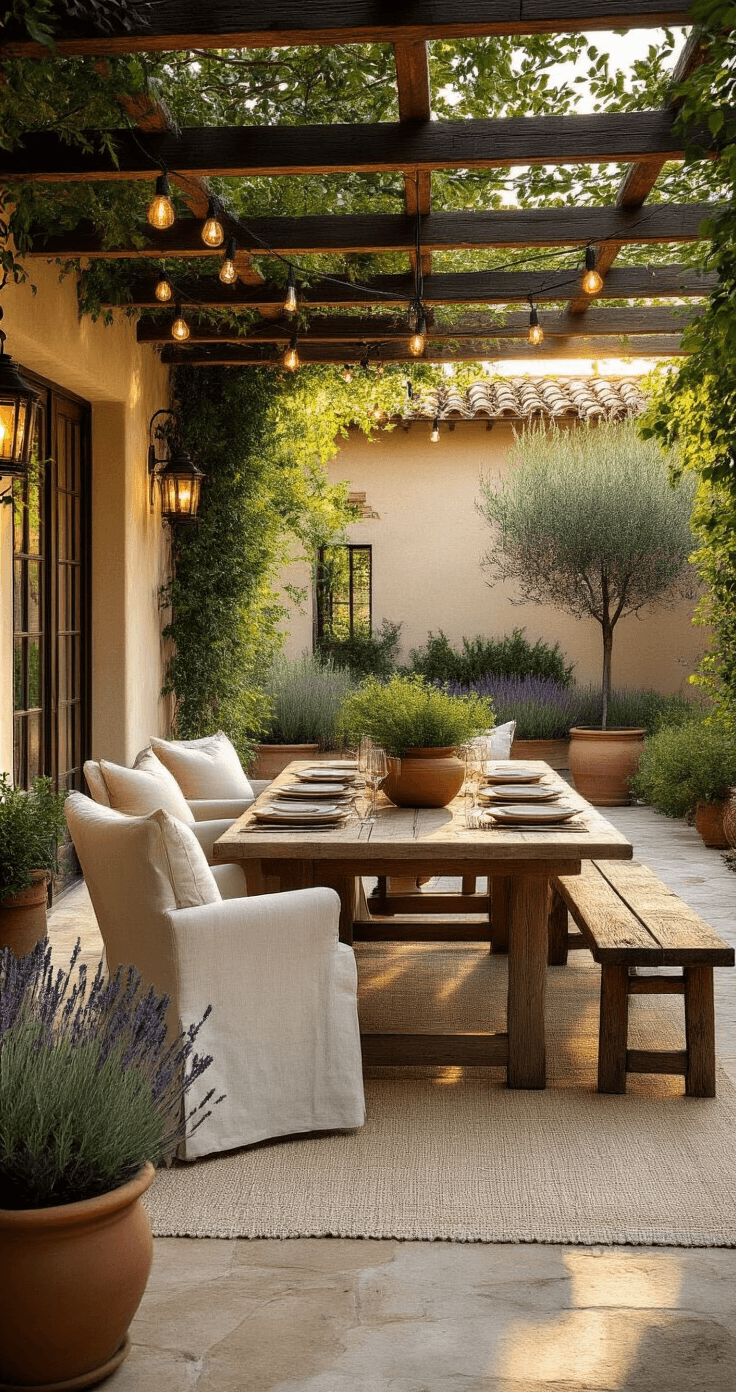
- Two upholstered armchairs at the head positions
- Regular dining chairs on the sides
- A bench on one long side for kids or extra guests
- Even a vintage wicker chair if it speaks to you
I use a long farmhouse table with two cushioned chairs at the ends and a wooden bench on each side. The bench thing changed everything because kids can actually squeeze in without chair wars, and adults don’t feel trapped between armrests.
For smaller spaces, push your table against a wall or railing. You don’t need 360-degree access—this isn’t a restaurant.
Want something completely different? Try low Japanese floor cushions with a coffee-height table. It sounds weird until you try it, then you’ll wonder why anyone sits on regular chairs.
Shade Isn’t Optional, It’s Essential
West-facing spots are money for outdoor dining. You get gorgeous evening light without the blazing afternoon sun that makes butter melt before you can spread it.
Your shade options, ranked by what actually works:
Pergolas – The best long-term investment if you own your place. Add climbing vines and you’ve got living shade that smells amazing.
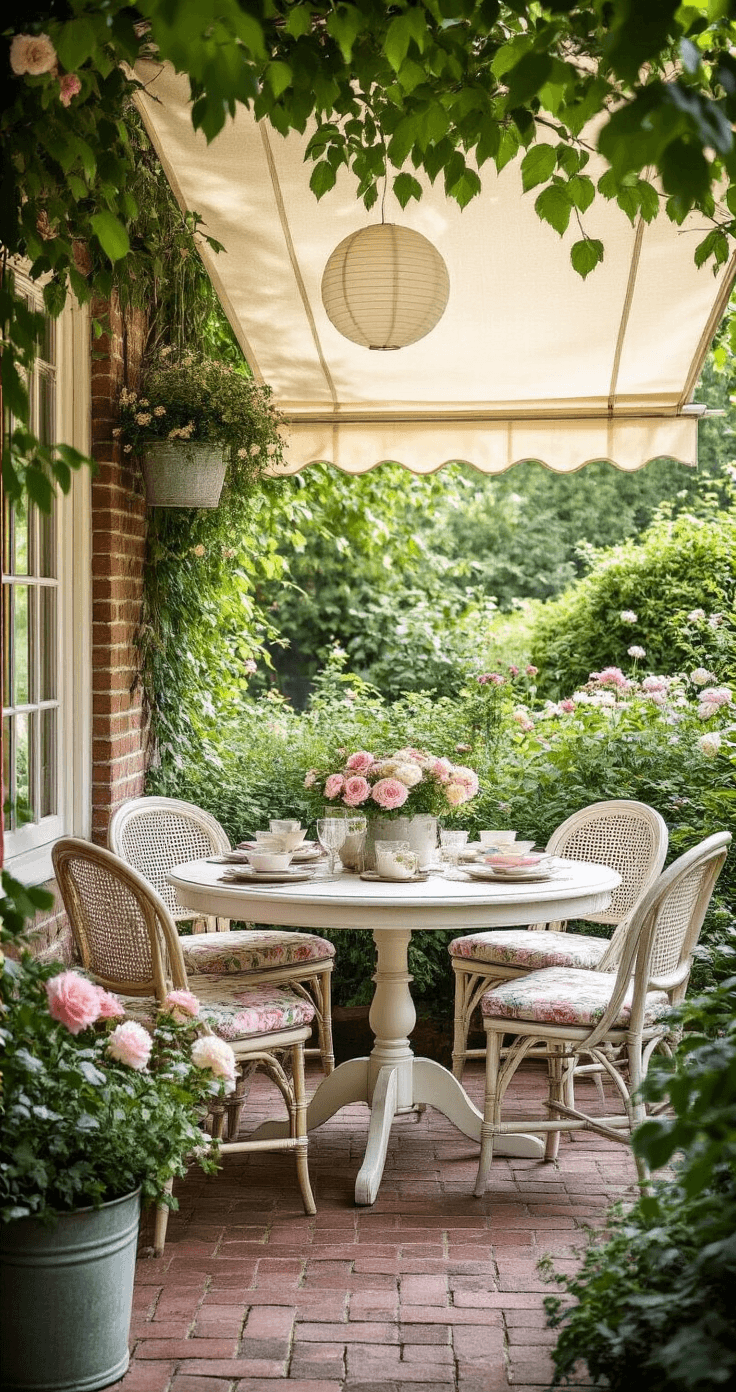
Retractable awnings – For when you want options. Sun in the morning, shade at lunch, stars at night.
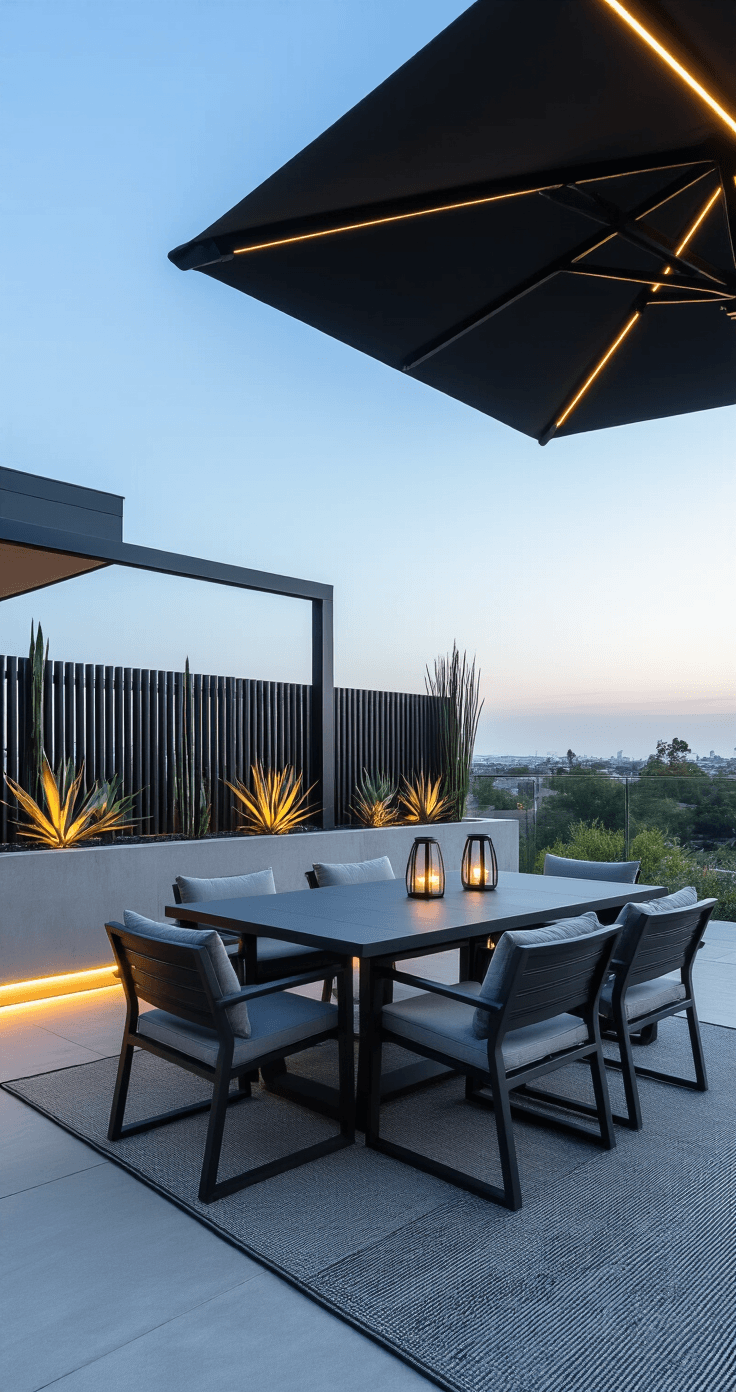
Cantilever umbrellas – Better than center-pole patio umbrellas because they don’t eat your table space and you can angle them as the sun moves.
Shade sails – Modern, affordable, and surprisingly effective. They look like your dining area just got back from Ibiza.
I started with a massive umbrella and upgraded to a pergola two years later. The pergola was expensive and took a weekend to install, but I should’ve just done it first.
Save this article
Enter your email and we'll send it straight to your inbox.
Create Walls Without Actually Building Walls
Open-air dining is great until you realize you’re basically eating on a stage with your neighbors as the audience.
Build enclosure without claustrophobia:
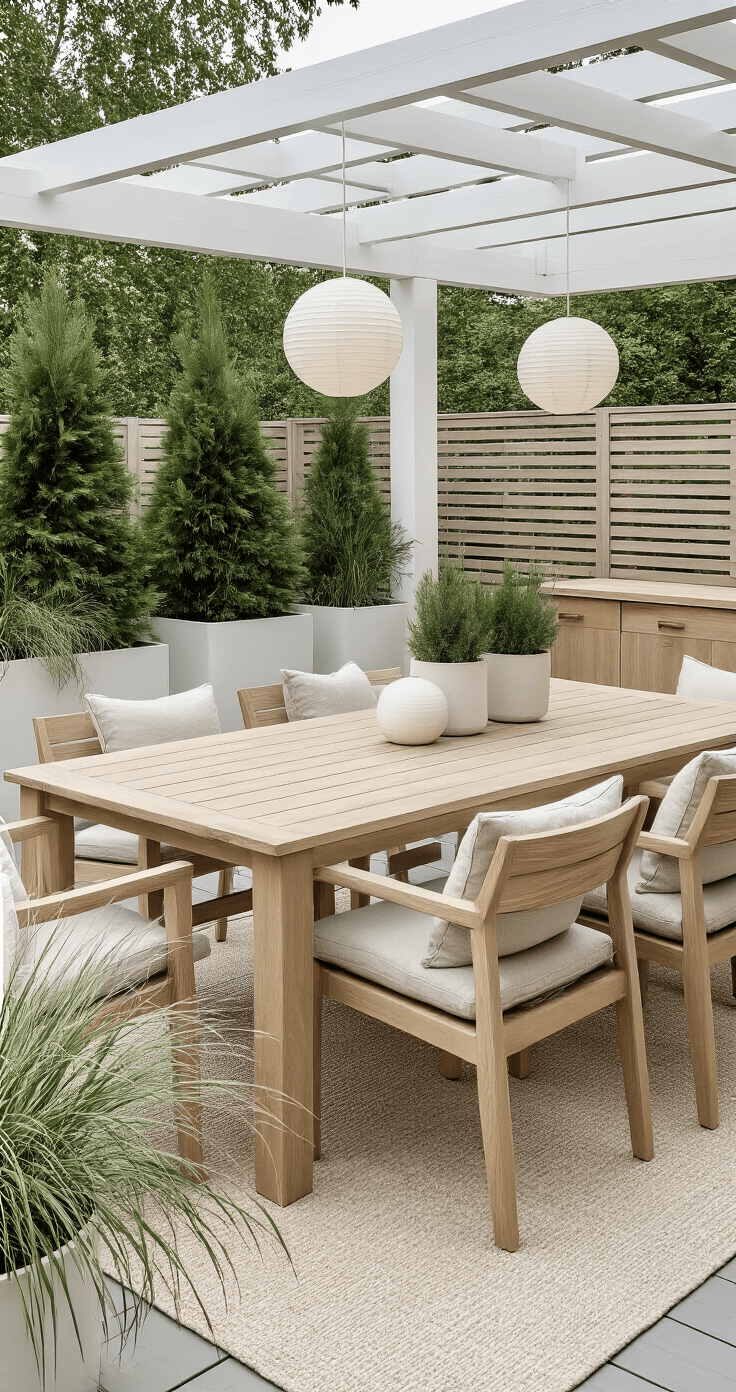
Tall planters with ornamental grasses arranged in a loose semicircle behind your dining area. They move in the breeze, provide privacy, and don’t block airflow like a fence.
One dramatic element like a decorative folding screen or a trellis with flowering vines. I found a weathered wood screen at an estate sale for $40 and it makes my concrete patio look like it has character.
Outdoor curtains hung from your pergola or awning. Pull them closed for intimate dinners, tie them back for parties.
Hedge plants in large planters if you’re renting or don’t want permanent landscaping. Boxwoods and evergreens work year-round.
Layer Your Plants Like You Mean It
Here’s what nobody tells you about outdoor spaces: flat is boring.
Create depth with three planter heights:
Tall (3-4 feet): Olive trees, Italian cypress, tall grasses. These go behind or beside your dining area to create backdrop.
Medium (1-2 feet): Flowering plants, herbs, small shrubs. These go around the edges of your space.
Low (under 12 inches): Groundcover, succulents, trailing plants. These soften hard edges and fill gaps.
I keep a long planter box with herbs right next to the table. Fresh basil for caprese, mint for mojitos, rosemary for everything. Guests think you’re fancy, but you’re just lazy and like things within arm’s reach.
Vertical gardens on walls or fences add greenery without eating floor space. Perfect for tiny patios where every square foot counts.
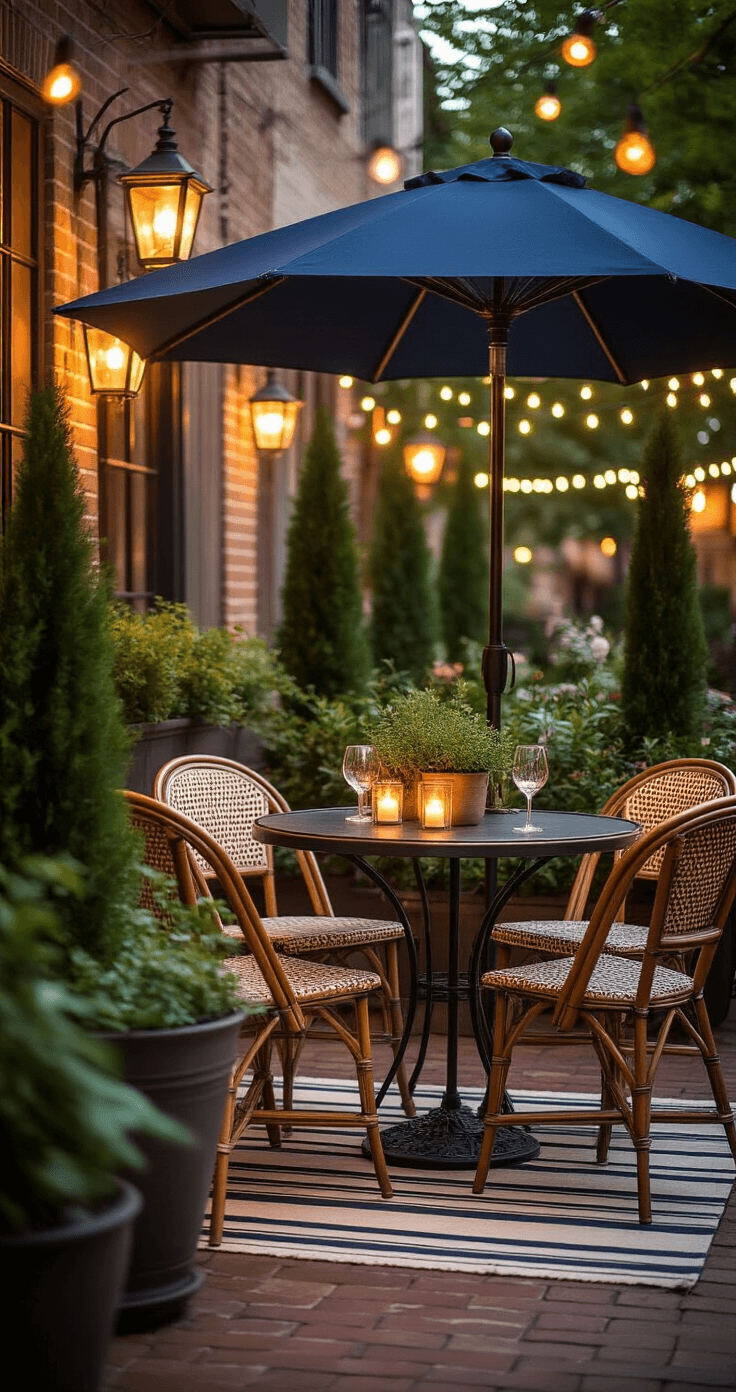
Lighting That Doesn’t Look Like a Police Interrogation
Overhead floodlights are for security, not ambiance.
Light your space in layers:
Task lighting over the table so people can actually see their food. A pendant hung from your pergola or a chandelier-style outdoor light fixture does the job without the industrial vibe.
Pathway lighting so nobody trips walking from the kitchen. Small solar lanterns or LED path lights every few feet.
Ambient lighting everywhere else. String lights above, candles on the table, lanterns on plant stands.
I use warm white string lights (not the cool
Keep this one for later
We'll email you the link so you can come back to it.


[…] magical, inviting, and full of personality. Get ready to explore 27 adorable vintage kids room ideas that will inspire you to create the coziest, dreamiest space your little one will absolutely […]
[…] friendly barndominium ideas can still look beautiful and inspiring. Use affordable finds from Walmart, Target, Amazon, and IKEA to style each room. Focus on smart […]