

This post may contain affiliate links. Please see my disclosure policy for details.
Fall Porch Planters: Plants, Design & Setup
Contents
Fall porch planters transformed my tired-looking front entrance into something that made neighbors actually stop and ask questions.
I’m talking about the kind of curb appeal that makes you want to grab a pumpkin spice latte and just stare at your own porch.
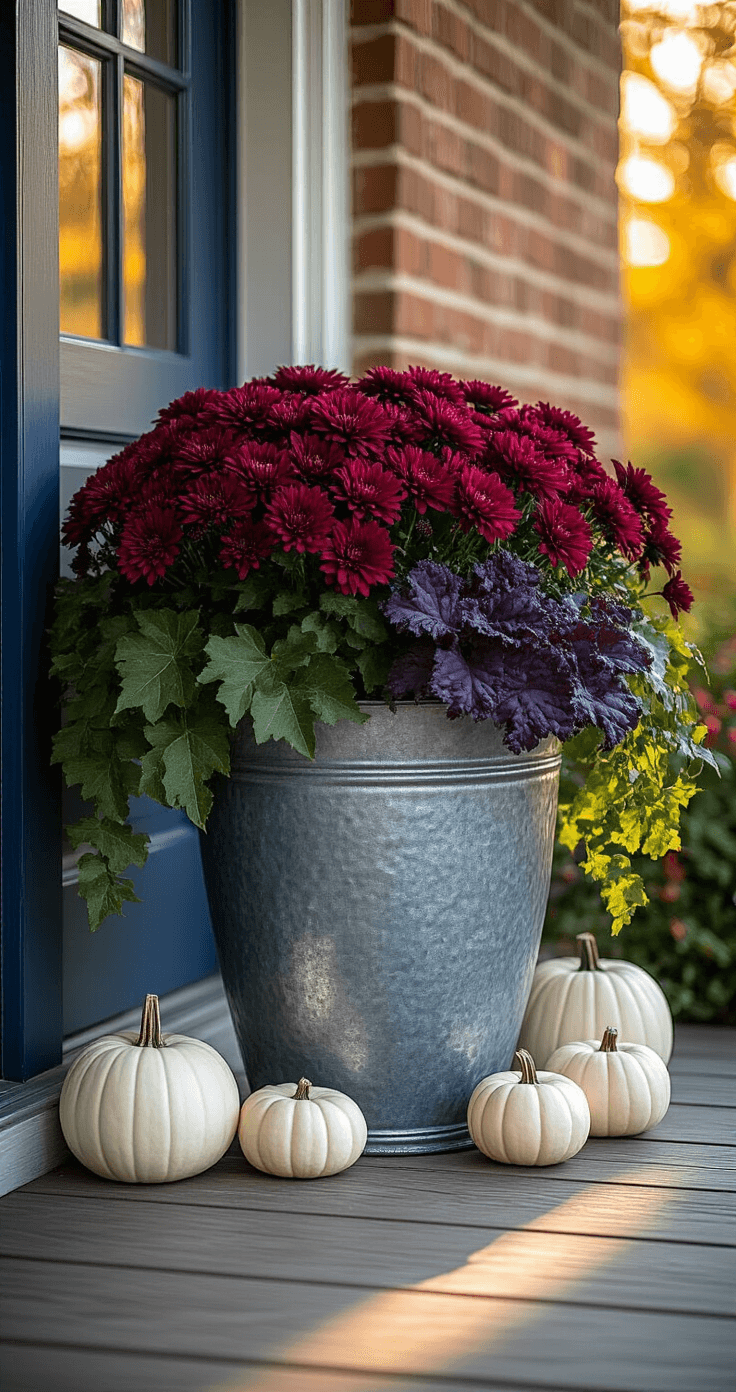
Why Your Porch Looks Sad (And How Plants Fix It)
My front porch looked downright depressing after summer flowers gave up the ghost in August. Crispy brown stems don’t exactly scream “welcome home.”
I needed something that wouldn’t die the moment temperatures dropped below 70 degrees. Something that actually looked better in cooler weather instead of worse.
That’s when I discovered fall plants are basically the opposite of summer divas—they thrive on neglect and cooler temps.
The Plants That Actually Survive Fall
Let me save you from my early mistakes when I tried planting summer leftovers in September.
Mums are the workhorses of fall planters, and I’m not talking about those sad single-color pots from the grocery store. Get the real deal in burnt orange, deep burgundy, or golden yellow.
Ornamental kale and cabbage sound weird until you see them—they look like enormous roses made from purple and green leaves. I was skeptical until I planted them, and now I’m obsessed.
Coral bells give you these incredible burgundy leaves that look almost metallic in the right light.
Pansies are tougher than they look—these little guys can handle frost like champions.
Asters bring that last burst of purple flowers before everything goes dormant.
Coleus offers wild patterns and colors that make your planter look professionally designed even when you’re winging it.
For the cascading effect, grab some ivy or potato vine. These trailing plants soften the edges and make everything look intentional instead of just stuffed in a pot.
I keep ornamental kale plants on rotation because they last for months and get prettier as temperatures drop.
The Secret Formula That Makes Planters Look Expensive
I used to just shove plants randomly into pots and wonder why they looked like a messy salad.
Then a friend who actually went to design school told me about “thriller, filler, spiller.” It sounds cheesy, but it works every single time.
Thriller: Your showstopper in the center or back—usually the tallest plant that draws the eye first. I typically use a massive orange or burgundy mum here.
Filler: Medium-height plants that fill the space and create bulk. Ornamental kale, coleus, or more mums work perfectly here.
Spiller: Trailing plants that cascade over the pot edges and soften everything. Ivy and potato vine are my go-to choices.
Combinations That Actually Work
Here’s what I’ve tested on my own porch:
Classic Fall Favorite:
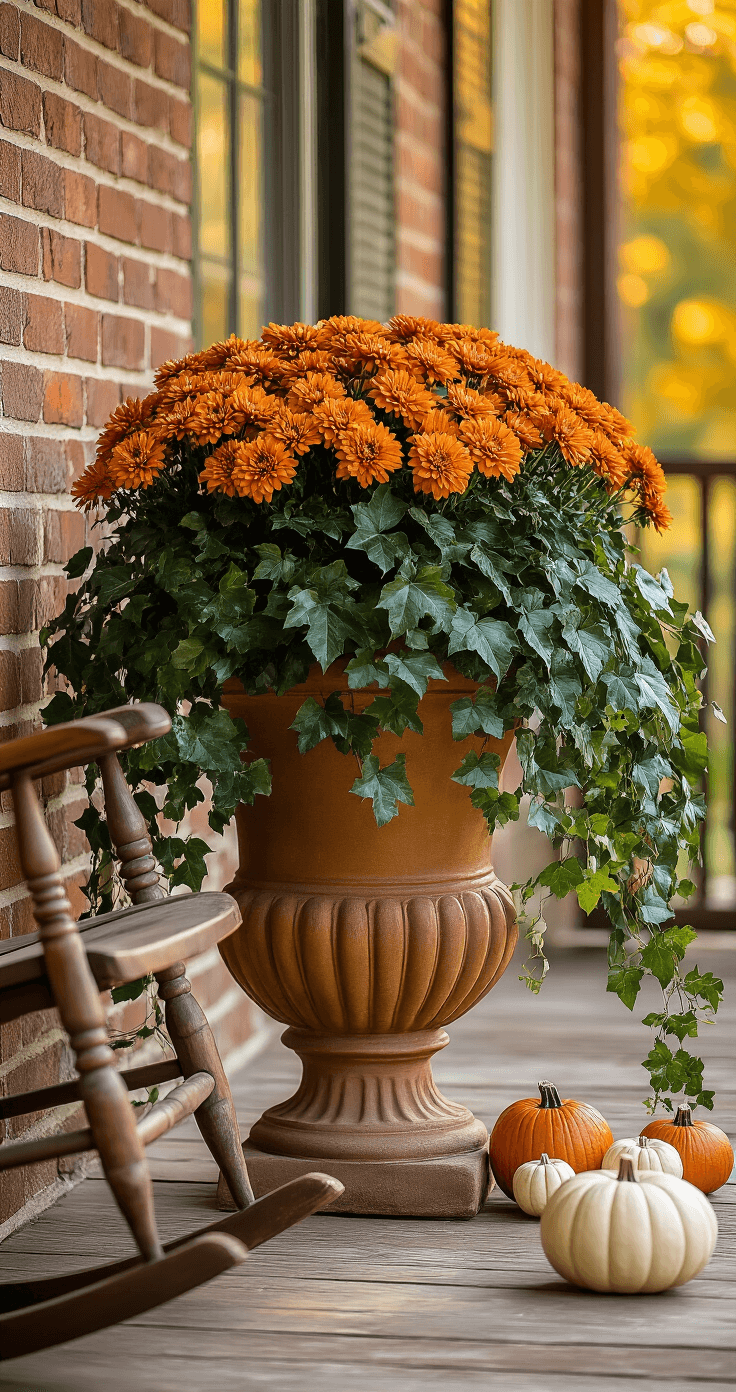
- Orange mums (thriller)
- Dark green ivy (spiller)
- Mini pumpkins tucked around the base
This combo looks full and mature immediately, which is exactly what you want when you’re putting planters out in September.
The Dramatic Purple Situation:
- Burgundy mums (thriller)
- Purple ornamental kale (filler)
- Trailing ivy (spiller)
I added this to large ceramic planters flanking my front door, and people literally pulled into my driveway to ask about them.
Jewel-Toned Drama:
- Coral bells with those deep burgundy leaves (thriller)
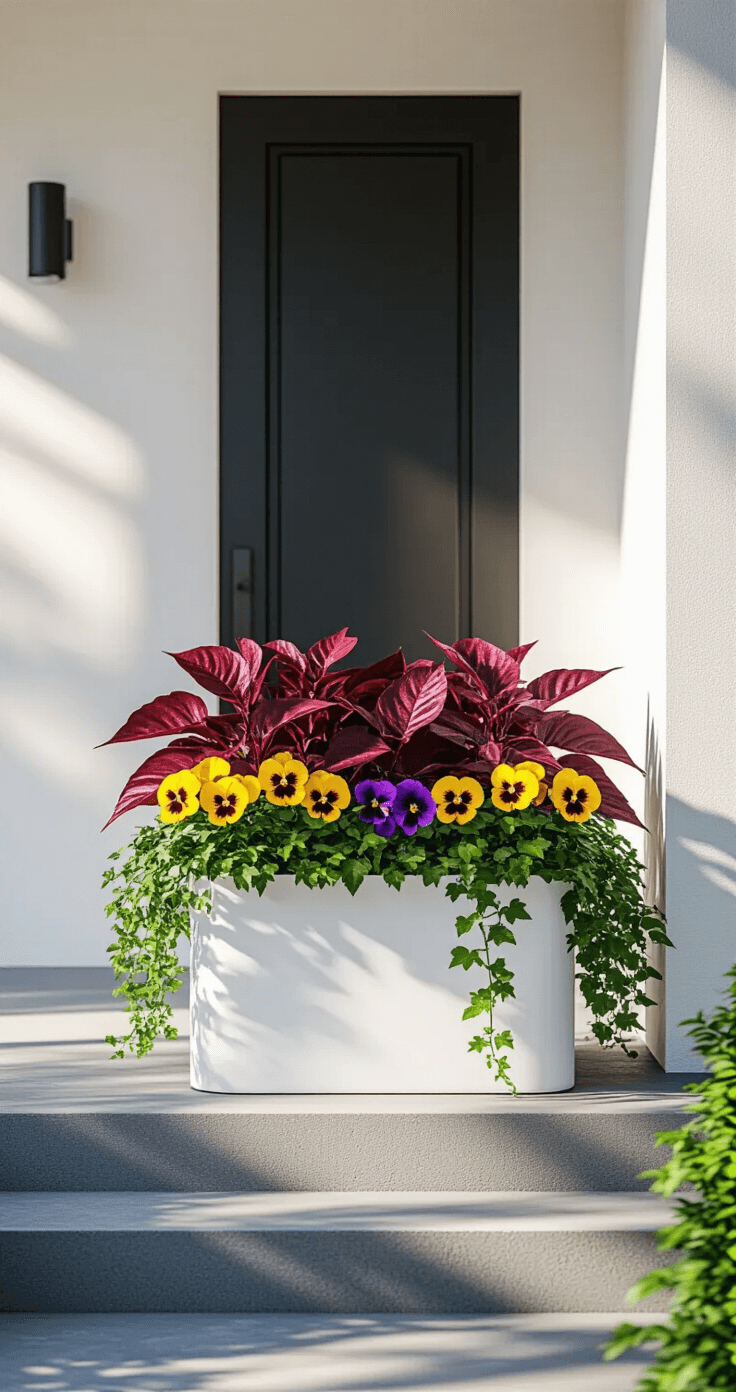
- Pansies in purple and yellow (filler)
- More pansies cascading over the edge (spiller)
The Softened Edges Look:
- Ornamental kale (thriller/filler)
- Trailing ivy covering the pot rim (spiller)
- White pansies for contrast
Maximum Color Attack:
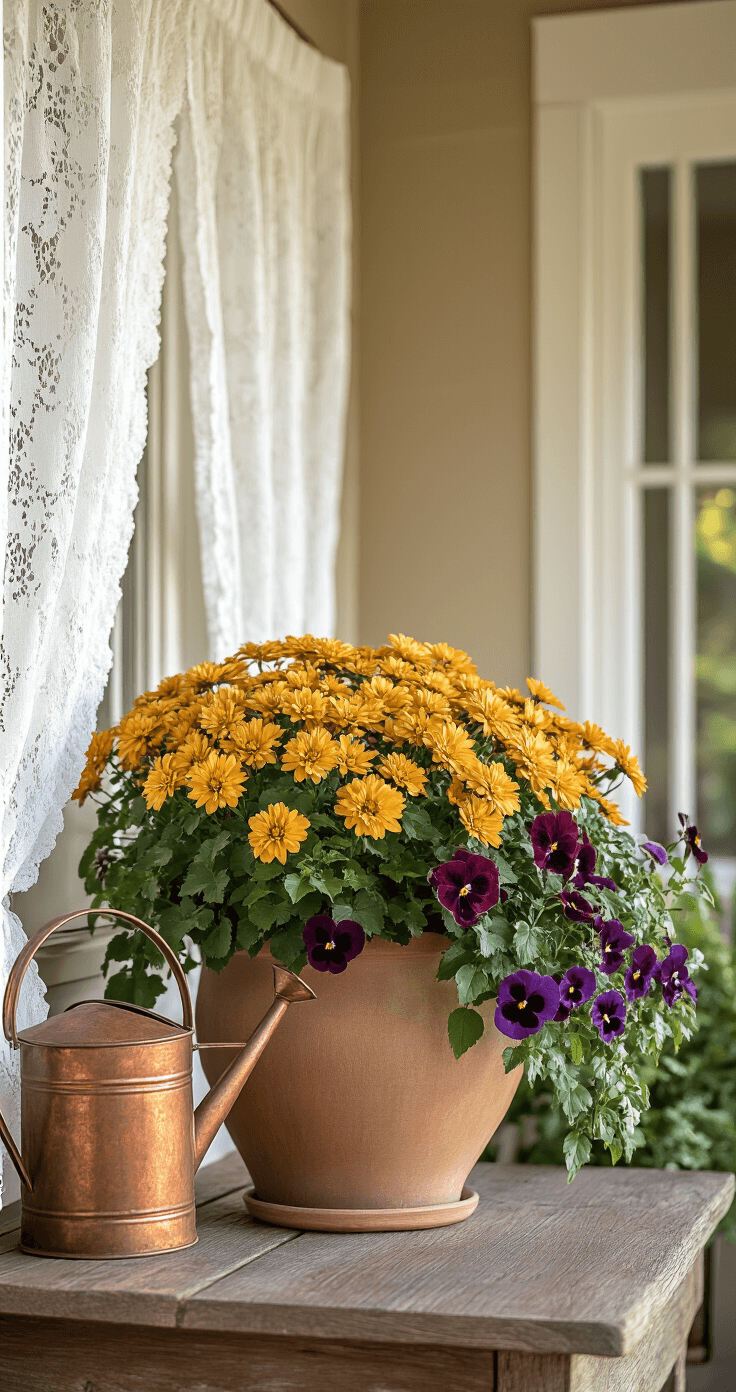
- Golden mums (thriller)
- Coleus with wild patterns (filler)
- Purple pansies (filler)
- Potato vine (spiller)
This one is busy in the best way—festive without looking like Halloween threw up on your porch.
The Sneaky Trick for Extended Display
I learned this from a woman at my local nursery: add faux elements.
Real mini pumpkins rot by Thanksgiving. Faux pumpkins and decorative fall picks last through Thanksgiving, into December, and even up to Christmas if you’re strategic.
I tuck in some bittersweet sprigs (faux ones don’t drop berries all over) and suddenly my fall planters work until it’s time for evergreen branches.
What to Actually Plant Everything In
I’ve used everything from fancy urns to literal galvanized buckets.
Here’s what actually matters: drainage and weather resistance.
Terra cotta pots look classic but crack if you live somewhere with freeze-thaw cycles. Ask me how I know (I lost three in one winter).
Urns give you that formal, elegant look if your porch skews traditional.
Galvanized buckets or washtubs work beautifully for farmhouse or rustic styles—and they’re nearly indestructible.
Olive buckets add that aged, European vibe without breaking the bank.
Wooden planter boxes are gorgeous but make sure they’re actually outdoor-rated or they’ll rot.
Black or white metal planters give you modern clean lines that work with literally any house color.
My actual advice: match your containers to your door color or existing porch aesthetic.
I have a navy blue front door, so I use galvanized buckets and white ceramic pots—anything that creates contrast without clashing.
The
[…] Trailing plants that cascade over planter […]