

This post may contain affiliate links. Please see my disclosure policy for details.
Poinsettias get a bad rap as those “basic” holiday plants your aunt brings to Christmas dinner, but I’ve discovered they’re secretly the most versatile centerpiece ingredient you can grab from any grocery store.
Last December, I walked past the sad little poinsettia display at my local supermarket three times before actually stopping. I kept thinking they were too predictable, too obvious. But then I remembered my dining table looked like a decorating graveyard, and I had exactly $15 in my holiday budget. That desperate moment turned into my favorite centerpiece I’ve ever made.
Why Your Poinsettia Centerpiece Probably Looks Sad (And How to Fix It)
Contents
- Why Your Poinsettia Centerpiece Probably Looks Sad (And How to Fix It)
- The Rustic Bowl Method That Makes Guests Think You Hired a Florist
- Single Stem Drama in Mismatched Glasses
- The Glass Cloche Trick That Looks Fancy But Takes Five Minutes
- Mini Topiary Trio for When You Want Maximum Table Impact
- The Teacup Candle Situation That Uses Your Random Dishes
Most people plop a potted poinsettia in the middle of their table and call it a day. It sits there like a lonely plant waiting for someone to acknowledge its existence. The problem isn’t the poinsettia—it’s that we’re treating it like it’s finished when it’s actually just the starting point.
Here’s what actually makes a poinsettia centerpiece work:
- Layering textures around the plant instead of leaving it isolated
- Varying heights so your eye travels across the display
- Adding unexpected elements that make people look twice
- Creating visual weight that anchors your entire table

The Rustic Bowl Method That Makes Guests Think You Hired a Florist
This is my go-to when I want maximum impact with minimum skill.
Grab a wide, shallow bowl from your kitchen. You know that serving dish you use twice a year? That one.
What you’ll need:
- Floral foam (soak it in water first—it should feel like a wet sponge)
- Poinsettia stems cut from a larger plant or small potted varieties
- Pinecones and acorns from your yard
- Small evergreen clippings
The assembly:
Push your floral foam into the bowl until it fits snugly. Cut poinsettia stems at an angle—about 4-5 inches long. Stick them into the foam close together, like you’re creating a dense flower carpet. The key is not leaving gaps where the foam shows through.
Now jam those pinecones and evergreen bits into any remaining spaces. I mean really stuff them in there. The fuller it looks, the more expensive people think it was.
The whole thing takes maybe 20 minutes. I made mine while my coffee was brewing.

Single Stem Drama in Mismatched Glasses
This approach works when you want something modern that doesn’t scream “grandma’s dining room.”
I raided my kitchen cabinets and pulled out every clear glass container I owned. Wine glasses, mason jars, that weird tall vase from my wedding. Different heights, different shapes, all grouped together on a wooden cutting board.
The trick with cut stems:
Poinsettia stems leak this milky sap that clogs their water-drinking ability. Dip the cut end in warm water for about 30 seconds right after cutting. This seals the end and keeps them fresh for days instead of hours.
I cut stems of varying heights—some short and stubby, others taller and dramatic. Each one went into its own glass with fresh water.
The whole cluster created this sculptural line of red that ran down my table like a bold statement. Zero arranging skills required. Just cut, dip, stick in water.

The Glass Cloche Trick That Looks Fancy But Takes Five Minutes
I bought a glass cloche on a whim during a Target run. It sat in my closet for eight months because I had no idea what to do with it.
Turns out, you just put a poinsettia under it. That’s literally it.
Here’s how I made mine look intentional:
Plant your poinsettia in a simple terracotta pot—nothing fancy. Set it on a slate board or wooden tray. Scatter some dried leaves, small pinecones, or moss around the base. Lower the cloche over the whole setup.
The glass creates this greenhouse effect that makes a basic plant look like a botanical specimen. My mother-in-law asked where I bought it. I told her Kroger.
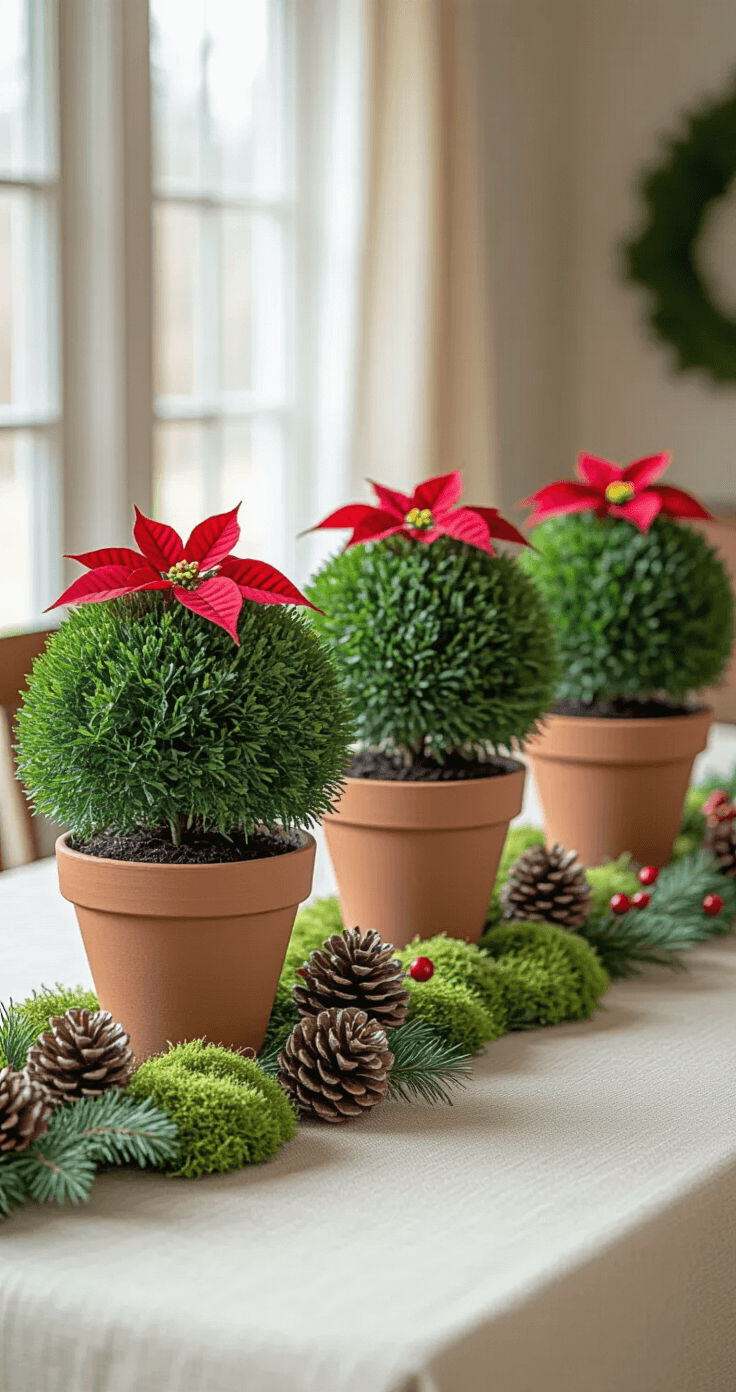
Mini Topiary Trio for When You Want Maximum Table Impact
Some grocery stores sell poinsettias trained into little tree shapes. They look like lollipops made of flowers.
I bought three of these for $8 each and felt immediately fancy.
The setup:
Plant each one in a matching small pot—I used simple terracotta because I’m not trying to win design awards. Cover the soil with fresh green moss (you can buy this dried at craft stores). Line them up down the center of your table with even spacing.
Space some frosted pinecones and berry sprigs between them.
The repetition creates rhythm. The spacing creates breathing room. Together they look like you actually planned something instead of panic-decorating an hour before guests arrived.

The Teacup Candle Situation That Uses Your Random Dishes
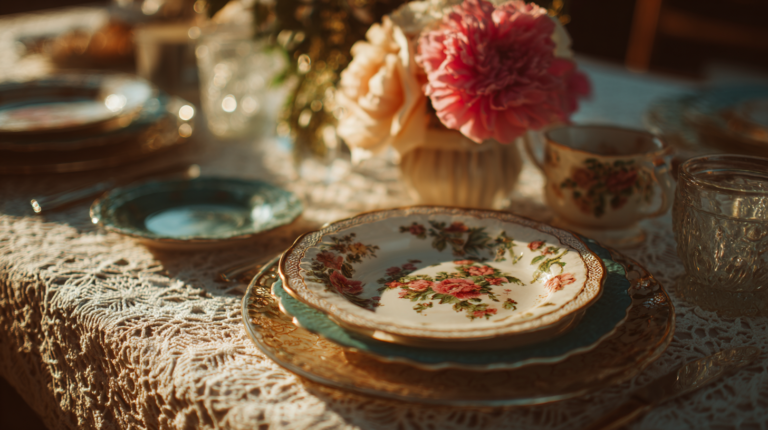
I have approximately 47 mismatched teacups that I’ve collected from thrift stores. Finally found a use for them.
What makes this work:
Grab your oddball teacups, mugs, or small bowls. Stick a small chunk of floral foam in the bottom of each. Push a candle into the center—I used battery-operated LED pillar candles because I’m



[…] dining table deserves more than a sad centerpiece and a […]
[…] secret lies in creating layers of light that work together to transform your space into something […]