

This post may contain affiliate links. Please see my disclosure policy for details.
Transform Your Front Porch with These Stunning Tile Patterns (And Why I’ll Never Go Back to Plain Concrete)
Porch tile patterns changed everything for me—and I’m not being dramatic.
Two summers ago, I stood on my sad concrete stoop with a lukewarm cup of coffee, staring at my neighbor’s gorgeous herringbone-tiled entryway. I was jealous. My porch looked like a parking lot. Theirs looked like it belonged in a magazine.
Here’s what nobody tells you: the floor of your porch does more heavy lifting than any wreath, bench, or potted fern ever will. Get the tile pattern right, and suddenly your entire home feels intentional, elevated, welcoming. Get it wrong (or skip it entirely), and you’re fighting an uphill battle every time you try to make your entrance look decent.
I’ve spent the last two years photographing, styling, and obsessing over porch tile patterns for my own home and for content creation. I’ve tested layouts, cursed grout lines, and learned which patterns photograph like a dream and which ones just confuse the eye.
Let me walk you through everything that actually matters.
Why Your Porch Floor Deserves More Attention Than Your Front Door
I used to think the door color was everything. Paint it a bold navy or a cheery red, add a seasonal wreath, done.
Wrong.
The floor is the foundation—literally and visually—of your entire porch vignette. When you nail the tile pattern, everything else falls into place. Your outdoor doormat suddenly looks curated instead of random. Your planters feel like they belong. Even a simple rocking chair looks like a design choice instead of an afterthought.
Here’s what a great porch tile pattern does:
- Creates instant visual interest even when you haven’t decorated seasonally
- Defines the space and makes even a small stoop feel intentional
- Adds perceived value to your home (curb appeal is real, and buyers notice floors)
- Photographs beautifully if you’re into content creation or just want a killer holiday card backdrop
- Sets the style direction for everything else you add
The Patterns That Actually Work (And the Ones That Don’t)
Not all tile patterns are created equal, especially outdoors. Some look stunning in a design rendering and chaotic in real life. Others seem boring on paper but create the most elegant, timeless entries.
Herringbone: The Overachiever
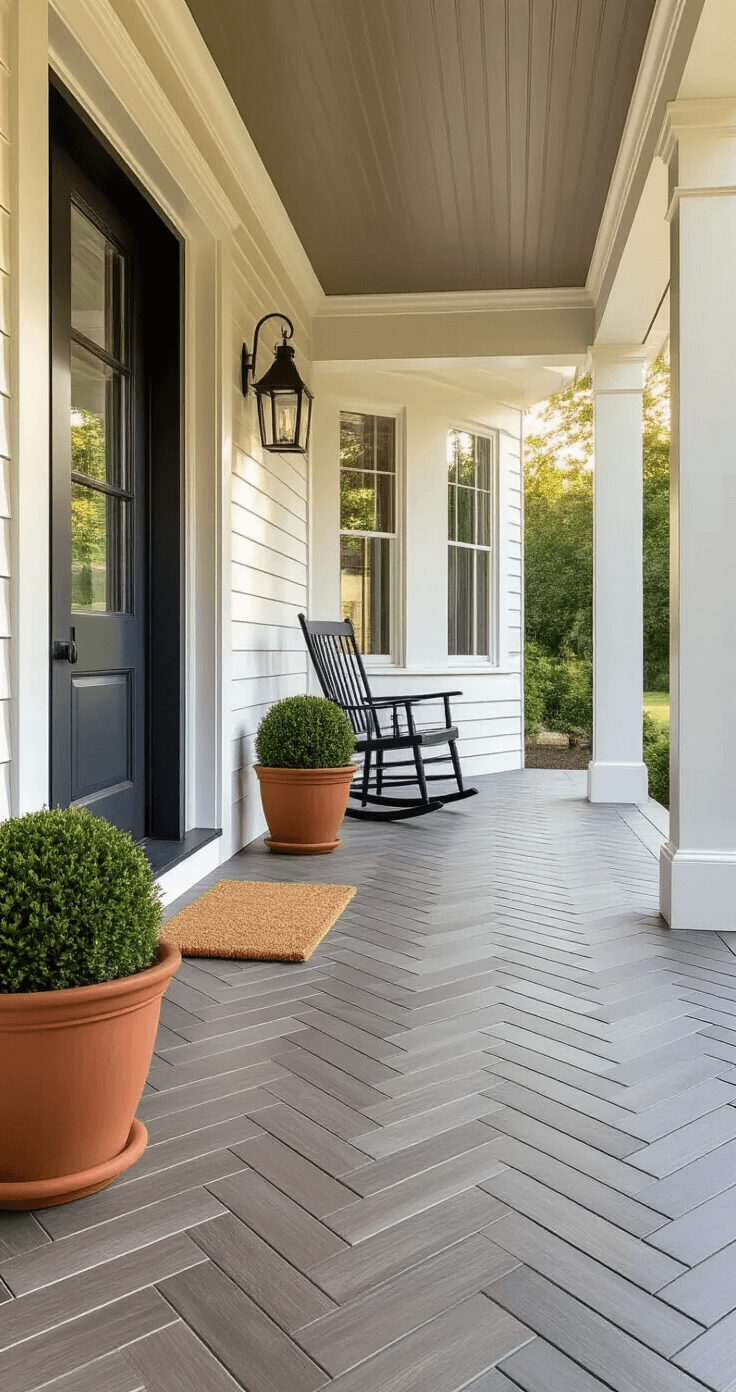
This is the pattern I see everywhere right now, and for good reason. Herringbone creates movement and sophistication without feeling fussy.
It works with:
- Wood-look porcelain tiles in soft grays, weathered browns, or driftwood tones
- Stone-effect tiles for a more formal, European look
- Small to medium porches where you want maximum impact
The zigzag layout draws your eye straight to the door. It’s genius for narrow stoops because it makes the space feel wider than it is.
Save this article
Enter your email and we'll send it straight to your inbox.
Pro tip from my own mistakes: Keep the herringbone running toward your door, not parallel to it. I laid out a test pattern the wrong way once and it made my porch look like a hallway to nowhere.
Chevron: Herringbone’s Bolder Cousin
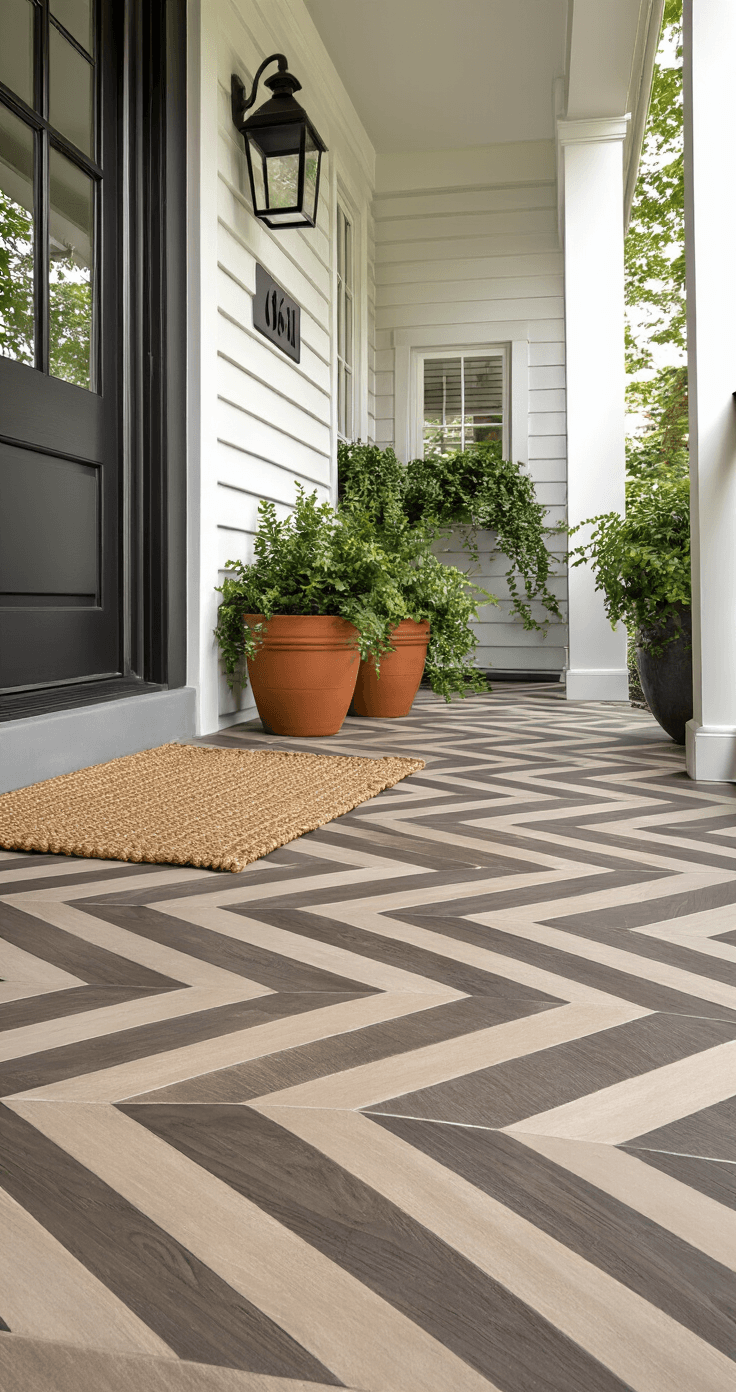
If herringbone feels too safe, go chevron. The V-shaped pattern is more dramatic, more modern, and slightly trickier to install (but you’re styling, not installing, so who cares).
Chevron works beautifully with:
- Distressed wood-look tiles that give that reclaimed-barn vibe
- Matte porcelain in neutral tones
- Larger porches where you have room to let the pattern breathe
I styled a shoot last fall with chevron wood-look tiles in a soft taupe, paired with a woven jute rug and terracotta pots. It photographed like an Anthropologie catalog.
Geometric and Hexagon: The Risk-Takers
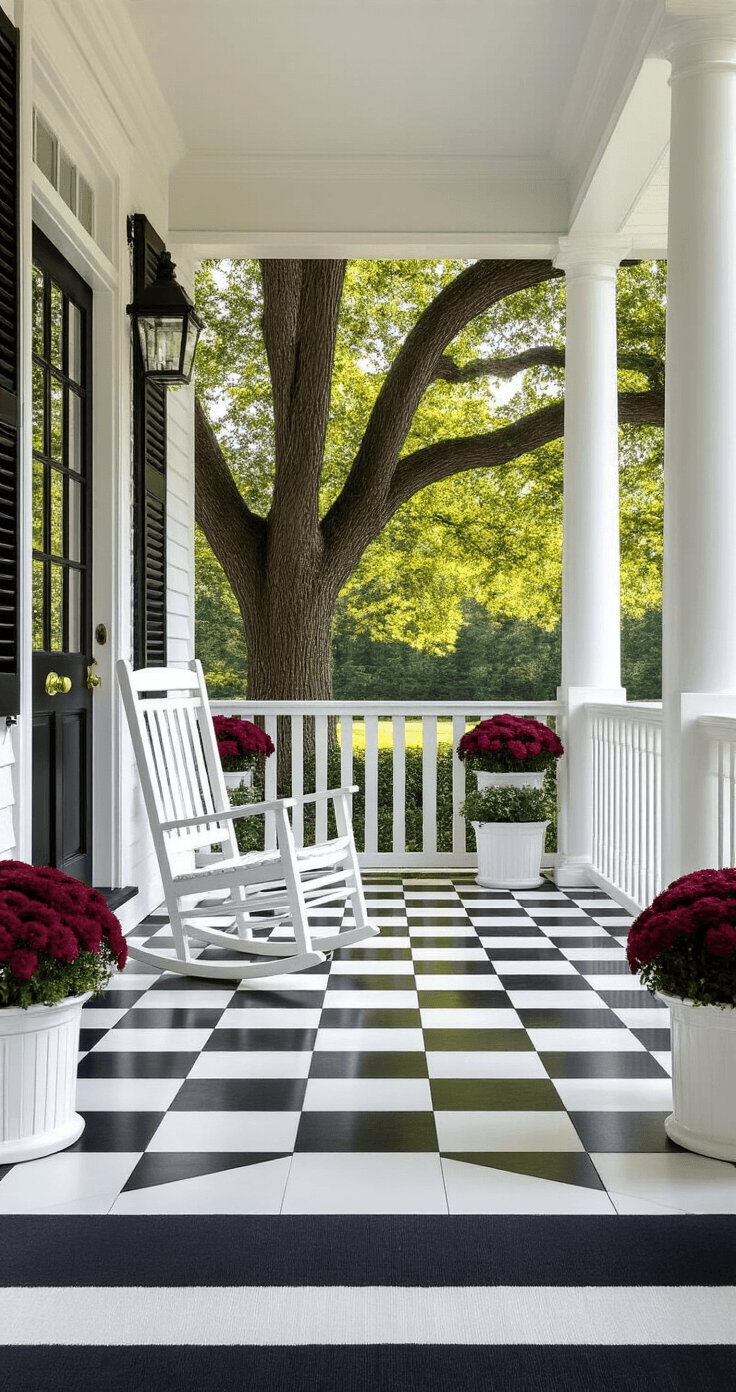
Hexagon tiles are having a moment. I’m talking marble-look hexagons, matte black-and-white hexagons, even oversized stone-look hexagons that feel modern farmhouse.
Why I love them:
- They feel current without being trendy
- The shape itself is visually interesting, so you don’t need a busy pattern within the tile
- They work for both traditional and contemporary homes
Why they’re tricky:
- If your porch has awkward dimensions, cutting hexagons to fit edges can look messy
- They need clean grout lines and precision, or the whole thing looks DIY-gone-wrong
Geometric patterns (think Moroccan-inspired or modern triangles) fall into the same category: stunning when done right, chaotic when not. Use them on small stoops or as a defined “landing zone” in front of the door, not edge-to-edge on a sprawling porch.
Checkerboard: Classic For a Reason
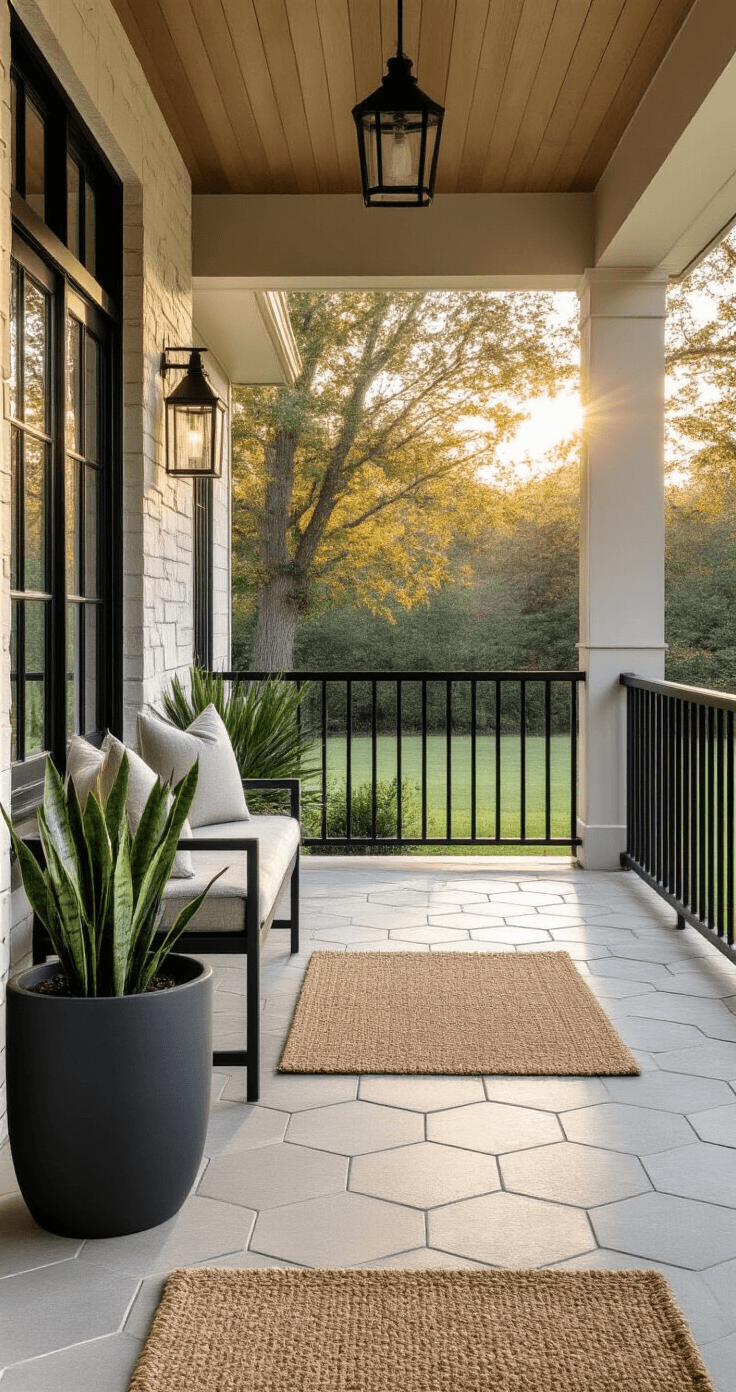
Black and white. Gray and white. Charcoal and cream.
Checkerboard is timeless, clean, and shockingly versatile. I’ve seen it work on colonial homes, modern builds, and even quirky bungalows.
Best uses:
- Traditional or vintage-style homes
- Small square or rectangular porches
- When you want a bold floor but plan to keep decor minimal and rotational
Checkerboard is easy to style around because it’s neutral despite being graphic. Throw down a striped outdoor runner, add a single statement plant, and you’re done.
<img alt
Keep this one for later
We'll email you the link so you can come back to it.


