

This post may contain affiliate links. Please see my disclosure policy for details.
Small toilet design focuses on compact fixtures that minimize space consumption while maintaining comfort and functionality, and trust me, after renovating three bathrooms smaller than most walk-in closets, I’ve learned every trick in the book.
Look, I get it. You’re standing in your shoebox-sized bathroom wondering how on earth you’ll fit a toilet without banging your knees every time you sit down. I’ve been there, measuring the same four square feet seventeen times, hoping the numbers would magically change.
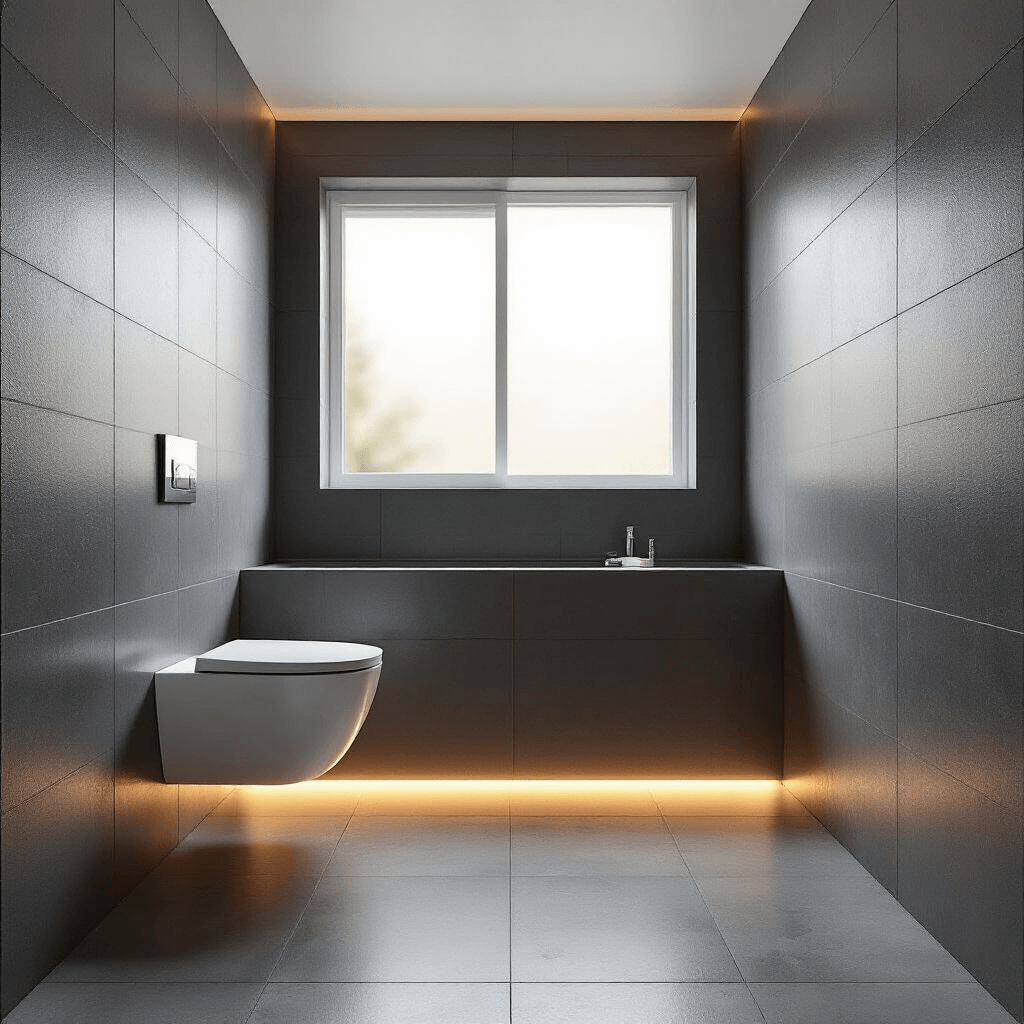
Why Your Bathroom Feels Like a Sardine Can (And What Actually Works)
Contents
Here’s what nobody tells you about small bathrooms: it’s not always about the actual size. It’s about what you cram into that space and how you arrange it.
I remember my first attempt at fixing my cramped downstairs toilet. I bought what looked like a “normal” toilet from the hardware store, wrestled it home, and realized it stuck out so far that the door wouldn’t close properly. Amateur hour.
That’s when I discovered the world of compact fixtures, and honestly, it changed everything.
The Real Space-Saving Champions You Need to Know About
Wall-Hung Toilets: The Floating Miracle
These bad boys literally hang off your wall like modern art, except actually useful.
The magic happens because the cistern hides behind the wall, and suddenly you’ve got all this floor space you didn’t know existed. I installed a wall-hung toilet in my en-suite, and the visual difference was staggering.
The room felt bigger immediately. Cleaning became ridiculously easy because I could mop right underneath.
But here’s the catch: you need decent wall construction and possibly a plumber who actually knows what they’re doing. I learned this the hard way when my first quote came back and I nearly fell over.
Short-Projection Toilets: The Compromise King
These are designed for people like us who need every centimeter to count. They don’t stick out as far from the wall, simple as that.
I measured mine at about 50 cm from wall to front edge, compared to the standard 70 cm monster I’d almost bought. That extra 20 cm meant I could actually stretch my legs when sitting down. Revolutionary, right?
Back-to-Wall Toilets: The Middle Ground
Think of these as the sensible option when wall-hung feels too adventurous.
The pan sits flush against the wall with the cistern tucked away, but you don’t need the same heavy-duty wall reinforcement. Plus, if something goes wrong (and things always go wrong), your plumber won’t charge you a kidney to fix it.
I chose a back-to-wall toilet for my main bathroom, and it’s been brilliant.

Other Clever Options Worth Considering:
- Corner toilets – Perfect for those weird triangular spaces that seem to exist in older homes
- Slimline models – Narrower width without compromising on the important bits
- Close-coupled toilets – The pan and cistern become one unit, creating a tidier silhouette
The Numbers That Actually Matter (Without the Boring Math)
Here’s what you need to tattoo on your brain: compact toilets measure less than 52 cm from the wall.
Standard toilets sprawl out at 60-70 cm deep and 40-50 cm wide. Compact versions shrink these dimensions significantly.
I’ve tested several models:
- The Acro Compact sits at 49.5 cm deep and just 36 cm wide
- The Essence C Compact measures 51 cm deep and 34 cm wide
Round-front bowls give you lengths between 25⅝” to 29¾”, which sounds technical but basically means they’re proper compact.
Spacing Rules You Can’t Ignore:
Listen, building codes exist for reasons beyond annoying you.
- 70 cm width clearance – So you’re not sitting sideways like you’re on a bus
- 120 cm length clearance – Your knees will thank you
- 20 cm gap from the wall – Minimum breathing room
- 15 cm spacing from other fixtures – Unless you enjoy intimate relationships with your sink
I ignored these measurements once. Once. My elbow still remembers the towel rail every time I reached for toilet paper.

Features That Make Small Toilets Feel Less Like Punishment
Rimless Bowl Technology
This sounds fancy, but it’s genuinely useful.
Traditional toilets have that rim around the top where all manner of disgusting things hide. Rimless designs eliminate that hiding spot entirely.
I installed a rimless toilet in my downstairs loo, and cleaning time dropped by half. No more scrubbing blind spots with a tiny brush while questioning my life choices.
The flush works differently too, creating this powerful circulation that actually cleans the bowl properly.
Soft-Close Seats
Anyone who’s been startled awake at 3 AM by a toilet seat slamming down understands this feature’s value.
They’re standard on most modern toilets now, but check anyway. Nothing says “budget fixture” quite like a seat that crashes down like a guillotine.
Dual Flush Systems
Two buttons, two flush strengths.
One for lighter loads, one for when you need serious water power. These systems genuinely reduce water consumption, which means lower bills and feeling slightly less guilty about your environmental impact.
Most dual flush toilets work brilliantly, though I’ve encountered a few where the buttons are so confusing I felt like I was defusing a bomb.
Minimalist Aesthetics That Aren’t Boring
Small spaces demand clean lines.
Fussy details and decorative nonsense make cramped rooms feel claustrophobic. Wall-hung and back-to-wall designs work because they reveal more floor, which tricks your brain into perceiving more space.
I went full minimalist in my renovation, choosing a modern compact toilet with zero decorative elements. White ceramic, simple lines, nothing fancy.
The room feels twice as large now, despite being exactly the same size.
[…] a small speaker in the bathroom for soothing tunes or […]