

This post may contain affiliate links. Please see my disclosure policy for details.
Spring Front Porch Decor: Transform Your Entryway Into a Seasonal Welcome
Contents
- Spring Front Porch Decor: Transform Your Entryway Into a Seasonal Welcome
- Why Your Front Porch Actually Matters (More Than You Think)
- Start With Plants (Because Everything Else Is Just Background Noise)
- The Foolproof Flower List
- Container Strategy That Actually Works
- Build Around One Show-Stopping Focal Point
- The Wreath Situation (Keep It Simple)
- Door Mats: The Quickest Win You’ll Get
Spring front porch decor is breathing new life into your home’s entrance, and I’m about to show you exactly how to make it happen without breaking the bank or losing your mind in the process.
Listen, I get it. You walk past your front porch every single day thinking, “This looks depressing.” Winter’s stripped away whatever charm you had going on, and now you’re staring at a sad, empty space that screams “I’ve given up.”
But here’s the thing—spring decorating doesn’t have to be some Pinterest-perfect nightmare that requires a design degree.
Why Your Front Porch Actually Matters (More Than You Think)
Your porch is the first thing anyone sees. Not just guests—you, every time you come home from work, grab the mail, or let the dog out.
A well-decorated porch does three things:
- Boosts your mood when you arrive home
- Makes your neighbors jealous (let’s be honest)
- Increases perceived home value if you’re thinking of selling
I learned this the hard way after my sister visited last spring and asked if I was “okay” based solely on my barren porch. That stung.
Start With Plants (Because Everything Else Is Just Background Noise)
Plants and flowers are the backbone of any spring porch setup.
Last year, I killed four potted plants before figuring out what actually works. Here’s what survived my neglect:
The Foolproof Flower List
Easy Bloomers:
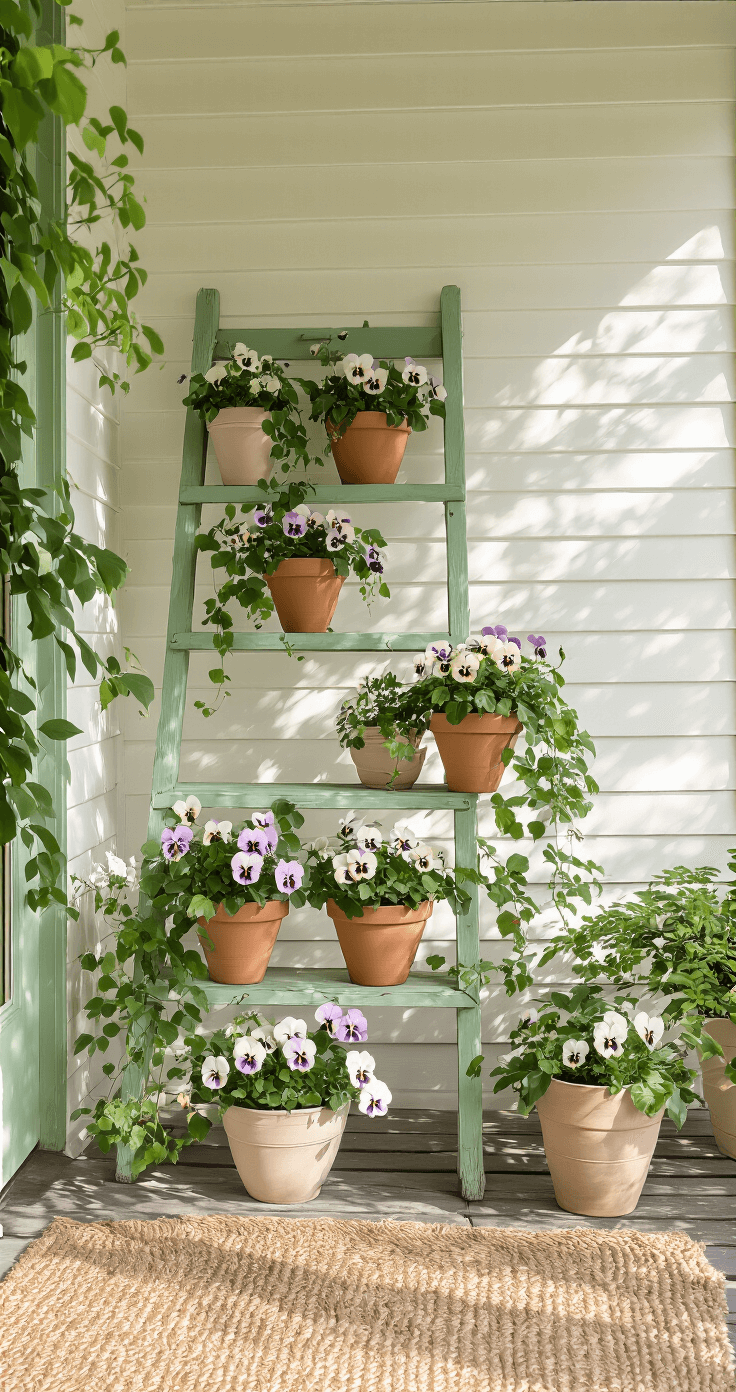
- Pansies – These things are indestructible and come in every color imaginable
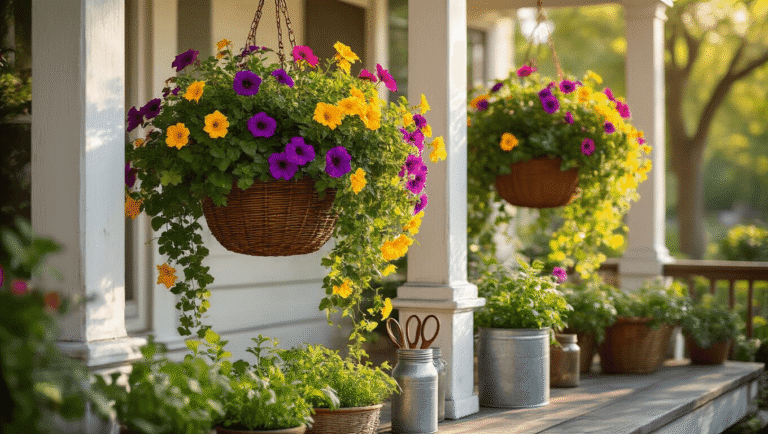
- Petunias – Low maintenance and they explode with blooms
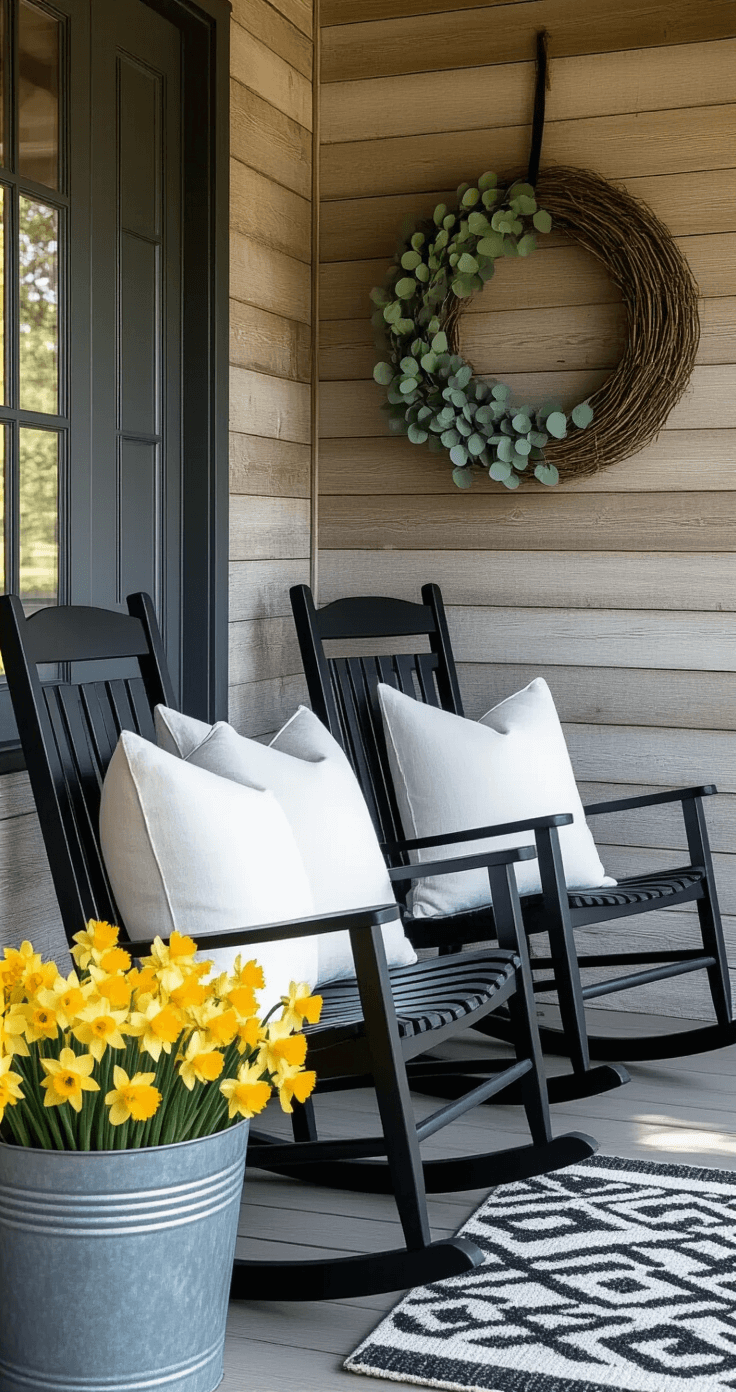
- Daffodils – Plant bulbs in decorative ceramic planters for instant spring vibes
- Violas – Like pansies’ cuter, smaller cousin
The Greenery Anchors:
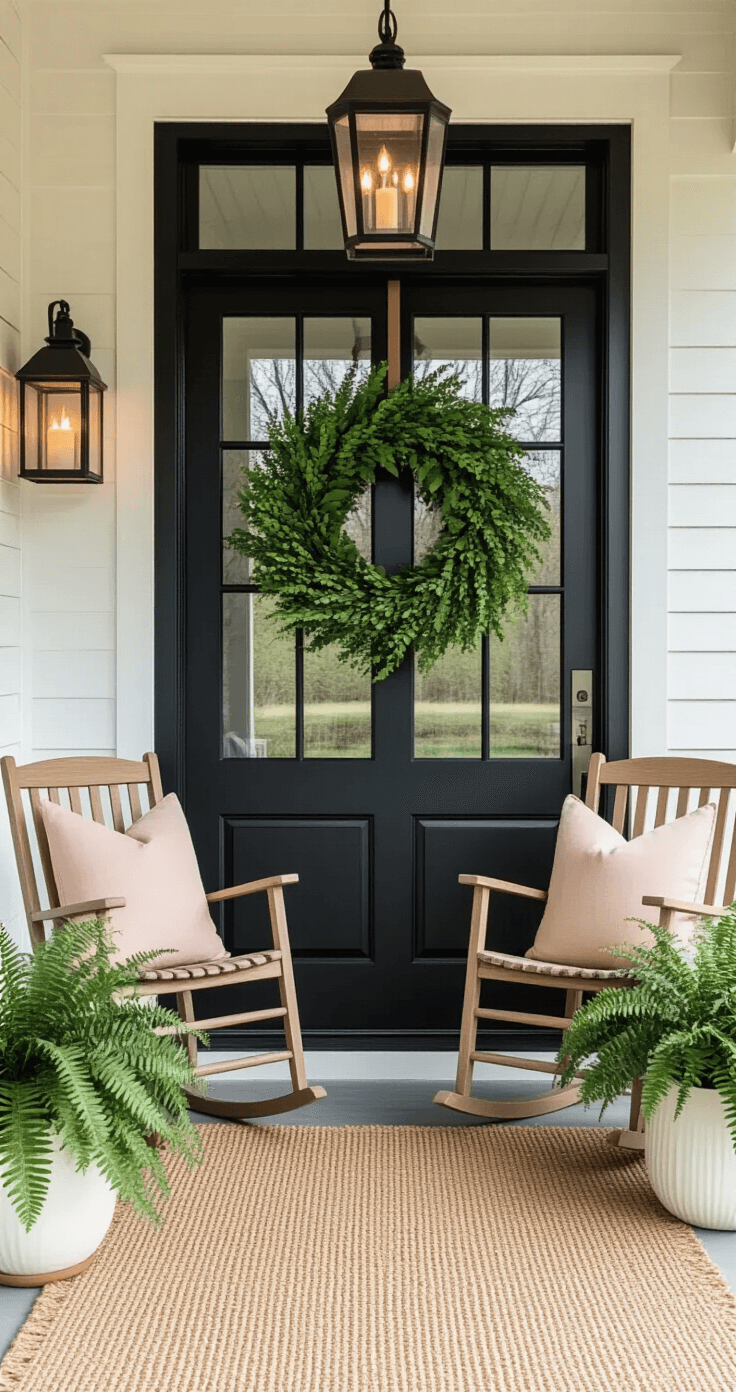
- Ferns – Perfect for shaded porches, impossible to mess up
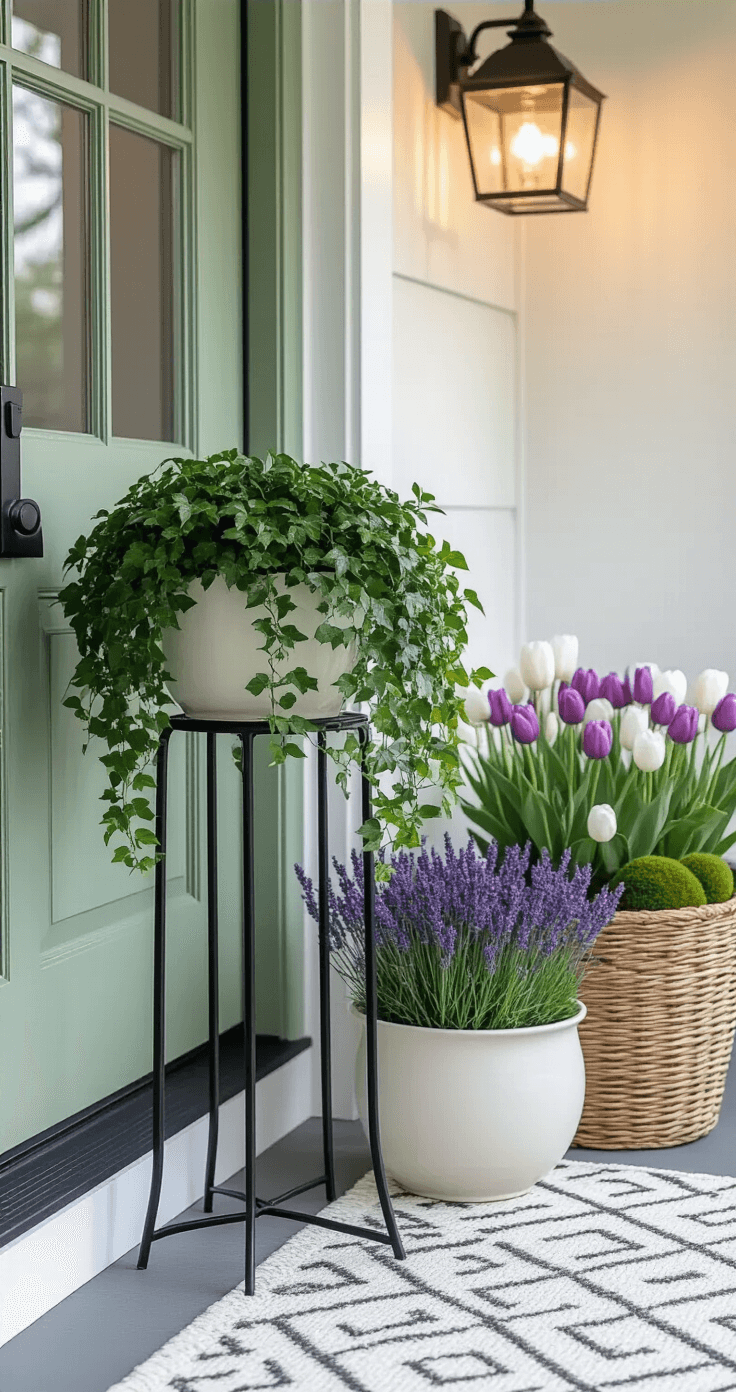
- English Ivy – Trails beautifully from hanging baskets
- Boxwood – Adds structure when flowers get unruly
Container Strategy That Actually Works
Forget matching everything perfectly. That’s design magazine nonsense.
Mix your containers:
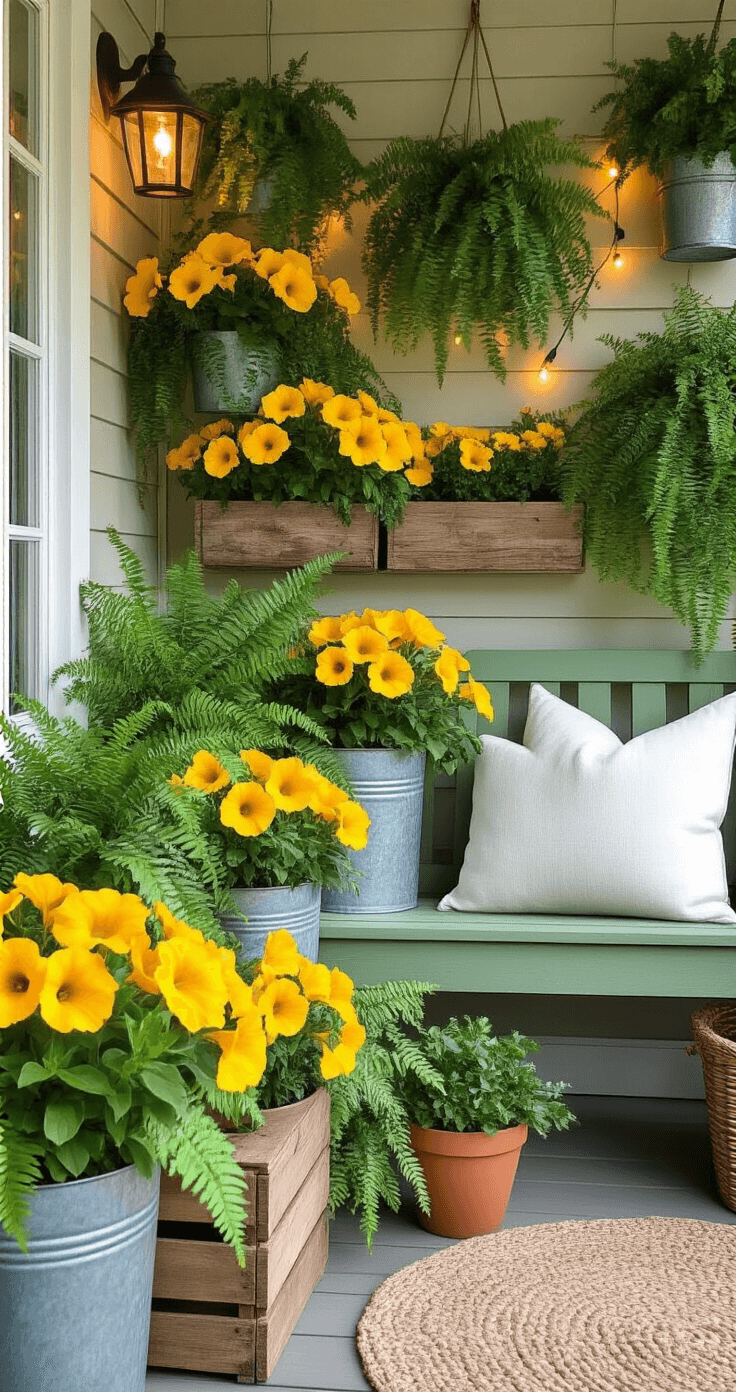
- Old galvanized buckets from flea markets
- Weathered wooden crates stacked asymmetrically
- Terra cotta pots in varying sizes
- One statement piece (like a large barrel planter) filled with bright blooms
I group mine in odd numbers—three pots here, five there. Even numbers look too formal, like you’re trying too hard.
Pro tip: Drill drainage holes if they don’t have them, or watch your plants drown after one good rainstorm. (Yes, I learned this by killing a $40 hydrangea.)
Build Around One Show-Stopping Focal Point
Here’s where most people mess up—they buy seventeen small decorations and create visual chaos.
Pick ONE larger piece that makes people stop:
- A vintage wooden bench painted in a bold color
- An oversized spring wreath (I’m talking 24+ inches)
- A tall plant stand with cascading flowers
- A refurbished piece of furniture (old ladder, potting table, whatever)
Everything else supports this piece.
I use a beat-up wooden ladder I found at a yard sale for $5. Painted it sage green, hung small pots on the rungs, and suddenly I had a “designer look” for less than twenty bucks.
The Wreath Situation (Keep It Simple)
Door wreaths are non-negotiable for spring.
But please, for the love of good taste, skip the ones with forty different elements hot-glued together.
What works:
- Simple grapevine base with fresh or faux greenery
- Single flower type in abundance (all tulips or all peonies)
- Minimalist eucalyptus wreath
- Anything that doesn’t scream “I bought this at a craft fair in 2003”
I make mine with a basic grapevine base and whatever’s blooming in my yard. Takes fifteen minutes, costs nothing, and people think I’m crafty.
Hang it with a decorative wreath hanger that complements your door hardware.
Door Mats: The Quickest Win You’ll Get
Swap your door mat—it’s literally the easiest update that makes the biggest impact.
I change mine seasonally because it’s satisfying and takes thirty seconds.
Spring mat options:
- Simple “Hello Spring” text (not too cutesy)
- Botanical prints
- Geometric patterns in spring colors
- Your initial or house number (always classy)
Spend $25-40 on something that’ll last multiple seasons. The $10 ones fall apart after two rainstorms.


[…] to transform your porch into a nightmare come to life? Let’s make it […]