This post may contain affiliate links. Please see my disclosure policy for details.
How I Transform My Fireplace Mantel Every Spring (And Why You’ll Want to Copy These Ideas)
Contents
Spring mantel decor saved me from staring at the same tired Christmas garland well into March last year.
I kept telling myself I’d deal with it “tomorrow,” until my sister walked in and asked if I was celebrating Christmas in April.
That lit a fire under me—pun absolutely intended.
Now I’ve cracked the code on creating a mantel that actually makes me smile every time I walk past it, and I’m spilling every detail.
Why Your Mantel Feels Like It’s Missing Something (And What Actually Works)
Here’s what I learned the hard way: throwing random pretty things on your mantel creates visual chaos, not charm.
You need a system.
I’ve tried the “Pinterest dump” approach where I bought everything that looked cute online.
My mantel looked like a yard sale exploded on it.
The game-changer? Starting with one anchor piece and building around it like you’re creating layers in a really beautiful cake.
The Anchor Piece That Changes Everything
Your mantel needs a heavyweight champion—something substantial that grounds the entire display.
I’m talking about:
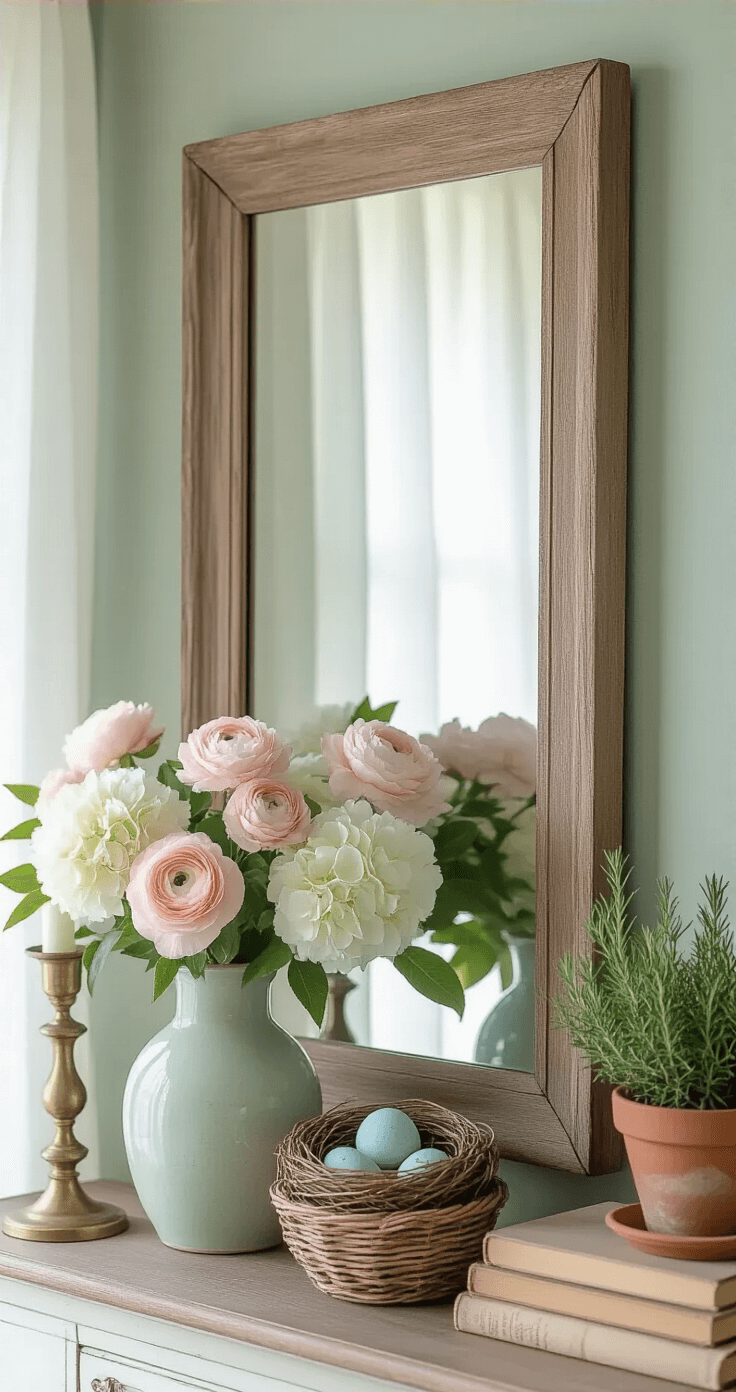
- A large mirror (my go-to because it bounces light around the room)
- Oversized framed artwork that reflects spring vibes
- A statement spring wreath hung dead center
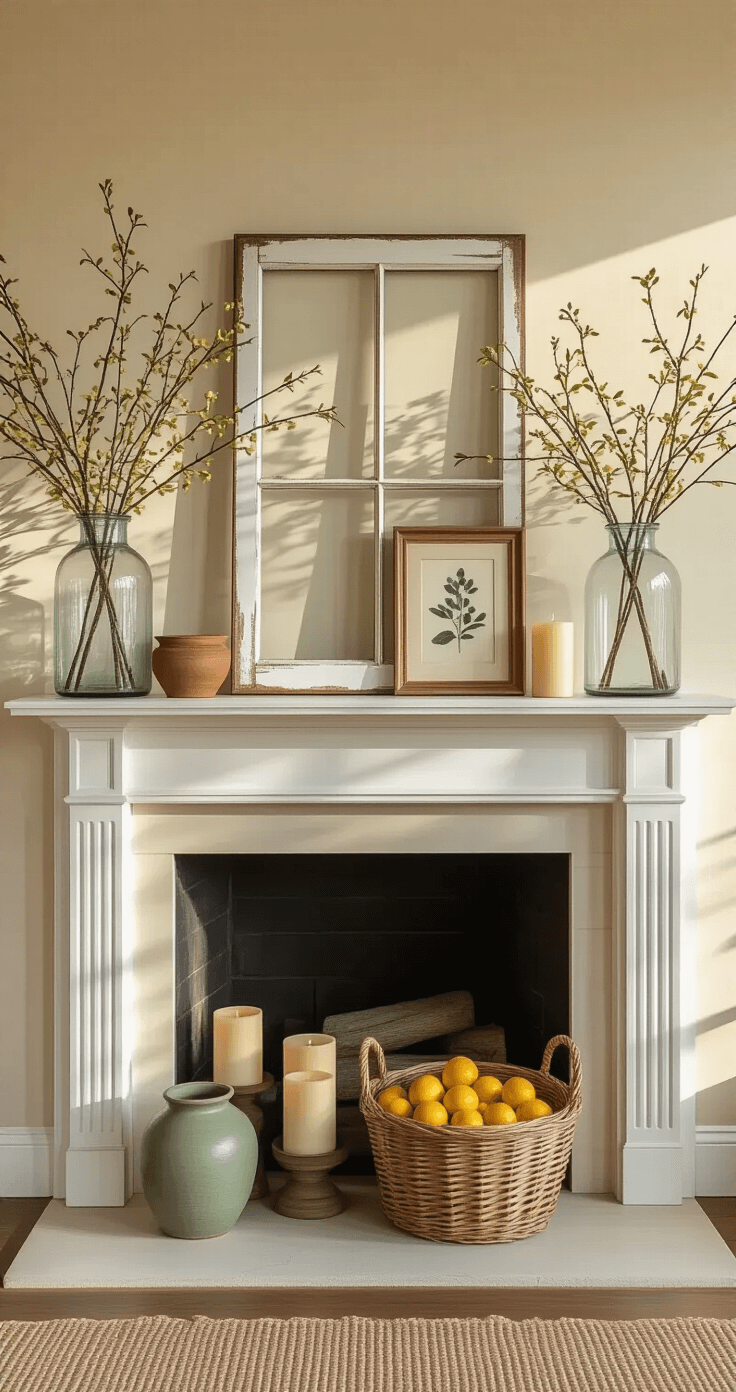
- A vintage window frame for that farmhouse touch everyone’s obsessed with
This anchor draws eyes upward and balances out the fireplace opening below.
Without it, your mantel feels like it’s floating in space.
I use a large rustic mirror propped against the wall, and it’s become my secret weapon for making the room feel twice as big.
Fresh Flowers vs. Fake Flowers (The Truth Nobody Wants to Hear)
Real flowers die.
There, I said it.
I adore fresh peonies and ranunculus—they’re absolutely gorgeous for about five days before they start looking like they survived a natural disaster.
Here’s my compromise: I use a mix.
Fresh flowers when I’m hosting or feeling fancy, and high-quality artificial spring flower arrangements the other 95% of the time.
The Best Spring Flowers for Different Vibes
Early spring (subtle and sweet):
- Peonies
- Ranunculus
- Hydrangeas in soft whites and pale pinks
Late spring (bold and confident):
- Tulips in bright yellows and reds
- Anemones with their dramatic black centers
- Dahlias for texture overload
I rotate these through the season so my mantel doesn’t look stuck in March when it’s actually May.
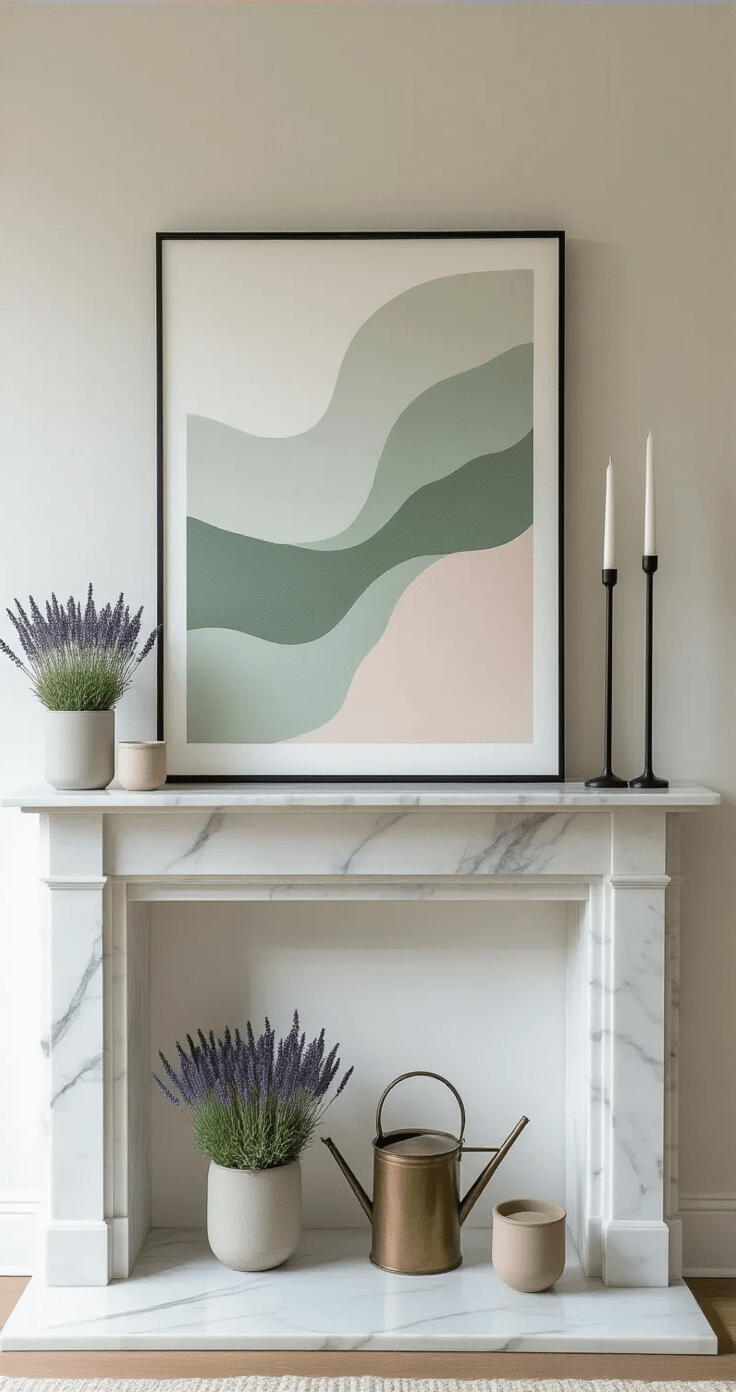
The Height Trick That Makes Everything Look Professional
This single tip transformed my mantel from “meh” to “wait, did you hire someone?
Create a mountain range, not a flat line.
Place your tallest pieces at the ends—think tall glass vases or candlesticks.
Work your way toward shorter items in the middle.
Your eye naturally follows this up-and-down movement, making the display feel dynamic instead of boring.
I learned this from a hotel lobby in Charleston, and I’ve stolen it shamelessly ever since.
Natural Elements That Cost Nothing (And Look Expensive)
Gordon Ramsay would approve of this approach—use what’s fresh, local, and in season.
I raid my backyard for:
- Branches from flowering trees (cherry blossom and forsythia are chef’s kiss)
- Moss from the shady side of my yard (free is my favorite price)
- Interesting twigs that add height without blocking the view
Then I supplement with:
- Bird nests with decorative eggs tucked inside
- Potted herbs like rosemary or lavender
- Bowls of fresh lemons and limes for that citrus pop
These elements add authenticity that fake stuff just can’t match.
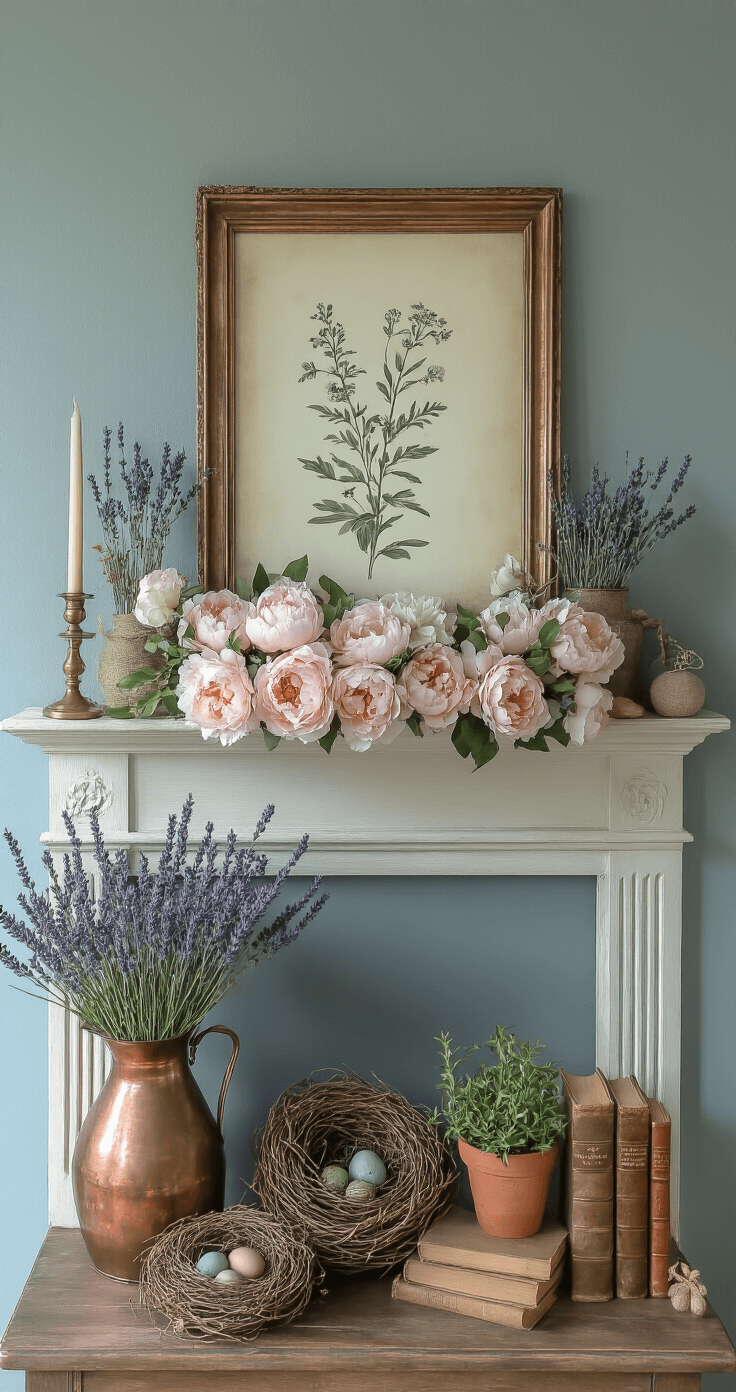
Color Schemes That Don’t Look Like Easter Threw Up
I love pastels, but there’s a fine line between “fresh spring morning” and “kindergarten classroom.”
My foolproof color strategy:
Start with your flowers and let them dictate everything else.
If you’ve got pink ranunculus, pull in blush picture frames, cream candles, and soft gray accents.
The colors should whisper to each other, not shout.
Spring’s natural palette works because it’s simple:
- Vibrant greens (the hero of the season)
- Soft pastels (used as accents, not the main event)
- Crisp whites (to keep things fresh, not fussy)
- Pops of yellow (because sunshine is non-negotiable)
I also throw in unexpected neutrals like terracotta and warm wood tones so the whole thing doesn’t float away into Pastel Land.
Texture Matters More Than You Think
Smooth glass vases next to rough ceramic pots.
Shiny candlesticks beside woven baskets.
This contrast creates visual interest that keeps people looking.
I learned this from a designer friend who said, “If everything’s smooth, nothing’s interesting.”
She was annoyingly right.
I now intentionally add woven wicker baskets with textured ceramics and distressed wood pieces.
The mix of materials makes the display feel collected over time, not bought in one panicked Target run.