

This post may contain affiliate links. Please see my disclosure policy for details.
Teacher Desk Organization: Strategies, Tools, and Tips
The teacher desk that felt most organized had a clear workspace, drawer organizers, and storage for supplies. Teacher desk organization is about creating a functional workspace. The key is using organizers that fit the desk and keeping only essentials on the surface.
Trust me, I’ve been there. My desk used to look like a tornado hit a stationery store. But fear not! I’ve cracked the code to desk nirvana, and I’m here to spill the beans.
First things first, let’s get real about the time investment:
- Initial setup: 20-60 minutes (depending on how much junk you’ve accumulated)
- Daily upkeep: A mere 5-10 minutes (I promise, it’s worth it!)
Now, before you start hyperventilating about the cost, breathe easy. You can transform your desk for as little as $15-$75. That’s less than a fancy dinner out!
Ready to dive in? Let’s do this!

🏠 Steal This Look
- Paint Color: Sherwin-Williams Agreeable Gray SW 7029
- Furniture: L-shaped or rectangular teacher desk with deep drawers, mobile filing cabinet with wheels, open shelving unit (36-48 inches wide) for resource organization
- Lighting: Adjustable LED desk lamp with warm color temperature (3000K) and adjustable arm
- Materials: Wood or laminate desktop surface, metal or plastic drawer organizers, fabric file sorters, cork or whiteboard wall panels
A teacher’s desk is mission control for classroom management, grading, and planning—chaos here ripples into classroom chaos. Creating a streamlined, organized workspace isn’t just about aesthetics; it’s reclaiming mental energy and modeling productivity for your students.
The Holy Grail of Teacher Desk Organization
1. Give everything a home
This isn’t just cute advice – it’s your new mantra. Every pen, paper clip, and Post-it note needs a designated spot. No more “I’ll just leave this here for now” excuses!
2. Declutter daily
Spend 3-5 minutes at the end of each day putting things back where they belong. It’s like brushing your teeth – a little effort goes a long way.
3. Downsize ruthlessly
Be honest: do you really need 17 mugs and that stack of papers from 2015? Channel your inner *Marie Kondo* and let it go!

4. Utilize vertical space
Your desk isn’t just a flat surface. Think up! Use the sides, add some hooks, get creative.
5. Personalize (but don’t go overboard)
A few photos or a motivational quote can make your space feel like home. Just don’t turn it into a shrine to your cat.

🏠 Steal This Look
- Paint Color: Benjamin Moore Simply White OC-17
- Furniture: L-shaped teacher desk with built-in storage cubbies, adjustable desk organizer with multiple compartments, wall-mounted filing system, and a ergonomic office chair
- Lighting: Adjustable task lamp with warm LED bulbs (3000K color temperature) to reduce eye strain during grading
- Materials: Natural wood desk surface, metal and wood organizational boxes, canvas storage bins, cork or fabric bulletin board for quick reference materials
Teachers deserve a workspace that feels intentional and calm, not chaotic. When your desk has a true home for everything—from grading pens to student work samples—you reclaim mental energy that was wasted searching and deciding where things go.
Essential Tools for Desk Domination
- Organizer caddy: This is your new best friend. It keeps your daily essentials within arm’s reach.
- Drawer organizers: No more black holes where pens go to die!
- File organizers: Because loose papers are the enemy of sanity.
- Cord clips: Tame those wild electronic spaghetti monsters.
- To-do list pad: Write it down, get it done, feel like a boss.
Save this article
Enter your email and we'll send it straight to your inbox.
🌟 Steal This Look
- Paint Color: Farrow & Ball Calluna 270
- Furniture: Minimalist teacher desk with built-in shelving and cable management cutouts
- Lighting: Task lamp with adjustable arm and warm white LED bulb (3000K)
- Materials: Light wood or light gray laminate desk surface, matte metal organizer caddy, felt-lined drawer dividers
A well-organized teacher desk isn’t about perfection; it’s about reclaiming mental space during a demanding day. When your supplies are streamlined and visible, you teach from a calmer, more intentional place.
Budget-Friendly Hacks
- Repurpose containers: That empty jam jar? Perfect for pencils!
- DIY organizers: Get crafty with some cardboard and washi tape.
- Use your phone: Snap pics of important papers instead of hoarding them.
The Great Desk Setup
1. Clear the decks
Remove everything. Yes, everything. Wipe it down. This is your blank canvas.
2. Group like items
Pens with pens, papers with papers. You get the idea.
3. Assign homes
Every group gets a spot. Label it if you’re feeling fancy.

4. Prioritize placement
Keep frequently used items close, banish the rest to drawers.
5. Maintain the magic
End each day with a quick tidy-up. Future you will be so grateful.

🏠 Steal This Look
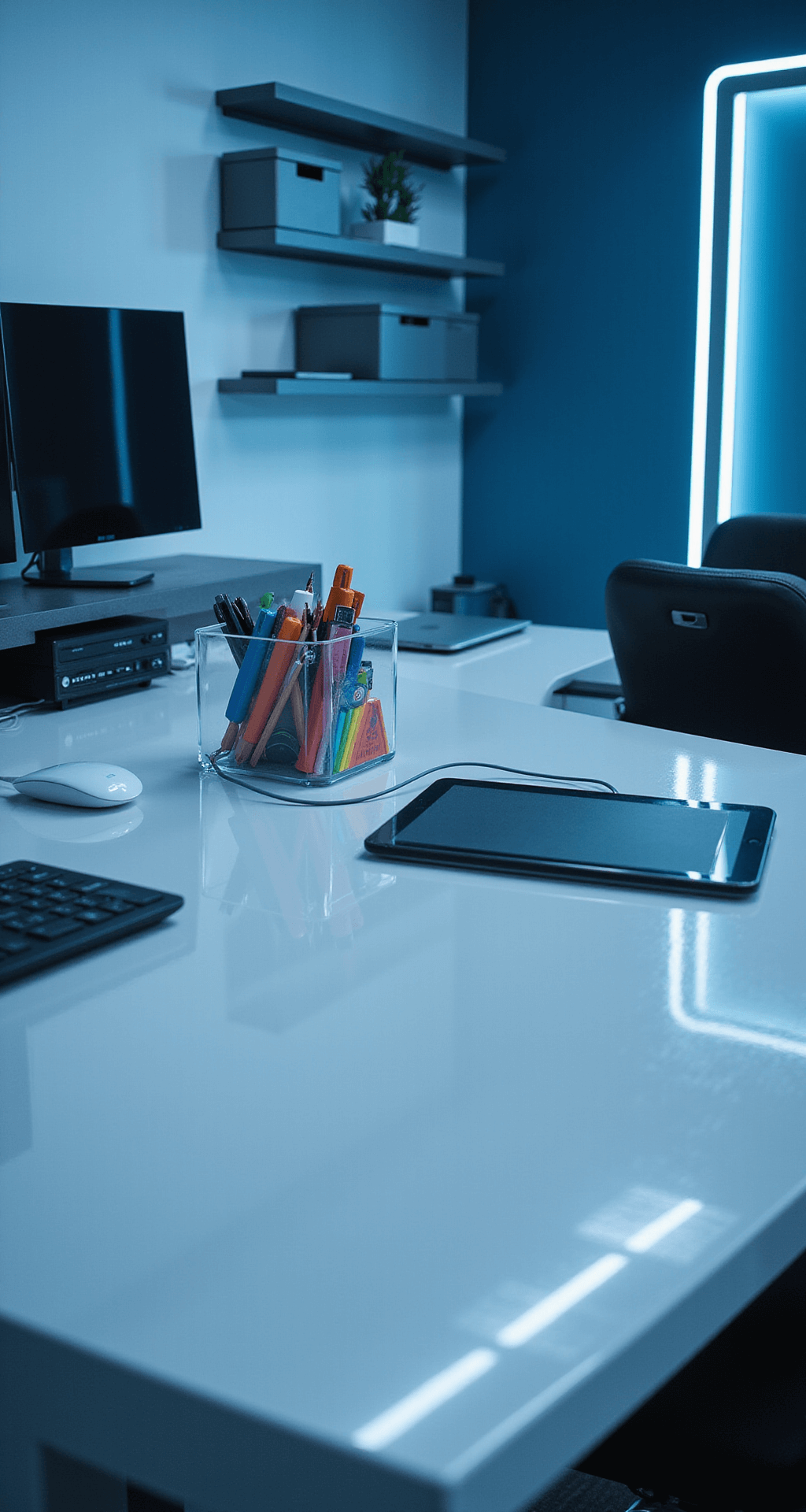
- Paint Color: Valspar Woodlawn Colonial Blue 5009-3 — a calming, focused blue-gray that supports concentration without being cold, ideal for teacher workspace productivity
- Furniture: L-shaped teacher desk with built-in hutch storage, ergonomic task chair with lumbar support, vertical file organizer cabinet, desktop drawer dividers and compartment organizers
- Lighting: Adjustable LED desk lamp with warm 3000K color temperature and glare reduction, positioned to left of dominant hand to eliminate shadows during grading
- Materials: Natural wood desk surface for durability, soft-close drawer hardware to reduce noise, matte finish surfaces to reduce glare, fabric-lined drawer organizers to protect papers
Teachers manage papers, grading rubrics, student work, and planning materials simultaneously — this system respects that reality by creating micro-zones so you’re not hunting for a red pen while holding three assignments. The daily tidy-up ritual (step 5) becomes a mental reset that separates work from personal time.
Avoiding Common Pitfalls
- Hoarding syndrome: If you haven’t used it in a month, it doesn’t belong on your desk.
- The “I’ll deal with it later” trap: No, you won’t. Deal with it now.
- Ignoring the daily reset: Those 5 minutes will save you hours of frustration later.
- Cord chaos: Use those clips! Your sanity (and your IT department) will thank you.
- Paper avalanche: File it, scan it, or toss it. No in-between!
Remember, a tidy desk isn’t just about looking good (although that’s a nice bonus). It’s about creating a space that supports your teaching and keeps you sane in the process.
So, are you ready to transform your desk from disaster zone to productivity paradise?
Trust me, once you go organized, you’ll never go back. Your students might even stop asking if a tornado hit your classroom!
Teacher desk organization works when the surface is clear and the supplies are organized. Use drawer organizers, a pen holder, and file trays. The desk should feel functional and efficient.
★ Steal This Look
- Paint Color: PPG Accessible Beige PPG1088-2 — a warm, neutral backdrop that reduces visual clutter and creates a calm teaching environment without competing with desk organization systems
- Furniture: Teacher desk with built-in drawers and compartments (like a traditional educator’s desk or modular storage unit), paired with a functional office chair with lumbar support for long grading sessions
- Lighting: Adjustable desk lamp with warm LED bulbs (3000K color temperature) to reduce eye strain during paperwork and create focused task lighting for organizing materials
- Materials: Natural wood desk surface for durability, matte finishes on storage to minimize visual overstimulation, soft-close drawer mechanisms to prevent noise in classroom setting
Teachers live in a unique organizational reality: papers multiply, student work stacks up, and ‘temporary’ piles become permanent fixtures. This section speaks directly to creating sustainable systems that work within the realities of classroom life, not Pinterest-perfect perfection.
Keep this one for later
We'll email you the link so you can come back to it.


[…] your teacher desk is more than just a place to pile papers. It’s your command center, your retreat, and […]