This post may contain affiliate links. Please see my disclosure policy for details.
How to Master Winter Barbecue Like a Pro (When Everyone Else Has Given Up)
Winter barbecue doesn’t mean packing away your grill until spring arrives.
I’ll be honest with you. The first time I tried grilling in January, I stood outside in my inadequate jacket, watching my grill struggle to hit 350°F while my toes went numb. I made every rookie mistake possible.
But here’s what nobody tells you: winter grilling isn’t just possible—it’s actually incredible once you know what you’re doing.
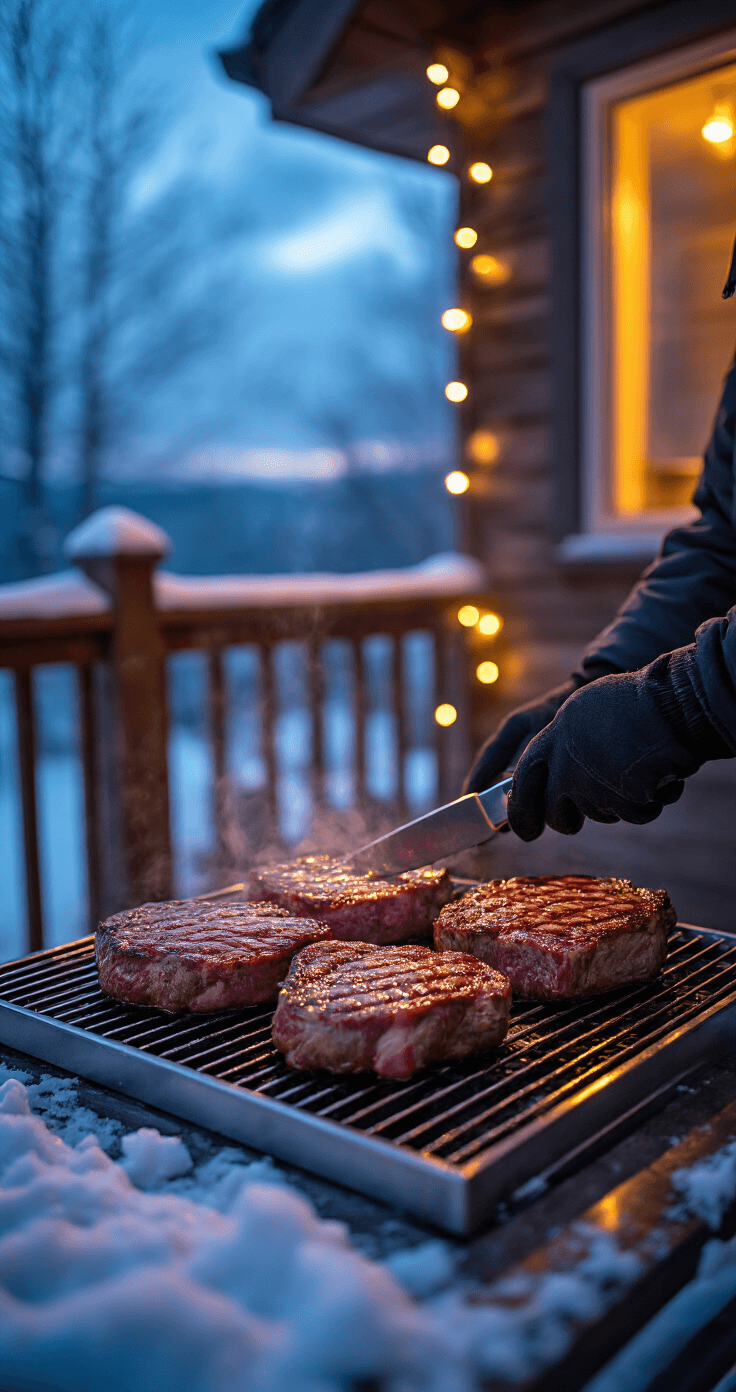
Why Your Grill Acts Weird When It’s Freezing
Ever noticed your grill takes forever to heat up in winter? That’s not your imagination. Cold air is denser and sucks heat away from your grill like a vacuum. Your poor grill is fighting a losing battle against physics, burning through fuel at twice the summer rate just to maintain temperature.
Here’s what actually happens:
- Preheating takes 2-3 times longer than warm weather (plan for 15-20 minutes instead of 5-10)
- Fuel consumption doubles or triples because your grill constantly compensates for heat loss
- Temperature swings become unpredictable every time wind hits your cooking chamber
- Metal components contract which can affect gas flow and seal quality
The other challenge nobody mentions? Snow drifts blocking your path to the grill at 6 PM when it’s already pitch black outside.
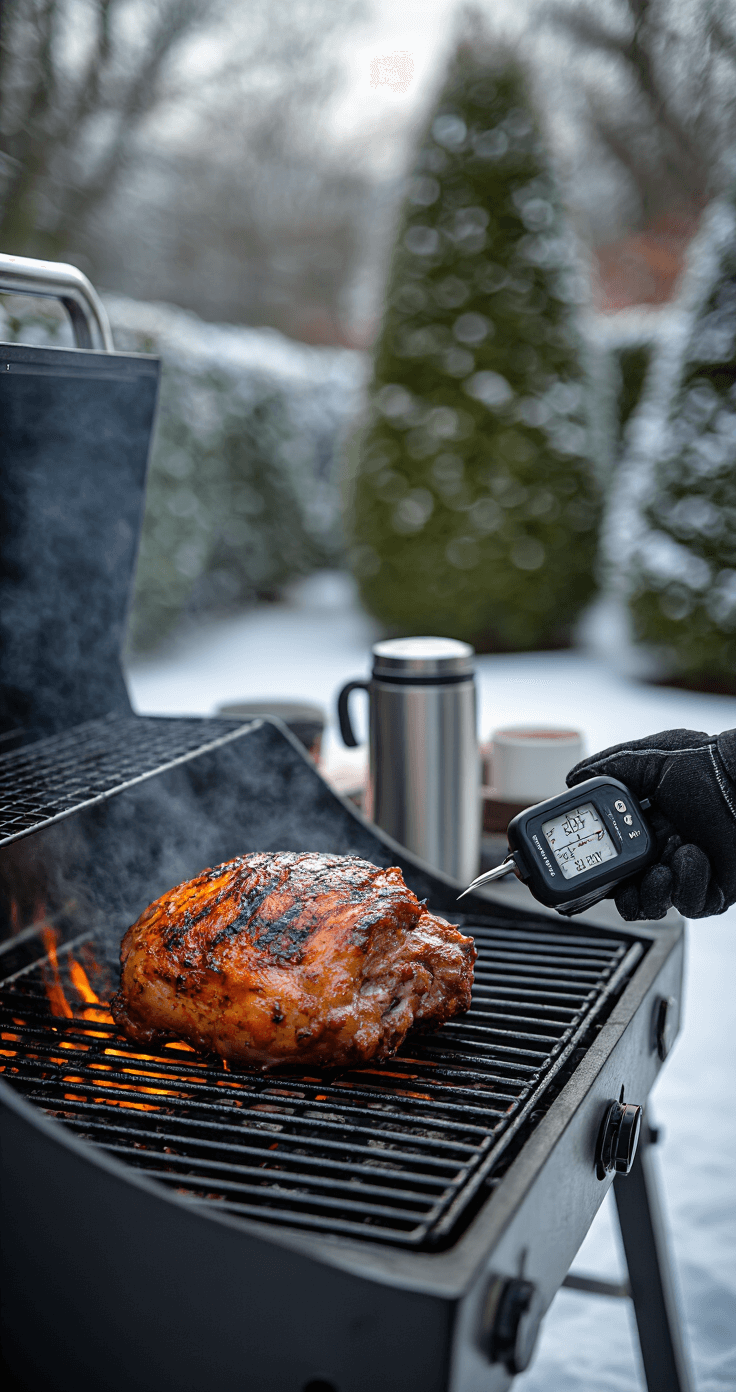
Setting Up Your Winter Grilling Station (Without Burning Your House Down)
Location matters more in winter than summer.
I learned this the hard way when a surprise wind gust nearly extinguished my burners mid-cook. Find a spot that blocks wind but maintains safety distance:
- Position your grill at least 10 feet from your house, garage, or any structure
- Never place it under overhangs, awnings, or tree branches (fire hazard + melting snow disaster)
- Look for natural windbreaks like fences or hedges
- Keep a clear, shoveled path from your kitchen door to the grill
When you’re done cooking, invest in a heavy-duty waterproof grill cover. This single purchase will save you ten minutes of scraping ice and snow before every session.
Fuel prep saves your sanity.
Stock up early because nothing’s worse than running out of propane mid-cook in freezing temperatures:
- Keep backup propane tanks or an extra bag of charcoal/pellets
- Store fuel in a dry, covered area (moisture ruins pellets and charcoal)
- For gas grills, keep tanks at room temperature when possible for better pressure
Check all your connections before winter hits hard. Cold makes rubber and plastic brittle, and a cracked gas line isn’t something you want to discover when flames are involved.
The Lighting Problem Everyone Forgets
December sunset hits around 4:30 PM where I live. You know when most people want dinner? 6-7 PM. You need proper lighting, period.
Set up outdoor LED string lights around your grilling area, or grab a rechargeable headlamp that leaves both hands free.
Trust me on this—trying to gauge steak doneness by porch light is a recipe for disappointment.
Temperature Control Techniques That Actually Work
The lid is your best friend and your worst enemy.
Every time you open that lid, you’re releasing heat that took precious fuel and time to generate. In summer, opening the lid drops temperature by 50°F. In winter? You’re looking at 75-100°F drops that take forever to recover.
My rule: Open the lid only when absolutely necessary.
Use these strategies instead:
- Invest in a wireless meat thermometer so you can monitor internal temps without lifting the lid
- Set timers on your phone rather than “checking” every few minutes
- Plan your lid openings—flip everything that needs flipping in one session
- Position food strategically so you’re not rearranging mid-cook
Consider insulation for serious cold.
Some grillers wrap their grill bodies with welding blankets or purpose-built insulation blankets (keeping vents clear, obviously). Does this look ridiculous? Absolutely. Does it work? Also absolutely.
Wind positioning matters.
Turn your grill perpendicular to prevailing winds rather than facing directly into them. This simple adjustment can stabilize temperatures by 20-30 degrees.
What to Cook When It’s Freezing Outside
Winter ingredients are different, and your menu should reflect that.
Embrace cold-weather proteins:
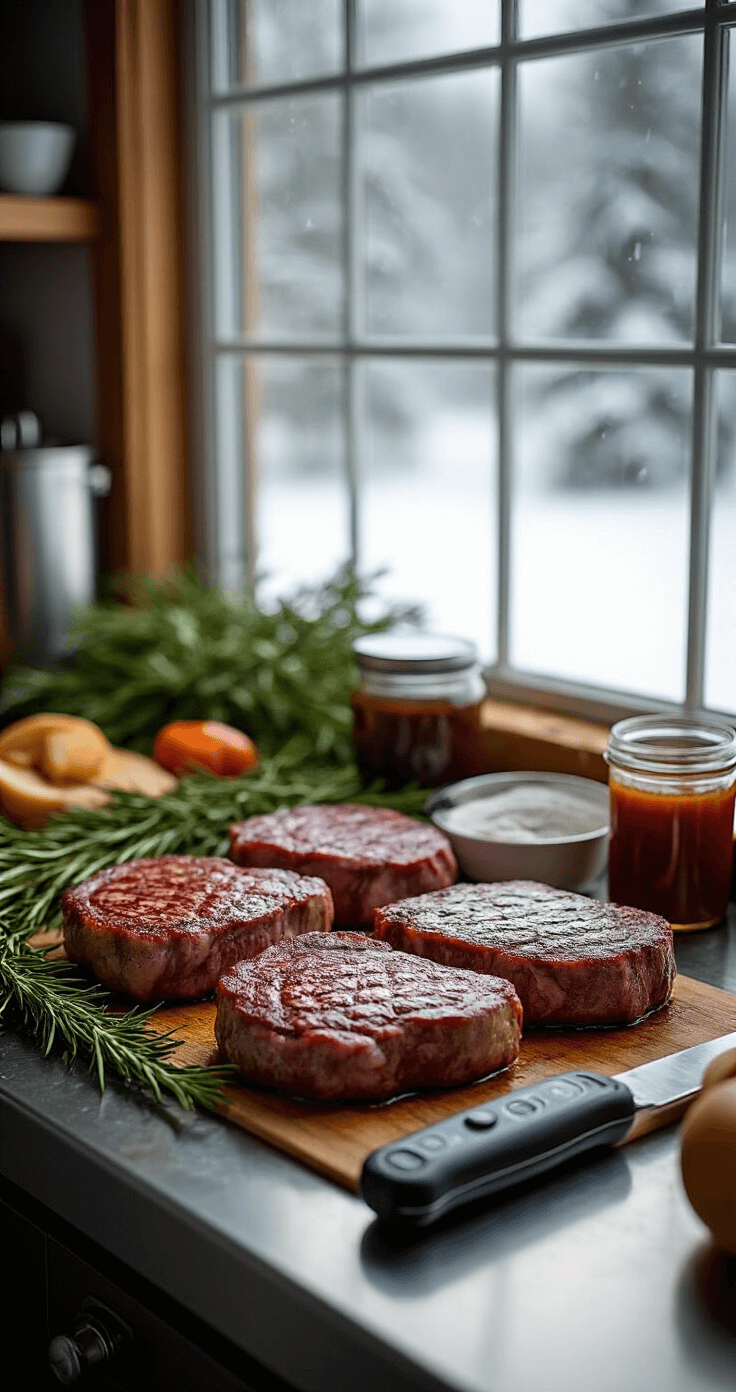
- Thick-cut steaks retain heat better than thin cuts
- Whole chickens or turkey breasts make the extended cook time worthwhile
- Pork shoulder or beef brisket for low-and-slow smoking sessions
- Hearty sausages that can handle temperature fluctuations
Winter vegetables grill beautifully:
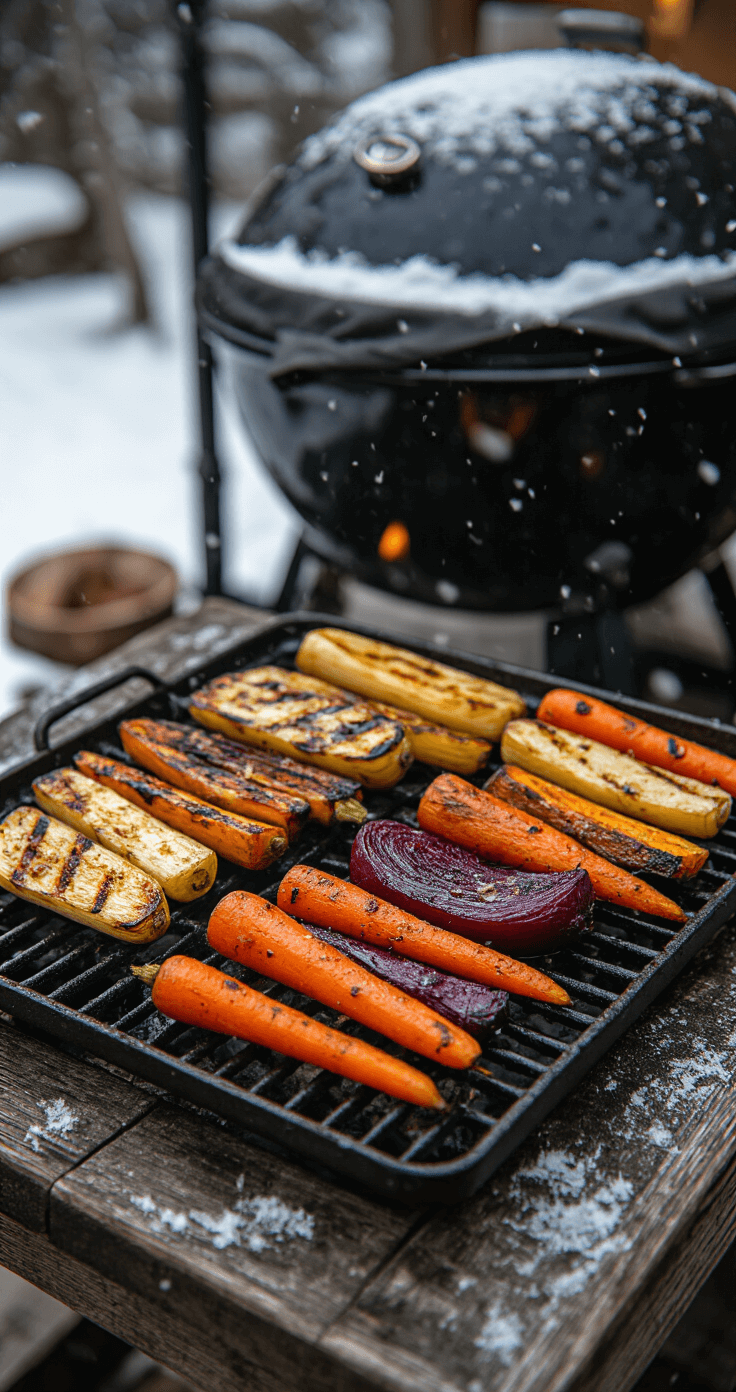
- Root vegetables (carrots, parsnips, beets) develop incredible caramelization
- Brussels sprouts get crispy exteriors while staying tender inside
- Portobello mushrooms marinated in balsamic vinegar and garlic become meaty, satisfying
- Winter squash halves brushed with maple glaze
Unexpected winter winners:
I’ve started grilling citrus—lemons