

This post may contain affiliate links. Please see my disclosure policy for details.
How to Decorate Your Home with Winter Branches (And Actually Make It Look Good)
Contents
- How to Decorate Your Home with Winter Branches (And Actually Make It Look Good)
- Why Winter Branches Beat Flowers Every Single Time
- Where to Find the Best Branches (Without Getting Arrested)
- The Branches That’ll Make Your Home Look Expensive
- How to Prepare Branches (This Part Matters)
- Arranging Branches Like You Actually Know What You’re Doing
- Styling Ideas That Don’t Look Like You Tried Too Hard
- Adding Extra Magic Without Going Overboard
- 🖼 Steal This Look
- ✓ Get The Look
Winter branches transform bare spaces into stunning focal points that bring natural elegance indoors without spending a fortune on flowers that’ll die in three days.
I’ve been decorating with branches for years, and I still remember my first attempt—a sad bundle of sticks shoved into a vase that looked like something the cat dragged in.
But here’s the thing: winter branches are having a serious moment right now, and for good reason.
They’re free (mostly), they last for months, and they give your home that effortlessly chic look that design magazines charge $500 to recreate.
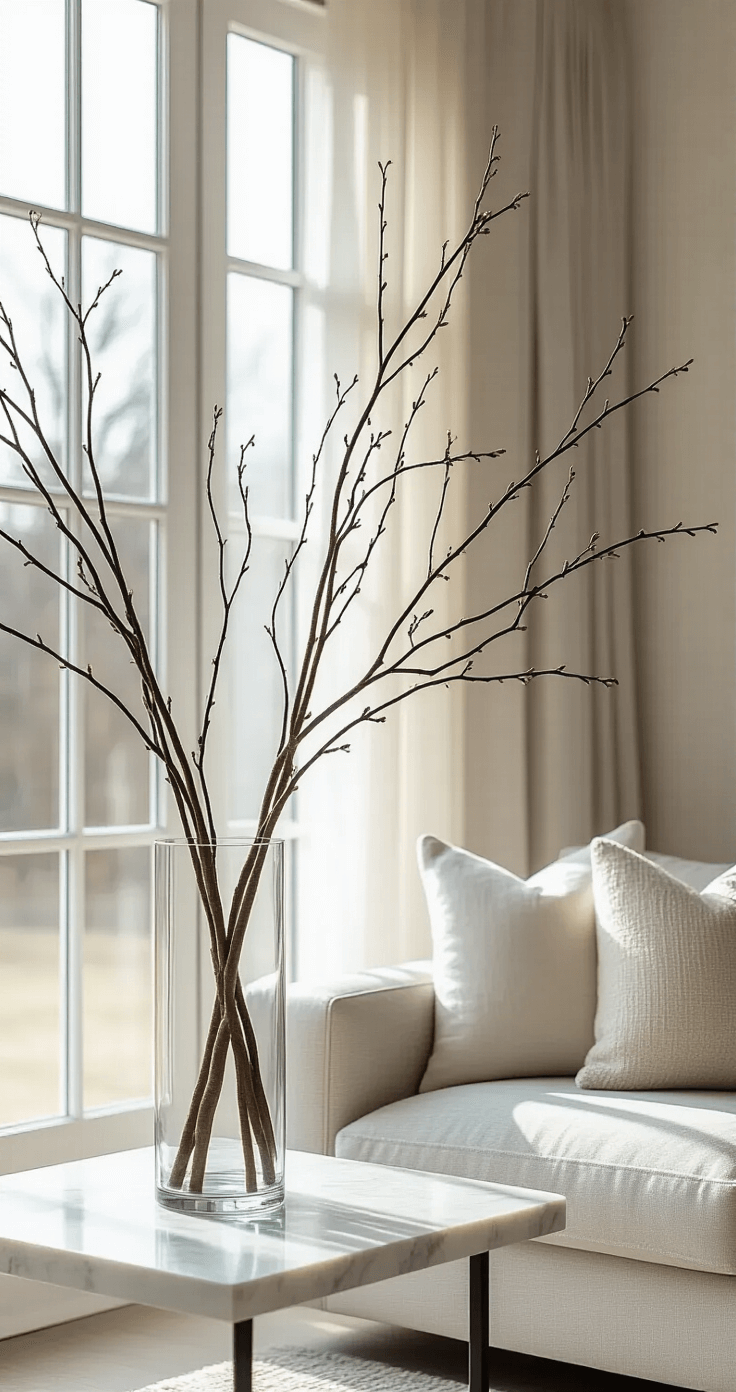
Why Winter Branches Beat Flowers Every Single Time
Let’s be honest—fresh flowers are gorgeous, but they’re also high-maintenance divas.
Winter branches, on the other hand, are the cool, low-key friend who shows up looking amazing without trying.
Here’s what makes them brilliant:
- They last for months without any fuss
- Zero watering required (unless you want them to bloom)
- They’re completely free if you know where to look
- They work with literally any decor style
- No one else on your street is doing it
I discovered this after spending ridiculous amounts on grocery store bouquets that wilted faster than my motivation to go to the gym.
Where to Find the Best Branches (Without Getting Arrested)
First rule: don’t be that person who takes pruning shears to their neighbor’s prized cherry tree.
Smart places to source branches:
- Your own yard after winter storms
- Friends and family who need pruning help
- Local parks (ask permission first—seriously)
- Tree removal services working in your area
- Farmers who maintain orchards
- Florists and garden centers that sell them
I once scored amazing curly willow branches from a landscaper who was literally about to chip them.
Asked nicely, walked away with an armful of gorgeousness.
Look for branches with interesting characteristics—curves, knobby bits, different bark textures, or unusual shapes.
The Branches That’ll Make Your Home Look Expensive
Not all branches are created equal, and some are absolute showstoppers.
My go-to varieties:
- Curly willow: Those gorgeous twisted stems that look like natural sculpture
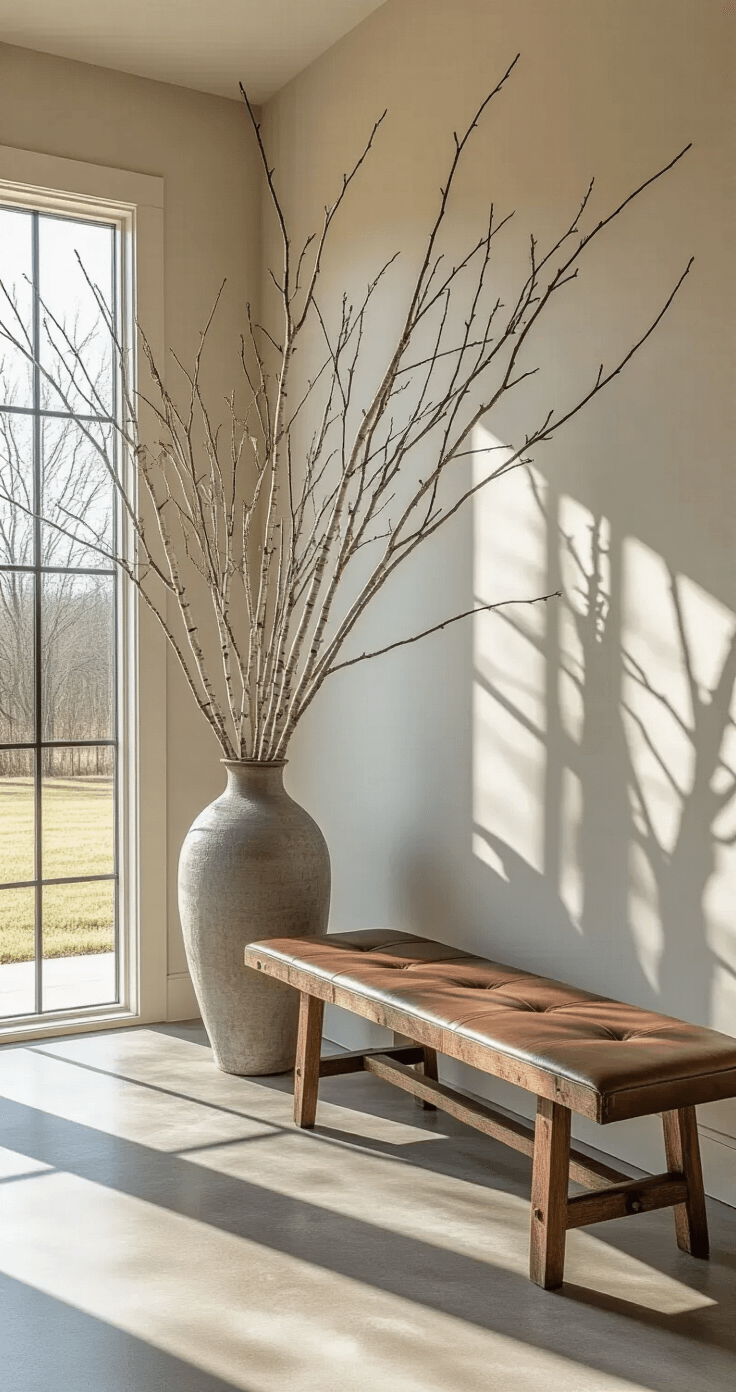
- Birch branches: White bark that screams Scandinavian chic
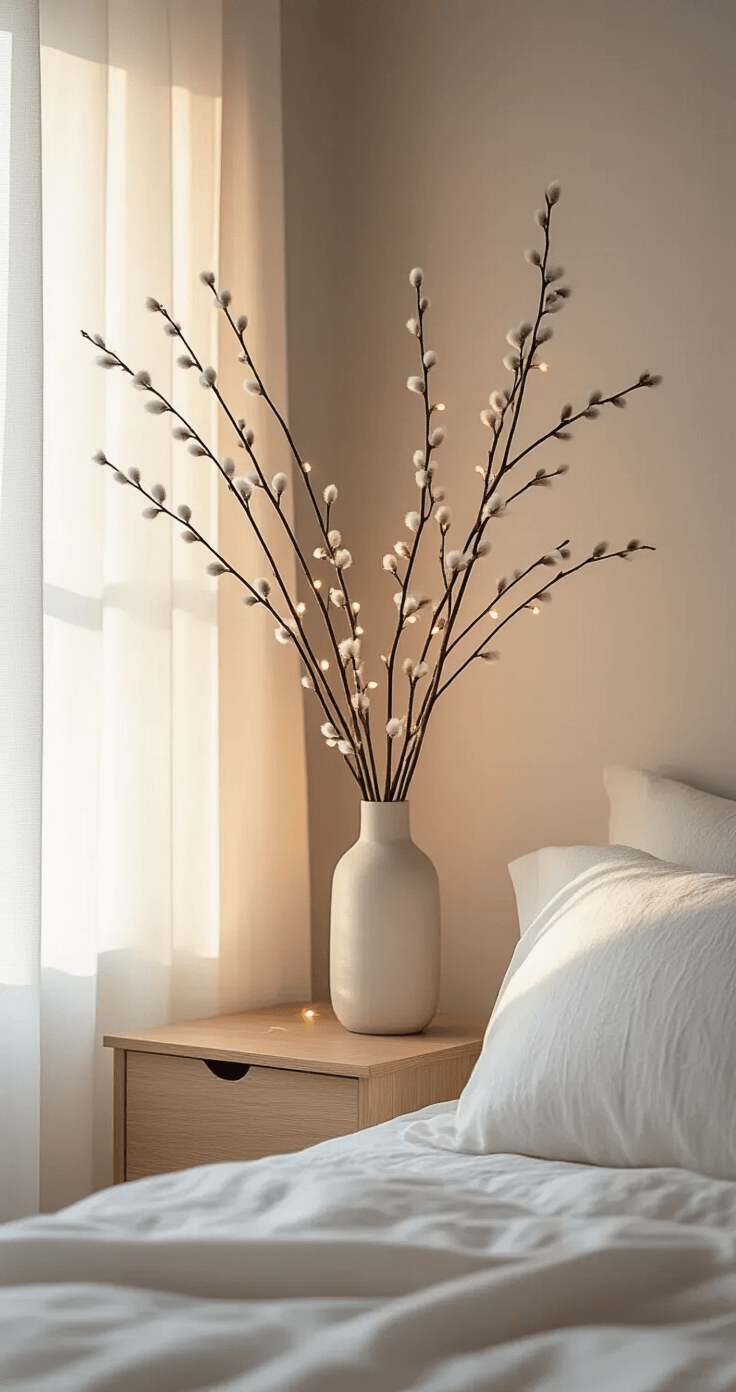
- Pussy willow: Soft fuzzy buds that everyone wants to touch
- Forsythia: Force these indoors and get sunny yellow blooms in February
- Cherry or apple branches: Delicate blooms if you force them
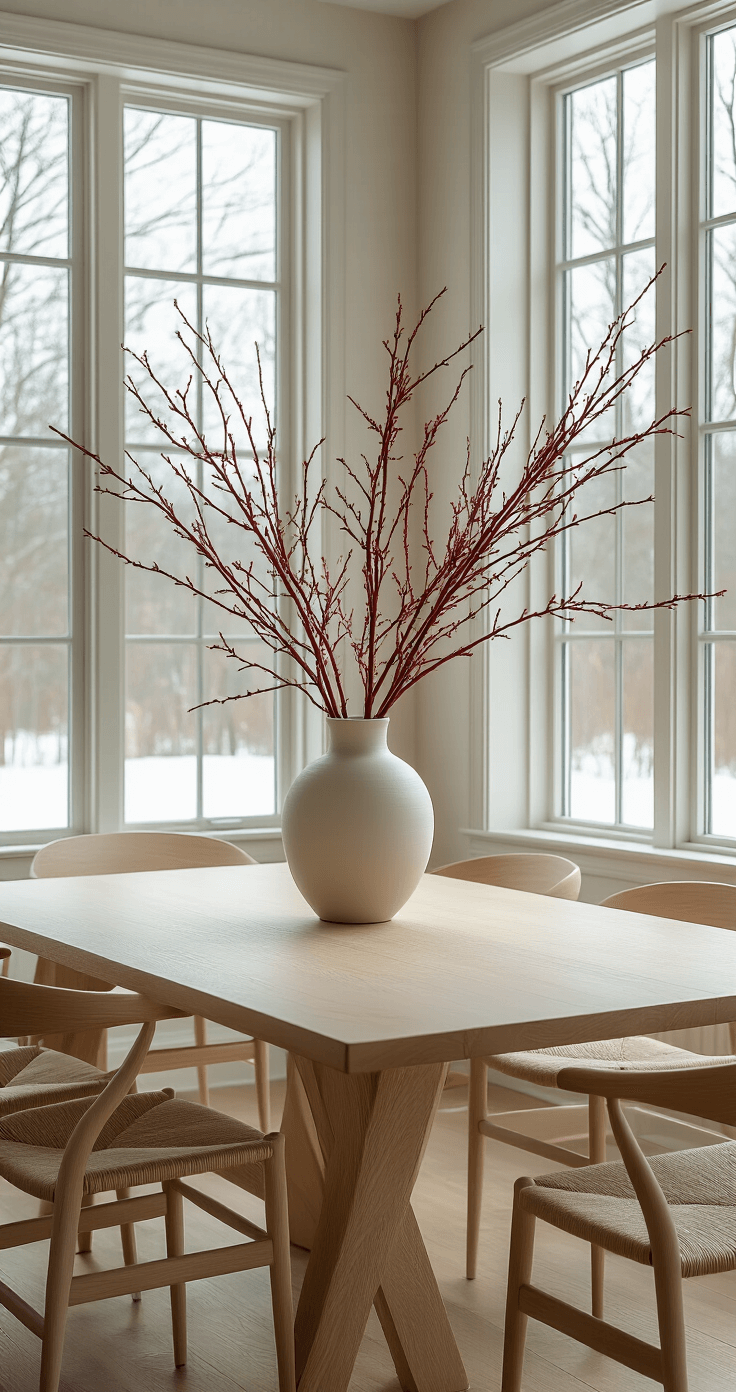
- Red twig dogwood: Bright red stems that pop against white walls
- Quince branches: Stunning coral or red blooms when forced
I keep tall glass cylinder vases in three different heights specifically for branch displays.
Game changer.
How to Prepare Branches (This Part Matters)
Don’t just shove dirty sticks into your grandmother’s crystal vase.
Trust me on this.
Proper branch prep:
- Cut branches on a dry day when temps are above freezing
- Bring them inside and let them acclimate for a few hours
- Trim ends at a 45-degree angle with sharp pruning shears
- Remove any loose bark or obvious bugs (yes, check for bugs)
- Wipe down with a damp cloth if they’re dusty
- For forcing blooms: smash the bottom inch with a hammer to help water uptake
If you want blooms, place branches in lukewarm water and change it every few days.
I learned the hard way that cold water basically tells the branches to stay dormant.
Arranging Branches Like You Actually Know What You’re Doing
This is where most people panic and create something that looks like a bird’s nest exploded.
My foolproof arrangement method:
Start with your tallest, most dramatic branch first—this is your anchor.
Place it slightly off-center in your vase (centered arrangements look stiff and boring).
Add 2-3 more branches at varying heights, creating a triangular shape.
The magic ratio: Your branches should be 1.5 to 2 times the height of your vase.
Less than that looks stumpy.
More looks unstable.
Leave space between branches—overcrowding is amateur hour.
The negative space is just as important as the branches themselves.
I use floral foam at the bottom of wide vases to keep branches exactly where I want them.
Styling Ideas That Don’t Look Like You Tried Too Hard
For modern spaces:
One or two branches in a sleek ceramic vase, nothing else needed.
Clean lines, minimal fuss, maximum impact.
For farmhouse vibes:
Bunch branches in a vintage pitcher or galvanized metal bucket.
Add some twine wrapped around the stems if you’re feeling extra.
For dramatic entrances:
Fill a large floor vase with tall branches—instant statement piece.
I have a corner in my entryway that was dead space until I added a large floor vase with birch branches.
Now it’s the first thing people compliment.
For dining tables:
Use shorter branches in low arrangements so people can actually see each other during dinner.
Revolutionary concept, I know.
For mantels:
Lay branches horizontally mixed with candles and small objects.
Creates a collected, layered look.
Adding Extra Magic Without Going Overboard
Sometimes bare branches need a little something extra.
Subtle upgrades:
- Wrap tiny battery-operated fairy lights around branches
- Hang small ornaments during holidays
- Spray paint tips with metallic paint (gold or copper, not silver—silver looks cheap)
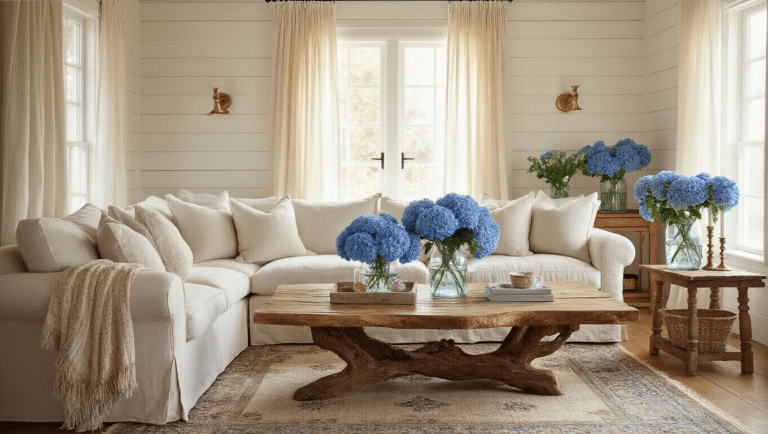
🖼 Steal This Look
- Paint Color: Sherwin-Williams Pure White SW 7005
- Furniture: a reclaimed wood console table with live edge detail
- Lighting: a brass arc floor lamp with linen drum shade
- Materials: raw birch branches, matte ceramic vessels, nubby wool throws, aged brass accents
There’s something quietly brave about bringing bare branches inside when everything outside feels stripped back—they remind you that beauty doesn’t need fullness to exist, just intention.

[…] French doors, look for options with double or triple glazing. This feature helps to keep your home warm in winter and cool in summer. The energy-efficient design minimizes heat loss, which can lead to lower energy […]
[…] use these during my work-from-home days because they instantly make my home office feel like a winter wonderland […]