

This post may contain affiliate links. Please see my disclosure policy for details.
Why Your Christmas Tree Might Be Missing the Mark
Let me guess what’s happening.
You’ve got boxes of ornaments collected over the years. You hang them all because, well, that’s what you’re supposed to do, right?
But when you’re done, something feels off. The tree doesn’t look like those stunning images you see on Pinterest or in home decor magazines.
Here’s the thing: aesthetic Christmas trees aren’t about quantity. They’re about intentional choices that create visual harmony. And I’m going to show you exactly how to get there.
🎨 Steal This Look
- Paint Color: Sherwin-Williams Agreeable Gray SW 7029
- Furniture: low-profile linen slipcovered sectional in warm ivory, paired with a reclaimed wood coffee table with visible grain and patina
- Lighting: oversized linen drum pendant with brass hardware, dimmable to create layered evening ambiance
- Materials: raw Belgian linen, aged brass, white oak with wire-brushed finish, hand-thrown ceramics, and wool-cotton blend textiles
I used to unpack every ornament I’d ever received and feel guilty leaving any in the box, but the year I finally edited down to a cohesive collection was the year I actually loved looking at my tree.
The Minimalist Magic: Less Really Is More
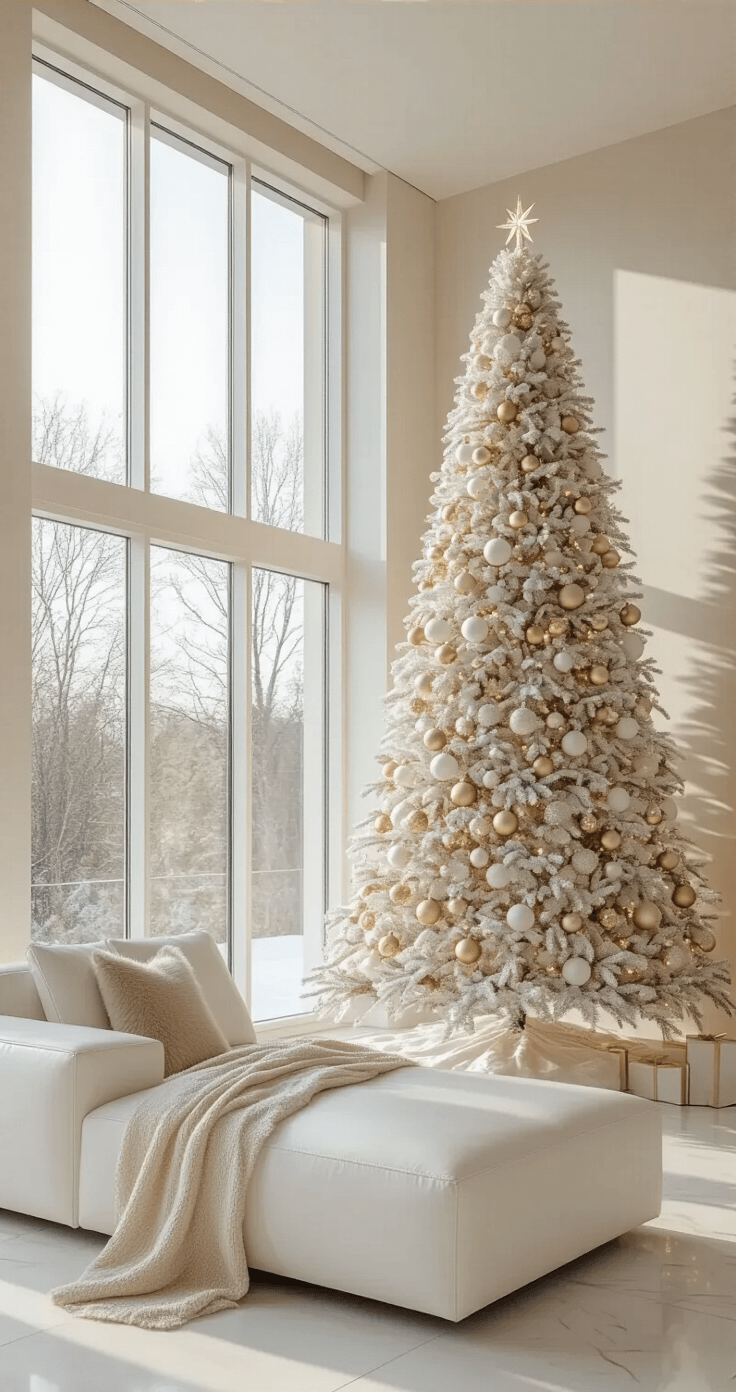
A minimalist Christmas tree changed everything for me. Instead of covering every branch, I started thinking of my tree as a piece of art.
Here’s what actually works:
- Choose a high-quality artificial Christmas tree with realistic branching
- Select ornaments in just 2-3 complementary colors
- Leave space between decorations so each piece can breathe
- Focus on the tree’s natural shape rather than hiding it
I remember the first year I tried this approach. My mother walked in and asked, “Are you still decorating?” No, Mom. I’m done. And it looked better than any tree I’d ever done before.
The color palette matters more than you think:
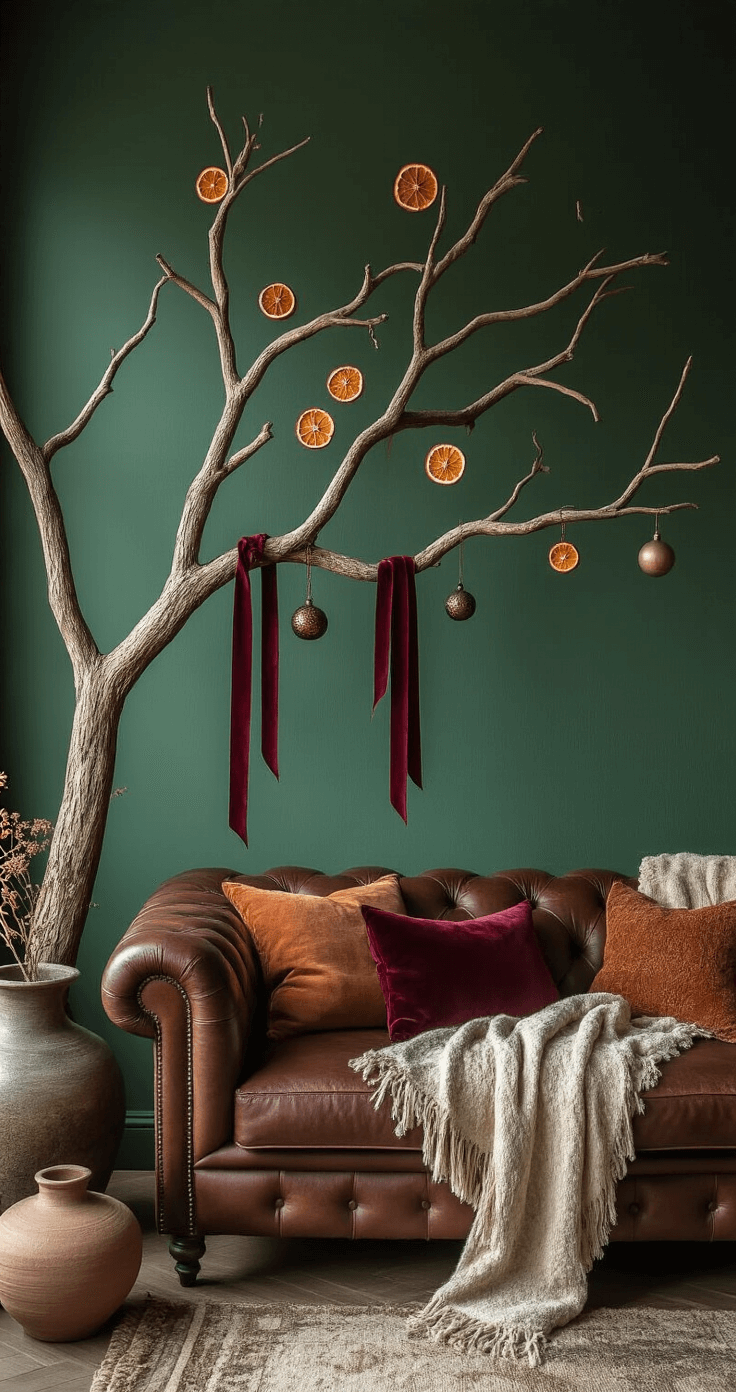
Start with neutrals like white, cream, and gold for timeless elegance. Or go moody with deep greens, burgundy, and matte black for modern drama. Pick your palette before you shop—this saves money and prevents impulse buys that don’t fit your vision.
💡 Steal This Look
- Paint Color: Benjamin Moore Simply White OC-117
- Furniture: low-profile linen sofa in natural oatmeal, floating walnut media console
- Lighting: arched brass floor lamp with linen drum shade
- Materials: raw oak, brushed brass, Belgian linen, matte ceramic
This approach resonates most in open-concept living rooms where the tree becomes a sculptural focal point rather than competing with daily life—I found it especially freeing in smaller spaces where every visual decision carries more weight.
Modern Sophistication: Making Your Tree Look Designer
Modern Christmas trees coordinate with your existing interior design instead of fighting against it.
Walk around your living room right now. What colors dominate? What’s your furniture style? Your tree should feel like it belongs in that space, not like it dropped in from someone else’s house.
Pre-lit versus custom lighting:
I’m team custom lighting all the way. Yes, pre-lit Christmas trees offer convenience. But when you string your own lights, you control the placement, density, and warmth.
Weave lights deep into the branches, not just on the surface. This creates depth and makes ornaments glow from within.
The ribbon technique that changes everything:
Forget those tightly wrapped ribbon spirals from the 90s. Instead, cut generous lengths of velvet or silk ribbon and let them cascade loosely through the branches. Tuck the ends into the tree so they disappear. This adds movement, softness, and fills visual space without adding more ornaments.
I use about 8-10 yards of ribbon on a 7-foot tree. The effect is stunning and costs less than buying more ornaments.
Save this article
Enter your email and we'll send it straight to your inbox.
💡 Steal This Look
- Paint Color: Farrow & Ball Pavilion Gray 242
- Furniture: low-profile sectional in charcoal bouclé with brushed brass legs
- Lighting: arched brass floor lamp with linen drum shade
- Materials: matte ceramic, smoked glass, raw walnut, brushed metal, nubby wool
There’s something quietly satisfying about a tree that doesn’t scream for attention—the kind that makes guests pause and ask where you found your ornaments, not where you bought your tree.
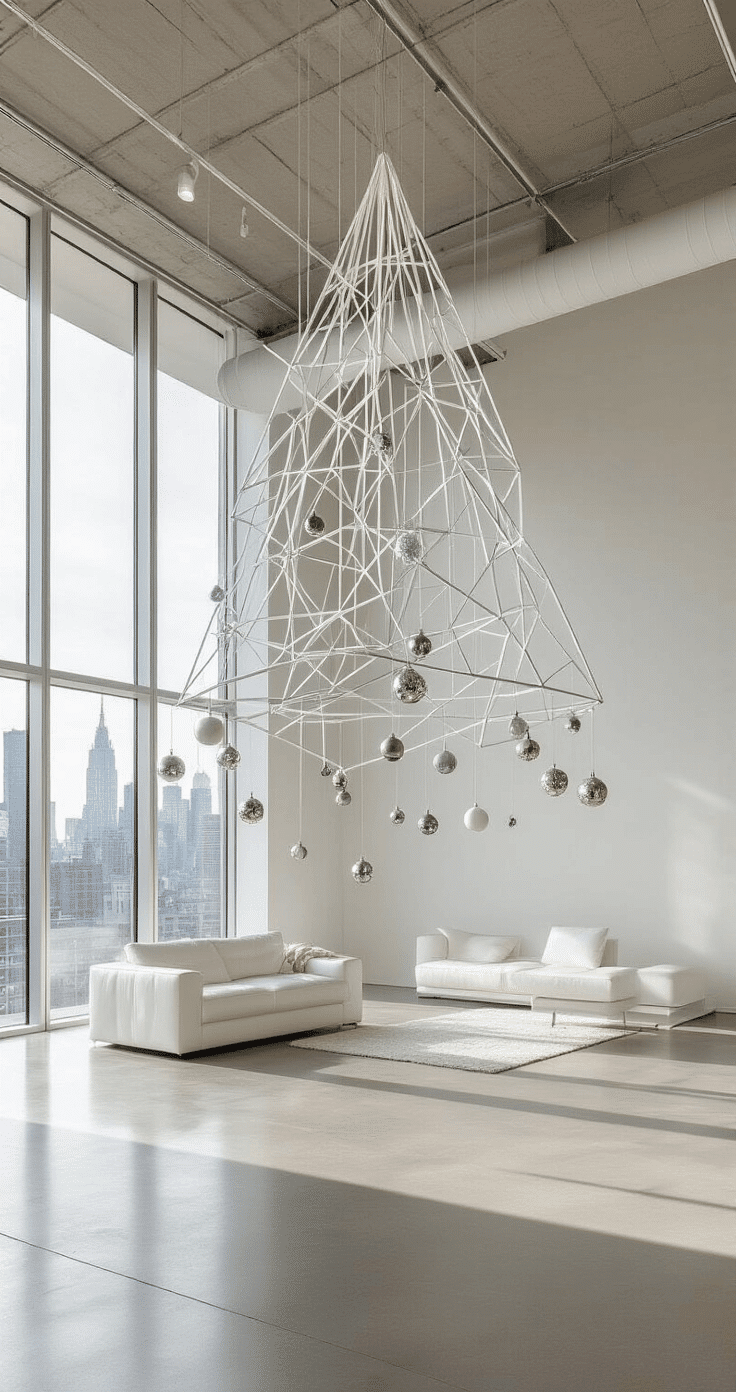
Beyond Traditional: Alternative Aesthetic Trees
Not everyone wants a traditional tree. And that’s completely fine.
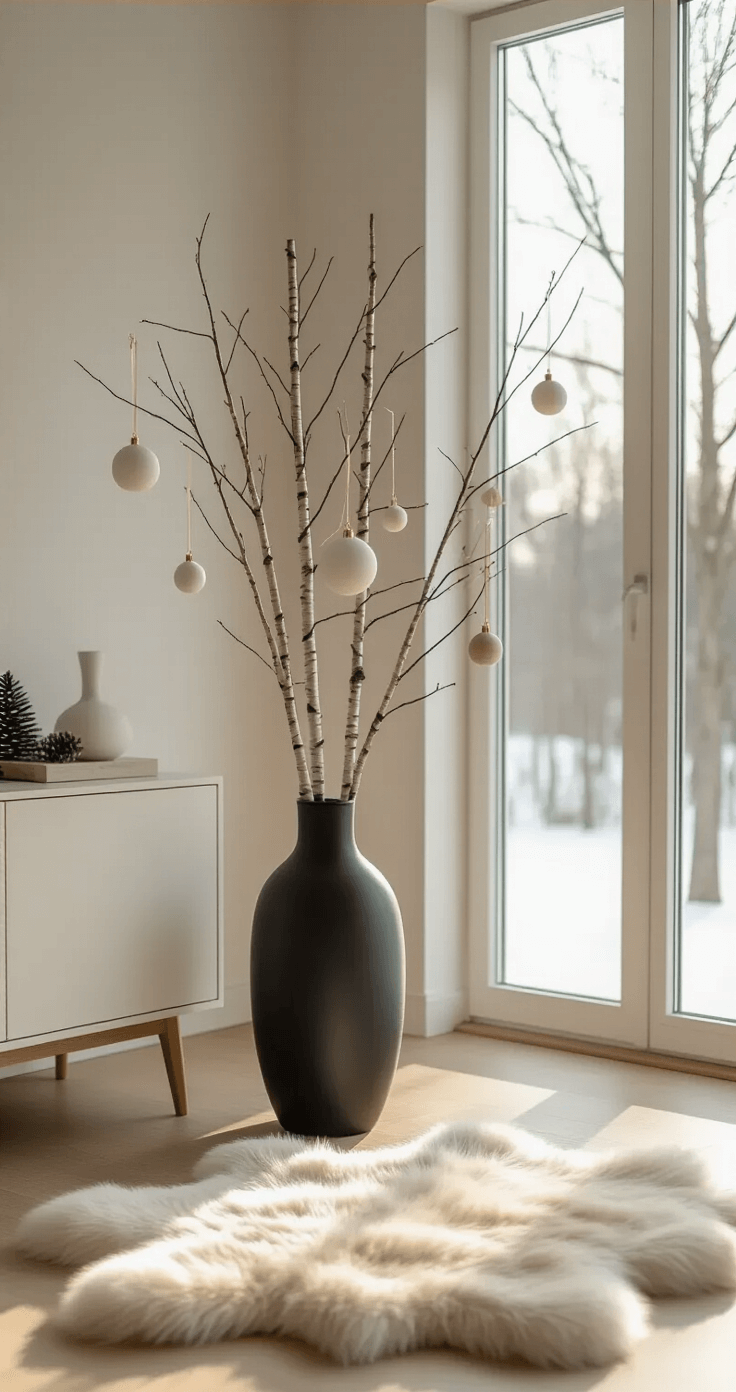
Twig and branch trees:
Collect branches from your yard or purchase decorative birch branches. Arrange them in a large vase or secure them to create a tree shape. Add minimal lights and a few special ornaments. This works beautifully in modern, Scandinavian, or rustic spaces.
Wall-mounted designs:
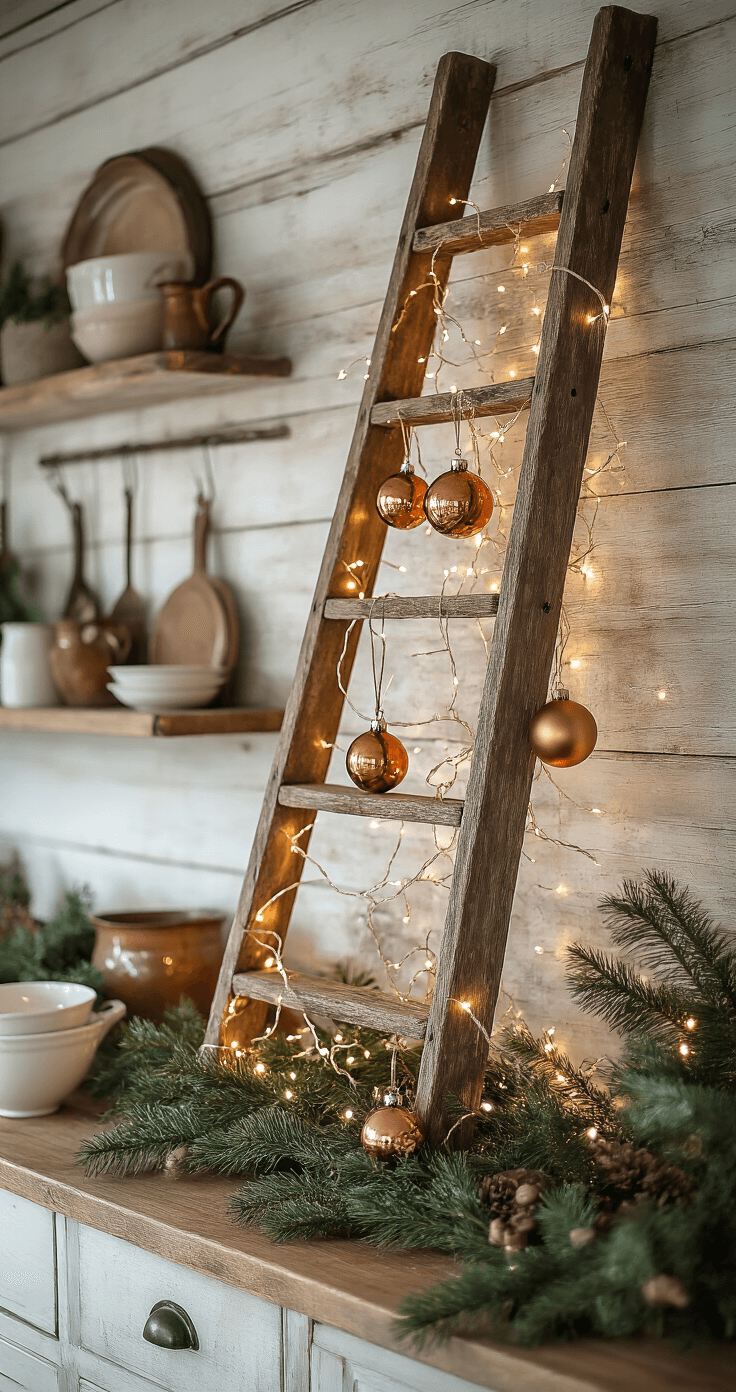
Short on floor space? Go vertical. String lights in a tree shape directly on your wall. Hang lightweight ornaments from small nails or adhesive hooks. I did this in my first tiny apartment, and guests absolutely loved it.
Living succulent trees:
For the plant lover, arrange potted succulents on tiered shelving in a tree shape. Add small battery-operated lights between the pots. This “tree” lives on year-round and needs minimal maintenance.
💡 Steal This Look
- Paint Color: Behr Swiss Coffee 12
- Furniture: low-profile platform bed with natural wood frame
- Lighting: adjustable brass arc floor lamp with linen shade
- Materials: raw birch branches, unbleached cotton, matte ceramic, warm white LED wire lights
This approach speaks to anyone who’s ever felt guilty about a neglected houseplant or a tree that shed needles until March—these alternatives forgive your busy life while still delivering that seasonal hit of wonder.
Layering Texture Without Creating Chaos
Visual depth comes from thoughtful texture combinations, not random additions.
Natural elements that actually work:
- Real or faux pine cones in varying sizes
- Dried orange slices (they smell amazing too)
- Cinnamon stick bundles tied with twine
- Faux white berries tucked between branches
- Feathered bird ornaments perched on branches
I learned from a designer friend to work in odd numbers. Three pine cones here, five berry sprigs there. It creates visual interest without feeling calculated.
The garland trick for fuller trees:
If your tree looks sparse, don’t buy more ornaments. Wrap faux greenery garland loosely around the tree, weaving it through branches. This adds fullness and creates a lush backdrop for your carefully chosen ornaments.
✎ Steal This Look
- Paint Color: Valspar Cozy White 7006-16
- Furniture: A tufted linen sofa in natural oatmeal, paired with a reclaimed wood coffee table with visible grain knots
- Lighting: A brass arc floor lamp with a linen drum shade positioned to cast warm pools of light across textured surfaces
- Materials: Raw Belgian linen, unbleached cotton, weathered oak, matte ceramic, hand-thrown pottery, nubby wool throws
There’s something deeply satisfying about running your hand across a well-textured room—it’s the difference between a space that looks styled and one that feels lived-in and genuinely welcoming.
The Spacing Strategy That Makes Everything Look Intentional
Here’s what nobody tells you about decorating trees. Empty space is part of the design. When I first embraced this concept, my tree transformed from “overdone” to “editorial-worthy.”
Follow this placement approach:
Start with your largest ornaments and place them deep in the tree, near the trunk. This creates depth. Add medium ornaments in the middle layer. Finish with smaller, delicate pieces on outer branches where they catch light.
The rule of three:
Group similar ornaments in clusters of three at varying depths. This creates visual triangles that the eye naturally finds pleasing. Don’t scatter identical ornaments evenly—that looks forced.
Leave breathing room:
If you can’t see any branch between ornaments, you’ve gone too far. Remove pieces until you can see the tree’s structure. I know it feels wrong at first. But trust the process.
<img
Keep this one for later
We'll email you the link so you can come back to it.


[…] Every piece hanging on your tree should either spark joy, trigger a memory, or contribute to the overall aesthetic you’re creating. […]
[…] white cabinets isn’t just a design choice—it’s a lifestyle. It’s about creating a space that feels both magazine-worthy and wonderfully […]