

This post may contain affiliate links. Please see my disclosure policy for details.
Fun Natural Table Settings That’ll Make Your Guests Say “Wow, Did You Hire a Stylist?”
Fun natural table settings transform ordinary meals into Instagram-worthy moments without requiring a design degree or emptying your wallet.
I’ve been setting tables for years, and I’ll tell you straight—nothing beats the authentic charm of bringing the outdoors in.

The pretentious design crowd might overcomplicate this, but honestly?
Natural table settings work because they’re simple, accessible, and genuinely beautiful.
🎨 Steal This Look
- Paint Color: Sherwin-Williams Alabaster SW 7008
- Furniture: reclaimed wood farmhouse dining table with live edge detail, paired with mismatched vintage wooden chairs in varying natural finishes
- Lighting: oversized woven rattan pendant light with exposed Edison bulb
- Materials: raw linen napkins, unglazed terracotta vessels, foraged greenery, weathered wood chargers, hand-thrown ceramic dinnerware with organic glaze variations
I set my own table this way last Thanksgiving and watched guests actually put down their phones to touch the bark-textured candleholders and ask where I ‘found’ everything.
Why Natural Elements Beat Expensive Store-Bought Decor Every Single Time
Here’s what I’ve learned after countless dinner parties:
Your guests remember atmosphere, not perfection.
A sprig of rosemary tucked into a napkin creates more impact than a $50 centerpiece.
Natural elements bring:
- Immediate warmth and texture
- Seasonal authenticity your guests can actually smell and touch
- Conversation starters (everyone wants to know where you foraged those branches)
- Zero pretentiousness—it’s honest, it’s real, it’s approachable
I once hosted a dinner where I simply scattered acorns and oak leaves down the center of my table.
Cost? Nothing.
Compliments? Endless.
The Building Blocks: What Actually Works on a Real Table
Start With Greenery (The Non-Negotiable Foundation)
Eucalyptus stems are my ride-or-die element.
They smell incredible, last for weeks, and forgive amateur arranging.
Grab ferns from your backyard, snip herb cuttings from your garden, or buy a bunch of whatever’s cheap at the grocery store.
Here’s my foolproof greenery approach:
- Run a loose garland down the table center
- Tuck sprigs into napkin folds
- Float leaves in shallow bowls
- Stick single stems in bud vases at each place setting
Textures That Add Depth Without Looking Like a Craft Store Exploded
Layer these for instant sophistication:
- Wood slices as chargers or trivets
- Smooth river stones clustered around candles
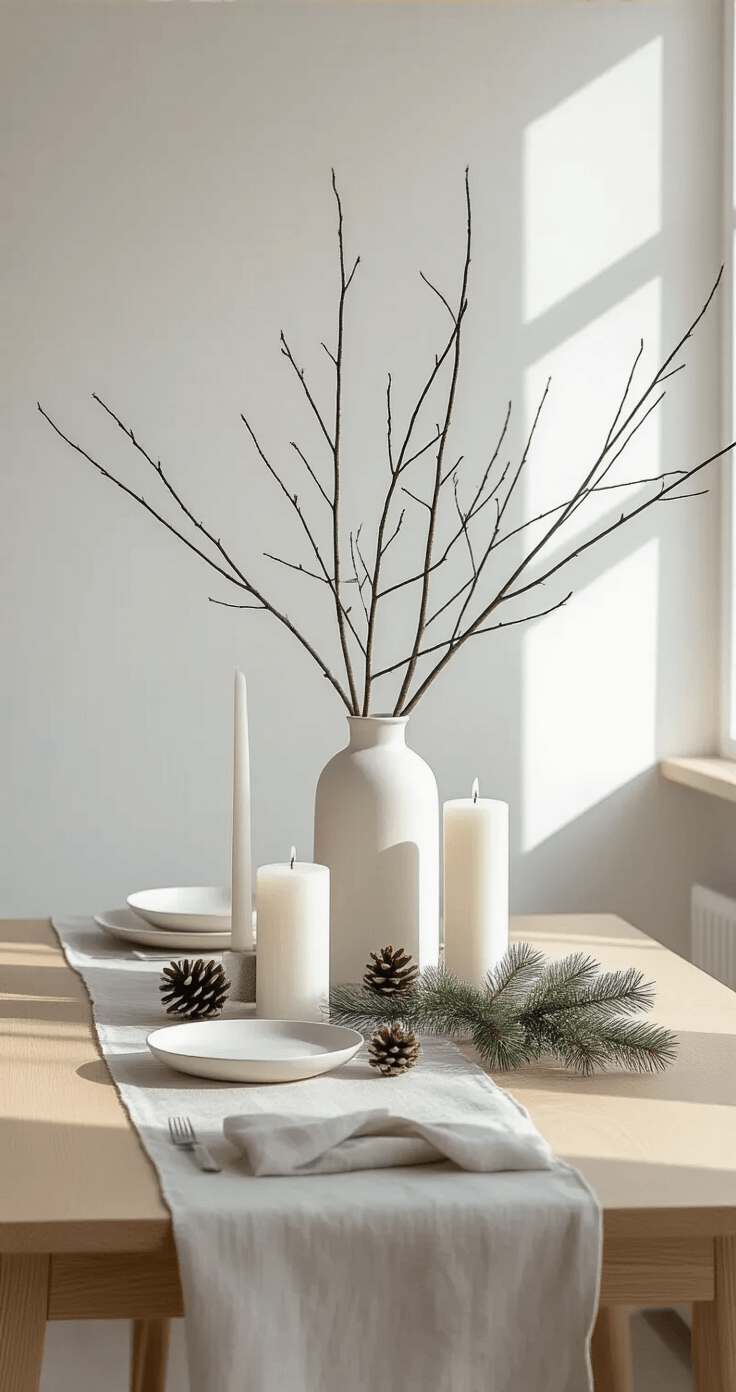
- Bare branches in tall vessels
- Jute table runners as your neutral base
- Linen napkins (wrinkled is fine—it’s “relaxed elegance”)
The Edible Centerpiece Move That Always Gets Comments
This changed everything for me.
Why separate your decor from your food?
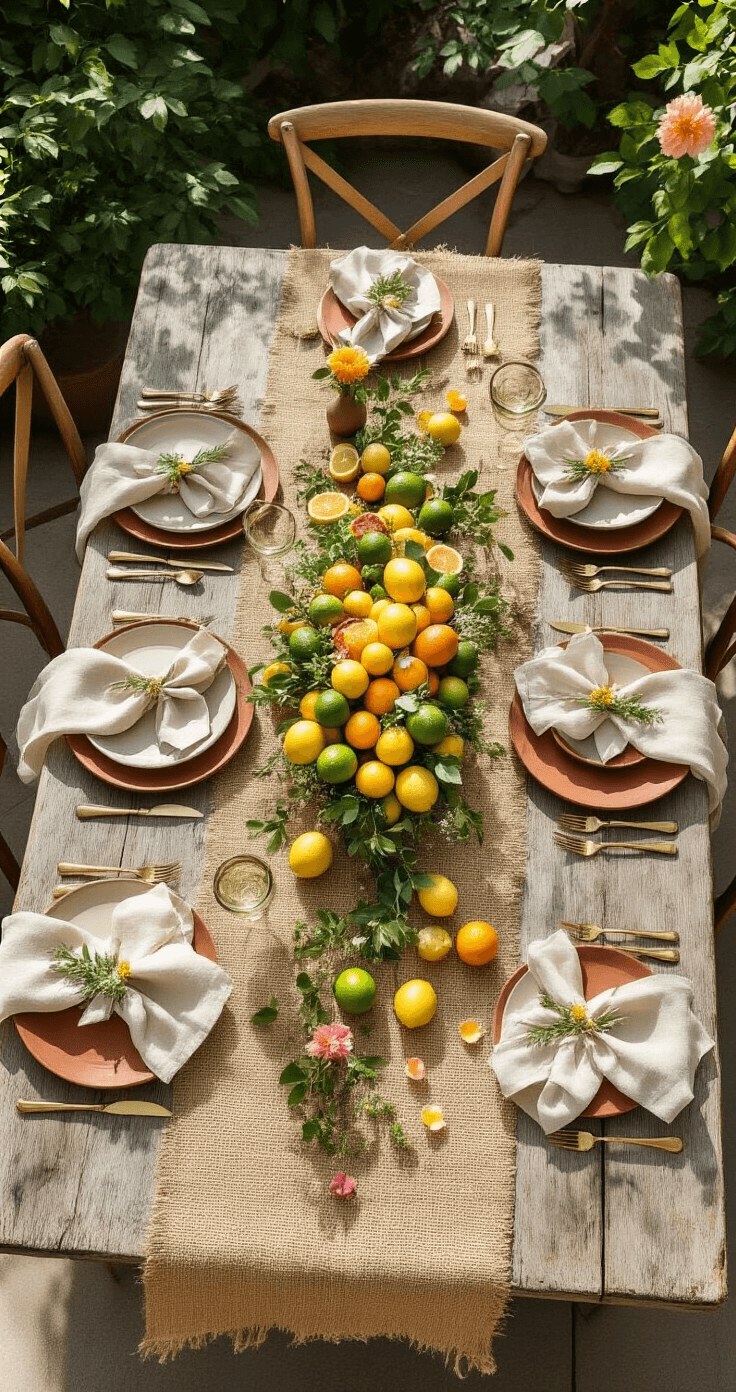
Pile citrus fruits down the center—lemons, limes, blood oranges.
Scatter fresh figs, grapes still on the vine, or colorful heirloom tomatoes.
Arrange root vegetables like beets and radishes with their greens still attached.
Cluster herbs in small glasses.
Your centerpiece becomes functional, beautiful, and zero-waste.
Plus, you can cook with it afterward, which is the ultimate practical flex.
Save this article
Enter your email and we'll send it straight to your inbox.
✎ Steal This Look
- Paint Color: Farrow & Ball Drop Cloth No. 283
- Furniture: reclaimed wood farmhouse dining table with visible grain and live edge
- Lighting: oversized linen drum pendant with warm brass hardware
- Materials: raw eucalyptus, unfinished wood slices, hand-thrown ceramic vessels, unbleached jute, river-washed stones
This is the table where you actually live—where weeknight pasta happens beside your laptop and Sunday brunch stretches into afternoon—so the greenery should feel gathered, not staged, like you simply paused while walking the garden.
🔔 Get The Look
The Formula I Use For Every Natural Tablescape (Copy This)
Layer 1: The Foundation
Start with natural linen tablecloth in cream, tan, or soft gray.
Wrinkles add character—don’t stress about ironing.
Layer 2: The Runner
Add texture with burlap, jute, or a second piece of linen in a contrasting tone.
Or skip the runner entirely and use a living garland of greenery as your centerpiece spine.
Layer 3: The Anchor Elements
Place your larger natural pieces:
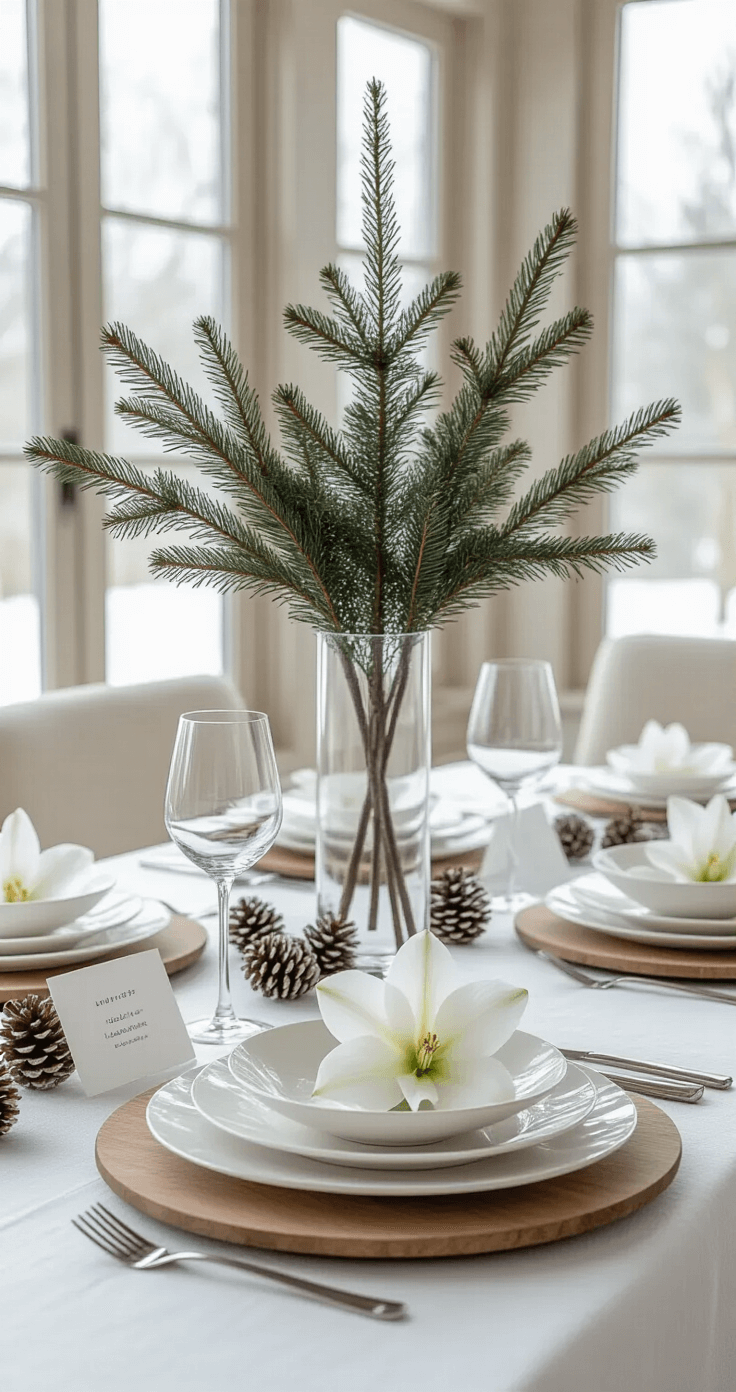
- Branches in vases
- Wooden bowls filled with nuts or seasonal produce
- Clustered candles of varying heights
- Large flat stones or bark pieces as serving pedestals
Layer 4: The Scatter
This is where magic happens.
Fill gaps with smaller elements:
- Loose leaves
- Small pinecones or acorns
- Flower petals
- Citrus slices
- Herb sprigs
Layer 5: The Place Settings
Each setting needs:
- A natural charger (wood, woven material, or even a large leaf)
- Regular dinnerware (white or cream works universally)
- Napkin with natural tie (twine, ribbon, or an herb sprig tucked through)
- Personal touch (a name card on a leaf, a small potted succulent, a single bloom)
🏠 Steal This Look
- Paint Color: Behr Swiss Coffee 12
- Furniture: reclaimed wood farmhouse dining table with visible grain and natural imperfections
- Lighting: oversized woven rattan pendant light with warm Edison bulb
- Materials: raw linen, unbleached cotton, unfinished wood, dried botanicals, beeswax, terracotta, hand-thrown ceramics
This is the formula I return to every single season because it removes decision fatigue—I know exactly where each element lives, which means I can actually enjoy my guests instead of fussing with placement while the soup gets cold.
Seasonal Variations That Take 20 Minutes Maximum
Spring: Fresh and Hopeful
Cut tulips short and cluster them in mason jars.
Scatter flower petals across the table.
Use pastel napkins with fresh herb ties.
Add bird nests or speckled eggs for whimsy without being twee.
Summer: Abundant and Casual
Pile fresh produce like it’s a still-life painting.
Float flowers in shallow bowls.
Use citrus halves as tiny vases for herb cuttings.
Embrace imperfection—summer tables should feel like outdoor markets.
Fall: Rich and Textural
Scatter actual fallen leaves down the center.
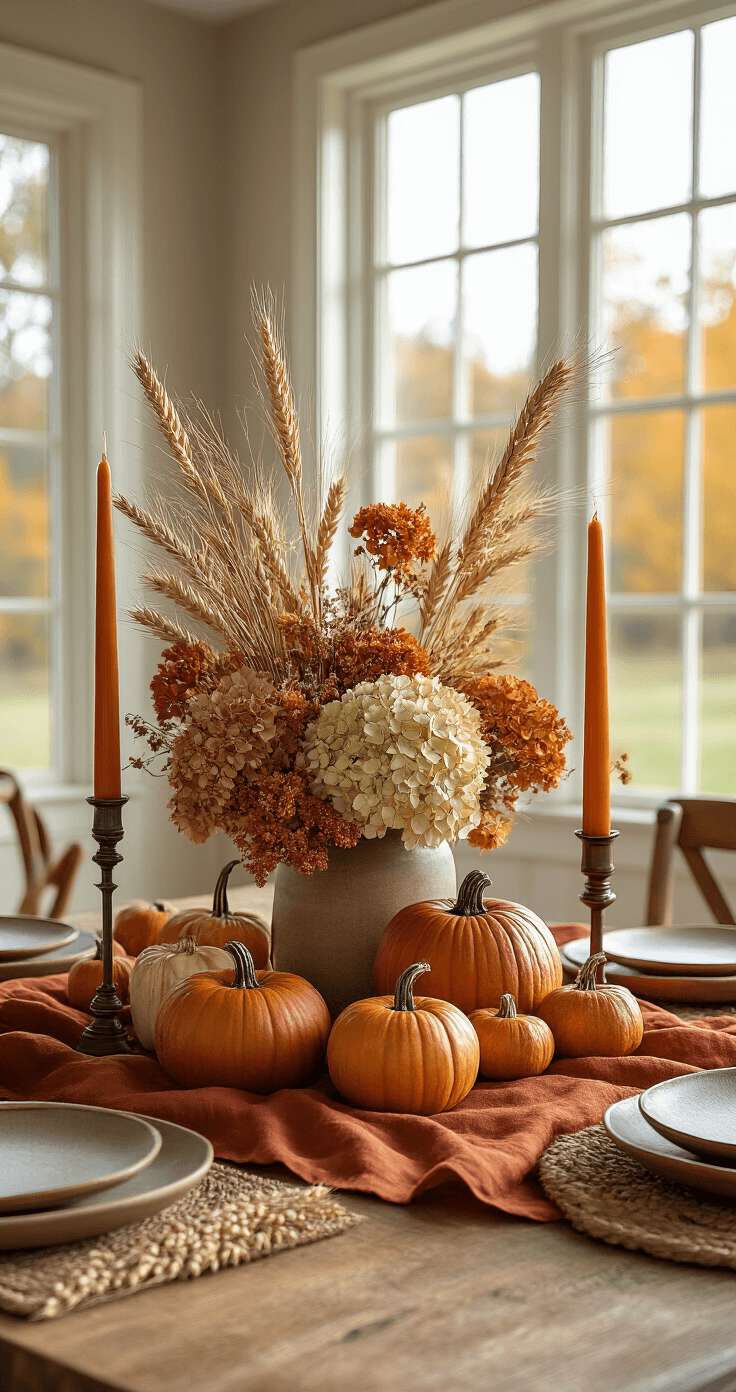
Cluster mini pumpkins, gourds, and winter squash.
Add wheat stalks, dried hydrangeas, or seed pods.
Use deep rust and amber tones in your linens.
🏠 Steal This Look
- Paint Color: use Valspar brand. Match the ACTUAL wall color in the image. Format: Valspar ColorName CODE
- Furniture: a weathered farmhouse dining table with visible wood grain and natural imperfections, paired with mismatched vintage wooden chairs
- Lighting: a simple linen drum pendant light in warm white, hung low over the table center
- Materials: raw linen napkins, unglazed terracotta vessels, matte ceramic plates, unfinished wood chargers, and foraged botanicals
This is the table setting style for anyone who loves the ritual of gathering but hates the pressure of formal entertaining; it’s about creating moments that feel discovered rather than staged.
Keep this one for later
We'll email you the link so you can come back to it.


[…] says “farmhouse” quite like natural wood. It’s like inviting a piece of the forest into your kitchen. Light-stained wood cabinets […]