This post may contain affiliate links. Please see my disclosure policy for details.
Why Your Attic’s “Problems” Are Actually Its Best Features
Contents
- Why Your Attic’s “Problems” Are Actually Its Best Features
- Let There Be Light (Seriously, Do This First)
- The Color Trick That Made My Ceiling Disappear
- Furniture Placement That Finally Makes Sense
- Those Exposed Beams Aren’t Your Enemy
- Creating Zones Without Walls
- The Temperature Problem Nobody Warns You About
Here’s what nobody tells you about attic spaces: those awkward features you’re cursing right now? They’re going to become your favorite things about the room.
I spent weeks fighting against my sloped ceilings before I had my lightbulb moment. Work with the space, not against it.
Those exposed wooden beams I wanted to cover up? They’re now the focal point everyone compliments. The weird angles that made me want to scream? They created the coziest reading nook I’ve ever had.
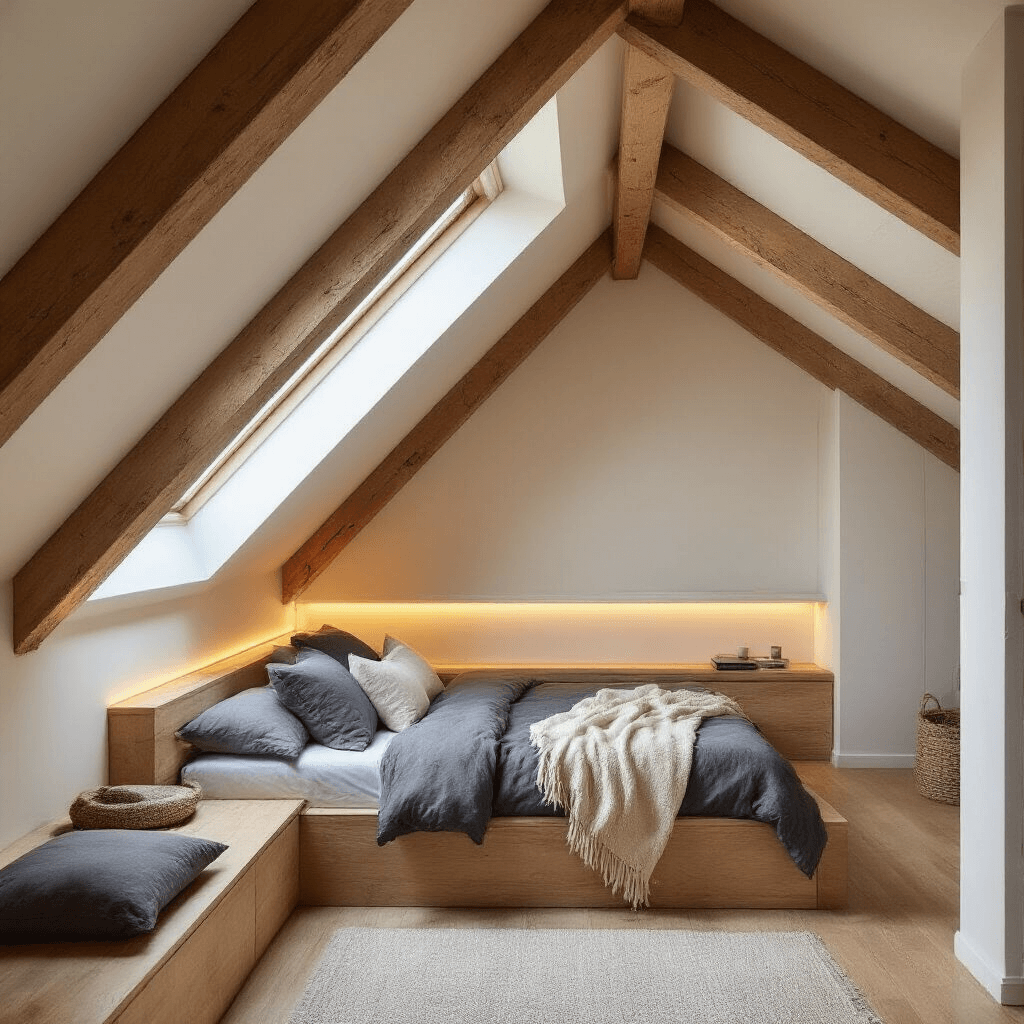
🌟 Steal This Look
- Paint Color: Sherwin-Williams Accessible Beige SW 7036
- Furniture: low-profile platform bed with integrated storage drawers to work beneath sloped ceilings
- Lighting: adjustable arc floor lamp with linen shade positioned to graze exposed beam texture
- Materials: rough-hewn reclaimed oak beams, natural linen textiles, matte black iron accents, unbleached wool rugs
I learned this the hard way after three failed furniture arrangements—once I stopped treating my attic like a regular room and started designing for its quirks, everything clicked into place.
Let There Be Light (Seriously, Do This First)
The biggest game-changer for my attic wasn’t paint or furniture. It was a large skylight.
Before the skylight, my attic felt like a cave. Dark. Depressing. Not somewhere you’d want to spend time.
After installation? Complete transformation.
Natural light poured in from above, bouncing off the walls and making the whole space feel twice as large. The warmth from the sun made those cold mornings bearable. And watching clouds drift by from bed? Better than any TV.
Here’s my lighting formula that actually works:
- Start with natural light as your foundation
- Add LED ceiling lights for evenings (go for 3000K to 4000K – trust me on this)
- Layer in adjustable wall sconces for reading
- Finish with table lamps you can move around
Don’t make my mistake of buying incandescent bulbs. My attic turned into a sauna in summer. LEDs stay cool and slash your electric bill.
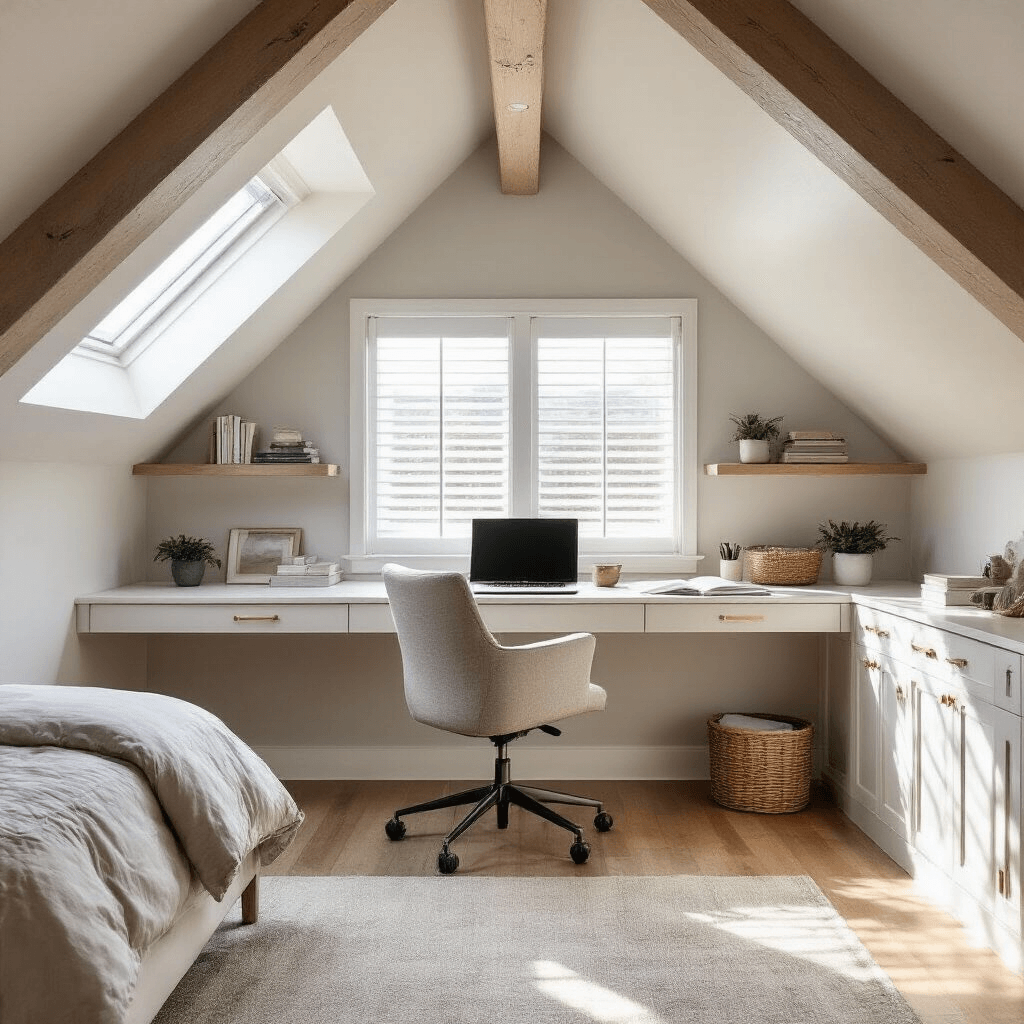
✎ Steal This Look
- Paint Color: Benjamin Moore Chantilly Lace OC-65
- Furniture: low-profile platform bed with integrated storage drawers to maximize headroom
- Lighting: Velux solar-powered fresh air skylight with integrated blackout blind
- Materials: white-washed pine shiplap walls, natural linen textiles, pale oak flooring
There’s something almost primal about waking up to actual daylight instead of an alarm—my attic went from forgotten storage zone to the place I genuinely look forward to retreating to each evening.
The Color Trick That Made My Ceiling Disappear
I painted everything white. Ceiling, walls, trim – everything.
My mother-in-law thought I’d lost it. “It’ll look like a hospital,” she said.
She was wrong.
The white made the boundaries between walls and ceiling blur together. Suddenly, my attic felt open and airy instead of cramped. The natural light bounced around like crazy.
But here’s the thing – white isn’t your only option.
My friend went full moody with deep grays and browns in her attic bedroom. It looks like a luxury hotel suite. Dark colors can actually make sloped ceilings feel intentional and cozy rather than awkward.
Pick your vibe:
- Light and airy: Whites, creams, soft grays
- Cozy cave: Deep browns, charcoal, navy
- Warm retreat: Beiges, tans, warm whites
Just commit to one direction. Don’t waffle in the middle.
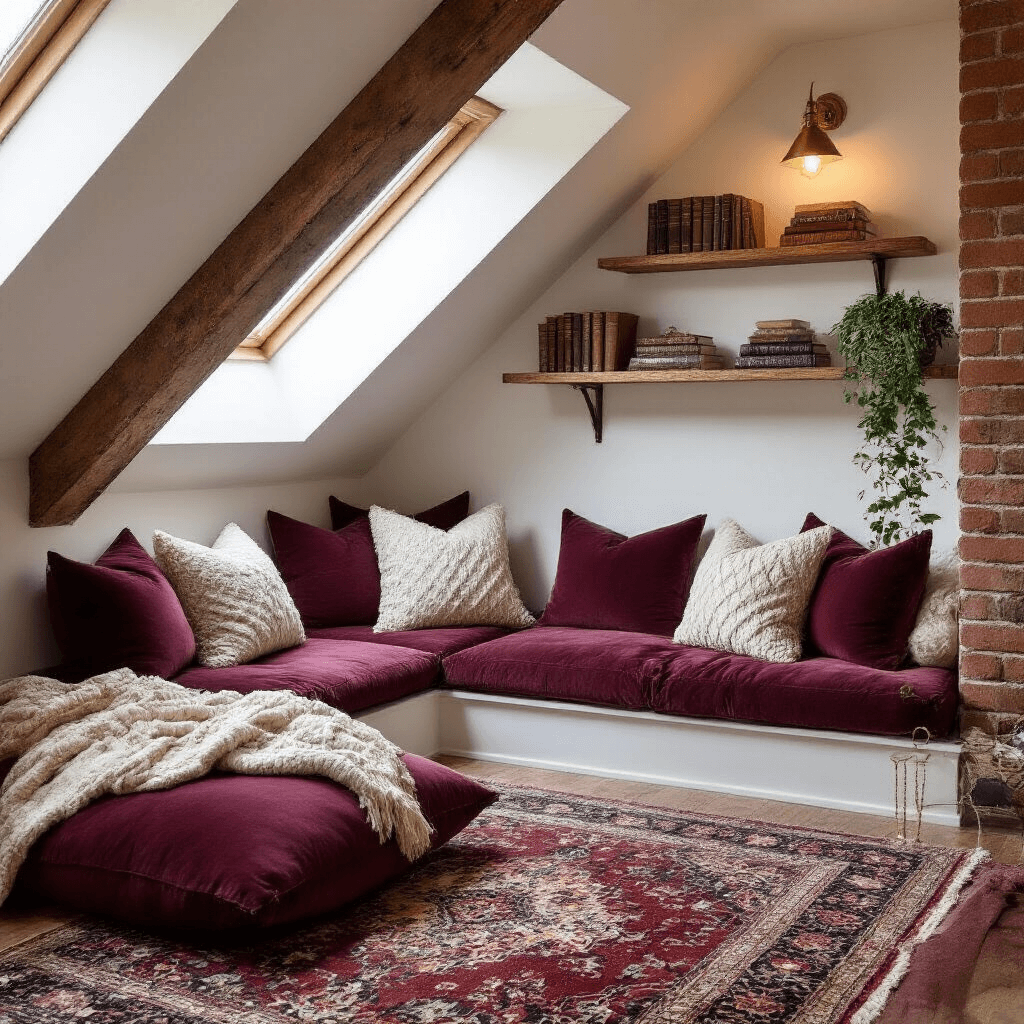
✎ Steal This Look
- Paint Color: Farrow & Ball All White No. 2005
- Furniture: low-profile platform bed with clean lines, painted white to match walls
- Lighting: recessed LED can lights or slim flush-mount fixtures to maintain seamless ceiling plane
- Materials: matte painted plaster, bleached oak flooring, linen textiles, minimal visible hardware
This is the room where you finally stop apologizing for quirky architecture and start owning it—whether that means disappearing into cloud-like white or wrapping yourself in dramatic shadow.
👑 Get The Look
Furniture Placement That Finally Makes Sense
I tried fighting the sloped ceiling at first. Pushed my bed against the wall under the highest point. Left all this awkward dead space under the slopes.
Dumb.
Then I flipped everything. Put my bed right under the lowest part of the ceiling. Created this snug sleeping nook that feels like being in a cocoon.
My furniture rules for attic bedrooms:
- Bed placement: Under slopes or perpendicular to windows
- Storage: Low and built-in beats tall and freestanding every time
- Seating: A comfortable reading chair in that weird corner you thought was useless
- Desks: Against the knee wall where you can’t stand anyway
I got custom low-profile storage units built to follow the roof’s slope. Best money I spent. They hold everything without eating up visual space.
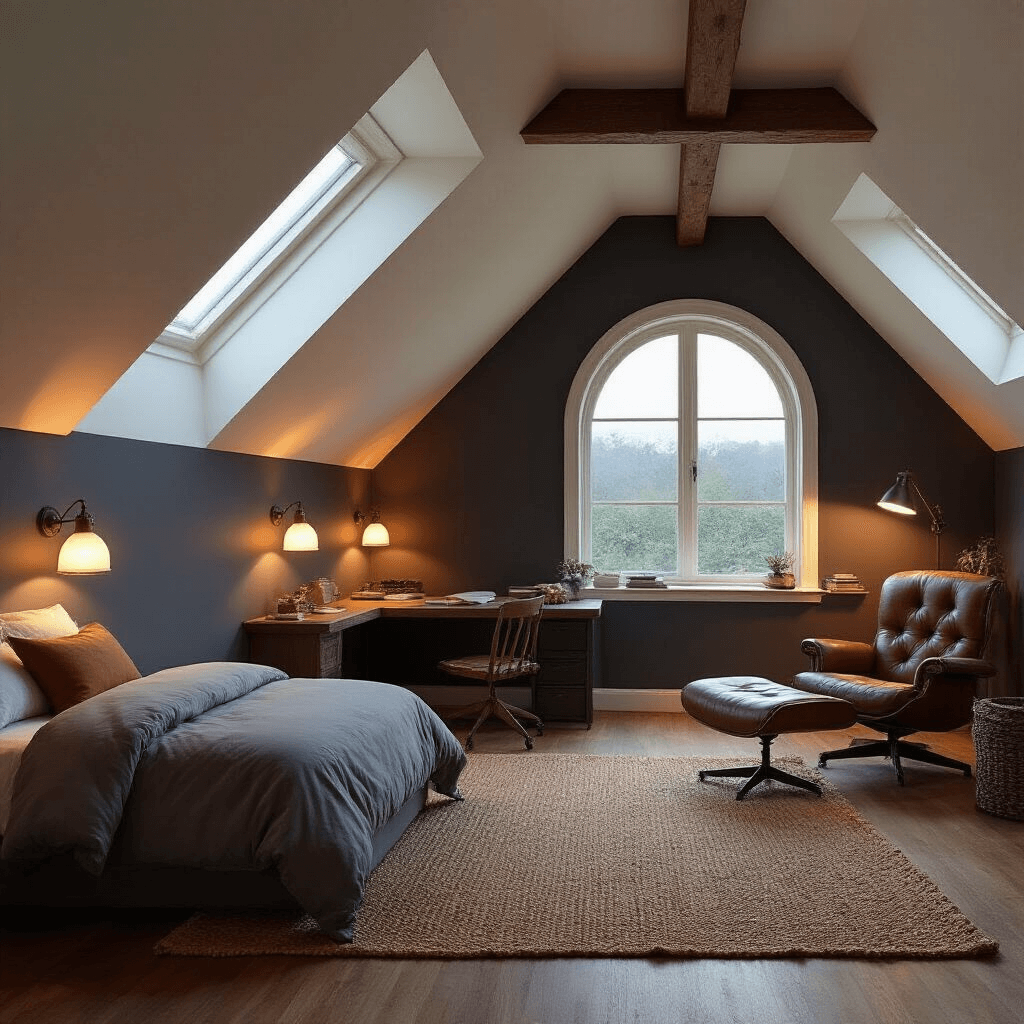
★ Steal This Look
- Paint Color: Behr Swiss Coffee 12
- Furniture: custom low-profile storage units built to follow the roof slope, platform bed positioned under the lowest ceiling point
- Lighting: adjustable wall-mounted swing arm sconce with fabric shade
- Materials: bleached oak, linen upholstery, matte black metal, woven rattan
There’s something deeply satisfying about surrendering to the quirks of an attic rather than fighting them—the slope becomes your coziest feature instead of your biggest frustration.
Those Exposed Beams Aren’t Your Enemy
I almost covered mine with drywall. Almost.
Thank god I didn’t.
Those old wooden beams add character money can’t buy. They give the room history and warmth.
I just gave them a light sand and sealed them with a matte finish. Matched my furniture’s wood tones to complement them. Added some dark neutral bedding. Boom – instant rustic-modern bedroom.
If your beams are painted over or damaged, don’t stress. The exposed brick or the angle of the walls itself becomes your feature. Every attic has something.
Creating Zones Without Walls
My attic is only 250 square feet. But it functions as a bedroom, office, and reading nook.
The secret? Using furniture and lighting to create separate zones.
Here’s how I divided my space:
- Sleeping zone: Bed under the eaves with soft ambient lighting
- Work zone: Small desk against the knee wall with bright task lighting
- Relaxation zone: Chair by the window with a floor lamp
Different lighting for each area tricks your brain into seeing them as separate rooms. A rug under the bed defines the sleeping area. A bookshelf acts as a subtle divider.
No walls needed.
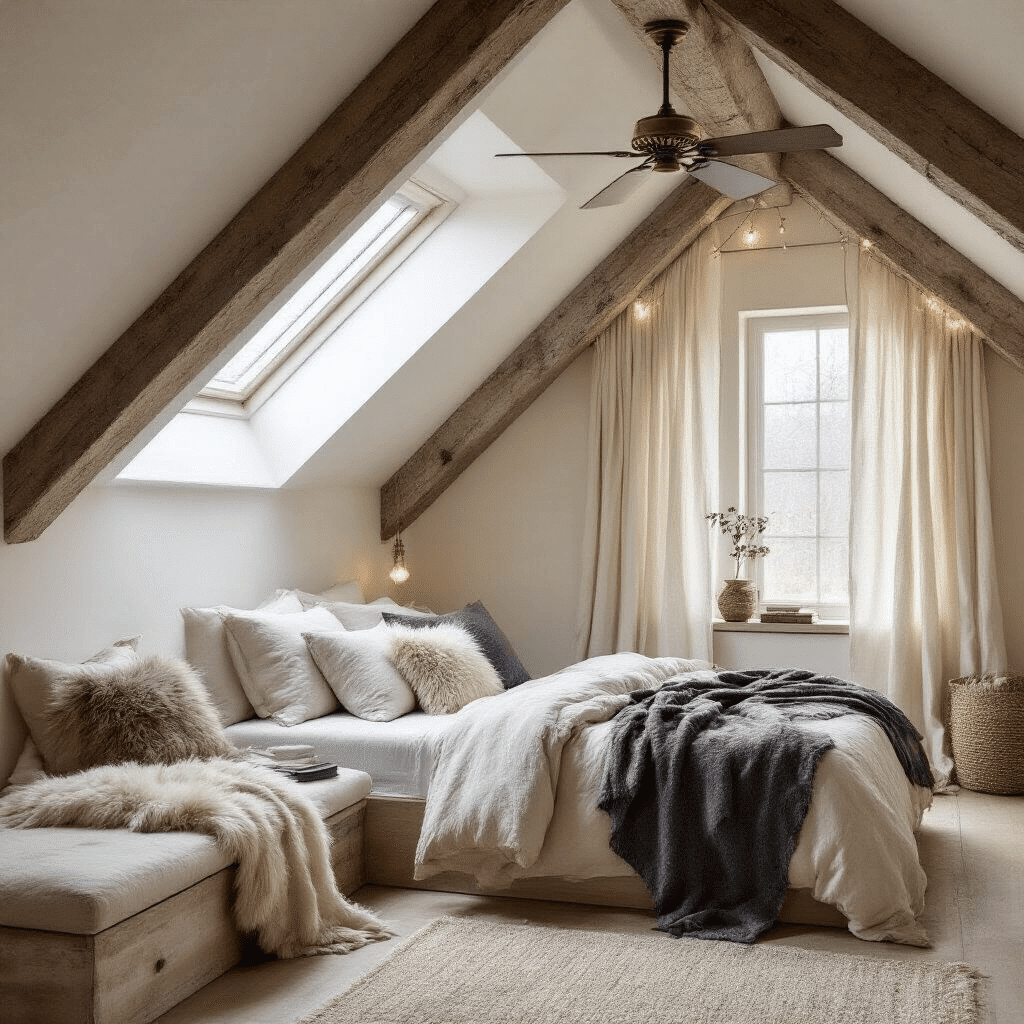
💡 Steal This Look
- Paint Color: PPG Delicate White PPG1001-1
- Furniture: low-profile platform bed with built-in storage drawers to maximize headroom under sloped eaves
- Lighting: adjustable-arm pharmacy floor lamp with warm 2700K LED for reading zone; articulated desk lamp with 4000K daylight LED for work zone
- Materials: natural jute area rug for sleeping zone definition; reclaimed wood floating desk; linen-upholstered slipper chair; matte black metal shelving unit as visual divider
Small attics force you to be intentional about every square foot, and honestly, that constraint often produces more thoughtful, livable spaces than sprawling open floor plans where zones bleed together without purpose.
The Temperature Problem Nobody Warns You About
Attics get hot in summer. Freezing in winter. It’s just physics.
I learned this the hard way during my first July up there. Woke up at 3 AM drenched in sweat.
Solutions that actually worked:
- Proper insulation (boring but essential)
- A quality ceiling fan
- Blackout curtains to block afternoon sun
- A small portable