

This post may contain affiliate links. Please see my disclosure policy for details.
Outdoor Christmas Lights That’ll Make Your Neighbors Jealous
Contents
- Outdoor Christmas Lights That’ll Make Your Neighbors Jealous
- Why Most People Get Outdoor Christmas Lights Completely Wrong
- The Best Types of Outdoor Christmas Lights (And What They’re Actually Good For)
- LED vs. Incandescent: This Isn’t Even a Fair Fight
- The Safety Stuff Nobody Wants to Read (But Seriously, Read This)
Outdoor Christmas lights transform your home into a winter wonderland, but picking the wrong ones means you’re either replacing burnt-out bulbs every week or watching your electricity bill skyrocket.
I’ve been there.
Standing in the hardware store aisle, completely overwhelmed by the 47 different types of lights, wondering if I need C9s or icicle lights or those weird net things.
And then there’s the nagging worry about whether they’ll survive the first rainstorm or if I’m about to burn my house down.
Let me save you from my mistakes.
Why Most People Get Outdoor Christmas Lights Completely Wrong
Here’s what nobody tells you: not all Christmas lights are created equal.
That $15 string you grabbed at the discount store?
It’s probably designed for indoor use, and now you’re wondering why half the bulbs died after one snowstorm.
LED Christmas lights rated specifically for outdoor use are your only real option if you want lights that actually last and don’t triple your electric bill.
I learned this the hard way after replacing three sets of cheap incandescent lights in one season.
Never again.
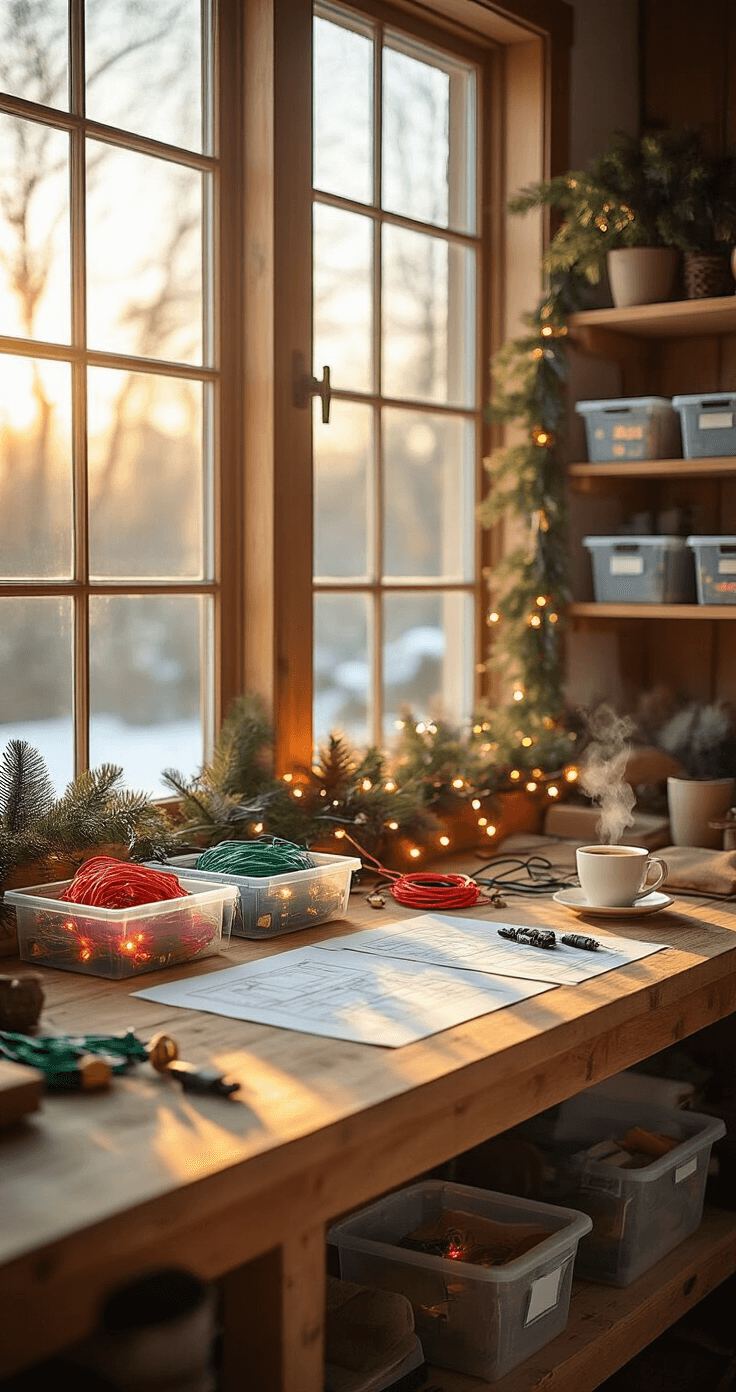
★ Steal This Look
- Paint Color: Benjamin Moore Black Forest Green HC-187
- Furniture: weather-resistant teak storage bench with hidden compartment for light storage
- Lighting: commercial-grade LED string lights with sealed sockets and 50,000-hour lifespan rating
- Materials: marine-grade stainless steel clips, UV-resistant cable ties, powder-coated aluminum mounting tracks
I still remember standing in freezing rain, swapping dead bulbs on cheap strings I’d hung with grocery store tape—now I spend one Saturday in October planning my layout and the rest of December actually enjoying the glow.
The Best Types of Outdoor Christmas Lights (And What They’re Actually Good For)
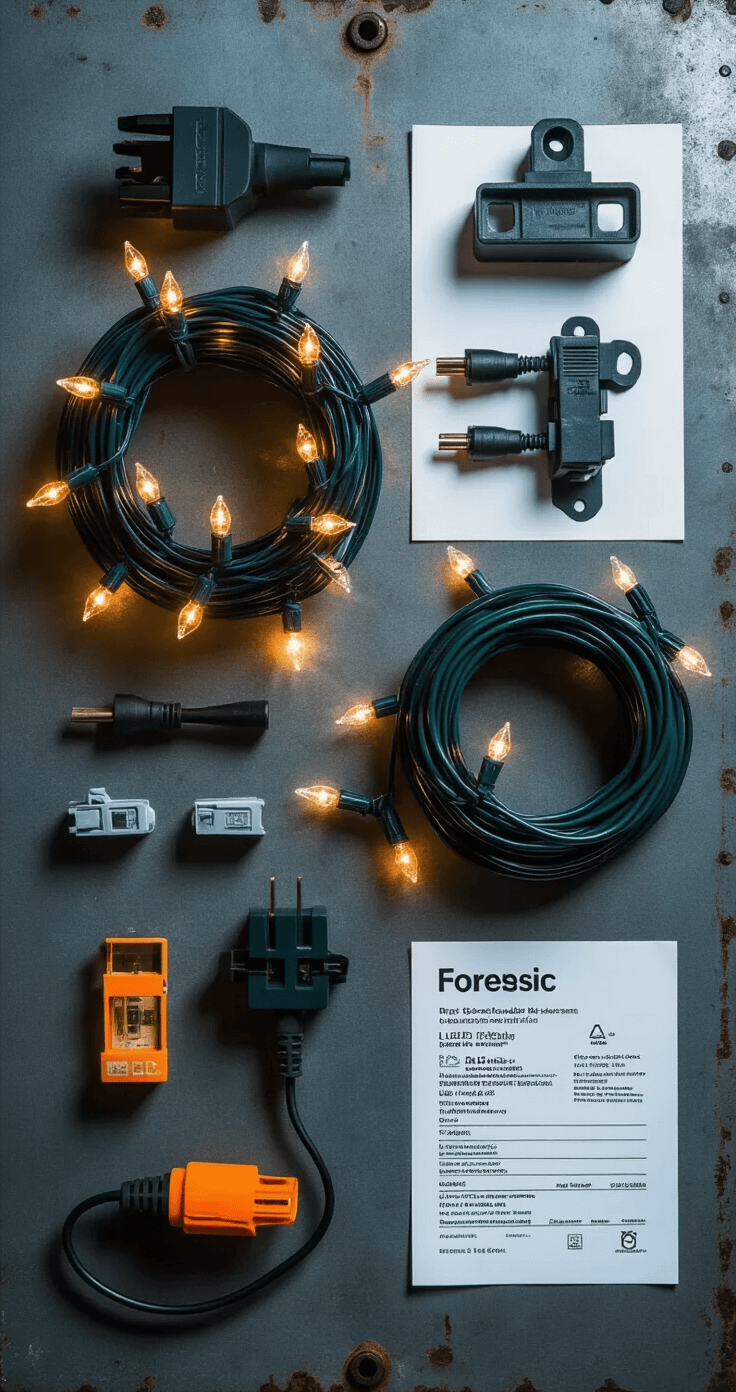
Coaxial 5mm Wide-Angle Conicals: The Workhorses
These are the gold standard for outdoor displays.
The connections screw tight to keep water, snow, and dirt out, and the angled design means they’re bright from every direction—even when your neighbor drives past at 40 mph.
I use LED wide-angle Christmas lights for my entire roofline, and they’ve survived three winters without a single bulb failure.
Why they work:
- Sealed connections that actually keep moisture out
- Visible from any angle
- Durable enough for harsh weather
- Energy-efficient LED technology
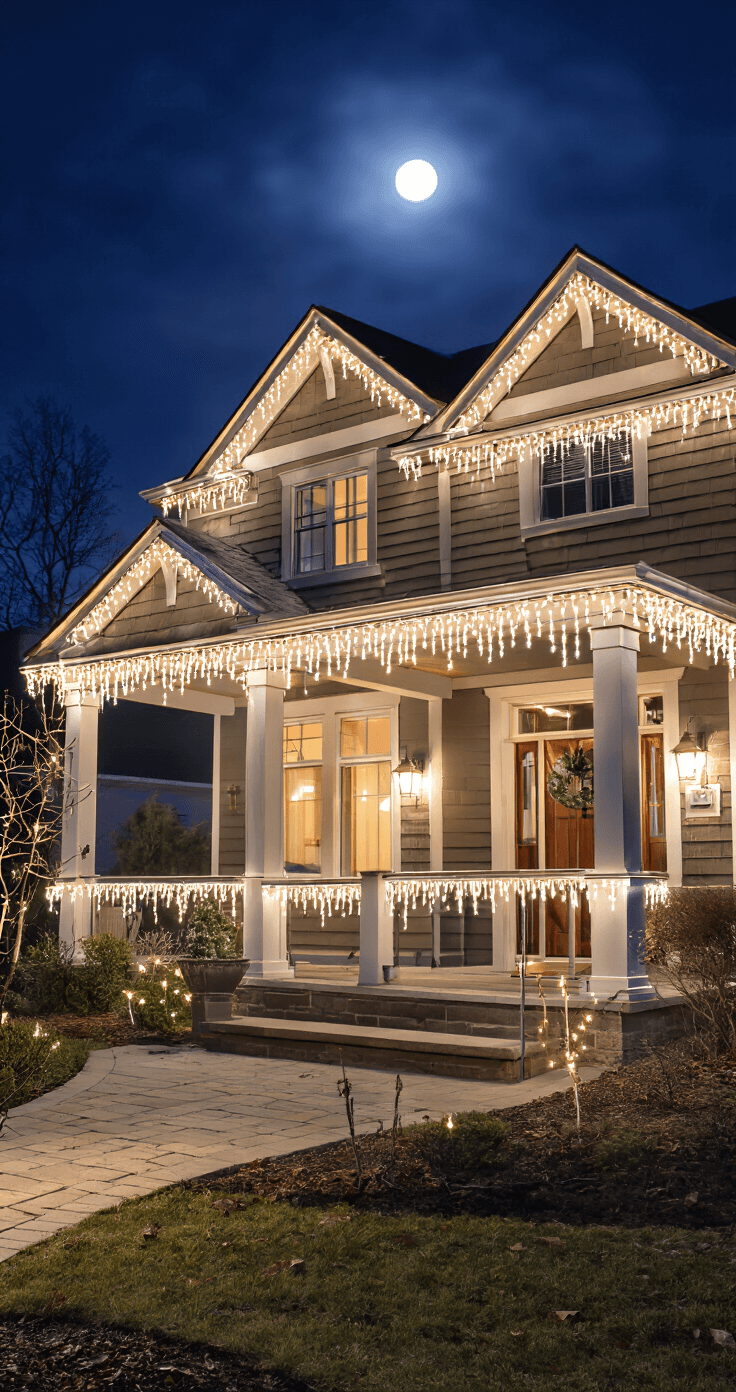
Icicle Lights: For That Classic Frozen Look
Perfect for gutters and fence lines.
They come in different drop lengths, so you can create dramatic cascading effects or keep things subtle.
Some versions twinkle or shift colors, which either looks magical or like a disco depending on your taste.
I stick with steady white LED icicle lights because I’m boring that way.
Best uses:
- Gutters and eaves
- Porch railings
- Fence tops
- Window frames
Net Lights: For When You’re Lazy (In a Good Way)
Net lights are grid-shaped lights that you literally throw over bushes and call it done.
No wrestling with tangled strings.
No spending two hours wrapping individual branches.
Just drape, adjust, and you’re drinking hot chocolate while everyone else is still outside cursing at their holly bushes.
C9 Bulbs: The Retro Showstoppers
Those big, chunky, cone-shaped bulbs your grandparents used?
They’re back, and they’re better than ever in LED form.
They make a statement on rooflines and look incredible wrapped around porch columns.
Fair warning: they’re not subtle.
If your goal is elegant and understated, look elsewhere.
If your goal is “you can see my house from the International Space Station,” C9s are your friend.
String Lights with Large LED Bulbs: Maximum Impact
These provide serious visibility from the street.
I’m talking about those bulbs you can see three blocks away.
They work beautifully along rooflines and across garage doors.
My preference? Warm white outdoor LED string lights that give off that cozy glow without looking like a carnival.
💡 Steal This Look
- Paint Color: use Farrow & Ball brand. Match the ACTUAL wall color in the image. Format: Farrow & Ball ColorName CODE
- Furniture: weather-resistant storage bench with built-in electrical outlet access for light controller boxes
- Lighting: coaxial 5mm wide-angle conical LED string lights with sealed screw-tight connections for roofline installation
- Materials: marine-grade stainless steel mounting clips, UV-resistant polycarbonate light housings, rubber-gasketed electrical housings
I’ve learned the hard way that spending an extra $40 on professional-grade coaxial lights saves three hours of frustration and a frozen December afternoon re-climbing the ladder—the sealed connections really do matter when ice dams form.
LED vs. Incandescent: This Isn’t Even a Fair Fight
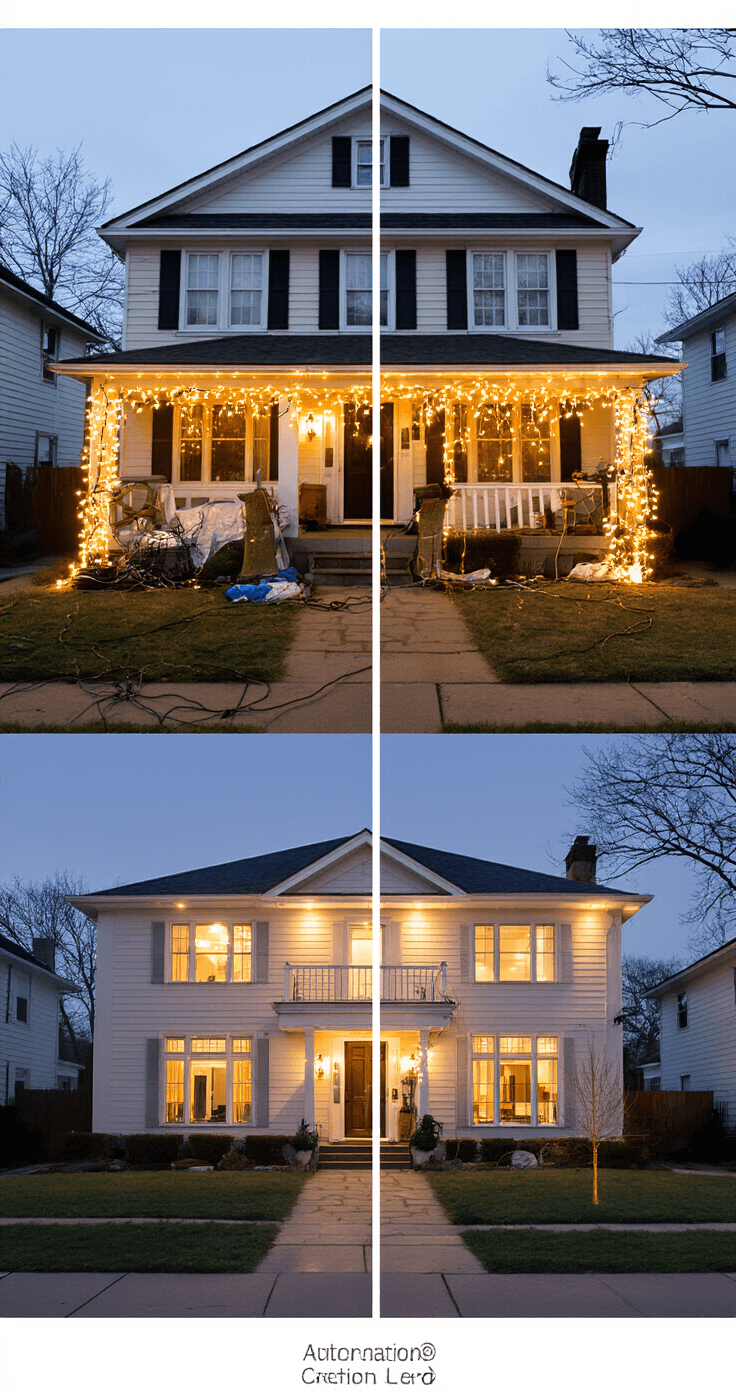
I used incandescent lights exactly once.
Once.
Here’s what happened: half of them burned out within three weeks, my electricity bill went up $40, and when I tried to connect more than three strands together, I nearly tripped a breaker.
LED lights use 75% to 90% less energy than incandescent lights.
Let that sink in.
You can run your entire display for what it used to cost to light up one section.
Other reasons LEDs win:
- They don’t get hot (way safer)
- They light up instantly in freezing weather
- They’re brighter and stay bright longer
- You can connect 15-50 strands together instead of just 3-5
- They last for years instead of one season
The only downside? Initial cost.
LEDs are more expensive upfront, but you’ll save that money back in two seasons through lower energy bills and not having to replace them constantly.
✎ Steal This Look
- Paint Color: Behr Polar Bear 75
- Furniture: weather-resistant outdoor storage bench with built-in electrical access panel for hiding power supplies and timers
- Lighting: permanent outdoor-rated LED channel lighting system with RGBW capability for year-round architectural accenting
- Materials: UV-resistant polycarbonate bulb housings, marine-grade stainless steel mounting hardware, rubberized waterproof connection seals
I learned this lesson the hard way after a $400 incandescent investment literally went dark—now my LED setup from 2019 still burns bright every December, and my January electric bill barely registers the difference.
The Safety Stuff Nobody Wants to Read (But Seriously, Read This)
I’m not trying to be your mom here, but I’ve seen some genuinely terrifying Christmas light situations.
Like extension cords running through puddles.
Or lights stapled directly into electrical wires.
Don’t be that person who ends up on the local news.
Check for the Right Certifications
Look for UL-listed or ETL-listed labels on the packaging.
These certifications mean the lights were actually tested for safety instead of just shipped from some random factory with zero oversight.
You also want an IP44 rating or higher for moisture protection.
This isn’t optional if you live anywhere that gets rain, snow, or even heavy dew.
Electrical Safety Rules You Cannot Ignore
Rule #1: Maximum three light sets per extension cord.
I don’t care if it seems like it should handle more.
Overloading extension cords is how fires start.
Rule #2: Outdoor-rated everything.
Your extension cords need to be rated for outdoor use.
Your outlet covers need to be weatherproof.
Indoor equipment outside is a

[…] Battery-operated lights changed my village game completely. […]
[…] Early December: Cozy, anticipatory images like wrapped presents or twinkling lights that build excitement without screaming “CHRISTMAS!” […]