

This post may contain affiliate links. Please see my disclosure policy for details.
A fresh fringe can change your haircut’s feel without making you lose the length you like. Curtain bangs with layers can bring a softer shape to familiar hair. The right look depends on what you want to keep, change, or make easier each morning.
These 40 ideas show how length, texture, and cut shape can shift the result. Use them as inspiration to personalize a hairstyle with your hairstylist, not as a promise that every version will suit every head of hair. Your natural part and styling habits matter, too.
Some cuts add movement while preserving most of your length. Others make a shorter style feel less blunt, or give long hair a lighter outline. A few may call for more styling than you want to do, and that is useful to know before choosing.
Think about how you want your hair to sit on an ordinary day, not only in a styled photo. The right features can make a cut feel like yours, whether you prefer a neat bob or loose, flowing ends. Start by deciding whether keeping length, adding movement, or simplifying your routine matters most.
What Are Curtain Bangs, and How Are They Different From Face-Framing Layers?
The key difference is that curtain bangs are a parted fringe, while face-framing layers continue farther down the sides of your hair. Face-framing layers are longer sections that taper down each side of the face, generally reaching the cheekbone or lower.
You can get curtain bangs without adding longer layers. The bangs themselves can be the only layer cut around your face, opening from a center or slightly off-center part.
Layers are sections cut at different lengths. Curtain fringe is often angled out from the middle parting, so its shorter center gradually lengthens toward the sides.
The fringe can blend into longer layers, but the two choices do different jobs. Curtain bangs shape the front; face-framing layers carry that shape farther down. Ask your hairstylist to clarify whether you want only a fringe or extra layers through the lengths.
40 Curtain Bangs With Layers Ideas for Every Length and Texture
A bob, a shoulder-length cut, and long hair can all carry curtain bangs, so start with the length you want to keep. Short, medium, and long cuts each give the fringe a different place to blend.
Choose by silhouette first, then consider how the layers and fringe meet. These hairstyles pair different lengths, shapes, and textures without relying on color to make one cut seem different.
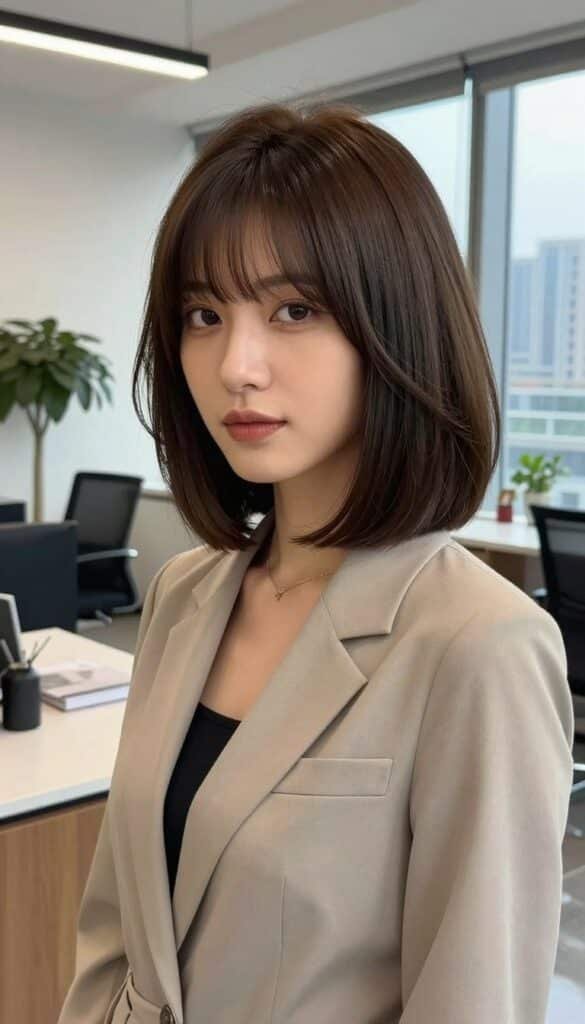
Short Cuts and Bobs
- Layered bob with curtain bangs, soft ends, and a rounded outline that keeps the jawline in view.
- Shaggy bob with broken, choppy layers and a loose fringe that blends into the sides.
- Jaw-length French bob with light curtain bangs and a neat, chin-skimming shape.
- Textured pixie bob with longer crown pieces and a short, parted fringe.
- Blunt bob with subtle curtain bangs, pairing a strong hemline with a softer front.
- Short wavy bob with airy layers that let the natural waves define the shape.
- Curly bob with blended bangs, leaving the curls rounded rather than sharply stacked.
- Asymmetrical bob with a deeper part and longer fringe on one side.
- Ear-length shag bob with feathered sides and a piecey, open fringe.
- Stacked bob with a lifted back and longer pieces that sweep toward the cheekbones.
- Short layered crop with soft curtain bangs and wispy ends around the ears.
- Rounded bob with a smooth crown and gently tapered face-framing pieces.
Medium-Length Movement
For medium hair, curtain bangs with layers can add shape without giving up a shoulder-grazing length. This range also suits layers curtain bangs that blend into a lob or fall toward the collarbone.
- Flipped-out lob with ends that turn away from the neck and a curved fringe.
- Shoulder-length waves with blended bangs and loose, natural movement through the ends.
- Collarbone cut with wispy layers and a soft outline that keeps the ends light.
- Medium U-shaped cut with long front pieces and a rounded back hem.
- One-length lob with curtain bangs, using only the fringe for movement around the face.
- Shaggy shoulder cut with crown lift and separated layers through the sides.
- Medium curly cut with rounded layers and bangs blended into the curl pattern.
- Wavy lob with feathered front layers that join the rest of the hair.
- Medium cut with choppy ends and a loose, slightly off-center fringe.
- Shoulder-length blunt cut with longer curtain bangs that tuck behind the ears.
- Layered lob with soft bends and face-framing pieces that start near the cheekbones.
- Medium cut with a deep side part and sweeping, curtain-inspired fringe.
- Fine, shoulder-length hair with subtle layers and a light, see-through fringe.
- Thick medium hair with blended layers that remove weight near the front.
Long Lengths and Flowing Layers
Long hair gives longer pieces room to blend into the cut. If you want long curtain bangs with layers, consider how the front pieces connect to the length rather than stopping abruptly.
- Long butterfly cut with short, airy crown layers and sweeping front sections.
- Long feathered layers that flow from the cheekbones toward softly tapered ends.
- Long curls with blended bangs, shaped to join the curl pattern on each side.
- Long U-shaped cut with a center-parted fringe and a full, rounded hem.
- V-shaped long hair with layers that narrow toward the back and frame the cheeks.
- Long, straight hair with minimal layers and a light fringe for a clean outline.
- Long shag with choppy layers, crown texture, and an easy, piecey front.
- Thick long hair with blended layers that add movement without thinning every end.
- Long waves with face-framing layers that follow the natural flow of the hair.
- Long hair with wispy layers around the face and a fuller shape through the back.
- Long, fine hair with longer layers and a sparse fringe that keeps the ends full.
- Long curls with a rounded shape and soft, side-blended bangs.
- Long hair with a center part, cheekbone-length fringe, and smooth tapered layers.
- Long layered hair with a gentle outward sweep and loose, flowing ends.
Choose the example whose overall silhouette is closest to the shape you want before narrowing down the fringe details.
Which Curtain Bangs Suit Your Face Shape?
No face shape is automatically wrong for curtain bangs, but the most flattering length and sweep can differ. Your features can guide the fringe shape, while small changes in length can shift the overall effect.
Each face shape can wear curtain bangs when the length and sweep are customized. These starting points are flexible, not strict rules.
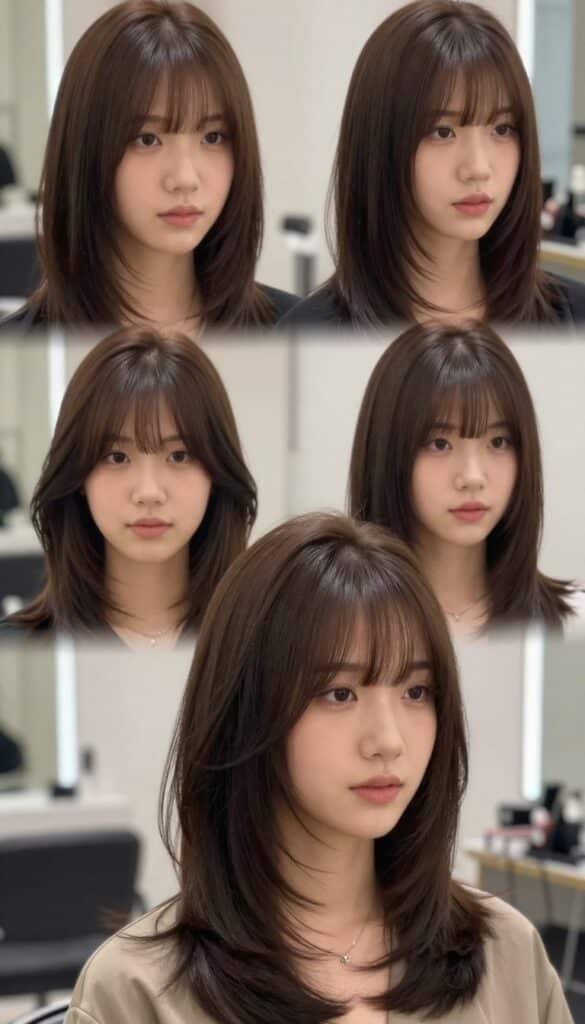
| Face shape | Bang length or shape | Intended effect |
|---|---|---|
| Round | Longer pieces beginning near cheekbones | Create the look of added vertical length |
| Square | Shorter center feathered outward | Soften angles and draw attention to eyes |
| Oval | Nearly any curtain-bang length | Keep the face outline balanced |
| Heart-shaped | Start just below the brow and sweep outward | Add width to the lower face |
Round and Square Faces
Longer curtain bangs that begin around the cheekbones can create the illusion of extra vertical length on a round face. For a square face, a slightly shorter center that feathers outward can soften angular features and draw the eye upward.
Oval and Heart-Shaped Faces
Oval faces can wear almost any curtain-bang length, so your preferred style can lead. On a heart-shaped face, bangs starting just below the brow and sweeping outward can add width near the lower face.
Long and Oblong Faces
Very long bangs swept far to the sides can emphasize a long or oblong face. A shorter fringe closer to the eyebrows can add width instead.
The often-cited short-hair test measures about 2.25 inches from earlobe to chin, not three inches. It is a style guideline for short hair, not a test of bang suitability. Bangs do not inherently make an older woman look older or younger; the chosen length, shape, and personal preference matter more. If you have a long or oblong face, keep the center closer to your eyebrows rather than letting very long pieces sweep far outward.
How Do Layers Work With Different Hair Types?
Your natural texture changes how curtain bangs fall, so the same cut can look airy on waves and flatter on straight hair. Hair density also matters because layers remove weight as well as shape the outline.
Very fine or sparse hair may look less full with many short layers. Subtle, longer layers are often the safer starting point for thin hair.
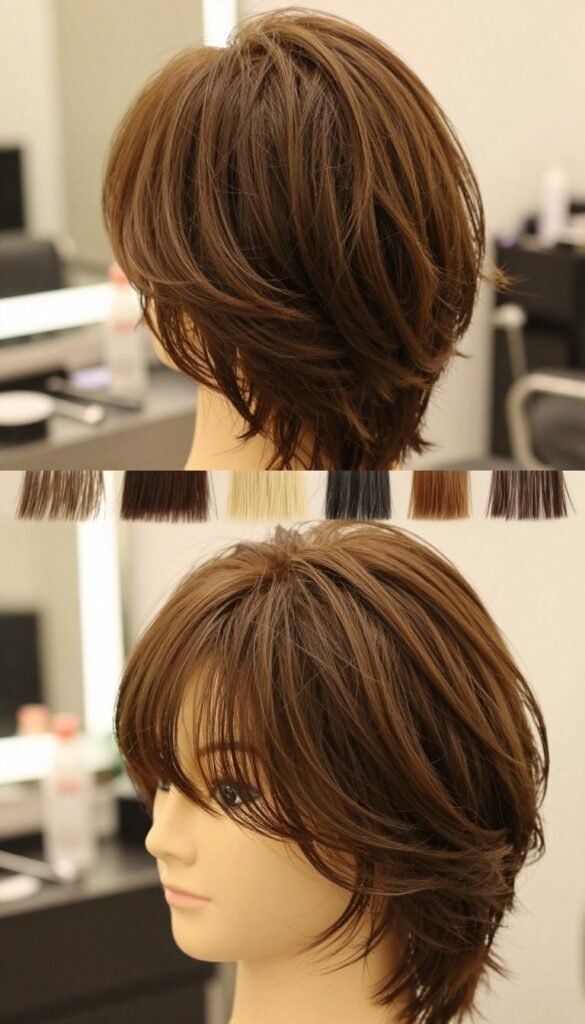
| Hair type | Layer or fringe approach | Main consideration |
|---|---|---|
| Straight | Point-cut ends and light layers | Plan for root lift if the fringe sits flat |
| Fine | Wispy fringe and subtle longer layers | Keep fullness through the ends |
| Wavy | Blended layers that follow the wave | Natural movement can form the sweep |
| Curly | Dry-cut bangs shaped to the curl | Allow for shrinkage as curls dry |
| Thick | Layered fringe with texturized ends | Reduce heaviness without over-thinning |
Straight and Fine Hair
Curtain bangs with layers for straight hair can benefit from point-cut ends, which add texture instead of a blunt edge. A root-lift plan can help the fringe avoid lying flat, especially when your hair has little natural volume.
For fine hair, a wispy curtain fringe can frame the face without taking as much fullness from the rest of your cut as a thick fringe. Many short layers may make sparse hair appear thinner, so ask your hairstylist to keep the shape soft.
Wavy, Curly, and Thick Hair
Waves can create an easy outward sweep with little help. For more ideas that suit this texture, browse these haircuts for thick, wavy hair, including blended shapes that keep fullness.
Thick hair can suit layered curtain bangs, with texturized ends to stop the fringe from feeling too heavy. Curly bangs need a dry cut from a hairstylist who knows curl shrinkage, since wet hair can become much shorter as it dries. For curls, ask for a dry cut so the finished length reflects how your hair sits when dry.
How Should You Choose Bang Length and Layer Placement?
Decide first whether you want to preserve length, create lift near the crown, or make the front pieces blend into the rest of your cut. Layer placement changes the shape more than the word “layers” alone suggests.
Shorter layers can add height, while longer layers lighten hair with less change to its outline. Longer curtain bangs often work best below the shoulders, where the front pieces have enough length to blend without weighing down the face.

| Overall length | Layer placement | Likely effect |
|---|---|---|
| Short | Crown layers or short blended layers | More height and a defined shape |
| Medium | Blended layers through the front | Movement without a sharp change in outline |
| Long | Longer layers and soft front pieces | A softer outline with less weight |
Short hair can take shorter curtain bangs because the fringe does not need to travel as far before meeting the rest of the cut. Medium hair often suits blended layers that let the front move without breaking the shape into many steps.
Save this article
Enter your email and we'll send it straight to your inbox.
On long hair, the layers curtain bangs create can start near the face and continue into longer lengths. A longer layer usually removes less shape than many choppy layers, while crown layers focus on height. Layers add movement in different places, so name the area where you want to see it.
Ask for wispy layers if you want a softer front, or longer layers if your main aim is volume without a major loss of length. The best placement follows your natural flow and the outline you want, not a fixed rule for every haircut. If keeping length is your priority, ask for longer layers rather than removing weight with many short layers.
How Do You Style Curtain Bangs at Home?
A round brush and a few minutes of outward-directed drying can create the soft curve that makes curtain bangs open away from your face. About five minutes is a common morning styling time, though your texture can change the routine.
Unstyled curtain bangs may hang flat. A short blow-dry can set the shape, while air-drying gives natural waves and curls room to keep their texture.

Make a Soft Outward Bend With a Blow-Dryer
To style curtain bangs, start with damp hair or a light prep product. Rough-dry the fringe forward, then split it at your natural part before shaping each side.
- Rough-dry the fringe forward until it is damp, not dripping.
- Split the hair at your center or slightly off-center part.
- Use a round brush to direct each side outward from your face.
- Let the fringe cool in place, using no-crease clips if needed.
- Use a straightening tool only to bend roots and ends away from your face.
Keep the airflow moving as you brush so the roots lift instead of lying close to your forehead. A light spray can help hold the curve, but use a small amount near the front.
Add Lift With Rollers or Air-Dry
A Velcro roller can add root lift and an outward bend. Leave it in damp bangs for 10-15 minutes to help set the shape.
Air-drying is another option, especially for naturally wavy or curly hair. Wavy or curly hair may need less heat to keep its natural texture, so let its own pattern guide the finish. Let the fringe cool in its intended direction before brushing through it.
How Often Should You Trim and Care for Curtain Bangs?
Plan on a bang-trim visit every 3-4 weeks if you want to keep the fringe’s shape crisp. Most bang trims take 10-15 minutes, so the appointment is usually brief.
Longer side pieces can blend into your existing layers as the fringe grows. You can sweep them aside or tuck them behind your ear during that stage.

That softer grow-out can make curtain bangs easier to keep than a fringe with one blunt, fixed edge. The side sections join the rest of your hair, so they can still frame your face while gaining length.
Front pieces may need more frequent cleansing than the rest of your hair. Face oils, sweat, makeup, and sunscreen can collect on the bangs through the day, especially when they touch your forehead.
Keep a gentle cleansing option handy for the front pieces on days when they collect oil or face products.
What Does This Cut Cost, and What Should You Ask For?
In the United States, a women’s haircut averages $10-$90, while a bang trim averages $5-$60. The service, stylist experience, salon type, and local cost of living affect the final price.
A full haircut and a bang trim have different price ranges. Curtain bangs with layers may be part of a haircut or an added service, so ask how the salon prices the work.
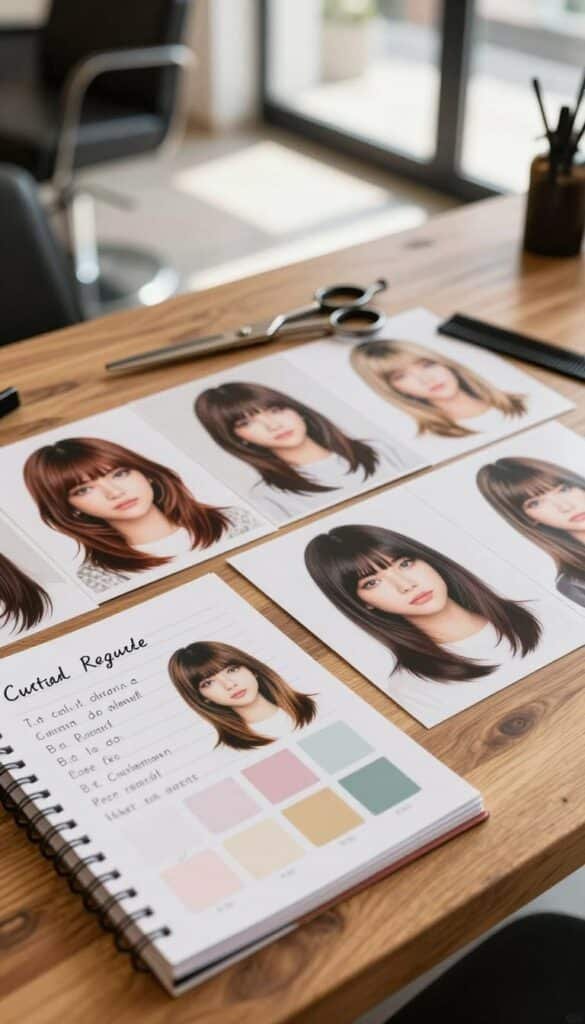
Typical U.S. Salon Price Ranges
A typical U.S. women’s haircut costs $10-$90, and a bang trim costs $5-$60. Those ranges give you a starting point for a curtain bangs with layers price estimate.
Experience, salon type, local living costs, and the work requested all affect the bill. Many hairstylists offer existing clients free bang trims, though salon policies differ.
What to Tell Your Hairstylist
Clear details help your hairstylist shape soft curtain bangs to match your hair and routine. Bring reference photos, then explain what you like about each one.
- Bring reference photos that show the fringe and the full cut.
- Describe your desired fringe length and thickness.
- Explain how the bangs should blend and where your natural part falls.
- Describe your daily styling routine and how much time you want to spend.
Avoid cutting curtain bangs at home because an uneven fringe sits at the center of your face. Your hairstylist can also tell you whether the cut needs extra layers through the lengths. Before booking, ask the salon whether a bang trim is included with your haircut or priced as a separate service.
What Can You Try Instead of Curtain Bangs?
If you like the face-framing effect but do not want a center-parted fringe, you have other cut options. The right front shape depends on whether you want your forehead clear or prefer some hair across it.
Face-framing layers leave the forehead clear while shaping the sides. Side-swept bangs cross the forehead, while wispy bangs offer a lighter fringe than a thick, heavy bang.

Keep the Forehead Clear With Face-Framing Layers
Choose face-framing layers if you want no fringe but still want the sides of your hairstyle to frame your face. The longer pieces can enhance natural movement without covering your forehead.
This option can suit a routine where you would rather wash and style the front with the rest of your hair. Ask for the side sections to blend into your haircut instead of ending in a sharp step.
Choose a Different Fringe Shape
Side-swept bangs move across the forehead and create an off-center line. They can work if you want a fringe that follows one direction rather than opening from the middle.
Wispy bangs make a softer, airy fringe with less weight across the forehead. Choose them if you want some coverage without a thick, full shape.
Bring a reference photo of the alternative you prefer so your hairstylist can adapt its length to your routine.
Conclusion
The right layered look is the one that works with your natural texture and the amount of time you want to spend styling. A good cut balances fringe length and layer placement with the way your hair falls on its own.
You do not need to copy a photo exactly. A small change to the part, length, or amount of layering can make the hairstyle fit your habits better.
Choose one or two reference photos and take them to a hairstylist for a cut tailored to your part and routine.
Keep this one for later
We'll email you the link so you can come back to it.


