

This post may contain affiliate links. Please see my disclosure policy for details.
A few light pieces around your face can change the feel of a haircut without committing you to a solid fringe. Could a little movement at the front make your usual cut feel new? Wispy curtain bangs offer inspiration for that kind of change, with options for long, medium, and short hair.
You can wear the look with natural texture, loose lengths, or an updo. The right reference should match your hair and daily routine, not just a photo you like. Treat these ideas as a starting point for a salon conversation, not a one-shape-fits-all rule.
That distinction matters when you are choosing a trend to try. A fringe that looks light and easy on one person may need a different fullness or length for your hair. Bring photos that show the front and side, so your stylist can see how the pieces connect.
Keep one or two reference photos that show the kind of movement and fullness you actually want.
What Defines Wispy Curtain Bangs?
Think of curtain as the shape of the fringe and wispy as how much hair makes up that fringe. Density means how much hair is gathered into the fringe. Curtain describes an opening and outward sweep, while wispy describes a light, separated amount of hair.
Wispy curtain bangs combine those features; they are not a separate hair type. Curtain bangs part near the center and sweep toward the sides, while wispy bangs can part in the middle, part to one side, or fall forward.
Wispy bangs are lighter and less full than blunt bangs, often ending at the brow bone or just below. The sides may taper longer. That light fringe can still fall over the forehead, so “wispy” describes the amount of hair, not its direction.
| Type | Defining feature | Usual direction | Forehead coverage |
|---|---|---|---|
| Curtain | Center-opening shape | Sweeps outward | Open center, sides frame forehead |
| Wispy | Light, separated density | Center, side, or forward | Light or uneven coverage |
| Wispy curtain | Light hair with an opening | Parts and sweeps outward | Open center, airy sides |
A useful starting length is brow level or longer. Longer pieces at the sides can leave the frame more open. Wispy bangs often reach the brow bone, but the finished length depends on the shape you want and how your hair sits.
If you are unsure about length, ask to keep the first cut longer so the sides can still be moved away from your face.
Which Face Shapes Do They Complement?
A round face can wear this fringe, with longer side pieces helping create a more vertical frame. No face shape is ruled out; length, fullness, and sweep change the effect. Use these five adjustments as options, not rules that exclude you from bangs.
Wispy bangs can soften angular features, while curtain bangs can draw attention to the cheekbones. Your face shape is one guide, but the feature you want to highlight matters just as much.
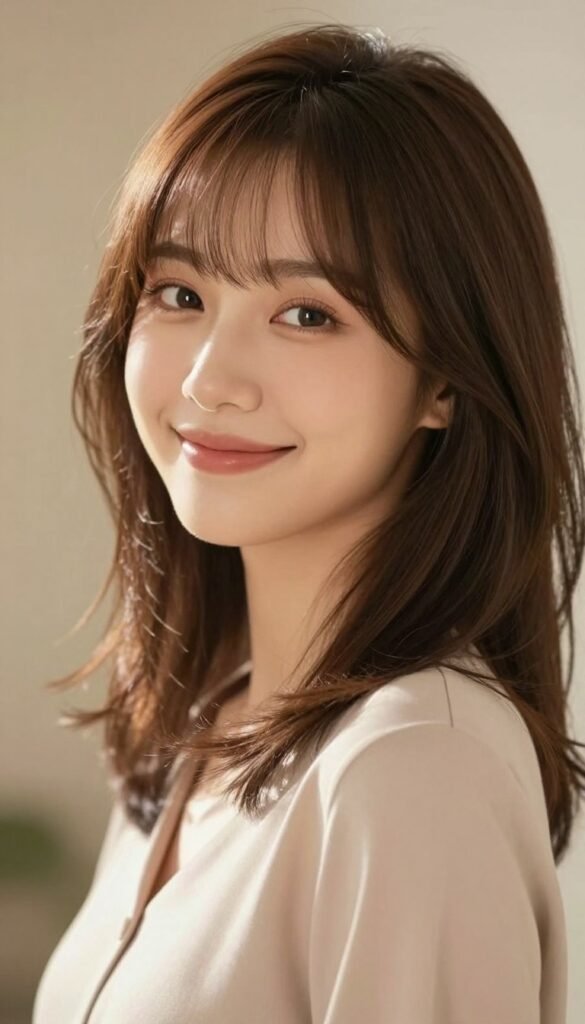
- Round: Let longer curtain pieces extend below the cheekbones. This adds dimension and can create the illusion of a longer outline.
- Square or rectangular: Choose airy pieces that fall below the cheekbones and sweep outward. That soft movement can ease the look of angular features.
- Heart-shaped: Let wisps skim the cheekbones. The soft frame can balance the forehead without hiding the face.
- Long: Try a fuller fringe that starts higher on the forehead. Added width at the front can create a broader-looking frame.
- Diamond-shaped: Keep the curtain pieces longer and textured. Their movement can soften the outline and draw attention to the cheekbones.
These ideas describe how a cut can change the frame, not what you are allowed to wear. A round face may prefer a longer side sweep, while an angular face may like softer, separated ends.
Longer pieces past the cheekbones can add dimension on a round face. For a square face, an outward sweep below the cheekbones can soften the outline.
Use the feature you want to emphasize, such as cheekbones or eyes, to guide the shortest point and side length.
How Should You Adapt the Cut to Your Hair Texture?
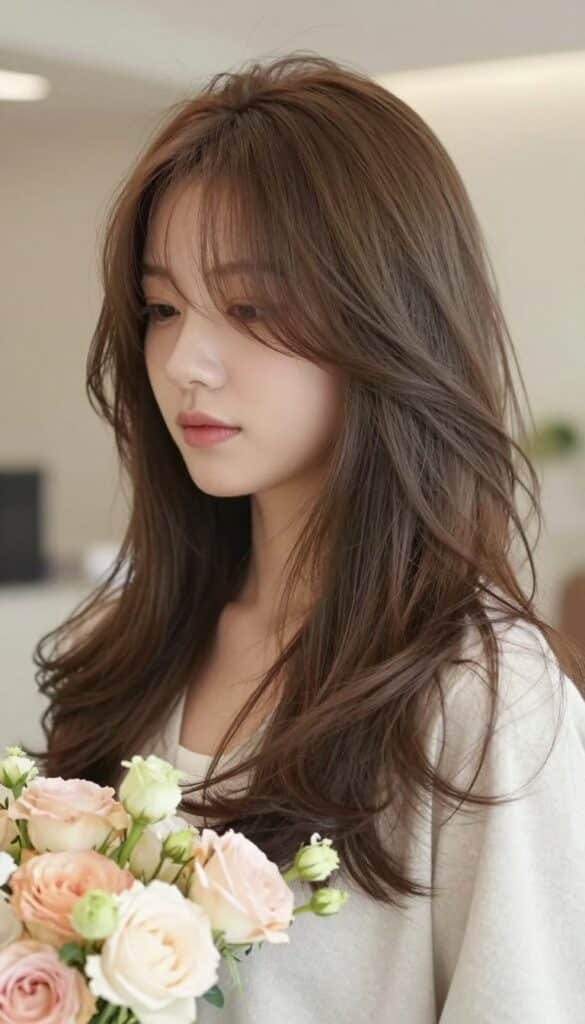
Fine hair can support wispy bangs when the section is light enough to stay airy rather than look sparse. Your natural texture shapes how the fringe falls and how much work it may need. Thin hair can wear bangs when the section stays light and the cut suits the way your hair behaves.
Fine, straight hair often benefits from a soft fringe and a little lift at the roots. Medium hair can hold more fullness, while waves bring their own bend and movement.
| Hair type | Useful fringe approach | Natural effect | Practical caution |
|---|---|---|---|
| Fine and straight | Light section with root lift | Airy, soft front | Too much hair may look flat |
| Medium and straight | Separated pieces with a clear opening | Smooth, controlled sweep | Check how the part falls |
| Wavy | Follow the bend in the hair | Loose movement and texture | Uneven waves may separate |
| Curly or coily | Shape around the curl pattern | Distinct curls frame the face | Shrinkage changes dry length |
Wispy bangs suit long, medium, and short hair, so the base length does not set the limit. The amount of hair brought forward has a bigger effect on fullness than the haircut’s overall length.
In 2026, fine-to-medium hair can wear a light fringe, and coily hair can create a similar effect by separating a few curls with fingers. A light section and root lift can keep fine, straight hair looking airy.
Show your stylist how your hair usually dries, not only how it looks when wet.
Which Wispy Curtain Bangs Ideas Work With Long Hair?
Long lengths give the longer side pieces room to blend into the rest of your haircut. Below-shoulder hair can balance longer curtain pieces without making the front feel heavy. The fringe still needs to balance your face, even when the rest of your hair is long.
Look for a reference that shows where the front pieces end and how they join the length. A clear view of that blend can help you describe the shape you want.
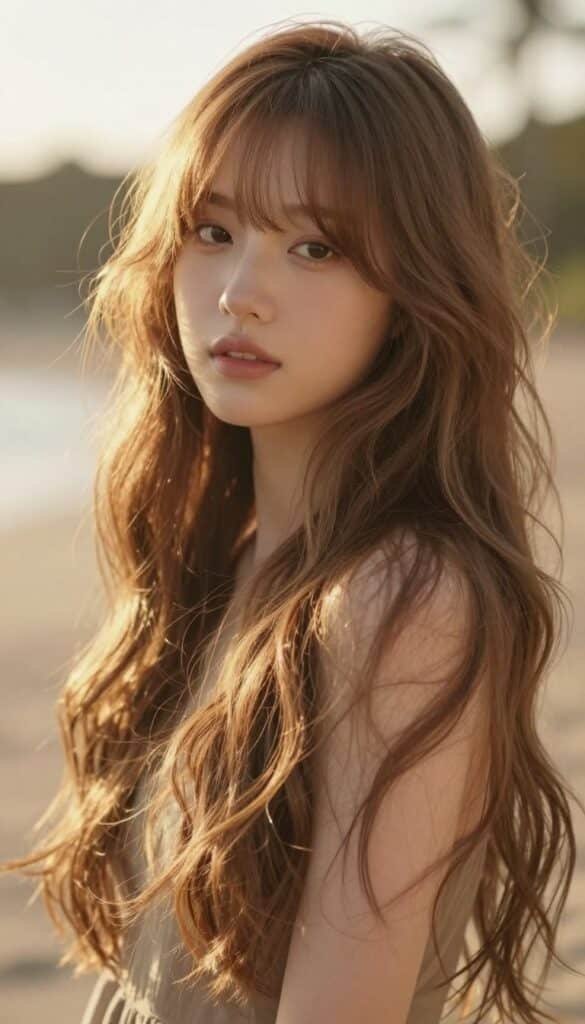
- Billie Eilish’s long curtain fringe with long hair gives you a clear example of a frame that continues into extended lengths. Keep the sides light so they move with the rest of the cut.
- Dakota Johnson’s longer fringe with extra-long hair shows how a soft front can sit alongside a dramatic length. The sides can taper into the hair rather than stop abruptly.
- Jessica Alba’s long, outward-flicked curtain pieces add a visible frame without making the whole front look solid. They work as a reference for a more open finish.
- Suki Waterhouse’s lived-in curl and boho feel pair a relaxed fringe with natural movement. That loose finish can suit hair that rarely falls in a perfectly smooth line.
- Loose waves with wispy curtain bangs create a gentle frame that joins the length through movement. Keep the wave loose enough to show where the fringe separates.
Long curtain pieces can suit hair that falls below the shoulders, especially when the side lengths connect with the base cut. The same fringe may need a different shortest point on you, so focus on the balance rather than copying a celebrity’s exact haircut.
Billie Eilish wore long curtain bangs with her long hairstyle at the 96th Oscars. Daisy Edgar-Jones has worn a softer fringe with beachy waves, another option if you want a less defined frame.
Choose a reference where you can clearly see both the fringe and the length it needs to blend into.
What Medium-Length Looks Show Off the Fringe?
Medium-length hair gives you room to show a fringe without letting long side pieces dominate the whole cut. The front can be soft or bold, depending on how much hair sits across the forehead. Choose the fullness at the front before settling on the rest of the style.
A medium base cut works with layers, curls, and polished waves. The fringe can look intentionally choppy or softly grown-in, so your reference should show the finish you prefer.
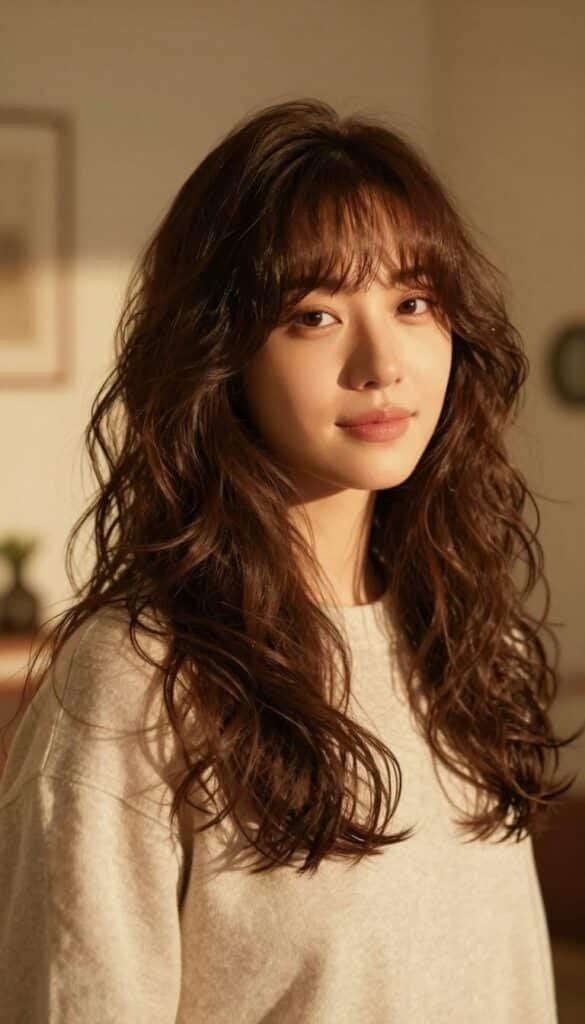
- Ella Purnell’s choppier fringe with a curly, undone updo gives the front a relaxed, broken-up edge. It can inspire a medium cut that feels loose rather than carefully set.
- Sabrina Carpenter’s voluminous fringe at the 2024 Vanity Fair Oscar Party shows a fuller, curled shape. The lifted front makes the bangs a clear part of the hairstyle.
- Emily Ratajkowski’s full bangs with Hollywood curls offer a polished wave and a more finished frame. Use the example to describe the balance between styled hair and a soft fringe.
- Selena Gomez’s outgrown curtain bangs with a subtle curl create a gentle, less structured finish. The longer front pieces can sit easily with a flexible base cut.
- Jameela Jamil’s bangs with thick hair show how a denser texture can carry more fullness. Keep the shape separated if you want movement rather than a solid block.
These references show different ways to shape the front without copying someone else’s face or exact haircut. A choppy edge changes the mood, while a curled fringe gives the front a more finished outline.
Medium hair can also hold layers that help the sides blend into the rest of the cut. Tell your stylist whether you want a visible fringe or a softer frame that grows into the haircut.
Ask for the amount of fullness you want at the front before deciding how much hair to bring forward.
Which Short Cuts Pair Well With a Wispy Fringe?
A short haircut can still carry a longer fringe that softens the line around your face. Short hair does not require short bangs; the fringe can remain brow-length or longer. Choose a length that balances the haircut and gives you the forehead coverage you prefer.
Bobs and short layered cuts can both work with separated pieces at the front. The key is how the fringe meets the sides, not whether every part of the cut has the same length.
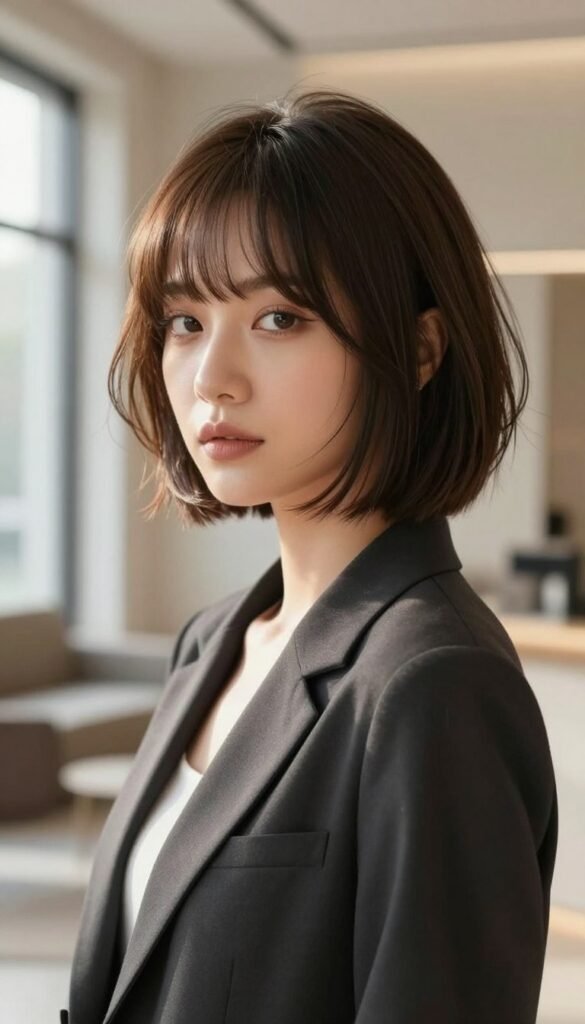
- A soft face-framing bob inspired by Lucy Boynton keeps the outline gentle around the cheeks. The curtain pieces can blend into the bob instead of forming a hard edge.
- A bob with a longer, center-opening fringe gives you an airy front and compact shape. The longer sides can soften the line between bangs and the rest of the cut.
- A short layered cut with tapered sides adds texture near the temples. Separated ends keep the front from looking too dense against the shorter sides.
- A jaw-length cut with a light, brow-skimming fringe pairs a clear haircut line with a softer front. This look keeps some forehead coverage without a heavy band of hair.
- A textured bob with separated pieces over the forehead adds a broken-up finish. Each piece can move on its own, which suits a less polished style.
Lucy Boynton has worn soft, face-framing curtain bangs with a bob. Her look offers one example, not a promise that the same cut will suit every face or hair type.
Short wispy bangs can be brow-length or just below, but the length can change with the haircut. A short bob may call for longer side pieces to keep the front connected to its shape.
Bring a front-facing and a side-view reference so the stylist can see how the short cut and fringe meet.
How Can Natural Curls and Waves Shape the Look?
Natural curls can give each side of the fringe its own movement, so a perfectly matched pair is not the only goal. Texture can be part of the shape, rather than something to smooth away. Curl pattern and shrinkage affect where the fringe lands when dry.
A wavy or curly fringe can show more of your natural texture when air-dried or diffused. The final length may look shorter than it did while wet, especially when curls spring up.
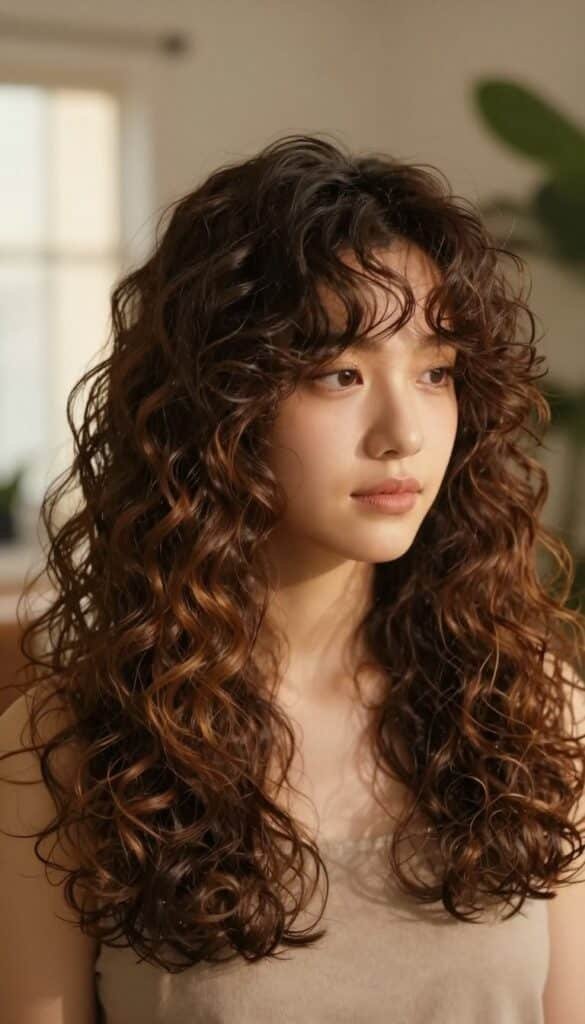
- A defined curly frame inspired by Yara Shahidi lets curls shape the opening around the face. The outline can stay soft without forcing every curl into the same position.
- Alexa Chung’s softer, choppy curly fringe blends with choppy layers. This gives the front a less uniform edge and connects it to the rest of the haircut.
- Naturally diffused waves with separated front pieces keep the bend visible. A few distinct sections can make the fringe feel light without flattening the wave.
- A layered curly cut with a light fringe follows the hair’s natural movement. The layers help the front feel connected to the curls below it.
- A coily look with a few individually separated curls creates a wispy effect through small gaps. Let the curl pattern set the shape instead of expecting straight, even pieces.
Yara Shahidi has worn curtain bangs with her curls, while Alexa Chung’s softer curly fringe pairs with choppy layers. Both references show how natural texture can shape the look.
Curly and wavy hair can also look different from day to day, depending on how each section dries. Choose a reference that resembles your own curl pattern, not just the cut’s silhouette.
Judge the fringe in its usual dry, styled state before choosing the final length.
What Updos Keep the Fringe in Focus?
Pulling the rest of your hair back can make the soft fringe the focal point of the style. Leave the front visible so it reads as part of the look, not loose hair you missed. Longer side pieces need to stay outside the tie or pins.
A high ponytail, knot, or chignon can all work with wispy bangs. The updo can be neat or relaxed, while the front sets the frame around your face.

- A high ponytail with wispy pieces at the brow keeps the front light against a pulled-back style. The separated fringe adds a soft edge to the clean shape.
- A top knot with long side-swept fringe inspired by Emily Blunt pairs a raised updo with a longer frame. Let the side pieces stay visible beside the cheeks.
- A chignon with face-framing pieces inspired by Kaia Gerber offers a softer formal look. The loose front creates contrast with the hair gathered at the back.
- A black headband with a light fringe inspired by Soo Joo Park makes the accessory part of the style. Keep the fringe visible below the band for a clear frame.
- A half-up style leaves the front loose while gathering only part of the length. This keeps the fringe and side pieces separate from the secured section.
Wispy curtain bangs can pair with a high ponytail, while a top knot can suit long, side-swept pieces. A chignon also leaves room for face-framing hair beside the ears.
Save this article
Enter your email and we'll send it straight to your inbox.
Emily Blunt has worn long side-swept bangs with a top knot, and Kaia Gerber has paired face-framing bangs with a chignon. These looks work as shape references, not rules for a specific event.
Leave the side pieces loose when securing an updo so they do not disappear into the tie or pins.
How Do You Style the Fringe at Home?
Start by directing the roots, because the way they dry determines whether the fringe opens or falls forward. Shape begins at the roots, not just at the ends. Use low heat, then finish with a cool shot to help the fringe hold its direction.
To create an open curtain shape, dry the whole fringe forward first, then make the center part. A round brush can lift flatter hair, while a diffuser or air-drying can keep waves and curls intact.
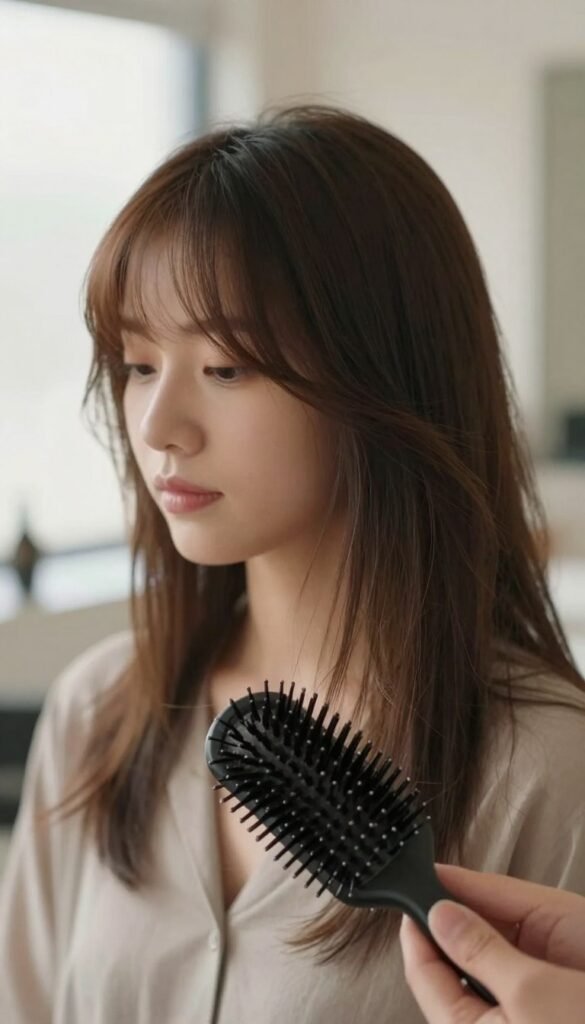
| Method | Useful hair situation | Action |
|---|---|---|
| Forward-first round-brush drying | Straight hair or a stubborn part | Dry the full fringe forward, then part it |
| Outward root-and-end shaping | Flatter hair needing lift | Lift roots and turn ends away from face |
| Diffuser or air-drying | Wavy or curly hair | Keep the natural bend visible |
For a cheek-grazing shape, dry forward for volume and direct the ends back and outward. A Velcro roller can hold the section while it cools, which may help the lift last longer.
Do not curl only the ends and expect the same shape each time. If the roots dry flat or toward the forehead, the fringe may fall forward even after you bend the tips.
Let the hair cool before separating the pieces so the shape has time to set.
What Should You Ask for at the Salon?
Tell the stylist where you want the shortest piece to land and how light you want the fringe to feel. Be clear about the front, then describe the sides and how they should connect. A consultation and reference photos are the safest first step if you are new to bangs.
A small triangular section can begin near the bridge of the eyebrows, with the center slightly shorter than the sides. That describes a common shape, not a set of at-home cutting steps.
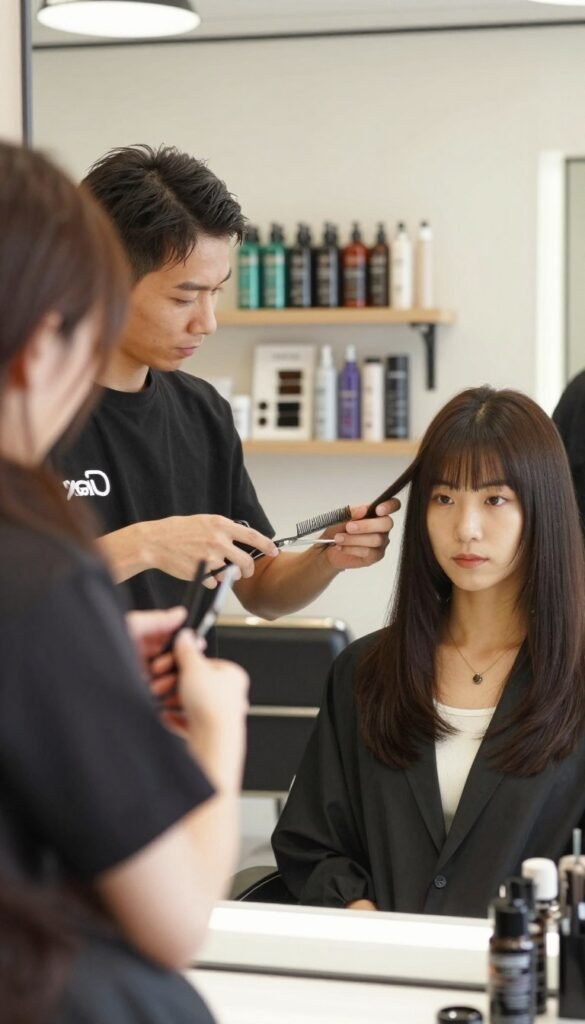
Describe the Shape and Density
Say whether you want a center opening and an outward sweep, or a fringe that falls more forward. Explain how much fullness you want and where the shortest piece should sit.
Describe the side length, too. Ask whether the fringe can blend into your layers, and point out how much forehead coverage feels comfortable to you.
Cut Curly Bangs to Their Dry Fall
Curly bangs should be shaped when dry and styled in their usual way, so the stylist can see how each curl falls. Curls can spring up as they dry, changing the finished length.
Gradual trimming leaves room to adjust the shape. If you are unsure, begin longer and decide on a shorter length after seeing how the fringe settles.
For wispy bangs for beginners, take your time with the consultation instead of choosing a short cut on the spot. Photos that show your texture and the front shape help make the plan clear.
If you are undecided, ask for a longer first version that can be shortened after you see how it falls.
Can You Trim Wispy Curtain Bangs at Home?
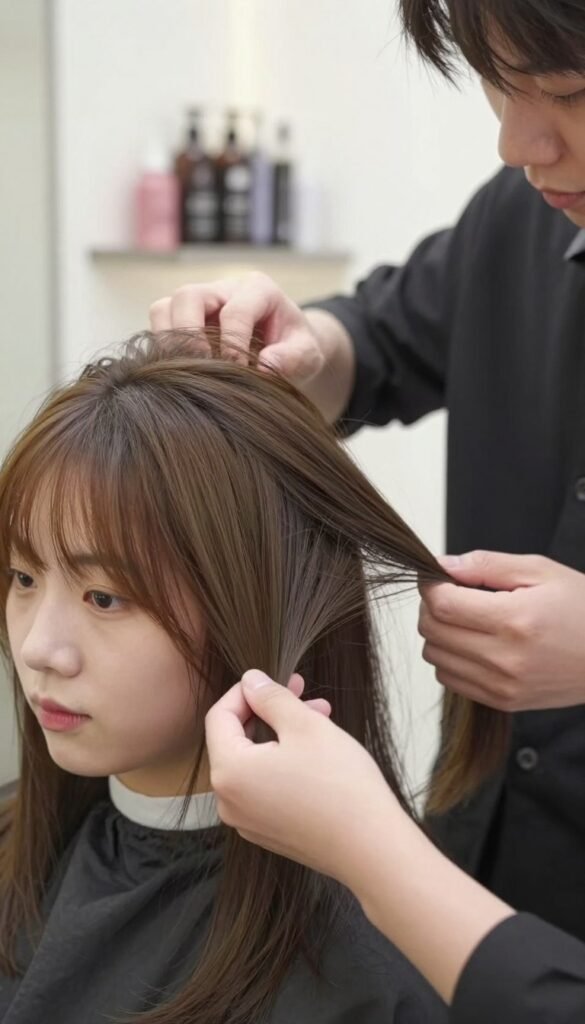
A new curtain shape asks you to control both the center and the longer sides, so it is easy to remove more hair than intended. A first cut is different from a small upkeep trim. Have a stylist create and blend a new shape; treat home trimming as minor maintenance only.
Creating the fringe means shaping the opening and connecting the sides to your haircut. Correcting an uneven or overly short piece is harder, since the hair may need time to grow back.
| Task | What it involves | Safer setting |
|---|---|---|
| Creating the first shape | Shaping the center and blending the sides | Salon with a stylist |
| Correcting uneven or short pieces | Balancing lengths without cutting shorter | Salon with a stylist |
| Maintaining a familiar fringe | Small adjustment to an established shape | Home only if you know the shape |
Wispy curtain bangs DIY attempts can go wrong when you cut too much from the center or make the sides uneven. A stylist can shape the first fringe to work with long, medium, or short hair.
Bring reference photos to a salon appointment, including one that shows the front and another that shows the side. That gives the stylist a clearer view of the shape you want.
Put down the scissors if the section is uneven, curly, or already shorter than you wanted.
Are Curtain Bangs Still in Style for 2026?
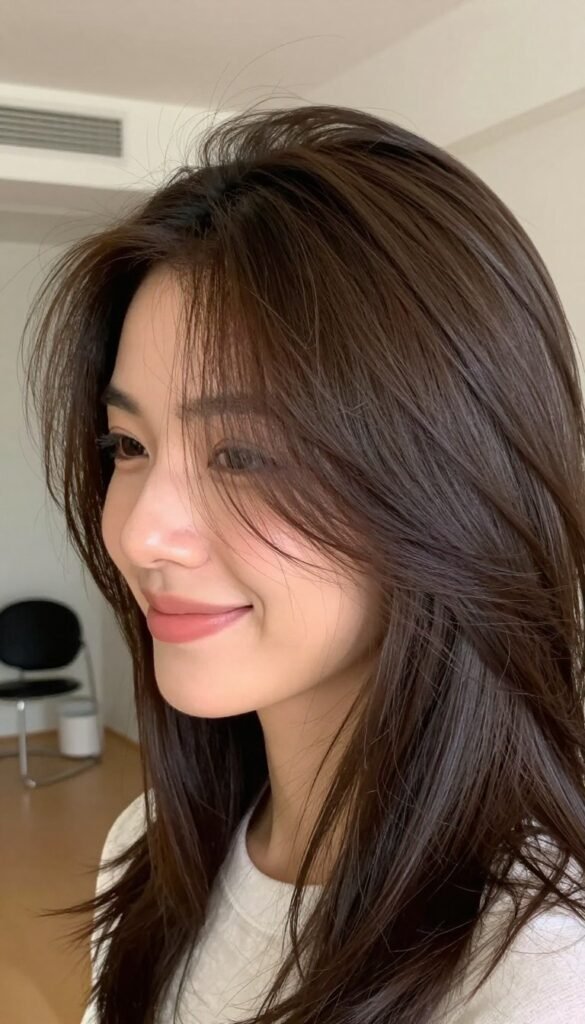
Curtain bangs are still a 2026 option, but the shape is being tailored rather than copied from one template. Personal choice leads, with face shape, hair color, and style all shaping the result. Straight and wavy hair can both suit the look, especially when you want lift or bounce at the front.
The current trend favors a fringe that fits your features and the way you wear your hair. That leaves room for a subtle opening or a fuller, more visible shape.
| What is customized | Choice to discuss | Intended effect |
|---|---|---|
| Face shape | Opening, side length, and fullness | A frame that balances your features |
| Hair color | How the fringe sits with your color | A clear or softer outline |
| Personal style | Airy, polished, or relaxed finish | A look that feels like your own |
Stylist Katie Brenner says the shape works well with straight and wavy hair. It can suit you if you want more lift and bounce at the front, rather than a fringe that lies flat.
Hair color can affect how visible the front pieces look, while your preferred finish guides how separated or full they feel. Neither choice requires a single shade or shape to be “in.”
Choose a reference that matches your preferred finish, then ask how to adapt it to your own hair.
How Do Face-Framing Layers Change the Result?
Face-framing layers make the side pieces feel connected to the haircut instead of ending as a separate fringe. The diagonal line continues from the bangs into the lengths around your face. Layers can link the front to the rest of the cut without making every piece equally full.
That connection can make a soft fringe look more blended as it grows. Face-framing layers work with wispy curtain bangs because they carry the side sweep farther into the haircut.
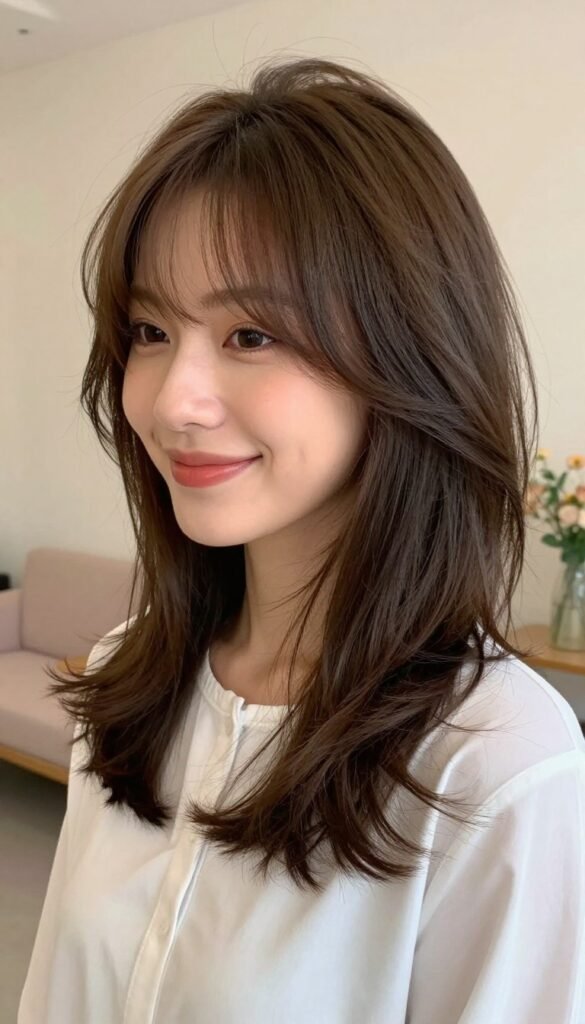
- Wispy curtain pieces that blend into long face-framing layers extend the diagonal line toward the shoulders. The front remains light while the sides join the length.
- A layered lob with a soft center opening gives the fringe a clear part. The next layers keep the shape connected to the shorter base cut.
- A choppy shag with separated ends gives the fringe a more broken-up finish. Layers can carry that texture from the forehead through the rest of the haircut.
- A curly layered cut lets the fringe follow the curl pattern. The front pieces can blend into curls at the sides without forcing a straight line.
- A fuller fringe connected to a cut with depth and layers gives the front more support. The added layers help the shape feel related to the rest of the hair.
Hair with depth and layers can support a fuller fringe, while fine hair may need a lighter section. The goal is a smooth connection, not a sudden step from short bangs to long sides.
Ask to see where the shortest front layer will blend into the next longer piece.
How Do You Maintain the Shape as It Grows?
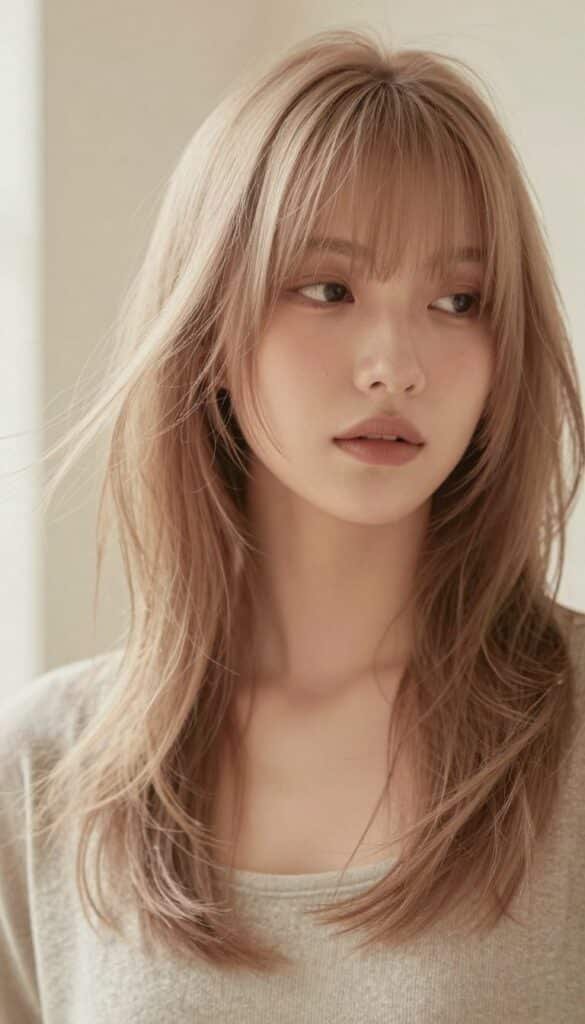
The front can lose its intended shape before the rest of your haircut needs attention. The fringe may need an earlier refresh, while longer side pieces can grow into face-framing layers. Professional curtain-bang trims are commonly recommended every four to six weeks.
Your daily refresh and a salon trim serve different purposes. A quick reset can help the front sit as you like, while a professional visit restores the cut’s shape.
Keep the Shape Between Haircuts
Watch how the center falls and whether the sides still open around your face. A small change in how the fringe separates can make the front feel less balanced, even when the rest of your haircut still looks fresh.
Keep the daily routine simple and focus on the pieces that fall out of place. Do not treat a quick morning refresh as a full reshaping of the fringe.
Plan for the Grow-Out
As the center gets longer, the fringe can shift toward a softer, more open frame. Longer side pieces may blend into face-framing layers instead of needing to stay separate bangs.
Tell your stylist whether you want to keep the fringe or grow it out. That choice can guide how the front connects to the rest of your haircut over time.
| Moment | Practical adjustment | Goal |
|---|---|---|
| Between salon visits | Refresh the front as needed | Keep the fringe sitting as intended |
| At a professional trim | Restore the shape and side blend | Keep the opening balanced |
| During grow-out | Blend longer sides into layers | Move toward a softer frame |
Book the next trim around how the fringe is falling, using four to six weeks as a professional-maintenance guide.
Will This Fringe Fit Your Routine?
The best fit is the version you can wear on an ordinary morning, not only after a salon blowout. Your natural habits matter as much as the photo you bring. Face shape alone is not a reason to rule out bangs; choose a shape and effort level that fit your routine.
A natural wave may help the fringe turn outward with less effort. Strong curls or roots that fight the part can take more work to shape into a sweeping frame.

| Your usual hair behavior | What may make the fringe easier | What to weigh before choosing |
|---|---|---|
| Natural wave | The bend can support an outward shape | How much the wave changes each day |
| Straight hair that falls forward | Light fullness and a workable part | Whether you will style it away from face |
| Curly or coily texture | Shape built around the curl pattern | Shrinkage and the desired sweep |
Very curly hair can make a sweeping 1970s shape harder to achieve, while a strong wave may be easier to air-dry. The best reference accounts for your usual texture, not just the salon finish.
If you want to test the look before changing your haircut, clip-in bangs and wigs offer different ways to preview it. Clip-ins leave your existing hairstyle visible, while a full wig creates a larger change.
No bang style is guaranteed to need no styling. If you want almost no styling, choose the lightest shape your natural part and texture can hold.
Conclusion
A wispy curtain fringe can be as subtle or as defined as you want when its shape and fullness are chosen deliberately. You can choose density separately from the opening and sweep, so your reference does not have to match every detail of your hair.
Save a photo with a texture close to yours, then mark the fringe length you want. Bring your marked reference to your next salon consultation and ask how it will fall with your natural texture.
Keep this one for later
We'll email you the link so you can come back to it.


