

This post may contain affiliate links. Please see my disclosure policy for details.
Your curls can make a polished look possible without an elaborate routine or a long stretch of styling time. What could you do with your natural texture when the day is busy, but you still want a look that feels like you?
These 35 easy curly hairstyles offer ideas for wash-and-go looks, ponytails, braids, and cuts. You will find options for different lengths, occasions, and curl patterns, from quick school mornings to parties and relaxed days at home. One style can look quite different on two heads, and that difference is part of its charm.
You do not need to copy a photo curl for curl. Use it as a starting point, then adjust the shape to your length, comfort, and available time. A small change can make a familiar look feel new without turning your routine into a project.
Start with the option that suits your time and comfort today, then adjust it to the way your curls naturally fall.
What Curl Pattern and Hair Traits Should Guide Your Choices?
Look at the shape your strands make when they dry naturally: an S, a corkscrew, or a Z gives you a useful first clue. Type 2 hair is wavy, type 3 hair is curly, and type 4 hair is coily. Check several sections rather than naming your whole head from one curl.
| Type | Typical pattern | Useful clue |
|---|---|---|
| Type 2 | Loose S-shaped waves | 2A is looser than 2B and 2C |
| Type 3 | Corkscrew curls | 3A, 3B, and 3C grow tighter |
| Type 4 | Tight corkscrews or Z shapes | Shrinkage can hide length |
The A, B, and C subcategories describe patterns that grow tighter within each type. Type 3A often forms loose, bouncy curls, while 3B forms springy spirals. Type 3C has tighter curls with more volume and texture.
Type 4 hair can form tight corkscrews or Z-shaped patterns. Shrinkage can make your hair look shorter than it is, so a dry view may not show its full length. A head can also have curlier top layers and looser patterns underneath.
Hair porosity means how easily your hair absorbs and retains moisture. Density describes how much hair is on your head, not how thick each strand feels. These traits affect how a style sits and how much hair you gather.
Check several sections of your head before choosing a style, especially when the top and underneath behave differently.
You can part hair in a few places and compare its natural shape as it dries. That gives you a better sense of which styles can work across your whole head.
Which Products Help Curls Hold Their Shape?
Choose the product by the finish you want: a cream stays softer, while gel gives stronger definition. Creams offer soft hold, jellies offer light-to-medium hold, and foams add volume. Gel gives the strongest hold and definition of these options.
Lightweight products can help 2A waves keep their shape without feeling weighed down. Airy, water-based mousse can add lift at the roots. For 2B waves, scrunching with lightweight mousse or curl cream can bring out the wave pattern.
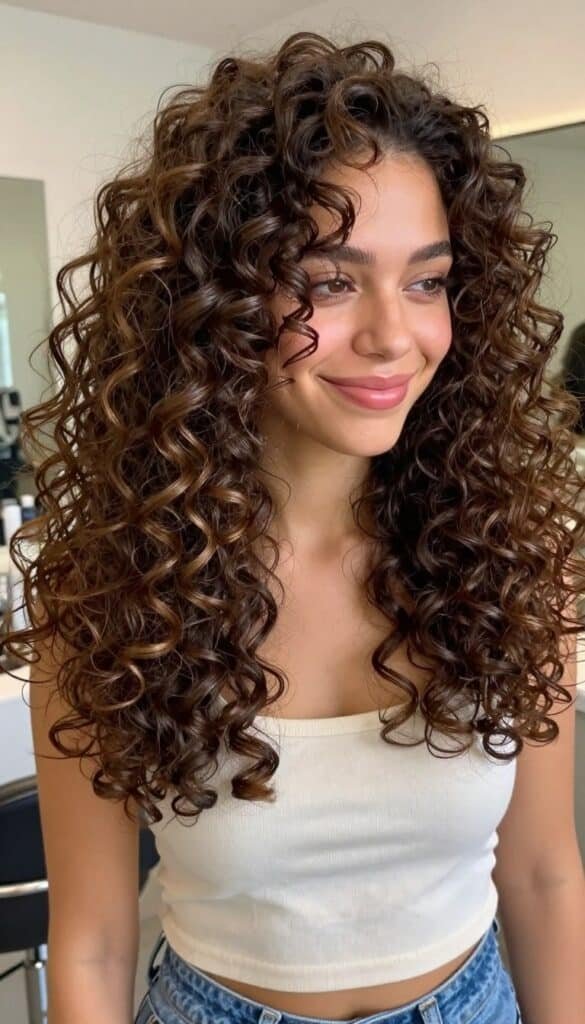
Match the hold to the finish you want
Leave-in conditioner adds a layer of moisture before your styler. A jelly can give waves or curls some shape without the firmer finish of gel. Choose a foam when you want more volume, or gel when defined curls need stronger hold.
Products can dry with a light cast, which is a firm feel around the curl. Once your hair is dry, scrunch gently to soften that cast. This helps keep the curl pattern in place without leaving it stiff to the touch.
Apply and dry without flattening the pattern
Use this simple order after washing or dampening your hair:
- Apply leave-in conditioner through your hair.
- Distribute a small amount of styler evenly.
- Scrunch curls or shape them by hand.
- Air-dry or use a diffuser, then scrunch out any light cast once dry.
A diffuser can dry curls with a styler while keeping the shape in place. Let the curls dry before scrunching out a cast, since scrunching too early can loosen their definition. Add a little product at a time, since too much can weigh waves and curls down.
Easy Curly Hairstyles for Everyday Wear
A wash-and-go is the quickest of these four when your curls already fall into a shape you like. A small styling change can shift the look without a full restyle. Keep each look recognizable by changing one feature at a time.
These easy hairstyles let your curls stay loose or need only a little shaping. Choose the curly hairstyle that fits your usual routine, then leave the rest of your hair alone. A diffuser can dry your curls with a styler when you want a defined finish.
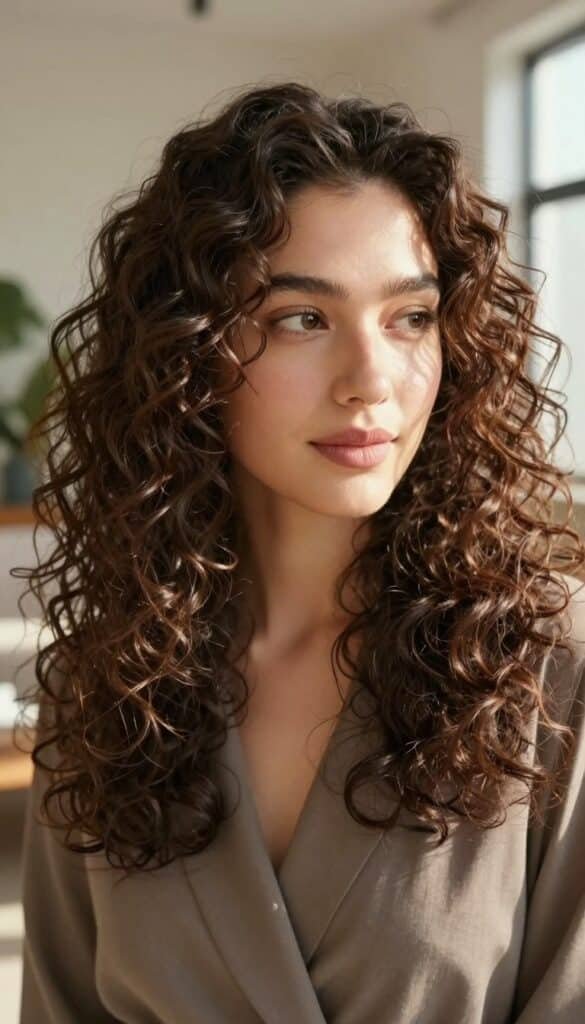
- Wash-and-go curls: Apply your styler, shape the curls, and use a diffuser or let them air-dry. Keep the shape you already like instead of trying to make every curl match.
- Side-parted look: Move your part to one side for a quick change in silhouette. The shifted line changes how curls fall around your face without calling for a new set of styling steps.
- Wet-look curls: Shape glossy curls with a strong-hold gel while your hair is wet. This finish takes more product, so it is not the lowest-product choice.
- Voluminous natural curls: Lift the roots as your hair dries to keep the shape full. Let the ends settle naturally rather than pulling them into a fixed outline.
Each look can work with your natural curl pattern, even when the finished shape differs from a reference. You can change the part or the root lift without reworking every section. That small adjustment keeps daily styling simple.
For a simple change without adding more product, switch your part while your curls are still settled.
Which Ponytail Styles Work on Curly Hair?
If you want your curls visible and off your neck, a high ponytail keeps the length gathered while leaving the ends loose. Gather the hair gently instead of pulling it taut. A comfortable tie should not pull at your hairline.
These five hairstyles use height and shape to change the look of curly hair. A few tendrils around your face can soften the outline, while a gathered section can stay loose. Try a scrunchie or a soft elastic that holds without pinching.
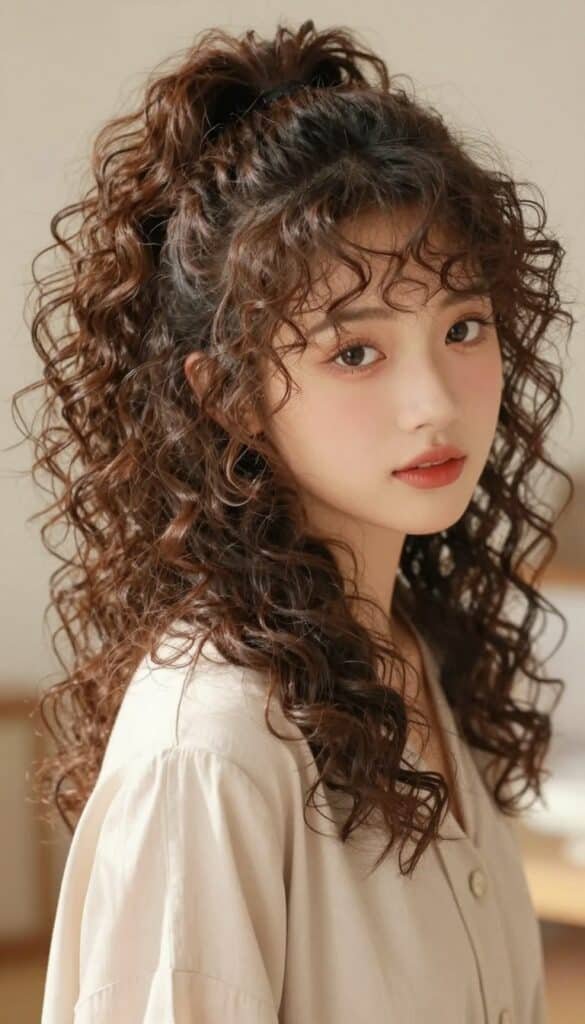
- High curly ponytail: Gather your hair high and let the curls fall around your face. Leave a few front pieces loose if you want a softer frame.
- Low ponytail: Place the tie near the nape for a gentle shape that suits soft waves. Keep the crown relaxed rather than smoothing every strand down.
- Loose pineapple: Gather dry curls high toward the front of your head. Let the ends spill over the tie instead of tightening the base.
- Mini pineapples: For short hair, make two or three small gathered sections. This gives shorter curls a way to stay up without forcing them into one tight tie.
- Slicked-back fluffy ponytail: Smooth the base while leaving volume in the ends. The contrast keeps the gathered shape neat without hiding your curl texture.
The placement of your tie changes where the curls sit and how much length shows. You can leave a couple of tendrils by your cheeks or temples for a different frame. Keep the tie comfortable and avoid pulling the hairline tight.
How Can You Wear Curls Half-Up?
A half-up style gives you a gathered crown without hiding the curls that frame your length. Leave the bottom section loose while you secure only the top. The loose curls remain a clear part of the finished shape.
Part off the top section of your hair, from temple to temple or farther back. Secure it as a small ponytail, then let the remaining curls fall freely. A part that follows your natural growth can make the top section easier to gather.
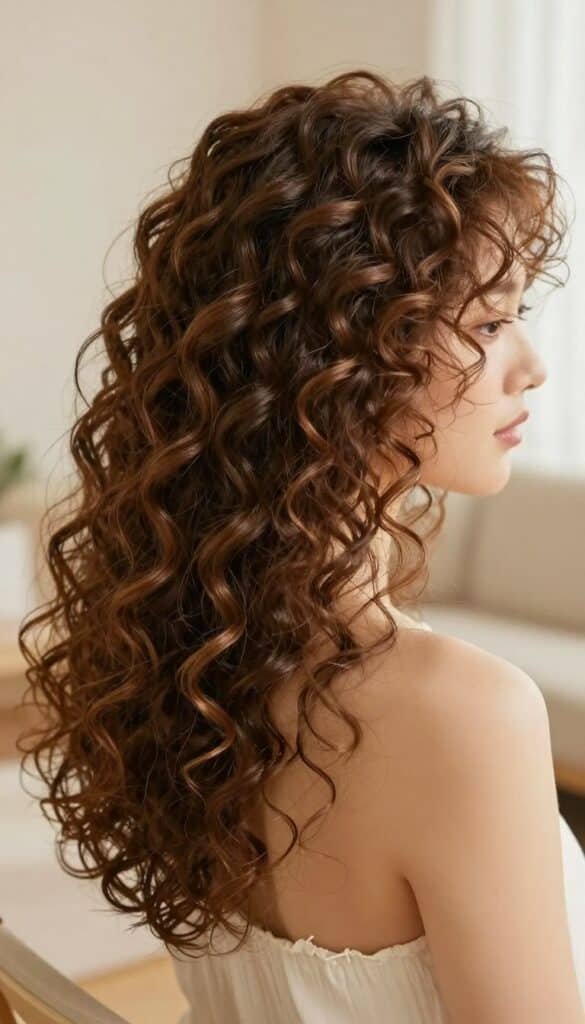
For a half-up knot bun, gather the top section into a ponytail and twist it around its base. Secure the small bun with a scrunchie or pins. You can keep it loose for a softer outline or make the knot compact for a neater shape.
A clip offers a quick alternative when you do not want to tie the hair. You can also braid the gathered section before securing it, adding detail while keeping the rest of your length visible. The braid or clip changes the crown without changing the whole style.
Leave a few front pieces out if you want a softer edge around your face. The loose curls can make a half-up style feel relaxed rather than tightly arranged. Choose a clip or tie that holds the section without making the scalp feel sore.
Make the top section only as large as needed to hold securely, so the loose curls remain the main feature.
Which Bun Styles Are Simple to Make?
A loose bun at the back of your head is an easy way to gather curls without forcing them into a smooth shape. Let your texture stay visible around the bun. A few pins or a scrunchie can hold the shape without flattening every curl.
Four simple bun styles offer different placements and amounts of detail. A low chignon sits at the nape of the neck; “chignon du cou” means “nape of the neck.” It is a name for that low placement, not a separate hairstyle.
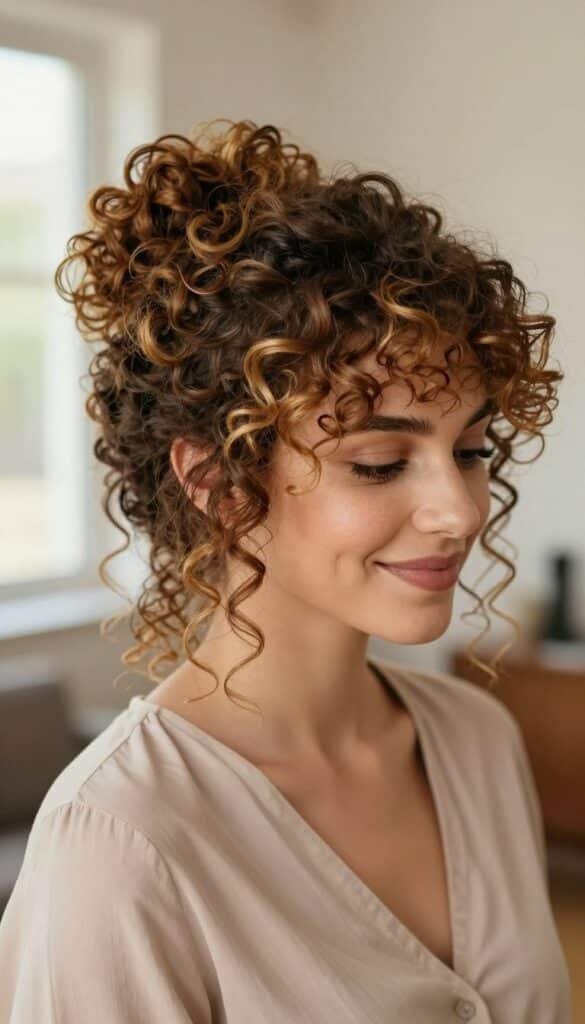
- Loose low bun: Gather your curls at the nape and secure them with a scrunchie or bobby pins. Leave the bun soft rather than winding it too tightly.
- Messy bun: Place the gathered hair where it feels comfortable, then let a few curls frame your face. The loose pieces make the shape look less formal.
- Top knot: Gather your hair high and wrap the ends into a knot. Adjust the position to suit your head and the amount of length you want to show.
- Space buns: Part your hair down the middle and gather each side above the ears. Secure each bun with a clip or elastic.
You can make a braided bun by braiding hair gathered at the back, then wrapping the braid around itself. Secure it with an elastic or bobby pins. The braid adds texture and gives the bun a clear outline.
Do not worry if a few curls escape as you pin the shape. That loose finish can make the bun feel more comfortable and suit natural texture. Let a few curls escape around your face if a tightly gathered outline feels too severe.
Which Braids Keep Curls Styled and Out of Your Face?
Two French braids are a practical choice when you want curls held away from your face on both sides. Start with a middle part and work across one side at a time. Keep the braid tension comfortable because curls can expand and loosen it.
The braid can hold your hair back without hiding all its texture. For a neat pair, add small sections as you work rather than pulling the hair tight against your scalp. This helps the style feel secure without creating a strained look.

Make two French braids
Part your hair down the middle, then begin with three sections on one side. Cross the outer sections into the braid, adding a little hair as you go. Continue toward the nape, braid the remaining length, and secure the end with an elastic.
Repeat those steps on the other side. Check that both braids feel alike, but do not tighten them to force a perfect match. Curly hair can make the two sides look slightly different, even with the same method.
Try a braid that frames or gathers the length
A braided headband runs across the front of your head and keeps curls away from your face. A one-sided waterfall braid adds detail while leaving much of your length loose. Both options can work when you want a braid without gathering every section.
Two loose side braids keep hair to either side and leave a relaxed shape. For more inspiration, try these boho knotless braid ideas, which include different lengths, shapes, and ways to wear braids. Choose a comfortable installation with minimal tension if you wear braids for longer periods.
A braid may loosen as your curls expand, so start with comfortable tension rather than pulling hard at the roots. Secure the ends without pulling the scalp tight.
Which Protective Styles Help Curls Overnight?
A loose pineapple keeps dry curls gathered high while reducing contact with the pillow. Keep the tie soft and place it near the front of your head. A protective style should never pull hard on your scalp.
A fabric-covered tie or soft scrunchie can reduce mechanical stress on your curls. If you have short hair, divide it into two or three mini pineapples. That makes it easier to gather the curls without stretching them into one high tie.
Save this article
Enter your email and we'll send it straight to your inbox.
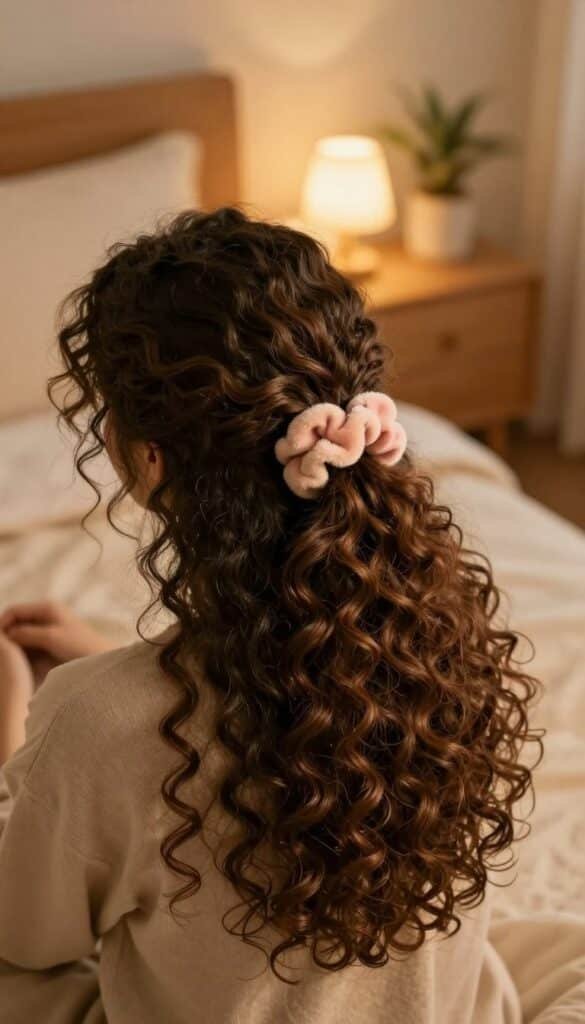
Two-strand twists are another bedtime option: divide your hair into sections, twist two strands together, and secure the ends. A loose high bun can also gather your hair without pulling it tight. Choose the option that feels secure but comfortable when you lie down.
A satin or silk bonnet, cap, or pillowcase can reduce friction during sleep. A covering can help limit rubbing, while a loose style keeps curls gathered underneath. You can choose the one that stays in place most comfortably.
Knotless box braids use less tension than traditional box braids, but they are not tension-free. A protective style worn too tightly or for too long can irritate your scalp and contribute to traction alopecia, a type of hair loss caused by prolonged pulling.
If a style causes pulling or scalp discomfort, loosen it rather than trying to preserve it overnight.
Which Short Haircuts Make Curly Hair Easy to Manage?
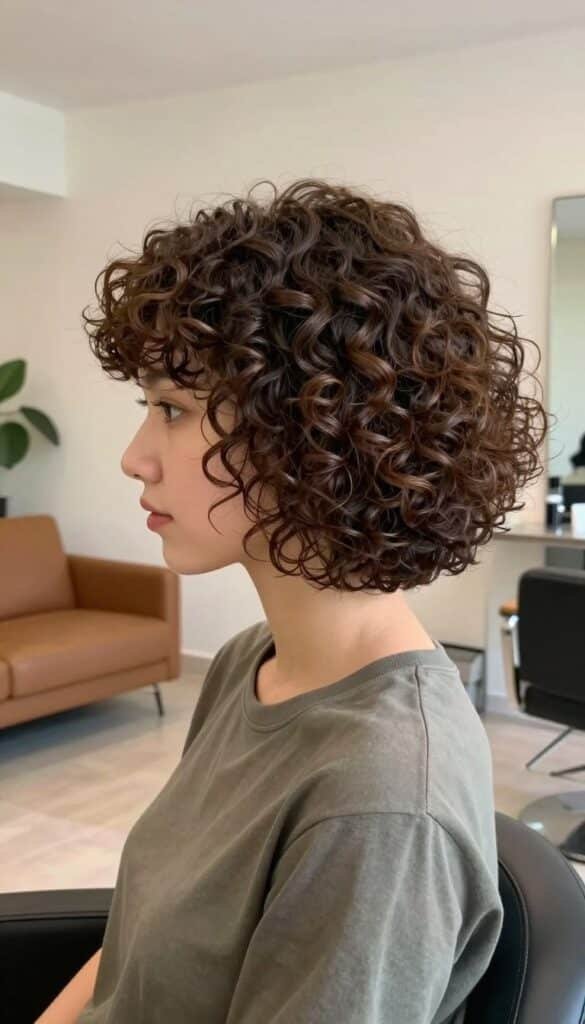
If you want less length to manage, a curly pixie or bob gives you a clear starting point for a shorter shape. Pick a length you can live with between trims. Short hair still needs a clear outline to keep the cut’s shape.
These haircuts for women with curly hair range from close-cropped to chin-length. A curly bob can gain extra volume when you wear it with a side part. The best fit depends on how much length you want to keep and shape each day.
| Cut | Shape | Good fit when |
|---|---|---|
| Curly pixie | Short, hand-shaped curls | You want less length |
| Curly bob | Short-to-medium curls | You want a side-part option |
| Soft bixie | Bob and pixie proportions | You want a blended short shape |
| Box bob | Light, choppy outline | You want a less uniform edge |
A soft bixie blends the proportions of a bob and a pixie. It leaves more length than a very short pixie, while still giving you a compact shape. A box bob uses a light, choppy form that can work with curly textures.
A curly pixie is short enough to shape by hand, while a bob gives curls more room to fall. The cut can change how much of your daily routine involves arranging the ends. Bring reference photos that show the curl pattern and finished length you want, not just the cut on straight hair.
Which Curly Haircuts Work for Men?
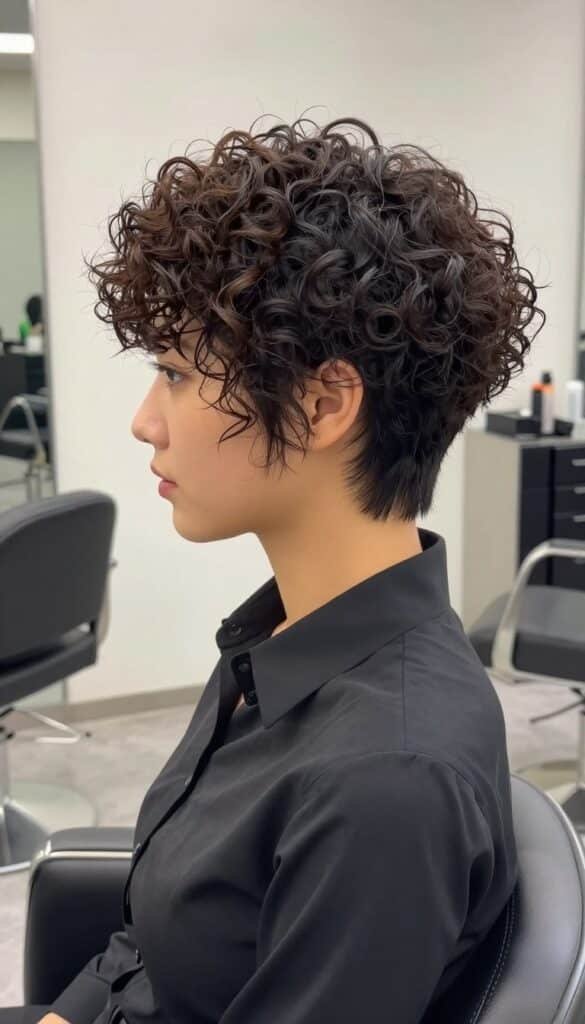
A curly undercut keeps the sides closely cropped while leaving the curl volume on top. Choose the crop by the top shape you want. The cut’s shape and suggested trim interval depend on its style.
Curly hairstyles for men range from close sides with a full top to shorter cuts all over. The choice between a crop and a fade depends on how much curl volume you want to leave on top. Use the table to compare the shape and upkeep.
| Cut | Shape | Suggested trim interval |
|---|---|---|
| Undercut | Close sides, curly volume on top | 4-6 weeks |
| Taper fade | Sides shorten gradually from crown downward | 4-5 weeks |
| Crew cut | Usually 1 to 1.5 inches all over | 6-8 weeks |
| Broccoli cut | Height and volume over clipped sides | 6-8 weeks |
| Wolf cut | Heavier crown layers with length kept | About 6 weeks |
A taper fade gradually shortens the sides from the crown downward. That change in length gives the cut a blended edge, unlike the sharp contrast of a closely cropped undercut. A crew cut keeps hair typically 1 to 1.5 inches long all over.
A broccoli cut builds height and volume on top over clipped sides, while a wolf cut uses heavier layers around the crown and keeps length. The suggested intervals help maintain each shape, though you can discuss the outline you want with your barber. Use the trim interval for the specific cut you choose, since a fade needs upkeep sooner than a crew cut.
Which Curly Styles Suit Your Face Shape?
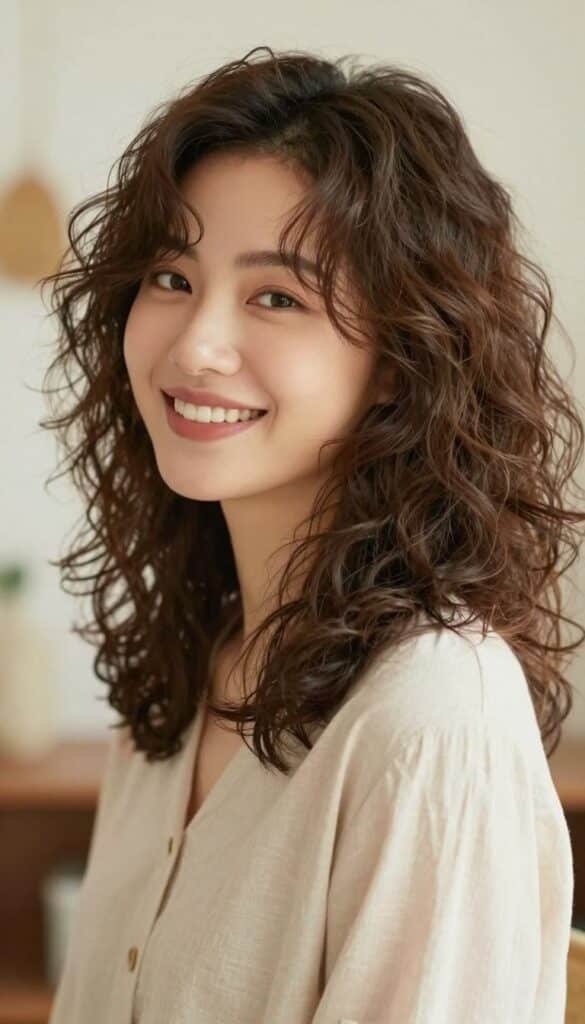
For a round face, long curls below the chin or a side-swept fringe can create a more elongated impression. Think of these as options, not rules. Face-shape suggestions can help balance proportions without limiting your choices.
The same style can frame your face in different ways depending on length and volume. Try one of the listed options if you want to emphasize or soften a feature. Your comfort and personal taste matter more than a strict match.
| Face shape | Options to try | Effect |
|---|---|---|
| Round | Soft layers, side-swept bangs, long curls below chin | Can create a longer impression |
| Oval | Short bob, long layers, curly bangs | Frames a range of proportions |
| Square | Soft waves, shoulder-length curls, deep side part | Can soften or balance angles |
| Heart-shaped | Chin-layered textured bob, half-up style | Adds jawline volume or leaves curls loose |
| Diamond-shaped | Voluminous curls, layered bob | Adds width near cheekbones, softens angles |
Soft layers, side-swept bangs, and curls below the chin can add length around a round face. For an oval face, options range from short bobs to long layers, while curly bangs can draw attention to the eyes. These are flexible ways to frame your face.
Soft waves, shoulder-length curls, or a deep side part can balance angular features on a square face. A chin-layered textured bob can add volume around a heart-shaped face, while a half-up style leaves the rest loose. For a diamond shape, volume near the cheekbones or a layered bob can soften angles.
See more round face hairstyle ideas if you want extra examples of parts, layers, and face-framing pieces. Choose the option you like wearing, even if it is outside the usual face-shape suggestions.
What Are Easy Curly Hairstyles for Kids and School?
Double puffs make a quick school style by dividing damp, detangled curls into two sides and securing each with a soft scrunchie. Keep the tie gentle and the parts simple. Easy hairstyles for school should keep hair comfortably out of the eyes.
These options suit a child’s routine and can be adjusted for hair length and curl pattern. A simple curly hairstyle for a girl can be double puffs or loose side braids. The same low-tension methods work for naturally curly hair on a white girl, since curl pattern and length guide the technique, not race.

Quick school-morning styles
Choose a shape that feels secure but does not need a long morning routine. Soft scrunchies and clips can help keep a style in place without making it stiff. Check the front pieces so they stay clear of the child’s eyes during class and play.
- Double puffs: Part damp, detangled curls down the middle and secure each side with a silk or satin scrunchie.
- Half-up knot bun: Gather the top section into a ponytail, twist it around its base, and secure it with a scrunchie.
Twists and braids for a secure look
Two-strand twists take just two strands at a time. Divide the hair into sections, twist each pair together, and secure the ends. Optional clips or beads can add color when the child likes them.
- Two-strand twists: Make several twists and add clips or beads if they feel comfortable.
- Two loose French braids: Braid down the sides to keep curls away from the eyes.
Keep the parts and ties easy to undo at the end of the day. A child may prefer puffs one morning and braids the next, so offer a choice when there is time. Let the child choose a comfortable accessory so the style is easier to wear through the school day.
How Can You Refresh Second-Day Curls?
On day two or day three, start by checking which curls have lost their shape before refreshing your whole head. Work only where needed instead of wetting every section. A light mist and gentle scrunch can help revive curls between wash days.
Mist the curls that look flat, then scrunch gently to bring back some bounce. Give the hair a moment to settle before adding more leave-in conditioner or moisture. You may find that a small amount of water is enough for the sections that need reshaping.
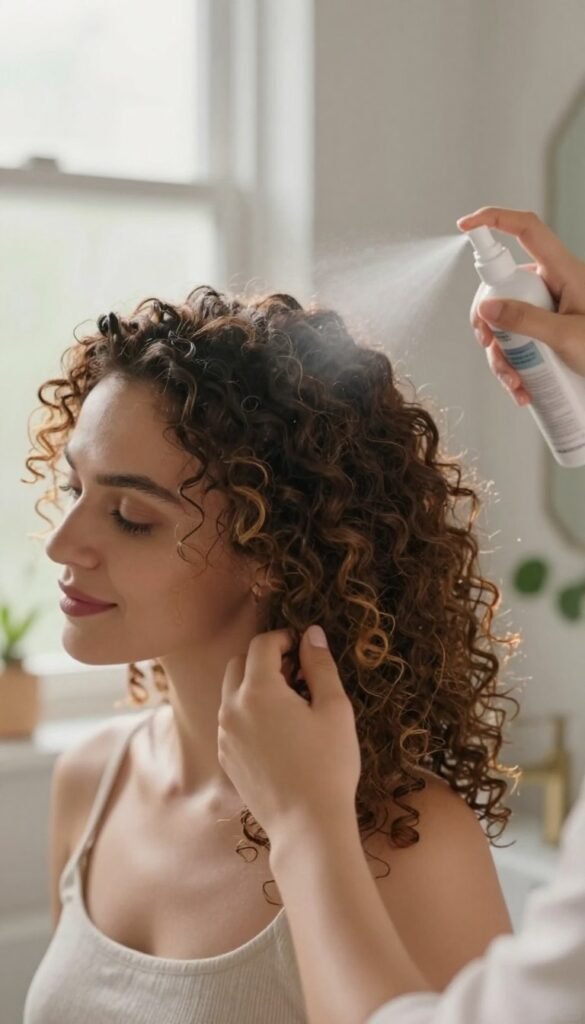
Leave your curls loose when their shape still looks good and you want to keep the length visible. If several sections have lost definition, gather them into a loose bun. A scrunchie or bobby pins can hold the updo without demanding a full restyle.
A loose bun can work for day-two or day-three hair, especially when the curls do not fall evenly. If only a few sections look flat, refresh those pieces and leave the rest alone. This keeps the original curl pattern from getting disturbed across your whole head.
Check whether your hair needs moisture before layering on more product. A light mist may be enough, while dry ends may need a little leave-in conditioner. Refresh only the sections that need it, so the rest of your curl pattern stays undisturbed.
Which Curly Looks Feel Right for a Party?
For a party, one polished detail such as a defined curl, a pinned side, or a tidy updo can make your usual texture feel dressed up. Keep the base familiar and add one special touch. A small change can make an everyday shape feel event-ready.
You can define a few loose curls, pin one side back, or turn a braid or bun into a more polished finish. Those choices build on looks you already know, so you do not need a complicated routine. A curl or pin can be enough to make the shape feel intentional.

Make an everyday shape feel more polished
Start with the shape that feels most comfortable, then refine one detail. Smooth the outline of an updo or arrange a braid neatly along one side. If you wear extensions, keep them in line with your curl texture and the style you have chosen.
These curly hairstyles for a party can also work for other events. A defined curl adds shine and shape, while a pinned side keeps the style open around your face. A tidy bun or braid gives you a more formal finish without changing your texture.
Try a 2026 trend or temporary color
Curly crops, cascading waves, coily updos, and relaxed, natural-looking styles are trends highlighted for 2026. Choose one that suits your length and the amount of styling you want. You can adapt the trend rather than copying its exact shape.
Temporary hair color coats curls with pigment and washes out with one shampoo without leaving residue. Use it to add color for the event without making a lasting change to your usual look. Try temporary color on the style you plan to wear, then wash it out with shampoo when you are ready to return to your usual look.
How Can You Avoid Common Curly-Hair Styling Mistakes?
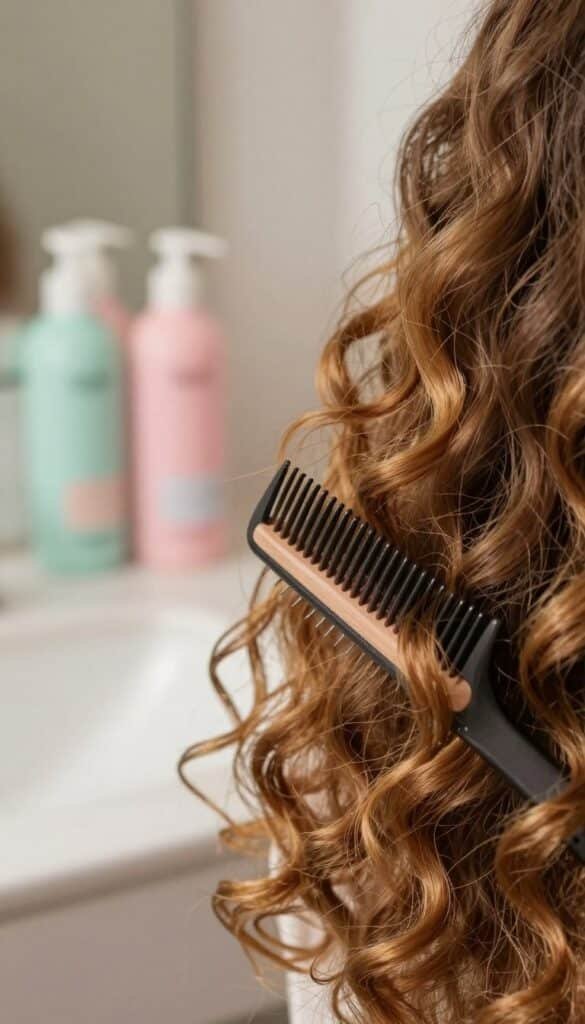
Dry brushing can separate curls that have formed together and leave the overall shape less defined. Use a wide-tooth comb when knots need attention. Detangle from the ends upward instead of pulling from the roots.
Dry brushing can also contribute to frizz by breaking up the curl pattern. If you need to comb through your hair, start at the ends and work upward in small sections. This lets you ease out knots without dragging them through the full length.
Use heat sparingly when styling hair with a heated tool. A diffuser is an option for drying curls, while heat protection helps guard hair when you use heated styling tools. Keep the heat low enough to suit your routine and avoid needless repeat passes.
Applying small amounts of product makes it easier to build on the result. A heavy application can leave curls feeling weighed down before you know how your hair responds. Add more only when a section still needs support.
Make sure your comb, clips, and ties feel comfortable as you work. A snag or sharp pull can make styling harder and leave you less likely to wear the finished look. If you use a heated tool, apply heat protection and keep heat use to a minimum.
Conclusion
A good curly style is one you can wear comfortably and shape with the time you have. Your curl pattern and length offer a useful starting point, but your comfort matters just as much. A style should work with your texture rather than force it into a different one.
You can adapt a look as your hair changes from day to day. A small shift in shape can make the style feel right for your routine without asking you to redo everything. Choose a version that feels like yours.
Pick one look from the list, gather the simple tools it needs, and try it on your next styling day.
Keep this one for later
We'll email you the link so you can come back to it.


