This post may contain affiliate links. Please see my disclosure policy for details.
Fall Greenery That Actually Makes Your Home Look Expensive (Without the Designer Price Tag)
Fall greenery transforms ordinary spaces into magazine-worthy rooms, and I’m about to show you exactly how to pull it off without hiring a decorator or emptying your wallet.
You’re probably wondering which fall plants actually work indoors, how to keep them alive longer than a week, and whether you need some special skill to arrange them without looking like you just dumped a grocery store bouquet in a vase.
I get it.
I’ve killed my fair share of beautiful fall arrangements by overthinking them.
Why Fall Greenery Hits Different Than Spring Florals
Fall foliage isn’t trying to impress you with delicate petals or sweet fragrances.
It delivers drama through texture, depth, and those rich colors that make everything feel cozier.
Here’s what actually happens to create those colors:
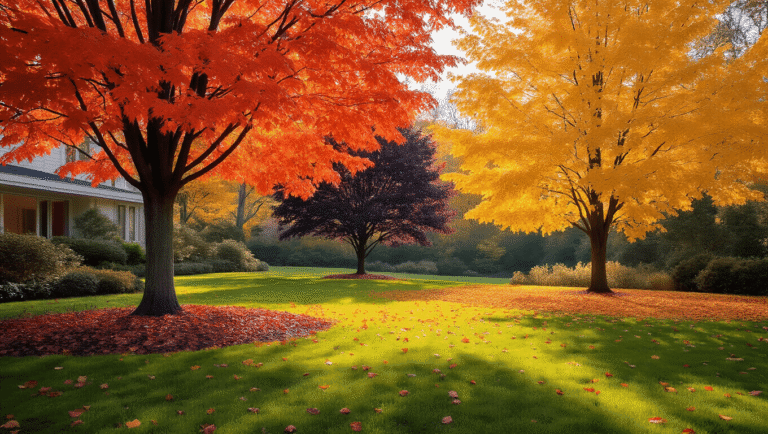
The green pigment (chlorophyll) that dominated all summer starts breaking down as days get shorter. Suddenly, the yellows and oranges that were hiding underneath all along get their moment to shine.
Those gorgeous reds and purples?
Those are brand new pigments called anthocyanins that leaves produce specifically in fall when they’re flooded with sunlight during the day and hit with cool temperatures at night.
It’s basically nature’s grand finale before winter.
The Fall Greenery That Makes Designers Weak in the Knees
Let me break down the absolute stunners you should be hunting for:
The Golden Crew:
- Ginkgo leaves with their fan-shaped perfection
- Spicebush with delicate yellow sprays
- Ash branches that give you that expensive, architectural look
The Red Hot Favorites:
- Japanese maple branches (these are the showstoppers)
- Oak leaves in deep burgundy
- Sweetgum with its star-shaped leaves in crimson
The Moody Purple Squad:
- Oakleaf hydrangea (gives massive vintage vibes)
- Bronze-toned maple varieties
- Viburnum branches with their deep, almost black-purple hues
I learned the hard way that decorative branches from craft stores never look as good as the real thing foraged from your own yard or a local park.
Where to Actually Find This Stuff
Your Own Backyard:
I’m serious about this one.
That scraggly tree you’ve been ignoring might be dropping absolute gold right now.
Oak, maple, and sweetgum trees are everywhere, and their fallen branches are fair game.
Local Parks and Nature Areas:
Check if they allow branch collection (most do, especially after storms).
Early morning walks yield the best finds before other people snag them.
Farmers Markets:
Many vendors sell bundles of fall foliage specifically for decorating.
Your Neighbor’s Yard:
Ask first, obviously, but most people are thrilled to let you prune some branches, especially if you make it look like you’re doing them a favor.
I once knocked on a stranger’s door to compliment their spectacular maple tree, and walked away with an armful of branches and a new friend.
The Arrangements That Actually Work (No Florist Degree Required)
Forget everything you’ve learned about “proper” flower arranging.
Fall greenery plays by different rules.
The Oversized Statement:
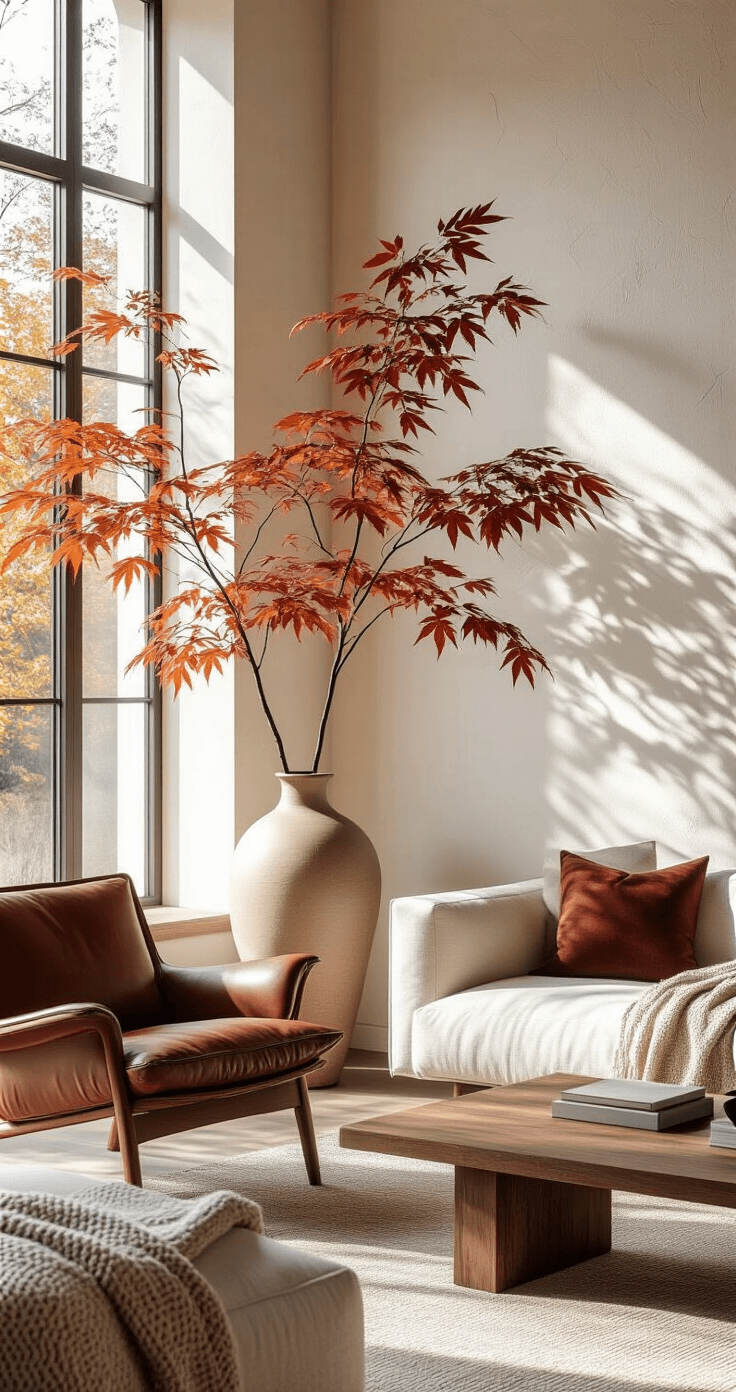
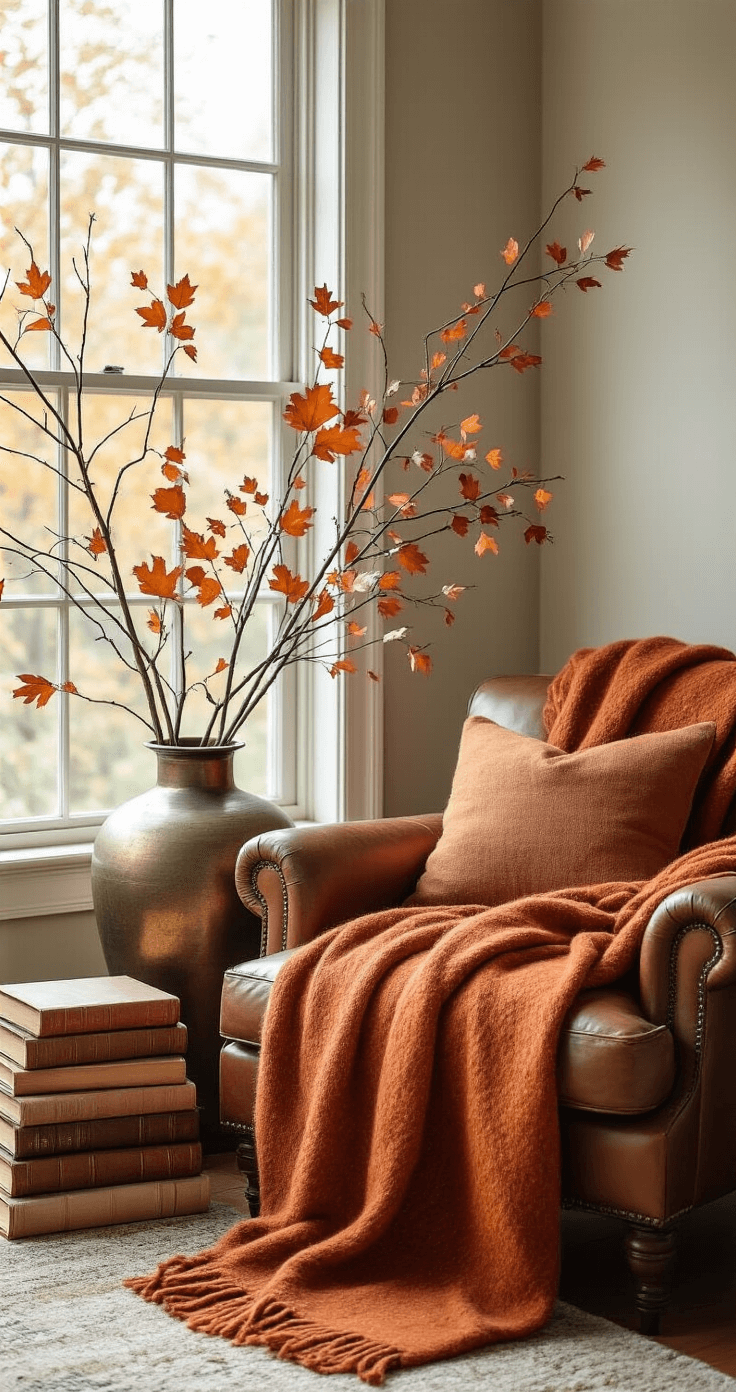
Grab a large ceramic vase and jam in branches that are twice as tall as the container.
Let them lean, sprawl, and look a bit wild.
This isn’t a stiff hotel lobby arrangement.
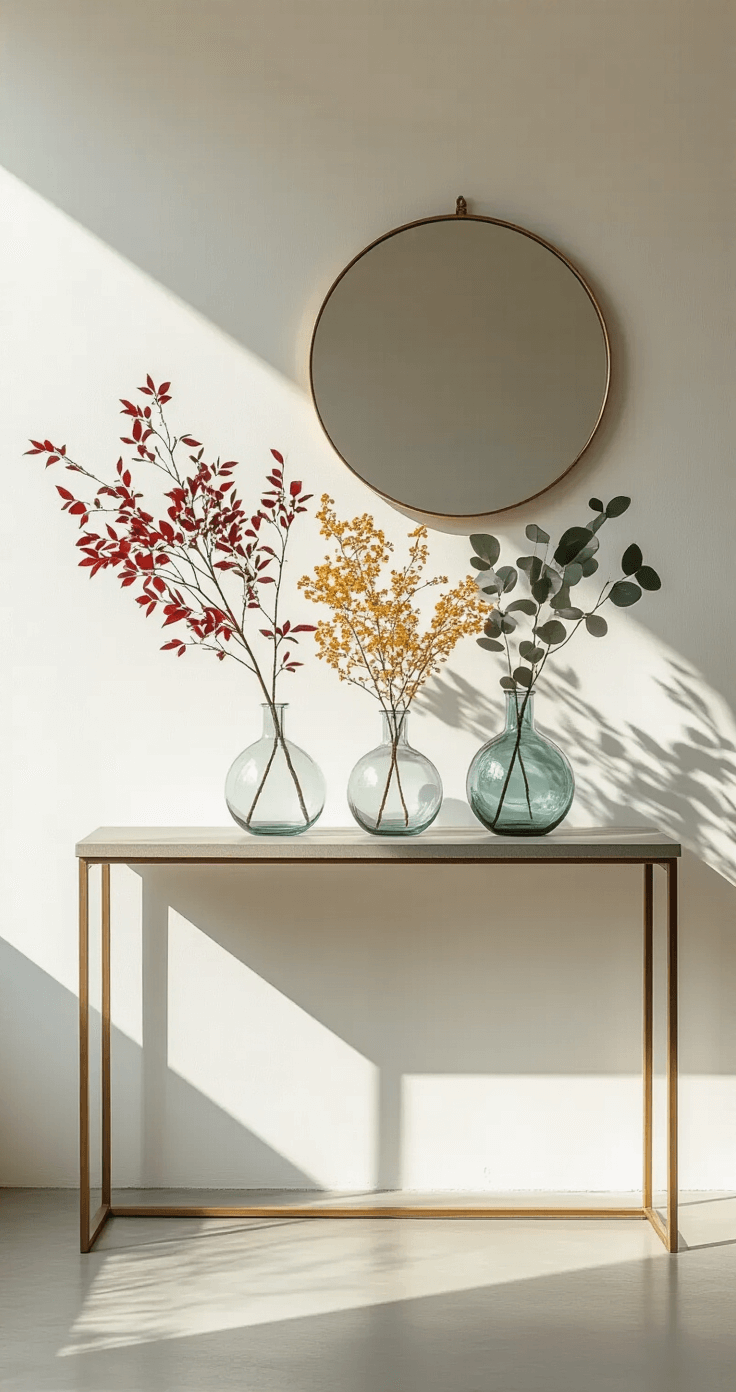
The Cluster Method:
Use three small vessels of varying heights.
Put different colored branches in each one.
Group them together on a console table or mantel.
The varying heights create visual interest without looking like you tried too hard.
The Horizontal Drama:
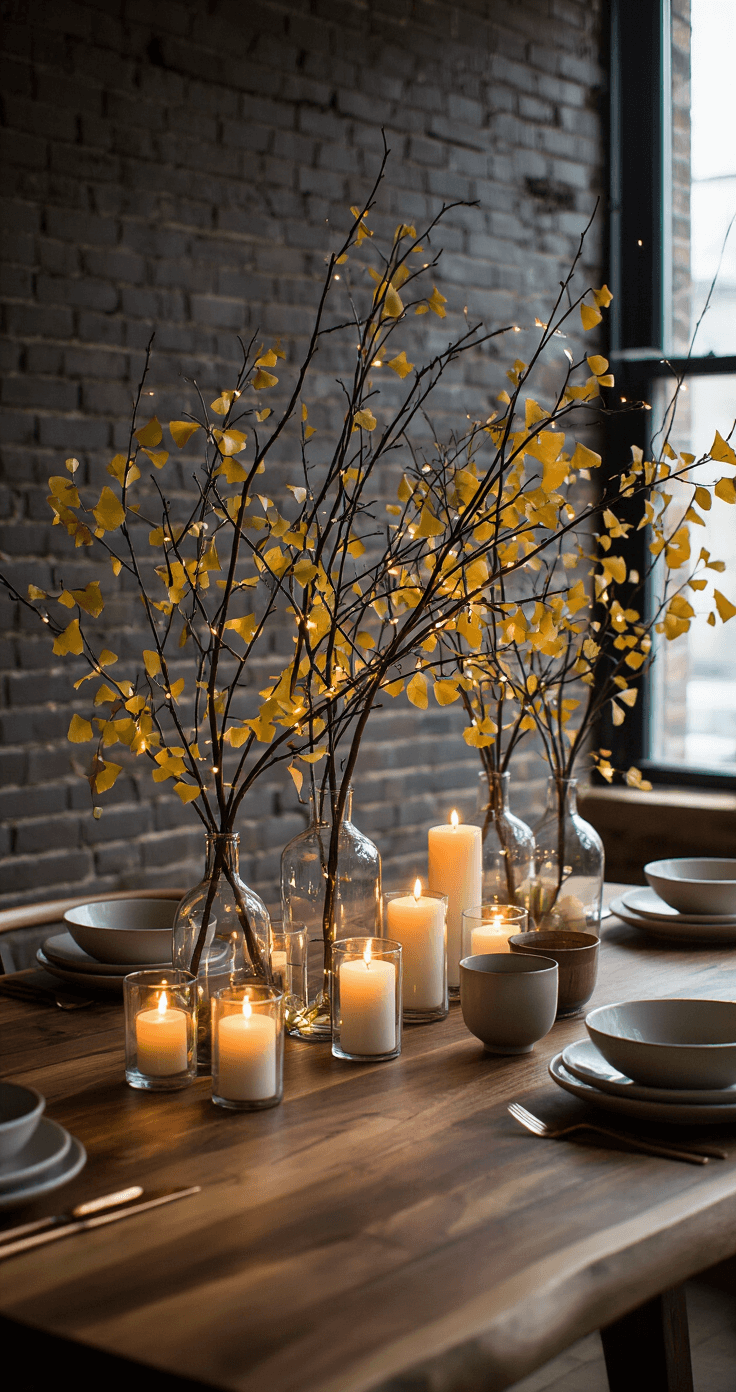
Lay branches flat down the center of your dining table.
Weave in some battery-operated string lights between the branches.
Add scattered votives or pillar candles.
Done.
The Minimalist Power Move:
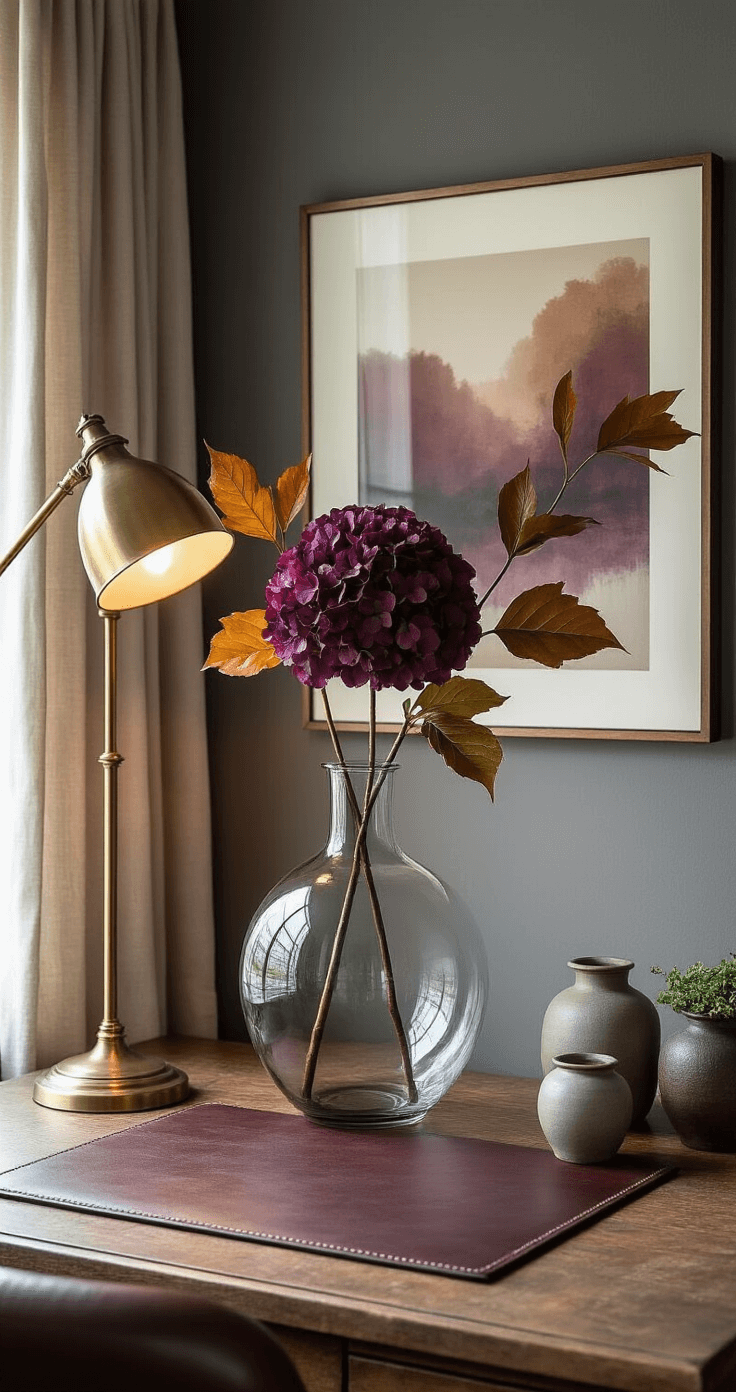
One absolutely perfect branch in a simple clear glass vase.
That’s it.
Sometimes restraint speaks louder than abundance.
Keeping Your Fall Greenery from Looking Sad and Crispy
Fresh branches last 1-2 weeks if you treat them right:
- Smash the cut ends with a hammer (seriously, this helps water absorption)
- Change the water every 2-3 days
- Keep arrangements away from heating vents and direct sunlight
- Mist leaves with water every few days to maintain moisture
For longer-lasting displays, preserve them:
Glycerin preservation keeps leaves supple and changes their colors to deeper, richer tones.
Mix one part glycerin with two parts water, place branch stems in the solution, and wait 2-3 weeks.
The leaves will absorb the glycerin and stay pliable for months.
I’ve kept glycerin-preserved branches looking good until Christmas.