This post may contain affiliate links. Please see my disclosure policy for details.
Fall Hanging Baskets That’ll Make Your Front Porch the Talk of the Neighborhood
Contents
Fall hanging baskets transform your front porch from basic to breathtaking faster than you can say “pumpkin spice.”
I get it—you walk past your neighbor’s porch with those gorgeous cascading mums and ornamental grasses swaying in the breeze, and you think, “How hard can it be?”
Then you’re standing in the garden center, completely overwhelmed by plant options, wondering if you’re about to kill another innocent basket of flowers.
Been there, done that, got the wilted petals to prove it.
But here’s the thing: creating stunning fall hanging baskets isn’t rocket science.
You just need to know which plants actually survive autumn weather, how to arrange them so they don’t look like a jumbled mess, and a few styling tricks that make your porch look professionally decorated.
I’ve spent years experimenting with everything from classic mums to weird ornamental kale combinations, and I’m sharing what actually works.
No fluff, no fancy gardening jargon—just practical advice that’ll have your porch looking magazine-worthy before the first frost hits.
Why Your Fall Baskets Keep Disappointing You
Most people make three critical mistakes:
They pick summer plants that hate cold weather. Your petunias might’ve looked gorgeous in July, but they’ll throw a tantrum when September temperatures drop.
They cram too many plants together. More isn’t always better—overcrowded baskets compete for resources and end up looking scraggly.
They forget about visual balance. A basket full of only one type of plant reads flat and boring, no matter how pretty that plant is.
I learned these lessons the expensive way, killing off basket after basket until I figured out the formula.
The Plants That Actually Thrive in Fall Weather
Let’s talk about the real MVPs of autumn hanging baskets.
Flowers That Love the Chill
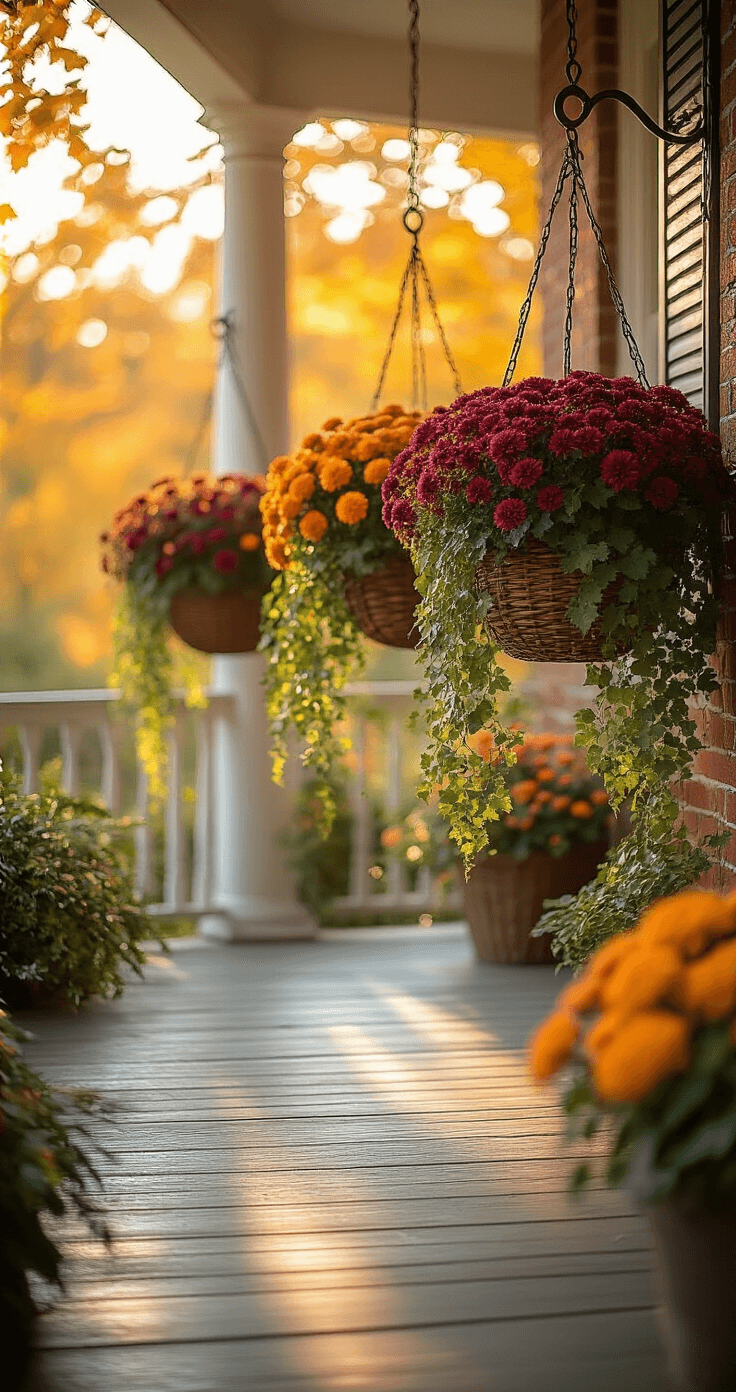
Mums are the obvious choice for good reason.
These chrysanthemum beauties come in every fall color imaginable—burnt orange, deep burgundy, golden yellow, rusty bronze.
They laugh at light frosts and keep blooming when other flowers have given up.
I usually grab colorful fall mums in 4-inch pots and cluster three in a larger basket for serious impact.
Pansies and violas punch above their weight.
These delicate-looking flowers are secretly tough as nails.
Their velvety faces in deep purples, warm oranges, and burgundies feel contemplative and cozy—exactly what fall should be.
Violas are smaller but multiply like crazy, filling in gaps between larger plants.
Million Bells overflow with blooms.
If you’re in a warmer climate (zones 9-11), these miniature petunia-lookalikes cascade over basket edges in bronze, magenta, and deep purple.
They bloom continuously and don’t need deadheading—perfect for lazy gardeners like me.
Foliage That Brings Texture and Drama
Here’s where hanging baskets go from nice to “wait, where did you get that?”
Ornamental kale and cabbage look weirdly gorgeous.
I resisted these for years because, honestly, who hangs vegetables on their porch?
But the ruffled rosettes in purple, cream, and green create architectural interest that flowers can’t match.
They get prettier as temperatures drop, deepening in color with each frost.
Ornamental grasses add movement.
Watching wispy grasses sway in autumn breezes makes your whole porch feel alive.
Carex varieties feature narrow, arching leaves that look stunning when backlit by afternoon sun.
They’re hardy down to zone 5, tolerating serious cold.
Coral bells offer year-round foliage.
These plants come in an absurd range of leaf colors—chartreuse, burgundy, peachy coral, deep plum.
The lobed leaves add unexpected texture, and they’re nearly evergreen in milder climates.
I’ve had the same coral bells plants surviving in baskets for two full years.
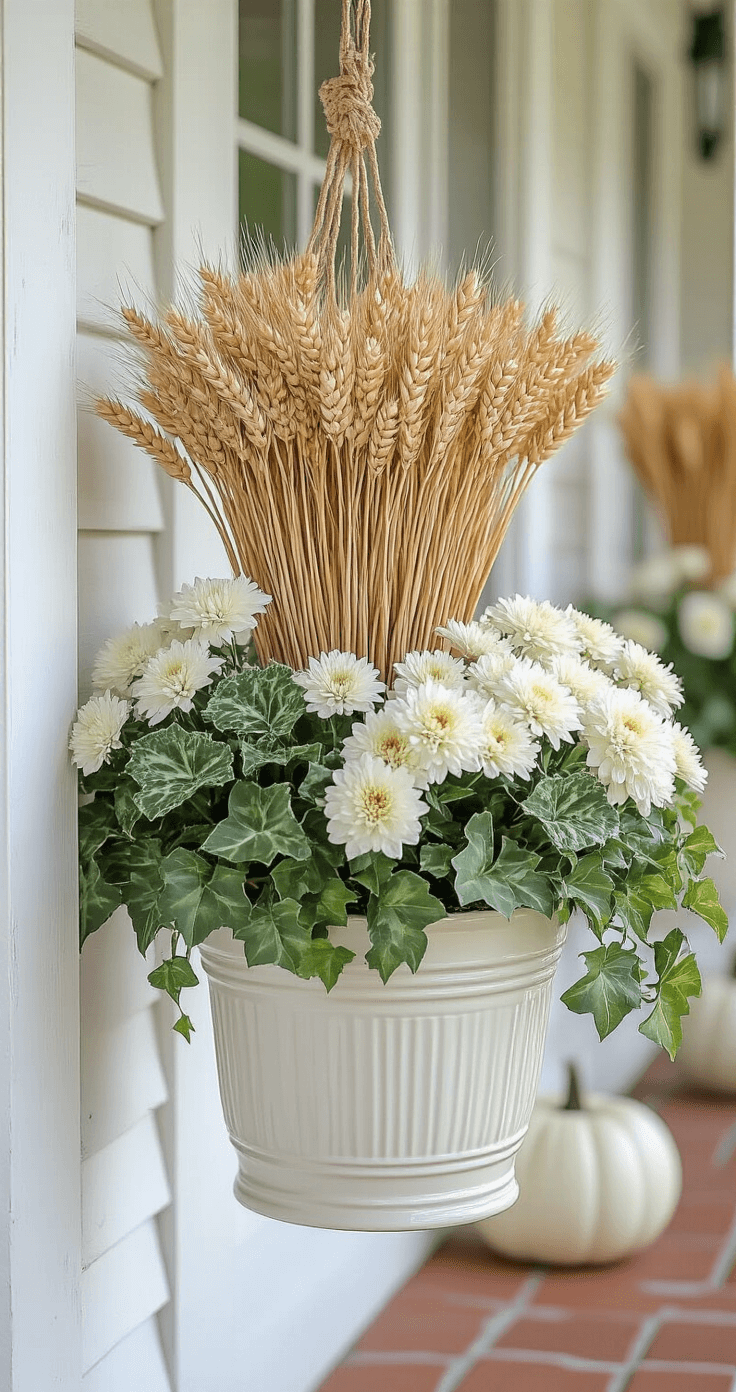
Trailing ivy creates that cascading effect everyone wants.
English ivy, Swedish ivy, or variegated ivy varieties spill dramatically over basket edges.
They stay green through frost and provide the “spiller” element that makes arrangements look professionally designed.
Pair artificial trailing ivy garland with fresh plants if you want guaranteed cascading without the maintenance.
Sweet potato vine in autumn colors.
While technically a warm-season plant, sweet potato vine in burgundy, bronze, or lime green transitions beautifully into early fall.
The heart-shaped leaves trail aggressively—one plant can cascade two feet within weeks.
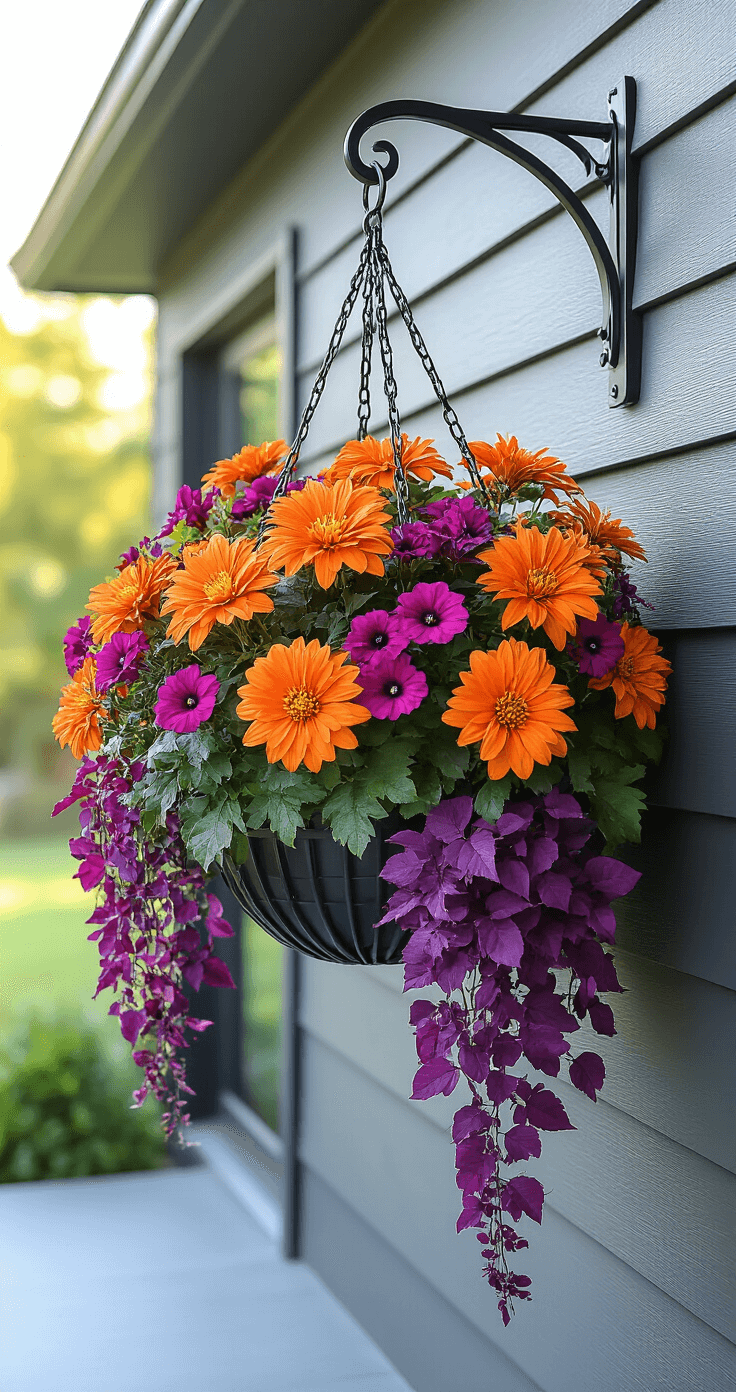
The Thriller-Filler-Spiller Formula That Never Fails
This three-part formula is how professionals create balanced, visually interesting arrangements.
I ignored it for years, wondering why my baskets looked chaotic.
Once I started following this structure, everything clicked.
The Thriller (Your Statement Piece)
This goes in the center and draws the eye immediately.
Height is key here.
Your thriller should be the tallest element, creating vertical interest.
Options that work:
- Tall ornamental grasses (fountain grass, pennisetum)
- Upright mums
- Ornamental kale with dramatic height
- Small decorative pumpkins positioned on floral picks
- Tall sedum varieties
I usually choose thrillers that reach 12-16 inches above the basket rim for dramatic impact.
The Fillers (Your Supporting Cast)
These surround your thriller, adding color and volume at medium heights.
They should complement, not compete with, your thriller.
Fill in the middle layer with 3-5 plants that create fullness without overwhelming the arrangement.
Excellent filler choices:
- Compact mums
- Ornamental peppers (those cute little purple and orange cone-shaped ones)
- Coleus in autumn colors
- Sedum varieties
- Zinnias in rust and gold tones
- More ornamental kale
The fillers should sit 6-10 inches above the basket rim, creating a gentle slope from your tall thriller down to your trailing spillers.
The Spillers (Your Cascading Elements)
These trail over the basket edges, softening the container and adding graceful movement.
Without spillers, baskets look chopped off and unfinished.
I learned this the hard way after spending good money on arrangements that looked stunted.
<p