This post may contain affiliate links. Please see my disclosure policy for details.
Fall Outdoor Planters That’ll Make Your Neighbors Actually Stop and Stare
Contents
- Fall Outdoor Planters That’ll Make Your Neighbors Actually Stop and Stare
- Why Your Summer Planters Look Wrong Right Now
- What Makes a Fall Planter Actually Work
- Choosing Your Container (This Matters More Than You Think)
- The Plants That’ll Last Through Frost
- Color Schemes That Don’t Look Like Halloween Threw Up
- How I Actually Plant These Things
Fall outdoor planters transform a boring front porch into the kind of space that makes people slow down while driving past your house.
I get it—you want your home to look like those magazine covers without spending your entire weekend or draining your bank account.
You’re standing there looking at your sad summer containers wondering how to make them autumn-appropriate, and you’re not sure if you should toss everything and start fresh or just stick a pumpkin next to them and call it done.
Let me walk you through exactly how I create fall planters that actually work.
🖼 Steal This Look
- Paint Color: Sherwin-Williams Tricorn Black SW 6258
- Furniture: black metal plant stand with scrollwork detailing
- Lighting: outdoor lantern sconce with seeded glass
- Materials: weathered terracotta, galvanized zinc, dried wheat stalks, preserved eucalyptus, velvet ribbon accents
I still remember the first time a neighbor actually rang my doorbell to ask about my planters — it was the dried okra pods and rust-colored amaranth that did it, not the mums everyone else had. There’s something deeply satisfying about creating curb appeal that feels personal, not purchased off a big-box shelf.
Why Your Summer Planters Look Wrong Right Now
Those petunias you planted in May? They’re done. Crispy, leggy, and screaming “I gave up in August.”
Fall isn’t summer with pumpkins thrown in. The light changes, temperatures drop, and you need plants that thrive in cooler weather.
I learned this the hard way when I spent $60 on gorgeous flowers that died within two weeks because I didn’t account for our first cold snap.
What Makes a Fall Planter Actually Work
Here’s the truth: it’s not about cramming every fall plant you can find into one pot.
The best planters follow a simple formula:
- One tall thriller for drama
- Spillers that cascade over the edges
- Fillers that plug the gaps
This isn’t my made-up system—professional designers use this every single time.
Choosing Your Container (This Matters More Than You Think)
Before you touch a single plant, look at your container.
Terra cotta looks classic but cracks in freeze-thaw cycles. Metal buckets and galvanized tubs give you that farmhouse vibe everyone’s obsessed with. Wooden planter boxes work beautifully for larger spaces like porches and decks.
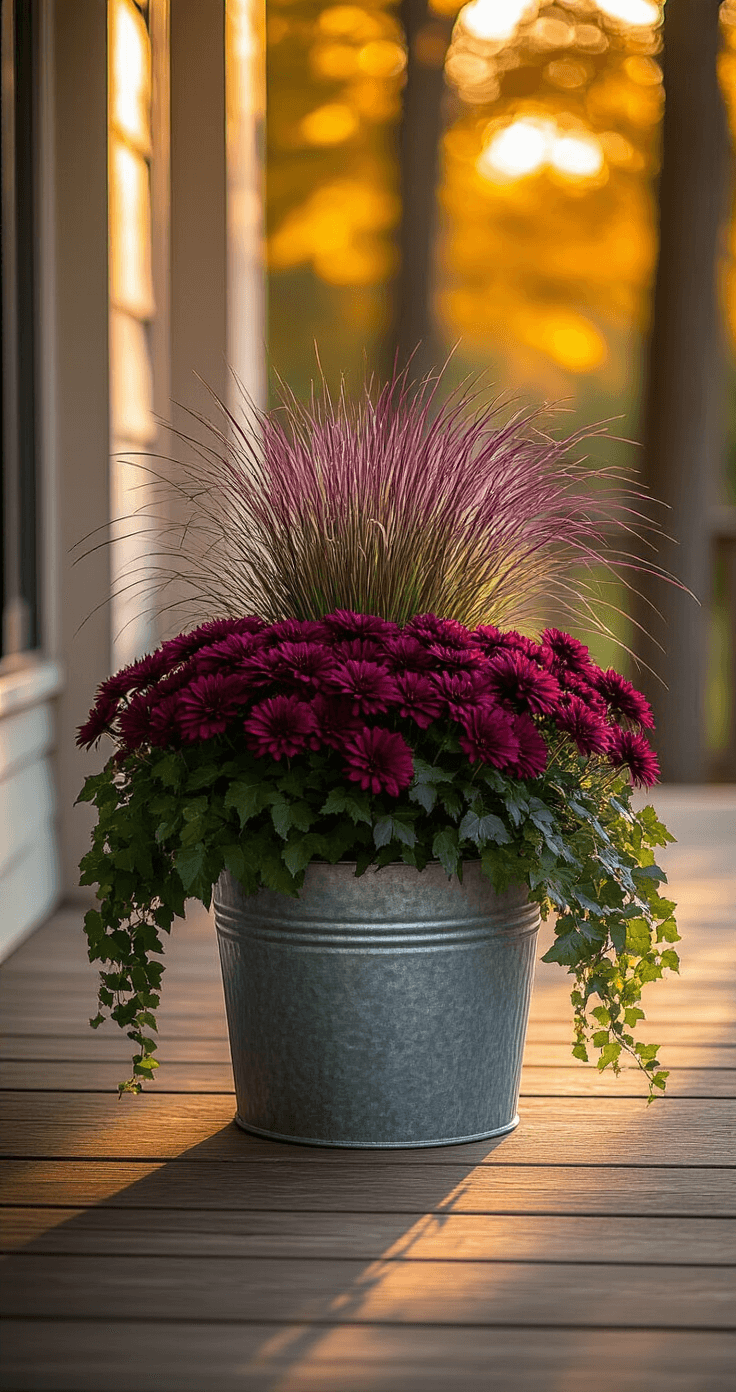
I use galvanized metal planters for my front steps because they handle weather like champs and never look dated.
Whatever you pick: drainage holes are non-negotiable. Standing water kills roots faster than forgetting to water.
🖼 Steal This Look
- Paint Color: use Behr brand. Match the ACTUAL wall color in the image. Format: Behr ColorName CODE
- Furniture: weathered teak bench with slatted seat for porch seating
- Lighting: oversized black gooseneck barn light with warm LED
- Materials: galvanized steel, reclaimed cedar, cast iron, matte black powder coat
I learned the hard way after losing three beautiful terra cotta pots to a single hard freeze—the shards still haunt my garage—so now I only use freeze-proof materials for anything staying out past October.
The Plants That’ll Last Through Frost
Your Thriller Options (The Stars)
Ornamental grasses are my secret weapon. They add instant height and movement without looking fussy.
Purple fountain grass, ruby grass, or maiden grass varieties create drama that mums alone just can’t match.
Mums are classic for a reason. But here’s what nurseries don’t tell you: those tight, perfectly rounded mums you buy? They’re pumped full of growth regulators. They’ll bloom for weeks if you deadhead spent flowers, but they’re not perennial in most climates despite what the tag says.
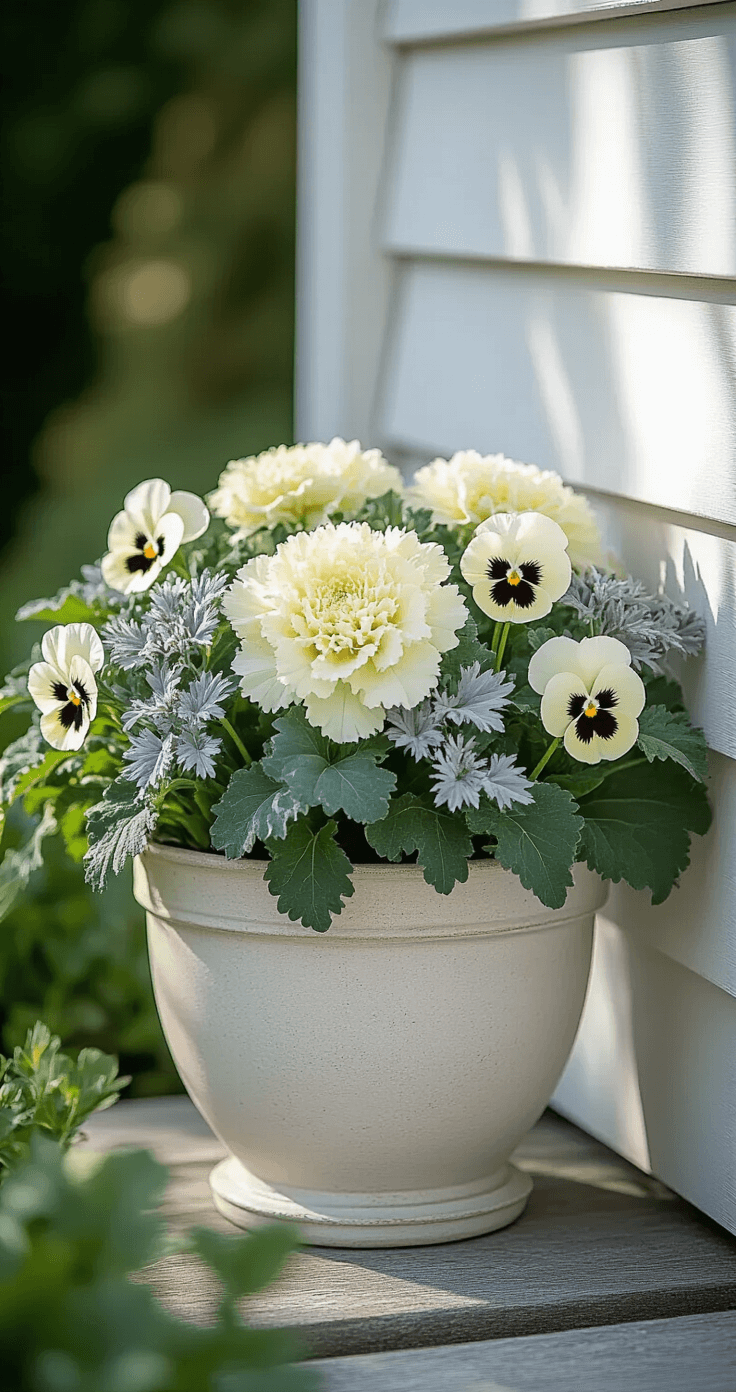
Flowering kale and ornamental cabbage get more beautiful after frost hits them. Most plants look worse when temperatures drop—these look better.
Your Spiller Options (The Edge Softeners)
Trailing ivy is nearly impossible to kill. It survives frost, looks good year-round, and you probably already have some.
I pull ivy from my summer containers and reuse it every fall. Free plants that look intentional? Yes, please.
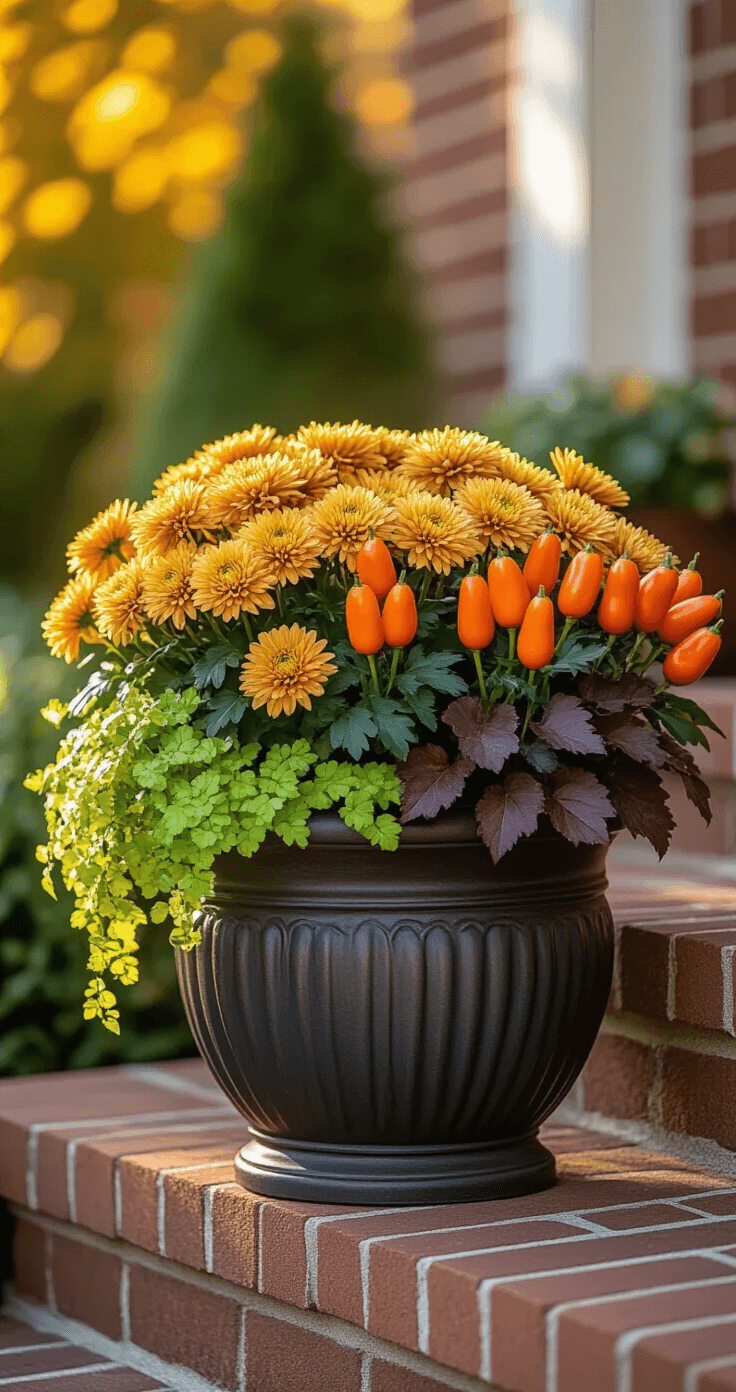
Creeping Jenny gives you that chartreuse pop that makes everything else look brighter. It trails beautifully and comes back every year if you plant it in the ground later.
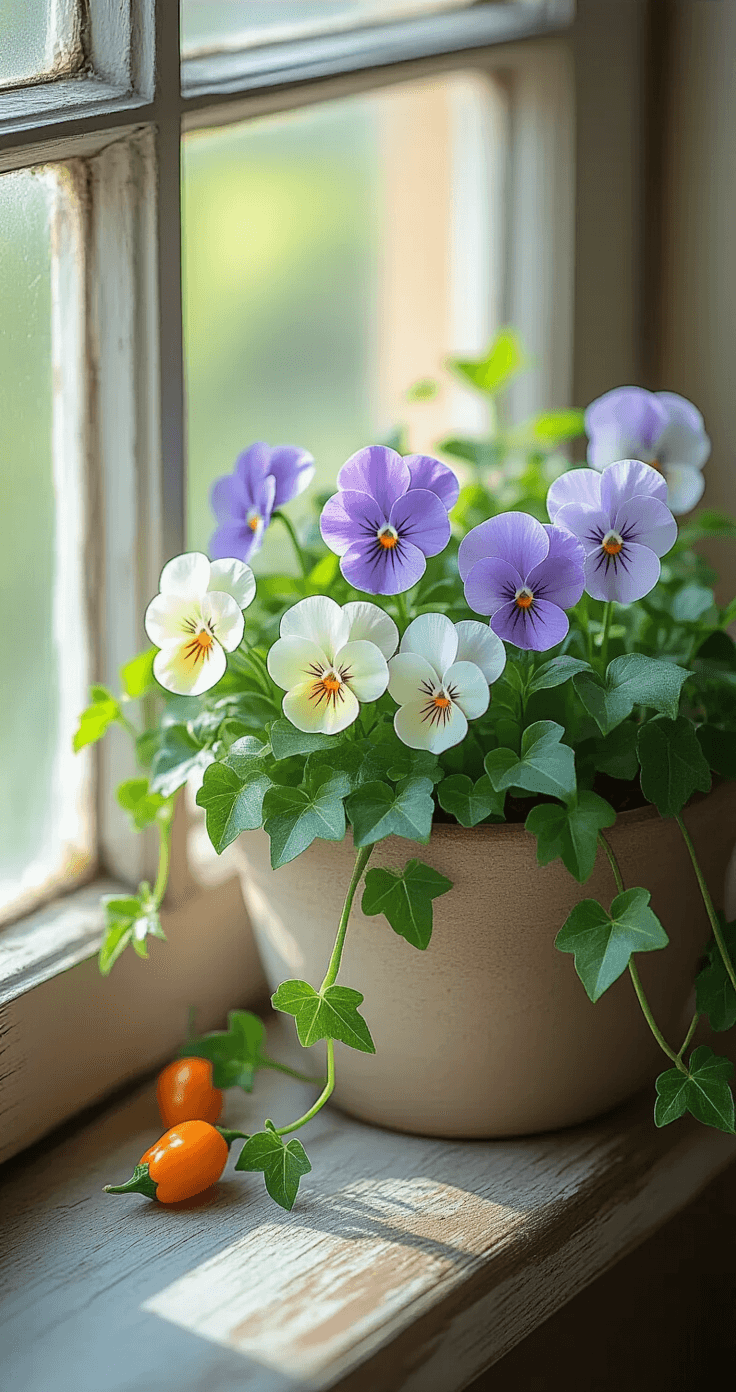
Pansies and violas are tougher than they look. These delicate-looking flowers laugh at frost and keep blooming through fall into winter in many climates.
Your Filler Options (The Supporting Cast)
Heuchera (coral bells) comes in ridiculous colors—burgundy, caramel, lime, almost black. The foliage does all the work so you don’t need flowers.
Ornamental peppers add bright pops of orange, red, or purple. Bonus: they’re actually edible, though not particularly tasty.
Here’s where I do something different: I add herbs.
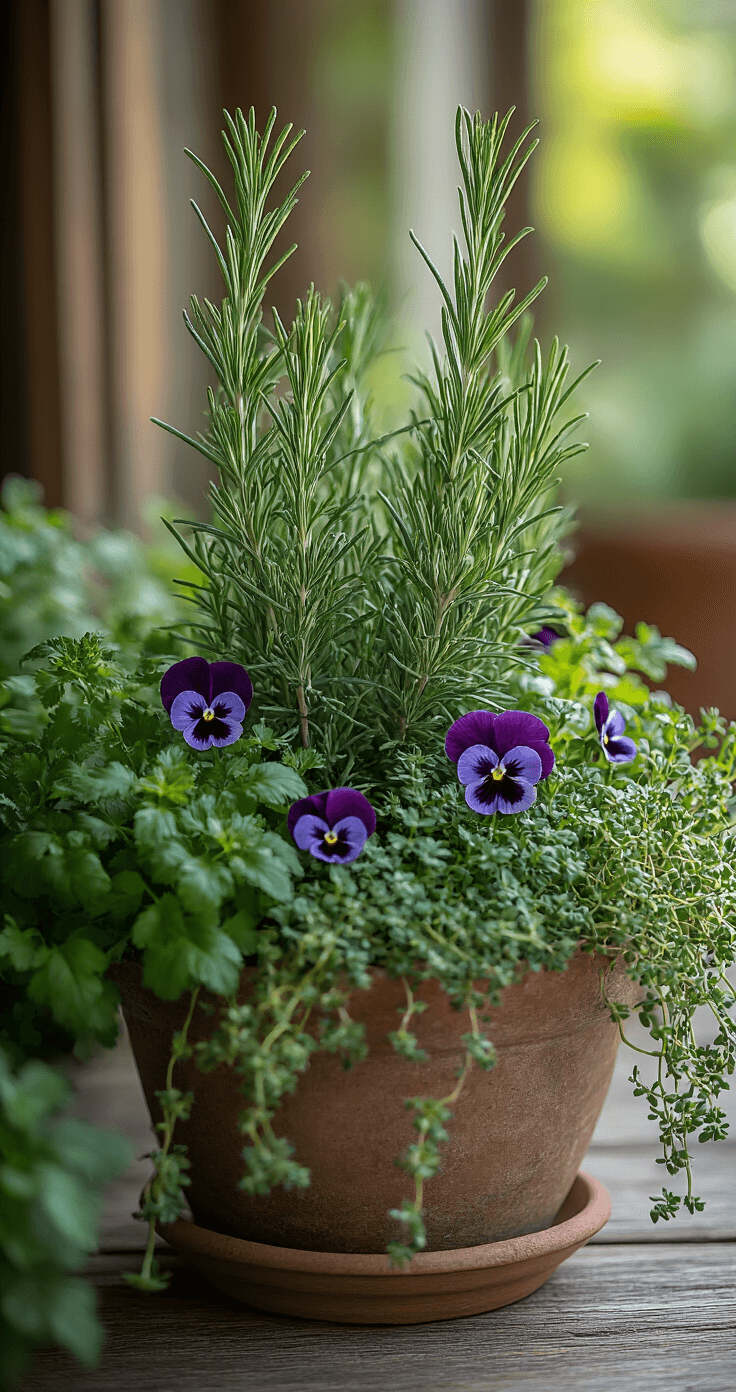
Last year I planted a large decorative planter with rosemary as the center thriller, surrounded by purple pansies and trailing ivy. It looked amazing AND I could snip fresh rosemary for cooking.
★ Steal This Look
- Paint Color: use Valspar brand. Match the ACTUAL wall color in the image. Format: Valspar ColorName CODE
- Furniture: weathered teak potting bench with galvanized steel top for staging and storing fall containers
- Lighting: solar-powered Edison bulb string lights with warm 2700K color temperature draped along fence lines
- Materials: aged terracotta with mineral deposits, galvanized zinc planters, raw cedar boxes, brushed copper plant markers
There’s something deeply satisfying about stepping outside on a crisp October morning to find your containers still thriving while your neighbors’ have turned to mush—these plant choices buy you that extra month of garden pride.
Color Schemes That Don’t Look Like Halloween Threw Up
Everyone defaults to orange, and then wonders why their porch looks like a Spirit Halloween store.
Try these instead:
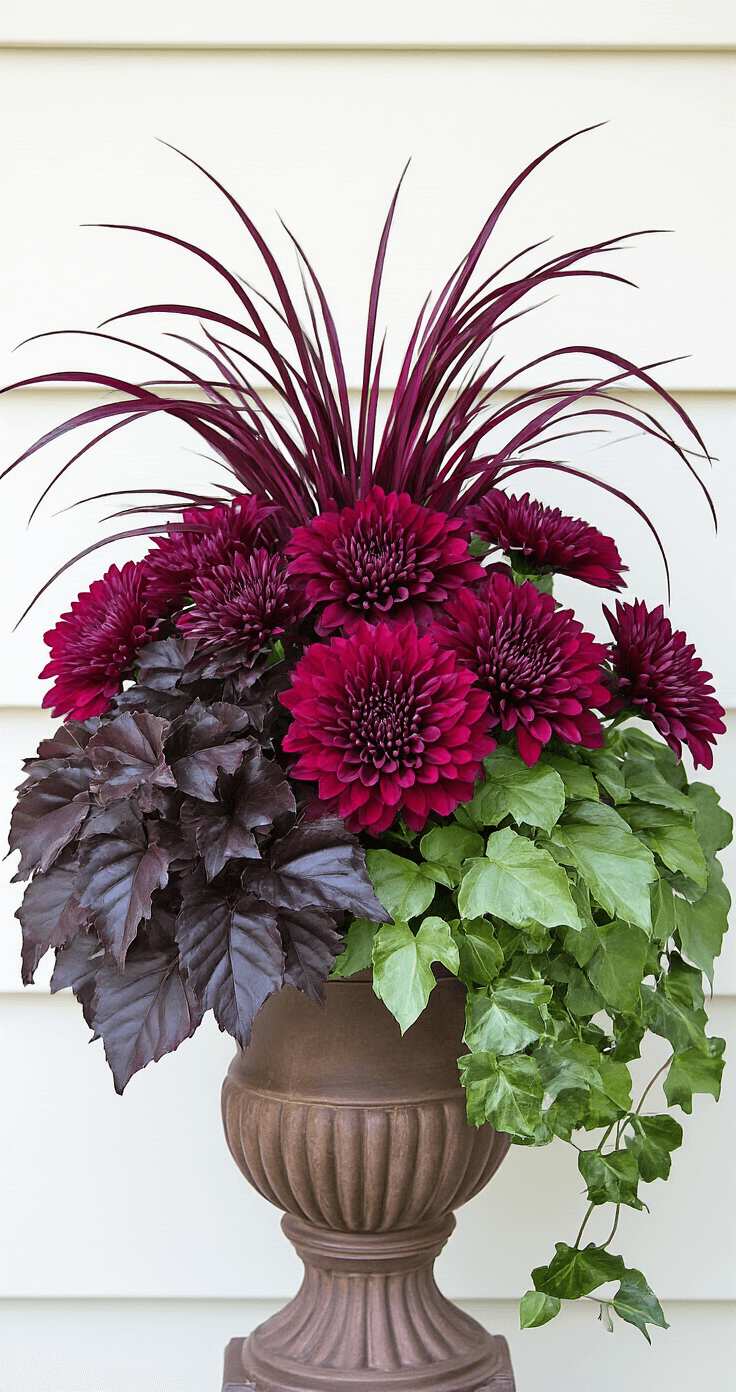
The Jewel Tone Approach: Deep burgundy mums + purple fountain grass + wine-colored heuchera + trailing ivy. This looks expensive and sophisticated.
The Unexpected Neutrals: White flowering kale + silver dusty miller + cream pansies + green ivy. It’s elegant and works with any house color.
The Moody Drama: Dark purple ornamental cabbage + black mondo grass + burgundy coleus + dark ivy. This is what I call “gothic garden chic” and it’s stunning against white siding.
The Classic Warm: Golden mums + orange ornamental peppers + chartreuse creeping Jenny + bronze heuchera. Yes, it’s traditional, but there’s a reason this combination shows up everywhere.
💡 Steal This Look
- Paint Color: use PPG brand. Match the ACTUAL wall color in the image. Format: PPG ColorName CODE
- Furniture: weathered teak planter bench with storage
- Lighting: oversized black iron carriage lantern on shepherd’s hook
- Materials: aged copper planters, raw cedar boxes, brushed zinc cachepots, weathered limestone gravel
Your front porch is the handshake of your home—it’s worth taking fifteen extra minutes at the nursery to touch the actual plants and see how colors shift in natural light rather than defaulting to the brightest orange on the rack.
How I Actually Plant These Things
I’m going to walk you through this like we’re doing it together on my porch.
Step 1: Layer Your Drainage Put 1-2 inches of rocks or broken pottery in the bottom. Even containers with drainage holes benefit from this.
Step 2: Fill Halfway with Potting Mix Use actual potting mix, not garden soil. Garden soil compacts in containers and drowns roots. I use premium potting soil