

This post may contain affiliate links. Please see my disclosure policy for details.
Fall Porch Flowers That’ll Make Your Neighbors Actually Stop and Stare
Contents
Fall porch flowers transform tired entryways into knockout displays that celebrate the season without looking like every other house on the block.
I spent years throwing random mums in pots and calling it done. Then I realized I was wasting money on plants that looked sad within weeks while missing out on dozens of better options that actually thrive when temperatures drop.
Let me show you what actually works.
Why Most Fall Porches Look Exactly the Same (And How to Fix That)
Walk any neighborhood in September and you’ll see the same thing: orange mums, a pumpkin, maybe some corn stalks if someone’s feeling ambitious.
Here’s what bugs me about that approach. Mums are fantastic, but they’re just the beginning. The porches that make me slow down while driving feature layers—flowers mixed with foliage, height differences, unexpected color combinations, and textures that create actual visual interest.
The secret isn’t spending more money. It’s knowing which plants love cool weather and how to arrange them so they complement rather than compete.
The Heavy Hitters: Flowers That Deliver in Fall
Mums (But Make Them Interesting)
Yes, chrysanthemums are the workhorses of fall porches. But here’s where most people go wrong—they grab whatever’s on sale without thinking about color strategy.
Single-color displays pack more punch than rainbow mixes.
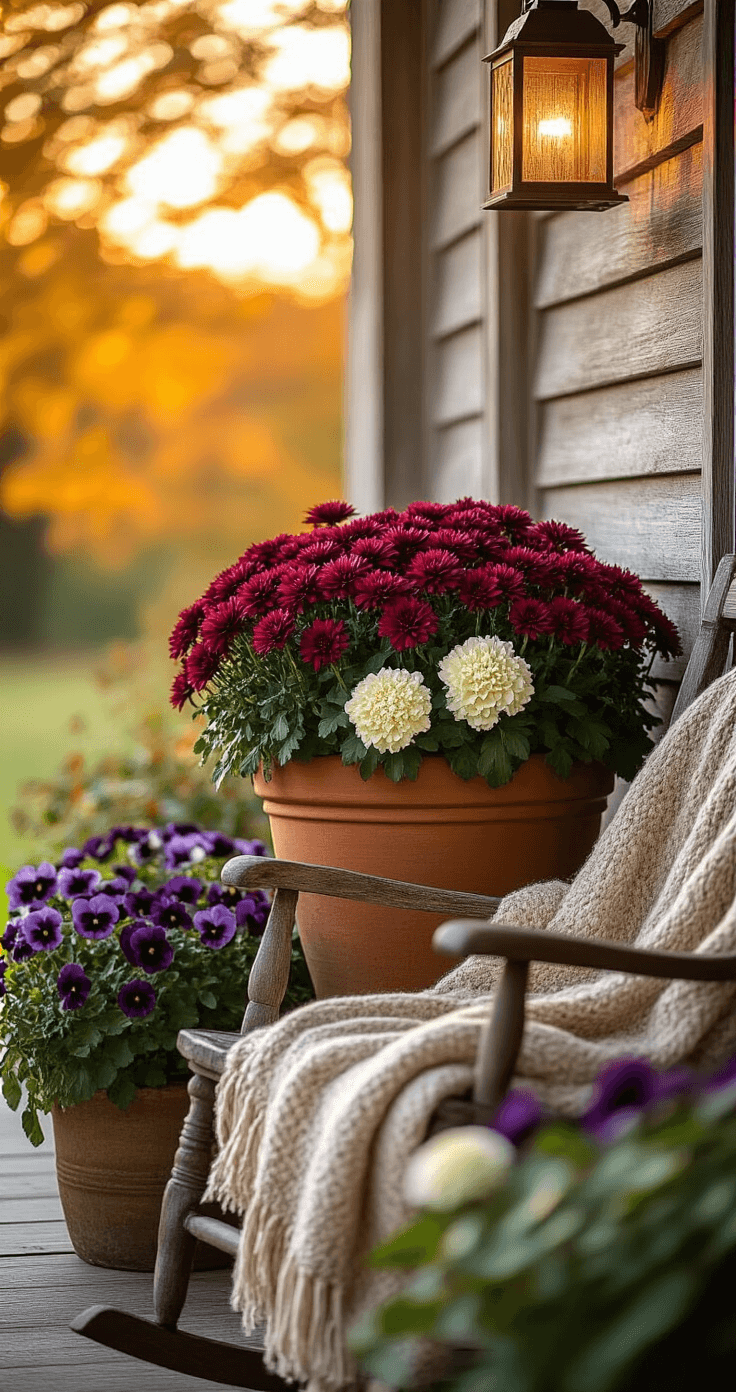
I learned this after creating a burgundy and white porch that stopped traffic compared to my previous “all the colors” approach that just looked busy and confused.
Try these combinations:
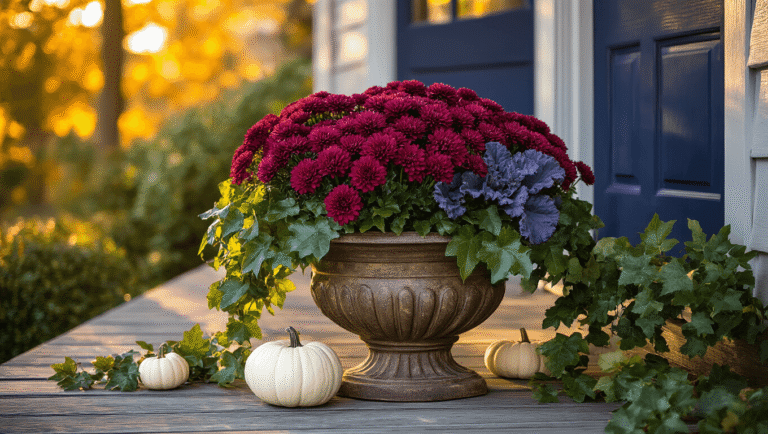
- Deep burgundy mums with white ornamental cabbage
- Burnt orange mums with copper-toned heuchera
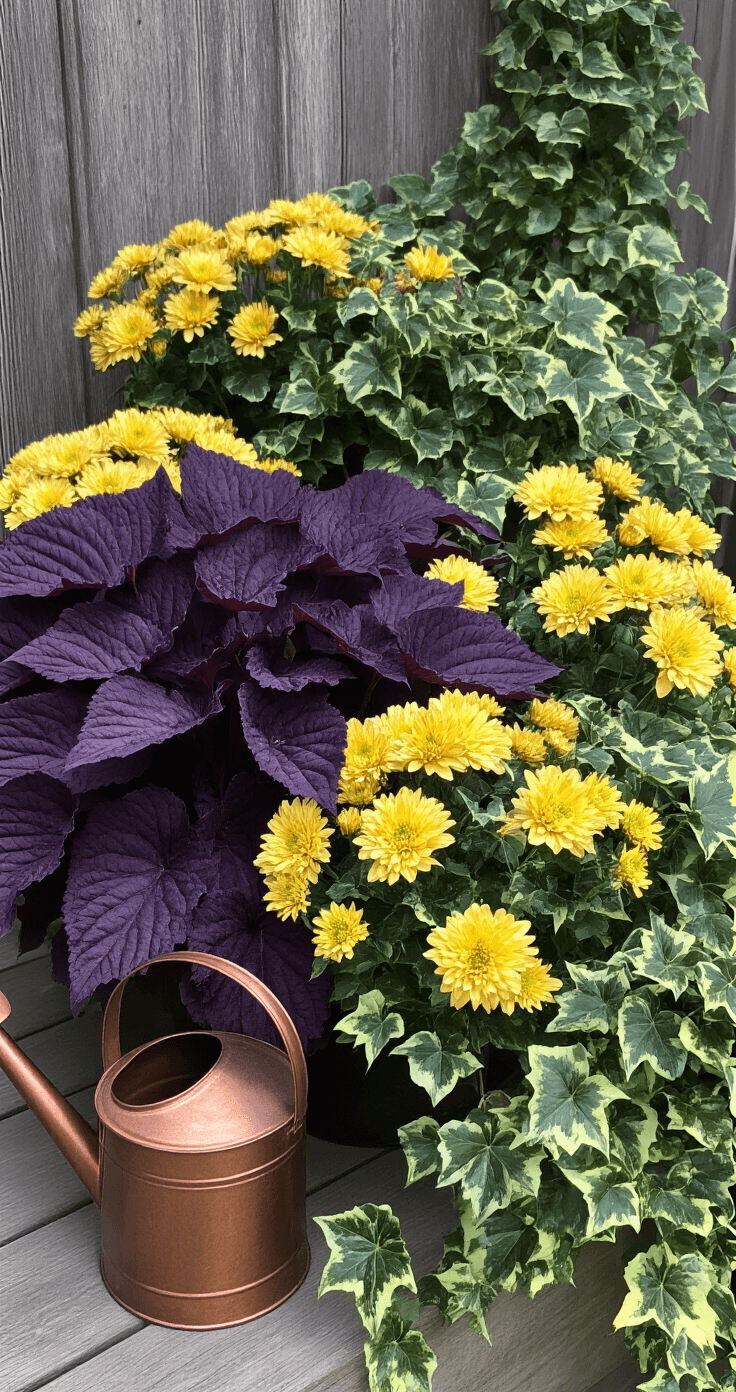
- Golden yellow mums with deep purple pansies
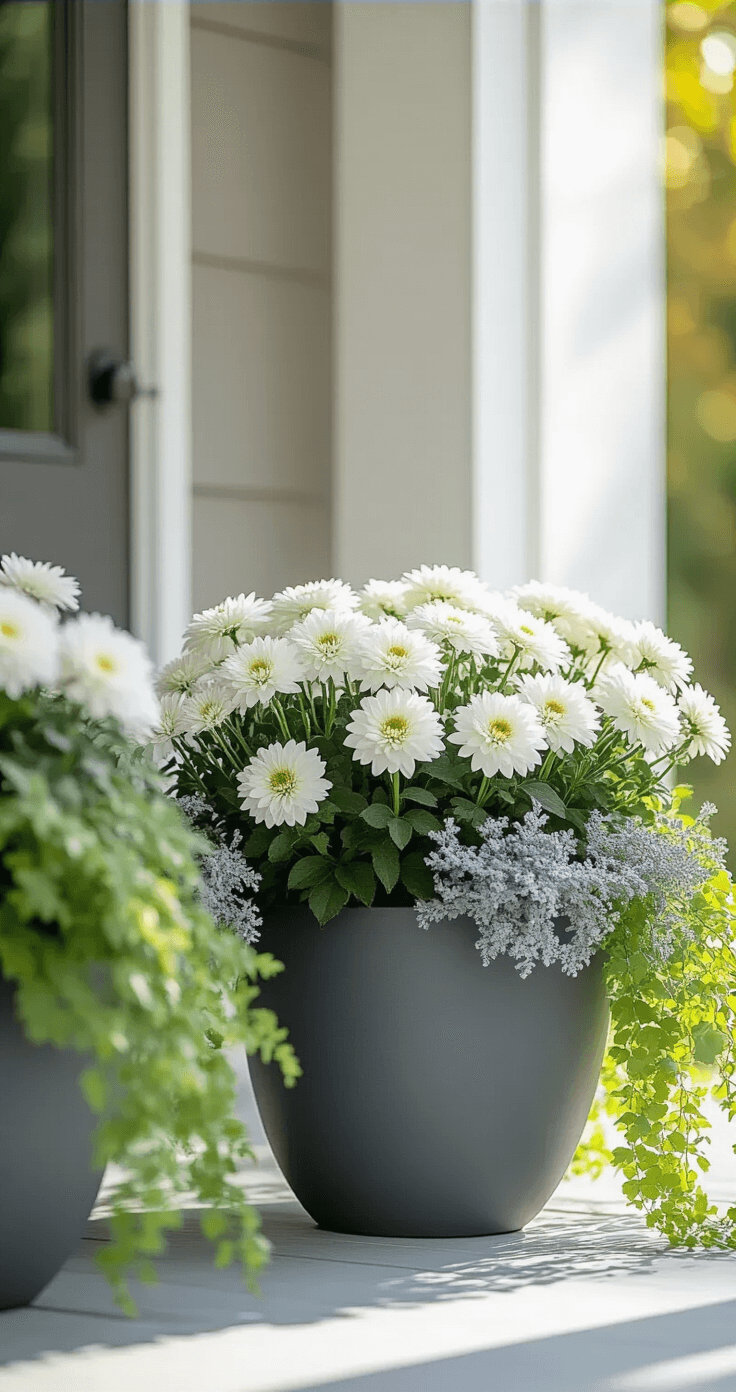
- White mums with silvery dusty miller
Mums come in tight mounds that look polished for weeks if you deadhead spent blooms and keep them watered.
Pansies and Violas (The Underestimated Champs)
People sleep on pansies because they seem too delicate. Wrong.
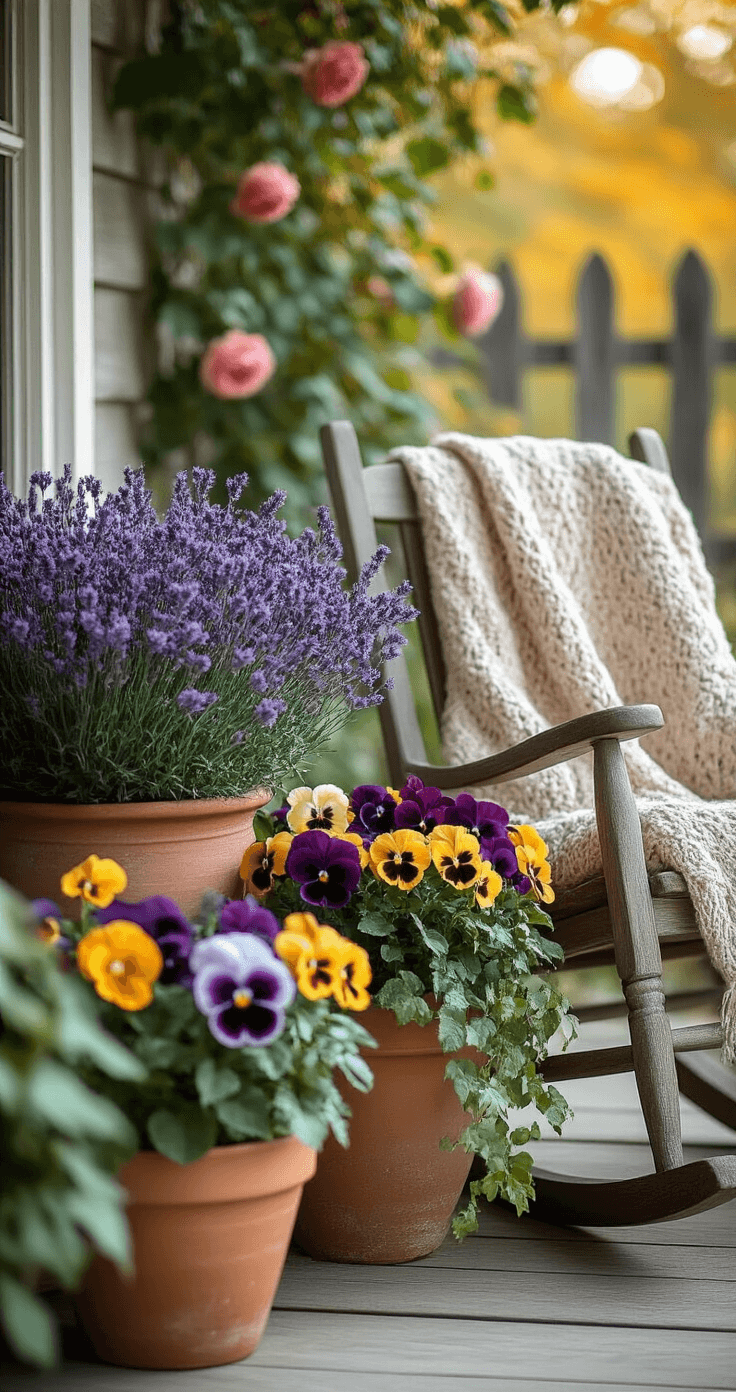
These little powerhouses laugh at frost and keep blooming when everything else has given up. I’ve had violas flowering through light snow, which makes them worth their weight in gold for extending your porch’s beauty into November and beyond.
What makes them special:
- Keep blooming as temperatures drop into the 40s and lower
- Available in deep jewel tones perfect for fall
- Lightly fragrant (a bonus most people don’t know about)
- Work as “spillers” that soften container edges
- Cost less than half what you’d pay for mums
Plant them around the base of taller plants or let them cascade over pot edges.
Asters (For Late-Season Color)
Asters are perennials that bloom late, ensuring your porch doesn’t look bare when early-bloomers fade.
I added New England asters to my porch containers three years ago and they’ve become my favorite fall plant. They start looking good in late August and keep going through October with daisy-like flowers in purple, pink, and white.
Pairing suggestions:
- Combine with mums for extended bloom time
- Plant behind shorter pansies for height
- Add trailing ivy to soften the container edge
The only downside? They can get leggy if you don’t pinch them back in early summer, but that’s a small price for such reliable late-season color.
Black-Eyed Susans (Sunshine in a Pot)
Compact varieties like ‘Little Goldstar’ bring that cheerful golden daisy look without taking over your entire container.
Deadhead these regularly and they’ll keep pushing out flowers well into fall. I pair mine with deep purple ornamental kale for a color combination that feels both classic and unexpected.
The Secret Weapons: Foliage Plants
This is where amateur porch decorators separate from the pros. Flowers grab attention, but foliage provides the structure and staying power that makes displays work for months instead of weeks.
Heuchera (Coral Bells)
These plants changed everything about how I approach fall containers.
Why I’m obsessed:
- Leaves in burgundy, copper, caramel, and deep plum
- Tolerates shade (game-changer for north-facing porches)
- Looks good from September through hard frost
- Provides color without needing to bloom
- Comes back year after year if you plant it in the ground
The darker varieties work best for fall—think ‘Palace Purple’ or ‘Obsidian’ rather than the lime-green summer varieties.
I use heuchera as the “thriller” in my containers, planting it in the center with mums and pansies around the base. The layers create depth that flat, one-level plantings can’t match.
Ornamental Kale and Cabbage (Surprisingly Gorgeous)
I ignored these for years because they sounded weird. Who wants vegetables on their porch?
Then I actually looked at them.
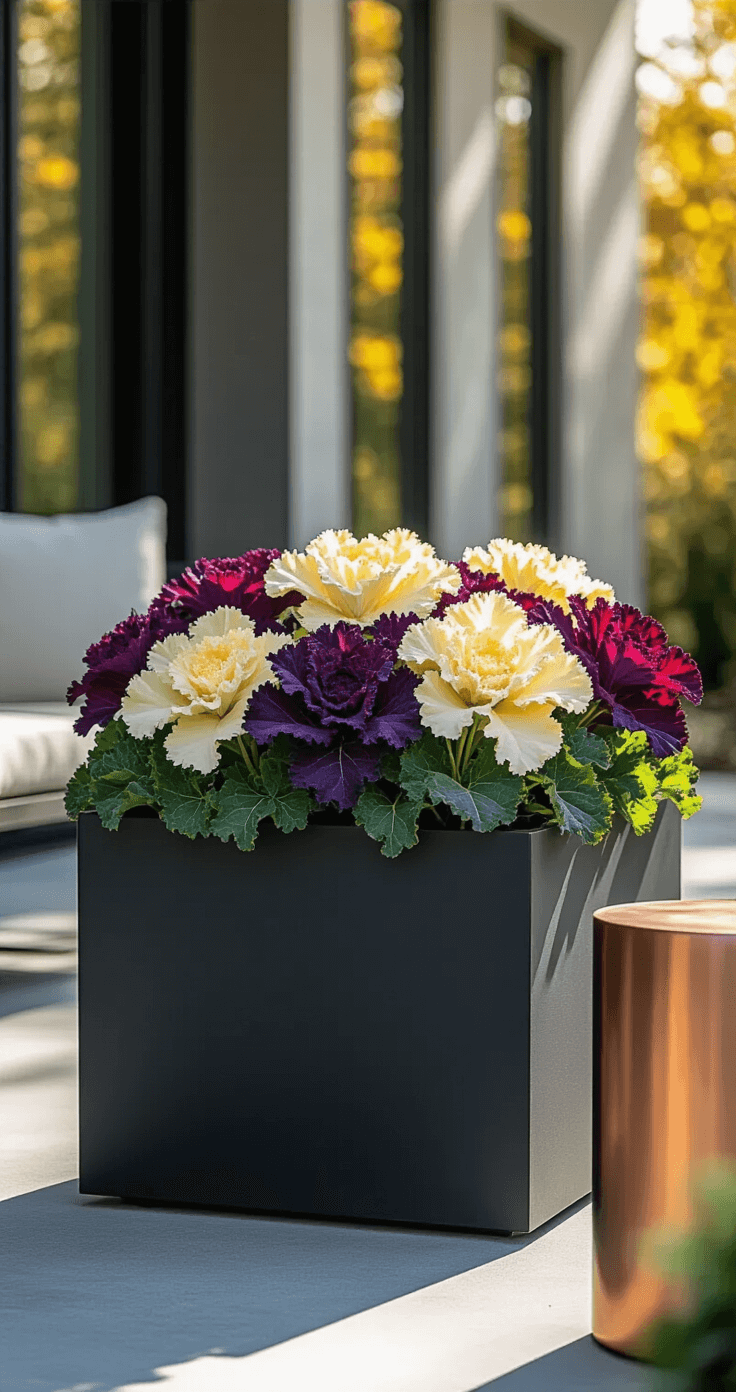
Ornamental kale and cabbage offer sculptural, ruffled leaves in combinations of deep purple, creamy white, and rich green that actually get more vibrant as temperatures drop.
What makes them work:
- Bold architectural shape adds structure
- Colors intensify with frost
- Last for months without looking tired
- Create focal points in arrangements
- Cost less than most flowering plants
The trick is treating them like flowers, not vegetables. Plant them prominently in containers or use them as standalone specimens in decorative pots near your door.
One heads-up—they can bolt and flower in spring if you leave them in place over winter, which looks terrible, so pull them out once they’re truly done.
<h

[…] ‘Henry Duelberg’ features tall spikes of blue flowers from spring to fall and actually thrives in heavy clay […]