
This post may contain affiliate links. Please see my disclosure policy for details.
Why Your Fall Planters Look Sad (And How to Fix It)
Contents
You’re probably making the same mistake I did.
You bought a gorgeous mum at the garden center, stuck it in a pot, and called it done.
Two weeks later, it looked like a deflated balloon at a kid’s birthday party.
The problem? One-note planting creates one-note boring.
Fall containers need layers, contrast, and plants that actually want to be together.
Not just whatever’s on clearance at the big box store.
The Three-Layer System That Actually Works
Forget complicated garden design theory.
You need three types of plants working together:
Thriller Plants – Your attention-grabbing superstars
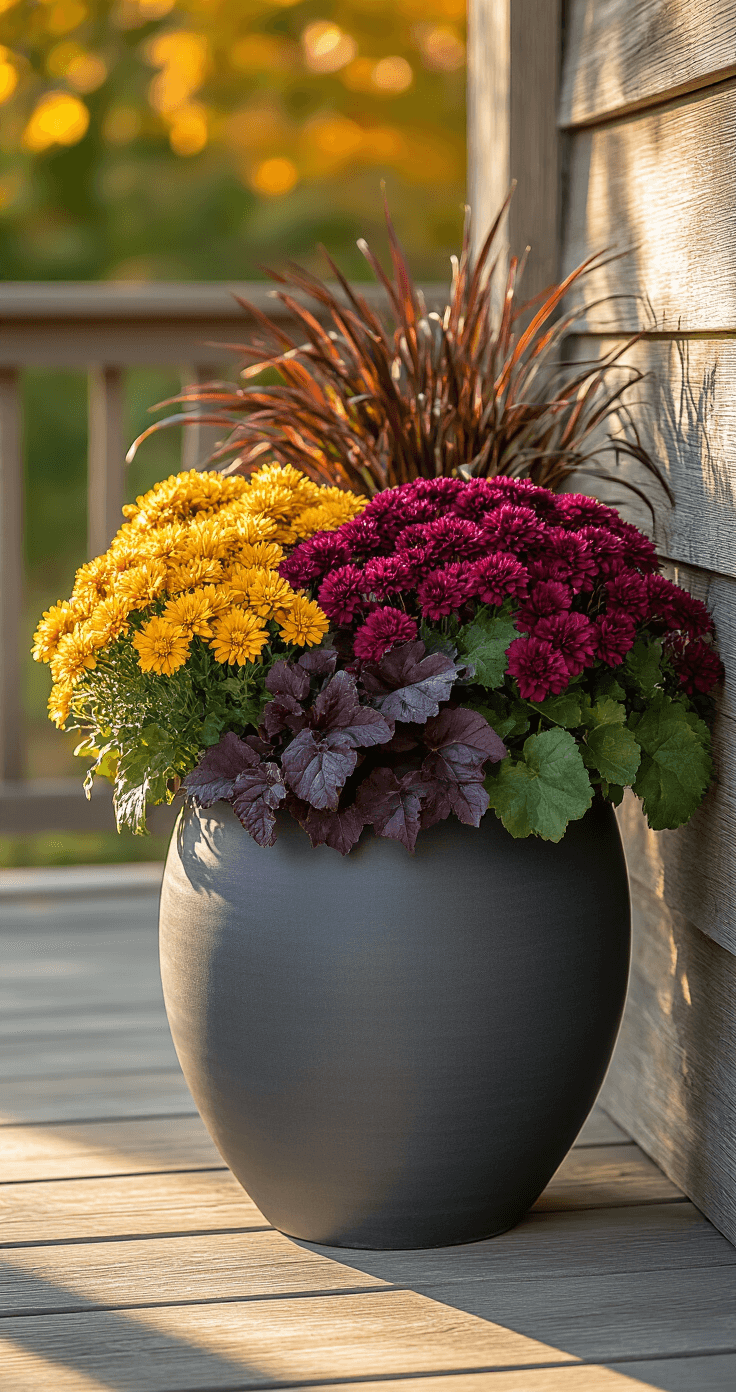
- Ornamental grasses like purple fountain grass
- Tall decorative mums in rust or burgundy
- Spike plants for vertical drama
- Flowering kale with those ruffled leaves that look expensive
Filler Plants – The supporting cast that fills gaps
- Heuchera plants in caramel and plum tones
- Dusty miller for that silvery-gray coolness
- Ornamental cabbage (yes, it’s different from kale)
- Asters that bloom late and don’t quit
Spiller Plants – The rebels that break the rules
- Sweet potato vine in chartreuse or deep purple
- English ivy that cascades like it means it
- Creeping jenny for that waterfall effect
- Vinca vine in variegated green and white
My Favorite No-Fail Combinations
The Moody Autumn Look
I planted this combination last October and people literally knocked on my door to ask about it.
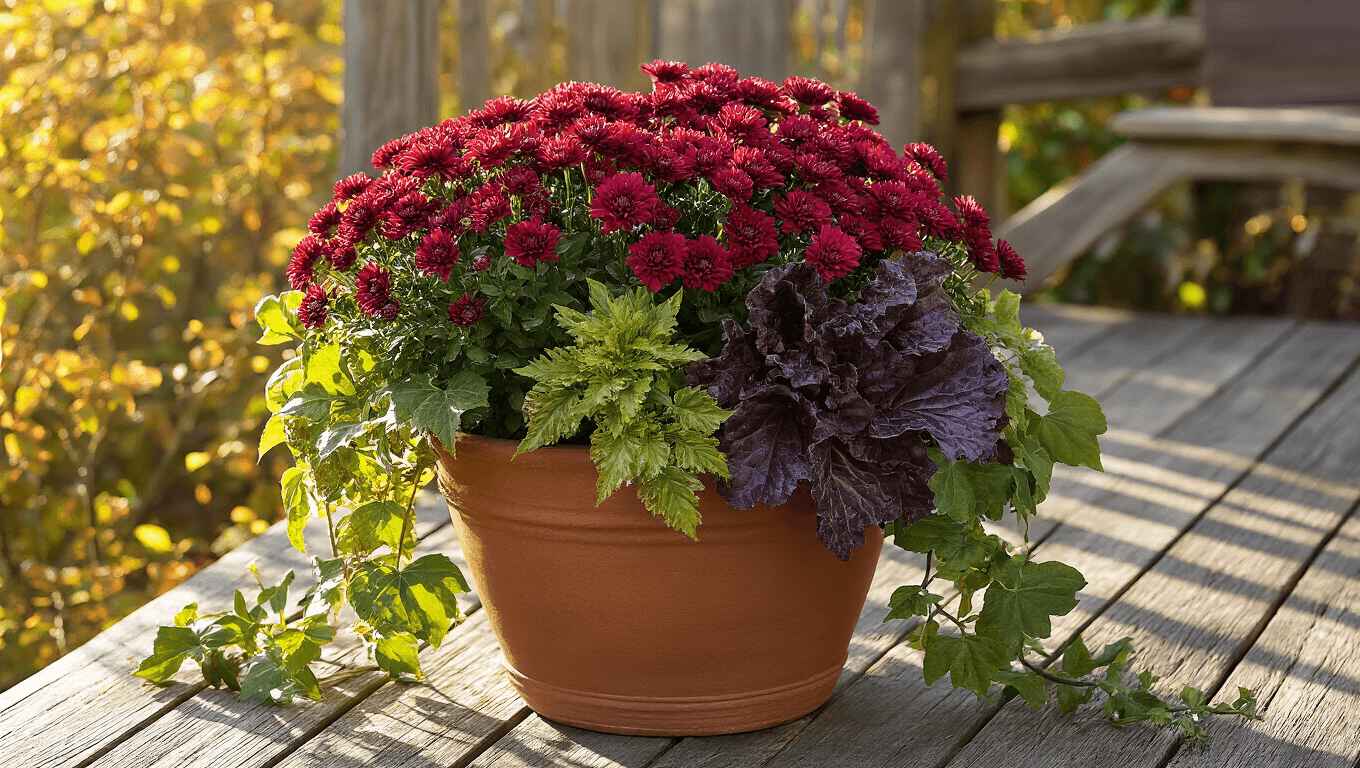
Start with a deep burgundy mum as your thriller.
Add chocolate heuchera and purple ornamental kale as fillers.
Let sweet potato vine in ‘Blackie’ spill over the edges like dark lava.
The entire thing looks like it cost three times what it did.
The Warm Glow Setup
This one photographs beautifully in afternoon light.
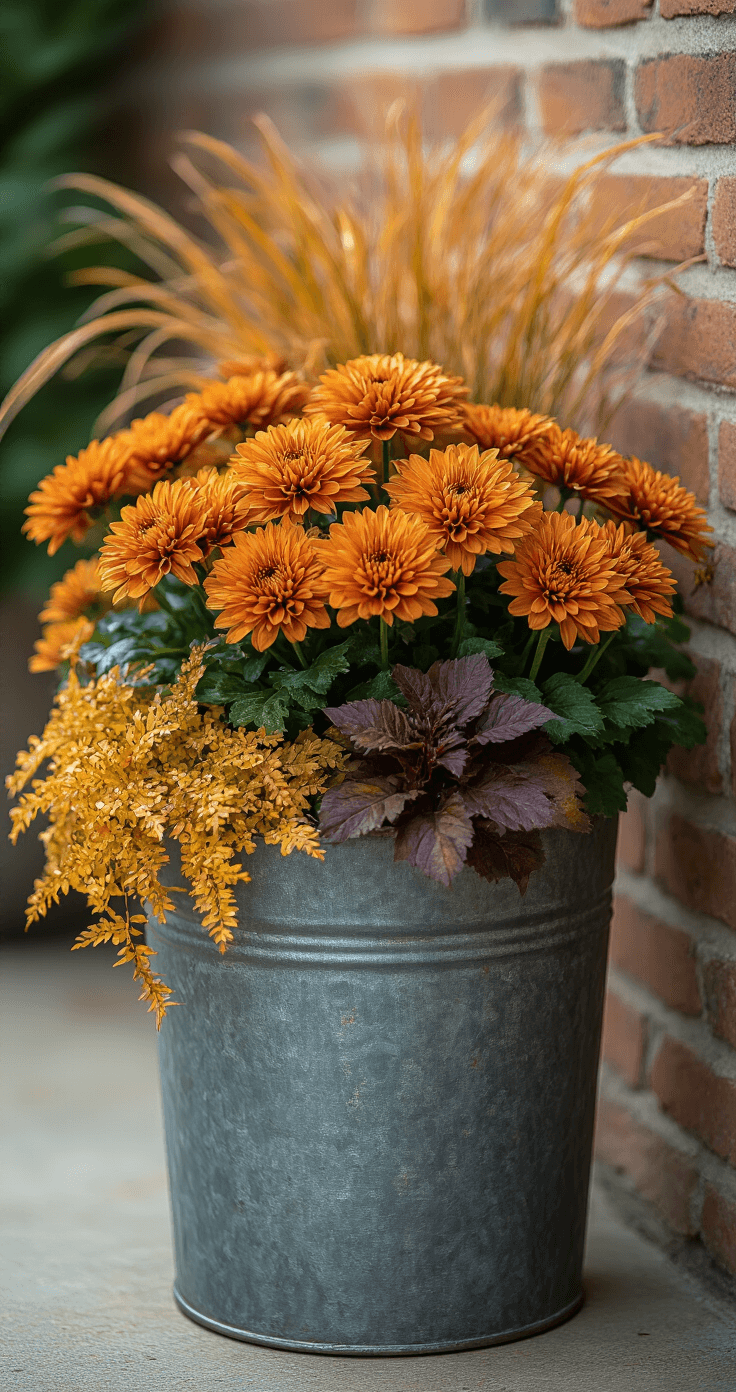
Use orange or amber mums as your star.
Fill in with golden creeping jenny and bronze heuchera.
Add rusty-toned fountain grass for movement.
Finish with chartreuse sweet potato vine spilling out.
The Elegant Neutral Approach
For those who hate traditional fall colors (I see you).
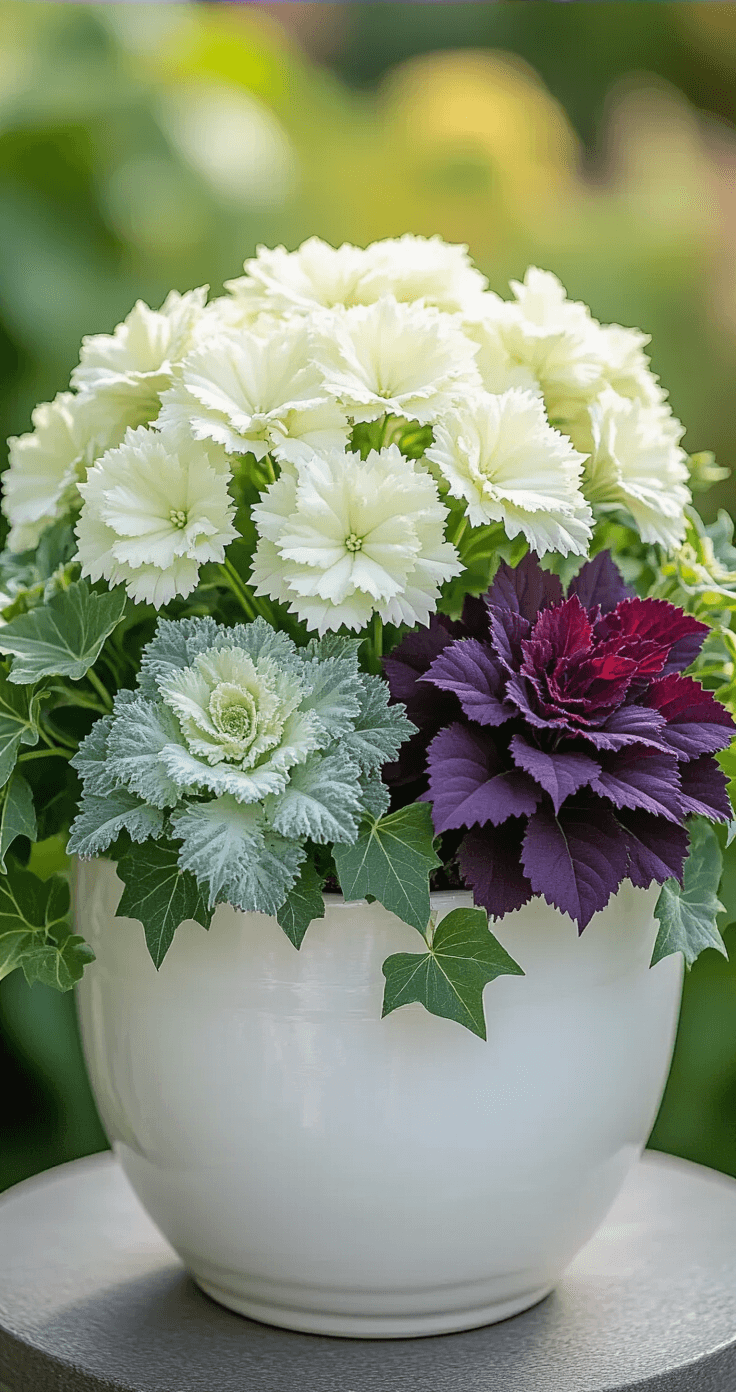
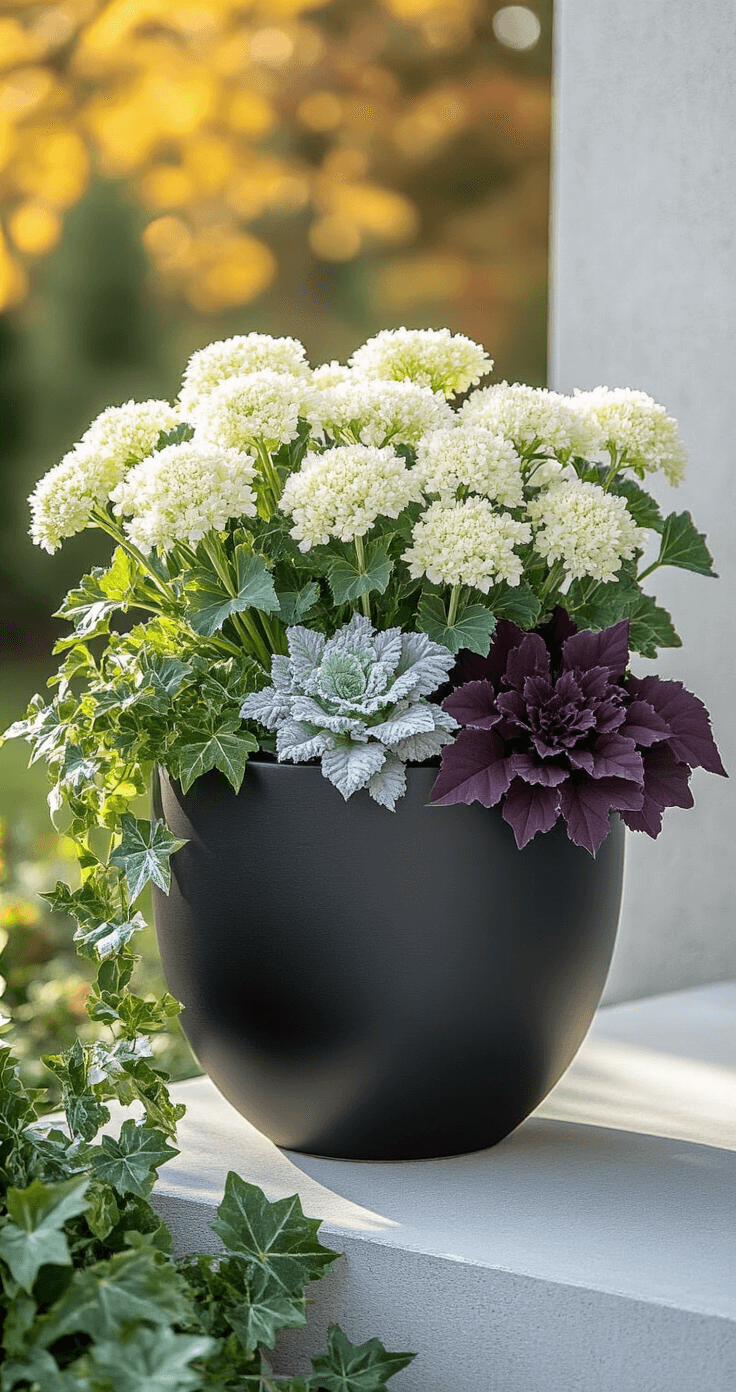
White flowering kale takes center stage.
Surround it with silver dusty miller and pale green ornamental cabbage.
Let variegated ivy cascade over the edges.
Add a single plum-colored heuchera for just enough contrast.

Container Choices That Don’t Look Like Everyone Else’s
Your pot matters more than you think.
I’ve planted beautiful combinations in boring containers and they looked instantly forgettable.
Sizing Up
Bigger is genuinely better for fall planters.
Aim for containers at least 16-18 inches in diameter.
Smaller pots dry out faster and limit your plant combinations.
Plus they look stingy, like you’re rationing beauty.
Material Matters
Skip the cheap plastic that blows over in wind.
Resin planters look expensive but won’t break your back moving them.
Galvanized metal adds industrial charm.
Ceramic glazed pots in deep colors make plants pop.
Color Psychology
Dark containers make bright plants explode visually.
Weathered terracotta gives instant cottage charm.
Black or charcoal gray feels modern and intentional.
White containers demand bold plant choices or they wash out.
The Dirt on Dirt (Because It Actually Matters)
Regular garden soil in containers is a death sentence.
It compacts, suffocates roots, and drains like concrete.
What you need:
- Quality potting mix designed for containers
- Added perlite for drainage
- Time-release fertilizer mixed in
- Space at the top for mulch
Fill your container about two-thirds full before you start planting.
This gives roots room to spread without drowning.
Planting Day: Getting It Right the First Time
Step 1:
Put your thriller plant in first, slightly off-center.
Dead-center looks stiff and formal unless that’s your thing.
Step 2:
Arrange fillers around your thriller while they’re still in their nursery pots.
Walk away.
Come back with fresh eyes.
Adjust until it feels right, not perfect.
Step 3:
Add spillers at the edges, angled outward.
You want them reaching toward the ground, not standing at attention.
Step 4:
Fill gaps with potting mix, pressing gently.
Water thoroughly until it runs out the drainage holes.
Step 5:
Top with mulch or moss to lock in moisture and hide soil.
<img src="https://evyvehomes.com
[…] I remember the first fall after I planted my perennial garden. […]