

This post may contain affiliate links. Please see my disclosure policy for details.
How I Keep My Christmas Cactus Blooming Year After Year (And You Can Too)
Contents
- How I Keep My Christmas Cactus Blooming Year After Year (And You Can Too)
- Why Your Christmas Cactus Looks Sad (And What It’s Really Trying to Tell You)
- Light: The Goldilocks Situation Nobody Talks About
- Watering: Stop Killing It With Kindness
- The Secret Temperature Trick for Holiday Blooms
- Humidity: Your Tropical Plant Needs Moisture in the Air
- The Darkness Ritual: How to Force Blooms Like a Pro
- Soil and Potting: Get This Right From the Start
- Feeding Your Christmas Cactus (Without Overdoing It)
Christmas cactus care stumped me for years until I figured out what these tropical beauties actually need.
I used to kill every Christmas cactus that crossed my threshold. Seriously, it was embarrassing. My grandmother would gift me her gorgeous blooming plants, and within months they’d look sadder than a forgotten houseplant in a college dorm.
Then I learned something crucial: Christmas cacti aren’t like their desert cousins. These guys are tropical plants that need completely different care.
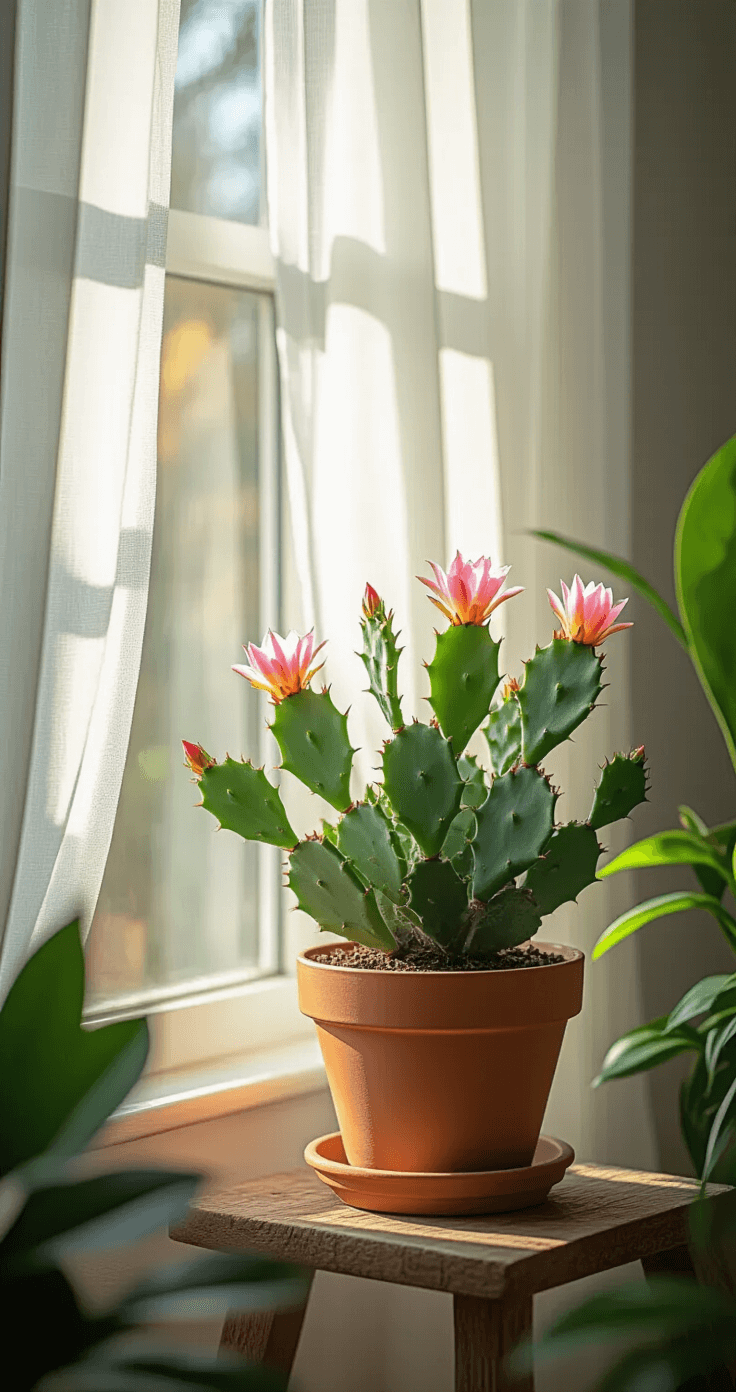
🏠 Steal This Look
- Paint Color: Sherwin-Williams Ripe Olive SW 6209
- Furniture: mid-century modern credenza with tapered legs to display plants at varying heights
- Lighting: adjustable arc floor lamp with warm 2700K LED for targeted plant growth light
- Materials: terracotta pots with drainage holes, sphagnum moss, woven rattan baskets, unglazed ceramic saucers
I keep mine on a plant stand right where morning coffee happens, so checking soil moisture becomes part of my daily ritual rather than a forgotten chore.
Why Your Christmas Cactus Looks Sad (And What It’s Really Trying to Tell You)
Most people treat Christmas cacti like regular cacti. That’s mistake number one.
These plants come from the Brazilian rainforests where they grow on trees, not in sand. They crave humidity, regular watering, and filtered light—basically the opposite of what you’d give a desert cactus.
When I finally understood this, everything changed.
Light: The Goldilocks Situation Nobody Talks About
Your Christmas cactus needs light that’s just right.
I keep mine near an east-facing window where it gets about 4-6 hours of gentle morning sun. Direct afternoon sunlight will scorch those beautiful segmented leaves faster than you can say “photosynthesis.”
Here’s what works:
- Bright, indirect light for most of the day
- Morning sun is your friend
- Afternoon sun is your enemy
- If leaves look pale or washed out, there’s too much light
- If stems get leggy and sparse, there’s too little
I use sheer curtains to filter harsh light during peak hours. Game changer.
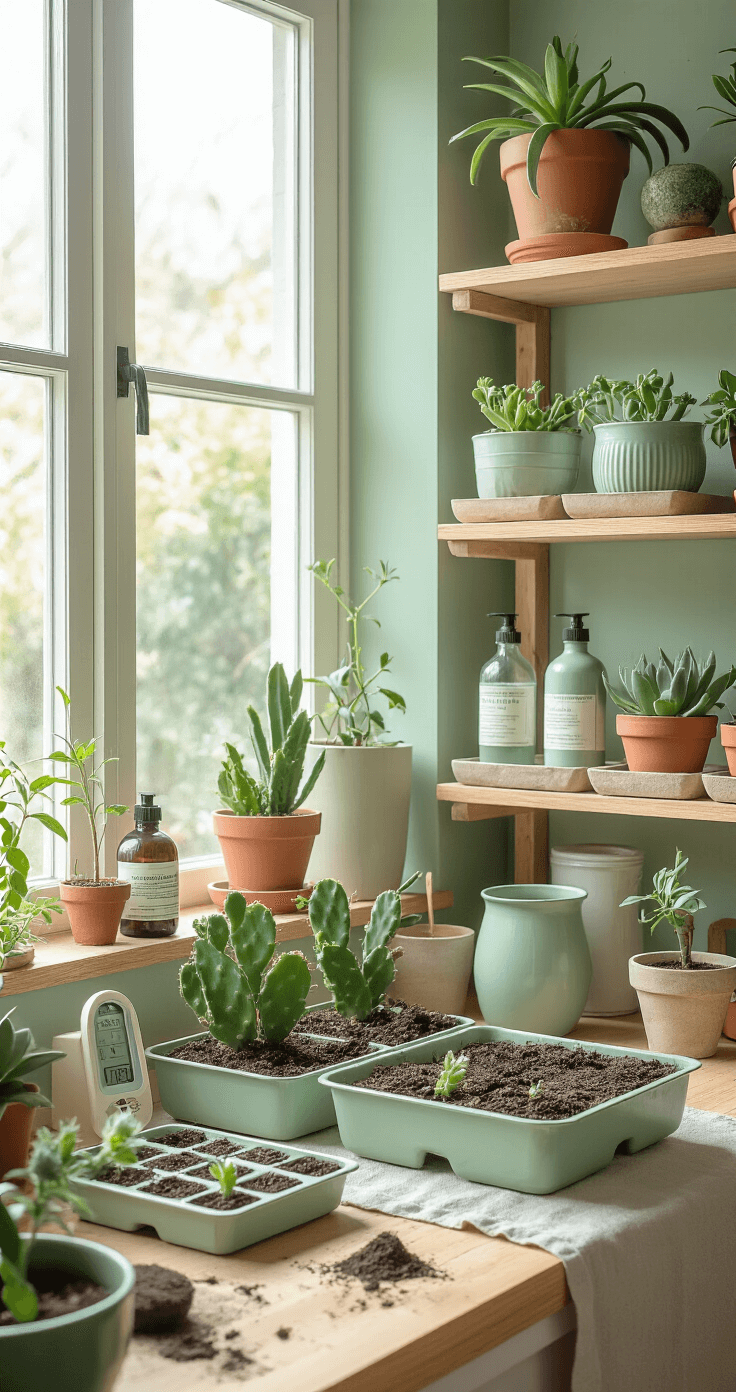
🏠 Steal This Look
- Paint Color: Farrow & Ball Skylight 205
- Furniture: east-facing window seat with built-in storage bench in natural oak
- Lighting: adjustable brass-arm wall sconce with linen shade for supplemental ambient light
- Materials: sheer Belgian linen curtains, unbleached cotton pot covers, weathered terracotta saucers
I learned this the hard way after frying three plants on my sunny kitchen ledge—now my east-facing breakfast nook is my cactus sanctuary, and morning coffee with them has become my daily ritual.
Watering: Stop Killing It With Kindness
I was either drowning my plants or letting them shrivel up. No middle ground.
Now I stick my finger into the soil about two inches deep. If it feels dry, I water. If it’s still moist, I leave it alone.
My watering routine:
- Check the soil every 3-4 days
- Water thoroughly when the top 2 inches feel dry
- Always empty the drainage tray within 15 minutes
- Use room temperature water (cold water shocks the roots)
- Cut back on watering in fall to trigger blooming
Overwatering causes root rot, which looks like mushy, blackened stems. Underwatering makes the leaves shrivel and look deflated.
I learned this the hard way when I lost my first really beautiful cactus to root rot. The smell was atrocious.
The Secret Temperature Trick for Holiday Blooms
Want flowers for Christmas? You need to manipulate the temperature in fall.
I move my Christmas cactus to a cooler room (around 50-60°F) starting in late September. This mimics what happens in their natural habitat when temperatures drop.
Temperature guidelines:
- Growing season: 70°F during the day
- Nighttime: 55-65°F is perfect
- Blooming trigger: 50-60°F for 6-8 weeks in fall
- Avoid: Placing near heating vents or drafty windows
My guest bedroom stays naturally cooler, so that’s where my cactus vacations every autumn.
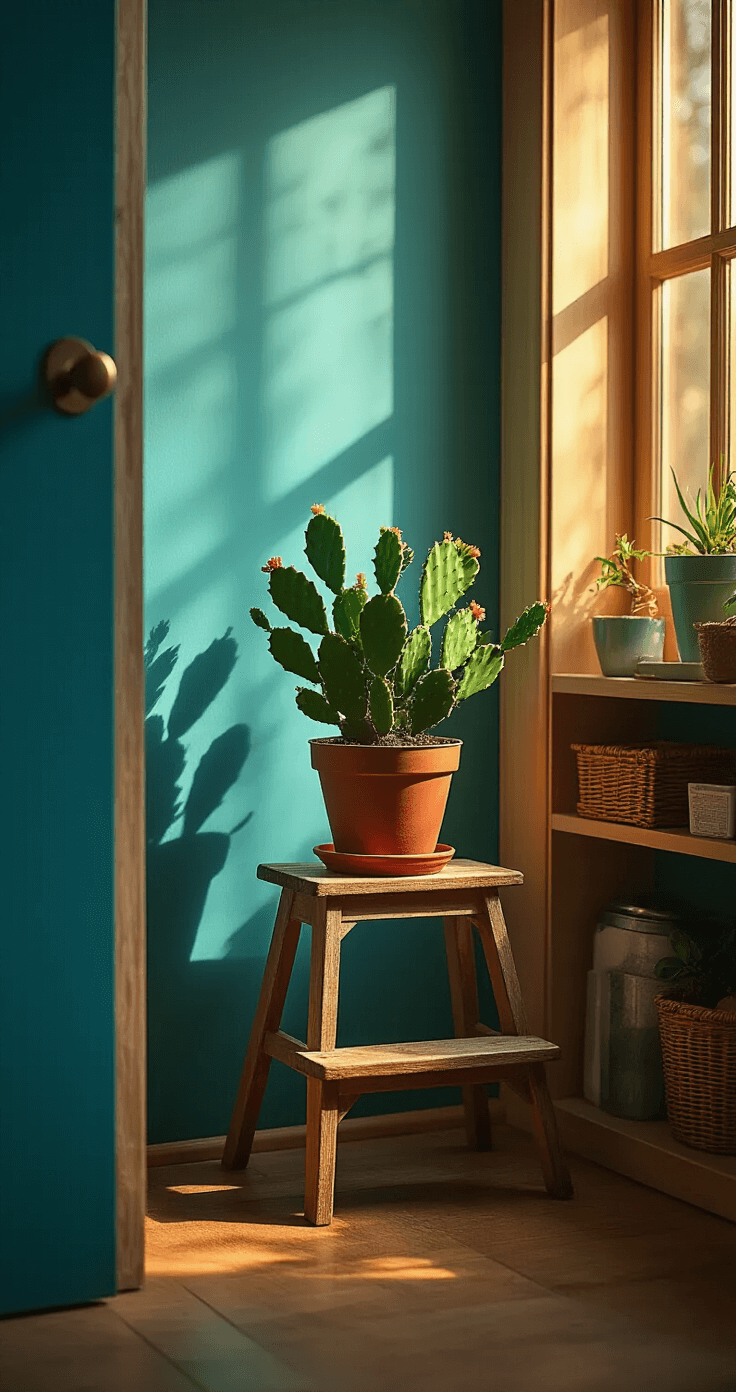
🏠 Steal This Look
- Paint Color: use Valspar brand. Match the ACTUAL wall color in the image. Format: Valspar ColorName CODE
- Furniture: a vintage wooden dresser with marble top for displaying plants at varying heights
- Lighting: a ceramic table lamp with linen shade for soft, warm evening glow
- Materials: wool throw blankets, unbleached cotton curtains, raw linen bedding, aged brass hardware
There’s something deeply satisfying about walking into a quiet guest bedroom in late October and feeling that unmistakable chill—knowing your Christmas cactus is tucked away in the corner, slowly building the energy for those shocking magenta blooms that will surprise every visitor who stays over in December.
Humidity: Your Tropical Plant Needs Moisture in the Air
Brazilian rainforests aren’t exactly dry.
I keep a humidity tray filled with pebbles and water under my Christmas cactus. As the water evaporates, it creates a nice humid microclimate.
Other humidity boosters:
- Mist the plant occasionally (not during blooming)
- Group plants together
- Keep away from heating vents
- A small humidifier works wonders in winter
My bathroom gets decent humidity, but the lighting isn’t great, so the humidity tray solution works better for me.
The Darkness Ritual: How to Force Blooms Like a Pro
This is where it gets interesting.
Christmas cacti need 12-14 hours of complete darkness every day for about 6-9 weeks to set buds.
I start this routine in late September or early October. My plant goes into a spare closet every evening around 6 PM and comes out the next morning around 8 AM.
The blooming protocol:
- Begin darkness treatment 6-9 weeks before you want blooms
- Ensure complete darkness (even streetlights can disrupt it)
- Keep temperatures cool during this period
- Reduce watering frequency
- Stop fertilizing completely
- Once tiny buds appear (usually 3-4 weeks), resume normal light
Critical warning: Don’t move the plant once buds form. I made this mistake once and watched every single bud drop off within two days. Heartbreaking.
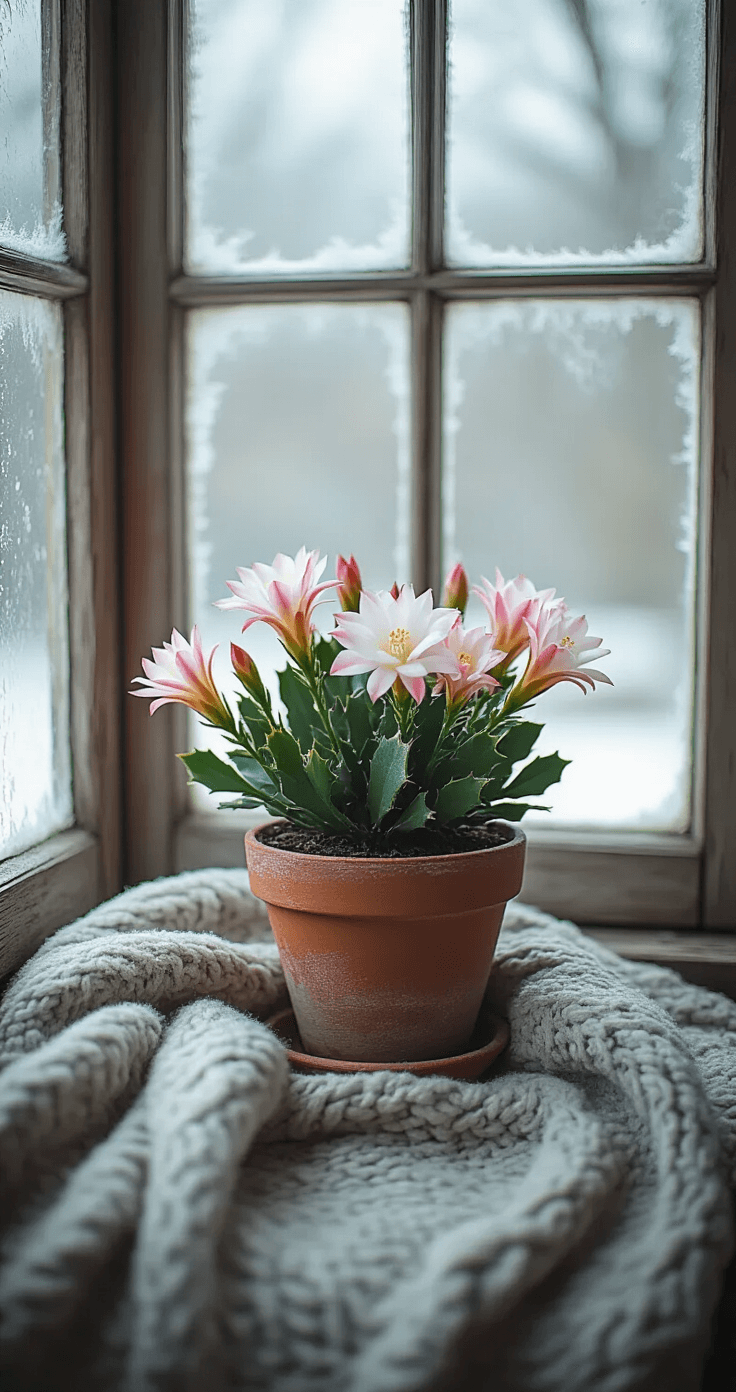
💡 Steal This Look
- Paint Color: Dunn-Edwards Midnight Hour DEA152
- Furniture: compact rolling plant stand with locking casters for easy closet transport
- Lighting: zero-light blackout curtains or a dedicated light-blocking grow tent for controlled darkness
- Materials: matte black cotton canvas, untreated cedar closet panels, brushed aluminum plant caddy
I turned my least-used hall closet into a bloom laboratory after losing an entire season’s buds to a hallway nightlight, and now that cramped dark space feels like my most productive room each autumn.
Soil and Potting: Get This Right From the Start
Regular potting soil is too dense.
I use a cactus and succulent soil mix or make my own with:
- 60% regular potting soil
- 30% perlite
- 10% coarse sand
This creates the drainage these plants desperately need.
Potting tips:
- Christmas cacti actually like being slightly pot-bound
- Only repot every 2-3 years
- Choose a pot with drainage holes (non-negotiable)
- Terracotta pots help prevent overwatering
- Repot after blooming, never during bud formation
I killed a plant once by repotting it right before blooming season. All the buds dropped. Lesson learned.
Feeding Your Christmas Cactus (Without Overdoing It)
I fertilize from spring through early fall only.
Use a balanced, water-soluble fertilizer diluted to half strength every 2-4 weeks during the growing season



[…] Yellow coneflowers like ‘Kismet Yellow’ are stunning, deer-resistant options that keep feeding birds even after blooming. […]